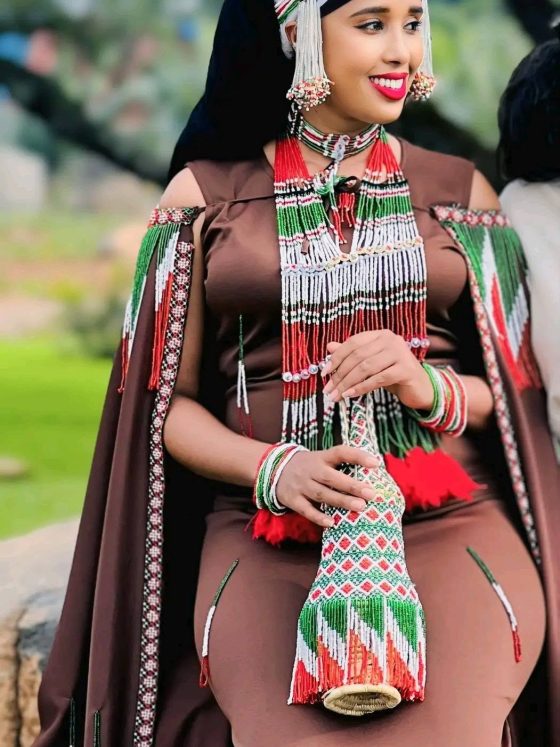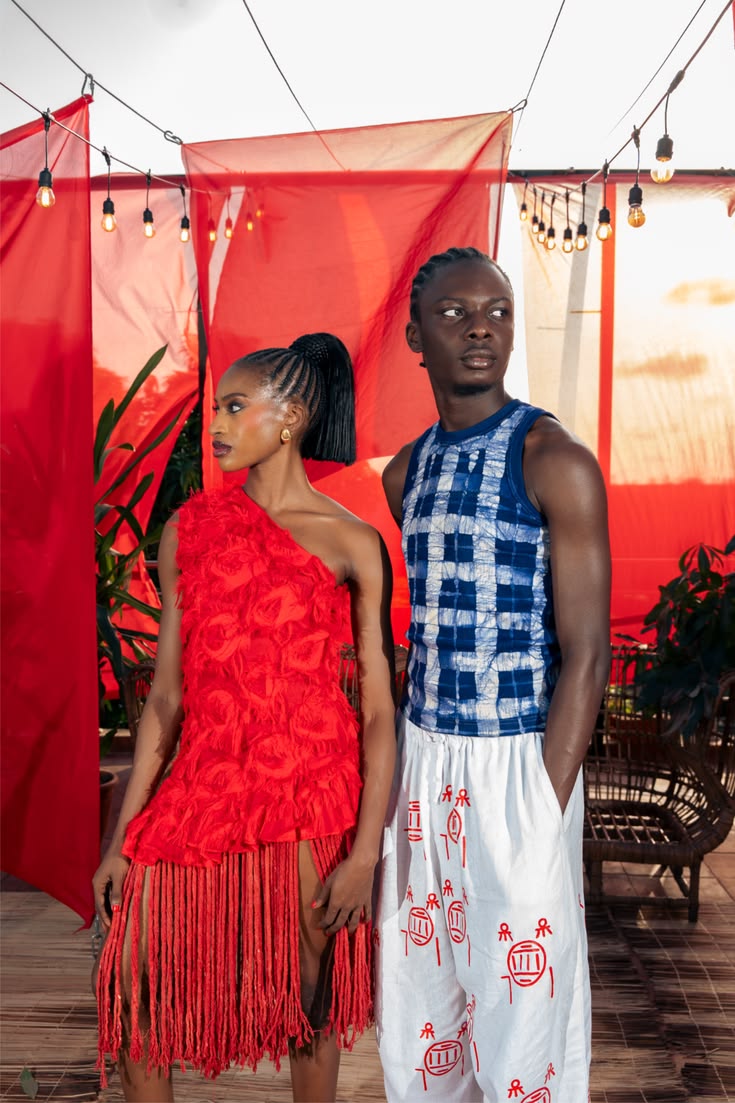
The word “emerging” is used in fashion as though it describes a stage. It does not.
It describes a position: a position relative to the institutions that decide who has arrived, who is worth investing in and who must continue to prove that they are ready.
Applied to African designers, the word has become remarkably durable. A label can produce internationally recognised collections for years, stock retailers, build a customer base, earn major editorial coverage and show at fashion weeks. Yet it can still be introduced as “emerging,” “rising,” “one to watch” or “the next big thing.”
The compliment keeps arriving. The structural support it appears to promise often fails to materialise.
This is not a small linguistic problem. It shapes how the industry distributes attention, capital, retail access and legitimacy. “Emerging” can be useful when it accurately describes an early-stage business. Every designer begins somewhere. New labels need discovery, editorial attention, mentoring, financial support and buyer introductions.
But the label becomes limiting when it is applied indefinitely: when it celebrates talent while treating the conditions required for that talent to become commercially established as someone else’s problem.
For independent African fashion brands, that distinction matters. A designer is not made established simply because a magazine stops calling them emerging. They become established when they have the commercial infrastructure to sustain their practice: working capital, production capacity, dependable retail relationships, distribution systems, legal protection, insurance, reliable logistics and the ability to negotiate rather than accept any opportunity on any terms.
The fashion industry has become better at discovering African talent. It has not become equally effective at helping African designers move beyond discovery.
The word “emerging” describes a position, not a stage. For African fashion designers, it has become the industry’s most durable way of celebrating talent while avoiding the investment talent requires.
What “Emerging” Actually Delivers
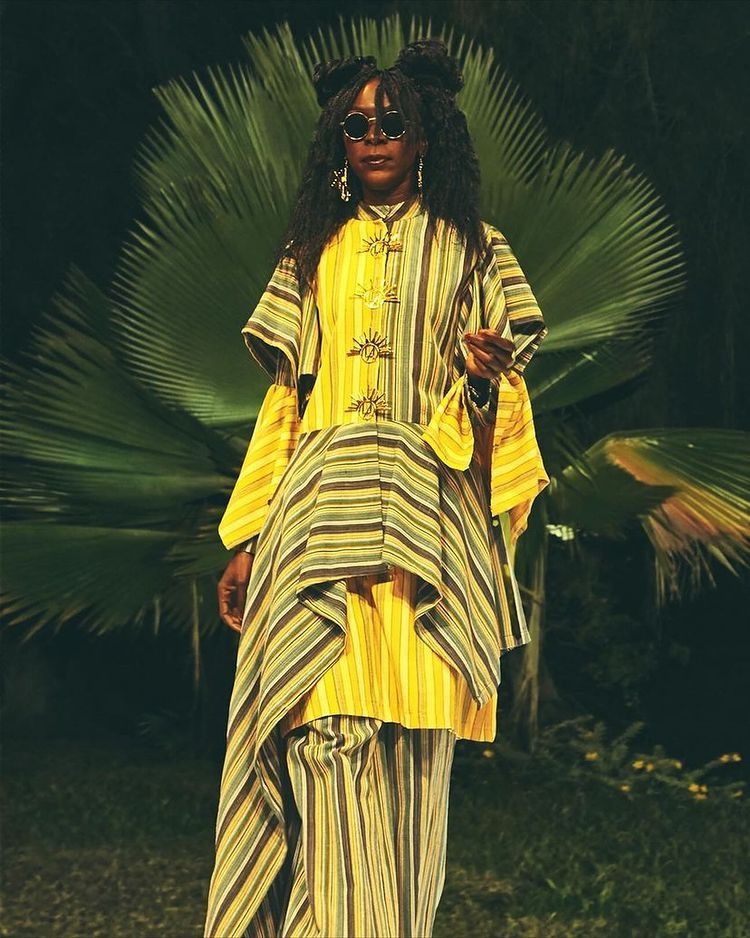
To be called an emerging designer can bring real benefits. It can create a press portfolio. It can attract an audience. It can lead to invitations to speak, present, exhibit or participate in showcases. It can bring a designer’s work to the attention of stylists, editors, buyers, cultural institutions and potential customers. For a founder who has spent years working without recognition, that first wave of visibility can be meaningful.
Visibility is nothing. The problem is what the industry asks visibility to stand in for.
An “emerging designer” feature may produce a beautiful profile, but it does not provide a production loan. A fashion-week showcase may create photographs, but it does not guarantee purchase orders. A prize shortlist may attract press attention, but it does not automatically provide the working capital needed to finance a wholesale order with net-30 or net-60 payment terms.
A buyer introduction is not the same as a buyer relationship. A buyer relationship is not the same as a retail order. A retail order is not the same as the cash flow required to fulfil it.
This is the argument at the centre of Visibility Is Not Market Power: attention can open a door, but it does not determine whether a business can walk through it and remain operational once it does.
The “emerging” label often offers a form of support without providing it itself. It says: we see you. It does not necessarily say: we will invest in your production, support your export process, introduce you to financing, help you manage compliance or commit to buying your work across multiple seasons. Those are different commitments. The industry is skilled at the first. It remains inconsistent at the second.
A Position, Not a Stage
“Emerging” sounds temporary. It implies a clear sequence: a designer begins, attracts interest, develops, grows and eventually becomes established. The word suggests that time and exposure will naturally lead to arrival.
But fashion does not work that way. Arrival is not simply granted through time. It depends on access to institutions, resources, markets, networks and money. It depends on who receives showroom support, buyer introductions, export assistance, grants, mentorship, production facilities, credit, manufacturing relationships and editorial reinforcement.
It also depends on who is allowed to make mistakes. A young European or North American designer may be supported through several seasons of experimentation by a fashion council, an established showroom, an investor, a retailer, an incubator, or a family-backed safety net. A designer operating from Lagos, Accra, Nairobi, Dakar, Johannesburg or Kigali may be expected to demonstrate the same commercial polish without access to the same systems.
When the second designer is then described as “emerging,” the word can conceal the unequal conditions behind their position.
The issue is not that African designers are incapable of building global businesses. The issue is that many are being asked to build those businesses while carrying financial, logistical and administrative burdens that fashion institutions elsewhere distribute across a more developed support system.
A designer who has built a collection, funded samples, sourced materials, paid makers, managed production, arranged international shipping, handled customs, built an online store, created content, negotiated with buyers and maintained customer service is not simply “emerging.” They may be undercapitalised. They may be under-distributed. They may be operating without a safety net. But those are infrastructure conditions, not evidence of creative immaturity.
The Grammar of Permanent Anticipation
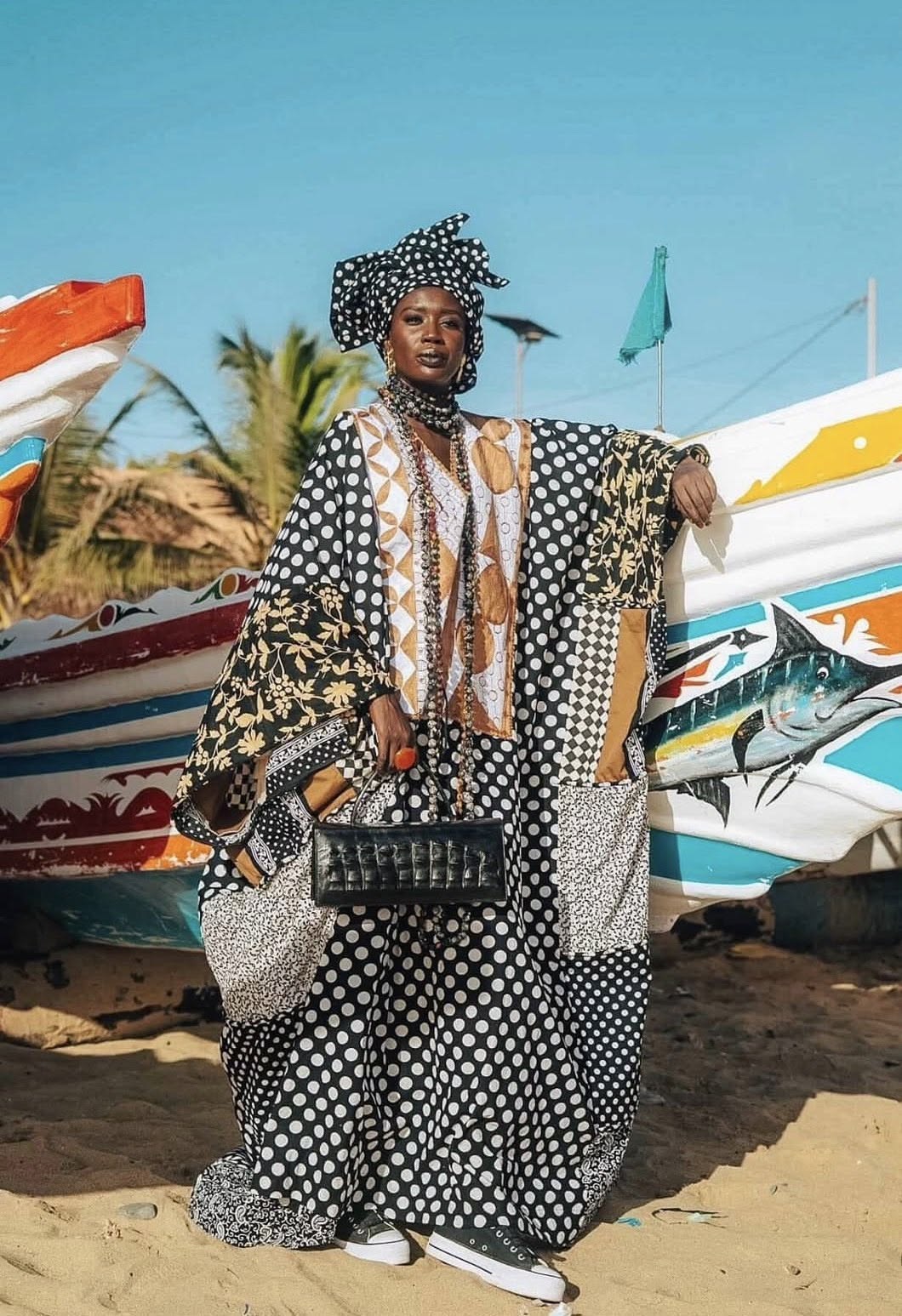
The language of emergence has long been applied to African cities as well as African designers. Lagos is “rising.” Accra is “up-and-coming.” Nairobi is “one to watch.” Dakar is “emerging.” These descriptions can appear in international coverage even when the cities in question have decades of fashion history, established consumer cultures, working designers, experienced makers, fashion weeks, boutiques, media ecosystems and regional influence.
The language creates a strange condition of permanent anticipation. The city is important, but not yet central. The designer is accomplished, but not yet established. The market is dynamic, but not yet mature. The work is exciting, but not yet fully recognised. As Omiren Styles has documented in its analysis of the African cities that will define global fashion by 2030, Dakar Fashion Week has a two-decade head start, which most international fashion discourse still frames in terms of future potential rather than documented history.
Dakar Fashion Week, founded by Adama Paris in 2002, has operated for more than two decades and has helped create visibility for designers, models and creative practitioners across Senegal, the continent and the diaspora. Yet international fashion discourse continues to frame Dakar in terms of future potential, rather than treating it as an established fashion city with its own history and authority.
The same pattern appears with individual designers. Kenneth Ize became a finalist for the 2019 LVMH Prize. This significant global signal introduced his Lagos-based work and his use of aso-oke textiles to a broad international fashion audience. That recognition mattered. It created attention, press and access to a larger fashion conversation.
But recognition does not erase the underlying business conditions a designer must still navigate. A finalist status does not manufacture fabric. It does not cover factory deposits. It does not create local production capacity at workable minimums. It does not solve cross-border logistics or guarantee a retailer will place a meaningful order for multiple seasons.
The industry often treats high-visibility recognition as the conclusion of a support story. For independent designers, it is more often the beginning of a more expensive phase. More people are watching. More demand may arrive. The brand needs to travel, sample, produce, respond, ship and scale. Without additional infrastructure, the attention can become pressure.
That is the damage of permanent emergence. The designer is celebrated for approaching the threshold while the system avoids changing what lies behind it.
The Problem With “Discovery”
Fashion likes discovery because discovery is cheap.
A publication can run a “new names” story. A luxury retailer can spotlight a designer in a seasonal edit. A fashion week can programme a showcase. A brand can borrow from a label for a red carpet. An institution can host a panel about the next generation of African talent. All of this can be valuable. But discovery does not require long-term commitment. Investment does.
Investment means helping a designer absorb the cost of growth. It means offering funding, fair payment terms, showroom access, production support, business advice, export readiness, sales support, logistics knowledge and credible paths into retail. It means accepting that a designer cannot build a globally viable label from inspiration and personal resilience alone.
Fashion institutions often prefer visibility because it allows them to participate in the narrative of change without incurring the costs of structural change. As Omiren Styles has argued in its analysis of why European luxury houses invest in Afrobeats stars but not in African fashion infrastructure, the cultural visibility that African design generates is being extracted for commercial gain. In contrast, the structural investment that would make African fashion businesses viable at scale has not followed.
A global retailer can celebrate a designer’s cultural relevance without changing its supplier payment terms. A prize can reward originality without providing the working capital needed to meet new demand. A fashion council can host a showcase without ensuring that participants have the sales, production or compliance support needed to convert a show into a business.
The system treats diversity and discovery as highly visible forms of support. It treats finance, production and distribution as separate technical matters. For independent African fashion labels, those technical matters are often the difference between a career and a cycle of exposure without stability.
What Structural Support Looks Like
If “emerging” is the language of anticipation, structural support is the material condition that allows a designer to move. It is specific.
Working capital
A wholesale fashion business often pays its costs before it receives its revenue. The designer buys fabric, pays for production, funds sampling, manages quality control, covers packaging and freight, then waits for a buyer to pay. As What Buyers Need Before They Take on an Independent Label explains, a label may secure a prestigious order and still face a cash-flow crisis if it cannot fund production before payment arrives. Working capital, trade finance, purchase-order financing and invoice financing are not luxuries. They are tools that enable a business to fulfil demand without being destroyed by it.
Production infrastructure
A designer needs more than a good factory contact. They need dependable access to materials, pattern cutters, sample makers, machinists, quality control, finishing, packaging and production partners who can meet the brand’s standards at a volume the brand can finance. UNESCO has identified lack of investment, weak infrastructure, limited local manufacturing capacity, high input costs, skills gaps and export barriers as continuing constraints on African fashion’s development. Those challenges do not disappear when a designer receives a press feature. They become more urgent when that feature produces orders.
Retail relationships
A buyer who takes a small, thoughtful order for multiple seasons can be more valuable than a one-time international showcase. Retail relationships teach a label how to deliver, communicate, price, replenish and understand sell-through. They create commercial proof. As Building Local First argues, local and regional retail should not be treated as a waiting room before international success. It can be the operating environment in which a label develops the discipline international expansion requires.
Export and compliance support
Independent labels need access to practical expertise: product labelling, fibre declarations, customs documentation, VAT, tariffs, commercial invoices, product safety standards, shipping rules, trademark registration and contracts. These are not glamorous parts of fashion. They are part of market access. A designer can be culturally recognised and commercially blocked by a missing document, incorrect label or unaffordable freight option.
Risk protection
Fashion businesses are vulnerable to material damage, theft, fire, shipment delays, cancelled events, supplier failures, customer disputes and production losses. Yet independent designers often carry these risks personally because commercial insurance is inaccessible, unaffordable or poorly matched to small creative enterprises. When a designer has no mechanism for transferring risk, every setback can become a personal financial crisis. That is not an “emerging designer” issue. It is an infrastructure issue.
The Limits of Institutional Access
The British Fashion Council’s NEWGEN scheme demonstrates both the value and the limits of institutional support. NEWGEN is one of the British fashion industry’s best-known development pathways. The programme offers selected designers financial support, showcasing opportunities and mentoring to develop critical business infrastructure. Established in 1993, it has supported designers including Alexander McQueen, Grace Wales Bonner and Conner Ives.
The BFC announced 16 NEWGEN recipients for 2026/27: A LETTER, Charlie Constantinou, E.W.USIE, Francesca Lake, Gui Rosa, Johanna Parv, Karoline Vitto, Liza Keane, LUEDER, OCTI, Oscar Ouyang, Pauline Dujancourt, Petra Fagerström, Steve O Smith, The Ouze and Yaku. Under its revised BFC 2030 strategy, the organisation has explicitly shifted focus from visibility alone toward longer-term business development and infrastructure: a direct acknowledgement that creative recognition is not sufficient on its own.
The more important structural point is this: schemes such as NEWGEN show what an organised pathway can look like when a fashion system decides that early-stage designers are worth supporting through more than a single editorial moment. They provide an institutional model.
African designers, including designers on the continent and Black diaspora designers working in global fashion capitals, need more pathways that connect visibility to commercial development. As Omiren Styles has documented in its analysis of African and diaspora fashion in London, the designers who have moved furthest in 2026 are those whose practices were fully formed before any institution came to validate them. The gap is not a lack of talent. It is an uneven distribution of formal support.
Capital Is Beginning to Move. But Not Fast Enough
There are signs that development and trade institutions increasingly recognise fashion as an economic sector. Afreximbank’s Creative Africa Nexus programme, CANEX, announced in 2024 that it intended to increase its creative-industry financing window from $1 billion to $2 billion over three years. The funding is intended to support infrastructure across creative sectors, including fashion manufacturing facilities and training centres.
That matters. It acknowledges that fashion is not only cultural expression. It is employment, manufacturing, trade, design, intellectual property, tourism, retail and export potential.
But capital at this scale must reach the businesses that make fashion visible in the first place. A funding announcement is not the same as a small label receiving accessible working capital. A textile park does not automatically create flexible, high-quality production capacity for independent designers. A trade-show opportunity does not automatically solve the cost of samples, travel, freight, sales representation or fulfilment.
The support landscape has to connect the macro and the micro. It must include manufacturing infrastructure and individual brands. It must include export-led industrial policy and the small business that needs to fund a 50-unit order. It must include luxury narratives and practical systems: warehouses, payment tools, product compliance, insurance, transport and fair buyer terms.
Otherwise, the industry will continue to celebrate African fashion as a source of creativity while failing to build the structures that allow its creators to own more of the value they generate.
The Omiren Argument
The cost of remaining in the emerging category is not only symbolic. It affects a designer’s negotiating power. A label constantly positioned as new or promising may be expected to accept less favourable terms in exchange for prestige. It may be encouraged to participate in unpaid showcases, underfunded events or speculative collaborations. It may be offered “exposure” where another brand would be offered a budget.
Meanwhile, the business infrastructure remains underfunded. The designer earns attention. Attention generates expectations and opportunity. The designer spends more to meet those expectations. The opportunity does not convert into enough revenue or investment. The business remains financially exposed. The industry calls the designer emerging again next season.
The designers who move beyond this cycle are not those who receive the most coverage. They are those who build the commercial foundations that coverage implies they already possess: reliable pricing, disciplined production, retail relationships, operational records, customer data, financing options and a strategy for growth. As Omiren Styles has documented in its analysis of African fashion investment and the case for Lomé, the clearest signals of commercial seriousness are confirmed achievements documented in the international press across consistent output: not emerging credentials, but an established record.
Fashion does not need to ban the word “emerging.” There are genuinely early-stage designers. There are new labels that deserve discovery and need the visibility that such recognition can provide.
But the label should come with accountability. If a publication, retailer, fashion council, brand or prize repeatedly calls a designer emerging, it should ask: What would allow this designer to become commercially established? Is the business undercapitalised? Does it have access to manufacturing support? Are the buyer terms realistic? Is the brand receiving paid opportunities or only visibility? What is the institution doing beyond celebrating their potential?
The industry should also become more precise in its language. Instead of “emerging,” say what is true. A designer may be early-stage, independent, underfunded, building a regional retail base, scaling production, seeking export partnerships or an established creative business with limited international distribution. Those descriptions tell us more than “emerging” ever could. They name the actual stage, the actual challenge and the actual work required.
The talent is not permanently emerging. The infrastructure is.
ALSO READ
- What Buyers Need Before They Take on an Independent Label
- Building Local First Is How African Fashion Brands Earn the Right to Expand
- Why European Luxury Houses Invest in Afrobeats Stars but Not African Fashion Infrastructure
- African and Diaspora Fashion in London: Designers, Institutions and Community Style
Frequently Asked Questions
Why is the word “emerging” limiting for African fashion designers?
“Emerging” describes a position relative to the institutions that grant arrival, not a stage of creative or commercial development. Applied to African designers, it often conceals unequal conditions behind their position: the absence of working capital, manufacturing infrastructure, buyer relationships and export support that designers in more established fashion systems receive. A designer can produce internationally recognised collections for years while still being labelled emerging, because the label reflects institutional hesitation to invest rather than evidence of commercial immaturity.
What is the difference between visibility and structural support in fashion?
Visibility is the industry’s ability to see and celebrate a designer’s work through editorial coverage, fashion-week invitations, prize shortlists, social media amplification and celebrity placements. Structural support is the material infrastructure that allows a designer to convert that visibility into a sustainable business: working capital, production access, retail relationships, export compliance, logistics, insurance and fair payment terms from buyers. As Visibility Is Not Market Power argues, the industry has become skilled at the first and remains inconsistent at the second.
What is the BFC NEWGEN programme and why does it matter for African fashion?
The British Fashion Council’s NEWGEN programme, established in 1993, provides emerging UK-based designers with financial support, mentoring and showcasing opportunities during London Fashion Week. Its 2026/27 cohort includes 16 designers. Under its BFC 2030 strategy, the programme has shifted explicitly from visibility toward longer-term business infrastructure, recognising that creative recognition alone is insufficient. NEWGEN demonstrates what an organised institutional pathway can look like. African designers on the continent and in diaspora fashion capitals need equivalent pathways connected to the markets they are building in.
What role has Dakar Fashion Week played in African fashion, and why is it still called “emerging”?
Dakar Fashion Week was founded by Adama Paris in 2002 and has operated for more than two decades, creating visibility for designers, models and creative practitioners across Senegal, the continent and the diaspora. As Omiren Styles has documented, Dakar’s design-led fashion week culture predates the current wave of Lagos-centred international attention by a significant margin. Yet international fashion discourse continues to frame it through the language of future potential rather than as an established platform with a documented two-decade history. That framing is an example of how “emerging” becomes a structural position rather than an accurate description of a stage.
What would structural support for African fashion actually look like?
Structural support for independent African fashion brands requires five specific things: working capital tools designed for fashion’s seasonal cash-flow patterns, including purchase-order finance and invoice finance; production infrastructure that gives designers dependable access to materials, factories and quality control at viable minimums; retail relationships that build commercial proof through consistent delivery and sell-through data; export and compliance expertise covering labelling, customs, tariffs, trademark registration and product safety standards; and risk protection through insurance products designed for small creative enterprises. These are not technical additions to a visibility strategy. They are the conditions that determine whether a designer can survive their own success.
How should the fashion industry describe designers instead of using the word “emerging”?
More precise language names the actual condition. A designer may be early-stage, meaning at the beginning of their public commercial profile. They may be independent, meaning they are building without institutional backing. They may be underfunded, meaning capital constraints are limiting operational capacity. They may be building a regional retail base, scaling production, seeking export partnerships or an established creative business with limited international distribution. Each of these descriptions is more useful than “emerging” because each names what is actually true and points toward what kind of support would help.
EXPLORE MORE
Read the full Fashion > Infrastructure and The Lens sections at Omiren Styles for analysis of the structural conditions that shape African and diaspora fashion: from language and labelling to capital, production and distribution. Discover travel and heritage intelligence across Africa at Rex Clarke Adventures.