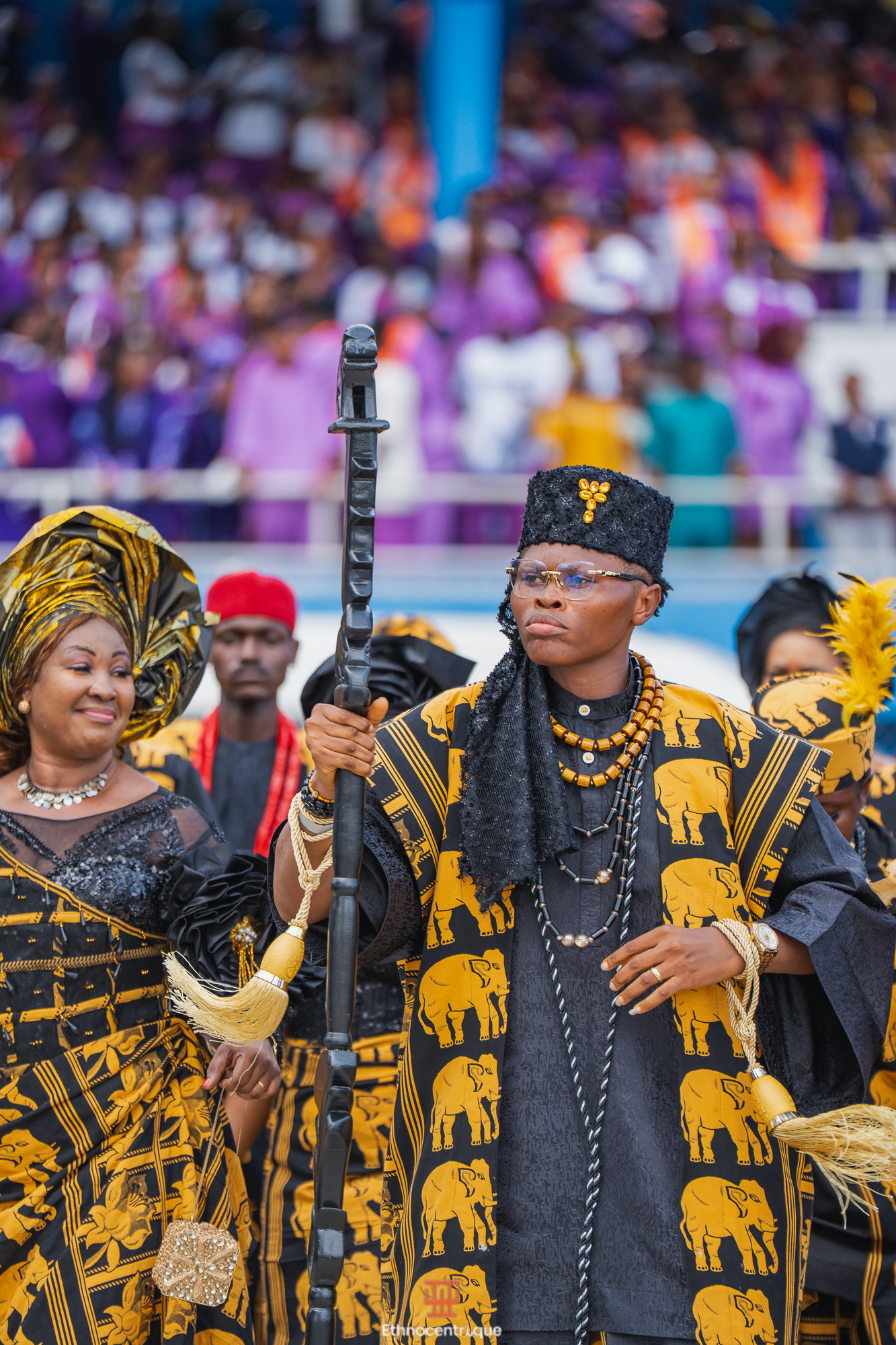
There is a city in southeastern Nigeria making fashion at a scale the global industry has spent decades refusing to see.
Aba does not carry the institutional signals that fashion uses to identify a capital. It has no internationally televised fashion week. No permanent circuit of European buyers. No press office translating local manufacturing expertise into language that Paris, Milan, London or New York immediately recognises as valuable.
What it has is more important.
Across Ariaria International Market, Garment Village, Ekeoha Shopping Centre and surrounding workshop districts, Aba operates as a dense production ecosystem. Garment makers, shoemakers, bag makers, leatherworkers, pattern cutters, embroiderers, printers, material suppliers, traders, apprentices, repairers, transporters and retailers work within an interconnected commercial system built through practice rather than outside recognition.
Aba’s fashion industry is not a craft village. It is a supply chain.
Aba does not lack fashion infrastructure. It has built one. What it lacks is the recognition, investment and market access that would allow that infrastructure to compete on fairer terms.
That distinction matters. “Craft” can be a respectful word when it names skill, patience and technical knowledge. But global fashion often uses it as a diminishing label for production systems outside Europe and North America. The word becomes a way to make large-scale manufacturing look small, informal enterprise look unserious, and African industry look like a charming exception rather than part of the world’s fashion economy.
Aba should not be treated as an exception.
It is one of the clearest examples of the wider argument in The Global South Made Fashion. It Just Never Got Credit. The Global South has never lacked creative skill, entrepreneurial energy or production capacity. It has been denied the systems of attribution, capital, infrastructure and international access that transform local expertise into globally recognised power.
Aba’s garment and leather economy is a serious Nigerian supply chain, not a craft village waiting for global fashion to notice.
Aba Is an Ecosystem, Not a Single Market

Ariaria International Market sits at the centre of Aba’s popular image, particularly as a destination for footwear, garments, bags and leather goods. But the city’s manufacturing life cannot be contained within one market.
Aba functions through linked zones. The finished leather-goods cluster is concentrated around Ariaria, while garment production operates across areas including Garment Village and Ekeoha Shopping Centre. Cluster mapping of Aba’s fashion and leather economy shows suppliers, workshops, traders, and service businesses that connect these areas into a wider production economy. This spatial structure matters because it explains how Aba actually works.
Aba does not fit the familiar image of a single giant factory operated by a single multinational company. Its manufacturing knowledge sits across hundreds or thousands of small and medium-sized businesses. One workshop may specialise in men’s trousers. Another may handle uniforms. Another may focus on bags, women’s footwear, screen printing, embroidery, cutting, finishing, branding, packaging or repairs.
The system is decentralised, but decentralised does not mean disorganised. Workers know where to source materials. Traders know which workshop can make which product. Buyers know where different quality tiers sit. Apprentices learn from established makers before opening their own businesses. Production moves through relationships, reputation, referrals and specialised local knowledge.
That is a supply chain. The term should not require a glass-fronted industrial park before it becomes acceptable to fashion media. Supply chains include networks of labour, inputs, knowledge, production, finishing, distribution and sale. Aba has all of them.
What Aba Actually Makes
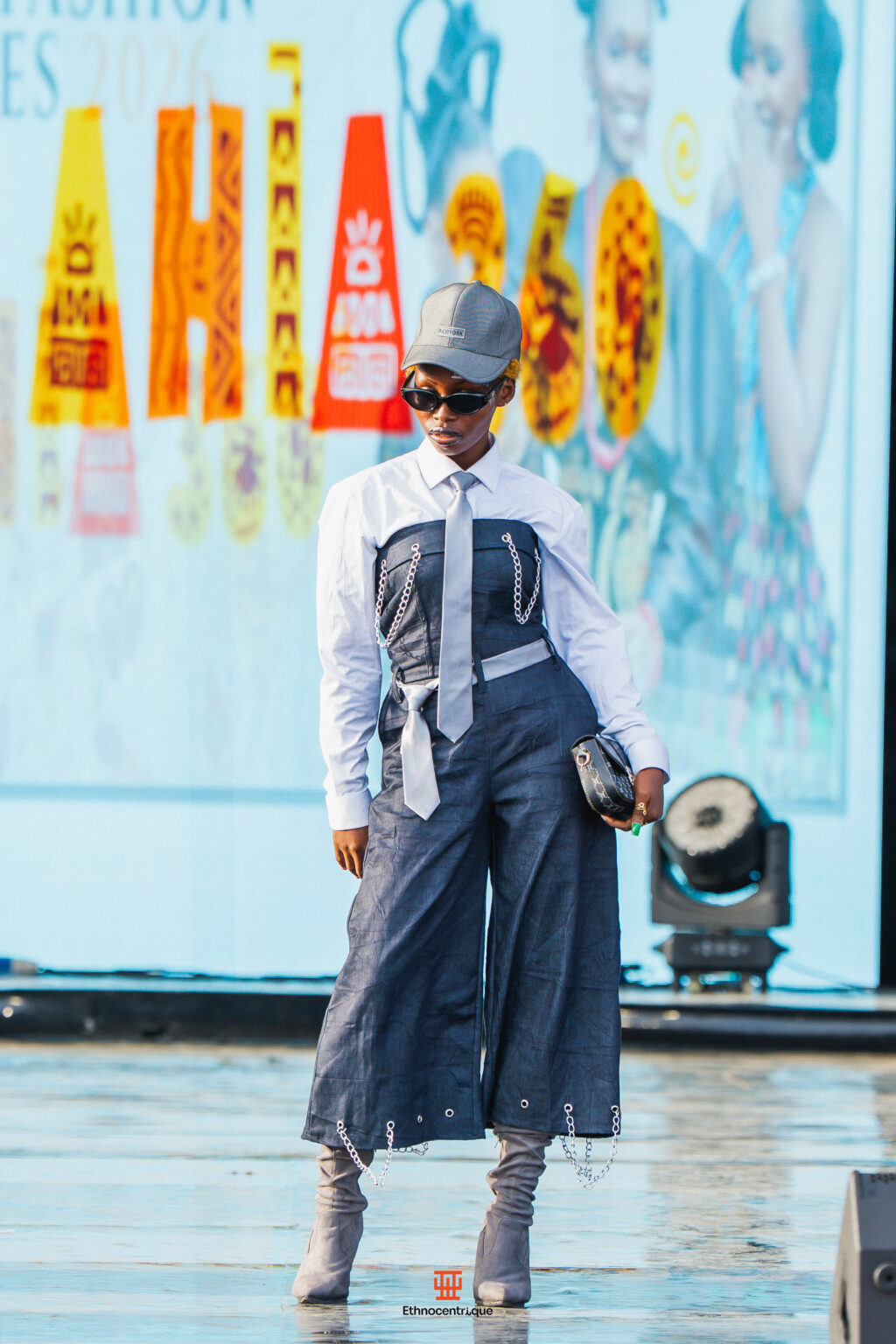
Aba produces far more than replica goods and low-cost footwear, though those narratives have often dominated coverage outside the country.
The city’s garment and leather economy includes school uniforms, workwear, casual clothing, ready-to-wear pieces, traditional garments adapted for contemporary customers, shoes, belts, bags, luggage and leather accessories. Its output serves local consumers, Nigerian markets and buyers across West and Central Africa. A 2018 mapping study of the Made-in-Aba cluster identified two clusters: garment-making and leather-goods, each with distinct production characteristics, business networks, and constraints. It was designed to document how the cluster formed, grew, and achieved relative success despite serious obstacles to productivity and scale.
The depth of specialisation is one of Aba’s strengths. A garment maker does not need to perform every task alone. The ecosystem enables work to move among people with different skills: cutting, sewing, printing, embroidery, finishing, repairs, embellishment, packaging, and distribution. That division of labour allows small businesses to respond quickly to demand without replicating the entire machinery of a vertically integrated factory.
Aba serves price-sensitive consumers, and low-cost production is part of its commercial reality. But this does not mean every Aba-made garment belongs to the same quality category. Workshops differ in machinery, materials, finishing, construction, experience and customer base. Better-skilled producers can make work that competes with imported goods, particularly when buyers value fit, customisation, speed and local knowledge.
The idea that Africa produces only raw materials while elsewhere produces finished fashion has never accurately described Aba. As Omiren Styles has documented in its analysis of the Lagos fashion market, Nigeria’s apparel market was valued at approximately $8.8 billion in 2025, with local manufacturers producing garments for a large, increasingly demanding consumer base. Aba sits at the heart of that economy’s production.
Ariaria’s Labour Is Skilled Labour
Behind every shoe, uniform, dress, bag or pair of trousers sits labour that requires time to learn.
Aba’s apprenticeship system is central to that process. Young people enter workshops, learn specific trades through sustained practical experience and eventually establish independent enterprises. This route does not always produce formal certification, but it does produce technical ability, business knowledge, supplier relationships, and a deep understanding of what local markets demand.
That matters because international supplier frameworks often mistake paperwork for skill. A buyer working from a conventional compliance template may ask for factory certifications, audited systems, formal employment records and documentation designed around large manufacturers. Those safeguards can matter. Workers deserve safe conditions, fair treatment and credible labour protections. But a framework built only for large factories can fail to recognise capable producers operating in a cluster-based economy.
Aba’s leather sector illustrates the scale. Research identifying Aba’s leather sub-clusters found multiple specialised zones around the city, including sites for women’s footwear, men’s footwear, belts, bags, and furniture, and estimated 3,950 leather businesses across the identified sub-clusters, with average employment ranging from 3.7 to 4.9 workers per business.
Other estimates suggest the leather sector is one of West Africa’s largest. As Business Day Nigeria has reported, industry figures cite approximately 110,000 shoemakers and 50,000 garment makers in the city. Those figures should be treated as indicative rather than definitive, but they point to the same conclusion: Aba’s production economy is too large to be dismissed as marginal. The city does not need inflated mythology. It needs accurate measurement.
The Counterfeiting Story Obscures the Real One

Aba’s association with counterfeit luxury goods is real. It should not be ignored or romanticised.
For decades, some producers in the city have made imitation-branded footwear, bags, and clothing. This has legal, ethical and commercial implications. It also makes for easy copy for international media: fake labels, imitation logos, a story of African manufacturing as derivative rather than inventive. But that story has become too dominant.
When outside observers reduce Aba to counterfeiting, they erase the city’s legitimate production capacity. They overlook the manufacturers producing unbranded goods, private-label work, uniforms, locally designed footwear, custom clothing, bags, belts and garments for regional markets. They also avoid the harder question: why has a city with such dense making capacity received so little sustained investment in branding, certification, equipment, training, quality control, export logistics and original design development?
Counterfeiting thrives in environments where demand for branded goods exceeds consumer purchasing power and where original local manufacturing lacks the institutional support required to build trusted alternatives at scale. That does not justify it. It does explain why the solution requires more than condemnation.
Aba’s makers do not need another article that treats imitation as their defining talent. They need conditions that make original production commercially viable. This connects directly to Who Really Owns Ankara? Ankara’s cultural significance was shaped in African markets, but much of the industrial value associated with the fabric remains outside the continent. The same gap appears in Aba: local makers hold knowledge, labour and demand, while external systems often control the highest-value parts of branding, financing, industrial equipment and market access. And as Oaxacan Weaving Is Not a Trend documents, the pattern of communities holding creative knowledge while external institutions capture economic value is not unique to Nigeria. It is a structural feature of how the global fashion system has been built.
A Supply Chain Under Pressure

Aba’s businesses operate with considerable resilience, but resilience should not become a euphemism for abandonment.
Manufacturers face persistent challenges: an inconsistent power supply, high fuel costs, limited access to affordable financing, expensive materials, insecure transport routes, weak infrastructure, inconsistent quality standards, limited export support, and competition from lower-priced imports. These constraints raise production costs and limit producers’ ability to plan, expand, or reliably meet larger orders.
Industrial clusters usually thrive when public policy recognises them. They need stable energy, roads, shared equipment, skills development, testing facilities, accessible credit, export support, quality-control systems and buyer connections. Aba has received some institutional support. The United Nations Industrial Development Organisation established a Common Facility Centre in Aba to improve production knowledge and support leather and garment clusters. That recognition matters, but it is not equivalent to the sustained industrial strategy required for a production hub of Aba’s size.
Fashion should understand this as an industry issue, not a charity issue. Aba does not require sympathy. It requires commercially intelligent investment. As Omiren Styles has argued in its analysis of African fashion investment in Lomé and across the continent, institutions now beginning to recognise African fashion as an economic sector, including Afreximbank and development bodies, are building frameworks that could eventually reach cities like Aba. But framework-level recognition must translate into operational investment at the city and cluster level.
Designers Need Manufacturers They Can Trust

African designers increasingly build brands that ask global audiences to take African fashion seriously. But design ambition cannot survive on image alone. It needs production.
The connection between Aba’s manufacturing capacity and the work of designers in Lagos, Accra, Nairobi, Johannesburg, Dakar and across the diaspora should be a major strategic conversation in African fashion. A strong regional network could help designers access smaller production runs, skilled makers, local materials, rapid prototyping and supply relationships that keep more value within African economies.
As Omiren Styles has argued in its analysis of what buyers need before they take on an independent label, the operational infrastructure required for international wholesale, including reliable delivery, consistent quality, clear pricing and responsive account management, cannot be built on creative ambition alone. It requires production partners that designers can trust. Aba has the workshop density to provide that. What remains missing is the bridge between creative direction, technical production, quality assurance, finance and market access.
Kenneth Ize’s work with aso-oke weaving communities in southwestern Nigeria offers one model of what locally rooted production can achieve. His practice demonstrates that African materials and makers can sit at the centre of a global fashion proposition rather than serving as decorative proof of authenticity. The lesson for Aba is not that every workshop should become a luxury atelier. The lesson is that African production systems deserve the full range of fashion investment: affordable mass manufacture, reliable uniforms, local brands, private-label production, high-quality ready-to-wear, export capability, technical innovation and, where appropriate, luxury craft. A supply chain is strongest when it contains multiple routes to value.
The Omiren Argument
The global fashion industry spends enormous energy mapping production elsewhere. It knows which factories make denim in Turkey, knitwear in Italy, luxury leather goods in France, fast fashion in Bangladesh and footwear in Vietnam. It should apply the same curiosity to Africa’s manufacturing ecosystems.
That begins with better language. Aba is not “informal” because it lacks intelligence. It is a complex economy operating through networks that formal institutions have not adequately supported or measured. It is not “artisanal” because its makers lack industrial capacity. It is a cluster-based manufacturing system whose skills and commercial relationships have developed outside the models of global fashion that are easiest to recognise.
What serious attention would look like is practical: buyer programmes that introduce credible Aba manufacturers to African and international brands; shared facilities for machinery, testing, finishing, product development and quality assurance; accessible finance for equipment, materials, larger orders and expansion; training that strengthens safety, labour conditions, documentation and export readiness; support for original brands, design registration and intellectual-property awareness; better power, logistics and transport infrastructure; research that measures Aba’s output, employment and economic contribution accurately; and fashion journalism that documents the businesses, workers and supply networks behind the product. As Omiren Styles has argued in its analysis of why visibility alone fails African fashion brands, market power for African fashion businesses requires capital, manufacturing infrastructure, logistics systems and commercial relationships that editorial attention alone cannot provide.
The makers in Aba are not waiting to be discovered. They have been building an economy from skill, relationships, adaptation and demand. As Omiren Styles has documented in its analysis of the artisan economy, recognising the labour behind fashion requires treating making as authorship, not as a service that occurs below the level at which credit is given. Aba’s workshops have trained generations. Its markets have connected producers with buyers. Its businesses have responded to local needs that international brands often ignore. That is not a minor achievement. It is industrial knowledge.
And as Dancehall Dressed the World First argues in the context of Caribbean creative labour, the question of attribution is not symbolic. It determines who gets commissioned, who gets funded and whose operational expertise is treated as professional knowledge rather than informal improvisation. The global fashion industry does not need to discover Aba. It needs to stop pretending it was never there.
ALSO READ
- The Global South Made Fashion. It Just Never Got Credit.
- Who Really Owns Ankara?
- Oaxacan Weaving Is Not a Trend. It Is a Textile System.
- Dancehall Dressed the World First
- Visibility Is Not Market Power: Why Global Attention Still Fails Independent African Fashion Brands
- The Lagos Fashion Week Effect: What a Decade of Runway Has Actually Done for Nigerian Designer Revenue
Frequently Asked Questions
What does Aba, Nigeria actually manufacture and who does it supply?
Aba produces school uniforms, workwear, casual clothing, ready-to-wear garments, traditional clothing adapted for contemporary consumers, shoes, belts, bags, luggage and leather accessories. Its output serves local consumers, Nigerian markets and buyers across West and Central Africa. The Made in Aba cluster mapping study identifies two distinct production clusters: a garment cluster operating in areas such as Garment Village and Ekeoha Shopping Centre, and a leather-goods cluster concentrated around Ariaria International Market. The system is decentralised across hundreds or thousands of small- and medium-sized businesses, with specialised roles in cutting, sewing, finishing, printing, embroidery, and distribution.
How large is Aba’s leather and garment economy?
The scale is significant by any measure. Research on Aba’s leather sub-clusters identified 3,950 leather businesses across the identified sub-clusters, with average employment of 3.7 to 4.9 workers per business. Industry estimates cited in Business Day Nigeria suggest that there are approximately 110,000 shoemakers and 50,000 garment makers in the city. These figures are indicative rather than definitive, reflecting the difficulty of accurately measuring a dynamic, decentralised economy. They point consistently to a production hub that is too large to be treated as marginal.
Why is Aba described as a supply chain rather than a craft cluster?
A supply chain is a network through which labour, materials, knowledge, production, finishing, distribution and sale are organised to deliver a product to market. Aba has all of these elements: specialist workshops, material suppliers, traders, transporters, quality tiers, buyer networks and commercial relationships that allow production to flow between businesses with different skills. The word “craft” often implies a single maker working alone, an aesthetic tradition, or a product type outside mainstream commerce. Aba’s production system is decentralised but commercially structured, serving regional markets at scale. Calling it a craft cluster diminishes what it is. Calling it a supply chain accurately describes how it functions.
What structural challenges limit Aba’s manufacturing capacity?
Aba’s manufacturers face persistent constraints: inconsistent power supply and high fuel costs raise operating expenses across every workshop; limited access to affordable finance prevents investment in better machinery and larger orders; expensive and largely imported materials expose businesses to exchange-rate pressure; insecure transport routes and weak logistics infrastructure complicate delivery and export; inconsistent quality standards across the cluster create reputational challenges with buyers who need reliability; and competition from lower-priced imports, particularly from China, undercuts local pricing in price-sensitive market segments. These are infrastructure and investment problems, not evidence of limited capacity or ambition.
How does Aba relate to broader African fashion manufacturing?
Aba represents one of the clearest examples of what the Global South has always held and the global fashion industry has consistently overlooked: production capacity, technical skill, commercial knowledge, and supply infrastructure that could support African designers’ ambitions and regional fashion markets. As Omiren Styles has argued in its analysis of Global South fashion authorship, the Global South has never lacked creative skill, entrepreneurial energy or production capacity. It has been denied the systems of attribution, capital, infrastructure and international access that transform local expertise into globally recognised power. Aba is part of that record. Building a stronger bridge between Aba’s manufacturing capacity and the commercial ambitions of African designers represents one of the most strategically important conversations in African fashion.
What kind of investment would actually help Aba’s fashion economy?
Investment that helps Aba must align with the actual structure of its economy rather than importing frameworks designed for large, vertically integrated factories. Shared facilities for machinery, testing, finishing, product development and quality assurance would raise standards across the cluster without excluding small producers. Accessible financing for equipment, materials, and larger orders would enable credible workshops to grow. Buyer introduction programmes connecting Aba manufacturers with African and international brands would create direct market relationships. Training that strengthens safety, labour conditions, documentation and export compliance would make producers more competitive internationally. Improved power supply, transport infrastructure, and logistics would reduce the operating cost premium that every Aba workshop currently bears.
EXPLORE MORE
Read the full “The Lens” and “Fashion > Power” sections at Omiren Styles for ongoing analysis of African manufacturing, fashion authorship, and the political economy of Global South creativity. Discover travel and heritage intelligence across Nigeria and Africa at Rex Clarke Adventures.