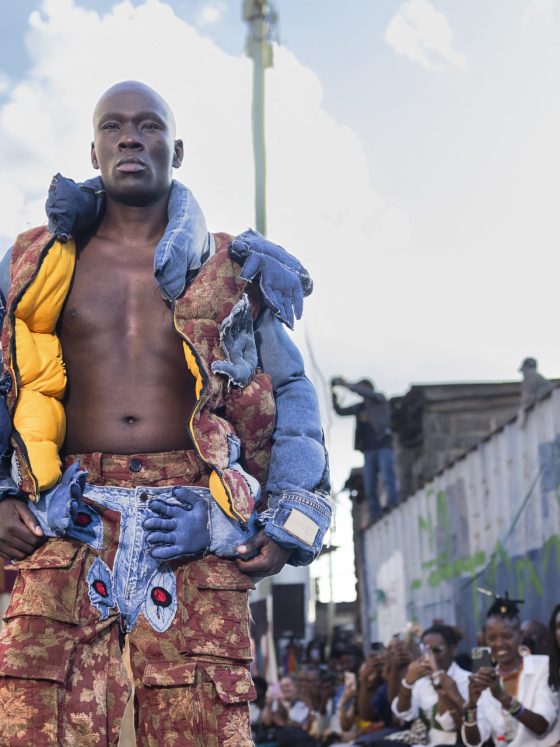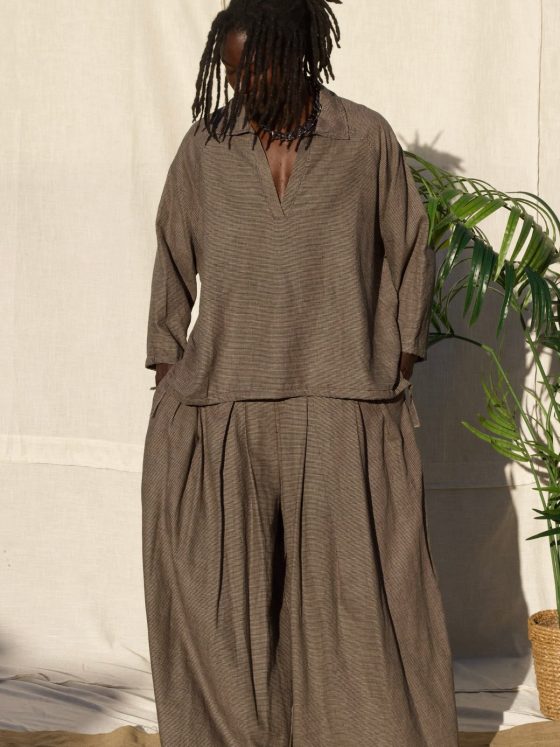
The conversation about getting independent African designers in front of buyers has become more productive. The conversation about what happens once they get there has not.
Runway invitations, editorial features, celebrity placements, and social media visibility can open the first door. But once a buyer is interested, the questions change quickly. The conversation becomes less about aesthetic originality and more about pricing, fulfilment, production capacity, payment terms, compliance and operational risk.
Can the brand deliver the order? Can it deliver at the agreed price? Can it produce enough units without compromising quality? Can it ship internationally, meet customs requirements and respond if something goes wrong? Can it survive the payment terms that wholesale often requires?
These are not secondary questions. They are the buyer’s job.
And they are where many independent African fashion labels, despite strong collections, cultural relevance, and growing international recognition, encounter the limits of the surrounding infrastructure.
As “Visibility Is Not Market Power” argued, global attention does not automatically translate into commercial power. A feature can create demand. A buyer conversation can create possibility. But sustained distribution requires the ability to price, produce, ship, finance and service a wholesale relationship over time.
That is commercial readiness. It is not a concession to commercialism, nor is it an argument that creativity should become secondary to sales. It is the condition that allows a creative business to remain independent long enough to grow on its own terms.
Buyers assess pricing, delivery, margins and operational readiness before creativity. Here is what independent African fashion labels need in place before the buyer conversation begins.
The Buyer Is Not a Talent Scout
The first mistake many independent labels make is misunderstanding what a buyer is employed to do.
A wholesale buyer at a boutique, department store, concept store or multi-brand e-commerce retailer may care deeply about independent designers. They may genuinely want to bring new perspectives, cultures and aesthetics into their assortment. They may be excited by a collection and committed to diversifying who gets stocked.
But their role is not primarily to discover talent. Their role is to build a product offer that sells.
They are responsible for buying merchandise customers want, at price points those customers will accept, with margins that make the retailer viable. They are accountable for delivery dates, inventory levels, sell-through, markdown risk, product quality and the commercial performance of every brand they take on.
A buyer is not simply asking, “Is this collection beautiful?” They are asking, “Will this product sell in our market?” Can the customer understand the price? Does the product sit clearly within our current brand mix? Can the label meet our delivery window? Is the wholesale margin viable? What is the minimum order requirement? Can the supplier replenish a successful style? Who absorbs the cost if stock arrives late, damaged or incomplete? Does the brand have the necessary paperwork, labelling and product information? Is this a one-season discovery, or the beginning of a stable supplier relationship?
The creative work must still be compelling. No amount of operational preparation can rescue an incoherent collection, weak product photography or unclear brand positioning. But creativity is an entry point, not a substitute for commercial readiness.
A buyer may admire a brand and still decline to place an order. That is not necessarily a rejection of the designer’s work. It may be a judgment that the business is not yet equipped to meet the terms of the relationship.
The problem is that “not yet” is often communicated poorly, if at all. Independent brands are left believing that a buyer simply did not understand the collection, when the actual obstacle was an unworkable margin, an unclear delivery date or the absence of a line sheet.
Price Architecture Comes First
The most common point at which an independent-label buyer conversation breaks down is price. Not because the designer is charging too much. Not always because the buyer is asking too much; more often, it is because the brand has not built a price architecture that works across both direct-to-consumer and wholesale channels.
A fashion label needs to know four figures before it approaches a buyer:
| Commercial measure | What it means | Why a buyer cares |
| Unit cost | The full cost of making one item, including materials, labour, trims, packaging and an appropriate share of overhead | Shows whether the product can be made profitably |
| Wholesale price | What the retailer pays the brand per unit | Determines the brand’s margin and the retailer’s cost |
| Recommended retail price | What the final customer is expected to pay | Determines whether the product is viable in the target market |
| Retail margin | The difference between the retailer’s cost and the final selling price | Determines whether the retailer can cover operating costs and make a profit |
The familiar wholesale model is often described as keystone pricing: the wholesale price is roughly 50% of the recommended retail price. Faire’s wholesale guidance explains the basic keystone approach as a wholesale price equal to 50% of the retail price, while stressing that brands need to account for their own costs and a minimum profitable selling price.
Consider a designer who produces a dress at a total cost of £115. That figure includes fabric, labour, trims, labels, packaging, quality control, studio overhead and local transport. The brand sells the dress directly to customers for £300.
Direct-to-consumer, the margin may appear workable. But a retailer will not pay £300. The retailer needs its own margin. If the wholesale price is £150, the retailer may sell the dress at £300. That leaves the label with only £35 per unit after accounting for export freight, duties, sample development, commissions, payment delays, currency conversion, and unexpected production costs.
The brand may technically make a profit. It may not make enough profit to survive.
This is why a label cannot begin with a direct-to-consumer retail price and simply halve it when a buyer asks for wholesale terms. The resulting wholesale price may be commercially impossible for the brand.
The better process is to work backwards: calculate the actual unit cost; establish the minimum gross margin the brand needs at wholesale; set a wholesale price that protects that margin; apply the retailer’s expected markup; and assess whether the resulting retail price makes sense in the target market. If it does not, reconsider the product, production method, distribution channel or target retailer before agreeing to a deal.
This is where brands protect themselves from the false prestige of a purchase order that costs them money.
Wholesale Is a Cash-Flow Test

A buyer may be ready to place an order. That does not mean the order is ready for the brand.
Wholesale reverses the cash-flow logic of direct-to-consumer sales. In direct retail, a customer pays before or at the time the product is delivered. In wholesale, a brand may need to finance production long before payment arrives. The designer purchases fabrics, pays makers, produces inventory, completes packaging, manages quality control and pays for freight. Only after the goods are delivered, and often after an agreed payment period, does the retailer pay.
Payment terms vary. Some independent retailers may accept deposits, pro forma invoices, or payment on delivery. Larger retail businesses may expect net-30, net-60 or net-90 terms. As Omiren Styles has documented in its analysis of why visibility alone fails African fashion brands, payment term structures are among the central mechanisms by which independent brands lose money on orders that should have been profitable.
A £20,000 wholesale order may look like growth. But the label may need to spend £12,000 to £15,000 before receiving any revenue from it. If payment arrives months after delivery, the brand needs sufficient capital to continue operating while waiting.
That is why a label should never discuss payment terms as an afterthought. Before approaching buyers, it should know whether it can accept net-30 terms; whether it can accept net-60 or net-90; whether it needs a deposit before production begins; what percentage deposit is required to fund materials and labour; whether it can offer staged deliveries; whether it has access to working capital if an order is larger than expected; what payment methods it can receive reliably; and how foreign-exchange conversion affects final revenue.
If the buyer’s terms and the brand’s reality cannot coexist, the relationship is not yet commercially ready. That may mean negotiating, starting with a smaller order, finding a boutique buyer rather than a department store, or prioritising direct-to-consumer sales until the business has enough working capital to support wholesale.
It is better to say no to an unsustainable order than to accept it and risk damaging the business, the customer relationship, and the brand’s reputation.
Delivery Reliability Is the Product
Buyers do not only buy a collection. They buy the promise that it will arrive.
A beautiful collection delivered three weeks late can create a serious problem for a retailer. Fashion calendars are planned around seasons, launches, campaigns, events, floor sets, newsletters, staff training and customer demand. Late stock can miss the commercial moment for which it was purchased. A summer collection arriving after the retailer has moved on to autumn stock creates markdown risk. An incomplete delivery leaves gaps in a carefully planned merchandise assortment.
Delivery reliability is not merely a shipping issue. It is the combined performance of the entire production chain: whether the brand can source materials consistently; whether it has more than one supplier for critical components; whether the factory or atelier can meet the agreed volume; whether there is quality control before goods leave production; whether sizes are consistent across the order; whether packaging is ready on time; whether commercial invoices, packing lists and customs documents are accurate; whether freight has been booked with enough lead time; and whether the business can communicate honestly and quickly when a problem arises.
This is especially consequential for labels operating across African and international markets, where material supply, foreign-exchange access, manufacturing capacity, shipping costs, border delays and customs procedures may create additional uncertainty. As Omiren Styles has documented in its analysis of African diaspora brands managing cross-border fulfilment, the fulfilment gap is one of the most underdiscussed structural constraints in African fashion. UNESCO identifies logistics, infrastructure and trade procedures as continuing constraints on the growth of African fashion businesses.
But buyers experience the consequence, not the context. If the delivery fails, the buyer’s floor is empty. That is why brands must turn structural risk into a credible operating plan.
A buyer does not need an impossible promise that nothing will go wrong. Experienced buyers know that production and freight disruptions happen. They need evidence that the label knows where the risks are and can manage them professionally.
“We build a two-week production buffer into confirmed delivery dates. We use a nominated freight partner, prepare commercial documents before collection, and send dispatch confirmation and tracking within 24 hours. If there is a material delay, we notify the buyer as soon as we know, provide a revised delivery date and discuss partial shipment where appropriate.”
That answer is more reassuring than vague confidence.
MOQ Is a Positioning Decision
Minimum order quantities are often misunderstood. A minimum order quantity, or MOQ, is the smallest number of units a buyer must order for a product, style or case pack. An order minimum is different: it is the minimum monetary value a buyer must spend across an order.
Faire defines MOQ as the smallest number of units a retailer must purchase, while an order minimum refers to the minimum spend required to place an order. Brands can set these differently for first orders and reorders.
For an independent fashion label, MOQ is not simply a number to put on a line sheet. It is a decision about production capacity, margin and the kind of buyer relationship the business can support.
A small, independent boutique may be willing to trial a label with 6-12 units across several styles. A larger concept store may need a higher opening order value. A department store may require a larger buy, greater size depth, more complete colour availability and more consistent replenishment. No one number is standard across fashion.
The correct MOQ is the one that allows the brand to make, pack, and deliver an order without incurring a loss. A label that produces artisanal, small-batch work may not be ready for a department-store order, even if the brand has the aesthetic profile for it. That is not failure. It is a signal to target the right retail tier first.
The wrong move is accepting a large MOQ because the retailer’s name carries prestige, only to discover that the business cannot finance material purchases, secure sufficient production time, maintain quality at volume, deliver all sizes and colourways, cover freight and documentation costs, or reproduce successful styles on demand.
A small boutique with realistic order sizes, thoughtful customer alignment and prompt payment may be a far better first wholesale partner than a large retailer with demanding terms. The first wholesale relationship should be designed to teach the brand how wholesale works. It should not be designed to impress social media.
What Must Be Ready
Before approaching a buyer, an independent label should be able to answer the following questions without improvising.
1. Do you have a usable line sheet?
A line sheet is the commercial document that turns a collection into an orderable assortment. It should include: style name and style code; product images, ideally on a white background and in context; wholesale price; recommended retail price; available sizes; available colourways; fabric composition; care information; country of origin; MOQ by style, colour or size where relevant; order minimum; delivery window; payment terms; contact information; and shipping terms where appropriate.
A lookbook sells the brand’s world. A line sheet sells the product. A buyer needs both, but they do different jobs.
2. Do your prices work at wholesale?
Know the full unit cost and do not omit difficult expenses. Include materials, labour, trims, labels, packaging, sampling allocation, quality control, studio overhead, local delivery, export documentation, insurance, payment fees and expected freight contribution. Then test whether the wholesale price leaves the brand with a viable margin after all those costs; if not, rebuild the product economics first.
3. Can you state a realistic lead time?
A lead time is not the shortest possible production time under perfect conditions. It is the time the brand can reliably meet, including fabric sourcing, production, finishing, quality control, packing, documentation and freight collection. Overpromising is worse than offering a longer but dependable lead time. A buyer can plan around 10 weeks if they know it is truly 10 weeks. They cannot plan around six weeks that repeatedly becomes 12.
4. What are your payment terms?
State whether you require a deposit at order confirmation; payment before dispatch; net-15, net-30 or other terms; a balance payment before shipment; currency-specific invoicing; or bank transfer, card or another approved payment method. The terms should be clear enough that neither party is surprised after the order is placed.
5. Can you meet compliance requirements?
Product compliance is not decorative administration. Different territories have different requirements regarding fibre content, care labels, country-of-origin marking, safety, product claims, packaging, customs codes, and commercial invoices. Requirements can vary across the United Kingdom, the European Union, the United States, and other markets. A brand should confirm the requirements for the market it is entering rather than assume a label suitable for one territory will work in another.
6. What happens when something goes wrong?
Every buyer understands that problems happen. The red flag is not the existence of risk. The red flag is a brand that doesn’t respond. Before approaching a buyer, establish policies for damaged goods, incorrect deliveries, delayed shipments, cancelled orders, returns, credits, repairs and reorders. The policy should be realistic, written and consistent with what the brand can actually afford to honour.
7. Is your brand positioning clear?
A buyer needs to understand who the customer is; what problem, desire or point of view the brand serves; where the product sits in price and category; which brands are comparable; whether the collection is occasionwear, resort, contemporary ready-to-wear, luxury, accessories, bridal, menswear, gender-fluid fashion or another category; why the brand belongs in that specific retailer; and what the label intends to become over the next two to three years. A compelling brand story is valuable. It has greater power when the business behind it is ready.
The Structural Problem Behind Readiness
It would be too easy to frame commercial readiness as an individual designer’s responsibility alone. Independent African labels are not operating on a level playing field.
Many have had to build businesses without the business education, factory networks, trade associations, showroom systems, export support, legal advice, investor networks and financing structures that designers in established fashion markets can access more readily. The commercial gaps are not evidence that African designers lack seriousness. They are evidence of what it takes to build a business with an incomplete support system.
A label can be creatively excellent and still lack access to a production manager. It can have international press and still not qualify for a bank loan. It can receive an order from an overseas retailer and still have no affordable way to finance the materials before payment is received. As Omiren Styles has argued in its analysis of African fashion brands and international retail access, the structural conditions for international wholesale placement require specific forms of institutional support that most independent labels lack.
That is why buyer readiness cannot be treated as a private problem for designers to solve by determination alone. It requires institutional support. Fashion schools need stronger business education. Industry associations need to provide legal, pricing, export and compliance guidance. Governments and development bodies need to create financing designed for creative businesses with seasonal inventory cycles. Retailers need to offer fairer and more realistic terms for smaller suppliers. Logistics providers need services that work for small brands, not only major exporters.
The African Development Bank’s Fashionomics programmes have explicitly recognised fashion businesses as part of the continent’s wider creative economy and have targeted finance, market access, skills and investment readiness as practical needs. That is the direction of travel. But brands should not wait for the system to become perfect before preparing for buyers.
The independent label that understands its true costs, delivery capacity, order minimums, payment terms, and production limits enters the conversation with more power than one that relies solely on creative acclaim.
The Omiren Argument
Getting in front of a buyer is an achievement. It means the collection has attracted interest. It means someone believes there may be a commercial relationship worth exploring. It can be the beginning of a new market, a new customer base and long-term distribution.
But it is not the finish line. The buyer meeting is where the brand’s real preparation becomes visible.
The strongest independent labels do not approach wholesale as a request for validation. They approach it as a proposal for a workable partnership. They know what they can produce. They know what they cannot yet produce. They understand their prices. They do not agree to delivery dates they cannot meet. They have a position on payment terms. They target retail partners that fit their actual scale. They communicate early when something changes. As Omiren Styles has documented in its analysis of what Lagos Fashion Week has actually done for Nigerian designer revenue, the gap between runway recognition and sustained distribution is closed not by visibility alone but by the operational infrastructure that converts attention into repeatable commercial outcomes.
That is no less creative. It is how creativity becomes a business capable of surviving its own success. The talent is not the problem. It never was.
ALSO READ
- African Designers Buyers Should Act On in 2026: A Three-Tier Shortlist
- The Lagos Fashion Week Effect: What a Decade of Runway Has Actually Done for Nigerian Designer Revenue
- The African Fashion Brands in the Diaspora That Are Actually Shipping Back to the Continent
- Why European Luxury Houses Invest in Afrobeats Stars but Not African Fashion Infrastructure
Frequently Asked Questions
What do wholesale buyers look for before taking on an independent fashion label?
Wholesale buyers assess commercial readiness before they assess creativity. Their primary concerns are whether the wholesale price leaves both sides with viable margins; whether the label can deliver the confirmed quantity on time and in full; whether the brand has a clear line sheet with accurate product information; whether payment terms are workable for both parties; and whether the brand can meet compliance requirements for the target market. A strong collection is a necessary starting point, not a sufficient one.
How should an independent label approach wholesale pricing?
The correct approach is to work backwards from unit cost. Calculate the full cost of making each item, including materials, labour, trims, packaging, quality control, overhead and a realistic freight contribution. Establish the minimum gross margin required at wholesale. Set a wholesale price that protects that margin. Then apply the retailer’s expected markup and assess whether the resulting retail price works in the target market. Faire’s wholesale pricing guidance describes the keystone model as a starting framework, but warns that brands must account for their own true costs before applying any formula.
Why do wholesale payment terms create cash-flow problems for independent labels?
Wholesale reverses direct-to-consumer cash flow. A brand must pay for materials, production, quality control, packaging and freight before a retailer pays for the goods. With net-30, net-60, or net-90 payment terms, the gap between spending and receiving can be months long. For a £20,000 order, a label may need to fund £12,000 to £15,000 in advance. Without a deposit, a credit line, or a trade finance facility, that gap can threaten the business. Brands should know their payment position before any buyer conversation begins.
What is a line sheet and why does a buyer need one?
A line sheet is the commercial document that turns a collection into an orderable assortment. It lists style name, style code, product images, wholesale price, recommended retail price, available sizes, colourways, fabric composition, care information, country of origin, MOQ, order minimum, delivery window, payment terms and contact information. A lookbook communicates the brand world. A line sheet communicates product terms. A buyer needs both, but the line sheet is what makes an order possible. Without one, there is no transaction.
What is the difference between MOQ and order minimum in wholesale?
A minimum order quantity, or MOQ, is the smallest number of units a retailer must buy of a given style. An order minimum is the smallest total monetary value a retailer must spend across a single order. Faire distinguishes the two clearly: an MOQ of six means the retailer must buy at least six units of a given style; an order minimum of £500 means the retailer’s total basket must reach that value. Brands can set both independently and can offer different thresholds for first orders and reorders.
How should an independent African fashion label approach its first wholesale relationship?
The first wholesale relationship should be designed to teach the brand how wholesale works, not to impress the market. That means targeting a boutique or independent retailer whose order size, payment terms, delivery expectations and customer base match the brand’s actual production capacity. It means starting with a smaller order, understanding the full cost of fulfilling it, and building the operational infrastructure that larger buyers will require later. As Omiren Styles has documented in its 2026 buyer shortlist, the signal of international commercial readiness is a named stockist relationship that endures over time, not a single prestigious placement.
EXPLORE MORE
Read the full Industry section at Omiren Styles for intelligence on African fashion wholesale, distribution infrastructure and the commercial conditions that determine whether independent labels can build sustained market access. Discover travel and heritage intelligence across Africa at Rex Clarke Adventures.