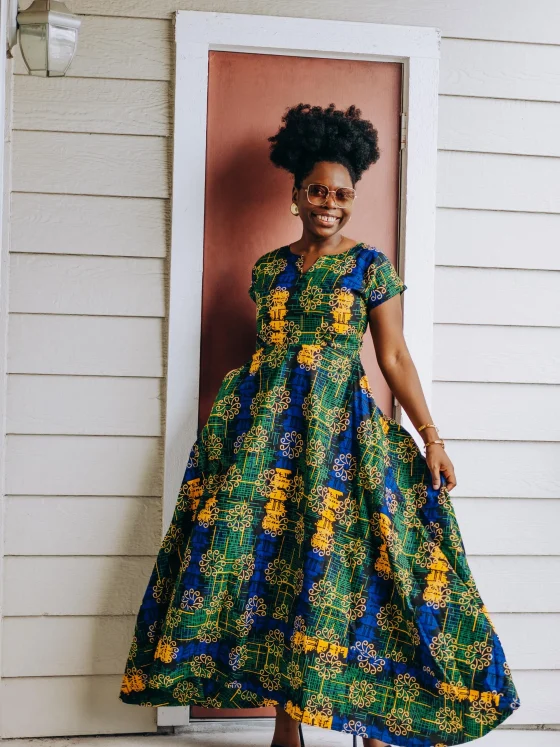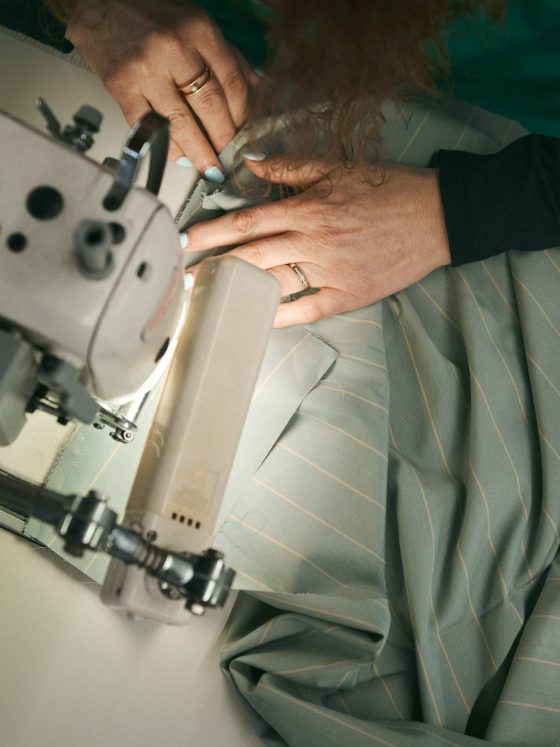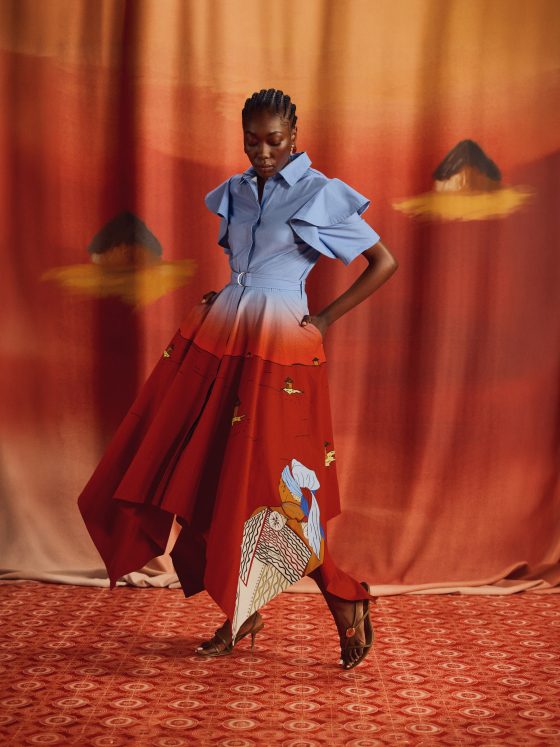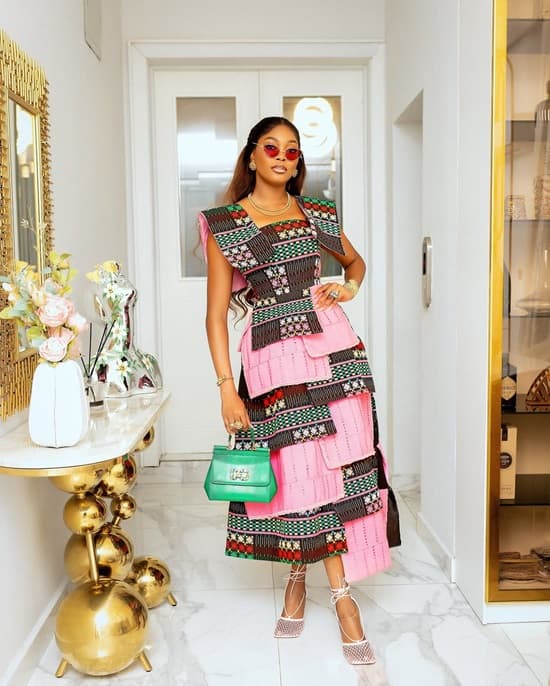
Ankara has never been just a fabric.
It has been a message carried through a market. A public declaration worn to a rally. A record of grief, celebration, party loyalty, family history and political ambition. It has appeared at weddings, funerals, campaign events, independence anniversaries, church services, graduations, and meetings where the wearer needed to convey something that words alone could not capture.
To read Ankara only as pattern is to miss its argument.
For many people outside West and Central Africa, the fabric arrives as colour: vivid prints, strong contrasts, repeating motifs and an immediate visual charge. Fashion often stops there. It calls Ankara “bold,” “expressive,” or “African-inspired,” then moves swiftly on to the next runway reference.
But Ankara carries a political grammar.
The cloth became meaningful because communities made it meaningful. Women traders, tailors, customers, political organisers, families and public figures transformed wax print into a system through which people could signal identity, allegiance, humour, desire, solidarity and dissent. The fabric’s importance did not come from its industrial origin. It came from the social world built around it.
Ankara does not merely decorate African public life. It records who holds power, who resists it and whose story a community chooses to wear.
This is the political dimension of Ankara that fashion coverage often overlooks. The question is not only where the cloth came from, who owns it, or which designer used it in a recent collection. The deeper question is what it has been made to say. The answer begins with refusal.
Ankara has never been just a fabric. Across West Africa, wax print has carried politics, memory, identity and public power.
Ankara Became African Through Meaning

Ankara’s industrial history is complicated. The wax-print fabrics now strongly associated with African identity developed through nineteenth-century European attempts to mechanise Indonesian batik techniques. Academic research on the textile’s transcontinental history documents how Dutch manufacturers directed machine-made wax prints towards West African markets through colonial trading networks after the products failed to secure the buyers they expected elsewhere.
That fact is important. It does not settle the question of cultural ownership.
West African communities did not receive wax print passively. They transformed it. Traders built markets around it. Customers gave prints names. Families and communities attached social meanings to motifs, colours and occasions. Tailors adapted the cloth into silhouettes that reflected local ideas of beauty, status, modesty, confidence and celebration. The fabric became African through use. As Who Really Owns Ankara? argues, manufacture and meaning do not always sit in the same place. A factory may print the cloth, but it cannot create the cultural language that tells a wearer what that cloth says at a wedding, a funeral, a market, a rally or a family gathering. That language emerged through communities.
The political power of Ankara begins there. A fabric becomes political when people use it to communicate publicly and collectively, with enough shared understanding that the message can travel without explanation.
Cloth Can Carry a Public Message
West African wax prints have long functioned as message-bearing textiles. In Ghana and other parts of the region, patterns often acquire popular names and social associations through traders and consumers. A cloth may become linked to romance, marriage, jealousy, economic aspiration, faith, a public figure or an everyday proverb.
That system allows fabric to become a form of communication. A person wearing a named print can make a statement without needing to announce it. The print might not mean the same thing to every observer, and meanings can shift across countries, languages, generations and markets. But the principle remains clear: cloth can hold social knowledge.
Research on Ghanaian women and Dutch wax prints describes these textiles as message-bearing forms whose meanings emerge through the lived experience, creative expression and interpretive practices of women. As Omiren Styles has argued in its investigation of clothing as cultural identity, when heritage textiles move across borders, the questions of credit, authorship and economic participation follow. The pattern is not merely decorative. The name is not merely a sales tool. The wearer is not merely choosing colour. Each decision can sit within a wider system of reference.
That system has political consequences because public life often depends on visual recognition. A fabric linked to a political movement, national moment, leader or campaign can turn the body into a moving sign. It can build a sense of collective presence in streets, meetings, celebrations and public photographs. In this sense, Ankara works as political technology. It allows messages to circulate through material culture.
Independence Changed the Meaning of Dress

Across the twentieth century, African independence movements understood that political sovereignty required more than a new flag, a new anthem or a new constitution. It also required new images of authority.
Colonial rule had imposed hierarchies of dress. European suits, uniforms and formal codes often became associated with official power, education, respectability and access to institutions. African textiles and garments could be dismissed as customary, local or insufficiently modern. Independence challenged that hierarchy.
The decision by political leaders to wear African dress in public did not simply express cultural pride. It contested the colonial idea that seriousness, professionalism and political authority required European appearance. A head of state in locally meaningful cloth could make a visual argument before speaking a word.
Kwame Nkrumah understood this clearly. Fashion Theory’s documented study of Nkrumah’s sartorial politics at Ghana’s independence shows how Ghana’s first prime minister and president created a wardrobe of distinct looks to communicate overlapping traditional, modern, Pan-African, Ghanaian and socialist identities. While he became famous for intricate kente cloths draped like togas, he also wore batakari smocks from northern Ghana and, later, long-sleeved suit jackets in a style known in Ghana as “Zhou Enlai.”
Kente is not Ankara. It belongs to distinct weaving traditions associated particularly with the Akan and Ewe communities in Ghana and Togo. It should never be flattened into a generic African cloth. But Nkrumah’s political use of dress reveals the same wider logic that makes Ankara significant: fabric can carry a national and ideological message.
Scholars have documented how Nkrumah used kente and regional dress to project national unity and decolonisation, including in international settings where colonial assumptions about African leadership remained strong. The clothing was not background to politics. It was politics, made visible. As Omiren Styles has documented in its analysis of how cultural resistance shaped the world’s most powerful style movements, these acts of dress were never merely symbolic. They formed part of a wider argument about who had the right to define what authority looked like.
Ankara Is Politics in an Everyday Register
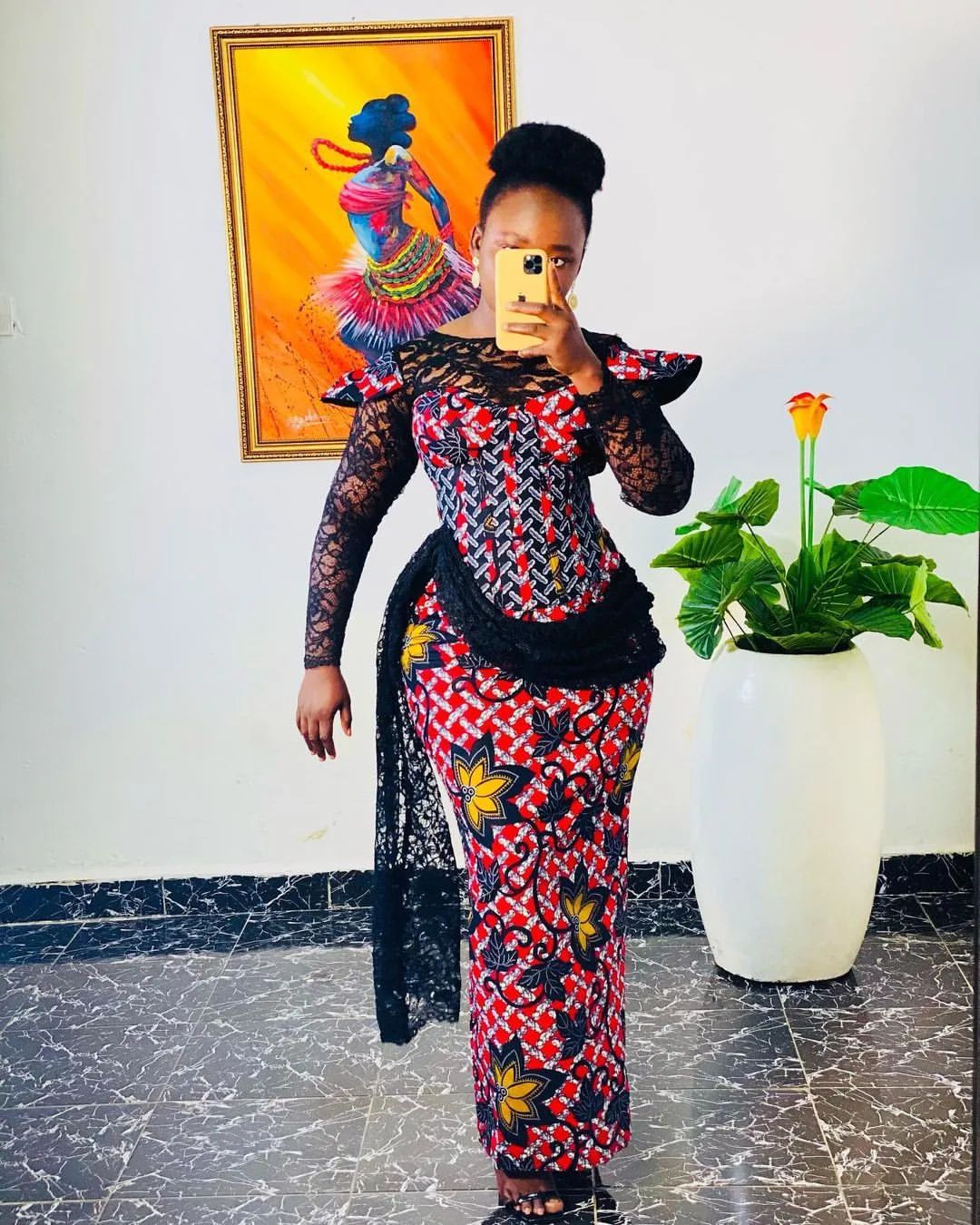
Kente often operates at a ceremonial, diplomatic or formal level. Ankara works differently. It moves through everyday life.
A cabinet minister may wear Ankara to a public event. So may a market trader, student activist, church leader, bride, tailor, teacher or grandmother. That accessibility gives Ankara a democratic political force. It does not belong only to presidents, chiefs or elite ceremonies. It belongs to a public that can purchase it, tailor it, name it, interpret it and make it part of daily social life.
A print made for an election, party celebration, independence anniversary or leadership campaign can circulate widely through ordinary bodies. It turns political affiliation into visual presence. It can create solidarity. It can make a crowd appear unified. It can also create pressure to perform loyalty.
The same fabric can therefore speak in radically different ways depending on context. At one moment, Ankara can express cultural confidence: an assertion that African public life does not need European dress codes to appear modern or authoritative. At another, it can become party uniform: a garment printed with a candidate’s image, slogan or symbol and distributed in ways that make political support highly visible.
The fabric is not automatically liberating or oppressive. It carries the politics of the people and the institutions that use it. That ambiguity is precisely what makes Ankara politically important.
Political Fabric Can Include and Exclude
Fashion writing often celebrates Ankara as a pure symbol of African identity. The reality is more complicated.
Printed campaign cloth has appeared across West and Central African political cultures for decades. Leaders, parties and movements use fabric printed with portraits, logos, slogans and commemorative images to mobilise supporters, mark events and create a unified public image. Research on Ghana’s post-independence political culture documents the development of political dress, or propaganda attire, made from fabrics printed with political, social, religious, and cultural motifs.
The practice can foster pride and a sense of belonging. It can also create discomfort. When political fabric is freely chosen, it may function as collective expression. When it is distributed through patronage networks, work structures, local party organisations or social pressure, the line between choice and compliance can blur. Wearing a leader’s face at a rally does not always communicate the same kind of voluntary endorsement.
Who commissioned the print? Who distributed it? Who wears it? What happens if they do not? Is the fabric worn at a rally, a family event, a state ceremony or an ordinary day in the market? Does the wearer support the message, reject it, parody it or simply use the cloth because it is available? A serious reading of Ankara must consider everything around the garment.
This is where fashion’s tendency to reduce African print to aesthetics causes real damage. It removes the history, the politics and the social tension. What remains is a generic surface called “vibrant African pattern.” That phrase explains almost nothing.
Sankara Treated Cloth as Economic Policy
Thomas Sankara made one of the clearest modern arguments for the political power of dress.
During his presidency of Burkina Faso from 1983 until his assassination in 1987, Sankara promoted Faso Dan Fani, a locally woven cotton cloth whose name translates roughly as “woven cloth of the homeland.” Academic documentation of Sankara’s textile policy confirms that his government required civil servants and officials to wear Faso Dan Fani at least twice a week, turning dress into both a state-led economic intervention and a public statement of cultural sovereignty.
Sankara’s policy did not treat locally made cloth as a lifestyle preference. It linked fashion to the value chain. Burkina Faso produced cotton, yet much of that raw fibre could leave the country while finished clothing returned through imports. Faso Dan Fani offered a visible challenge to that dependency. It created demand for local weaving, cotton, labour, and production.
The Omiren Styles analysis of Sankara and Faso Dan Fani explores that proposition in greater detail. Sankara understood that clothing could create domestic demand, communicate political values and expose the absurdity of a global economy that extracts raw cotton from African farmers while reserving higher-value manufacturing for someone else.
Ankara belongs in that same conversation, even though its industrial supply chain differs. The fabric raises a sharp question: if a cloth carries African cultural meaning, why does so much of its industrial profit still sit outside African production systems? As Omiren Styles has documented in its analysis of the Ankara value chain, the cultural premium embedded in Ankara fabric has been built by African communities over generations. In contrast, the economic capture of that premium has flowed primarily to manufacturers and distributors outside those communities. Aba Is a Supply Chain, Not a Craft Village provides part of the structural answer: Nigeria already contains dense networks of garment production and skilled labour. What remains missing is the investment and market access needed to retain more value within African fashion economies.
Ankara in the Diaspora
Ankara’s political meaning also changes when it travels.
Across African diaspora communities in London, Toronto, New York, Paris, Amsterdam and beyond, wearing Ankara can become a visible declaration of connection. It can express family heritage, Pan-African solidarity, generational memory, cultural confidence or a refusal to treat European dress as the default language of professionalism and beauty.
The decision may be personal. It can still be political. For a second-generation Nigerian-British creative, an Ankara jacket in a corporate boardroom can challenge the assumption that authority must appear culturally neutral. For a Ghanaian family in London, coordinated print for a wedding may serve as a link to kinship and celebration across borders. For a designer, a contemporary Ankara silhouette may prompt the question of how inherited material culture can move through the present without becoming a costume.
These meanings do not belong only to the diaspora. They travel back and forth through families, music, weddings, migration, social media and trade. The fabric creates a visual bridge between places, but it does not erase difference. Lagos, Accra, Abidjan, Kinshasa, London and New York do not read “Ankara” in the same way. That diversity is part of its power.
Dancehall Dressed the World First shows a related Caribbean pattern: local style systems travel through diaspora networks, become globally influential and often lose their attribution along the way. The Kanga cloth of East Africa carries a similar political biography. As Omiren Styles has documented in its analysis of Kanga as East Africa’s living language, the fabric’s printed messages have long carried political, social and personal declarations in Swahili across coastal East Africa. Ankara and Kanga do not share the same history, but both reveal how cloth becomes political when communities choose to speak through it.
The Omiren Argument
When global fashion brands use Ankara-inspired prints without serious attribution, sourcing or collaboration, the problem is not only aesthetic. It is political.
A print associated with African social life, history and identity can become a profitable surface treatment in a collection designed, manufactured and sold without any meaningful relationship to African producers or communities. The cultural reference travels. The economic relationship does not.
Fashion companies routinely ask consumers to understand the heritage of French couture, Italian leatherwork, Scottish tartan or Japanese indigo. African textiles deserve the same level of care. A print should not become “African” only when the copywriter cannot name where it came from. The anger that follows misuse is not oversensitivity. It reflects the scale of what is being taken.
As Oaxacan Weaving Is Not a Trend. It Is a Textile System. documents, the minimum standard for any engagement with a living cultural textile is specificity: name the fabric, identify its supply chain, explain the reference, credit the people and communities involved, and ensure that commercial benefit does not flow entirely away from the cultural source. Anything less treats identity as inventory.
Ankara remains politically alive because people continue to use it to say things. A graduate wears it to make a family history visible at a formal milestone. A political party distributes it to create public unity. A designer reworks it to challenge imported definitions of luxury. A diaspora creative wears it in a workplace that assumes professionalism has a European silhouette. A market trader sells it, knowing which print will speak to which customer.
The fabric holds many political lives at once: cultural affirmation, national identity, state power, consumer aspiration, diaspora connection, economic frustration, collective memory and commercial possibility. It can be celebratory. It can be coercive. It can be intimate. It can be public. Ankara has survived because it has never been fixed.
The fashion industry sees a print. Communities see a language. Omiren is here to document the language, name its speakers and make the record permanent.
ALSO READ
- Who Really Owns Ankara?
- Thomas Sankara and Faso Dan Fani: The Cloth That Made an Economic Argument
- The Global South Made Fashion. It Just Never Got Credit.
Frequently Asked Questions
How has Ankara been used as a political tool in West Africa?
Ankara has served as a medium of political communication across West Africa through printed campaign cloth, independence-commemoration fabrics, party colours, leaders’ portraits on garments, and coordinated community dress at public events. Because wax print moves through everyday markets, tailors, families, and workplaces, political messages embedded in fabric can circulate more broadly through the population than formal media alone. Research on Ghana’s post-independence political culture documents the development of propaganda attire as a deliberate strategy for political mobilisation. The fabric’s named motif system, through which prints acquire social associations through traders and consumers, gives Ankara an additional layer of communicative power that purely visual design cannot replicate.
What is the connection between Kwame Nkrumah’s dress and African political fashion?
Kwame Nkrumah used dress deliberately to communicate multiple political identities simultaneously. Fashion Theory’s study of Nkrumah’s sartorial politics documents how he wore intricate kente cloths draped like togas, batakari smocks from northern Ghana and custom-made suits inspired by Asian socialist leaders, choosing each according to the political message required by a specific occasion. His deliberate adornment in Ghanaian cloth at national and international events turned kente and northern smocks into Pan-African symbols of independence, challenging the colonial assumption that African leadership required European dress. That sartorial argument remains a reference point for how African political figures understand the relationship between cloth and authority.
What was Thomas Sankara’s Faso Dan Fani policy and why does it matter?
Faso Dan Fani, meaning “woven cloth of the homeland,” was a locally woven cotton cloth promoted by Thomas Sankara’s government in Burkina Faso from 1983 to 1987. His administration required civil servants and officials to wear it at least twice a week. Academic documentation of Sankara’s textile policy confirms that this was not a cultural gesture alone but an economic intervention: Burkina Faso produced cotton, yet finished clothing was largely imported. Faso Dan Fani created demand for local weaving, cotton, labour and production, directly challenging the logic of an economy that exported raw materials while importing finished goods made from them. The policy is relevant to Ankara because it demonstrates that African political leaders have understood fabric as an instrument of economic sovereignty, not merely as a form of cultural expression.
How does Ankara’s political meaning change in diaspora communities?
In diaspora communities across London, Toronto, New York, Paris and Amsterdam, wearing Ankara can become a declaration of connection that is both personal and political. It can express family heritage, Pan-African solidarity, cultural confidence or a refusal to accept European dress as the default language of professional authority. These meanings do not exactly replicate the uses of Ankara in Lagos, Accra, or Abidjan. They travel through families, music, migration, weddings and social media, creating new associations while retaining connections to originating cultures. Lagos, Accra, Abidjan, Kinshasa and London do not read the same print in identical ways, and that diversity of meaning is part of Ankara’s political durability.
Why is the appropriation of Ankara a political rather than only a cultural problem?
When a global fashion brand uses Ankara-inspired prints without attribution, sourcing or collaboration with African producers or communities, the harm is not only to cultural recognition. It is to economic relationships. The cultural reference, built over generations of African social life, market knowledge, and naming practices, becomes a profitable surface treatment. The value travels outward. The communities whose knowledge created that value receive no commercial benefit. As Omiren Styles has documented in its analysis of the Ankara value chain, the cultural premium embedded in Ankara fabric has been built by African communities over generations. At the same time, economic capture has flowed primarily to manufacturers and distributors outside those communities. Treating that extraction as an aesthetic problem misses the political and economic stakes.
What distinguishes Ankara from kente, kanga and other African textiles?
Ankara refers broadly to colourful machine-printed wax or wax-style cotton fabrics, produced industrially and widely traded across West and Central Africa. Its specific named motifs and social meanings are shaped by market and community use rather than by the weaving process. Kente is a handwoven textile associated with specific Akan and Ewe weaving traditions in Ghana and Togo, conveying meaning through its patterns and colours. Kanga is a printed cotton textile from coastal East Africa, often carrying Swahili inscriptions whose messages are central to its social function. As Omiren Styles has documented in its analysis of Kanga as East Africa’s living language, each of these textiles belongs to a distinct material and cultural system. Reducing them to a generic “African print” strips each of its specific authorship, geography and social life.
EXPLORE MORE
Read the full “The Lens” and “Fashion > Power” sections at Omiren Styles for ongoing analysis of African textile politics, fashion authorship, and the political economy of Global South creativity. Discover travel and heritage intelligence across West Africa at Rex Clarke Adventures.