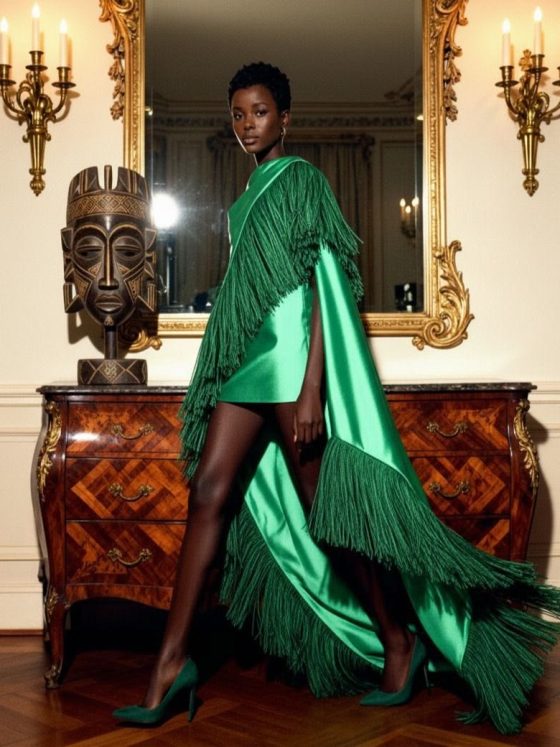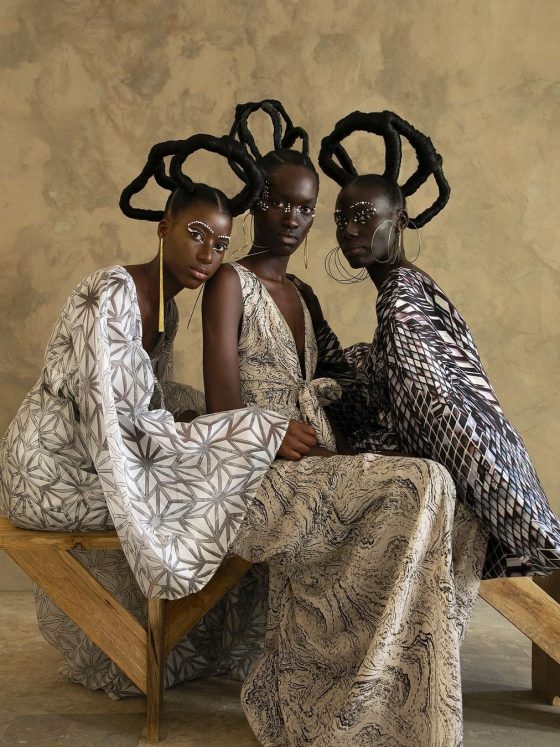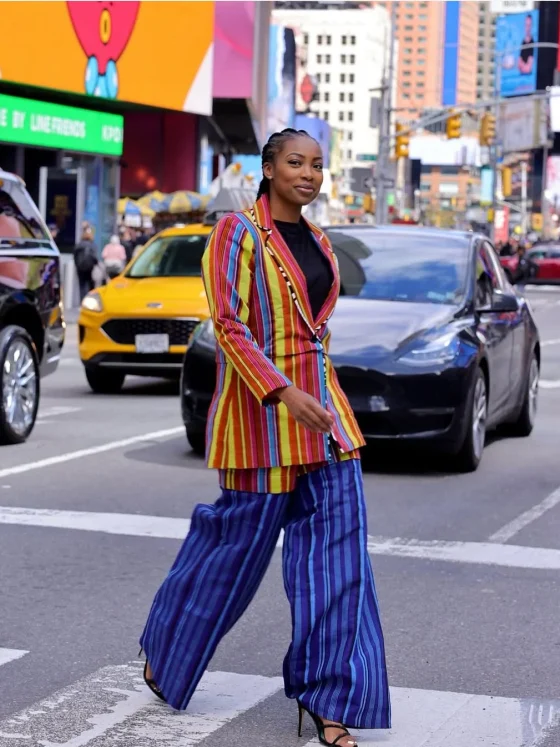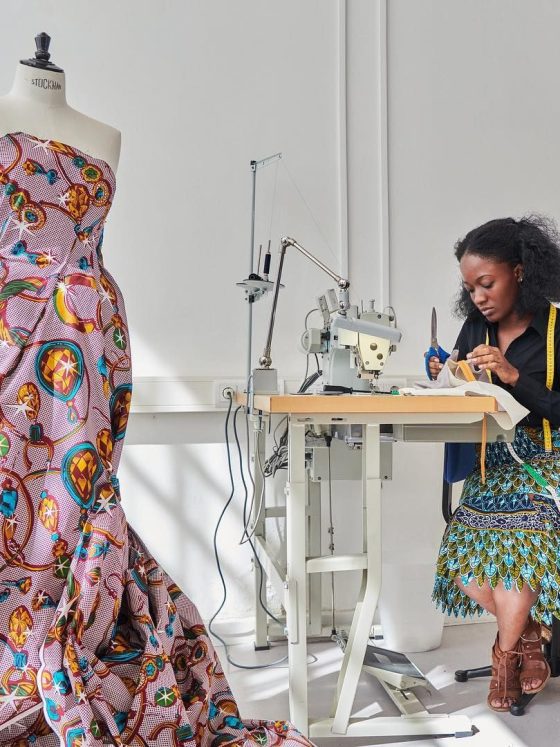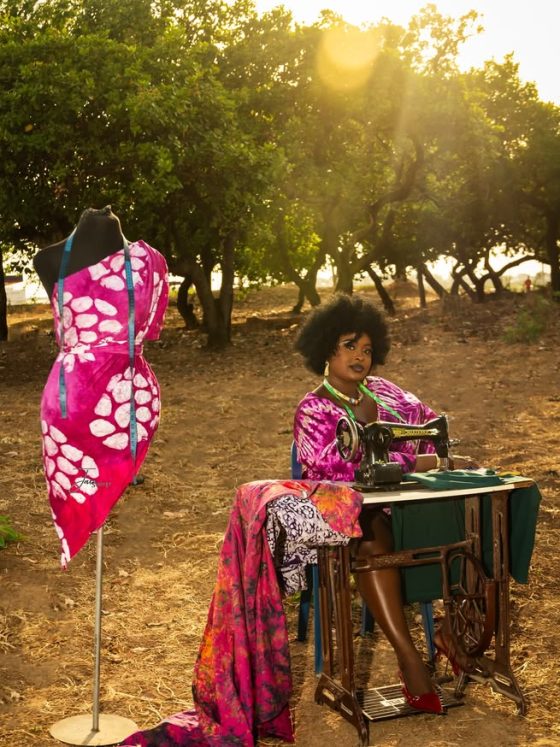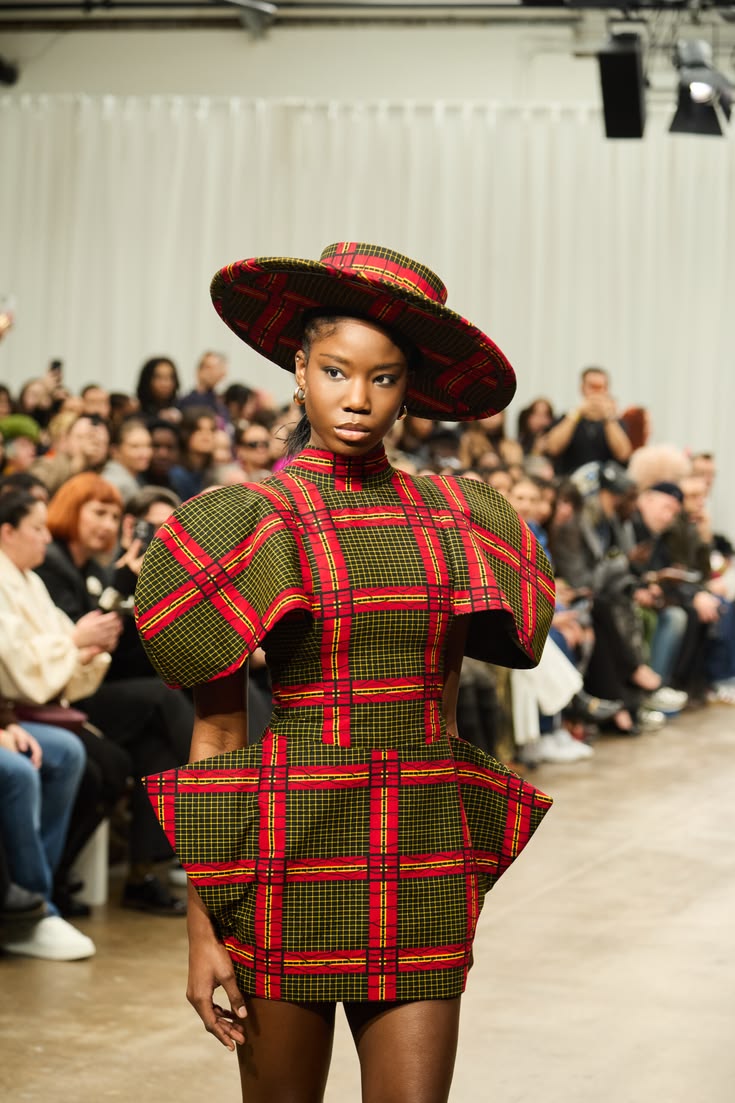
On 19 February 2026, King Charles III arrived at 180 Strand in London and sat in the front row for the opening show of London Fashion Week. The seat was at Tolu Coker’s AW26 runway presentation of a 28-look collection titled Survivor’s Remorse. It was the first time a senior royal had taken a front-row seat at LFW since the late Queen Elizabeth II appeared at Richard Quinn’s show in 2018. Stella McCartney sat beside him. So did Seán McGirr, Alexander McQueen’s creative director. In the same row: Little Simz and Skepta.
The African fashion market is worth 31 billion dollars. The detail to fix on is not the King’s attendance but what he was attending: a British-Nigerian designer who launched her label in 2021 after graduating from Central Saint Martins, who describes her practice as reformative luxury, meaning craft with consequence, designed to last and designed to mean something, and whose collection that day drew simultaneously on British tartans, Yoruba heritage, deadstock fabrics, and the specific emotional experience of moving between social worlds. As CNN Style’s documentation of King Charles’s attendance at Tolu Coker’s AW26 show confirms, Coker told CNN backstage that this collection was about grief, aspiration, assimilation, and then coming back to oneself. She had built that collection from family archives, West London memory, the push-and-pull of social mobility, and clothes strong enough to carry that story. The King showing up did not make that work important. The work was already important.
London fashion is described through heritage houses and Central Saint Martins. That description misses most of what makes it alive. Here is what it actually includes.
The Structural Argument
London fashion is described, internationally and domestically, through a set of familiar markers: Savile Row tailoring, heritage houses, Central Saint Martins, Vivienne Westwood, Alexander McQueen, John Galliano, London Fashion Week as a platform for emerging talent, and British cool as a global export. That description is not wrong. It is incomplete. It positions African, Caribbean, and wider diaspora creative practice as influence: a source of colour, energy, or cultural freshness that periodically enters the British system from outside. The implication is that a stable, self-contained British mainstream exists first, and diaspora contributions supplement or inspire it.
That model does not reflect how London fashion actually developed. Its tailoring tradition was shaped by Caribbean migrant cutters who worked on Savile Row from the Windrush era. Its nightlife-to-runway pipeline ran through reggae, jungle, garage, grime, and Afrobeats scenes whose visual cultures were built by Black British communities. Its independent retail infrastructure in Peckham, Brixton, Hackney, and East London fabric markets includes businesses that have supplied fabric for African occasionwear, bridal markets, and diaspora dress traditions for decades. Its most internationally visible young designers in 2026 include a cohort whose practices are built around Afro-Atlantic research, diaspora cultural memory, and cultural specificity as design method rather than as optional reference.
Tolu Coker describes her brand as reformative luxury: craft with consequence, designed to last and designed to mean something. When King Charles sat in the front row at 180 Strand on 19 February 2026, he was not discovering that language. He was sitting in institutional proximity to a designer who had already built it without waiting for that proximity to arrive.
The Designers: Practices, Not a Category
The British-Nigerian designers, Black British designers, and Afro-Atlantic practitioners who appear in London Fashion Week programming in 2026 do not constitute a single aesthetic school. As Omiren Styles’ documentation of diaspora style as a research practice rather than a trend reservoir confirms, diaspora aesthetics carry specific histories and specific cultural knowledge that have been consistently extracted by the mainstream without credit or compensation. The designers whose work is documented below are building practices that refuse that extraction model. Their differences are as important as what they share.
Grace Wales Bonner developed her label in London after graduating from Central Saint Martins in 2014. Her practice is documented in detail across Omiren Styles’ Wales Bonner series: research-led menswear that brings Afro-Atlantic history, Black cultural expression, publishing, and exhibition-making into the language of luxury fashion. As Omiren Styles’ documentation of Wales Bonner’s research practice confirms, her methodology begins in archives rather than trend forecasts and produces clothing that carries cultural inquiry rather than cultural reference. In October 2025, she was appointed Creative Director of Men’s Ready-to-Wear at Hermès.
Tolu Coker launched her label in 2021. Her practice is multidisciplinary: fashion design, illustration, documentary, and filmmaking. She describes clothes as archives of memory, carriers of culture, and markers of identity. Her AW26 collection Survivor’s Remorse, shown to King Charles III at 180 Strand on 19 February 2026, drew on her British and Yoruba heritage, West London family memory, and the specific psychological experience of social mobility. She uses deadstock fabrics, upcycled denim and leather, and British wool. The Princess of Wales subsequently wore a Tolu Coker grey coat dress to welcome Nigerian President Bola Ahmed Tinubu and First Lady Oluremi Tinubu on their UK state visit, a deliberate act of fashion diplomacy that connected a British-Nigerian designer’s work to a formal diplomatic occasion with Nigeria.
Bianca Saunders has built a London menswear practice that engages Black masculinity, proportion, portraiture, and Caribbean cultural reference. Her work appeared in Somerset House’s The Missing Thread exhibition, which positioned her alongside the longer history of Black British fashion innovation rather than as a recent development. Priya Ahluwalia brings British, Nigerian, and Indian cultural references into a practice also shaped by material reuse. Foday Dumbuya’s Labrum London demonstrates how a London-based diasporic label can operate at a national sporting scale: his collaboration with Adidas for Sierra Leone’s Paris 2024 Olympic kit used a reimagined cowrie-shell image to simultaneously connect a global sporting event with Sierra Leonean identity and diaspora pride.
The Missing Thread: Why Institutional Correction Matters
The Missing Thread: Untold Stories of Black British Fashion ran at Somerset House from 21 September 2023 to 7 January 2024, curated by the Black Orientated Legacy Development Agency (BOLD). The exhibition explored Black British fashion from the 1970s to the present through four themes: home, tailoring, performance, and nightlife. Its institutional importance lay not simply in presenting Black British designers in a major London venue. It was that it did not present them as a recent development in diversity. It located fashion within a longer history of migration, racial politics, music, photography, art, social life, and enterprise. As Omiren Styles’ analysis of cultural authority in fashion confirms, the people who build and transmit a cultural tradition hold its authority, regardless of whether formal institutions recognise them. The Missing Thread made the historical record of Black British fashion institutional in the most literal sense: it put it in a major museum.
The exhibition also made a methodological point that has implications beyond the gallery. Black British fashion cannot be understood only through fashion-week runways and luxury labels. Its history includes hair salons, nightclubs, church dress, tailoring, sound-system culture, Carnival costumes, street markets, family photographs, and independent retail. Any account of London fashion that confines itself to the official fashion week calendar is describing a fraction of the city’s actual fashion culture.
The City’s Fashion Geography
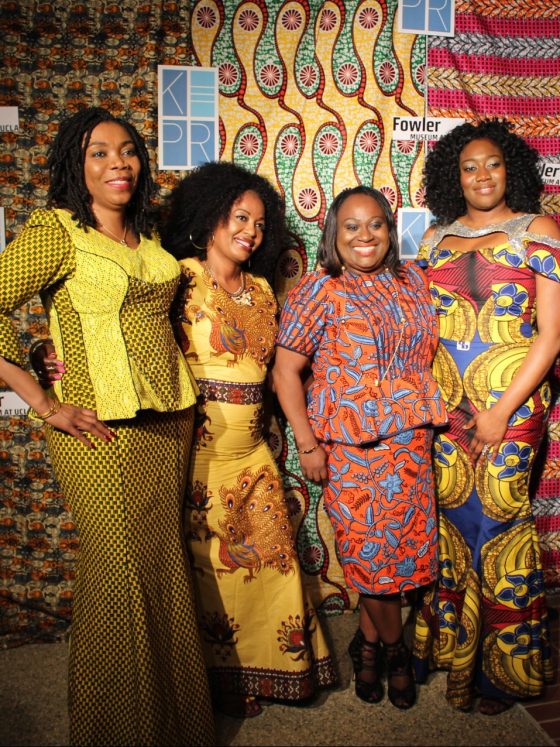
London Fashion Week maps a narrow geography of show venues, showrooms, hotels, galleries, and temporary event spaces. African and diaspora fashion operates across a much wider map. Peckham is a significant site of West African, Nigerian, and wider diaspora retail: fabric shops, beauty businesses, tailors, occasionwear networks, and food economies that support dress traditions which do not require the London Fashion Week calendar to function. Weddings, naming ceremonies, church gatherings, and family celebrations generate their own demand for fabric, embellishment, headwear, menswear, beauty work, and custom tailoring. As Omiren Styles’ documentation of the Caribbean hair shop as diaspora infrastructure confirms, the beauty and retail infrastructure of diaspora communities is not peripheral to fashion. It is how fashion circulates, is funded, is made wearable, and becomes socially meaningful in the communities that sustain it.
Brixton remains central to Caribbean and African diaspora commerce, retail, and public cultural life. Its history of Black London style is not separate from fashion history. It is part of what London’s fashion history actually consists of. Notting Hill Carnival should also be treated as a fashion event. Its costumes involve design research, textile work, engineering, embellishment, movement, music, group identity, and months of collective labour. Carnival does not require fashion-week recognition to be fashion. It requires documentation, archival seriousness, and institutional acknowledgement of its technical and aesthetic importance that the mainstream fashion press has been slow to provide.
The Omiren Argument
London fashion is not a stable system that African and diaspora creative practice occasionally influences. It is a system that has been built, sustained, and continually renewed by African, Caribbean, and diaspora designers, makers, retailers, stylists, beauty workers, and cultural practitioners whose contributions the institutional record has consistently undervalued. The African fashion market is worth 31 billion dollars. When King Charles III sat in the front row at Tolu Coker’s AW26 show on 19 February 2026, he was not opening a new chapter in London fashion. He was making visible an institutional recognition of work that was already fully formed before he arrived. When Grace Wales Bonner was appointed Creative Director of Men’s Ready-to-Wear at Hermès, she brought a London-based practice rooted in Afro-Atlantic archives to one of the most significant menswear roles in European luxury. When Foday Dumbuya put a cowrie-shell image on Sierra Leone’s Olympic kit through Labrum London, he demonstrated what a London-based diaspora label can do at the scale of national representation. These are not diversity moments. They are evidence of a fashion practice built with rigour, cultural seriousness, and creative commitment before any institution came to validate it. The future of London fashion will be secured by recognising the people and infrastructure that have already made the system possible, not by adding diaspora references to a framework that still treats them as supplements.
Also Read:
- Black Consciousness Made Dress Political: Steve Biko, the Afro Look and Apartheid South Africa
- Ola Ebiti Stylist: Nigerian Heritage, Tailoring and Editorial Fashion
- Grace Wales Bonner at Hermès: What Her Menswear Appointment Changes
- Hermès Menswear After Véronique Nichanian: What Grace Wales Bonner Inherits and What Remains Unknown
Frequently Asked Questions
Who is Tolu Coker, fashion designer?
Tolu Coker is a British-Nigerian fashion designer, illustrator, and multidisciplinary artist based in London. She graduated from Central Saint Martins with a First-Class Honours degree in Fashion Design and Textile Print and launched her label in 2021 after being supported by the King’s Trust (formerly the Prince’s Trust). She describes her brand as reformative luxury: craft with consequence, designed to last and designed to mean something. She uses deadstock fabrics, upcycled denim and leather, and British wool, frequently drawing on her Yoruba heritage, her British-Nigerian upbringing, and archival references. Her AW26 show, Survivor’s Remorse, at London Fashion Week on 19 February 2026 was attended on the front row by King Charles III, the first senior royal to attend an LFW runway show since 2018. The Princess of Wales subsequently wore Tolu Coker for the Nigerian state visit welcome.
What is The Missing Thread exhibition?
The Missing Thread: Untold Stories of Black British Fashion was an exhibition at Somerset House, London, running from 21 September 2023 to 7 January 2024. Curated by the Black Orientated Legacy Development Agency (BOLD), it explored Black British fashion from the 1970s to the present through four themes: home, tailoring, performance, and nightlife. It placed Black British fashion within a longer history of migration, racial politics, music, photography, art, and enterprise rather than presenting it as a recent development. Participating designers included Bianca Saunders. The exhibition made a methodological argument: Black British fashion history includes hair salons, nightclubs, church dress, tailoring, sound-system culture, Carnival costumes, street markets, and family photographs, not only fashion-week runway shows.
How has African fashion influenced London?
The premise of the question implies a stable mainstream that receives influence from outside. The more accurate account is that London fashion has been built through African, Caribbean, and diaspora creative practice from its foundations: Caribbean migrant tailors shaped the Savile Row tradition from the Windrush era; reggae, jungle, garage, grime, and Afrobeats scenes developed the visual cultures that moved into London’s nightlife-to-runway pipeline; diaspora retail districts in Peckham, Brixton, and east London have supplied fabric and tailoring for decades. Contemporary British-Nigerian and Black British designers, including Grace Wales Bonner, Tolu Coker, Bianca Saunders, Priya Ahluwalia, and Foday Dumbuya, have built internationally recognised practices that make cultural specificity central to their methodology rather than treating it as an optional reference point.
What is Labrum London?
Labrum London is a fashion label founded by Foday Dumbuya, a Sierra Leonean-British designer based in London. The brand operates across fashion, sportswear, and national representation contexts. Labrum’s collaboration with Adidas for Sierra Leone’s Paris 2024 Olympic kit used a reimagined cowrie-shell image to connect the global sports event with Sierra Leonean identity and diaspora pride. The label demonstrates how a London-based diasporic design practice can operate at the scale of national sporting representation while maintaining cultural specificity.
Why is Peckham important for African fashion in London?
Peckham is a significant site of West African, Nigerian, and wider diaspora retail in London, with fabric shops, beauty businesses, tailors, occasionwear networks, and food economies that support dress traditions operating independently of the London Fashion Week calendar. Wedding dresses, naming ceremony outfits, church dress, and family celebration attire generate consistent demand for fabric, embellishment, headwear, and custom tailoring through businesses that have operated in the area for decades. Peckham’s fashion economy is not peripheral to London fashion. It is one of the city’s active dress economies, sustaining cultural practices and livelihoods that the mainstream fashion press rarely documents.
Explore More
Read the full Fashion > Opinion section for Omiren Styles’ documented positions on diaspora fashion, cultural authority, and the creative practices that are building what London fashion actually is rather than what its institutional description claims it to be.
Discover travel and heritage intelligence across Africa and the African diaspora at Rex Clarke Adventures.