In February 2026, thirteen traders from the indoor section of Ridley Road Market in Dalston, Hackney, were served eviction notices requiring them to leave the premises by the end of March. The landlord was registered in a tax haven. The market, which has been trading since the late 1880s and now houses more than 150 stalls selling Afro-Caribbean, Asian, Turkish, and European goods, had previously been saved by community campaigns. In 2018, a mass campaign kept it open. In 2022, Hackney Council took on a fifteen-year lease, though as of 2026 the council had not yet formally completed the takeover, leaving the market’s future structurally unresolved.
The African fashion market is worth 31 billion dollars. The traders who faced eviction in February 2026 include fabric sellers, textile traders, clothing stalls, and beauty product vendors whose businesses serve the Afro-Caribbean, West African, Turkish, and East African communities of Dalston and wider Hackney. Their eviction would not register as a fashion industry event in most coverage. As Dazed’s June 2026 documentation of Katharine Hamnett’s Save Ridley Road T-shirt campaign confirms, the protest action blocked private security from shutting the building after an hour-long standoff in late March. It was a significant win. The fashion press covered Hamnett’s protest T-shirt. It did not, in any article Omiren Styles has located, cover what the traders were selling, who their customers were, or what would have disappeared from Hackney’s fashion infrastructure if the evictions had succeeded.
Ridley Road’s fabric traders faced eviction in 2026 and won. Hackney’s diaspora fashion infrastructure is real, productive, and under sustained pressure.
What Ridley Road’s Fashion Economy Actually Consists Of
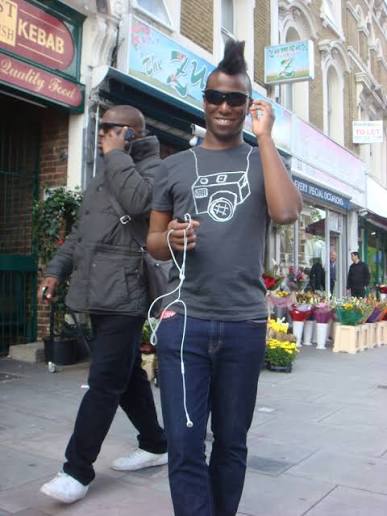
Ridley Road Market has been a site of Afro-Caribbean, West African, and wider diaspora commerce for decades. As Hackney Council’s official documentation of the market confirms, the market offers a unique combination of international goods with a focus on Afro-Caribbean, Asian, and European produce, goods, clothing, and cosmetics. The clothing and textile dimension of Ridley Road’s economy includes fabric stalls selling African and Caribbean prints, clothing traders carrying West African dress styles, and beauty product vendors whose stock caters to the community’s specific hair and skin care needs.
The fabric traders on Ridley Road serve specific community needs that the mainstream retail market does not meet: fabrics for Nigerian and Ghanaian occasionwear, textiles for Jamaican and Barbadian dress traditions, materials for East African dress cultures from the Somali, Ethiopian, and Eritrean communities in Hackney. Each of these communities has specific fabric requirements for their most significant dress occasions, which require specialist suppliers who understand the materials, price points, and the community dress conventions that define what constitutes an appropriate outfit for a naming ceremony, a church Sunday, or an Eid celebration.
In February 2026, 13 traders in the indoor section of Ridley Road Market were served with eviction notices by a tax-haven-registered landlord. By March, the London Renters Union and Save Ridley Road had staged a standoff that kept the building open. The fashion press covered Katharine Hamnett’s protest T-shirt. It did not cover what the traders were selling, who they served, or what would disappear if they lost.
The Displacement Timeline: What Has Already Changed
The Save Ridley Road campaign has documented a sustained timeline of pressure. As the Save Ridley Road campaign press archive confirms, the market has faced sustained threat across multiple years: a 2023 police raid described as traumatising by traders; a 2024 planning application to convert part of Ridley Road Shopping Village into what campaigners described as slum flats; a 2025 council proposal for fee and rent increases that traders warned could force further exits; and the February 2026 eviction notices from the indoor section’s tax-haven landlord. Each of these events represents a separate pressure on the market’s commercial infrastructure, and their cumulative effect on trader composition is not publicly documented. There is no published record of how many fabric traders, clothing stalls, or beauty vendors have left Ridley Road since 2018.
The absence of that data is itself significant. The fashion infrastructure of Ridley Road’s diaspora economy is commercially invisible in the same way that Peckham’s occasionwear tailors are: not tracked, not measured, not included in fashion industry analyses of London’s fashion economy, and therefore not protected by the frameworks those analyses inform. When the Sunday Times style desk covers London Fashion Week, Ridley Road’s fabric traders are not part of the story. When Hackney Council’s economic development team analyses the borough’s creative industries, Ridley Road’s textile economy is more likely to appear in market heritage documentation than in fashion industry data.
Hackney Wick and the Creative Fashion Infrastructure
Ridley Road is one node in Hackney’s diaspora fashion infrastructure. Hackney Wick, at the eastern end of the borough, is another with a different character: an established creative cluster that developed from the 2000s onward as a network of studios, workshops, and maker spaces housed in former industrial buildings. Fashion designers, textile makers, printmakers, pattern cutters, and garment technicians have worked from Hackney Wick studios, using the low-cost creative space that industrial conversion provided in a period before the 2012 Olympics development transformed the surrounding Stratford area.
The Olympic development and subsequent regeneration of east London’s Stratford and Hackney Wick fringe have increased property values and studio rents across the area, producing exactly the displacement dynamic documented in the retail market context of Ridley Road. A fashion designer who could rent a studio in Hackney Wick for a manageable monthly cost in 2010 faces a substantially different cost environment in 2026. The creative infrastructure of affordable studio space that allowed independent designers to maintain production in East London has contracted under the same displacement pressure that now threatens the fabric traders on Ridley Road.
The two halves of Hackney’s diaspora fashion infrastructure, the retail and tailoring service economy of Ridley Road and the creative production infrastructure of Hackney Wick, face the same displacement mechanism from different directions. Ridley Road faces it from a tax-haven landlord extracting maximum rent from historically low-cost market pitches. Hackney Wick faces it from the general property value inflation that follows large-scale regeneration investment. The communities and practitioners who built both are not the primary beneficiaries of the regeneration that is pricing them out.
The Dalston Plan and Institutional Protection
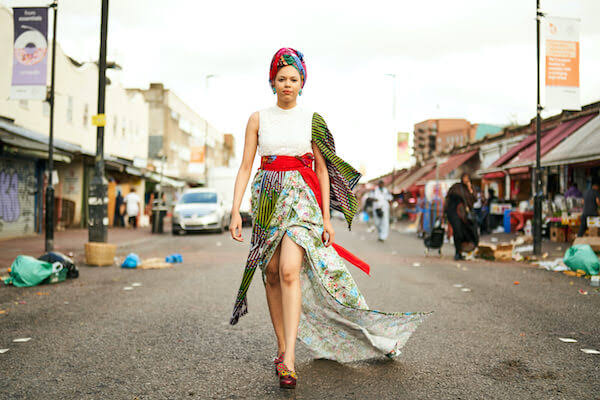
Hackney Council’s adopted Dalston Plan commits to protecting the long-term future of Ridley Road’s street market and to ensuring that future development does not reduce the number of market pitches. As the Hackney Council Sunday Collective announcement confirms, a £1 million programme of upgrades to the market was completed in 2023, delivering a greener, safer, and more accessible public space. The Sunday Collective, launched on 8 March, brings together rotating independent traders, makers, and food businesses, including natural skincare, perfume oils, books, clothing, textiles, and ceramics, extending the market to seven days a week.
These are institutional commitments and genuine investments. They do not resolve the structural vulnerability exposed by the February 2026 eviction notices. If Hackney Council has held a fifteen-year lease since 2022 but has not formally completed the takeover by March 2026, the gap between stated commitment and institutional completion has allowed a tax-haven landlord to issue eviction notices to thirteen traders in the interim. The institutional protection framework exists on paper. Its translation into enforceable protection for specific traders in specific buildings requires the institutional follow-through that the council had not yet completed.
What Fashion Infrastructure Means When It Is Under Threat
Ridley Road’s fabric traders and Hackney Wick’s independent designers are not separately endangered communities. They are adjacent nodes in the same fashion infrastructure whose displacement has the same cause. As Omiren Styles’ documentation of African and diaspora fashion in London confirms, the correct description of London fashion is not a stable mainstream occasionally influenced by diaspora creative practice. It is a system built through African, Caribbean, and diaspora creative practice from its foundations. That system includes Ridley Road’s fabric traders as well as Central Saint Martins graduates. When the fabric traders are displaced, the designer who sourced materials there loses a supply node. When the Hackney Wick studio closes, the designer who worked there loses production infrastructure. The downstream effect on what London fashion can produce is not tracked in any available dataset. dataset
The Katharine Hamnett protest T-shirt is a useful cultural document. A white British fashion veteran with forty years of activist credentials designed a garment to support the Ridley Road traders. The act of solidarity is real, and the fundraising for legal fees is concrete. What the T-shirt cannot do is address the structural conditions that produced the eviction notices: the absence of formal council takeover of the lease, the continued vulnerability of traders to a tax-haven landlord, and the general pattern of gentrification-driven displacement that is removing diaspora commercial infrastructure from Hackney at a rate faster than any protest T-shirt can reverse.
The Omiren Argument
Hackney’s diaspora fashion infrastructure is real, productive, and under sustained pressure from displacement. The African fashion market is worth 31 billion dollars. The fabric traders of Ridley Road and the designers of Hackney Wick’s studio clusters are not separate stories. They are the retail and production ends of the same fashion infrastructure, built over decades by African, Caribbean, and diaspora communities in east London, and now facing the same structural mechanism: property value inflation driven by regeneration investment that benefits landlords and developers more directly than the traders, designers, and community members who built the neighbourhood’s commercial and cultural value in the first place. An hour-long standoff defeated the February 2026 eviction notices. That outcome required a mass campaign that had been running since 2018, a legal team whose fees were being funded by a designer’s T-shirt, and the physical presence of protesters blocking security guards. These are not the conditions under which a fashion infrastructure sustains itself. They are the conditions under which it survives despite institutional failures that should have made the eviction impossible. Omiren Styles documents Ridley Road and Hackney Wick together because they are together: a fashion economy whose displacement the mainstream fashion press will notice, if at all, only after it has already happened.
Also Read:
- Peckham’s Diaspora Fashion Economy: Rye Lane, Occasionwear and Creative Production
- Brixton’s Caribbean Dress Legacy: Tailoring, Fabric, Beauty and Cultural Memory
- Who Should Define Cultural Authority in Fashion? Start With the Makers
Frequently Asked Questions
What happened to Ridley Road Market in 2026?
In February 2026, thirteen traders from the indoor section of Ridley Road Market in Dalston were served eviction notices by the market’s landlord, registered in a tax haven, requiring them to leave by the end of March. Traders joined forces with the London Renters Union and Save Ridley Road campaigners to stage a protest in late March that blocked private security from shutting the building. After an hour-long standoff, the traders won a reprieve. The structural vulnerability that produced the eviction remained unresolved: Hackney Council had held a fifteen-year lease since 2022 but had not formally completed the takeover, leaving traders exposed to the private landlord’s actions in the interim.
What does Ridley Road Market sell in terms of fashion?
Ridley Road Market includes traders selling African and Caribbean print fabrics, West African dress styles, clothing, cosmetics, and beauty products serving the Afro-Caribbean, West African, Turkish, and East African communities of Dalston and wider Hackney. The fabric and textile traders provide materials for Nigerian and Ghanaian occasionwear, Jamaican and Caribbean dress traditions, and East African dress cultures from the Somali, Ethiopian, and Eritrean communities resident in Hackney. The market’s fashion economy is oriented toward community service: providing specialist materials, knowledge, and goods that the mainstream retail market does not supply.
How is Hackney Wick connected to fashion?
Hackney Wick, at the eastern end of the London Borough of Hackney, developed from the 2000s as a creative cluster in former industrial buildings housing fashion designers, textile makers, pattern cutters, garment technicians, and maker spaces. Its affordable studio infrastructure allowed independent designers to maintain production in East London during a period when central London costs were prohibitive. The area’s property values have increased substantially following the 2012 Olympic development and subsequent regeneration of the surrounding Stratford and Hackney Wick fringe, compressing the affordable studio infrastructure that sustained the creative fashion economy there.
What is Save Ridley Road?
Save Ridley Road is a campaign that has been active since 2018, working to protect Ridley Road Market from closure, redevelopment, and trader displacement. It has organised multiple protests and campaigns, documented the market’s commercial and cultural significance to the Hackney community, and engaged with media and political stakeholders over the market’s vulnerability. In 2026, it worked with the London Renters Union to stage the protest that kept the indoor section of the market open following the February eviction notices. Its press archive documents the sustained nature of the threat the market has faced across multiple years.
Why does gentrification threaten diaspora fashion infrastructure?
Diaspora fashion infrastructure, including fabric shops, tailors, beauty businesses, and independent creative studios, typically operates in lower-cost commercial premises that become financially unviable as neighbourhood property values rise due to gentrification and regeneration. The businesses that built the commercial and cultural value of neighbourhoods like Dalston, Peckham, and Brixton through decades of community service are frequently unable to sustain operations at post-regeneration rent levels. The displacement removes not only individual businesses but the specialist knowledge, community supply networks, and cultural competence that those businesses embody and that cannot be replaced by standard retail.
Explore More
Read the full Fashion > Industry section for Omiren Styles’ documentation of diaspora fashion economies across London, the displacement pressures they face, and the commercial infrastructure that constitutes African and diaspora fashion in Britain.
Discover travel and heritage intelligence across Africa and the African diaspora at Rex Clarke Adventures.