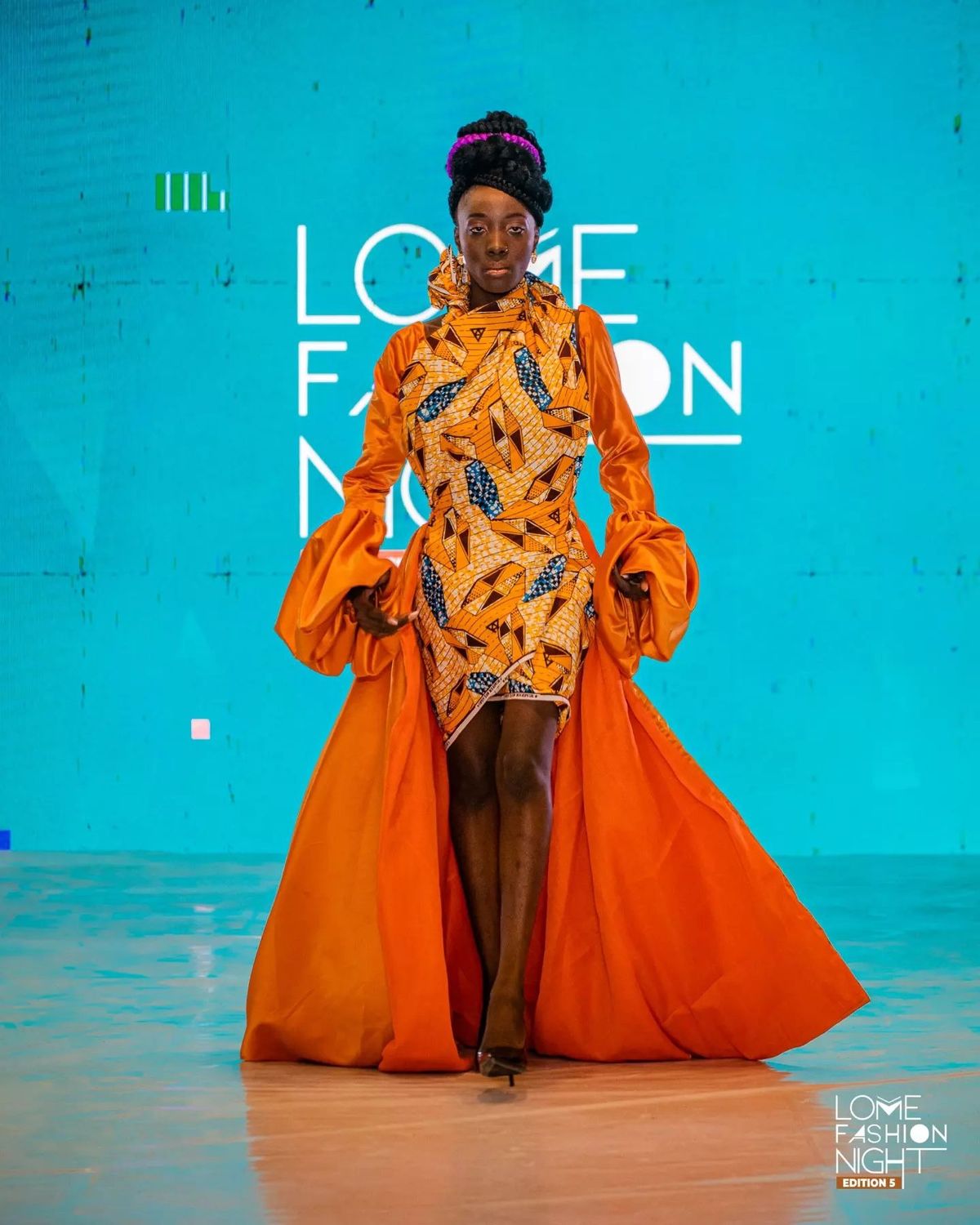
The International Finance Corporation chose Lomé. Star Garments, evaluating Kenya, Ghana, Ethiopia, and Benin, chose Lomé. Vlisco, the Dutch company that has been producing wax print for West African markets since 1846, chose Togo Yeye to produce its 2025 Blossoming Beauty campaign, which ran on billboards across West Africa. The British Fashion Council named a Togolese photographer to its 2023 New Wave Creatives list. Wallpaper* sent editors to Lomé to cover a design exhibition. The Oscar de la Créativité Africaine went to a Togolese accessories designer who had been in business for one year.
None of these institutions made these choices based on what Lomé might become. They made them based on what Lomé already is. The investment case for Lomé does not rest on potential. It rests on evidence. This article assembles that evidence in the form an investor needs: specific, confirmed, and placed in the context of what the African fashion market as a whole is doing in 2026.
Lomé’s fashion investment case rests on evidence, not potential. IFC, Vlisco, the BFC and Wallpaper* have all chosen Togo. Here is why you should, too.
The Omiren Argument:
The investor who is not paying attention to Lomé is not making a neutral decision. They are making an expensive one. The creative infrastructure, manufacturing investment, trade position, and international recognition are all in place. What is not yet in place is the investor attention that these conditions deserve. This article is the case for closing that gap.
The Market Context: African Fashion in 2026
The African apparel market is worth an estimated $31 billion and growing. West Africa has developed what the Kenyan Wall Street’s May 20 describes as “a more visible designer ecosystem supported by local tailoring networks and diaspora-linked premium demand, allowing a greater share of value to be captured in branded and semi-branded fashion” compared to East Africa. Nigeria alone accounts for an apparel market estimated at approximately $8.8 billion in 2025. Afreximbank, the Cairo-based Afrocentric trade finance institution, is actively funding projects across the continent, from textile and garment manufacturing facilities in Benin and Nigeria to export programmes for designer brands in Kenya and Ghana, as documented by Business of Fashion in November 2025.
At Lagos Fashion Week 2025, 68 per cent of attending brands reported securing new financing or distribution agreements, according to Innovation Village’s December 2025 analysis of African fashion investment readiness. The analysis describes African fashion as “no longer just culture on a runway” but “an economic force with demonstrable scale, clear value chain logic, and mounting global demand.” The continent’s cultural capital, including indigenous textiles, artisanal techniques, and design languages that global consumers now prize, cannot be replicated by any other geography. This is the structural advantage that makes African fashion investable in a way it was not a decade ago.
Within this market, Lomé occupies a position that no other city in Francophone West Africa fully replicates. It is the logistics hub of the region. It is the port through which the textile trade has moved for decades. It is the city where the Nana Benz built their empire, where FIMO 228 has run for 13 consecutive years, where FAALT has been graduating fashion designers since 2016, and where the PIA is building West Africa’s most advanced vertically integrated textile manufacturing platform. This combination- creative ecosystem, manufacturing infrastructure, trade position, and human capital- is the investor’s quadruple convergence.
The Lomé Investment Case: The Five Confirmed Advantages
First: logistics. Lomé’s deepwater port is one of the most efficient in Africa, giving Togo unmatched transit access for landlocked West African markets, including Côte d’Ivoire, Mali, and Niger. Togo’s exports to the US rose from $20 million in 2021 to $97 million in 2024, driven by the PIA’s garment manufacturing capacity. Star Garments, choosing among five Countries, chose Lomé specifically because of its infrastructure and supply chain capacity. When the world’s most rigorous manufacturing investors conduct due diligence and choose a city, that choice becomes a data point that reduces uncertainty and streamlines analysis. IFC’s $15 million loan is the validation of that due diligence.
Second: macroeconomic stability. Togo’s economy grew 5.3 per cent in 2024. GDP growth forecasts for 2025 range from 5.3 to 5.8 per cent, above regional and sub-Saharan Africa averages. Inflation dropped to 2.2 per cent in April 2025, one of the lowest in the region. The government has consistently maintained a business-friendly regulatory environment, including low import tariffs that made the Grand Marché the region’s dominant fabric distribution hub and that continue to attract industrial investors to the PIA. In February 2025, Gozem, a Lomé-based super app, closed a $30 million Series B round, briefly placing Togo among Africa’s top five startup funding destinations alongside Nigeria, Kenya, South Africa, and Egypt. Fashion is not the only sector where Lomé is attracting capital.
Third: creative capital. The practitioners documented across this series collectively constitute one of the most concentrated bodies of confirmed creative achievement per capita of any city in West Africa. Meli Bodombossou won the Oscar de la Créativité Africaine twelve months after founding her brand. Togo Yeye’s Delali Ayivi was named to the British Fashion Council’s 2023 New Wave Creatives and to the Dazed 100. The Vlisco Blossoming Beauty campaign, produced by Togo Yeye in January 2025, ran on billboards across West Africa. Jacques Logoh’s FIMO 228 has held three Paris editions, the most recent at the Orangerie d’Auteuil at Roland-Garros during Paris Fashion Week. These are not emerging credentials. They are confirmed achievements, documented in the international press, across a consistent thirteen-year output.
Fourth: manufacturing infrastructure. The Plateforme Industrielle d’Adétikopé, built through a public-private partnership between the Togolese government and ARISE IIP with an investment of 130 billion FCFA, is designed to create a vertically integrated cotton-to-garment value chain. Phase 2 plans three textile units and six garment facilities capable of processing 30,000 tonnes of cotton annually and creating 20,000 new jobs. Togo is one of Africa’s top ten cotton producers. The industrial infrastructure to convert that raw material into a finished product, with export access through West Africa’s most efficient port, is being built now. The investor who waits for the PIA to be complete before positioning is at the post-completion price. The investor who moves now buys at the development price.
Fifth: human capital pipeline. FAALT has been graduating trained fashion stylists since 2016. Desmo’s atelier-école has trained practitioners for three decades. Togo Yeye has built the documentation infrastructure that makes Togolese talent legible to international buyers and the press. The generation entering the ecosystem in 2026 arrives better trained, better connected, and better documented than any previous cohort. The value of human capital compounds: a trained designer who trained the next designer who trained the one after that is not three individual talents. It is an ecosystem.
What Lomé Fashion Investment Looks Like: Three Entry Points
Investment in Lomé’s fashion ecosystem does not require a single large bet. It distributes across three distinct entry points, each with its own risk profile, return timeline, and strategic logic.
Entry point one: manufacturing. The PIA offers industrial investors streamlined customs, targeted tax incentives, and modern facilities. Star Garments’ Renaissance Togo factory is the proof of concept for export-oriented garment manufacturing. Phase 2 capacity is available. The captive solar plant under development at the PIA is described as potentially West Africa’s largest photovoltaic facility, addressing the electricity constraint that currently limits independent local production. Investors seeking exposure to Africa’s role in global supply chain diversification, particularly as brands move production away from single-source Asian hubs, will find the PIA’s infrastructure, port access, and AGOA trade framework the most developed combination currently available in Francophone West Africa. The African textile manufacturing renaissance is a documented trend; Togo’s PIA is the most advanced Francophone expression of this trend.
Entry point two of this trend: creative brands. The designers documented in this series range from established practices with international show history (Kavsokl Batoka, Grace Wallace, Desmo) to rapidly internationalising brands (Meli Bodombossou, Jacques Logoh Couture) to documented early-stage practitioners with international validation (Eugénie Guidi Ayawa, Kimberly Anthony’s G.Y.D. Studio). Each occupies a different stage of the investment-readiness spectrum. The constraint that limits most of them from scaling is not creative quality, which is international, but operational infrastructure: reliable electricity, IP protection, domestic retail access, and buyer connections. These are exactly the kinds of constraints that patient, operationally capable investors are positioned to address through partnership rather than pure capital deployment.
Entry point three: platforms and infrastructure. FIMO 228 runs thirteen editions on a budget of approximately 60 million CFA francs annually, half its ideal. Lomé Fashion Week operates without the government co-investment needed to operate at full potential. FAALT trains designers without the student exchange programme and Brussels showroom that Fall Touré has planned but not yet funded. These are platforms that have proven their model at low cost and could achieve significantly greater impact with proportionally modest investment. The return is not primarily financial in the short term. It is positional: the investor who is the title partner of FIMO 228’s fourteenth edition is the investor whose name is on the runway when Togolese fashion achieves the scale this series documents as its near-term trajectory.
ALSO READ
- The Future of Fashion in Togo: Two Tracks, One City
- Made in Togo 2026: The Label That Is Already Being Worn
- African Cultural Economy: How Creativity Builds Economies
The Competitive Position: Why Lomé Rather Than Lagos or Dakar

The question an investor will reasonably ask is why Lomé rather than Lagos, Accra, or Dakar, where fashion investment infrastructure is more developed and the market profile is higher. The answer is a combination of relative valuation, structural advantage, and timing. Lagos’s fashion market is larger and better documented, which means earlier-stage opportunities are largely captured; valuations reflect that maturity. Dakar’s FIMA and Dakar Fashion Week have a twenty-year track record, which means the entry price for platform investment reflects two decades of proof. Lomé’s FIMO 228 has thirteen years of proof and is priced like a thirteen-year-old platform rather than the continental-scale event it is becoming. The Omiren Styles investment analysis of April 2026 identifies this pricing gap as one of the defining features of the current African fashion investment landscape: the distinction between funded and unfunded projects is rarely about underlying business quality. It is about alignment with the frameworks that govern capital allocation.
Lomé’s specific structural advantages over comparable West African fashion cities are four: the deepwater port, the PIA’s textile infrastructure, the Grand Marché’s established trade networks, and the low-cost regulatory environment that has made Togo consistently attractive to investors across sectors. The city that the IFC chooses for a $15 million garment factory, that Gozem chooses for a $30 million Series B, and that Vlisco chooses for a West African billboard campaign is a city that multiple types of sophisticated investors have already invested in and backed. Fashion investors who have not done the same evaluation are not declining an opportunity that others have passed on. They are the last sophisticated capital to move.
The Documented Record as the Investment Thesis
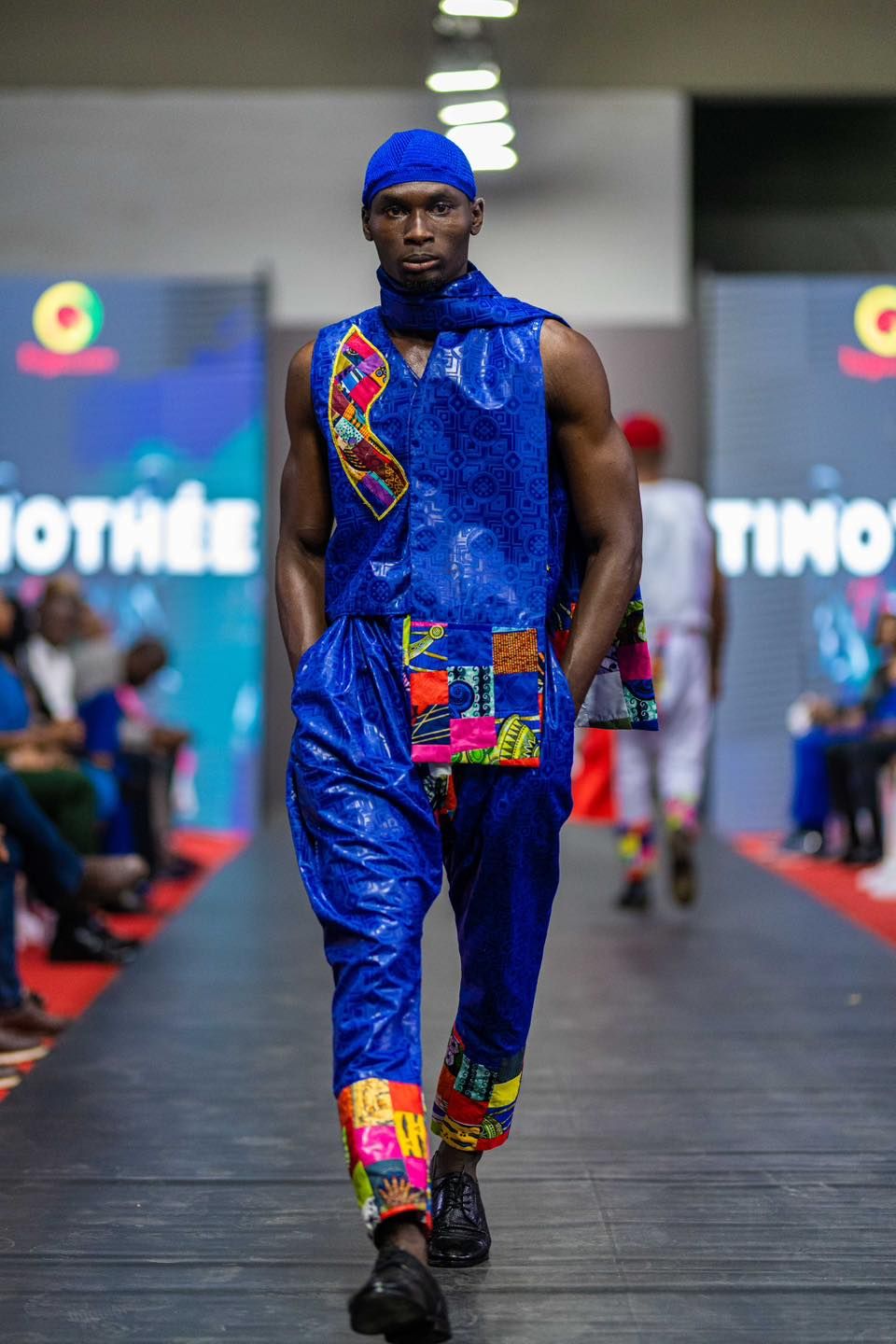
This series has produced the most comprehensive English-language documentation of Togolese fashion practice ever assembled: twenty-two articles covering the full range from the Nana Benz’s 1950s origins to Eugénie Guidi Ayawa’s body representationbody-representation025. Every fact in it is confirmed by primary and tier-one sources. Every practitioner profiled has a documented public record that includes international validation. Every infrastructure investment cited has IFC, government confirmation, or peer-reviewed research confirmation. The thesis for Lomé that this series documents is not editorial optimism. It is an analytical position built from the same kind of evidence that investment committees require: confirmed market data, documented institutional validation, identified human capital, and a clear account of the constraints that, when addressed, will release the value that it has already demonstrated. The investor who has read this series has done the primary research. The investor who has not had a gap in their West African analysis now has this series to close it.
Lomé is not a discovery waiting to happen. It is a market that has been building its case for three decades, through practitioners who did not wait for investors, institutions that built without government subsidy, and a creative community that documented itself before the international press arrived. The investor who arrives now is not early. They are timely. And, in a place where the infrastructure is being built and the creative track record is confirmed, being timely is the best position available.
“The investor who is not paying attention to Lomé is not making a neutral decision. They are making an expensive one. The creative infrastructure, the manufacturing investment, the trade position, and the international recognition are all in place.”
Frequently Asked Questions
Why should fashion investors pay attention to Lomé?
Lomé offers a combination of confirmed advantages that few West African cities match simultaneously: a deepwater port giving access to landlocked markets and direct export routes to the US and EU; a 5.3 per cent GDP growth rate in 2024; the Plateforme Industrielle d’Adétikopé attracting IFC-backed manufacturing investment; thirteen consecutive FIMO 228 fashion festival editions with three Paris editions and announced US expansion; a trained designer pipeline from FAALT since 2016; and international creative validation including the British Fashion Council, the Oscar de la Créativité Africaine, and Wallpaper* coverage. These are confirmed achievements, not projections. The investment case rests on evidence rather than potential.
What are the three investment entry points in Lomé’s fashion ecosystem?
Three distinct investment entry points exist in Lomé’s fashion ecosystem, each with a different risk profile and return timeline. Manufacturing: the PIA offers industrial investors streamlined customs, tax incentives, and procedures, as well as a vertically integrated cotton-to-garment value chain with port access; Star Garments’ IFC-backed Renaissance Togo factory is the proof of concept. Concept-led designers from established practices with international show history to rapidly internationalising brands are constrained primarily by operational infrastructure (electricity, IP, retail, buyer access) rather than creative quality, creating a specific investor partnership opportunity. Platforms and infrastructure: FIMO 228, Lomé Fashion Week, and FAALT have each proven their models at low cost and could achieve significantly greater impact with proportionally modest title partnership or development investment.
How does Lomé compare to Lagos, Accra, or Dakar as a fashion investment destination?
Lomé offers relative valuation, structural advantage, and timing that distinguish it from more developed African fashion cities. Lagos and Dakar have more mature fashion investment infrastructure, which means earlier-stage opportunities are largely captured, and valuations reflect that maturity. Lomé’s FIMO 228 has thirteen years of proof and is priced as a thirteen-year-old platform rather than the continental-scale event its trajectory suggests it is becoming. Lomé’s structural advantages over comparable cities include a deepwater port, IA’s textile manufacturing infrastructure, the Grand Marché’s established trade networks, and a low-cost regulatory environment that has consistently attracted sophisticated investors across sectors.
What is the IFC’s involvement in Lomé’s textile sector?
In July 2024, the International Finance Corporation, the private-sector arm of the World Bank Group, announced a $15 million loan to Star Garments Group Limited, a Sri Lanka-based company and a fully owned subsidiary of US-based Charles Komar & Sons, to build the first large-scale export-focused apparel manufacturing centre in Togo. The factory, named Renaissance Togo, is located at the Plateforme Industrielle d’Adétikopé and aims to create 4,520 direct jobs by 2030. Star Garments chose Lomé after evaluating Kenya, Ghana, Ethiopia, and Benin, specifically because of its port infrastructure, supply chain capacity, and business-friendly environment. Togo’s exports to the US rose from $20 million in 2021 to $97 million in 2024.
What creative validation has Lomé’s fashion scene received internationally?
Lomé’s fashion community has accumulated significant international validation and recognition over the years. Delali Ayivi of Togo Yeye was named to the British Fashion Council’s 2023 New Wave Creatives and the Dazed 100. Togo Yeye produced the Vlisco Blossoming Beauty campaign, which launched in January 2025 and ran on billboards across West Africa. Meli Bodombossou won the Oscar de la Créativité Africaine in 2019, one year after founding her brand. Wallpaper* covered the Design in West Africa exhibition at the Palais de Lomé in December 2025. FIMO 228 has held three Paris Fashion Week editions, the most recent at the Orangerie d’Auteuil at Roland-Garros in September 2025.
What constraints remain on Lomé’s fashion investment potential?
Four constraints limit the scaling of Lomé’s creative fashion track, each identified by the practitioners documented in this series: reliable electricity for domestic production at scale, which forces designers to manufacture in China despite designing locally. Intellectual property protection, identified by Desmo, is the most painful unsolved problem in the ecosystem. Domestic retail infrastructure is creating excessive dependence on international show circuits. Buyer access, limiting connections to international buyers who could stock Togolese work in premium markets. The PIA’s captive solar plant, potentially West Africa’s largest photovoltaic facility, is the most direct available solution to the electricity constraint. Each of the four constraints represents a specific investor partnership opportunity.
Explore the full Omiren Styles Togo series: twenty-two articles documenting the practitioners, institutions, and market conditions that make the investment case for Lomé.