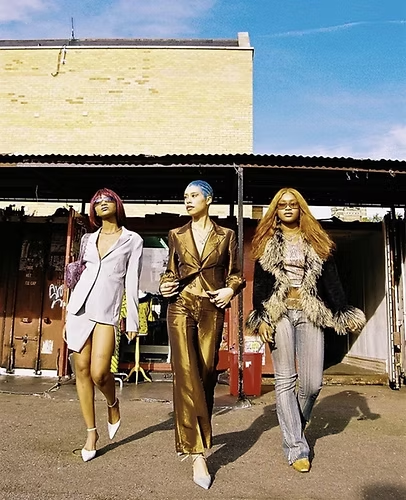
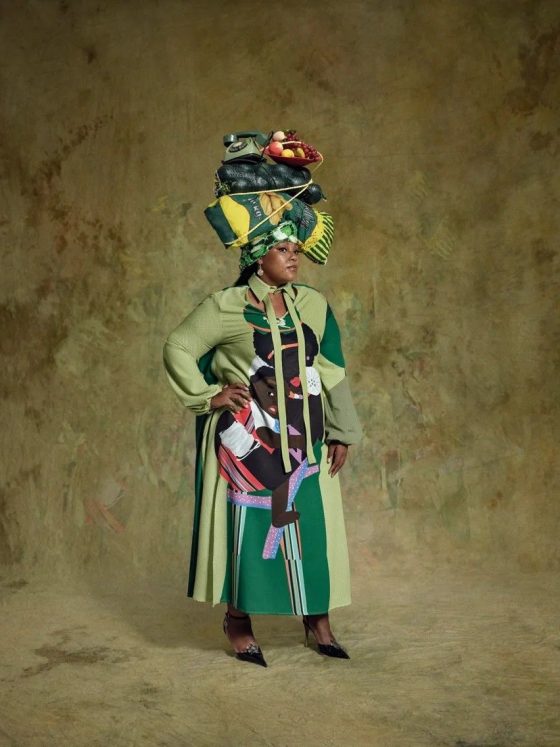
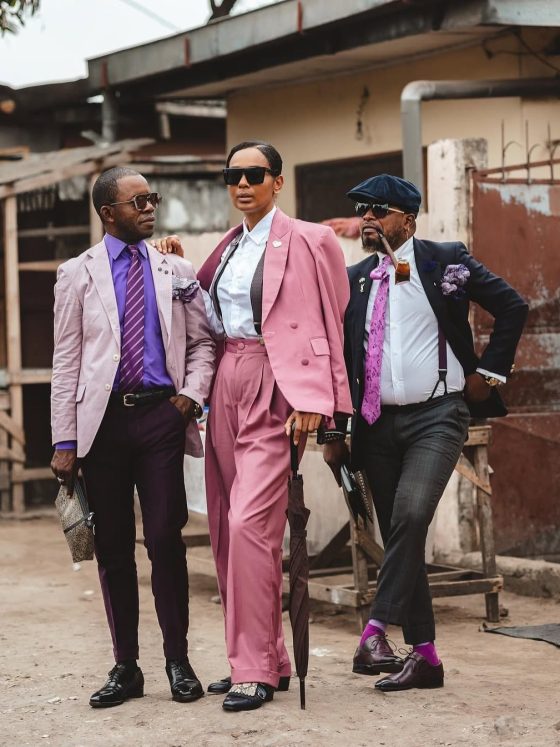
Before global fashion decided the body was a headline, Kingston had already made it a language.
Before the cut-out dress became a red-carpet staple, before visible lingerie became “intentional styling,” before body-conscious silhouettes became the default grammar of celebrity dressing, women in Jamaican dancehall had already built an entire visual system around fit, exposure, glamour, movement and presence.
They did not wait for a runway to legitimise it.
In dancehall, a Saturday-night outfit could carry more than fashion ambition. It could signal self-possession, sexuality, taste, class aspiration, creative skill, independence and refusal. The clothes had to work under heat, movement, bass, light and scrutiny. They had to look right from across the dance and up close in the crowd. They had to hold the body, frame it, exaggerate it, protect it and announce it.
This is why dancehall fashion history deserves to be treated as more than a colourful footnote in Jamaican music culture. Dancehall developed one of the modern era’s most influential yet under-documented fashion systems. It produced styling codes that travelled through music, migration, nightlife, photography, television, film and the internet, often reaching global fashion without the names of the women and communities who made them. As Omiren Styles has documented in its full analysis of Jamaica’s dancehall fashion, Carlene Smith, Jamaica’s first official Dancehall Queen, wore cut-out leather, sparkling tulle and thigh-high boots in 1992 at a time when those looks had no name in the Western fashion lexicon. These were not trends absorbed from elsewhere. They were created in Kingston, on the bodies of Black Jamaican women.
Dancehall did not wait for fashion’s permission to become fashion. It built a runway from the dance floor, then watched the world borrow its language.
The claim is not that every fitted dress, safety pin or high-cut leotard began in Jamaica. Fashion history is rarely that simple. The claim is more precise: dancehall created a distinct and recognisable way of using those elements, one rooted in Kingston’s working-class communities, Black women’s self-fashioning, local dressmaking, performance and public visibility.
It gave global culture a visual vocabulary. The fashion industry absorbed much of that vocabulary while failing to build a reliable record of its origins. That absence is part of the larger argument in The Global South Made Fashion. It Just Never Got Credit. The Global South has repeatedly generated fashion’s ideas, while powerful institutions have controlled the mechanisms of distribution, attribution and profit. Dancehall is not a footnote in that history. It is a primary source.
Dancehall fashion shaped global style long before fashion institutions named it. Omiren traces Kingston’s women, makers and visual codes.
Dancehall Dress Is a System
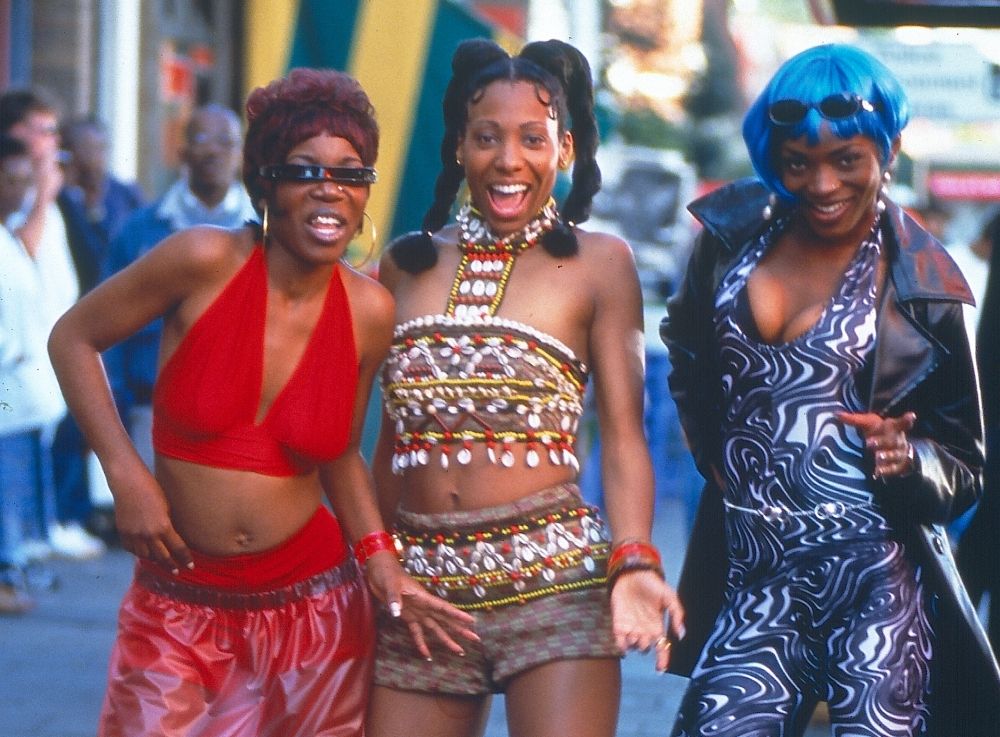
People who dismiss dancehall fashion as improvised, excessive or simply provocative miss the structure entirely. Dancehall dress is not casual. It is highly considered. It operates through rules that regular participants understand immediately: the weight of the fabric, the exactness of the fit, the relationship between skin and coverage, the proportion of the shoe, the balance between shine and colour, the look’s suitability for a particular event, sound-system space or performer.
The outfit is not separate from the dance. It is part of the performance.
Dancehall grew out of Kingston’s sound-system culture and social spaces from the late 1970s onward, maturing into a powerful visual and musical culture throughout the 1980s and 1990s. Scholarship on Jamaican dancehall has emphasised fashion as a site of women’s self-fashioning, social networks, care, creativity and everyday resistance. That context matters because dancehall fashion is often misread through an outside gaze. Critics may see only sexual display. Fashion editors may see a trend source. Tourists may see spectacle. But people inside the culture understand a more complex language of visibility, competition, femininity, labour, performance and control.
What does it mean to dress loudly in a world that has often instructed Black women to make themselves smaller? What does it mean to turn a dance into a place where a woman’s styling knowledge carries social authority? Dancehall answers through dress.
The culture has always valued self-invention. The Jamaican phrase “tun yuh hand mek fashion” captures a practical and creative principle: make something from what you have. Alter it. Rework it. Repair it. Style it until it becomes yours. That practice reflects resourcefulness, but it also reflects authorship.
Kingston’s Women Built the Visual Language
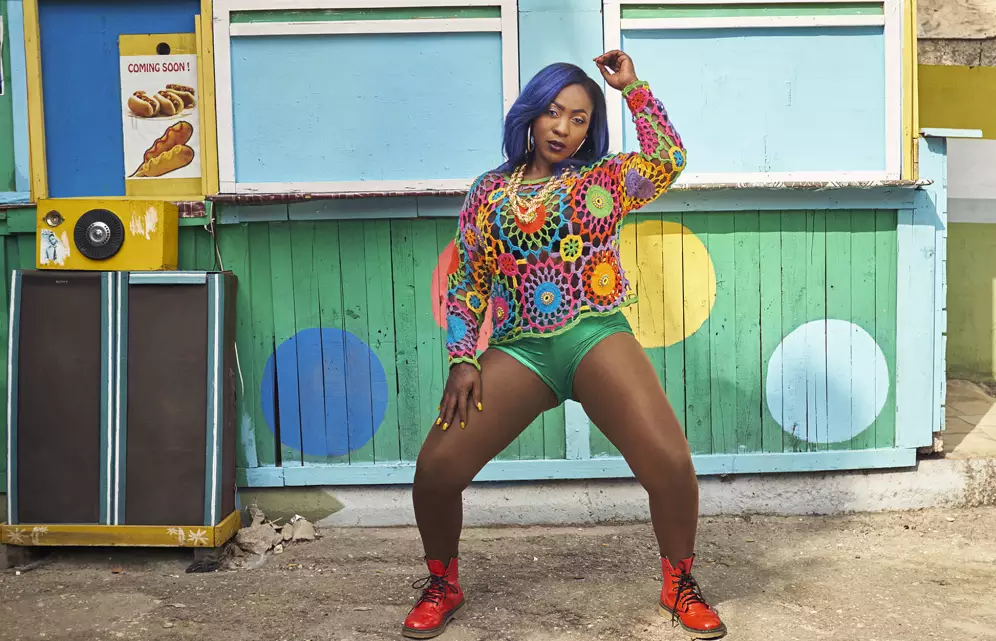
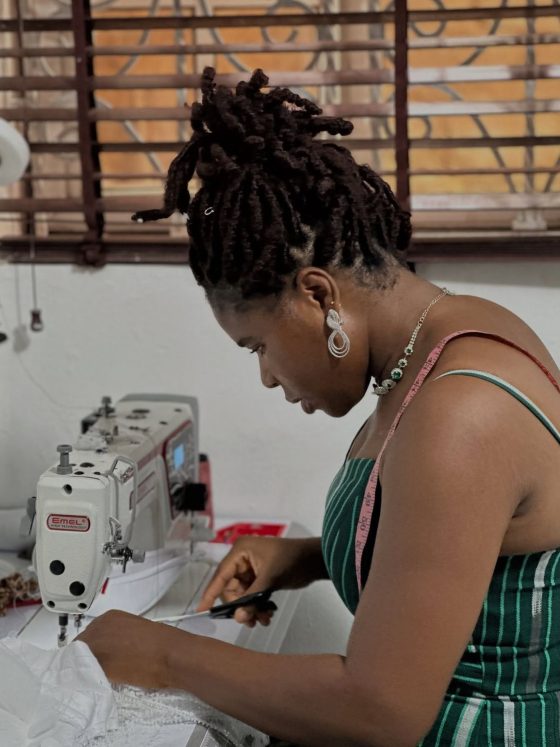
Dancehall fashion developed in communities that global fashion rarely treats as design centres. Its authors did not always have studios, fashion-school credentials, PR agencies, retail investors, lookbooks or seats at international fashion weeks. They worked through homes, markets, boutiques, hair salons, dressmaking networks and nightlife economies.
They were fashion coordinators. They were dressmakers. They were hairdressers, stylists, vendors, dancers, photographers and women who understood that appearing in the dance required as much creative intelligence as appearing on a catwalk.
The Dancehall Queen figure made this visible. By the late 1980s and early 1990s, dancehall queen competitions had developed from informal street-dance contests into organised events with wider recognition. Dancehall Museum’s documentation of the history of Dancehall Queens records how participants used clothing, beauty, movement and performance to negotiate femininity, authority and public identity. Carlene Smith, widely known as Dancehall Queen Carlene, became one of the best-known figures in that tradition. Her visibility matters because it offers a name where fashion history has often provided only anonymity.
But no single woman can stand in for the hundreds of women whose dressmaking, styling, accessorising and performance established dancehall’s fashion grammar. The system had designers, whether the mainstream industry called them designers or not. The system had trendsetters, even when fashion media treated them only as partygoers. The system had its own research and development process: people tested clothes in public. They watched what worked under light, movement, heat and collective attention. They adapted. They returned with something sharper the following week.
That is fashion innovation.
The Body Was Never an Accident
Dancehall’s relationship with the body is central to its style. Fitted dresses, cropped tops, high-cut bodysuits, slashed skirts, visible bras, fishnets, denim, glitter, metallics, heels and customised pieces all operate within a visual culture that refuses modesty as the only acceptable form of feminine respectability.
This does not mean dancehall fashion can be reduced to exposure. That reduction remains one of the laziest ways outside observers discuss it. The look depends on control. A garment must fit precisely. It must move well. It must create silhouette. It must hold its own against the visual competition of the dance. The wearer is not simply displaying a body; she is styling a public image.
Academic work on women in Jamaican dancehall has described fashion as a means through which women assert power over their bodies and circumstances. It also highlights the informal industries of dressmaking, hairstyling and other services that make a dancehall persona possible. For a fuller account of how dress functions as a cultural and political identity across Jamaica’s distinct communities, read Omiren Styles’s analysis of Rastafarian, Maroon, and Kumina dress as distinct cultural systems.
This matters because fashion institutions regularly credit European designers for “liberating” the female body through skin, cut-outs, sheer fabric or body-conscious construction. They often overlook how women in Black and Caribbean cultural spaces were already using those elements to create their own terms of visibility. The global fashion industry did not invent the confidence to wear a visible bra strap. It inherited a context it did not always understand.
From Kingston to the Diaspora
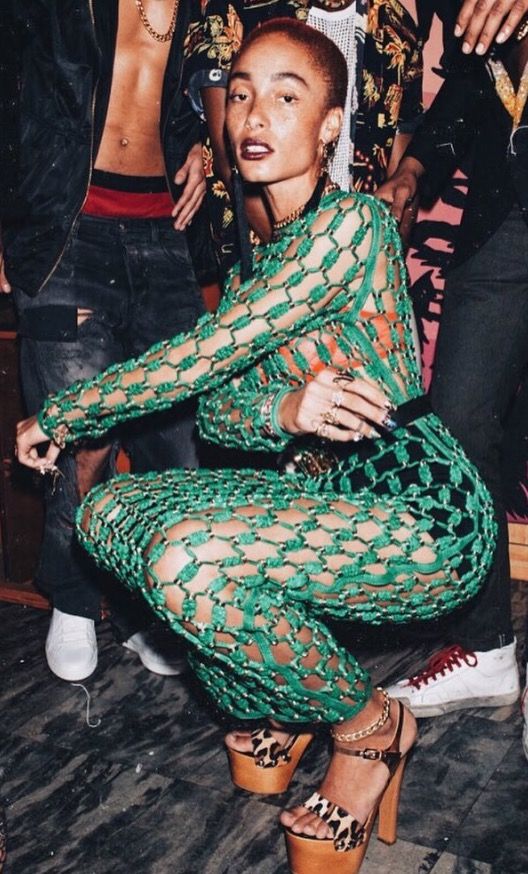
Dancehall travelled first through sound. As Jamaican dancehall music reached audiences beyond the island in the late 1980s and throughout the 1990s, its visual culture travelled with it. Artists, dancers, videos, album covers, club nights and street dances carried specific ideas about clothing, beauty, gender performance and public style. The music could move across borders quickly. The context moved less easily.
Jamaican and wider Caribbean diaspora communities in London, New York, Toronto and Miami kept active connections to dancehall culture. They adapted Kingston’s visual codes to different climates, neighbourhoods, club scenes and local fashion economies. In doing so, they helped dancehall become part of Black British fashion, North American urban style, club culture, music-video aesthetics and later, global streetwear. As Omiren Styles has documented in its analysis of African and diaspora fashion in London, the city’s nightlife-to-runway pipeline ran through reggae, jungle, garage, grime and Afrobeats scenes whose visual cultures were built by Black British communities. Caribbean migrant cutters shaped the tailoring tradition on Savile Row from the Windrush era. That lineage is documented in Caribbean cultural scholarship and rarely in mainstream British fashion writing.
Caribbean Diaspora Style: The Fashion Codes That Connect London, Toronto and Kingston traces how these codes move through cultural memory, tailoring and music across the diaspora. Caribbean diaspora style has never been a simple copy of Jamaica. It is a network of exchange: Kingston influences London, London reworks Kingston, Toronto adds its own references, New York accelerates circulation, and the style returns through music, travel, family ties and the internet.
The internet intensified that circulation. By the mid-2000s, dancehall photography, party footage, music videos and style images moved beyond their original communities at speed. Fashion stylists, editors, designers and trend forecasters could access the aesthetic directly. The difference was that they often encountered the image without the credit infrastructure. They saw the outfit. They missed the maker. They recognised a trend. They did not recognise a system.
When Global Fashion Borrowed the Look
Fashion’s relationship with dancehall has arrived in waves. The first wave was indirect. Body-conscious dressing became increasingly central to mainstream fashion throughout the late twentieth century, frequently framed by European fashion houses, celebrity culture, and the language of sculptural or architectural design. Those designers may have created important work, but their prominence should not erase the simultaneous development of body-conscious style in Kingston’s dance spaces.
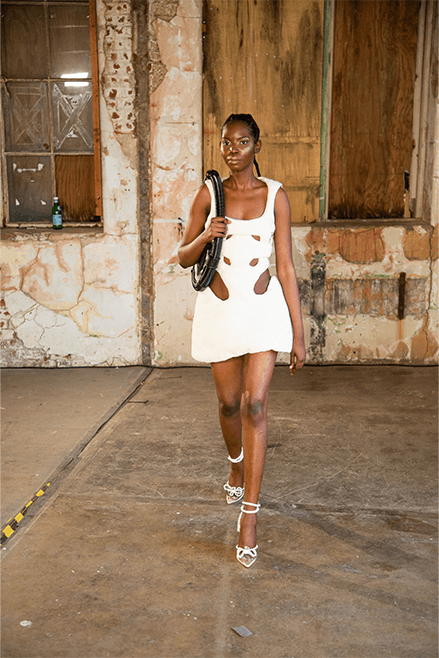
The second wave became more visible in the 2010s. Cut-outs, corset-like shaping, sheer panels, visible underwear, high slits, high-cut bodysuits, fishnets, bright synthetic colour and nightlife glamour became standard features of celebrity styling and fast-fashion collections. Fashion media often framed this moment as a new public confidence around the body. For dancehall women, it was not new.
The third wave continues now. Dancehall Museum’s documentation of Kingston’s global fashion influence identifies the culture’s reach across hip-hop, Caribbean diaspora fashion, runway references, nightlife, editorial imagery, and global music video aesthetics. Yet visibility is not the same as attribution. When a global brand sells a dancehall-coded look without naming the cultural source, commissioning Jamaican makers or investing in the communities that developed the visual language, it turns cultural knowledge into an untraceable product feature. The garment becomes “partywear,” “festival style,” “Y2K,” “club glamour”, or “street sexy.” Everything gets named except the source.
That is the central imbalance. Aesthetic value moves through the global fashion system. Economic power and institutional credit often remain elsewhere.
Carnival and Dancehall Share an Argument
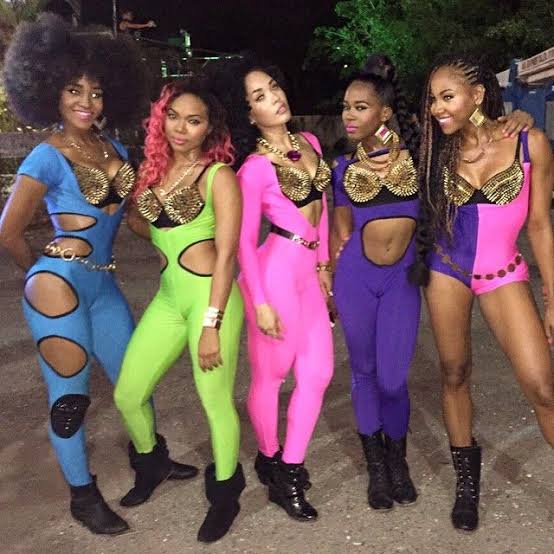
Dancehall does not stand alone within Caribbean fashion.
Carnival costume-making also requires specialist design, wirework, beadwork, featherwork, fitting, production planning, logistics and creative direction. Its makers produce complex work at scale, but mainstream fashion frequently categorises it as “culture” rather than recognising it as a serious creative industry. As Omiren Styles has examined in its analysis of Carnival fashion versus everyday Caribbean style, Kingston’s dress culture is one of the most layered in the Caribbean, shaped by the coexistence of the dancehall aesthetic system, formal professional dress, Rastafarian tradition and a youth streetwear culture that absorbs global references and Jamaicanises them without deference to their source.
The distinction between cultural admiration and institutional credit is not innocent. Fashion institutions are comfortable admiring Caribbean aesthetics. They are less comfortable treating Caribbean makers as peers with intellectual property, production expertise, commercial authority and the right to set terms. Dancehall and Carnival reveal the same pattern from different angles. Both involve high-level creative labour. Both rely on visual impact, movement, craft and collective production. Both have shaped global image-making. Both receive less institutional credit than their influence warrants.
This is not a demand for fashion to suddenly discover the Caribbean. The Caribbean has never been hidden. The demand is for fashion to stop looking without seeing.
The Omiren Argument
Some people dismiss attribution as symbolic. The clothes have already travelled, they argue. The influence has already been absorbed. What changes if fashion finally names dancehall now? A great deal.
Accurate documentation changes who gets commissioned. It changes who is hired as a consultant, stylist, photographer, curator, researcher or creative director. It changes which designers receive investment and which communities receive cultural and economic return. It changes whether a Jamaican maker becomes a source of “inspiration” or a paid author of the next visual conversation.
Attribution also changes fashion history. It stops the industry from presenting borrowed ideas as spontaneous discoveries. It gives younger creators a more truthful lineage. It tells a young woman in Kingston, Montego Bay, London, Toronto or New York that the style she sees around her is not merely local, disposable or peripheral. It has already shaped the world.
Dancehall fashion remains active. Jamaican women, dressmakers, stylists, dancers and performers continue to innovate within a culture that global fashion has not fully learned how to credit. As Omiren Styles has argued in its analysis of why the “emerging designer” label becomes fashion’s most limiting compliment, accurate attribution changes who gets commissioned, who is understood as a professional, and which communities accumulate cultural and economic authority from the work they produce. The same principle applies here: the task is not to freeze dancehall in the 1990s or turn it into a museum exhibit. The task is to treat it as a living fashion system with history, authors, rules, markets and a future.
As Omiren Styles has documented across its analysis of how cultural resistance shaped the world’s most powerful style movements, the communities that built these visual languages understood their significance long before external institutions came to name or value them. Dancehall is part of that record. The clothes came from somewhere. The record should say where.
ALSO READ
- The Global South Made Fashion. It Just Never Got Credit.
- Who Really Owns Ankara?
- Dancehall Fashion: Jamaica’s Most Influential Export That Fashion Media Refuses to Credit
- Carnival Fashion vs Everyday Caribbean Style: The Gap the Media Has Never Closed
- How Cultural Resistance Shaped the World’s Most Powerful Style Movements
- “Emerging Designer” Has Become Fashion’s Most Limiting Compliment
Frequently Asked Questions
How did dancehall create its own fashion system?
Dancehall fashion is a structured visual system, not an improvised aesthetic. It developed through Kingston’s sound-system culture from the late 1970s onward, with women building styles that had to perform under heat, movement, light and social scrutiny. The system had rules about fit, fabric weight, skin-to-coverage ratios, proportion, shine and colour. It had designers, trendsetters and a research-and-development process in which looks were tested publicly every week. Participants adapted and returned with sharper iterations. That is fashion innovation, regardless of whether fashion institutions named it as such.
What is the Dancehall Queen and why does she matter to fashion history?
Dancehall Queen competitions developed from informal street-dance contests in Kingston into organised events by the late 1980s and early 1990s. Participants used clothing, beauty, movement and performance to assert femininity, authority and public identity. Carlene Smith, Jamaica’s first official Dancehall Queen, crowned in 1992, wore cut-out leather and thigh-high boots at a moment when those looks had no name in Western fashion media. Dancehall Museum’s documentation of Carlene Smith and the Dancehall Queen legacy records how these figures named a fashion culture that global media later absorbed and renamed.
How did dancehall fashion travel from Kingston to the global fashion scene?
Dancehall’s visual culture travelled through music, migration and diaspora. As Jamaican music reached international audiences from the late 1980s onward, videos, album covers, club nights and street dances carried its clothing codes with them. Caribbean diaspora communities in London, New York, Toronto and Miami adapted Kingston’s visual grammar to different climates and club scenes, making dancehall part of Black British fashion, North American urban style and global streetwear. The internet then accelerated access, allowing stylists and trend forecasters to encounter the aesthetic directly, often without the historical context or cultural credit that should have accompanied it.
What is the difference between dancehall fashion and Caribbean fashion more broadly?
Dancehall is one strand within a much wider Caribbean fashion geography. Jamaica alone contains multiple dress cultures, including the dancehall aesthetic system, formal professional dress, Rastafarian tradition and youth streetwear. Across the region, Trinidad and Tobago’s Carnival costume-making, Puerto Rican urban style, Cuban performance dress, and other traditions each operate according to their own visual logic, makers, and histories. Dancehall is distinguished by its specific relationship to body-conscious dressing, sound-system culture, nightlife performance, female self-authorship and the social competition of Kingston’s dance spaces. For the broader picture of how these traditions intersect, read the Omiren Styles analysis of Carnival fashion versus everyday Caribbean style.
Why does attribution to dancehall matter practically, not just symbolically?
Accurate attribution changes who gets commissioned, hired and funded. When fashion cites dancehall as a source, it becomes possible to hire Jamaican makers, consultants, photographers, researchers, and creative directors as paid authors rather than as unnamed references. It changes the narrative younger designers inherit: a young woman in Kingston or London whose aesthetic references are rooted in dancehall culture learns that her visual knowledge has already shaped the world. Attribution also prevents the industry from presenting borrowed ideas as spontaneous innovation, thereby concentrating credit and economic returns in the hands of the institutions that distributed the image rather than the communities that created it.
How does dancehall connect to the wider argument about Global South fashion authorship?
Dancehall is one of the clearest examples of a pattern the Global South Made Fashion. It Just Never Got Credit. documents across Africa, the Caribbean and Latin America: creative languages travel globally, while recognition and economic power concentrate elsewhere. A Caribbean aesthetic reaches a European runway and becomes “body-conscious innovation.” A visual code from Kingston arrives in a fast-fashion collection and becomes “Y2K revival.” The original community receives cultural appreciation but not institutional credit, commissioning or financial return. As Omiren Styles has argued in its analysis of cultural resistance and global style movements, these communities understood the significance of their visual languages long before external institutions came to name or value them.
EXPLORE MORE
Read the full “The Lens” and “Fashion > Power” sections at Omiren Styles for ongoing analysis of Caribbean fashion, dancehall’s design legacy, and the wider argument about Global South creative authorship. Discover travel and heritage intelligence across Africa and the Caribbean at Rex Clarke Adventures.