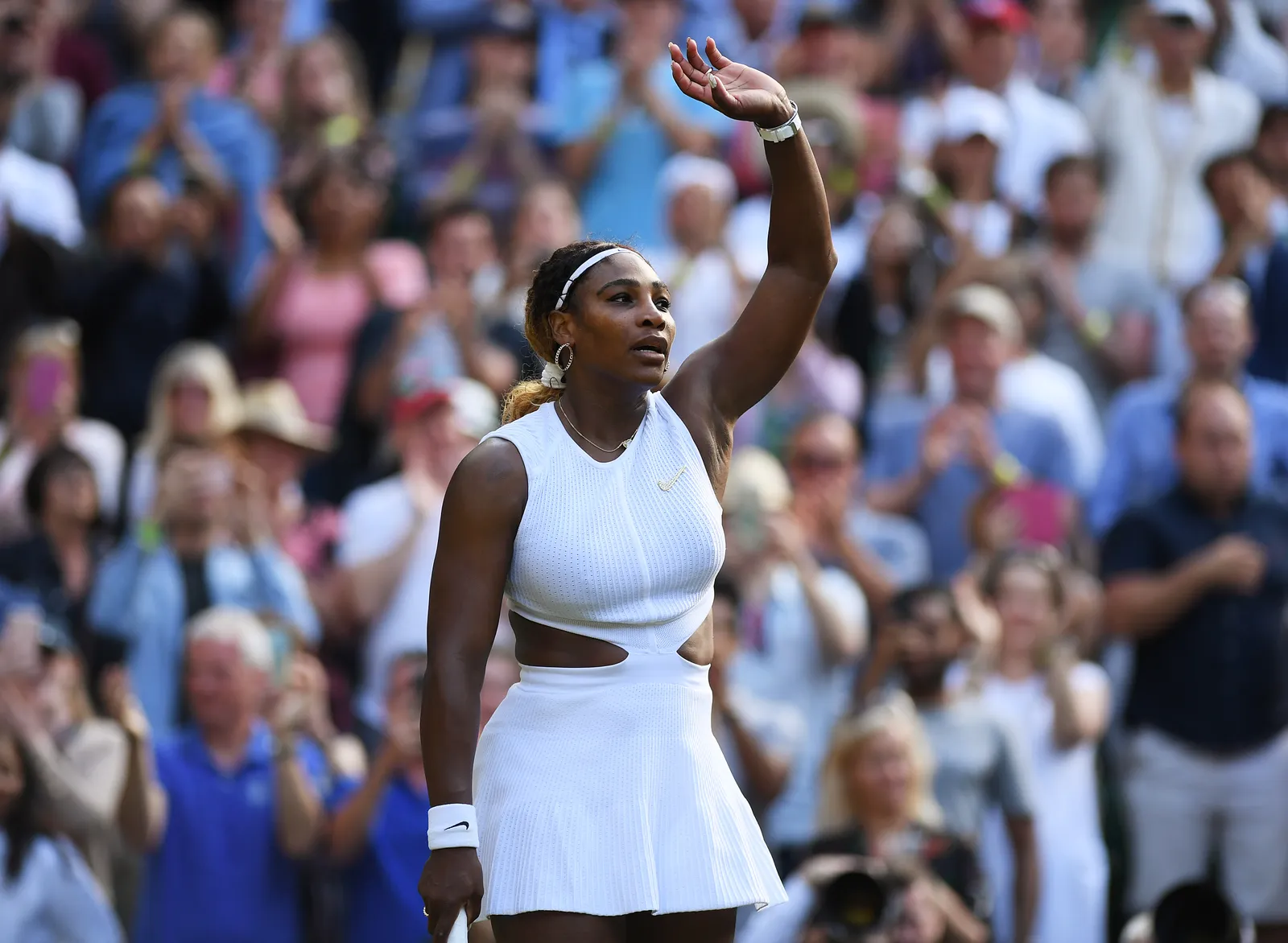
At Wimbledon 2019, Serena Williams wore a white Nike dress. That is the compliant reading. The dress was all-white, sweater-knit, fitted with a flared pleated skirt and subtle waist cutouts. It met Wimbledon’s dress code with precision: almost entirely white, colour trim capped at one centimetre, visible underlayers white. The rule was followed. Then you looked at the logo.
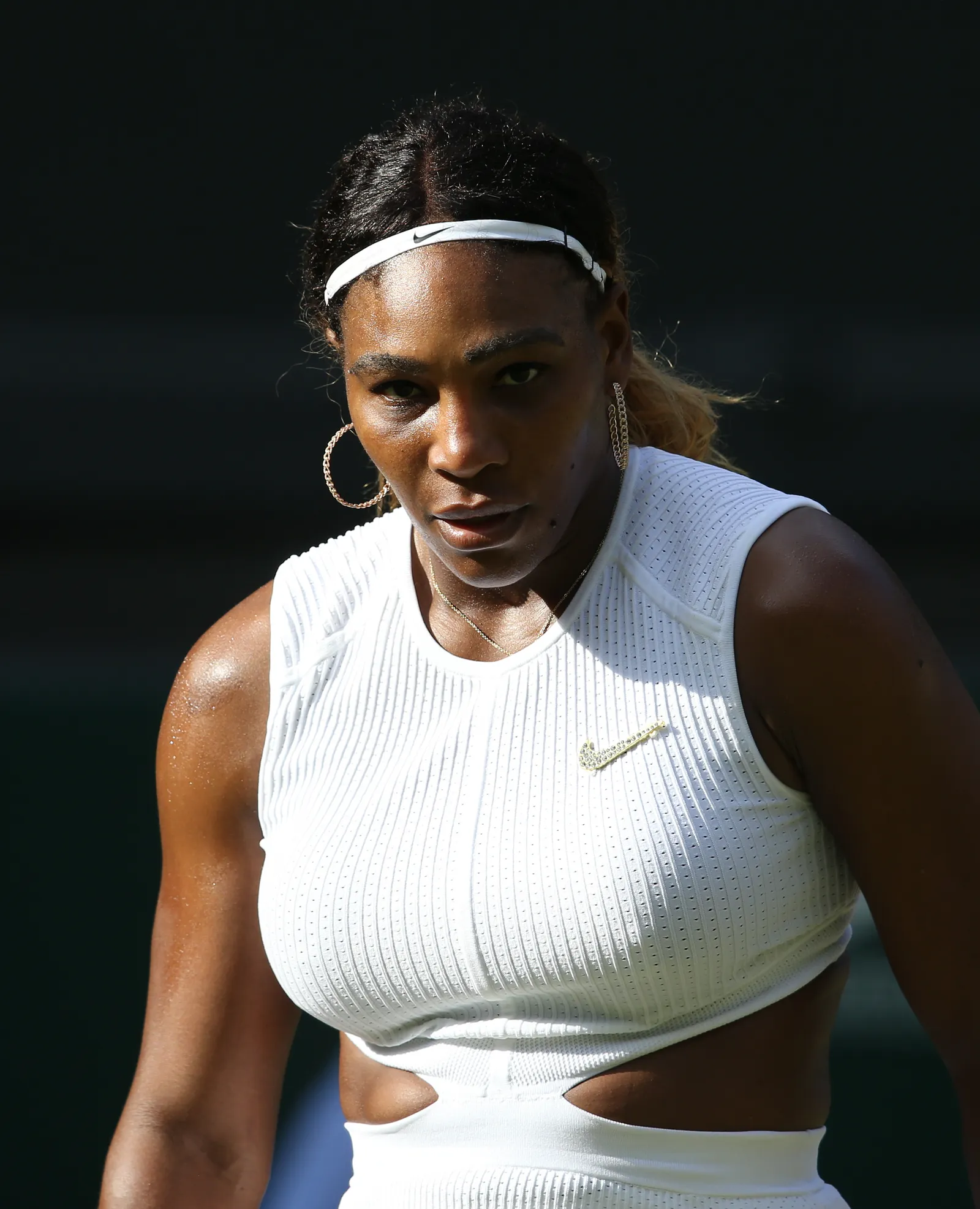
The swoosh was not printed. It was not embroidered. It was a brooch: a swoosh-shaped clasp set with 34 Swarovski crystals, one for each year of Serena’s age when she last lifted the Wimbledon trophy in 2016. Nike’s design team called it the Broosh. The name stuck because the object did something unusual. It turned a corporate logo into a piece of jewellery. It turned a piece of jewellery into a wearable archive. And it turned a wearable archive into a political argument, made inside one of sport’s most conservative visual codes, in the smallest permitted space available.
This is the essay about the Broosh. Not about the look. About what the Broosh is, why it works, and what it reveals about how Black women have learned to operate inside institutions that regulate their bodies and then dare them to be interesting anyway.
At Wimbledon 2019, Serena Williams wore a white Nike dress with a swoosh brooch made of 34 Swarovski crystals. This essay reads that accessory as Black womanhood, memory and quiet rule-bending inside tennis’s strictest visual code.
What the Broosh Actually Is
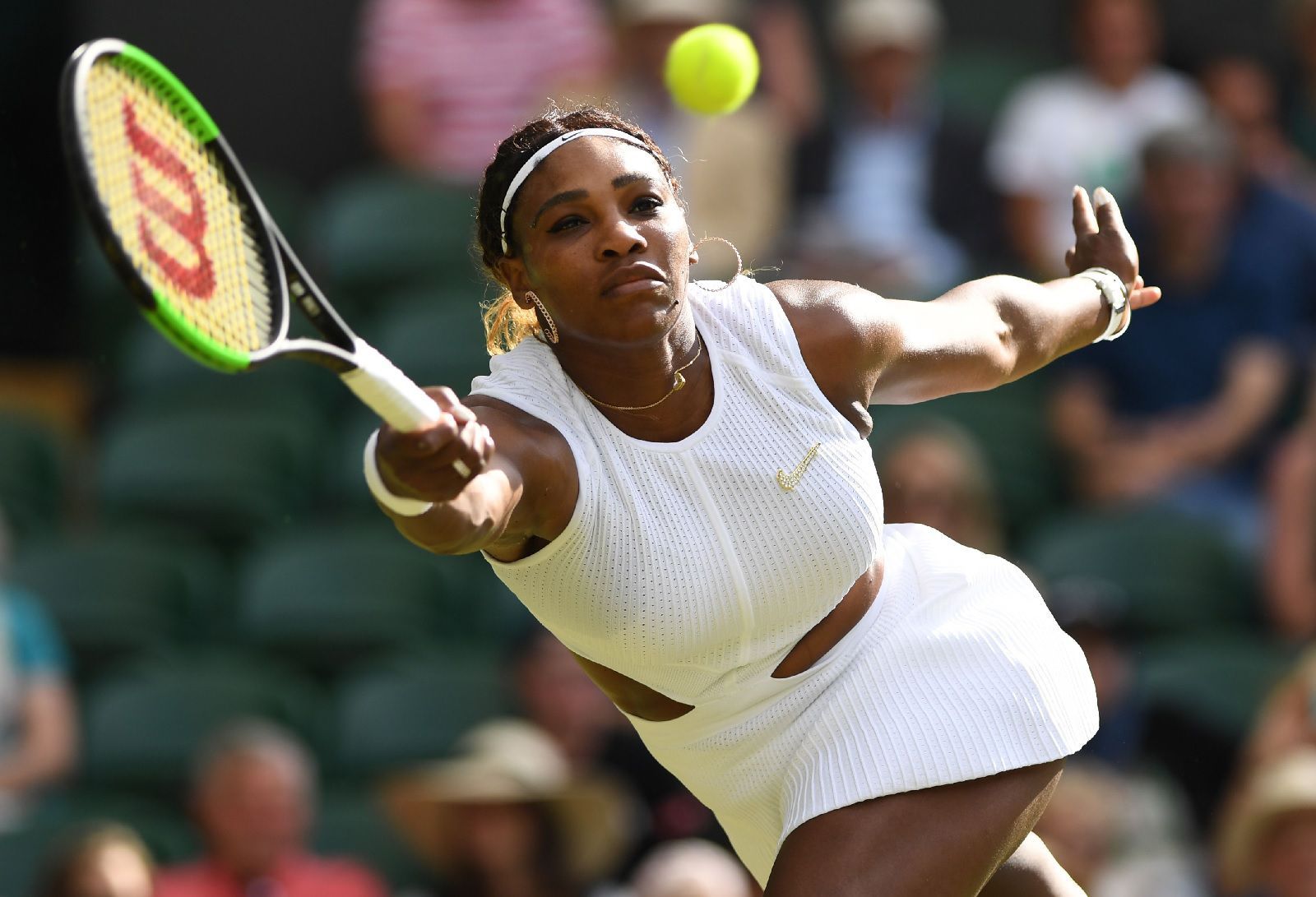
The design brief, according to Nike designer Abby Swancutt, was specific: the Broosh should feel like something Serena’s grandmother could have worn, but with a modern twist made for Serena. That brief is doing a great deal of work in a very small space. It is asking the object to be functional, ceremonial, intergenerational, and personal simultaneously, inside a venue that does not generally welcome any of those categories.
The 34 crystals are the object’s most precise move. They do not say Swarovski. They do not say, Nike. They say 34. They say the last time she won here, she was 34. They say she remembers. They say she came back. They say the number is still relevant because the body wearing it is still in contention. This is what Afro traditions of jewellery and adornment have understood for centuries: that objects worn on the body can simultaneously carry biography, cosmology, and memory. Beaded waist chains that record fertility and status. Ancestral charms worn in competition for protection and connection. Numerical symbolism in jewellery that marks rites of passage. The Broosh is part of that tradition, even when it falls within the Wimbledon dress code.
34 crystals. Not Swarovski. Not Nike. 34. The last time she won here, she was 34. She remembers. She came back.
Dress-Code Brinkmanship
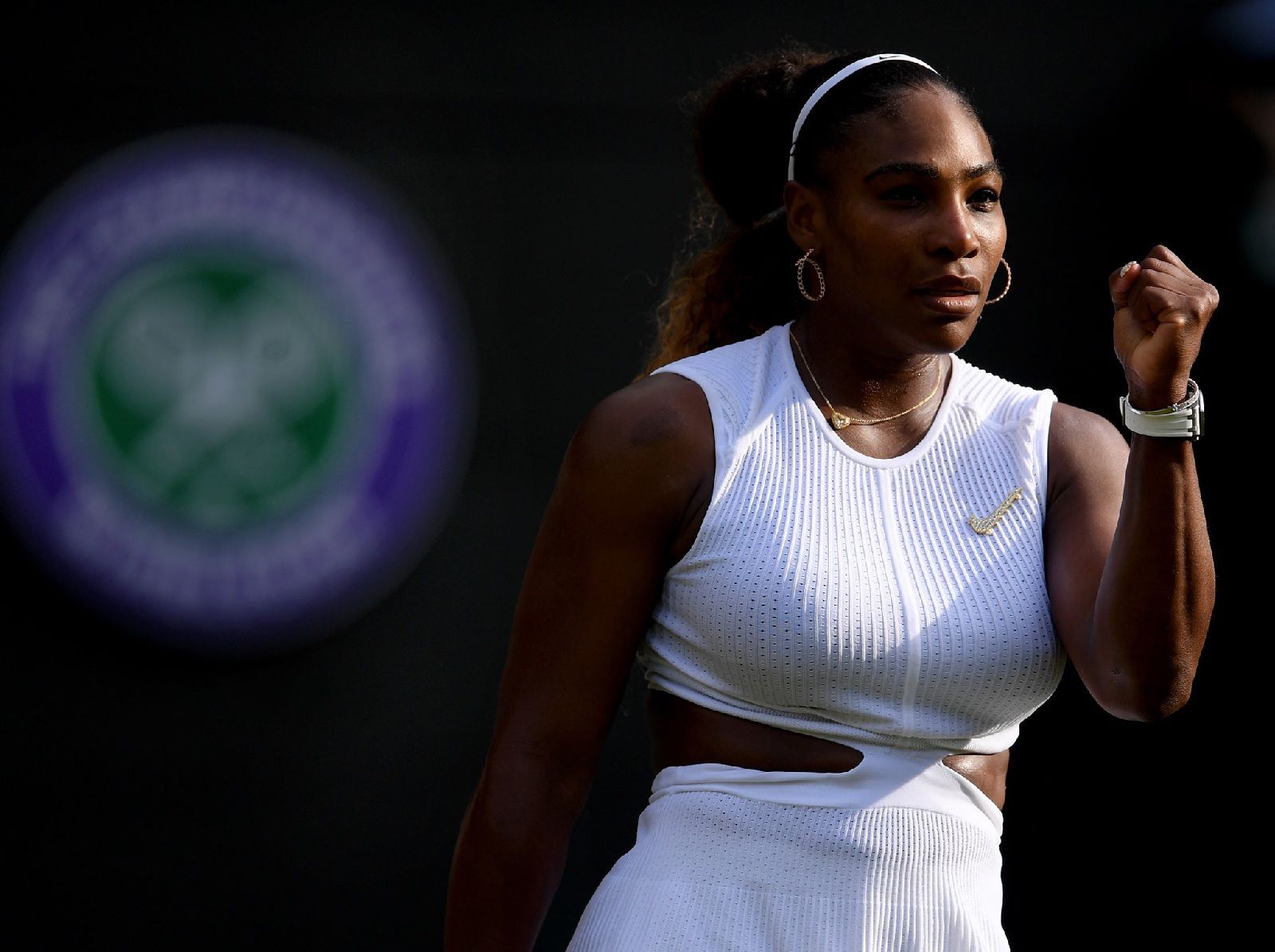
Wimbledon’s clothing rule applies to dresses, shoes, visible undergarments, and trim. Jewellery and small accessories sit in an ambiguous zone: tolerated as long as they do not disrupt the aesthetic. That ambiguity is the gap Serena used. She moved the battle to the logo itself, the one surface that was already there, already regulated, already corporate, and therefore already beneath the threshold of institutional concern. A brooch on a swoosh is not a catsuit. It is not a tutu. It is not the kind of statement that gets banned by the French Tennis Federation. There are 34 crystals on the logo if you count the crystals.
This is dress-code brinkmanship: maximal meaning in minimal permitted deviation. The Broosh achieves more argument per square centimetre than almost any piece of tennis dress recorded. It does not break the rule. It saturates the rule with content it was not designed to accommodate. The institution sees a swoosh. Serena’s community sees a timeline, a number, a memory, a declaration that she was here before and intends to be here again.
ALSO READ
- Wimbledon said ” White Only. Naomi Osaka Said White Will Carry My Heritage.
- Black on Green: Afro Representation at Wimbledon, from Althea Gibson to Naomi Osaka
- The Cultural Codes of Dressing Well: What Every Society Understands About Style and Respect
From Catsuit to Crystal: Creative Adaptation
The Broosh cannot be read without the French Open catsuit. In 2018, Serena wore a black compression catsuit at Roland Garros, designed partly for medical reasons: she had suffered blood clots after childbirth, and the compression helped her circulation. The French Tennis Federation banned it anyway. Bernard Giudicelli, then president of the FFT, said it “went too far” and that “one must respect the game and the place.” Nike’s response was immediate: “You can take the superhero out of her costume, but you can never take away her superpowers.” The catsuit was banned. Serena arrived at Wimbledon the following year in regulation white. She also arrived with the Brooch.
The lesson the Broosh teaches is that Black women have always known how to adapt. When one form of self-expression is policed, the argument shifts to another register. Bold silhouettes trigger institutional anxiety: move the battle to detail. The catsuit is banned: arrive in perfect white and put the argument in the logo. The dress code is non-negotiable: make it carry everything it was trying to prevent. This is not a retreat. As Omiren Styles has documented in the analysis of how diaspora communities practise strategic compliance as a long game rather than a compromise, the shift in register is itself the argument. You are not defeated when you move to a smaller surface. You are demonstrating that there is no surface small enough to be without politics when the body wearing it is a Black woman in a space that has spent a century deciding who belongs there.
Grandma’s Brooch, Granddaughter’s Grand Slam
Swancutt’s reference to Serena’s grandmother is the most important detail in the Broosh’s design history and the most under-discussed. The grandmother’s brooch is not a sentimental detail. It is a specific cultural object. In Black British and Black American communities, Sunday-best dress has long included the brooch: worn on the lapel of a church coat, pinned to the collar of a blouse for a formal occasion, selected from a jewellery box that was itself a family archive. The brooch was part of the respectability uniform, the dress code that Black communities developed to demand recognition within institutions not built for them.
Serena Williams’ grandmother wore a brooch to church. Serena Williams wears a Swarovski crystal swoosh on Centre Court. The design logic is the same: dress impeccably within the rules of the institution, and then make the dress carry something the institution did not ask for and cannot easily remove. The Broosh is intergenerational. It connects the grandmother’s Sunday best to the granddaughter’s Grand Slam in a direct line. It says: we have always known how to do this. We have been doing this for a very long time. We brought the brooch with us.
White as Canvas, Not Cage
The Broosh does not stand alone. It sits within an outfit that is doing the same work at every level. The sweater-knit dress has cutouts that add shape and edge within the white constraint. The shoes include crystal accents that extend the jewellery logic down to the feet. The whole look is a single argument made in three registers: silhouette, accessory, and footwear. All white. All compliant. All carried more content than Wimbledon’s dress code was designed to hold.
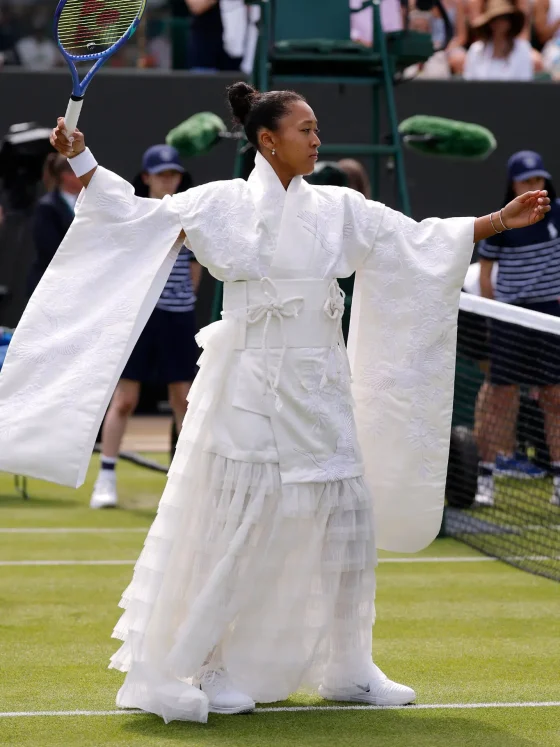
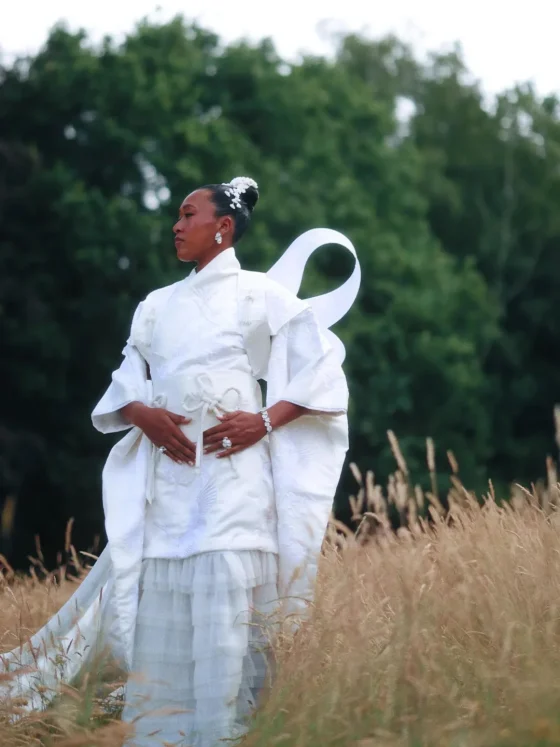
This is where Serena and Osaka meet. As Omiren Styles documented in the analysis of how Naomi Osaka used upcycled shiromuku silk and Heian court references to make Wimbledon’s white rule carry Japanese ceremonial heritage, both athletes treat the white dress code as a canvas rather than a constraint. Serena’s canvas is memory, number, and intergenerational jewellery. Osaka’s canvas is ceremonial heritage, upcycled silk, and diaspora identity. The dress code is the same. What they put on it is entirely their own. Together, they demonstrate that Wimbledon’s white rule does not flatten the people wearing it. It reveals them, because what you choose to inscribe on a constrained surface tells you more about the person than a blank one ever could.
Jewellery has always been the space in tennis with the most freedom. Bracelets, earrings, watches: the “tennis bracelet” itself is named for Chris Evert, who asked for a match to be stopped after her diamond bracelet fell off during the 1987 US Open. The court has never been without gems. What Serena did with the Broosh was not introduce jewellery to tennis. It was making jewellery the site of the argument, the logo the location of the claim, the accessory the essay.
Why Omiren Styles Is Reading the Crystals
The Broosh matters to Omiren Styles because it is a case study in what Black women do when institutions regulate their bodies and then leave them one centimetre of freedom. They use the centimetre. They use the logo. They use the grandmother’s brooch tradition. They put 34 crystals on a swoosh, walk onto Centre Court, and the institution says the rule has been followed and they are compliant. But the compliance carries a number that marks a woman’s timeline on a stage that did not invite her to have one.
From Althea Gibson’s immaculate regulation whites in 1957 to Arthur Ashe’s tactical conservatism in 1975 to the Williams sisters’ visible Black femininity to Coco Gauff’s normalised excellence to Osaka’s shiromuku silk: the through-line is the same. The rule is followed. The rule is made to carry more than the rule was written for. The institution says nothing has been broken. The community reads every crystal.
Omiren Styles will be watching what comes next. The Broosh was one moment inside a decade of Black women making Wimbledon’s white canvas carry Black womanhood, memory, and style intelligence. That decade has not ended. The brooch tradition has not ended. The argument is still being made, one crystal at a time, on the smallest available surface.
ALSO READ
- African Diaspora Fashion: The Dress Code in London, Paris, and New York
- Two Generations, One Fabric, Two Different Meanings
- African Royal Dress Is Not Decoration. It Is Governance.
Frequently Asked Questions (FAQs)
What was Serena Williams’ Wimbledon 2019 outfit?
Serena Williams wore an all-white sweater-knit Nike dress with a flared pleated skirt and subtle waist cutouts, fully compliant with Wimbledon’s all-white dress code. The defining detail was the Broosh: a swoosh-shaped brooch set with 34 Swarovski crystals, one for each year of her age when she last won Wimbledon in 2016. She also wore crystal-accented shoes, extending the jewellery logic across the full outfit.
What does the 34 in Serena Williams’ Swarovski brooch mean?
The 34 crystals correspond to Serena Williams’s age when she won her most recent Wimbledon title in 2016. The number makes the Broosh a wearable timeline: a reminder that she won there before, that she remembers, and that she returned to the tournament with that history on her body. Nike designer Abby Swancutt described the brief as wanting the object to feel like something Serena’s grandmother could have worn, connecting the accessory to a Black tradition of wearing significant jewellery on important occasions.
Did Serena Williams’s dress break Wimbledon’s dress code?
No. Wimbledon’s dress code requires players to be almost entirely in white, with colour trims capped at one centimetre, applied to dresses, shoes and visible undergarments. Jewellery and small accessories sit in an ambiguous zone that the rules tolerate as long as they do not disrupt the aesthetic. The Broosh is technically a white swoosh-shaped brooch and was deemed fully compliant by the tournament. Its significance lies in what it carries within that compliance rather than any breach of the rules.
How does the Broosh connect to Serena Williams’ French Open catsuit ban?
In 2018, Serena Williams wore a black compression catsuit at Roland Garros, designed partly for medical reasons related to blood clot prevention after childbirth. The French Tennis Federation banned it the following year, saying it went too far and must respect the game and the place. Serena arrived at Wimbledon 2019 in regulation white and placed her argument in the logo instead. The Broosh is a creative adaptation: when one form of self-expression is policed, the battle moves to a smaller surface. The argument does not disappear. It concentrates.
Why does the Serena Williams Broosh matter for Afro sports fashion?
Because it demonstrates the most precise form of dress-code brinkmanship in Wimbledon’s recent history: maximal meaning in minimal permitted deviation, the Broosh turns a corporate logo into a wearable archive, connects the grandmother’s Sunday-best brooch tradition to a Grand Slam stage, and makes 34 crystals carry a Black woman’s timeline inside one of sport’s most conservative visual codes. It sits within the Afro Wimbledon lineage documented by Omiren Styles: Gibson and Ashe using whites as legitimacy; the Williams sisters using whites as a canvas; Osaka using whites to carry diaspora heritage. The brooch is where Serena moved the canvas to the jewellery box and made the argument in crystals.