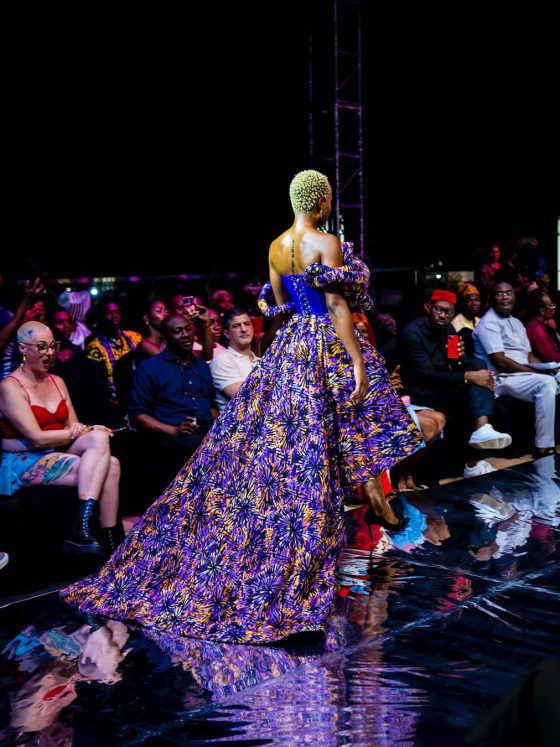
In January 2020, Imane Ayissi became the first sub-Saharan African designer to show on the official Paris Haute Couture calendar as a guest member of the Federation de la Haute Couture et de la Mode. He had applied twice and been rejected before being invited. He had been designing in Paris since the 1990s. The Federation had existed since 1868. The arithmetic of that timeline is not a story about African fashion arriving in Paris. It is a story about a structure that excluded African presence for over a century and then, when it finally could not ignore the quality of what it had excluded, admitted one designer as a guest, not a full member, at the age of fifty-one, after decades of work. That admission is not a triumph for French fashion. It is evidence of the debt’s length.
African designers and creatives are not bringing a new perspective to French fashion. They are auditing it and finding their own contributions already embedded, unacknowledged, and unpaid.
What the Maison System Was Built to Protect
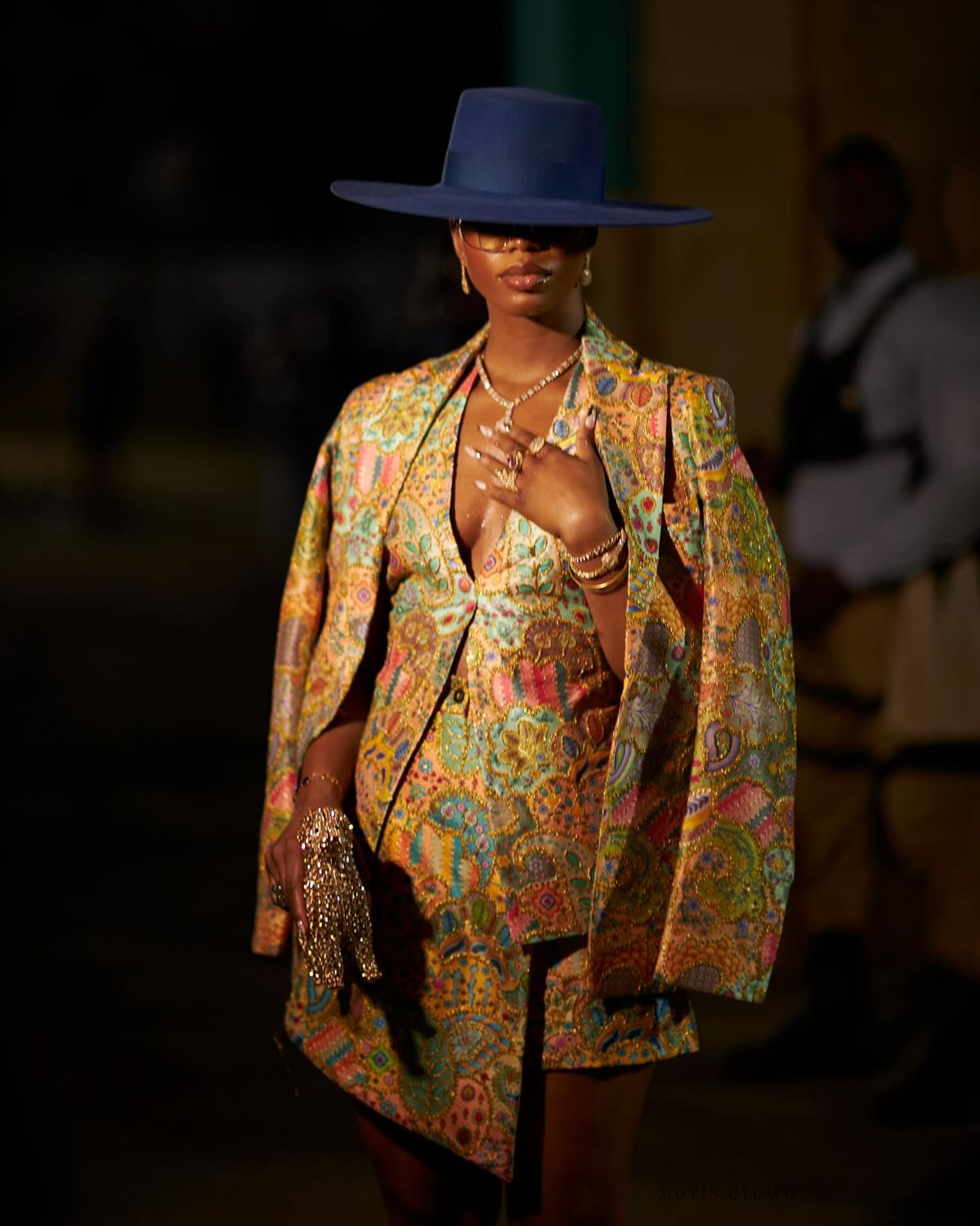
The Paris haute couture system is the most legally protected fashion structure in the world. The designation ‘haute couture’ is not a style description. It is a legally defined term governed by the Federation de la Haute Couture et de la Mode, which sets the criteria a house must meet to use it: a minimum number of employees, hand-produced garments made to order, collections presented twice yearly in Paris with a minimum number of looks. These criteria were established to protect French luxury fashion as French cultural and commercial property. They were not designed with African designers in mind. They were not designed with any non-European designer in mind.
Guest member status, the category under which Ayissi shows, is a specific tier that allows a designer to show during Haute Couture Week but not to use the term “haute couture” in their marketing or commercial communications. The tier exists partly to provide the Federation with the cultural-diversity optics that contemporary fashion requires, without diluting the commercial protection the designation provides. The distinction between guest membership and full membership is not ceremonial. It is commercial and legal, and it determines what a designer can claim in markets, in press materials, and in product labelling globally.
Ayissi has spoken directly about the commercial difficulty of his position. Without an investor behind him and showing alongside houses with the resources of Chanel and Dior, he has described the experience as demanding adaptation rather than complaint. In an interview with AFP following his Spring/Summer 2024 collection, he identified the failure to protect African intellectual property as a central structural problem, citing UNESCO data showing that 81% of cotton exported from Africa is raw, processed elsewhere, and sold back to the continent at higher prices. His collections, built from Obom bark cloth from Cameroon, kente from Ghana, kapok fibres from Burkina Faso, and raffia sourced across the continent, represent a direct challenge to the assumption that African materials are raw input and European design is the finished product.
The African Presence That French Fashion Has Always Had
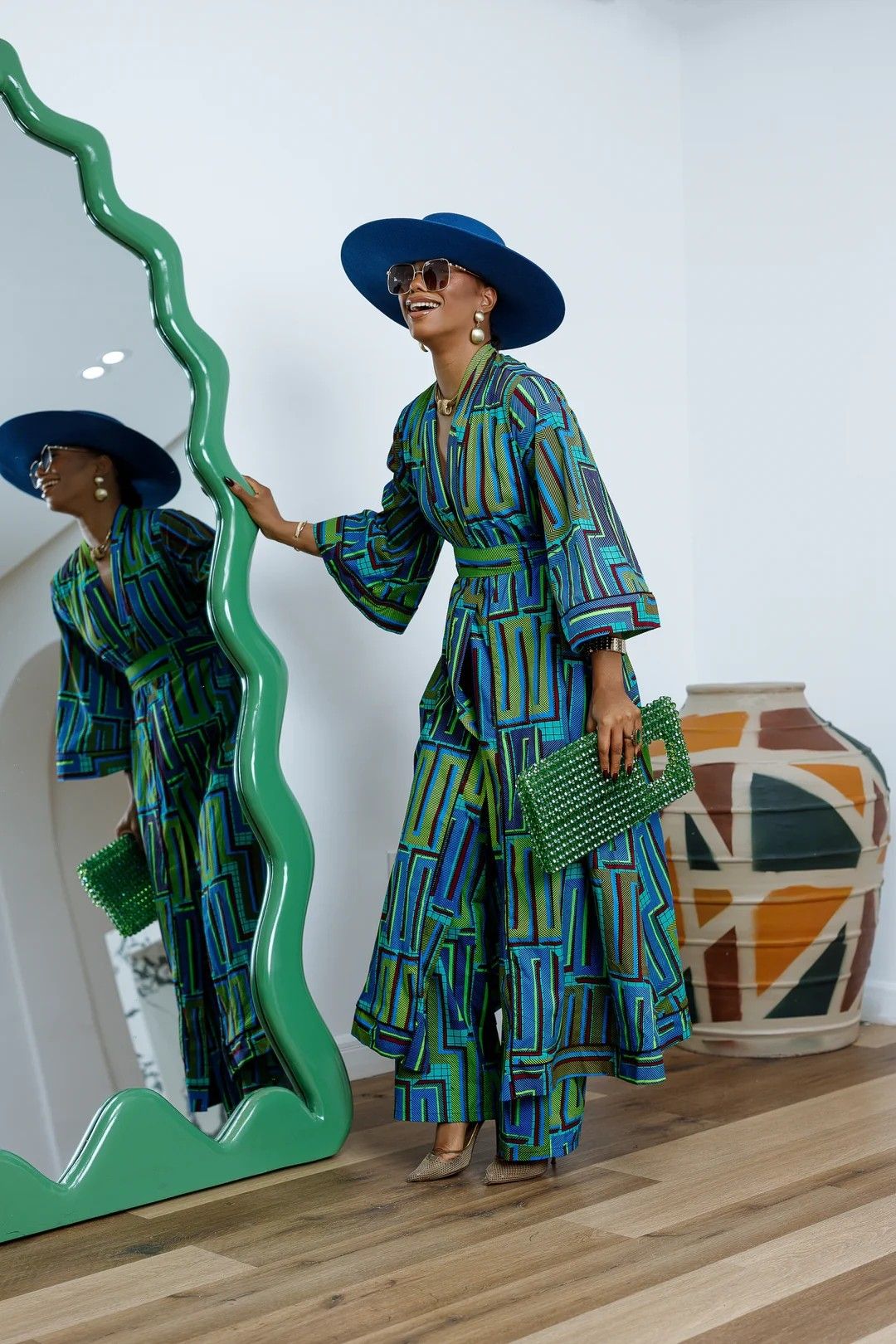
The framing of African designers and creatives as a new force entering French fashion misreads a longer history. The presence of African and African diaspora communities in French fashion is not new. It has been present since at least the 1920s, when Josephine Baker arrived in Paris from St Louis, Missouri, and became one of the most celebrated performers in the city. Baker was not simply an entertainer who influenced fashion. She was a collaborator with the Parisian fashion system: she wore Poiret, Patou, and Schiaparelli, she was photographed for Vogue, and her visual presence helped shape the French fascination with African aesthetics that ran through the modernist period and fed directly into the design innovations of that era.
Baker’s contribution to French fashion was extracted without attribution, just as African aesthetic influence on the broader modernist movement was. The African sculptures that informed Picasso’s Cubism, displayed at the Trocadéro museum in 1907, were not credited as design sources in the subsequent commercial development of the aesthetic they inspired. The relationship between African visual culture and French artistic production in the twentieth century has been one of consistent extraction paired with consistent silence about the source.
The most direct structural intervention in this history came in 1988, when Patrick Kelly, an African American designer from Vicksburg, Mississippi, became the first American designer admitted to the Chambre Syndicale du Prêt-à-Porter, the governing body of the French ready-to-wear industry. Kelly had moved to Paris in 1980, sold dresses on the street, built his practice without institutional support, and produced collections that drew directly on Black American cultural identity while operating at the centre of the global fashion system. His admission was historic. His death from AIDS in 1990, at thirty-five, ended a career that had barely begun to establish itself institutionally. The space he had opened did not stay open. The Chambre did not admit another Black designer to comparable status for decades.
Goutte d’Or: The African Fashion District in Paris Built Without Naming
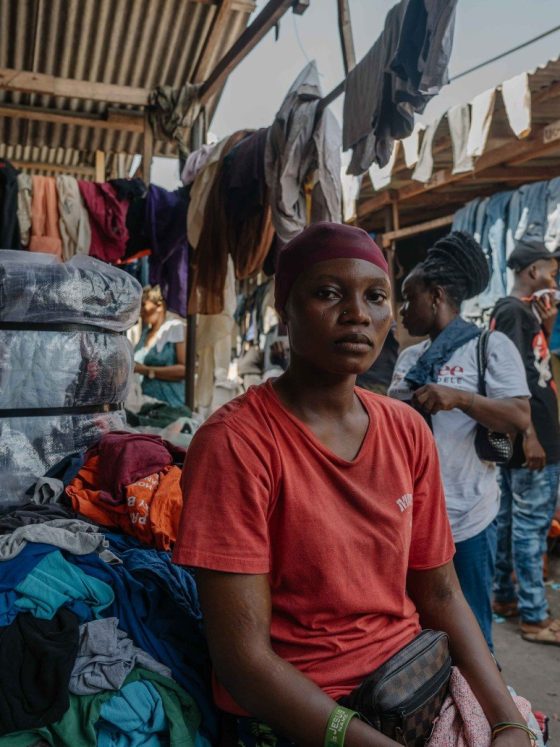
In the 18th arrondissement of Paris, the Goutte d’Or neighbourhood and its centre at Chateau Rouge constitute the most concentrated African textile and fashion commercial ecosystem in France. The area has been home to West and Central African, North African, and Caribbean immigrant communities since the early twentieth century, when the French government employed over half a million colonial workers for its industries during World War I, many of whom settled in the surrounding streets. By the 1980s and 1990s, Chateau Rouge had become the primary site of wax fabric retail in Paris, with traders sourcing cloth directly from West Africa and supplying a community whose fashion requirements the mainstream French retail sector did not serve.
The Rue Myrha, known locally as the Rue de la Mode, was redeveloped specifically to create spaces for young African and African-heritage fashion and textile designers. The Fabrique de la Goutte d’Or, a production facility established in the neighbourhood, has provided manufacturing infrastructure for designers working with African textile traditions. The wax fabric shops along Rue des Poissonniers and Rue Poulet constitute a commercial infrastructure that has supplied Paris’s African fashion culture for decades, with traders whose knowledge of West African textile production is among the deepest in Europe.
It was from this neighbourhood that Maison Chateau Rouge was founded in 2015 by Youssouf Fofana, a French designer of Senegalese heritage, and his brother Mamadou, as a label that drew directly on the commercial and cultural ecosystem of the 18th arrondissement. The name was an explicit tribute to the neighbourhood. The fabrics for the label’s collections were sourced from the wax traders of the surrounding streets. The label was manufactured in Paris. Maison Chateau Rouge’s rapid international success, including collaborations with Nike for the Jordan Brand’s Paris 2024 Olympics collection and with Lacoste in 2024, established that an African-rooted Parisian fashion identity had global commercial viability. The mainstream French fashion press, which had largely ignored the African fashion ecosystem of Goutte d’Or for decades, discovered Maison Chateau Rouge only after it had already become internationally successful.
“African designers in Paris are not bringing a new perspective to French fashion. They are auditing an industry that contains their ancestors’ contributions, unacknowledged and unpaid. The lens has been in the room since the beginning.”
Imane Ayissi and the Audit of Haute Couture
Imane Ayissi’s position within Paris haute couture is unique and requires an understanding of its full specificity. Born in Cameroon, he trained as a dancer with the Ballet National du Cameroun, moved to Paris in the early 1990s, and worked as a model for Dior, Lanvin, Givenchy, Yves Saint Laurent, and Valentino before establishing his own label in 2004. He debuted at Paris Haute Couture Fashion Week in 2010. His 2020 invitation as a guest member of the Federation, making him the first sub-Saharan designer on the official haute couture calendar, came after the Federation had rejected his applications twice. The rejection, followed by eventual invitation, is the structure of the Maison system’s relationship with African talent in condensed form: exclusion until the exclusion becomes untenable, then admission on terms the system controls.
Ayissi’s collections are built from African materials that have no equivalent in the European textile tradition. Obom bark cloth from Cameroon. Kente from Ghana. Faso Dan Fani striped cotton from Burkina Faso. Raphia. Kapok. These are not materials that French couture houses have access to through their established supply chains. They are materials that Ayissi sources directly, that carry specific cultural and geographical identities, and that are incorporated into garments whose construction draws on both French haute couture technique and African dress tradition. The result is not a hybrid. It is a work produced by someone who has mastered both traditions and chooses to honour both without subordinating one to the other.
His Spring/Summer 2025 collection, shown at the Galerie Bourbon in Paris’s 16th arrondissement, centred on the boubou, worn across West and Central Africa, and the kaba, a dress form imposed on Cameroonian women by European colonisers in the nineteenth century and subsequently claimed as national dress. The choice to build a haute couture collection around a garment that colonialism imposed, reframed as formal cultural inheritance, is not a fashion statement. It is a historical argument about who owns the forms that colonialism produced and what it means to present them in the house of their producers.
Africa Fashion Up and the Institutional Infrastructure Question
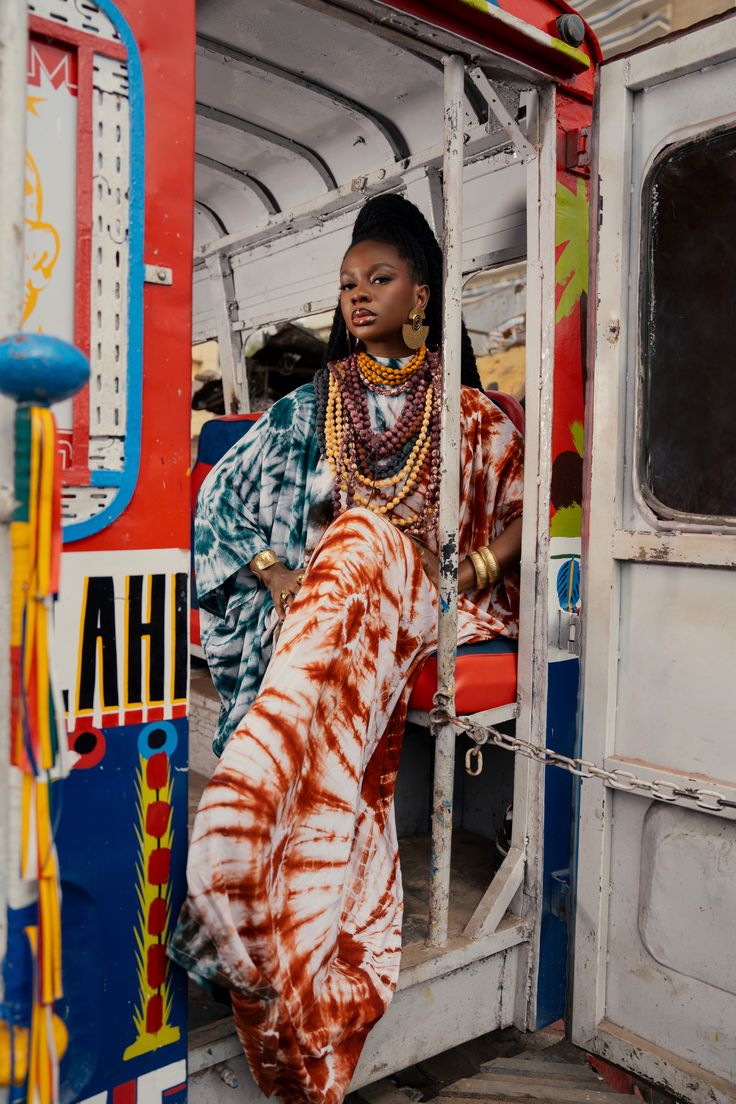
The structural challenge for African designers in Paris is not primarily about individual talent. The talent is present and documented. It is about the institutional infrastructure through which talent is converted into commercial viability: press coverage, wholesale relationships, trade show presence, and investment. Africa Fashion Up, which celebrated its fifth anniversary in 2025, was established specifically to address this gap. The programme, which partners with Galeries Lafayette, Balenciaga, Guerlain, and Istituto Marangoni, receives applications from African designers seeking visibility in the Paris market and selects finalists for presentation in the city. The 2025 edition received over 300 applications, compared to nearly 200 the year before, reflecting both the scale of African fashion talent and the scarcity of pathways for that talent to reach international commercial infrastructure.
The Afreximbank’s Creative Africa Nexus initiative, known as CANEX, took over twenty African fashion brands to the Tranoï trade show at the Palais Brongniart in Paris in September 2024, marking the first time three African designers had shown on the Paris Fashion Week runway within the programme. The brands included Emmy Kasbit from Nigeria, Thebe Magugu from South Africa, Christie Brown from Ghana, and Adele Dejak from Kenya. Their presence at Tranoï, one of the primary trade shows through which Paris Fashion Week reaches international buyers, represents a structural intervention: not a runway show for press coverage, but a trade show placement where the commercial relationships that sustain a label are actually formed. The Afreximbank initiative is building the commercial infrastructure that individual designer talent alone cannot construct, at the right level to address a structural problem.
ALSO READ
→ Lagos Is the New Fashion Capital Nobody in the West Will Officially Admit
→ The Rise of the Black Fashion District: Inside London’s African Style Scene
→ Does Wearing Your Culture Make You Exotic? The Diaspora Fashion Paradox
The Creatives Who Work Within the System From the Outside
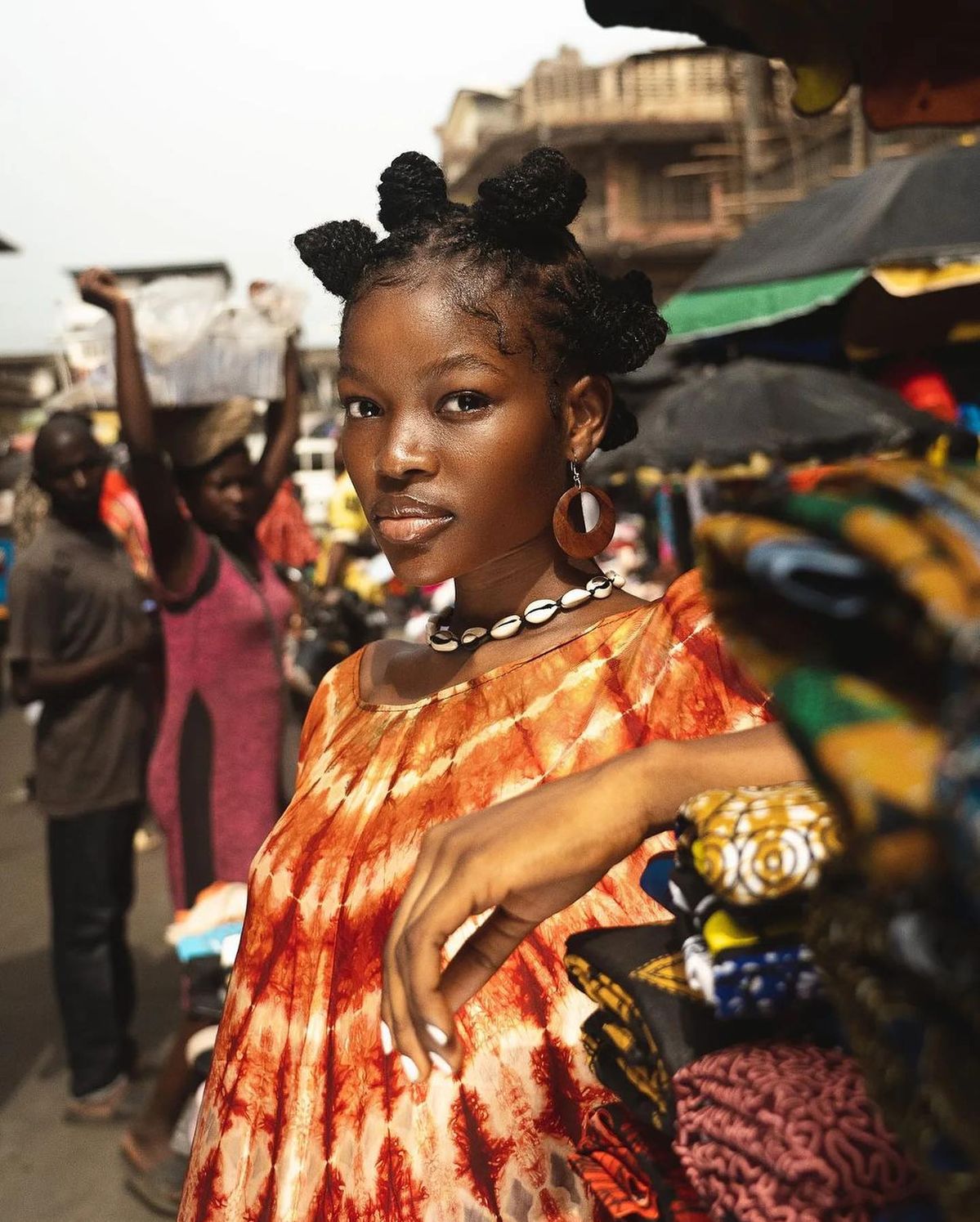
Beyond designers, the African creative presence in the Paris fashion system operates through stylists, photographers, art directors, and creative consultants whose influence on the visual language of French fashion is substantial and largely uncredited in the mainstream history of that language. The history of Black creative influence on Paris fashion’s visual culture is long enough to include Josephine Baker’s collaboration with the photographic studios that made her image one of the defining visual documents of 1920s France, and Patrick Kelly’s runway shows, which introduced a distinctly Black American visual grammar into the heart of the Parisian ready-to-wear season in the late 1980s.
In the contemporary period, creatives, including Sierra Leone-born Ib Kamara, who served as editor-in-chief of Dazed from 2021 and is currently creative director of Off-White, have built practices that operate across London and Paris with African visual authority as their explicit foundation. Kamara’s early 2026 project, produced while he was still a student at Central Saint Martins, was a collaboration with photographer Kristin-Lee Moolman that explored Black masculinity as a form of futurism. In October 2016, he took to the streets of Paris with photographer Jamie Morgan to cast and style young African-French men, producing images that made the African presence in the French capital visible in the language of international fashion editorial. His work for Dior, Chanel, Louis Vuitton, and Rihanna’s Fenty label, documented in his Art and Commerce profile, operates on a visual grammar he describes as a uniquely African body of work. The African lens is not a new addition to French fashion’s visual vocabulary. In Kamara’s work, it is the primary vocabulary, applied across the most commercially significant fashion accounts in the industry.
The African Fashion Week Paris, which held its inaugural event in September 2024 at Le19M, the Chanel-owned creative hub in the 18th arrondissement, represents a further structural development: a platform built specifically to present African designers in Paris without requiring them to seek entry into existing French fashion institutions on those institutions’ terms. The event featured designers, including Iamisigo, directed by Bubu Isigo, and Emmy Kasbit, presenting in a space architecturally and institutionally connected to the French fashion system but operating under African editorial authority. The platform is not a challenge to the Maison system from within. It is a parallel architecture being built outside it, in the same city, at the same time of year, for the same international audience of buyers and press.
THE OMIREN ARGUMENT
African designers and creatives are not bringing a new perspective to French fashion. They are auditing an industry that contains their ancestors’ contributions, unacknowledged and unpaid. France’s fashion identity was built on a set of material and aesthetic conditions that included West African cotton feeding French textile mills, colonial labour participating in the construction of the French fashion infrastructure, and the aesthetic innovations of African visual culture circulating through the modernist movement that shaped twentieth-century design without attribution to their African sources. Josephine Baker’s visual presence helped define French fashion’s relationship to African aesthetics in the 1920s. Patrick Kelly introduced Black American cultural identity into the centre of the Parisian ready-to-wear system in the 1980s and was the first American admitted to the Chambre Syndicale. Imane Ayissi spent decades building a practice in Paris before the Federation extended him guest membership, not full membership, in 2020. The lens is not new. It has been in the room since the beginning. What is new is that the people who own the lens are named, visible, and unwilling to let the industry continue presenting their contributions as anonymous.
The real challenge to the Paris fashion system is not happening on the Federation’s official calendar. It is happening in Goutte d’Or, where Maison Chateau Rouge built an internationally recognised label from the wax-fabric traders of the 18th arrondissement without institutional support, and then forced its way into the mainstream fashion conversation through the quality of its work. It is happening at Tranoï, where CANEX is placing African designers in the trade show infrastructure, where commercial relationships are actually formed. It is happening at African Fashion Week Paris, which holds its events in the same city and at the same time as the existing fashion week without petitioning the Federation for entry. These are not challenges from inside the Maison house. They are the construction of a house large enough that the Maison will eventually have to negotiate with it. Paris through an African lens is not a new perspective on an established tradition. It is the original perspective arriving, finally, with the institutional architecture to support it.
Frequently Asked Questions
Who is Imane Ayissi, and why is he significant in Paris fashion?
Imane Ayissi is a Cameroonian designer based in Paris who, in January 2020, became the first sub-Saharan African designer to show on the official Paris Haute Couture calendar as a guest member of the Federation de la Haute Couture et de la Mode. He had been designing in Paris since the early 2000s and debuted at Paris Haute Couture Fashion Week in 2010, a decade before his official calendar invitation. His collections are built from African materials, including Obom bark cloth from Cameroon, kente from Ghana, Faso Dan Fani from Burkina Faso, and kapok fibre, which are incorporated into garments that draw on both haute couture construction techniques and African dress traditions. He remains a guest member, not a full member of the Federation, a distinction with significant commercial and legal consequences.
What is the history of African influence on French fashion?
African and African diaspora influence on French fashion has a documented history dating to at least the 1920s. Josephine Baker, who arrived in Paris in 1925, became one of the most celebrated performers in the city and collaborated with French couture houses, including Poiret, while her visual presence shaped French fashion’s engagement with African aesthetics through the modernist period. In the 1980s, Patrick Kelly, an African American designer from Mississippi, became the first American admitted to the Chambre Syndicale du Pret-a-Porter, the governing body of French ready-to-wear, in 1988. The broader influence of African visual culture on the French modernist movement that shaped twentieth-century fashion, including the African sculptural tradition that informed Cubism, has been extensively documented but rarely attributed in mainstream French fashion history.
What is Maison Château Rouge, and how did it build its reputation?
Maison Chateau Rouge is a Paris fashion label founded in 2015 by Youssouf Fofana and his brother Mamadou Fofana, both of Senegalese heritage, taking its name from the Chateau Rouge neighbourhood of the 18th arrondissement, Paris’s primary African commercial district. The label sources its wax print fabrics from the African fabric traders of the surrounding streets and manufactures its garments in Paris. It grew through Instagram and online sales before entering Galeries Lafayette and international stockists. It has since collaborated with Nike for the Jordan Brand’s Paris 2024 Olympics collection and with Lacoste in 2024. Its trajectory from neighbourhood label to international collaboration is a documented case of African-rooted Parisian fashion achieving global commercial viability without initial institutional support from the mainstream French fashion system.
How are African designers accessing the Paris fashion market?
African designers access the Paris fashion market through several routes. Africa Fashion Up, which celebrated its fifth anniversary in 2025 with over 300 applications, selects African designers for presentation in Paris in partnership with Galeries Lafayette and other major institutions. The Afreximbank’s CANEX initiative placed over twenty African brands at the Tranoï trade show at the Palais Brongniart during Paris Fashion Week in September 2024, giving designers access to the international buyers who form the commercial foundation of any sustainable fashion label. African Fashion Week Paris held its inaugural event at Le19M in September 2024, presenting African designers on an independent platform in the same city during the same fashion week calendar without seeking entry to the Federation’s official schedule.
Omiren Styles covers African fashion, identity, and culture from inside the continent and its diaspora. Read more at omirenstyles.com.