Players and administrators have described Wimbledon as “too white, male and posh”. The phrase became a headline because it was accurate. For most of the tournament’s history, the grass was the visual headquarters of a very specific English idea of who sport was for, and the all-white clothing rule was not incidental to that idea. It was part of its grammar. White fabric. White history. White spectator. White world.
Black athletes changed that, not by ignoring the rule, but by entering the space it was meant to protect and refusing to leave. The story of Afro representation at Wimbledon is not one of rebellion. It is a story about presence and what it does to a space over time. From Althea Gibson in 1957 to Naomi Osaka in 2026, the progression runs from survival to strategy to creative direction. The dress code did not change. What it was made to carry did.
From Althea Gibson and Arthur Ashe to Serena Williams, Coco Gauff and Naomi Osaka, Black athletes have slowly changed what tennis whites mean at Wimbledon. This essay traces Afro presence on the grass and what it reveals about race, style and power.
Althea Gibson: The Radical Act of Being There
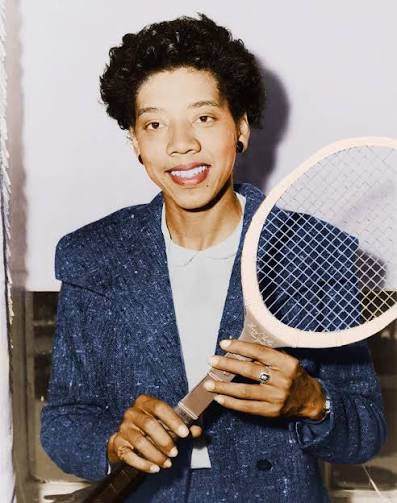
In 1951, Althea Gibson became the first Black player to compete at Wimbledon. In 1957, she became the first Black champion, winning the singles and doubles titles and receiving the trophy from Queen Elizabeth II before returning to a country that would not serve her at its finest hotels. She wore regulation tennis whites: modest, correct, compliant. Nothing about her kit was extraordinary. Everything about her presence was.
Gibson understood the negotiation she was in. She had been trained in respectability as a survival strategy, taught that impeccable dress and unimpeachable conduct were the price of admission to spaces that did not want her. She paid the price and walked in anyway. Her white kit was not a fashion statement. It was a statement about the right to occupy the same court as the people who had decided, decades before her birth, that the court was not hers. She won it twice. They gave her a ticker-tape parade in New York. They still would not let her in the front door of the tournament hotel. The whites were immaculate. The welcome was not.
Arthur Ashe: Quiet Disruption in Classic Whites
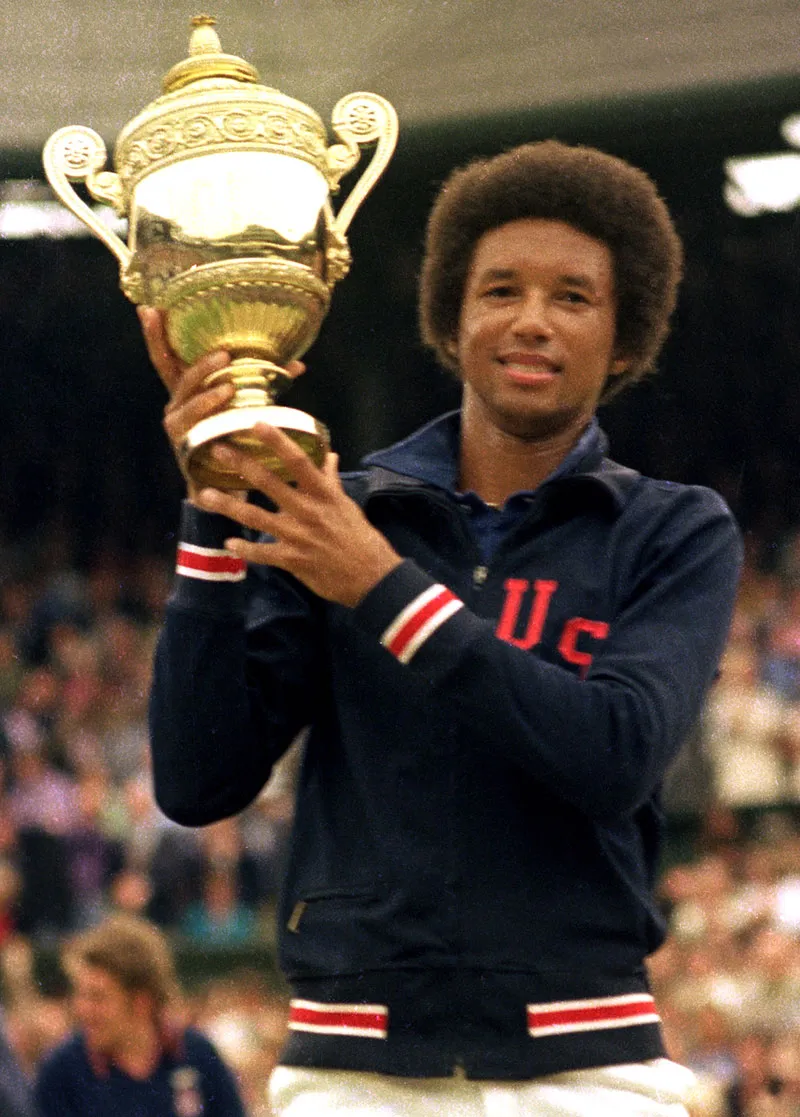
Arthur Ashe’s 1975 Wimbledon victory made him the first Black men’s singles champion. His kit was conservative to the point of invisibility: classic whites, clean silhouettes, nothing that gave the gatekeepers a reason to look at the clothes rather than the tennis. This was tactical. Ashe was one of the most politically outspoken athletes of his generation, a vocal opponent of apartheid who pushed for South Africa’s exclusion from Davis Cup and the ATP Tour. He knew exactly what his presence on Centre Court meant and exactly how much his clothes had to get out of the way of that meaning.
The lesson of Ashe at Wimbledon is that strategic compliance has always been part of the Afro-sporting toolkit. You wear what they require. You play on the stage they built. You win on the terms they set. And then the stage belongs, partially, irrevocably, to someone they never designed it for. The rule is followed. The rule has also changed. Both things are true, and both things were the point.
The dress code did not change. What it was made to carry did.
ALSO READ
- Wimbledon said ” White Only. Naomi Osaka Said White Will Carry My Heritage.
- The Cultural Codes of Dressing Well: What Every Society Understands About Style and Respect
- African Diaspora Fashion: The Dress Code in London, Paris, and New York
Serena and Venus: From Allowed to Be There, to Deciding How It Looks
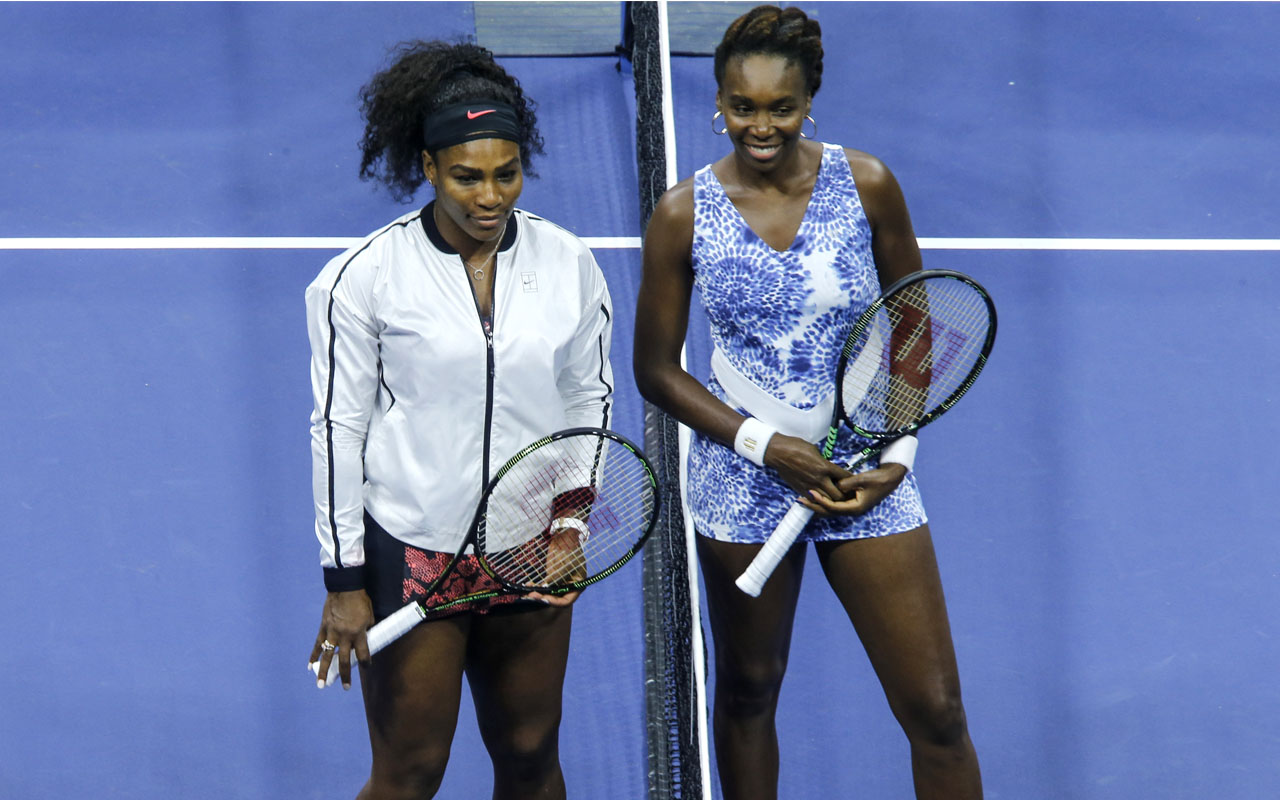
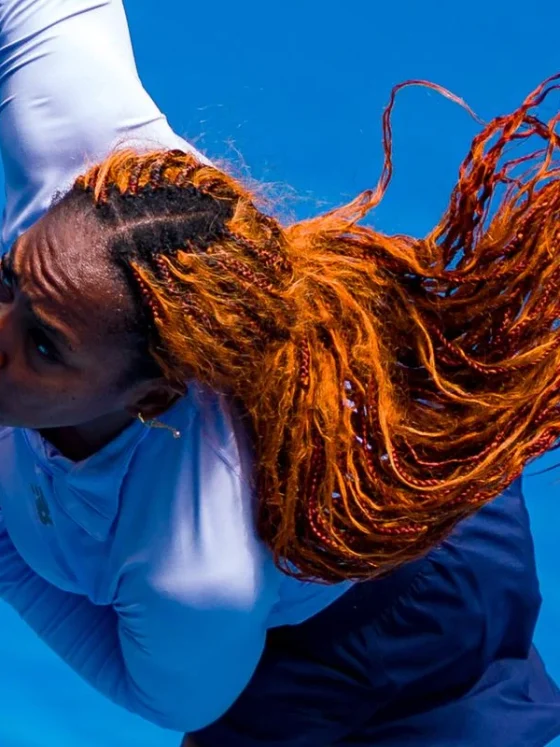
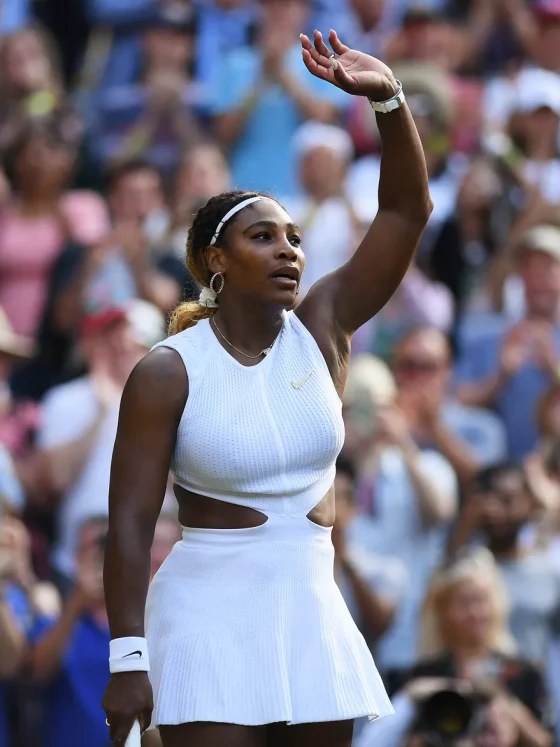
The Williams sisters changed the register. They arrived not as the first Black women on the grass but as Black women who had decided that the grass would look different now that they were on it. Hair in beads and braids, jewellery worn with intention, bodies that moved through tennis whites in ways those whites had never been designed to accommodate: the look was not rebellion, it was authorship. At Wimbledon 2019, Serena walked out in an all-white Nike dress with a Swarovski crystal swoosh, 34 crystals referencing her age at her last title. The Broosh, as it came to be known, was everywhere within hours. It was technically compliant. It was also a message that Black women had stopped merely wearing the dress code and started designing it.
This is the shift Gibson could not make, and Ashe did not attempt, not because they lacked the imagination but because the space had not yet been forced open enough. The Williams sisters forced it open. They turned tennis whites from a requirement into a canvas, then handed it to every Black woman who followed them onto the grass. As Omiren Styles has documented in the analysis of how Afro and diaspora designers have moved from permitted presence to creative authority, the moment a space stops asking whether you belong and starts asking what you will do with it is the moment representation becomes something else: co-authorship.
Coco Gauff and a New Generation: From Exception to Expectation
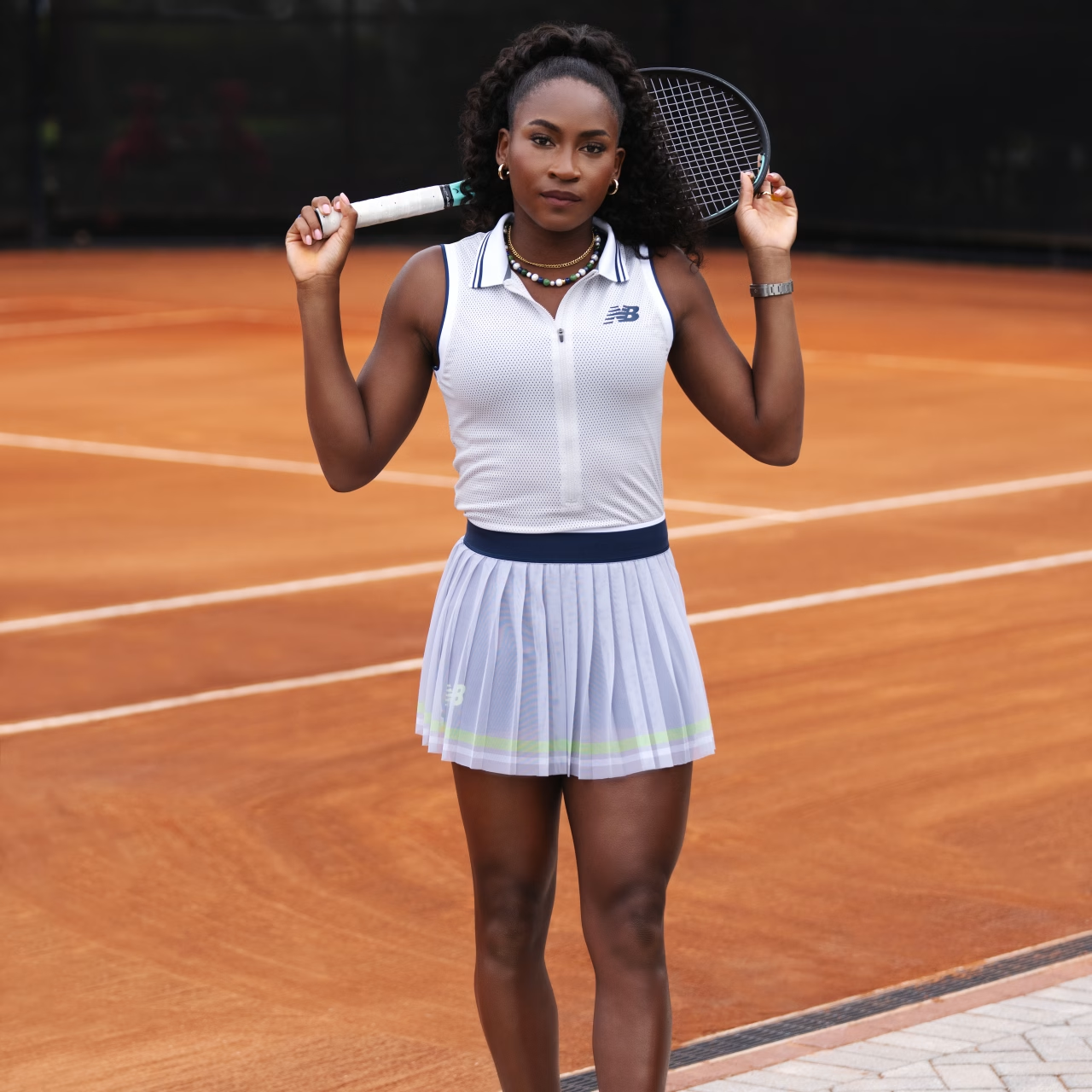
At Wimbledon 2026, at least fifteen Black players are in the singles draws, with additional representation in doubles. Coco Gauff is seeded. Frances Tiafoe is present. Robin Montgomery and others from the generation behind them are building careers on a surface that their predecessors had to fight to stand on. Their kit, their hair, their on-court comportment normalise Black presence on the grass for younger viewers around the world who have no memory of the court before Gibson walked onto it.
This normalisation is its own form of power. When Black excellence at Wimbledon stops being remarkable and starts being expected, the tournament has been permanently altered. The history that produced Gibson and Ashe and the Williams sisters does not disappear because Gauff is seeded. It is what makes Gauff being seeded mean what it means. The radical is still there, compressed inside the expected. Omiren reads both layers.
Naomi Osaka: Diaspora Heritage Inside the Rule
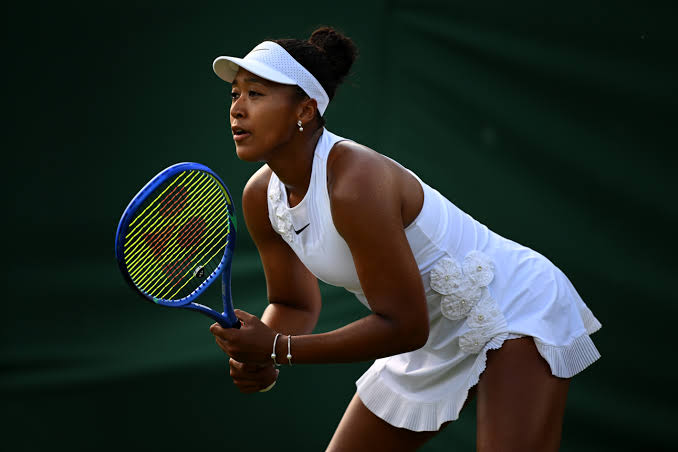
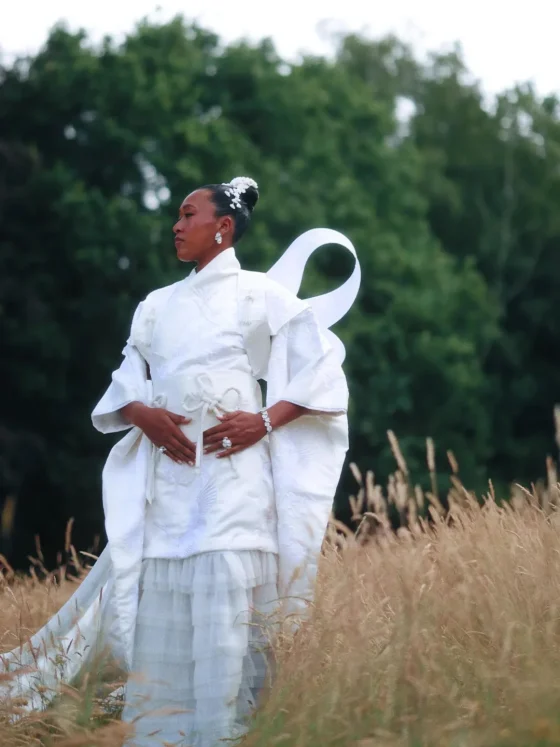
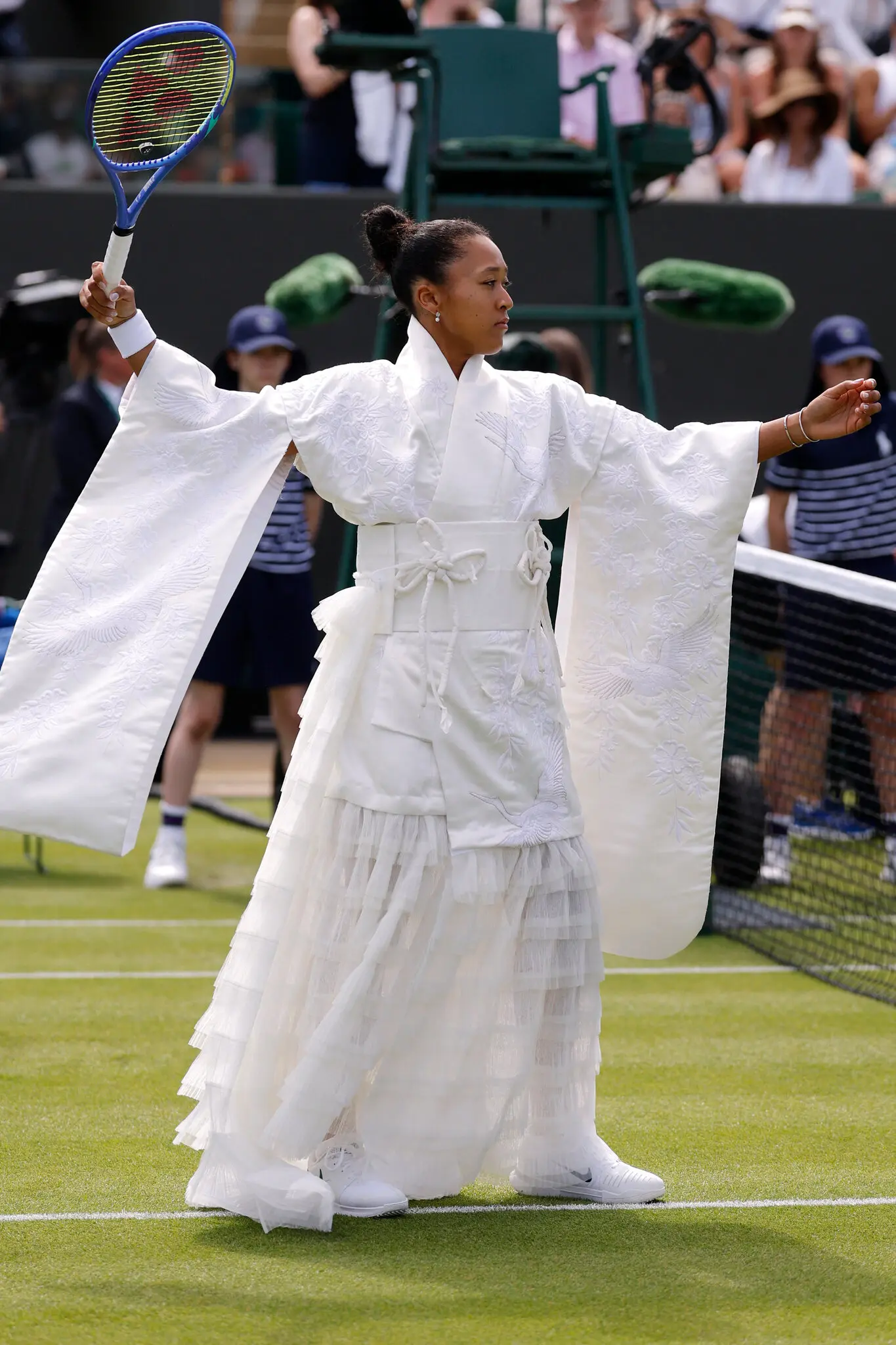
Osaka’s 2026 walk-on gown, Evolving Ceremony by Hana Yagi, made from upcycled shiromuku silk, with Heian court references and cranes hand-embroidered in white-on-white thread, is the most technically elaborate use of Wimbledon’s white rule in the tournament’s history. She is Japanese-Haitian. Her Haitian roots place her inside a Black Atlantic and Afro-diaspora lens on the tournament, even as her Japanese heritage is the explicit subject of the gown. The two identities are not in competition in the garment. They are both present, together, in the same white silk. She described the look as a way of “paying love and respect to Japan” while following the all-white rule. She also said: “You don’t have to have the colour of a kimono to know it is a kimono.”
That line is where Osaka joins the lineage. Gibson knew that you do not have to wear what they expect you to be. Ashe knew that you do not have to announce your politics to be political. The Williams sisters knew that you do not have to step outside the dress code to redesign it. Osaka knows that you do not need the colour to carry the meaning. The white rule is followed. The white rule now carries a shiromuku bridal kimono, Heian court volume, Japanese pearl heritage, and a Haitian-Japanese body on Centre Court. The institution says the rule has been followed. They are correct on compliance. They are wrong if they think compliance means the rule still belongs entirely to them.
From Survival to Design: What Afro Presence Has Built
The arc from Gibson to Osaka is not simply one of increasing freedom, though it is that, too. It is an arc of increasing creative authority. Gibson and Ashe used the dress code as a tool of legitimacy: wear what they require, be undeniable on the terms they recognise. The Williams sisters used it as a canvas: be undeniable, and make it carry your signature. Gauff and her generation normalise the undeniable as the expected. Osaka bends the canvas until it carries a heritage that the rule was never written to accommodate. As Omiren Styles has argued in the full analysis of how strategic compliance is not a compromise but the longer game, these are not separate strategies. They are a single strategy across seven decades: follow the rule so precisely that the rule ends up carrying more than it was designed to hold.
Omiren Styles will be watching what comes next. Collaborative kits between Black and African designers and players. Courtside Afro-style hair, jewellery, and fabrics that redefine what a tennis spectator looks like. Institutional moves beyond social content: coaching pipelines, funding, and archival work on Gibson and Ashe that places them inside fashion history as well as sports history. The grass at Wimbledon is the same colour it has always been. The people on it are not. That is not a fashion story. That is a design story. We are the publication that reads it as both.
ALSO READ
Peckham, Brixton, and Hackney Built What Central London Wouldn’t
African Royal Dress Is Not Decoration. It Is Governance.
Frequently Asked Questions (FAQs)
Who was the first Black champion at Wimbledon?
Althea Gibson was the first Black champion at Wimbledon, winning the women’s singles and doubles titles in 1957. She became the first Black player to compete in the tournament in 1951. She received the trophy from Queen Elizabeth II and was subsequently honoured with a ticker-tape parade in New York. However, she continued to face racial exclusion in social and hospitality settings throughout her career.
Who was the first Black men’s singles champion at Wimbledon?
Arthur Ashe became the first Black men’s singles champion at Wimbledon in 1975. His kit was conservative and classically compliant, contrasting with his politically outspoken off-court positions, including sustained opposition to apartheid and advocacy for South Africa’s exclusion from international tennis. His visual strategy was one of quiet disruption: working within the tournament’s aesthetic code while fundamentally altering who that code could belong to.
What did Serena Williams wear at Wimbledon 2019?
Serena Williams wore an all-white Nike dress featuring a Swarovski crystal swoosh, with 34 crystals referencing her age at the time of her last Wimbledon title. The look, widely referred to as the Broosh, was technically compliant with Wimbledon’s all-white dress code and became one of the most discussed outfits in the tournament’s recent history. It marked a shift in how Black women engaged with white rule: not merely wearing it, but authoring what it looked like.
How many Black players competed at Wimbledon 2026?
At least 15 Black players were in the 2026 Wimbledon singles draws, with additional representation in the doubles draws. Among the most prominent were Coco Gauff, Frances Tiafoe, and Robin Montgomery. Their collective presence at the tournament signals a shift from Black representation at Wimbledon being understood as exceptional to being understood as expected. This change took seven decades of groundbreaking work from Gibson and Ashe through the Williams sisters to achieve.
How does Naomi Osaka’s kimono connect to Afro representation at Wimbledon?
Osaka is Japanese-Haitian, and her Haitian heritage places her inside a Black Atlantic and Afro-diaspora lens on the tournament. Her 2026 walk-on gown, Evolving Ceremony, built by Hana Yagi from upcycled shiromuku silk and Heian court references, demonstrated the most technically elaborate use of Wimbledon’s white rule in the tournament’s history. She followed the rule precisely while making it carry Japanese ceremonial dress and multi-heritage identity simultaneously. Her own statement, that you do not have to have the colour of a kimono to know it is a kimono, connects directly to the seven-decade Afro practice at Wimbledon: you do not have to wear what they expect you to, and to demonstrate who you are.