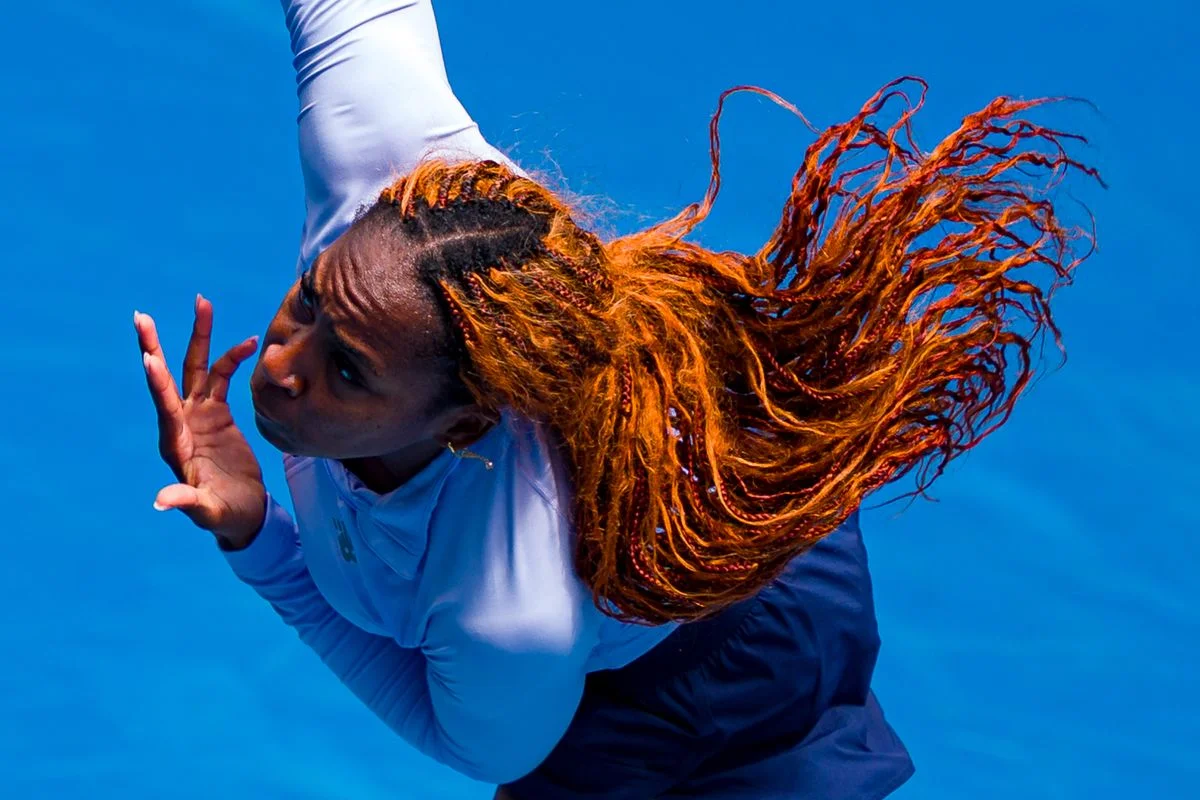
Wimbledon has a dress code. It says almost entirely white, colour trim capped at one centimetre, applied to everything visible. It does not mention hair. It does not need to. The unspoken rules about what “neat,” “elegant,” and “suitable” look like have never required documentation because they have been enforced by a century of images: sleek blowouts and careful waves on the women in the stands, conservative cuts on the men at the baseline, a very particular idea of European grooming translated into tennis tradition without anyone having to write it down.
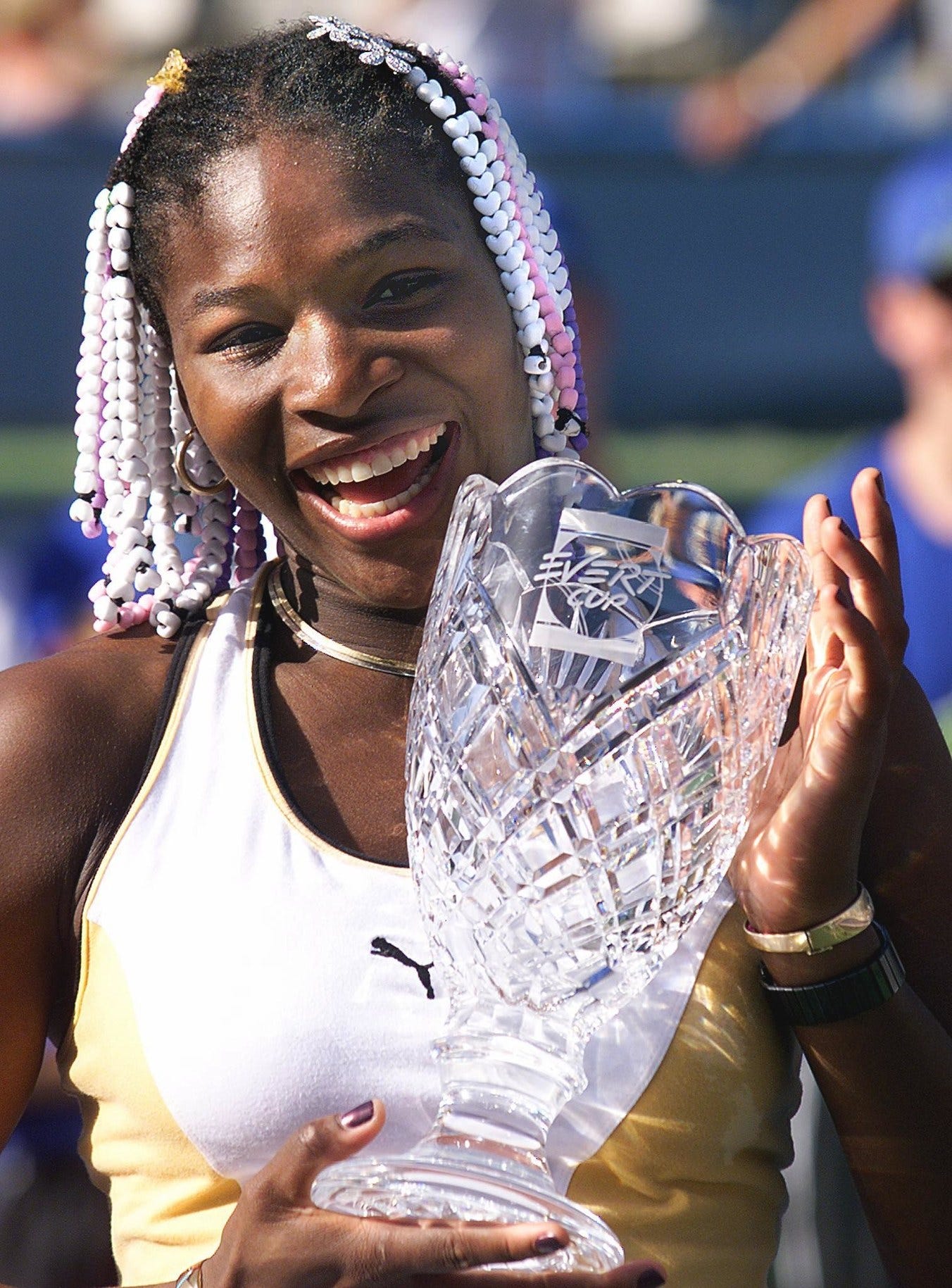
That idea is being slowly, precisely, and permanently altered. Jourdan Dunn arrived at Wimbledon 2025 in white, carrying a white bag, dressed for the occasion by every measure the tournament recognises, and wearing a closely cropped teeny-weeny afro that put her natural curl texture front and centre in the Royal Box. Serena Williams wore beads in her braids at Grand Slams for years before Wimbledon knew how to talk about it. Coco Gauff competed in box braids and cornrows, then wore braid cornrows in a collaboration with Carol’s Daughter that was explicitly described as an homage to Serena and Venus. These are not styling choices. They are interventions. They are doing the same work Osaka’s kimono does and the same work Serena’s Broosh does at the level of the strand.
From Jourdan Dunn’s teeny-weeny afro in the stands to Serena Williams’s beads and Coco Gauff’s braids, Black hair is quietly rewriting what neat looks like at Wimbledon. This essay reads natural hair and protective styles as dress-code politics on the grass.
Neatness, Whiteness and the Unwritten Hair Code
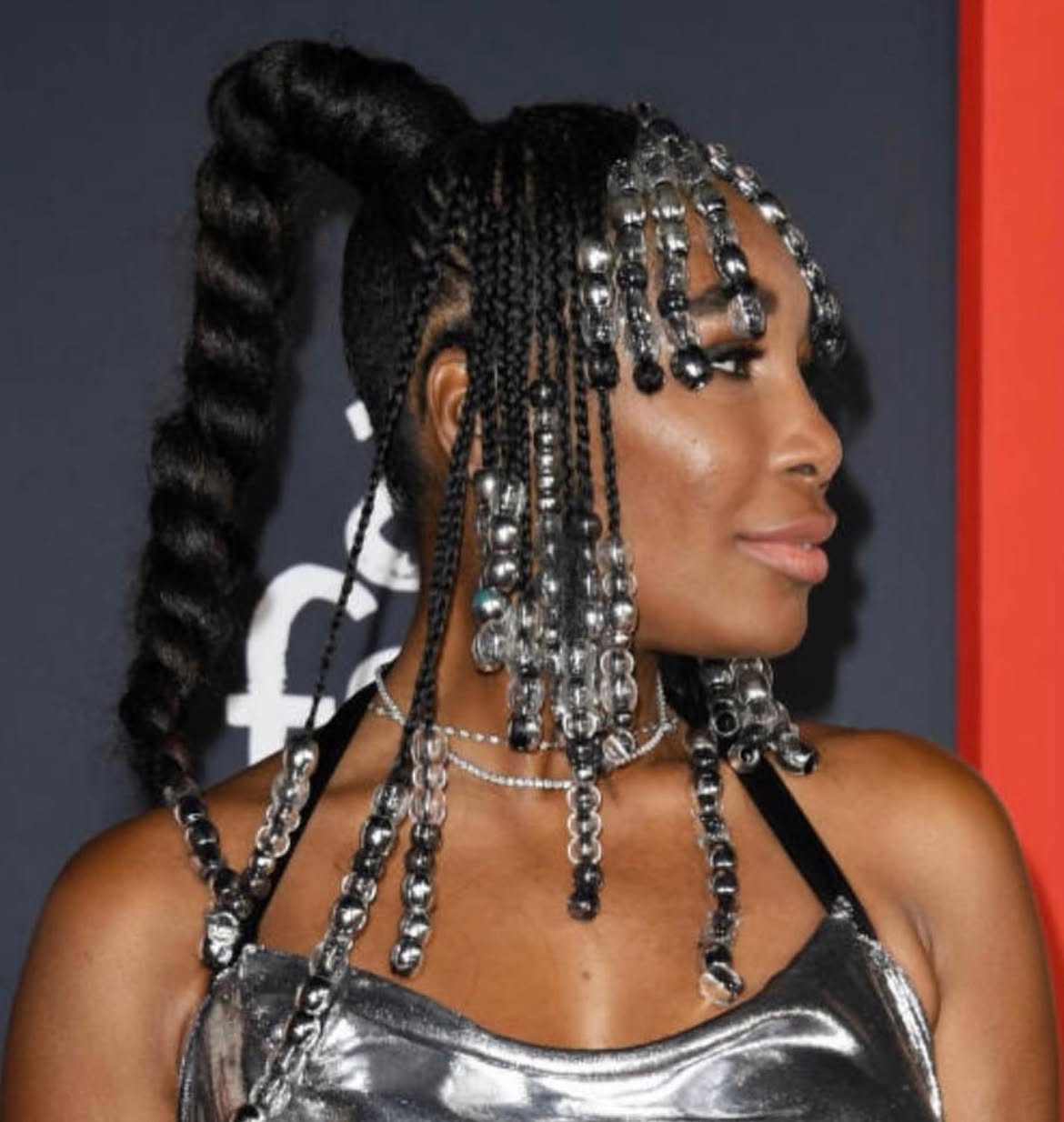
The official Wimbledon dress code says nothing about hair. This is not an oversight. When an institution has never needed to write down its hair expectations because the people whose hair would challenge them were not present, the rule does not need to exist. It is enforced by absence.
In the UK more broadly, the context is documented and specific. Black pupils have been sent home from school for wearing afros, braids, locs, and twists. Black professionals have been told that natural hair is unprofessional. The Halo Code, championed in part by Stephanie Cohen and The Advocacy Academy in Brixton, exists precisely because “neat” in British institutional culture has long been a synonym for “Eurocentric.” As Omiren Styles has documented in the analysis of how African professionals navigate workplace dress codes that were not built with their hair in mind, the calculation Black people make before entering professional spaces, about whether their hair will be read as appropriate before they have said a word, is not paranoia. It is a rational response to documented institutional behaviour.
Wimbledon sits inside that context even when it does not acknowledge it. The spectator dress code calls for smart, elegant attire. The player dress code calls for a neat and clean presentation. Neither code defines neatness. The definition has been inherited from a visual tradition in which Black hair textures were either absent or actively coded as disruptive. When Black players and spectators bring afros, braids, curls, and beads to the grass, they are not violating the code. They are revealing what the code assumed.
Jourdan Dunn: Natural Hair in the Royal Box
Jourdan Dunn’s appearance at Wimbledon 2025 was documented across fashion media as an example of summer dressing done right: white knit dress, matching bag, clean lines. Marie Claire described her teeny-weeny afro as “perfect for summer” and “classy and timeless”. That language matters. Not because it is wrong, but because it is new. For decades, the vocabulary around natural Black hair in elite British settings has included words like “unruly,” “indistinct,” or “not quite right.” Classy and timeless is a different sentence. It is the sentence that normalises the afro as a Wimbledon hair, not as an exception to Wimbledon hair.
Dunn is in the stands, not on the court. That location is important. Spectator representation shapes the visual archive of the tournament as surely as player representation does. The Royal Box is the most visible spectator space in world tennis. A teeny-weeny afro in the Royal Box is not a background detail. It is the foreground of a century-long shift in who the tournament considers part of its picture.
The hair is not incidental to the argument. The hair is the argument.
Serena Williams: From Beads to Braids to Curls
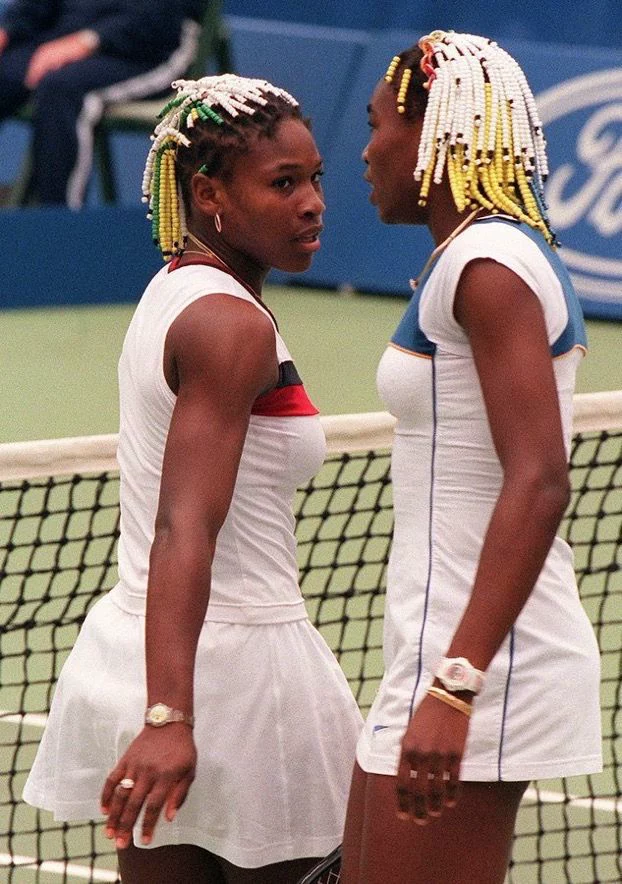
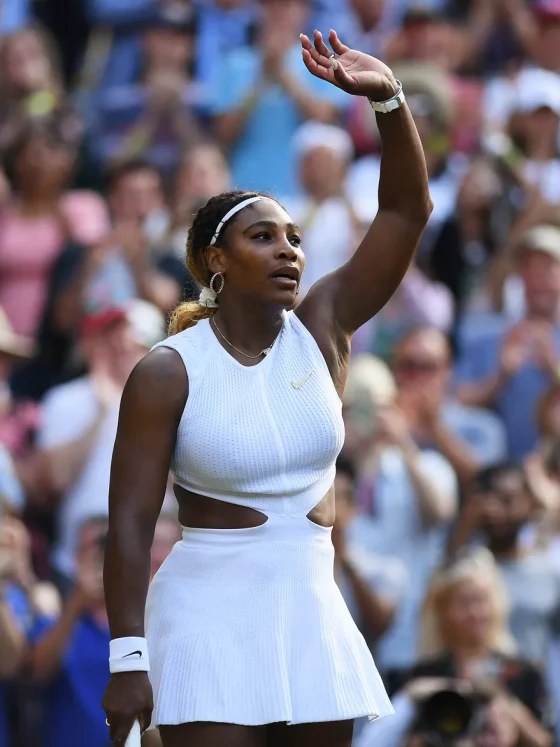
Serena Williams’ hair at Grand Slams is one of the most extensively documented style evolutions in sport. The beads in her braids at her early career tournaments became an image recognised by a generation of Black girls worldwide: evidence that you could be at the highest level of a European sport and still look like yourself. The evolution across her career moved from beaded braids to microbraids, to honey-blond braids, to natural curls in ponytails, each shift reflecting a different stage of her self-presentation and a different relationship with the institutions she was competing within.
At Wimblwithin, specifically, the context is sharpest. The tournament’s history of visual conservatism, its unspoken grooming expectations, and its association with a specific English aesthetic of composure make every Serena Williams hair choice a decision rather than a default. Beads at Wimbledon were not accidental. Microbraids at Wimbledon were not convenient. Natural curls at Wimbledon were not effortless. Each one was chosen within a regulated visual environment, as the Brooa was, because the hair was capable of making within the space where it appeared.
What Serena’s hair documented across two decades is the same thing the Broosh documented in 34 crystals: that a Black woman’s relationship with this tournament is long, layered, and entirely her own to narrate. The beads were the first chapter. The curls are ongoing.
Coco Gauff: Hair as Explicit Homage
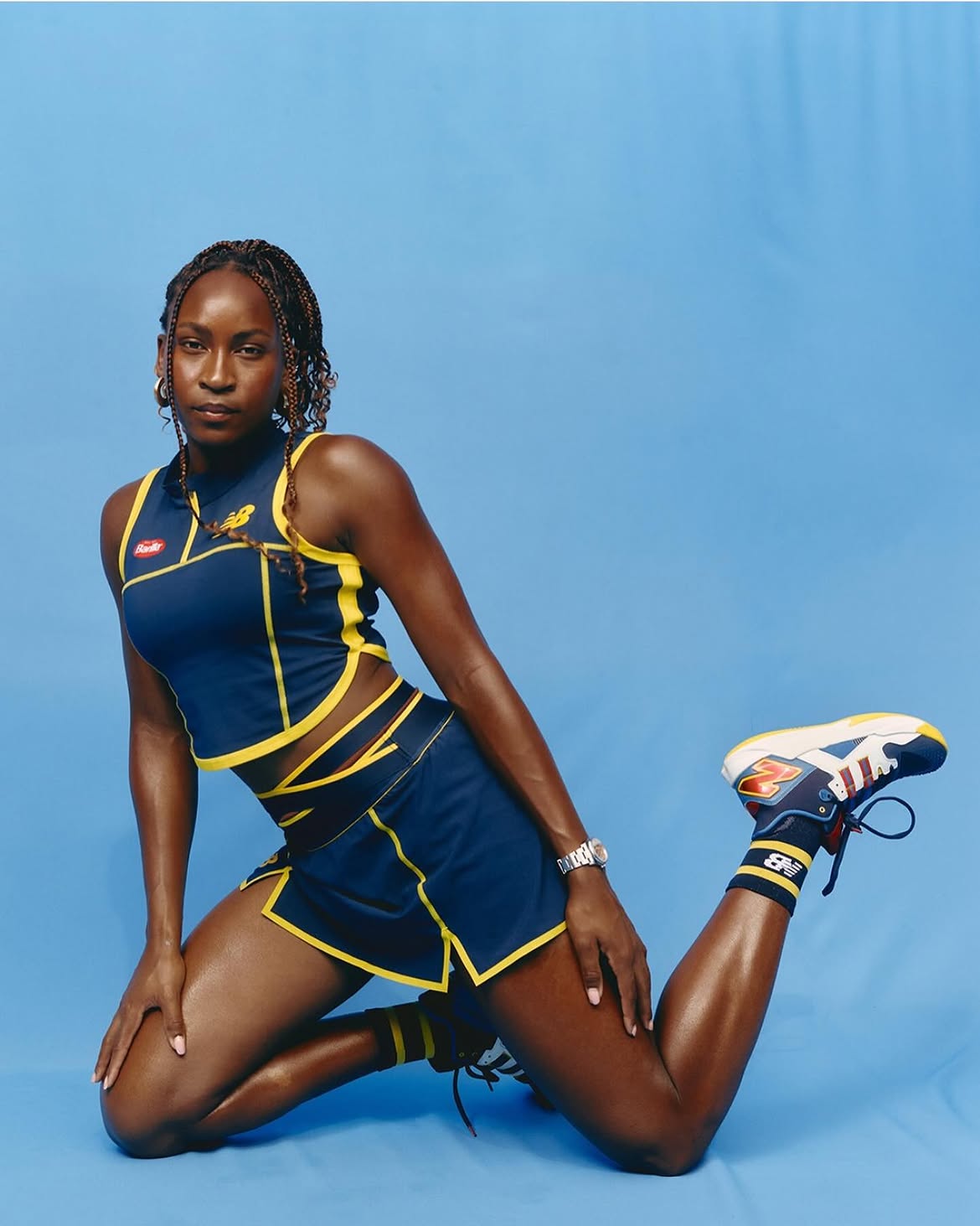
Coco Gauff is the first generation of Black tennis players who can be overt about the politics of their hair in ways Gibson and Ashe never could. Gauff wore box braids during her breakout Wimbledon run in 2019, when she was fifteen and the image o,f her competing on the grass in protective styles reached audiences around the world. She later wore intricate cornrows before the 2023 US Open. Most recently, her beaded cornrows, in a collaboration with Carol’s Daughter, were explicitly designed as an homage to Serena and Venus Williams and described as a tribute to Black heritage in tennis. She has stated that she is committed to showcasing Black hairstyles when she plays and that she takes pride in using braids, twists, and natural hair as self-expression in a sport where such styles are still unusual at the top level.
Gauff’s hair partnership with Carol’s Daughter is also an economic argument. It turns the representation into a commercial ecosystem: Black hair brands, Black athletes, Black audiences, and the circuits of money between them. As Omiren Styles has documented in the analysis of how diaspora communities build economic infrastructure within and alongside elite institutions, the commercial partnership is not separate from the cultural argument. It is the cultural argument made durable. The beads are the tribute. The brand deal is the structure that sustains the tributaries.
Prles as Performance Technology and Cultural Statement
Braids, twists, and cornrows are practical choices for high-intensity sport. They keep their hair secure across a five-set match. They reduce manipulation during a fortnight-long tournament. They withstand the sweat and wind, and tension of competitive tennis without requiring daily restyling. For Black athletes, protective styles are not a compromise between aesthetics and function. They are the point where aesthetics and function have always been the same thing.
They are also cultural technologies. The salon where cornrows are installed before a tournament is a community space, a site of conversation, memory, and continuity. The aunt, mother, or someone who puts the beads in is transmitting knowledge older than tennis’s dress code. The hours of installation are an investment in appearance that European competitors achieve with a hair tie and five minutes. When Gauff walks onto the court at Wimbledon in cornrows, she brings all of that with her: the salon, the stylist, the tradition, the hours, the community whose aesthetic logic produced the look. The hair does not leave a single one when it enters the tournament grounds.
Like the Kimono, Like the Brooch: Hair a Broochtegic Compliance
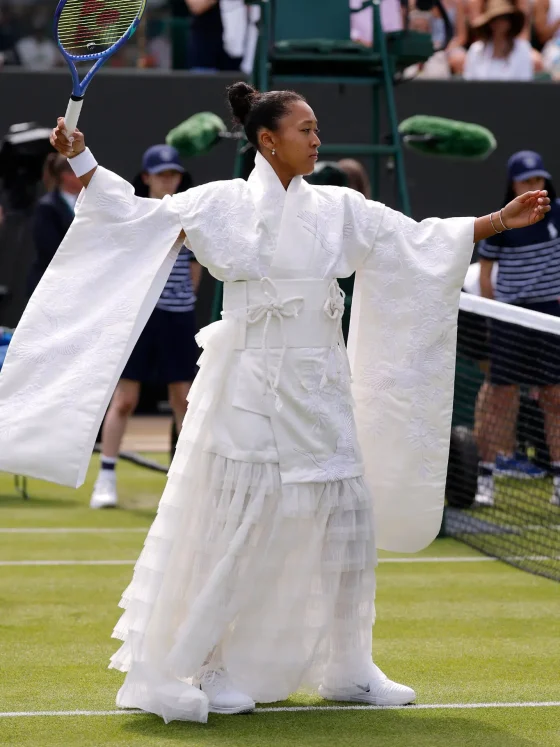
The parallel with Osaka’s kimono and Serena’s Broosh is structural. All three operate on the same principle: follow the letter of the institutional rule precisely enough that the institution cannot object, then saturate the permitted space with content the rule was not designed to accommodate. Osaka’s kimono was all-white. The Broosh had 34 crystals on an existing logo. Gauff’s cornrows are neat, secured, and within any reasonable reading of “presentable.” None of them breaks the code. All of them challenge what the code assumed it was protecting. As Omiren Styles has argued across the Afro Wimbledon series, in the analysis of how stratanalysing is not compromise but the long game that Black and diaspora athletes have always played inside elite institutions, within move, is the same each time. You learn the rule. You understand what it was built to preserve. You find the gap. You fill the gap with everything the rule assumed you would leave outside.
For Black hair, the gap is the absence of a hair code. Because the tournament never needed to write one, it cannot enforce one now without making explicit what has always been implicit. The afro, the braids, the cornrows, and the beads exist in that unwritten space and occupy it with precision. They are neat. They are presentable. They carry the entire history of Black hair in Britain and across the diaspora into a space that assumed they would not arrive.
The Archive That Hair Is Building
As the images accumulate, Wimbledon’s visual archive changes. Dunn’s TWA in the Royal Box. Serena’s beads at the baseline. Gauff’s box braids in the second week. These images circulate on television, on TikTok, in the spaces where young Black girls absorb what it looks like to be at the top of something. The archive is being rebuilt from inside the frame it was trying to exclude.
Omiren Styles reads hair as an archive because it holds what other dress elements cannot. The beads are individual. The cornrows are a tradition. The teeny-weeny afro is a political statement that took decades of movement to make publicly acceptable in British elite culture. Throughout Omiren Styl’s work, in African traditions and diaspora fashion, hair and headpieces have always been part of the dress code: the Yoruba beaded crown, the Baiana headwrap, the Mardi Gras Indian headdress. The hair was never just the hair. As the Afro Wimbledon series continues to document, from the Osaka kimono to the Serena Broosh to the afros and braids on the grass, the argument is not about whether these athletes belong at Wimbledon. They belong. As Omiren Styles has argued in the analysis of how Black presence on Centre Court has moved from survival to creative direction across seven decades, the question that remains is simpler and more consequential: what will Wimbledon look like once it fully accepts that the hair that comes with these bodies is part of what makes those bodies worth watching?
The answer is already in the archive. It looks like beads. It looks like cornrows. It looks like a teeny-weeny afro in the Royal Box on a summer afternoon, framed by white dresses and green grass and a century of assumptions that are, strand by strand, coming undone.
ALSO READ
- African Professionals Are Not Dressing for an Interview. They Are Dressing Against a Bias.
- The Cultural Codes of Dressing Well: What Every Society Understands About Style and Respect
- African Royal Dress Is Not Decoration. It Is Governance.
Frequently Asked Questions (FAQs)
Why is Black hair political at Wimbledon?
Because Wimbledon’s unwritten grooming expectations, embedded in language about neat, elegant, and suitable presentation, have historically assumed Eurocentric hair textures as the standard. In the UK, Black pupils and professionals have been told that afros, braids, locs, and cornrows are unprofessional or unsuitable in elite settings. When Black players and spectators bring protective styles and natural textures to the grass, they are not violating Wimbledon’s written dress code, which says nothing about hair. They are revealing what that code implicitly assumed and occupying the unwritten space with precision.
What hairstyles has Coco Gauff worn at Wimbledon?
Coco Gauff wore box braids during her breakout Wimbledon appearance in 2019, when she was fifteen, and the image of a young Black woman competing on the grass in protective styles reached global audiences. She has since worn intricate cornrows and beaded cornrows, including a Carol’s Daughter collaboration explicitly designed as an homage to Serena and Venus Williams and described as a tribute to Black heritage in tennis. She has publicly stated her commitment to showcasing Black hairstyles when she plays, positioning her hair choices as deliberate acts of self-expression and representation rather than mere personal preference.
What did Dan Dunn wear to Wimbledon 2025?
Jourdan Dunn attended Wimbledon 2025 in an all-white knit dress with a matching bag, dressed in full compliance with the tournament’s spectator aesthetic expectations, and wearing a closely cropped teeny-weeny afro. Beauty media, including Marie Claire, described the afro as perfect for summer and as classy and timeless, language that signals a shift in how natural Black hair is discussed in the context of elite British style events. Her presence in the Royal Box, with a natural curl text, and her fronds’ natural curl are spectator-side interventions in the tournament’s visual archive.
How does Black hair at Wimbledon connect to the Osaka kimono and Serena Broosh?
All three operate on the same principle: strategic compliance. Osaka’s kimono was all-white and technically unassailable. The Broosh was 34 crystals on an existing logo. Cornrows and box braids are neat, secured, and, within any reasonable reading, presentable. None of them breaks the institutional code. All of them carry content the code was not designed to accommodate: Japanese ceremonial heritage, a Black woman’s personal timeline, the Afro hair tradition and the community knowledge it carries. The move is the same across all three: find the gap in the rules, and fill it with everything the rules assumed you would leave outside.
What is the Halo Code, and how does it relate to Wimbledon?
The Halo Code is a UK initiative, championed in part by the Halo Collective and organisations including The Advocacy Academy in Brixton, that seeks to end discrimination against staff and students with afro-textured hair in schools and workplaces. It exists because in British institutional culture, natural Black hair has frequently been coded as unprofessional or unsuitable, with documented cases of Black pupils being sent home and Black professionals being advised to straighten or cover their hair. Wimbledon does not have a dress code, but it operates within the same cultural context that the Halo Code was written to address. When Black players and spectators bring natural and protective styles to the grass, they are practising, in a sports context, the same assertion of belonging that the Halo Code makes in educational and professional settings.