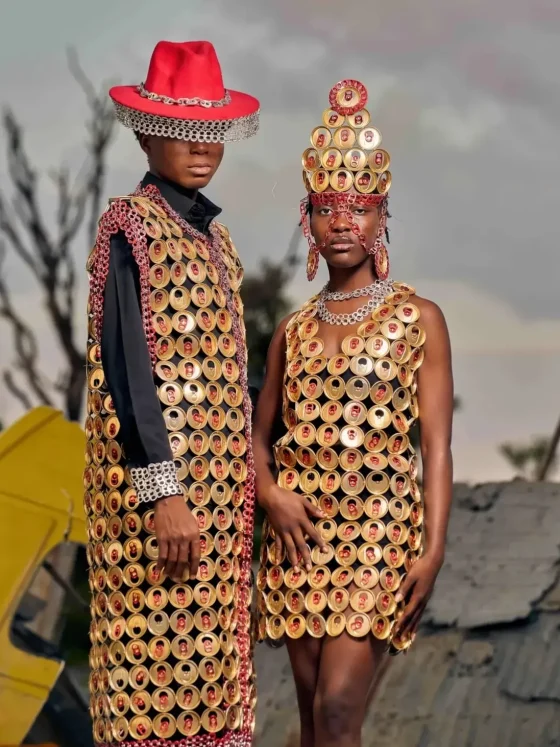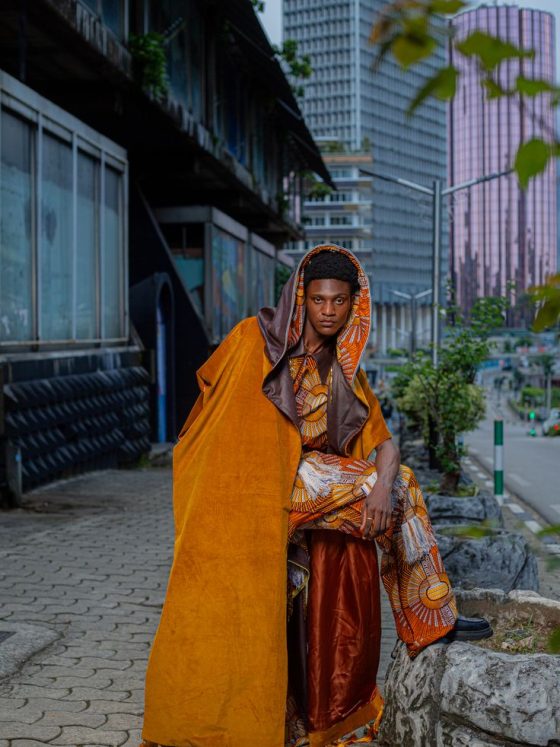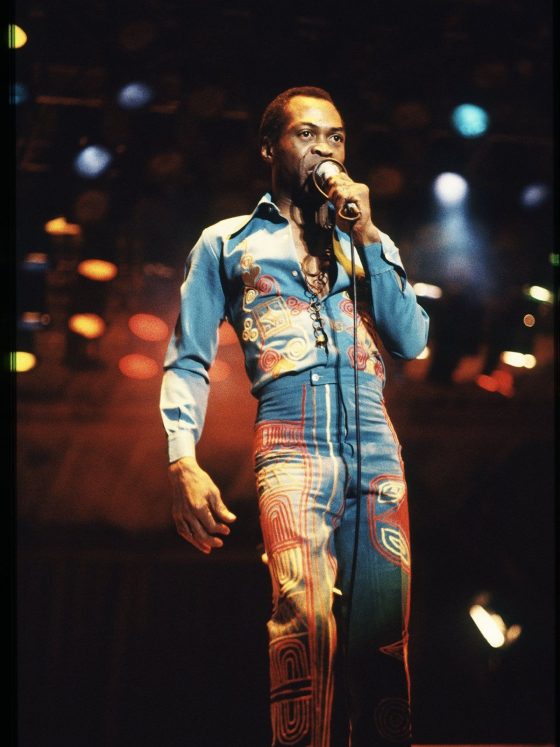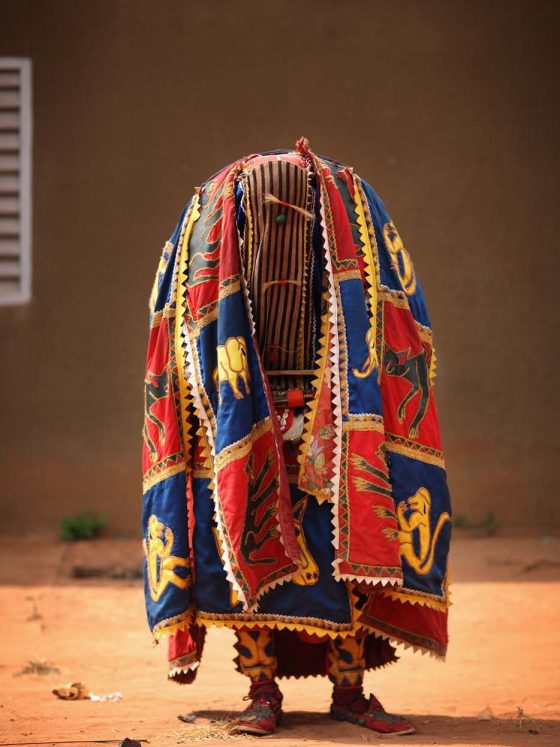
The African fashion week circuit, taken as a whole, is one of the fashion industry’s most productive generators of creative output and one of its least effective generators of commercial return. The continent hosts more than 20 fashion week events throughout the year. Lagos, Nairobi, Accra, Dakar, Johannesburg, Kampala, Abidjan, Addis Ababa, Kigali, Cape Town: the list extends further if you count the sector-specific and emerging platforms that have proliferated over the last decade. The designers who show on these runways are, at the top end, producing work at the level that Copenhagen, Berlin, and London buyers have confirmed they want to purchase. The infrastructure connecting those designers to those buyers is, across most of the circuit, either absent or inadequate.
This is not a creative problem. African fashion has no shortage of creative output. It is not a talent problem. The designers documented in this series, from Bubu Ogisi of IAMISIGO to Kenneth Ize to Abiola Olusola, demonstrate that the continent is producing work at an international luxury level across multiple cities and disciplines. The problem is structural, and it has three components: the circuit is fragmented and lacks coordination; most events lack the buyer infrastructure to convert runway into revenue; and the data systems required to measure commercial impact and to make the investment case for improvement do not exist at a continental scale. These three problems reinforce each other, and none of them will be solved by adding another fashion week to the calendar.
The African fashion week circuit has over 20 events and one functioning commercial infrastructure. That is not a circuit. Here is what needs to change and who needs to change it.
The African Fashion Week Circuit: What It Currently Looks Like
Lagos Fashion Week is the continent’s most institutionally developed platform and the only one that has built a documented, measurable commercial infrastructure around its runway. As Omiren Styles documented in its LFW analysis, 68% of attending brands secured new funding or distribution deals post-event. The platform has directly impacted over 3,800 beneficiaries, and the 2024 edition generated approximately 2.50 billion naira through sponsorships, pop-up shops, and international partnerships. The Africa Finance Corporation partnership, confirmed in 2025, linking LFW to the ARISE Integrated Industrial Platforms manufacturing infrastructure in the Benin Republic, represents the most serious attempt any African fashion week has made to connect its runway to a supply chain capable of fulfilling international demand. LFW is the exception. It is not the model that the rest of the circuit has been able to replicate.
Nairobi Fashion Week, which held its eighth season at the Sarit Expo Centre from January 28 to 31, 2026, under the theme Decarbonise, has found a clear and differentiated institutional identity. The event has onboarded over 100 designers across successive editions, attracted representatives from UNEP, Gatsby, and the Kenya Fashion Council, and positioned itself as the continent’s most explicitly sustainability-oriented runway platform. Its Thread Talks programming, held at The Social House Nairobi, examined how Africa can decarbonise its fashion supply chain fairly, reframing sustainability as systems thinking rather than seasonal trends. That is a coherent editorial and institutional position. It is also, commercially, a trade event still developing the buyer infrastructure that converts its reputation into order volume.
Dakar Fashion Week, founded by Adama Paris and now in its twenty-second edition in 2026, has operated for over two decades as an explicitly support-oriented platform for young designers. It provides grants directly to emerging talent, encourages the integration of cultural heritage, and maintains a programming philosophy that positions recycling and sustainable innovation as a creative methodology rather than marketing vocabulary. Its twenty-two editions represent a continuity of institutional commitment that most African fashion weeks cannot match. Its commercial infrastructure for connecting designers to international buyers remains underdeveloped relative to its longevity.
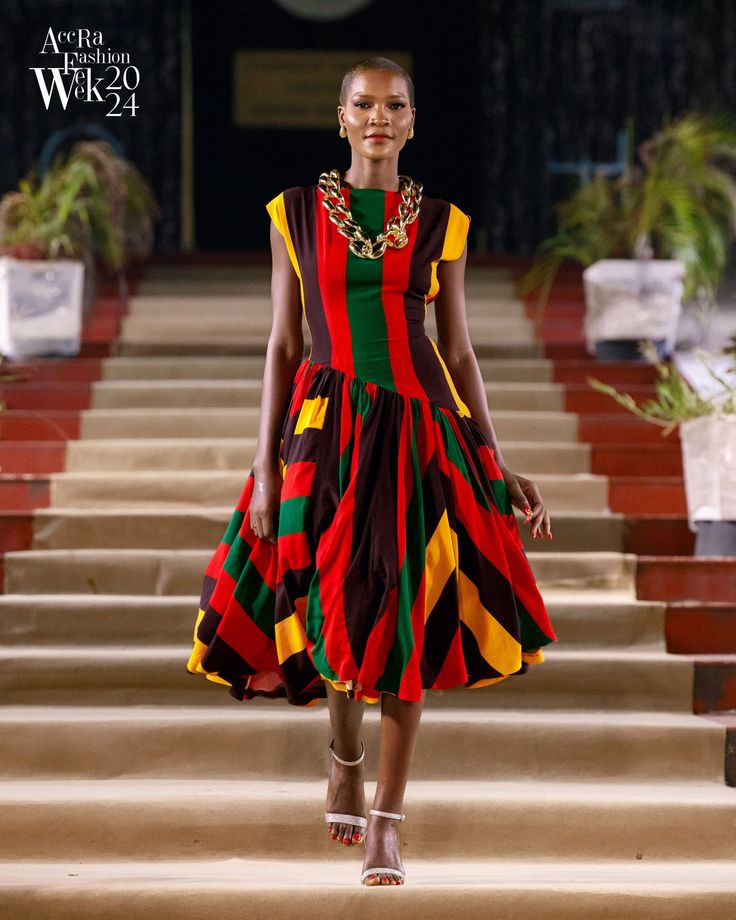
Accra Fashion Week returned for its December 2025 edition, running six days at Silver Star Towers in Accra from December 16 to 21. Approximately 400 visitors attended. Ten exhibitors participated. The event attracted international designers, including talent from Barbados and the Ivory Coast, as well as Ghanaian names. These figures do not suggest a commercially serious trade platform. They are figures that describe a credible local showcase operating without the institutional investment required to become something larger.
A fashion week that fails to connect designers with buyers is a party. A fashion week that does its infrastructure. The African circuit has too many parties and not enough infrastructure.
The Three Structural Problems That Cannot Be Fixed by Adding More Events
The first problem is fragmentation without coordination. The African fashion week circuit runs events across twelve months without a shared calendar, shared data standards, shared buyer-access infrastructure, or shared communication with the international press. A European buyer who wants to engage with African fashion has no central access point that aggregates the continent’s runway output, the way that the Paris, Milan, London, and New York weeks form a concentrated seasonal opportunity. The African circuit is geographically dispersed, temporally spread across the full year, and institutionally siloed. Lagos knows what Lagos is doing. Dakar knows what Dakar is doing. Neither knows, in any structured way, what the other is producing or which buyers have attended both, or what that overlap reveals about the continental market.
The second problem is the absence of buyer infrastructure at most events. A fashion week without buyers is a cultural event. A fashion week with buyers is an industry event. The distinction determines whether designers leave with orders or leave with photographs. Lagos Fashion Week’s International Buyers’ Hub, its Rising Stars showcase, and its documented 30-plus international retail partnerships from the 2024 emerging designer showcase represent the buyer infrastructure model. Across the rest of the continental circuit, equivalent buyer-engagement mechanisms are either absent or in their early stages. Designers show. Buyers are present as guests rather than as participants in a structured commercial programme. The connection between the runway and the purchase order does not happen at most African fashion weeks because the infrastructure to facilitate it has not been built.
The third problem is data. As Omiren Styles documented in its analysis of African fashion data infrastructure, African fashion weeks outside Lagos have not built measurement frameworks to demonstrate their commercial impact, tourism value, or policy-advocacy case to the governments and corporate partners whose support they need. A fashion week that cannot demonstrate its economic contribution in standardised, comparable figures cannot make the investment case for the infrastructure improvements that would increase that contribution. The data problem and the infrastructure problem are self-reinforcing: without data, you cannot attract the investment to build infrastructure; without infrastructure, you cannot generate the commercial activity that produces data.
What a Fixed Circuit Would Actually Look Like
Fixing the African fashion week circuit does not require consolidation. It does not require Lagos Fashion Week to absorb Dakar Fashion Week or Nairobi Fashion Week to become the continent’s single platform. What it requires is a coordination infrastructure that allows the circuit’s individual events to function as a networked system rather than as isolated annual occasions.
The first fix is a shared continental fashion calendar with standardised windows. West Africa, East Africa, and Southern Africa each have their own fashion week seasons. A continental calendar that clearly establishes those regional windows, prevents major events from being scheduled in direct competition with each other, and communicates the full circuit to international buyers and the press as a single annual programme would immediately increase the commercial relevance of every event on it. A European buyer who can plan a continent-wide engagement trip covering Lagos in October, Nairobi in January, and Dakar in December has a reason to invest in African market access that three separate uncoordinated invitations do not provide.
The second fix is a shared buyer access infrastructure. Lagos Fashion Week’s International Buyers’ Hub model is replicable. A continental buyers’ programme, jointly administered by the two or three strongest platforms and offering accredited buyers structured access to designers across the circuit, would give international stockists a reason to engage with the circuit as a system rather than requiring them to evaluate each event independently. The Afreximbank CANEX programme’s model of institutional support for designer access to trade platforms provides the financial mechanism: the same kind of support that underwrites African designers at Tranoi in Paris could underwrite international buyers at African fashion weeks.
The third fix is the African Fashion Data Index, proposed by Clearly Invincible, specifically applied to fashion-week economic measurement. Every event on the continental circuit that adopts the same economic impact methodology, media value calculation framework, and buyer activity tracking system contributes to a pooled intelligence picture that no individual event can produce alone. That pooled picture makes the investment case for the circuit as a whole to governments, corporate sponsors, and institutional partners who currently have no way to assess the circuit’s aggregate value.
Also Read:
- The Lagos Fashion Week Effect: What a Decade of Runway Has Actually Done for Nigerian Designer Revenue
- Why African Fashion Needs Its Own Data Infrastructure Before It Can Lead Globally
- The Real Cost of Showing at Paris Fashion Week for an African Designer
- What African Fashion Brands Get Wrong About Scaling — and the Three That Got It Right
Who Needs to Move First and Why They Have Not
The coordination failures of the African fashion week circuit are not mysterious. They are the predictable result of a set of individually rational decisions. Each platform has built its own identity, sponsor relationships, designer community, and press narrative. Coordination requires sharing some of that proprietary infrastructure with competitors, which no individual platform has an incentive to initiate unilaterally. The platforms that stand to gain most from coordination are the smaller ones, whose value is most limited by operating in isolation. The platforms with the greatest capacity to initiate coordination are the larger ones, whose relative advantage in coordination might be partially reduced.
Lagos Fashion Week’s win of the Earthshot Prize in November 2025 confirmed that the platform has the institutional standing and international relationships to initiate continental coordination without losing its competitive position. Its stated ambition to replicate its circular fashion hub model in Kigali, Dakar, and Accra by 2030 is the clearest signal that LFW’s leadership understands the circuit’s fragmentation problem and has begun building toward a solution. The question is whether that solution is structured as LFW expansion, which creates a hub-and-spoke model with Lagos at the centre, or as genuine peer coordination, which would require LFW to build infrastructure that benefits platforms it competes with for press attention and sponsor investment.
The African Union’s AfCFTA Secretariat has both the mandate and the structural position to convene the coordination conversation that individual platforms cannot initiate on their own. Trade facilitation is the AfCFTA’s primary brief. A continental fashion-week circuit that functions as an integrated trade infrastructure serves the AfCFTA’s core objectives more directly than almost any other creative-industry intervention. The AfCFTA’s intra-African trade projections, which suggest a 33% increase in textile trade under full implementation, require the commercial infrastructure to activate that potential. As the Omiren Styles data infrastructure analysis confirmed, building that infrastructure requires both institutional will and coordinated data frameworks. The AfCFTA has the mandate for the first. The fashion weeks need to build the second.
The Omiren Argument
The African fashion week circuit has produced something genuinely important over the past two decades: a continental runway culture that spans twelve cities, multiple languages, and dozens of distinct cultural traditions, and that has trained a generation of designers, producers, stylists, and fashion professionals who can operate at an international level. That is a real achievement, and it should not be dismissed in favour of a critique of what the circuit has not yet done. What it has not yet done is convert the creative capital it has generated into commercial infrastructure on a continental scale. The reason is structural: a circuit of individually operated events without coordination, shared buyer access, or standardised data frameworks will always generate visibility and rarely generate the commercial return that visibility suggests is available.
The circuit is not broken because the people running it are incompetent. Omoyemi Akerele, Adama Paris, and the teams behind Nairobi Fashion Week and Accra Fashion Week have each built something meaningful from limited resources against significant structural obstacles. The circuit is broken because it has been built as a collection of individual events rather than as a system. Fixing it requires the conversation that individual platform operators have not been able to have with each other: about shared calendars, shared buyer access, shared data standards, and shared advocacy to the African Union institutions that have the mandate to invest in the infrastructure those systems require. That conversation needs a convener. The AfCFTA Secretariat is the most credible candidate. The Afreximbank CANEX programme has the commercial relationships needed to be practically useful. The platforms need to agree that coordination serves their interests better than competition. That agreement is the hard part. It is also the only part that matters.
Frequently Asked Questions
What are the main African fashion weeks in 2026?
The most established continental platforms in 2026 are Lagos Fashion Week in Nigeria, now in its fifteenth year and the largest by institutional infrastructure; Nairobi Fashion Week in Kenya, which held its eighth season in January 2026 under the theme Decarbonize; Dakar Fashion Week in Senegal, now in its twenty-second edition under founder Adama Paris; Accra Fashion Week in Ghana, which ran a six-day December 2025 edition; Hub of Africa Fashion Week in Addis Ababa, Ethiopia; and South African Fashion Week in Johannesburg. Emerging platforms in Kigali, Kampala, Abidjan, and other cities supplement the core circuit.
Why is the African fashion week circuit described as broken?
The circuit generates significant creative output but limited commercial return for the designers who show on its runways. Three structural problems drive this gap: fragmentation without coordination, meaning events operate in isolation without shared calendars, shared buyer access, or shared communication to international press; the absence of buyer infrastructure at most events beyond Lagos, meaning designers present to audiences that do not include structured purchasing programmes; and the lack of standardised data systems to measure commercial impact and make the investment case for infrastructure improvement. These three problems reinforce each other.
What makes Lagos Fashion Week different from other African fashion weeks?
Lagos Fashion Week has built a commercial infrastructure around its runway that most other African platforms have yet to develop. Its International Buyers’ Hub provides structured access for international buyers. Its Rising Stars showcase produced over 30 international retail partnerships for 15 designers at the 2024 edition. Its documented impact data, 68% of attending brands securing funding or distribution deals post-event, 3,800-plus direct beneficiaries, is produced by a commissioned measurement framework that most other African fashion weeks do not have. Its partnership with the Africa Finance Corporation links the runway to manufacturing infrastructure capable of fulfilling international orders. These are qualitative differences in institutional development, not simply differences of scale.
What would a coordinated African fashion week circuit look like?
A coordinated circuit would operate with a shared continental fashion calendar that establishes regional windows for West, East, and Southern Africa, preventing major events from competing directly and communicating the full circuit to international buyers as an integrated annual programme. It would run a shared buyer access programme, jointly administered by the strongest platforms, giving accredited international buyers structured access to designers across the circuit. And it would adopt a shared economic impact measurement methodology, producing pooled data that demonstrates the circuit’s aggregate commercial value to the African Union institutions, governments, and corporate partners whose investment the infrastructure improvements require.
Who is best positioned to lead the coordination of the African fashion week circuit?
The African Union’s AfCFTA Secretariat has the institutional mandate and structural position to convene the coordination conversation that individual platforms cannot initiate on their own. Trade facilitation is its core mandate, and a coordinated continental fashion circuit directly serves AfCFTA objectives. The Afreximbank CANEX programme has the commercial relationships to make coordination practically useful, having already demonstrated that institutional support for African designers at international trade platforms produces measurable results. Lagos Fashion Week has the institutional standing, through its Earthshot Prize win and its ambition to replicate LFW, to initiate coordination without losing its competitive position.
Explore More
Read the full Opinion & Commentary section for Omiren Styles’ positions on the structural problems, institutional failures, and unrealised opportunities that determine whether African fashion leads globally or continues to underperform its creative potential.