The colonial gentleman’s outfit has a logic of its own. Socks first, then shoes. Then trousers, shirt, tie, coat. Last, to cover everything. In Nigeria’s heat, in Lagos in the 1970s, wearing this full assembly was a performance of loyalty to a system that had occupied your country, renamed your streets, and deemed your own dress insufficient. In 1973, Fela Kuti made a song out of this performance. “I no be gentleman at all,” he sang over horn-driven, polyrhythmic Afrobeat, his band, Afrika 70, laying down the groove that would carry the argument across continents. “I am an African man originally.” The song, Gentleman, described a friend sweating through a full three-piece suit in equatorial heat until he smelled, fainted, and urinated on himself, all in pursuit of looking acceptable to a colonial standard that had no business governing how Nigerians dressed. Fela Kuti’s fashion was a political argument made in fabric before it was a musical one made in sound. Every outfit choice was a public position. Here is what it said.
Fela Kuti’s fashion was a political argument made in fabric before it was a musical one made in sound. Every outfit choice was a public position. Here is what it said.
Fela Kuti’s Fashion as Political Statement: What He Actually Wore
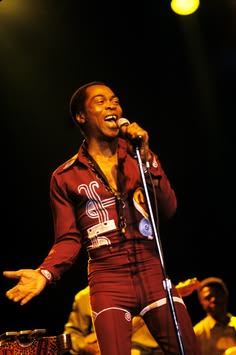
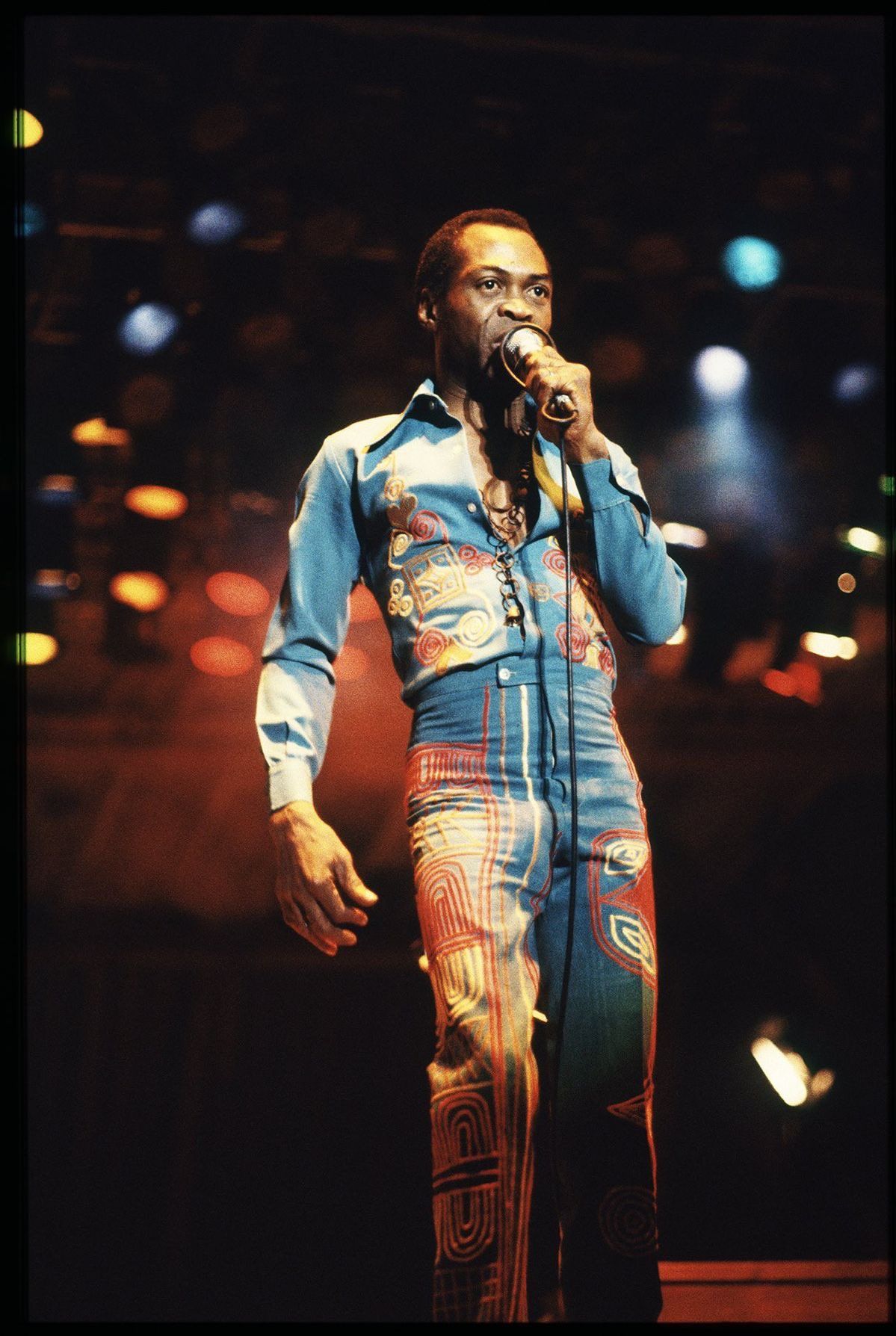
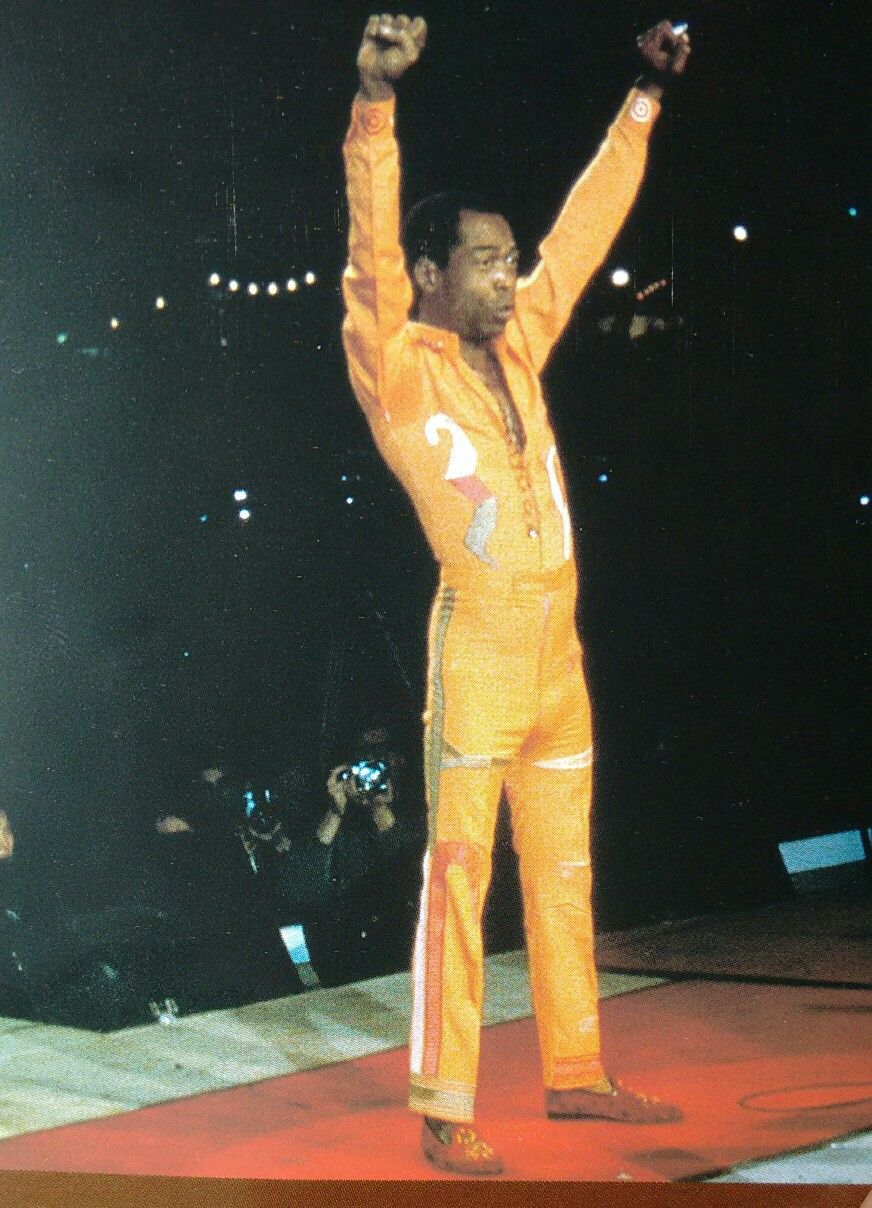
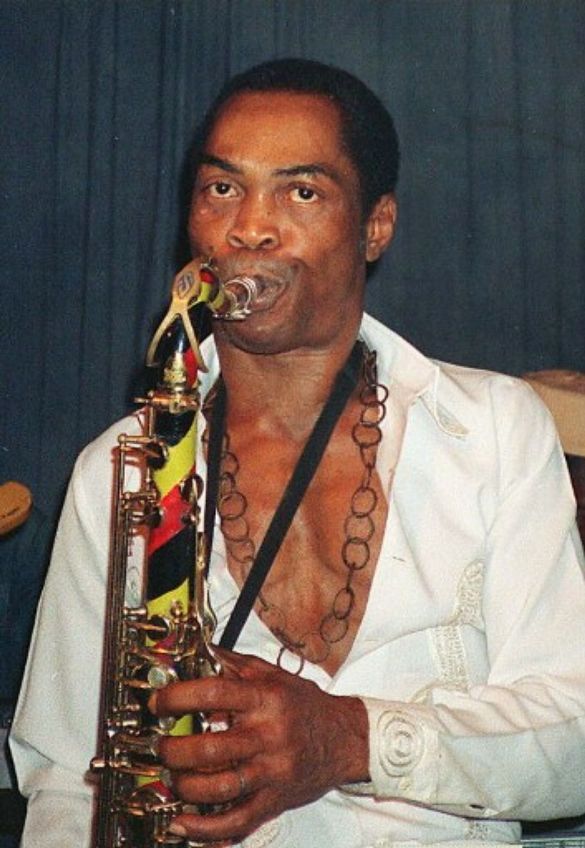
The image of Fela Kuti in white underwear is the most reproduced photograph of his fashion identity and also the most misleading. As Pulse Nigeria’s December 2025 investigation confirmed, Dede Mabiaku, a longtime member of Fela’s Egypt 80 band who lived with him for over a decade, has repeatedly clarified that Fela did not perform in underwear on most occasions. Benson Idonijie, Fela’s first manager and Burna Boy’s grandfather, confirmed the same. What happened was more specific: Fela rehearsed at the Kalakuta Republic for up to fourteen hours a day, and he did so in underwear for his own comfort. He gave interviews in underwear. He received guests in his underwear. In his final years, he occasionally performed onstage in underwear. But the consistent stage dress of his peak years was embroidered native attire, brightly coloured and precisely fitted, Ankara jumpsuits, beaded necklaces, and sometimes a shirtless torso during the Saturday night shows, his community called Comprehensive Nights.
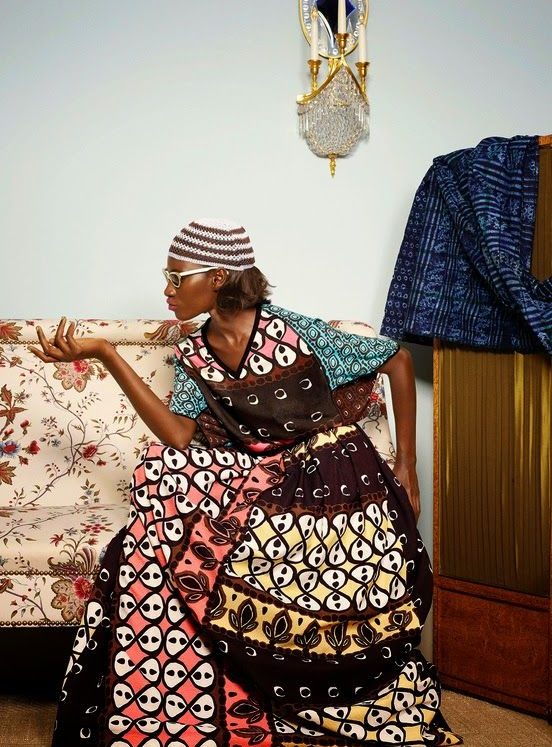
The distinction matters because the underwear image, however powerful as a symbol of defiance, reduces a complete fashion philosophy to a single provocative element. What Fela wore most consistently on stage was not a rejection of dress. It was a specific assertion of which dress carried legitimate authority. The embroidered native attire of the Yoruba and broader Nigerian tradition, the Ankara fabric produced in West Africa and worn in West African ways, the beaded necklaces that sat on the body as cultural inheritance rather than a Western accessory: these were not default choices. They were the explicit alternative to the colonial dress code that Gentleman spent twenty-seven minutes dismantling.
The white chalk face paint that Fela applied during Comprehensive Night performances carried its own specific meaning. Chalk painting in Yoruba spiritual practice is associated with the Orisa tradition, with ritual states of heightened spiritual presence, and with the assertion of African cosmological authority in the face of Christian and Islamic dominance. When Fela painted his face white on stage, he was not performing theatrics. He was invoking a spiritual grammar that his audience recognised and that the government, which had spent decades trying to suppress traditional religious practice, understood as a direct challenge.
What Does “Gentleman” by Fela Kuti Mean? The Full Fashion Argument
“Gentleman” is the most precisely argued fashion manifesto in the history of African popular music. The 1973 track, sung in Nigerian Pidgin English, is structured as a case study: Fela describes a friend who has internalised the colonial dress standard to the point of wearing socks, shoes, a vest, trousers, a shirt, a tie, a coat, and a hat simultaneously in the Lagos heat. The physical consequences — sweating, fainting, the smell of a body that cannot breathe in its own wrappings — are described with satirical precision. The argument is not that Western dress is ugly. It is that Western dress was designed for a climate and a body politic that had nothing to do with Nigeria, and that the decision to wear it was a decision to perform loyalty to a system of cultural subordination. As OkayAfrica’s documentation of Fela’s fashion politics confirms, for Fela, wearing non-Western clothes was a matter of pride and authenticity. “I am an African man originally” was not a boast. It was a position statement about cultural self-determination.
The song’s target was not the colonial power itself but the postcolonial African who continued to perform deference to it through dress. The 1970s Nigerian urban professional who wore a three-piece suit to the office was not being compelled by the British, who had left in 1960. He was choosing to maintain a system of cultural hierarchy that positioned European dress as the mark of education, authority, and respectability. Fela’s fashion argument was aimed at that choice. You know what to wear, he sang. You know the climate you live in. You know what your body needs. The suit is not ignorant. It is a submission. And I no be gentleman like that.
The Shrine, Fela’s legendary nightclub at 14 Agege Motor Road in Mushin, Lagos, was the physical space where this argument played out nightly. The Saturday Comprehensive Nights were all-night events that combined music, political oratory, the Yabis Sessions, and the visual argument of Fela’s dress. To attend the Shrine was to enter an environment in which the political and the aesthetic were inseparable. The audience that came to dance to Afrika 70’s polyrhythmic groove was also receiving a sustained argument about African cultural sovereignty, which the government understood well enough to raid the compound over.
The Fela Kuti Queens: A Fashion Argument That Extended Beyond the Stage
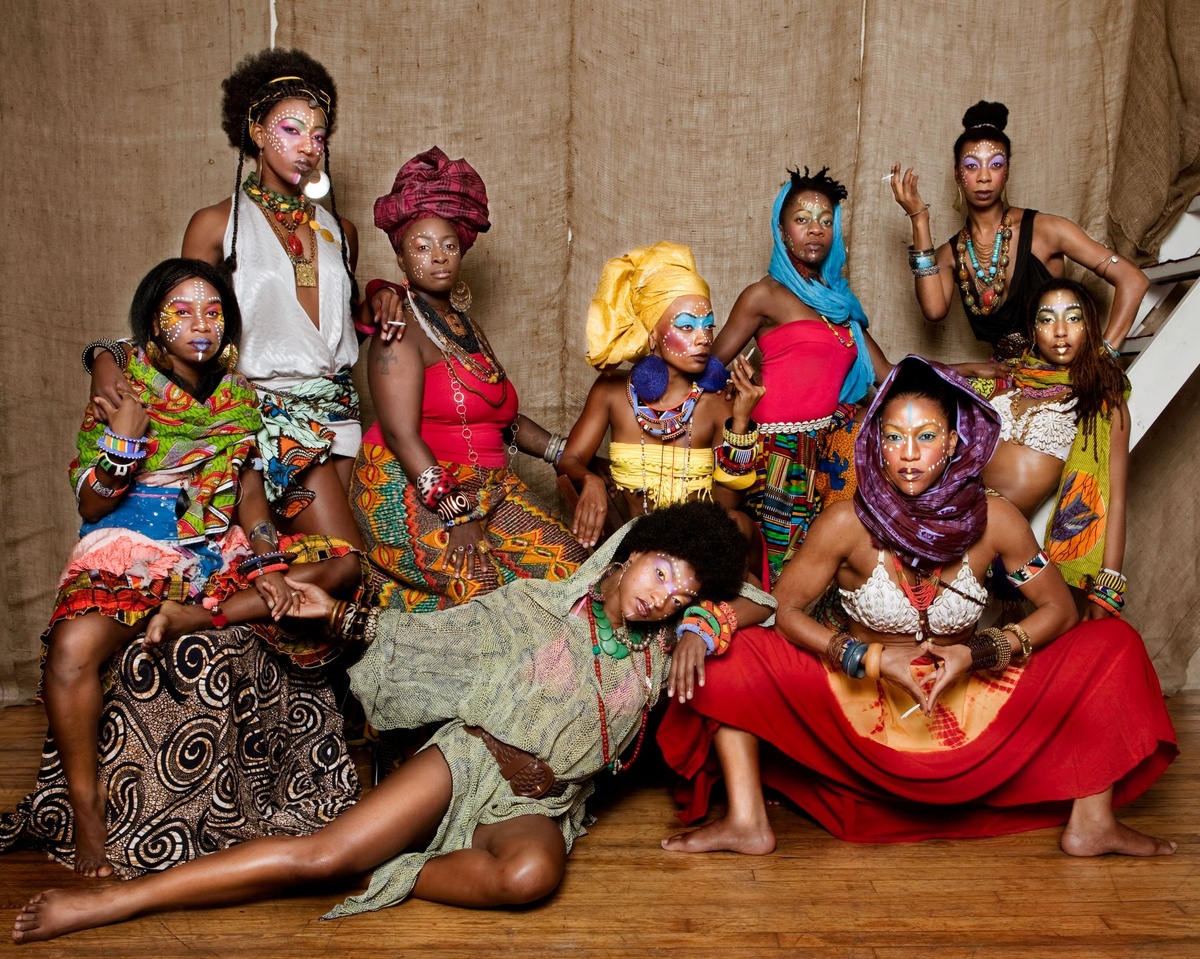
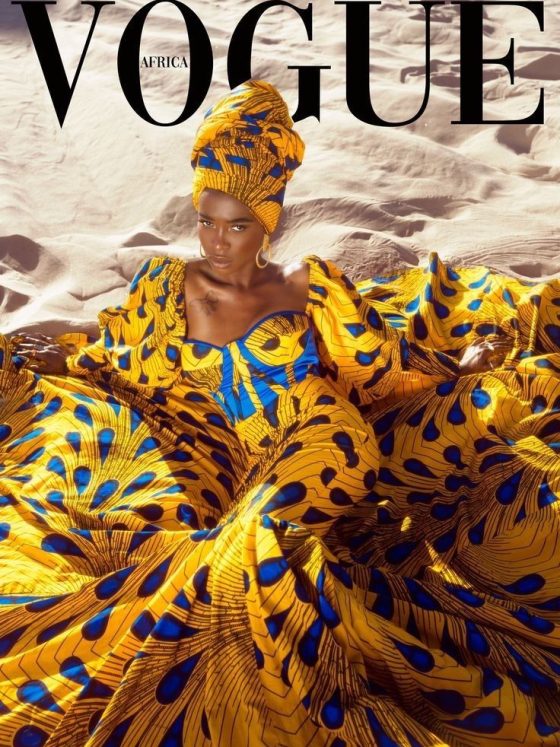
Fela Kuti’s fashion political statement was not contained to his own body. The 27 women he married simultaneously on 18 February 1978, one year after the military raid on the Kalakuta Republic that killed his mother Funmilayo Ransome-Kuti, constituted a parallel visual argument that the fashion press has almost entirely ignored. As Culture Review’s analysis of the sartorial revolution documents, the Fela Kuti Queens wore Ankara, headwraps, beaded braids, and elaborate ceremonial face paint that directly defied Eurocentric beauty standards. They were not background performers. They were a collective visual manifesto, present at every performance, every public appearance, every press photograph. The mass marriage itself was a legal strategy: the Nigerian government had used the argument that Fela was holding women against their will to justify raids on Kalakuta. Formal marriage removed that pretext. But the aesthetic of the Queens was a separate argument: this is what African women dressed on their own terms looks like, and it looks nothing like what colonial propriety demands.
The political radicalisation that produced both the music and the fashion had a specific origin. In 1969, in the United States, Fela met Sandra Izsadore, also known as Sandra Smith, a member of the Black Panthers. She introduced him to Malcolm X, the Black Power movement, and a theoretical framework for understanding African identity as a political question rather than a cultural one. The transformation in his music and his dress after that encounter was immediate and documented. The Ankara jumpsuits, the refusal of Western formal wear, the embrace of Afrocentric aesthetics as political positions: all of these intensified from 1970 onward in ways that directly track his exposure to Black Power philosophy. Fela did not invent the idea that clothing is political. He implemented it with more consistency and more consequence than any other African musician of his generation.
The suit was a colonial infrastructure worn on the body. Fela refused to put it on. That refusal was the fashion argument before the music started.
Also Read:
- Dressed With Power: How Nigerian Men Redefined Traditional Fashion at the AMVCA 12 Cultural Night
- The Egungun Masquerade: What the Yoruba Ancestral Festival Tells Us About Fashion and the Spirit World
- The Problem with Calling Every African Designer One to Watch
- AMVCA 2026 Designers: How Nigerian Fashion Claimed the World Stage
How Fela Kuti’s Fashion Argument Lives in Afrobeats Today
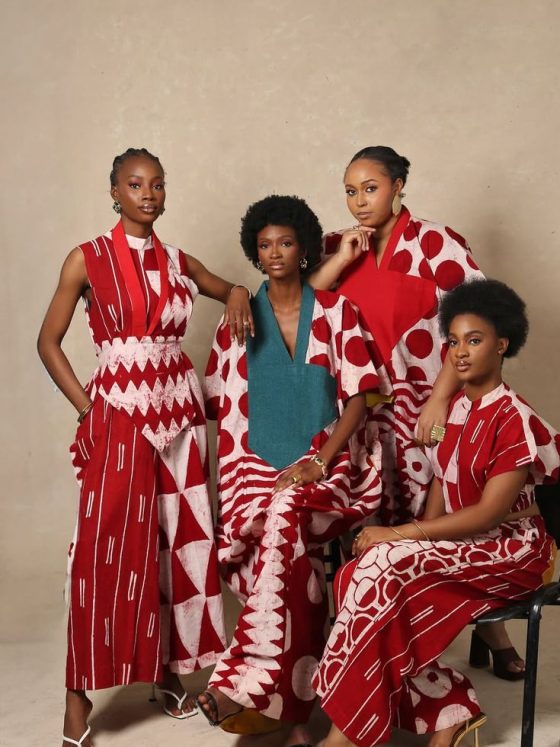
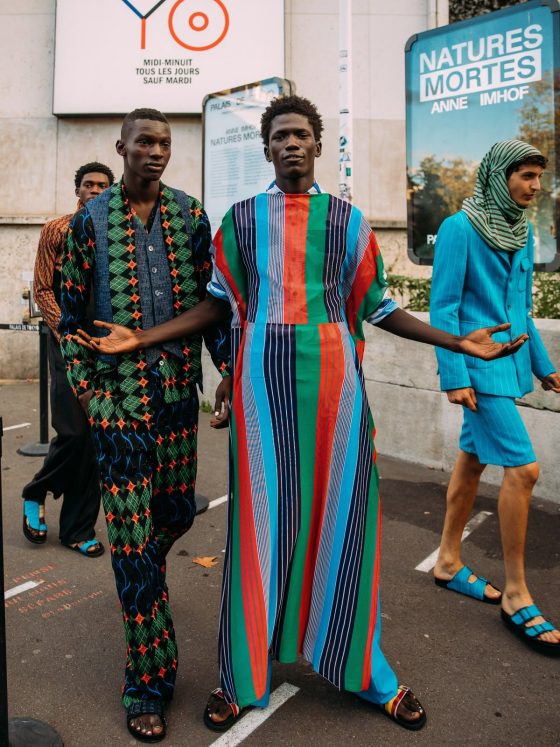
The line from Fela’s fashion politics to the contemporary Afrobeats aesthetic is direct and documented. The rejection of Western formal dress as the default for Nigerian public life, the embrace of embroidered native attire and Ankara as markers of cultural authority rather than cultural subordination, the use of beading and face painting as references to spiritual traditions that colonial power tried to suppress: all of these elements that Fela established as political positions are now the standard visual vocabulary of Nigerian celebrity culture at its most confident. As Omiren Styles documented in its coverage of the AMVCA 12 Cultural Night, the Edo coral regalia, Yoruba Aso-Oke Agbada, and Ijaw brocade that filled the Balmoral Convention Centre in May 2026 are the contemporary expression of exactly the cultural self-determination that Fela was arguing for in 1973. He did not live to see it become the default at Nigeria’s most-watched annual event. But the argument he made is the argument that won.
The distinction between Fela’s fashion argument and contemporary Afrobeats fashion is worth drawing precisely. Fela’s dress choices were explicitly anti-state. He wore native attire not to celebrate Nigerian culture but to challenge the government’s implicit endorsement of European standards as the mark of a serious person. Contemporary Afrobeats fashion wears the same garments with a different relationship to institutional power: the Agbada on the AMVCA red carpet is not a protest. It is a statement of arrival. That shift, from protest to authority, is the clearest evidence that Fela’s argument succeeded. The dress he had to fight to legitimise is now the one that legitimate institutions celebrate.
The Omiren Argument
Fela Kuti’s fashion was not a style. It was a complete political system expressed through dress, sustained over a career of twenty-five years, maintained under government persecution, and refined through the specific influence of the Black Power movement and his own Afrocentric philosophical development. The three-piece suit in Nigerian heat was not an aesthetic choice he rejected on grounds of taste. It was colonial infrastructure worn on the body, a garment that announced its wearer’s acceptance of European cultural hierarchy as the standard of respectability. His refusal to wear it, and his sustained development of an alternative aesthetic built on native embroidered attire, Ankara, beadwork, and Yoruba spiritual visual grammar, was a political position that cost him over two hundred arrests and a military raid that killed his mother. Fashion editorial that describes this as eccentric or rock-star showmanship has missed the entire argument. The clothes were the argument. The music was the amplification.
Omiren Styles places Fela Kuti’s fashion in the Art and Music section of the culture archive, not because it was incidental to his music, but because the two were inseparable systems that made the same argument in different media. The Gentleman lyric is a fashion critique. The Shrine was a fashion environment. The Fela Kuti Queens were a collective fashion manifesto. The chalk-painted face was a spiritual fashion statement. None of these is decoration around the music. They are the same political intelligence operating across every available medium simultaneously. African fashion editorial has not yet produced a figure who made the argument that dress is politics with the same consistency, the same consequence, and the same creative intelligence as Fela Kuti. His stage was his editorial. His clothes were his column. And the argument has never been answered.
Frequently Asked Questions
What did Fela Kuti wear on stage?
Fela Kuti’s primary stage dress was embroidered with native attire, brightly coloured and precisely fitted, Ankara jumpsuits, and beaded necklaces. During the Saturday night shows known as Comprehensive Nights, he was sometimes shirtless, and he applied white chalk face paint as a gesture tied to Yoruba spiritual tradition. Contrary to the popular image, he did not perform in underwear on most occasions. According to Dede Mabiaku, a longtime member of his Egypt 80 band, and Benson Idonijie, his first manager, the underwear was comfort wear during his famously long home rehearsals and informal settings, not a consistent stage costume.
What is the meaning of Gentleman by Fela Kuti?
Gentleman, released in 1973 and sung in Nigerian Pidgin English, critiques Africans who adopted European dress codes as a mark of respectability in postcolonial Africa. Fela describes a friend wearing socks, shoes, a vest, trousers, a shirt, a tie, a coat, and a hat in Nigerian heat until he sweats, faints, and smells. The song argues that this performance of colonial dress is a form of cultural self-betrayal. “I no be gentleman at all, I be Africa man original” is the refrain: a declaration of Afrocentric cultural self-determination over colonial respectability standards.
Why did Fela Kuti refuse to wear Western clothes?
Fela Kuti’s rejection of Western formal dress was a deliberate political stance informed by his Afrocentric philosophy and his exposure to the Black Power movement, particularly after meeting Sandra Izsadore (Sandra Smith) in the United States in 1969. He understood the three-piece suit in an African climate as colonial infrastructure worn on the body — a garment that announced its wearer’s acceptance of European cultural hierarchy. His alternative, embroidered native attire, Ankara, and Yoruba spiritual visual elements, was a sustained assertion that African dress carried its own authority and required no European endorsement.
What did the Fela Kuti Queens wear and why does it matter?
The 27 women Fela married simultaneously on 18 February 1978, known as the Fela Kuti Queens, wore Ankara, headwraps, beaded braids, and ceremonial face paint that directly defied Eurocentric beauty standards. They were present at every performance and public appearance, functioning as a collective visual manifesto alongside Fela’s individual dress statements. Their aesthetic was a parallel political argument: this is what African women dressed on their own cultural terms look like. The mass marriage itself had a legal dimension, removing the government’s pretext for raiding the Kalakuta Republic on grounds of unlawful detention.
How did Fela Kuti’s fashion influence Afrobeats artists today?
Fela Kuti established the rejection of colonial dress codes and the embrace of Afrocentric aesthetics as political positions in Nigerian cultural life. The embroidered native attire, Ankara, beadwork, and Yoruba spiritual visual grammar that he wore as acts of resistance are now the standard vocabulary of Nigerian celebrity fashion at its most confident. The Agbada, Aso-Oke, and coral regalia worn on the AMVCA Cultural Night red carpet in 2026 are the contemporary expression of the cultural self-determination Fela argued for in 1973. The difference is that what he had to fight to make legitimate is now what legitimate institutions celebrate.
Explore More
Read the full Culture > Art & Music section for Omiren Styles’ analysis of the music, performance, and visual cultures that African artists have built as complete political and aesthetic systems, on their own terms, for their own communities.