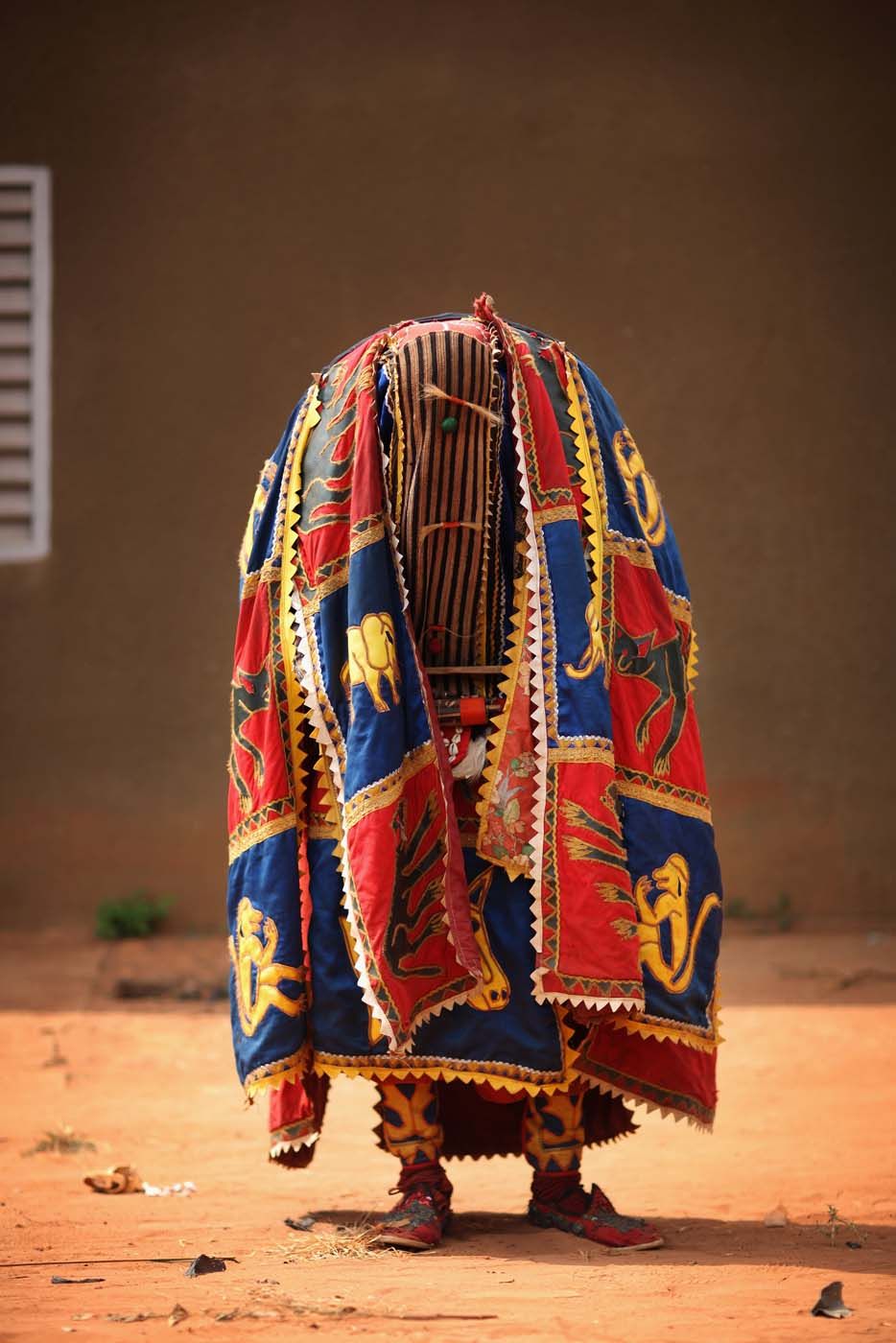
The word Egúngún means powers concealed. Not a costume. Not performance. Not theatrical dress. Powers concealed. In the Yoruba religious and cosmological system, this distinction is not a matter of linguistic precision. It is a statement of ontology. When the Egungun masquerade emerges during the annual Odun Egungun festival in the towns and villages of south-western Nigeria, the man wearing the layered cloth costume has not become a performer. He has become a vessel. The ancestors are present. The fabric does not cover a human being. It is housing a spirit.
Fashion editorial, when it has engaged with the Egungun at all, has tended to describe the masquerade costume as an extraordinary textile artefact: the damask panels, the velvet strips, the indigo-dyed cotton, the imported silk, the locally woven cloth, the cowrie shells, beads and metallic threads that accumulate across generations of additions. These descriptions are accurate but insufficient. A description of the Egungun costume that does not account for what the Yoruba believe the costume to be is a description of the surface of a text that has not been read. Omiren Styles is here to read it.
Egungun dress is not a costume. The word means powers concealed. Every fabric layer in an Egungun masquerade is a deliberate argument between the living and the dead.
Egungun Masquerade and Yoruba Fashion: What the Costume Is Actually Doing
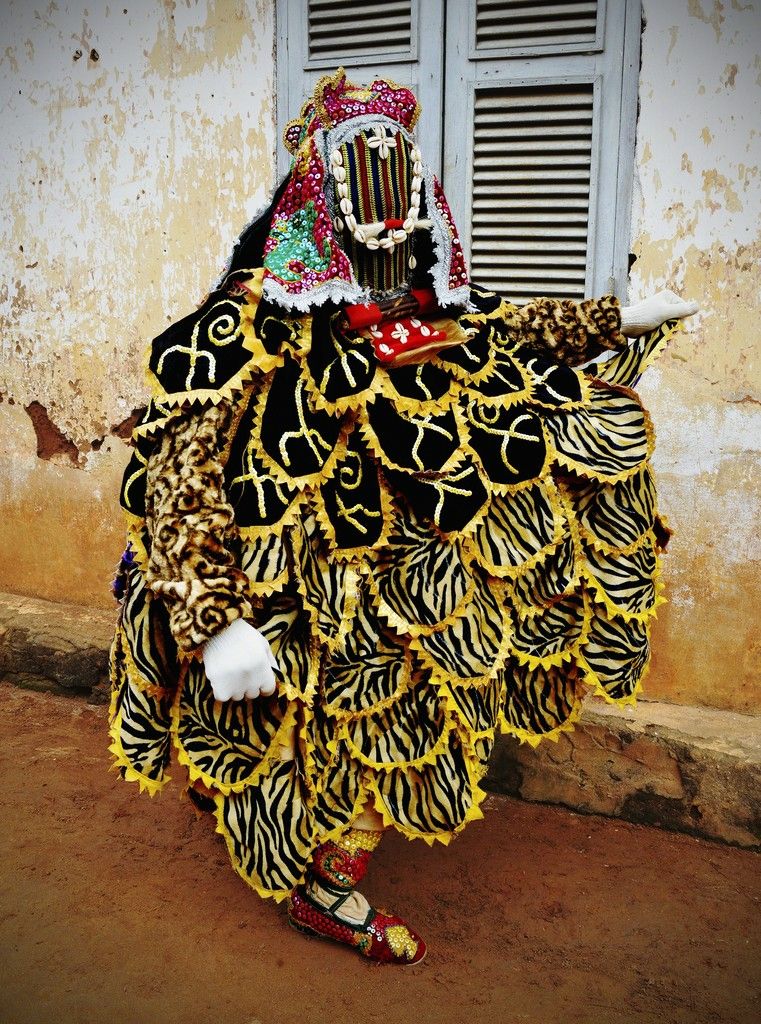
The Egungun masquerade is the primary mechanism through which the Yoruba maintain their relationship with the dead. The Yoruba understand death not as separation but as transformation: the deceased person’s spirit, or emi, crosses into the spiritual realm but remains connected to the living family and community. The Egungun provides the ritual structure for the ancestors to return temporarily, to bless their descendants, to transmit wisdom, to enforce social and ethical standards, and to demonstrate that the relationship between the dead and the living is continuous rather than severed. As scholar Bolaji Campbell documented in his 2020 study Fabric of Immortality, the Egungun masquerade costume is not a representation of ancestral presence. It is the means through which ancestral presence becomes physically real in the community. The cloth is the technology of that presence.
The costume that makes this possible is layered in a way that encodes the family’s history, wealth, and spiritual standing. The outer panels, which are added to every year by patrons who purchase luxurious imported cloth for the purpose, accumulate over generations. A family’s Egungun costume is a vertical archive: the oldest layers closest to the body, the newest additions outermost. To touch the outer layer is to touch the present. To reach the innermost layer would, in Yoruba understanding, be to touch something far older and far more dangerous. The layering is not aesthetic. It is temporal. The costume wears out.
The Paka Egúngún, created in Oyo State, Nigeria, between approximately 1920 and 1948 and held at the Brooklyn Museum, illustrates this principle in material terms. It is embellished with hundreds of fabric panels of varying lengths, incorporating locally woven indigo-dyed cotton alongside imported damasks, velvets, faux furs, and embroideries from Asian and European markets. The Brooklyn Museum’s documentation notes that the costume is arranged according to Yoruba design sense: ojú-ọnà, the Yoruba concept of compositional intelligence that governs how patterns, colours, and materials are combined to produce visual meaning. The panels do not simply cover the body. They create a dwelling place for ancestral spirits, as the museum’s own documentation confirms. This is not a metaphor chosen by curators. It is the Yoruba description of the costume’s purpose.
The Fabric as Argument: What Each Material Choice Communicates
The selection of fabrics for an Egungun costume is not a matter of aesthetic preference. It is a matter of social standing, spiritual investment, and familial honour. The more extravagant the costume, the more powerful the masquerade and the more prestigious the family it represents. Today, the fabrics chosen are literally the best that money can buy: damask, velvet, silk, Indian madras, printed cotton, imported from across the world. A family that adds a panel of fine damask to its Egungun costume is making a public statement about its capacity to honour the ancestors at the highest level of material investment. The costume is a balance sheet of family devotion, expressed in cloth.
The materials of the costume extend beyond fabric. The Indianapolis Museum of Art holds an Egungun masquerade garment from the period 1930 to 1970, made of velvet, leather, cotton, wood, sequins, beads, metallic threads, and cowrie shells. The cowrie shells carry their own historical weight: across West Africa, cowries were the primary currency of trade for centuries before colonial monetary systems arrived. To embed cowries in a ceremonial costume is to embed commercial history, spiritual value, and ancestral time simultaneously in a single object. The beads carry lineage information. The metallic threads carry prestige. Each component of the costume is doing specific communicative work.
The Ifá corpus, the Yoruba literary and divinatory system, provides the philosophical framework for understanding what the cloth is doing—a verse documented by the North Carolina Museum of Art states: Cloth only wears to shreds. Just as cloth wears to shreds but never completely disappears, the living are transformed via death into a state of immortality. The costume is a visual citation of this verse. The accumulation of layers, the wearing and addition of panels across generations, and the way older cloth survives within newer cloth is the physical enactment of the philosophical argument that the dead persist within the living. The Egungun costume does not illustrate a belief. It performs it.
Fashion editorial treats the Egungun costume as an artefact. The Yoruba treat it as a living presence. That is not a metaphor. It is a theological position, and the cloth is the evidence.
The Dance, the Drum, and the Portal Between Worlds
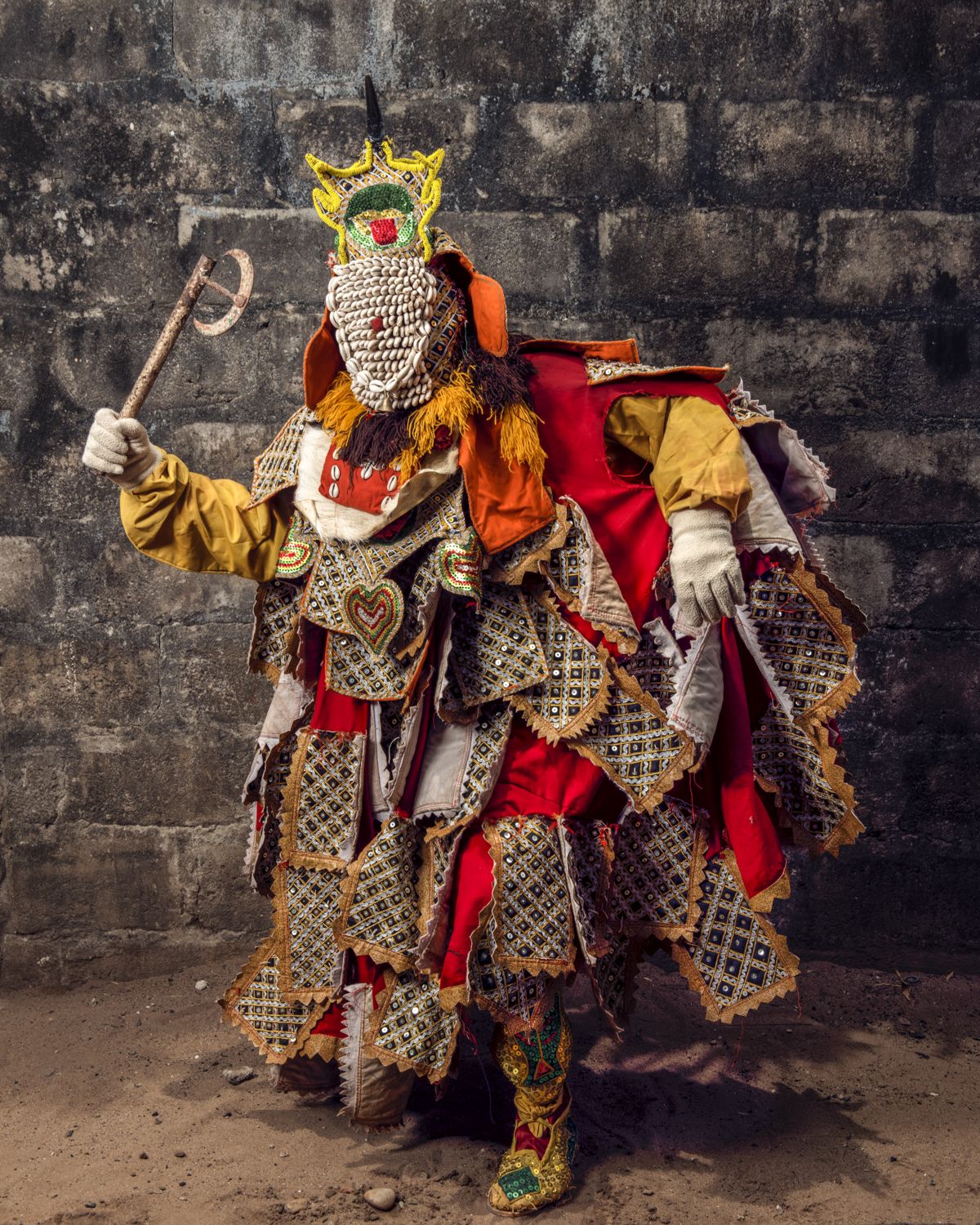
The spinning movement that characterises the Egungun performance is not choreography. It is cosmology. When the masquerade spins at speed, the layered fabric panels fly outward in a vortex of colour and motion, creating what Yoruba belief describes as a portal between the physical world and the spiritual realm. The spin is the moment at which the ancestral presence is most fully activated. The faster and more complete the spin, the more direct the connection between the living and the dead. Spectators step back not because the spinning is physically dangerous, though it can be, but because the vortex is understood as a literal boundary crossing. To be struck by the fabric of a spinning Egungun is to be touched by the ancestor.
The relationship between the masquerade and the talking drum is equally specific. The drummers do not provide musical accompaniment to a performance. They provide the language through which the living communicate with the dead. The Egungun responds to the drums, the different rhythms calling different ancestors, directing the masquerade’s movements, mediating between the spiritual content of the performance and its physical expression. The drum is the switchboard. The masquerade is the channel. The costume is the body the channel inhabits. None of these elements is decorative.
The Egungun speaks in a distinctive voice described as high-pitched, nasal, and unlike normal human speech. This is the ancestor’s voice, not the masquerader’s. The masquerade may deliver blessings, issue warnings, transmit prophecies, or rebuke family members who have violated the ethical standards upheld by the ancestors. The authority of these pronouncements rests on the context. No one in the community is supposed to see the human being inside the cloth. The cloth is the ancestor. To reveal the wearer’s identity would be to break the sacred structure that makes communication between worlds possible. The secrecy that surrounds the Egungun is not theatrical mystification. It is spiritual protocol.
Also Read:
- The African Origins of Carnival Costume: Feathers, Beads, and the Masquerade Tradition
- AMVCA 12 Cultural Night: When Nigerian Stars Dressed With Memory
- The Invisible Thread: How African Oral Tradition Shapes Fashion and Heritage Textiles
- Who Actually Owns Ankara: The Legal and Cultural Argument the Fashion Industry Has Been Avoiding
Women, Power, and the Cloth That Changed Hands
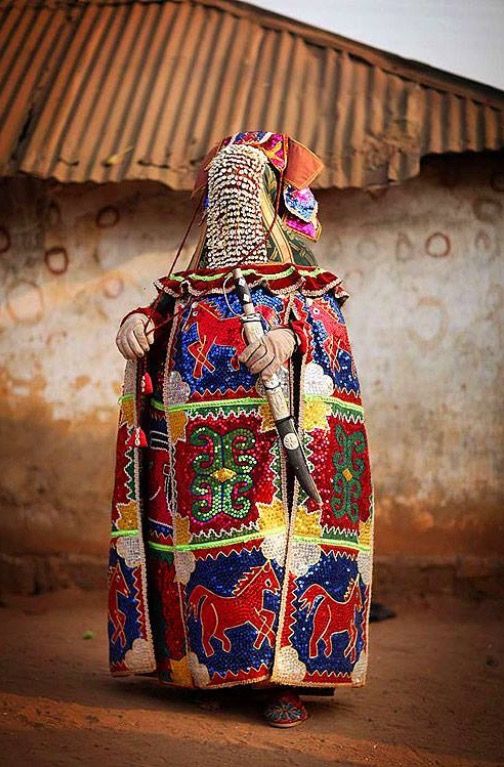
The most significant yet least discussed dimension of the Egungun tradition, in fashion terms, is the history of its gendered power. The Ifa corpus, specifically the Odu Irantegbe chapter, records that women once controlled the Egungun. The ritual originates from women’s religious experience in the Yoruba tradition. Women were the sustainers of the Egungun. According to the text, they were tricked by men, and their powers over the Egungun cult were taken away. Men now perform the masquerade. But women continue to create the costumes, sing the oriki praise poems that call the ancestors by name, and provide the sonic and material infrastructure without which the masquerade cannot function. Women’s hands made the cloth that houses the ancestor. The genealogy of that cloth is a women’s history that the performance has structurally obscured.
The iyaami, the elder women of high title who perform invocations, prayers, and offerings during Egungun ceremonies, hold a recognised spiritual authority within the tradition. Their role is not subordinate. It is parallel and in some respects foundational. The Egungun cannot appear without the preparations that elder women conduct. The oral histories that give the masquerade its content, the oriki recited during performance, are maintained primarily by women. The Yoruba understanding of the Egungun as a collective ancestral force rather than a solo male performance is partly explained by this foundational female contribution.
The survival of the Egungun tradition in the diaspora, in Brazil, Cuba, the Dominican Republic, Barbados, and the United States, documents the tradition’s capacity to cross the Middle Passage and reconstitute itself in conditions of extreme disruption. The Yoruba enslaved people who carried the Egungun tradition to the Americas carried not just a memory of a ceremony but a complete theological and material system. The fact that that system survived, adapted, and continues to be practised in communities across the Americas is the most powerful argument available against any characterisation of the Egungun as a culturally exotic curiosity. It is a living tradition with a documented global reach.
The Omiren Argument
Fashion editorial has engaged with the Egungun masquerade as a textile artefact. It has described the fabric, documented the layers, noted the imported damasks and velvets, and moved on. What it has not done is engage with the Egungun costume as what the Yoruba say it is: a dwelling place for ancestral spirits, constructed according to a specific design intelligence, accumulating across generations to create a material archive of family devotion and spiritual investment. The gap between what the costume is described as and what it is understood to be by the people who make and use it is the gap that fashion editorial has consistently chosen not to cross. Omiren Styles crosses it.
The argument the Egungun costume makes is that the global fashion industry has not yet produced a framework adequate to receive it. It is not that the costume is beautiful, though it is. It is not that the craft is extraordinary, though it is. It is that the garment is a technology for crossing the boundary between the living and the dead, that the fabric is chosen for its capacity to house spiritual power, that the layering is a temporal record of family history, and that the spinning movement that makes the fabric fly is an enactment of a cosmological proposition about the nature of death and continuity. When the global fashion industry asks whether fashion can be art, the Egungun tradition is not listening. It settled that question before the question existed. The cloth is not art. The cloth is present. And presence is more demanding than art.
Frequently Asked Questions
What does Egúngún mean?
Egúngún is a Yoruba word meaning powers concealed. It refers simultaneously to the masquerade tradition, the masked costumed figure who performs during the annual Odun Egungun festival, and the ancestors themselves as a collective spiritual force. The name encodes the tradition’s core theological position: the spiritual power of the ancestor is real and present but concealed within the costume from the uninitiated observer. Éégún is the abbreviated form of the word and carries the same meaning.
What is the Egungun costume made of, and why are the materials significant?
Egungun masquerade costumes are constructed from layers of fabric that accumulate over generations, with patrons adding new panels of the finest cloth they can afford at each Odun Egungun festival. Materials include locally woven indigo-dyed cotton, imported damask, velvet, silk, Indian madras, printed cotton, faux furs, and metallic embroideries. Additional components include cowrie shells, beads, leather, wood, sequins, and metallic threads. The selection is deliberate: the more extravagant the costume, the more powerful the ancestral presence it houses and the more prestigious the family it represents. The Brooklyn Museum’s Paka Egúngún from Oyo State, Nigeria, incorporates hundreds of fabric panels from African, Asian, and European sources, arranged according to the Yoruba design principle of ojú-ọnà.
Why does the Egungun spin during performance, and what does it mean?
The spinning movement of the Egungun masquerade is not choreography. It is a cosmological practice. When the masquerade spins at speed, the layered fabric panels fly outward, creating what the Yoruba believe is a vortex or portal between the physical world and the spiritual realm. The spin activates the ancestral presence most completely. Spectators step back because physical contact with the fabric of a spinning Egungun is understood as literal contact with the ancestor. The drums guide the masquerade’s movement, with different rhythms calling different ancestors and directing the performance’s spiritual content.
What is the role of women in the Egungun tradition?
Women’s relationship to the Egungun is complex and foundational. The Ifa corpus, specifically the Odu Irantegbe chapter, documents that women once controlled the Egungun tradition. It states that women were the sustainers of the Egungun and were tricked by men, after which male control of the masquerade performance was established. Today, only initiated men may wear the Egungun costume. However, women are central to the tradition in other ways. For example, they create the costumes, sing the oriki praise poems that call the ancestors by name, and perform invocations and offerings during ceremonies. Elder women of high title hold recognised spiritual authority within the practice. Women’s hands make the costume’s fabric.
Where else in the world is the Egungun tradition practised?
The Egungun tradition is practised across Yorubaland in Nigeria, Benin, and Togo. It is also maintained by Yoruba diaspora communities across the Americas, including in Brazil, Cuba, the Dominican Republic, Barbados, and the United States. The tradition’s survival through the Middle Passage and its reconstitution in diaspora communities amid extreme disruption demonstrates its structural completeness as a theological and material system. The fact that the tradition continues to be actively practised in the Americas is the most direct available evidence against any characterisation of the Egungun as a historical or regional curiosity.
Explore More
Read the full Culture > Ceremony & Ritual section at omirenstyles.com/category/culture/ceremony-ritual-culture/ for Omiren Styles’ analysis of the ceremony dress traditions, spiritual technologies, and cultural systems that African fashion editorial has consistently described from the outside without reading from the inside.