By now, you have seen the videos. A young man in Mekelle, Ethiopia, stands in front of a wall covered in discarded shoes, worn bags, and cast-off cloth. He is wearing a two-piece suit assembled from white plastic bags, cinched with architectural precision. He does not smile. He does not explain himself. He walks, and the internet breaks.
He is widely reported as Kaleb. The world knows him as Kalu Putic. And the question his work demands, the one a growing ecosystem of creators, critics, and commentary clips is now asking out loud, is the most important question fashion has faced in a generation: in 2026, how do we define luxury?
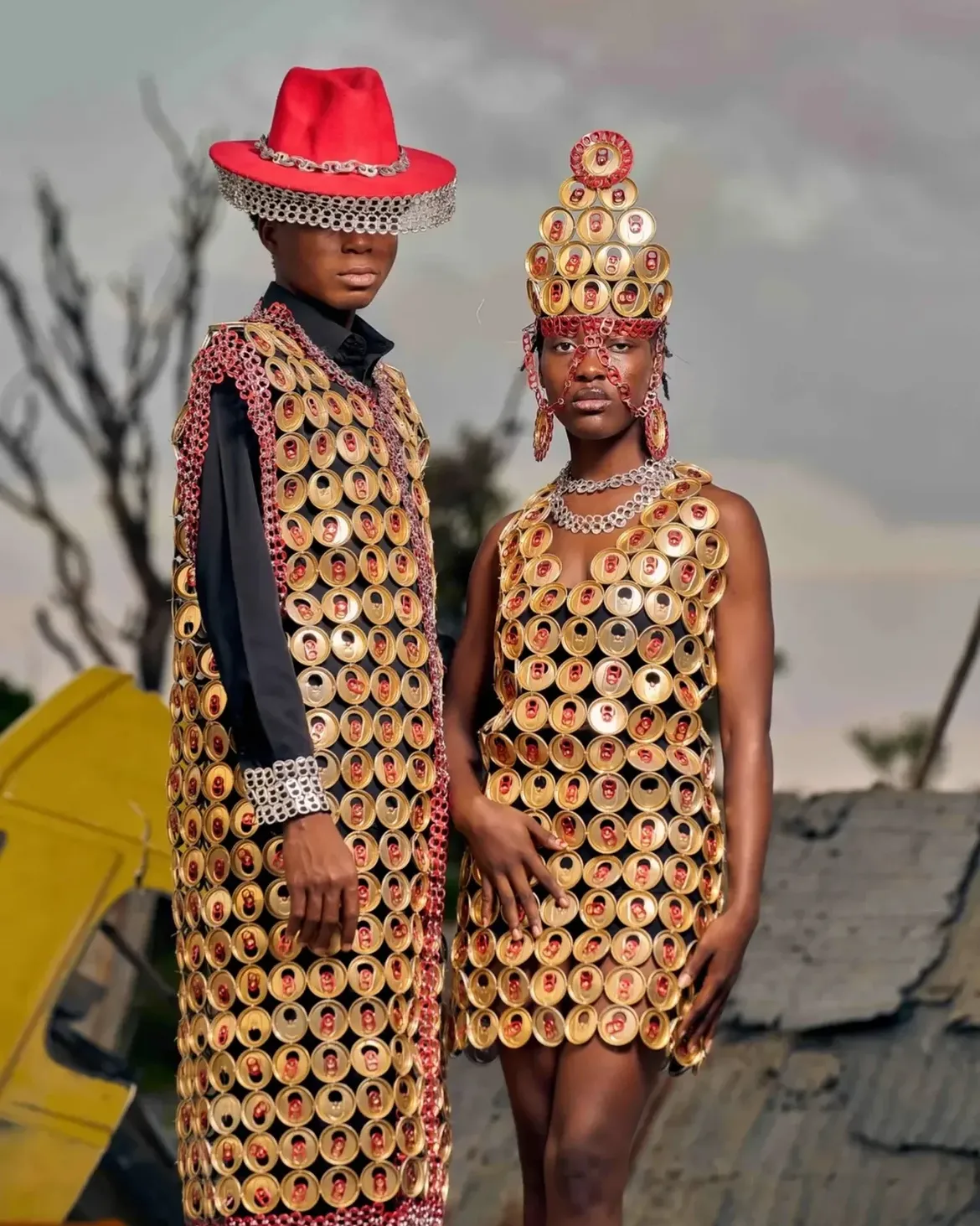
Kalu Putic, Nkwo Onwuka, and Bobby Kolade are redefining luxury from trash, discarded textiles, and secondhand cloth. This is what they are building it from.
When the Industry’s Story Starts to Crack
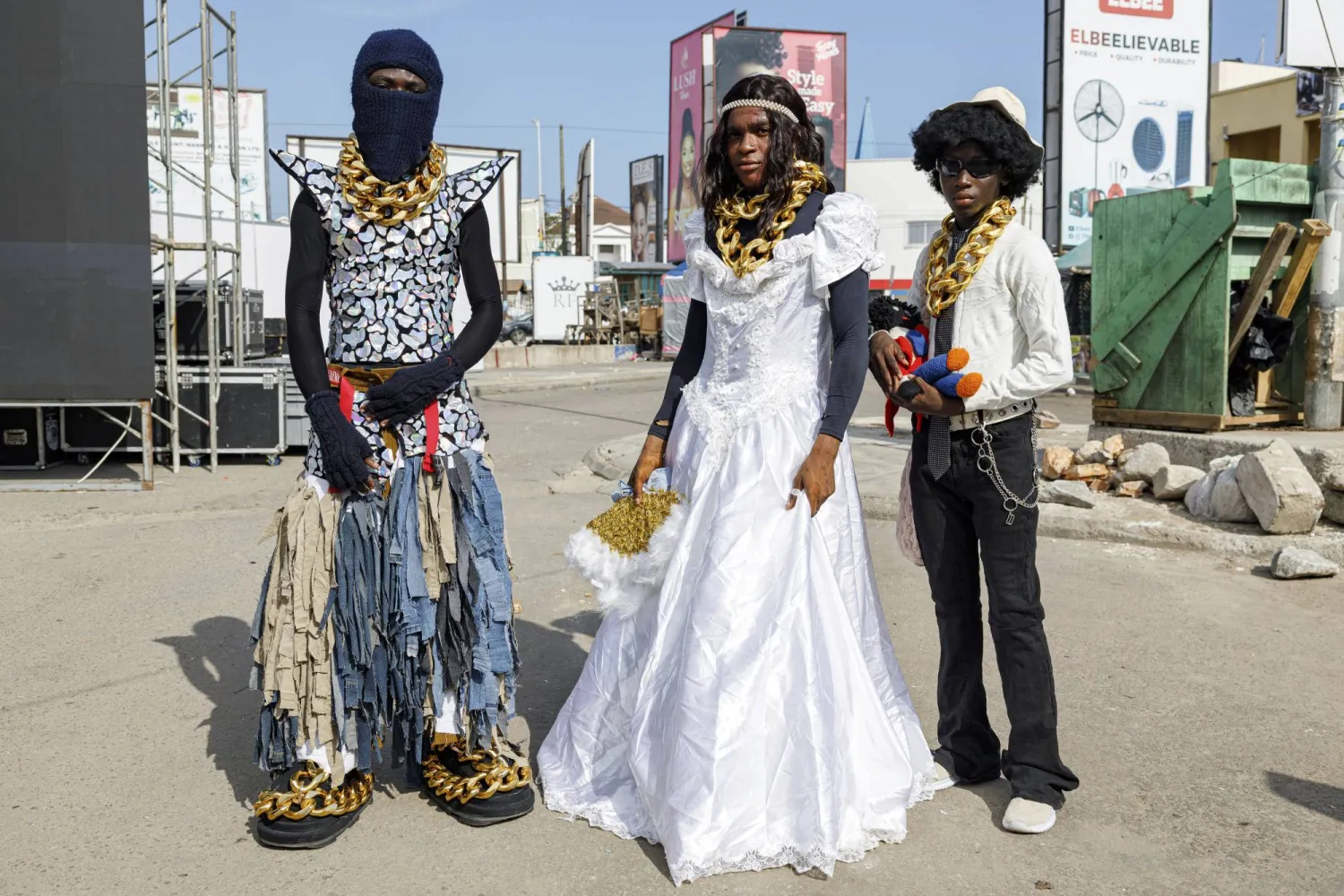
The fashion industry has spent roughly 100 years developing a very specific answer to that question. Luxury, it insists, requires the right fabric: cashmere, silk, fine Italian leather, heritage cotton. It requires the right training: the grandes écoles of Paris, the ateliers of Milan, the design programmes whose tuition fees alone exceed the annual GDP per capita of most African nations. It requires the right geography, the right pedigree, the right institutional blessing.
What it has never required, according to that century-long story, is imagination working without resources.
Kalu Putic has no studio. No budget. No fashion school credential. What he has is waste: discarded rubber, torn plastic, worn-out denim, cardboard, old beads, and what the viral commentary now forming around him correctly calls an undeniable imagination. Since launching his TikTok account in December 2025, he has accumulated approximately 730,000 followers on that platform and approximately 6.5 million on Instagram, according to TokPortal and HypeAuditor. SZA commented on one of his posts. A separate music producer is cited in a documentary as having reacted to his work as well, though this has not been independently confirmed. He has zero publicly announced brand deals.
That gap, between millions of witnesses and zero commercial investment, is not a coincidence. It is a system working exactly as designed.
Kalu Putic Is Not the Beginning. He Is the Latest Chapter.
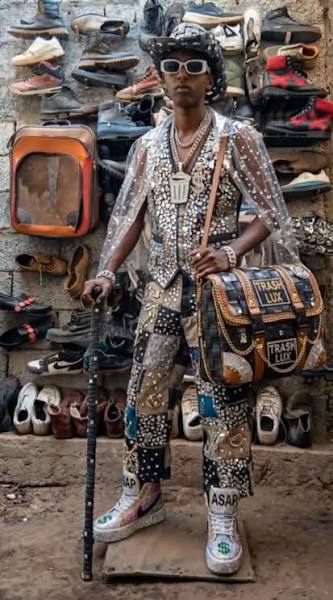
The commentary emerging around Kalu Putic is doing something critical: it refuses to let him be treated as an anomaly. It situates him within a lineage. And that lineage has names.
Nkwo Onwuka, the Nigerian designer behind the NKWO label, has been building luxury from textile waste since long before the Western fashion industry coined the phrase “sustainable fashion.” Her work repurposes deadstock, offcuts, and discarded textiles, most notably through the Dakala cloth built from upcycled denim, into high-concept design that operates with the intentionality and cultural specificity any Paris maison would claim as its highest value. NKWO was founded in 2007 and relaunched with its full sustainability focus in 2012. The Western fashion press discovered sustainable fashion as a trend circa 2016. Nkwo Onwuka had been practising it for a decade before that naming arrived. The lag is not incidental. It reflects who controls the language, and therefore who controls the legitimacy that follows from it.
Kampala-based designer Bobby Kolade’s “Return to Sender” collection, produced under his Buzigahill label, pushes the argument further. Built from discarded Western clothes, the billions of garments that wealthy countries export to African markets under the guise of charity, devastating local textile economies in the process, the collection reframes that waste as art and sends it back. The title is a geopolitical statement. The materials are the evidence. Kolade, who was born in Sudan to Nigerian-German parents, grew up between Kampala and Lagos, and holds a Master’s degree in Fashion Design from the Academy of Arts, Berlin Weissensee. He brings a precisely documented cross-continental perspective to this work. His practice has received a Berlin Vogue Talents award and international recognition at the Global Fashion Agenda, yet the fashion industry still does not consistently frame this as luxury. A designer constructing geopolitical critique from the West’s cast-offs does not get the same institutional recognition as a European designer constructing irony from the same material. The work is the same. The geography changes everything.
Kalu Putic, Nkwo Onwuka, and Bobby Kolade are not three separate stories. They are one argument, restated across three practices, three geographies, three generations.
The Market Already Knows. The Industry Refuses to Listen.
Here is what makes the industry’s silence indefensible: the market has already answered the question it is pretending not to hear. The global resale apparel market was valued at approximately $197 billion in 2023 and is projected to reach $350 billion by 2028, according to ThredUp’s 2024 Resale Report. Platforms like Vestiaire Collective, Depop, and The RealReal have built billion-dollar valuations on the premise that the story behind a garment matters as much as its origin. Consumers, particularly those under 35, are already operating with a redefined luxury vocabulary, one where thoughtfulness, rarity, and narrative carry more weight than thread count and heritage branding.
The market, in other words, is already telling the industry that luxury is not about newness or materials. It is about what is thoughtful, what is rare, and the story behind it.
Kalu Putic’s work scores at the highest level on every one of those criteria. Each look is unrepeatable, assembled from materials that cannot be sourced twice in identical form. Each one carries a story rooted in a specific place, a specific culture, a specific act of creative defiance. Each one is produced with a level of design intentionality that most formally trained designers would struggle to match. And yet the industry that claims to value these qualities has not moved.
Who Gets to Name the Movement?
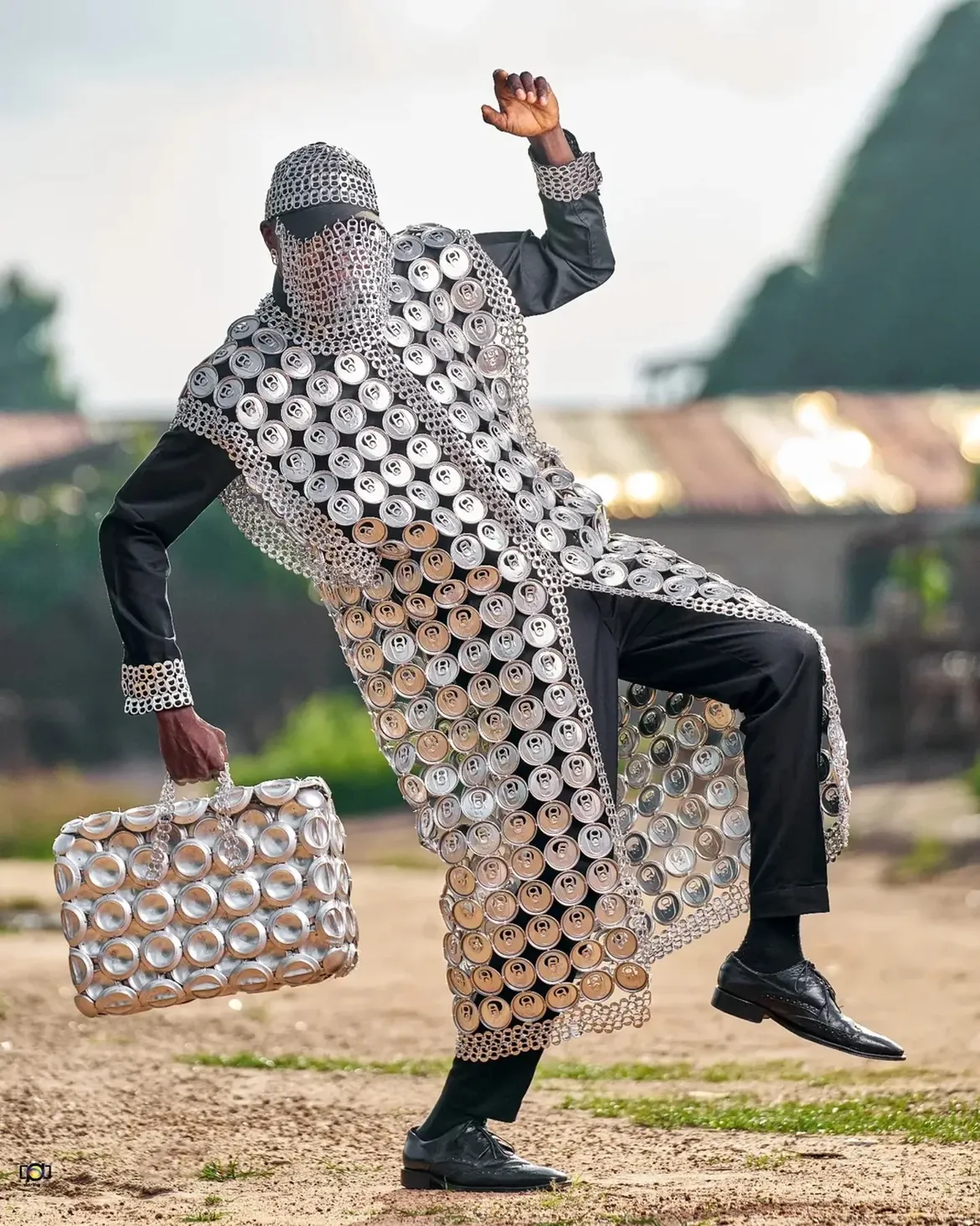
The naming problem is not cosmetic. It is structural. When Western fashion institutions name a practice, when they call something “sustainable fashion” or “upcycled luxury” or “deconstructivist design,” they do more than describe it. They legitimise it. They create the critical language that allows it to be reviewed in Vogue, stocked in luxury retail, and priced at a premium. They build the infrastructure of recognition that converts creative work into commercial power.
African designers have been practising what the West now calls sustainable fashion for centuries. The repurposing of cloth, the transformation of discarded materials, the construction of meaning from what others discard: these are not innovations imported from European sustainability discourse. They are the baseline creative conditions under which African fashion has often operated, born of economic reality and elevated by cultural intelligence. The Kantamanto market in Accra, Ghana, the largest second-hand clothing market in the world, processes an estimated 15 million garments per week according to the OR Foundation. The designers and tailors working within and around it have been turning the West’s cast-offs into new garments for decades. They did not call it sustainable fashion. They called it work.
The mainstream, as the commentary around Kalu Putic now acknowledges, is finally starting to see what Africa has been doing for centuries. But seeing is not the same as investing. Recognition is not the same as equity. And the Omiren argument, stated in our original feature on Kalu Putic in May 2026, holds that creators who originate significant cultural and aesthetic movements deserve material support commensurate with their contribution, not merely the approval of Western institutions that arrive late and leave the economic value elsewhere.
The Independence Question
There is a version of this story that ends with a European brand offering Kalu Putic a collaboration; both parties issue a press release; the brand receives a sustainability halo; and Kalu Putic receives a flat fee, while the long-term brand equity from the association flows entirely in one direction. That version of the story is the one the industry knows how to tell. It is not the version this piece is arguing for. As Omiren Styles has documented in its analysis of what African designers need from global luxury partnerships, the commercial relationship between a creator and a brand is where the ethical argument of African fashion is made or lost. Extraction dressed as collaboration is still extraction.
Kalu Putic’s independence at this moment is not simply a gap in his career. It is structural power. He controls his aesthetic vocabulary. He controls his audience relationship. He has built a community of millions without a single gatekeeper’s permission. In an industry where creative control is routinely the first casualty of commercial partnership, that sovereignty has real value, and it is fragile.
The question the industry must answer is not which brand will sign him. The question is what kind of partnership would allow him to scale without surrendering the creative authority and cultural specificity that made his work impossible to ignore. That answer looks like a funded design studio in Mekelle under his creative direction. It looks like international IP registration protects his aesthetic language. It appears we should use equitable revenue structures rather than flat fees. It looks like the fashion industry is choosing, for once, to build up rather than extract.
Redefining Luxury, From the Ground Up
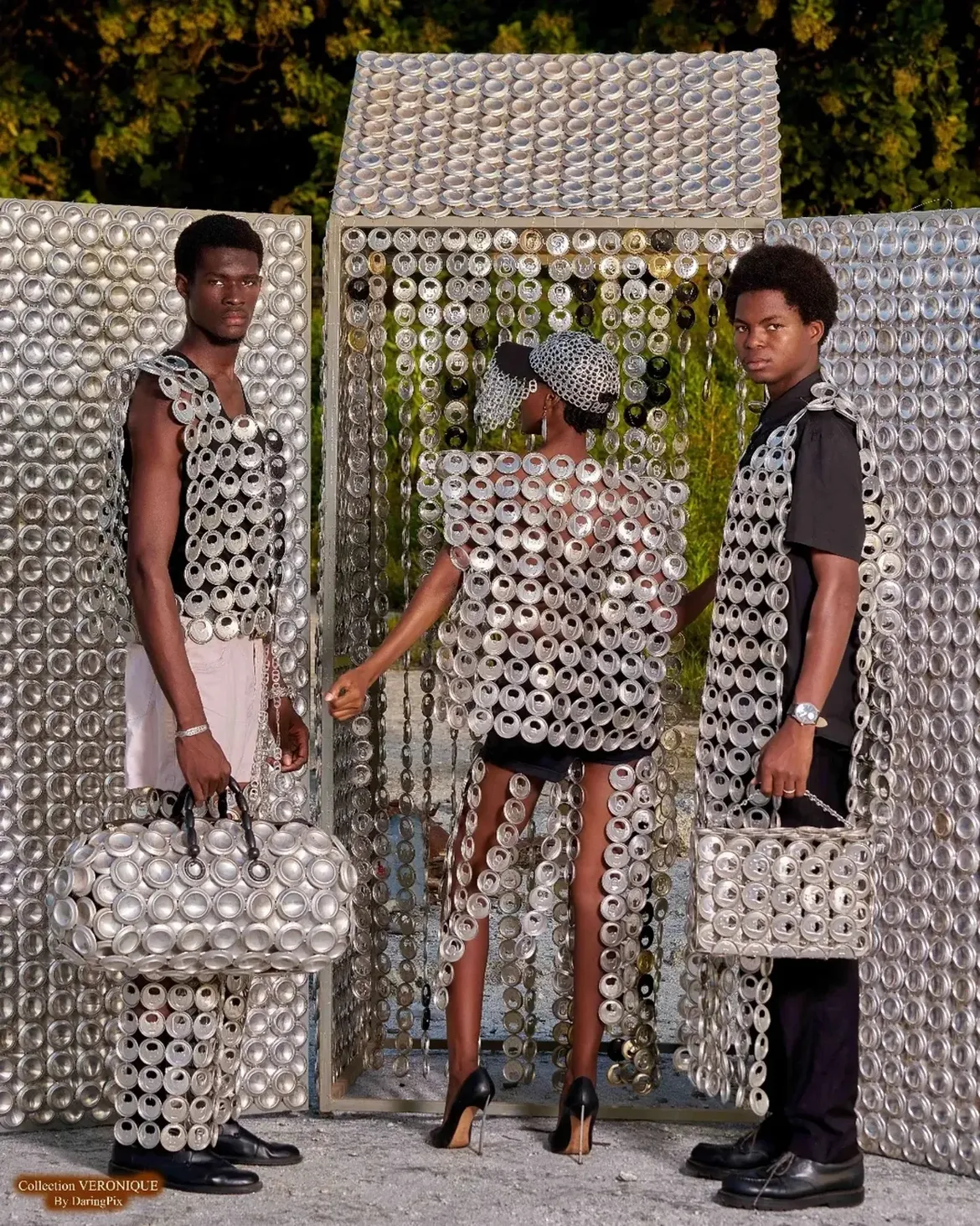
So. In 2026, how do we define luxury? The work of Kalu Putic, Nkwo Onwuka, and Bobby Kolade offers a working definition: luxury is what is thoughtful, what is rare, and what carries a story that could not have come from anywhere else. It is not a price point. It is not a postcode. It is not a century of heritage branding or a credential from a European design institution. It is the specific intelligence that turns discarded rubber into architecture, that sends the West’s cast-offs back as art, that builds a global audience of millions from a wall in Mekelle with no budget and no permission.
The fashion industry spent a century building its story. These designers are building a better one. The question is whether the industry is capable of the honesty required to follow.
SOURCE NOTE
This piece draws on the original Omiren Styles feature Kalu Putic: From the Walls of Mekelle to the World’s Runways, published May 2, 2026, and the follow-up analysis published in July 2026. Social data sourced from TokPortal (@kalu.putic on TikTok) and HypeAuditor (@kaluputics on Instagram), as of July 2026. Resale market data: ThredUp 2024 Resale Report. Kantamanto market data: OR Foundation.
ALSO READ