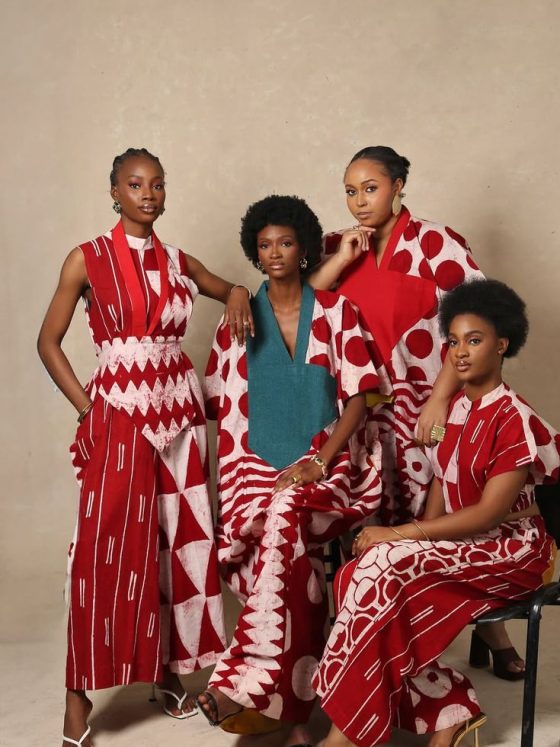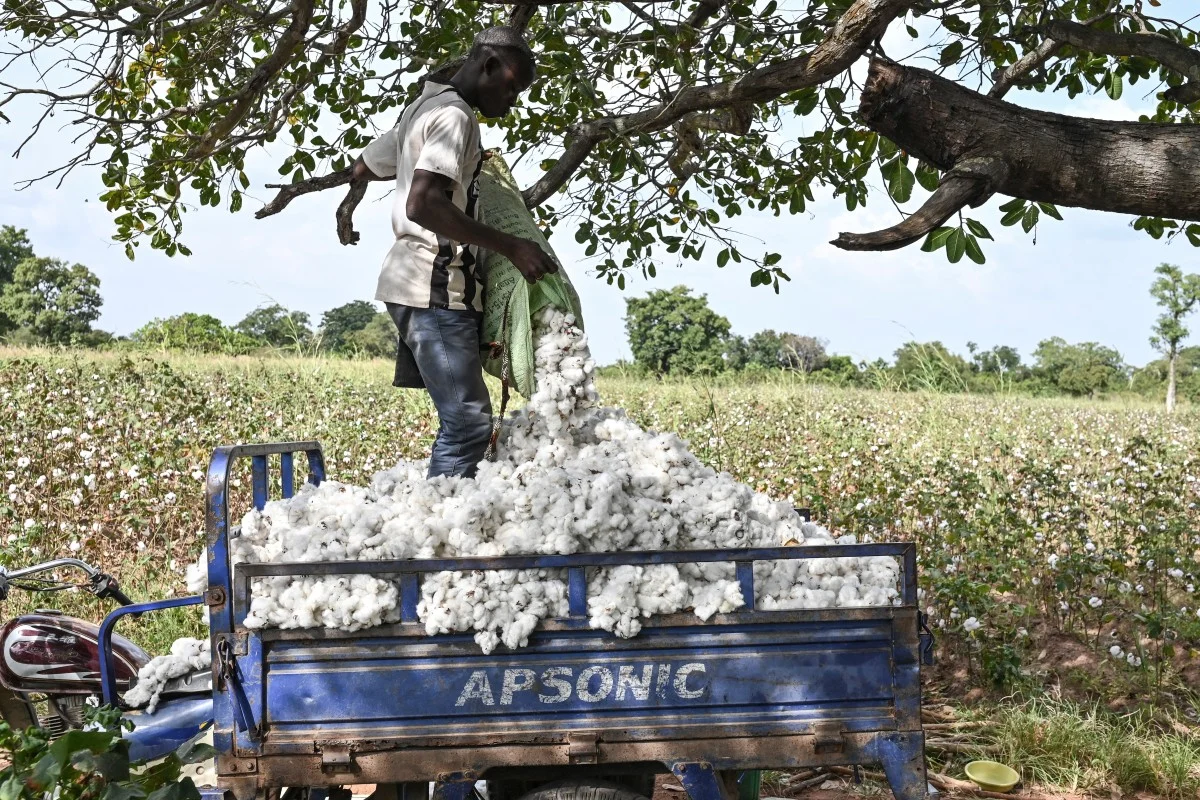
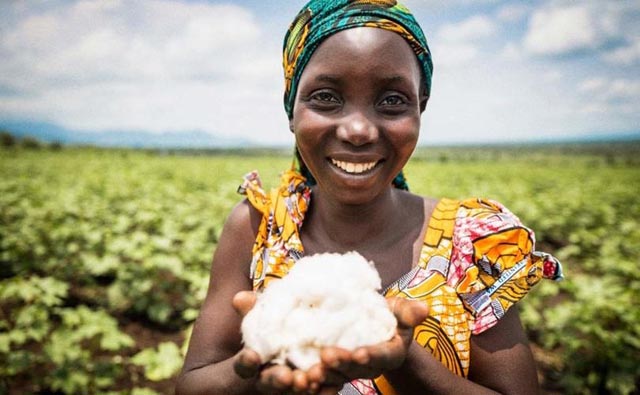
Mali produces some of the finest cotton on earth. Long-staple, dense, and white, it commands serious attention on international commodity markets. Smallholder farmers in the Sikasso region have worked this soil for generations, reading the seasons and rainfall with a precision no algorithm can replicate. The cotton leaves Mali as a raw fibre. It crosses an ocean. It arrives at spinning mills in Guangzhou, Dhaka, or Surat, where it is spun into yarn. Then fabric. Then a shirt retailing in London or New York for sixty pounds. The Malian farmer who grew the raw material receives approximately $0.80 per kilogram at the farm gate. The brand retains the margin. The spinning economy earns the processing premium. Mali, which grows everything, earns almost nothing proportionate to what its land produces.
This is not a market failure. It is a designed outcome, sustained deliberately for decades.
Africa grows world-class cotton yet exports almost all of it in raw form, while Asia captures the processing profits. Omiren Styles traces the trade rules keeping that value off the continent.
The Chain That Was Built to Extract
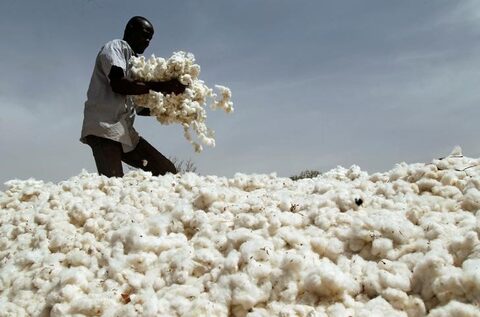
The relationship between African cotton and external processing has its roots in colonial trade architecture. During British, French, and Belgian administration of West and Central Africa, the infrastructure constructed, roads, railways, and port facilities, ran in one direction: towards the coast and out. It was export infrastructure, not processing infrastructure. Cotton grown in what is now Mali, Burkina Faso, and Côte d’Ivoire was destined for textile mills in Manchester and Lyon, not for mills on the continent. The spinning, weaving, and finishing, the stages at which raw fibre acquires value, happened in Europe.
What this created was not simply a trade pattern. It was a structural dependency encoded into the physical landscape of African economies. As independence spread across the continent during the 1950s and 1960s, several governments recognised this and moved to address it. Nigeria, Côte d’Ivoire, Tanzania, and Ethiopia built or expanded domestic textile industries in the post-independence decades. Nigeria, at the height of its manufacturing capacity in the 1980s, operated more than 150 textile mills: industrial facilities capable of spinning, weaving, dyeing, and finishing fabric at scale, employing an estimated 350,000 workers at their peak, according to International Labour Organisation data. African textile production has historically functioned as far more than commerce. As Omiren Styles has documented across traditions from Akwete to Kuba cloth, patterns encode histories, weaving techniques signal regional identities, and the materials themselves reflect relationships between communities and their environments. That knowledge base is both industrial and cultural. It represents centuries of textile expertise that colonial trade architecture systematically redirected away from the continent’s own production economy.
The foundation for a continental textile industry existed. What happened to it is a matter of policy, not fate.
How the Mills Were Closed
In the 1980s and 1990s, across sub-Saharan Africa, governments carrying significant external debt entered agreements with the International Monetary Fund and the World Bank. These agreements, structural adjustment programmes, carried conditions. Among the most consequential was the requirement to privatise state-owned enterprises, remove subsidies to domestic industries, and open markets to foreign competition. For African textile mills, this proved catastrophic.
Nigerian mills that had operated with government support could not compete with imported fabric from China and India, priced to reflect those countries’ decades of state investment, industrial scale, and continuing subsidisation. The mills closed. Employment in Nigeria’s textile sector fell from approximately 350,000 workers in the 1980s to fewer than 25,000 by the mid-2000s. Across the continent, the same process repeated. Ghana’s textile industry contracted sharply under import pressure. Tanzania’s state-owned mills were privatised, and many collapsed within years of the transition.
The structural adjustment period did not merely slow African textile industrialisation. It dismantled industrial capacity that had been constructed at high cost. The conditionality that required privatisation and market opening offered no transition mechanism, no phase-in period, and no protection for the workers who lost their livelihoods. The mills were closed. The machinery was sold. The continent resumed its role as a supplier of raw material.
Africa did not fail to industrialise. It industrialised and was then told to stop.
The Subsidy Architecture Nobody Names
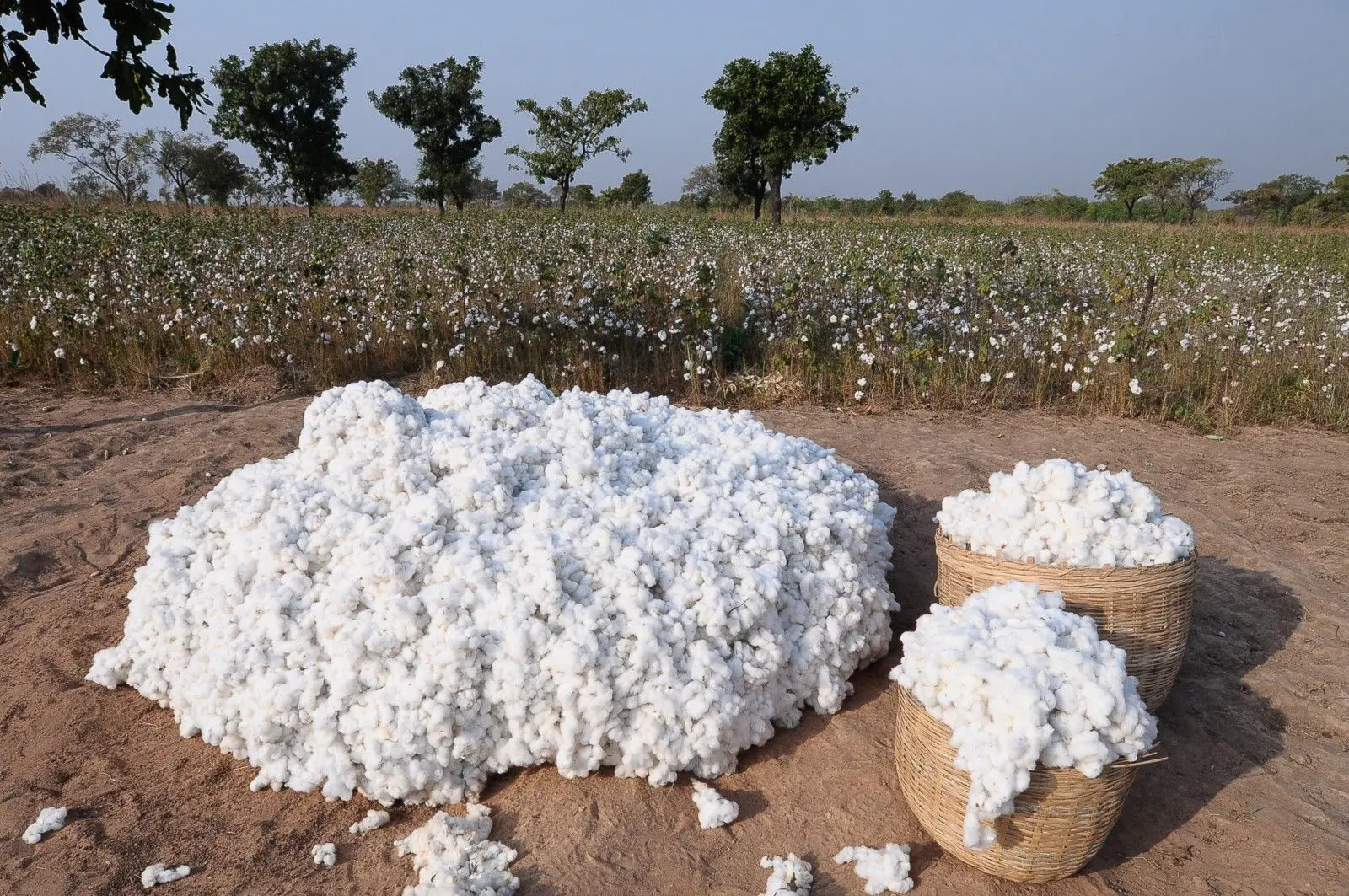
While African governments were required to dismantle support for domestic industries as a condition of debt restructuring, the United States government was paying its cotton farmers billions of dollars in direct subsidies. These payments allowed US cotton to be sold on global markets below its cost of production, directly suppressing the commodity price African farmers received for their crop, regardless of the quality of the crop they produced.
The four West African nations most directly affected, Benin, Burkina Faso, Chad, and Mali, brought the Sectoral Initiative in Favour of Cotton to the WTO in 2003, documented in full at the WTO Agriculture Cotton page. The initiative was explicit: rich-country cotton subsidies were depressing global cotton prices and impoverishing African smallholders who lacked equivalent state support. The WTO process ran for more than two decades. The C4 nations documented the harm with precision and named its scale. As WTO Deputy Director-General Jean-Marie Paugam confirmed as recently as March 2026, the request for subsidy reform has never been met. Today, 98% of the region’s cotton is still exported as raw fibre.
The African Development Bank’s 2018 African Economic Outlook estimated that processing just 30% of raw cotton domestically before export could generate an additional $1.7 billion in annual revenue across the continent. That threshold has not been reached. The policy environment has not been restructured to make it rational.
“Africa grows world-class cotton, builds the industry to process it, was required to dismantle that industry, and is now invited to assemble garments at poverty wages and call it industrialisation.”
The Assembly Model and Its Ceiling
Ethiopia’s Hawassa Industrial Park, inaugurated in 2017, was presented internationally as a model for African textile industrialisation. Attracting global brands, including H&M and PVH Corporation, to purpose-built facilities, it generated employment and was cited by development institutions as evidence that Africa could compete in global garment manufacturing.
What Hawassa demonstrated, on closer examination, was the ceiling of the assembly model rather than its transcendence. The brands brought their own supply chains. Yarn and fabric were frequently imported rather than sourced domestically from Ethiopian cotton. Design, brand architecture, retail relationships, and intellectual property remained with the brands. Ethiopia contributed labour. The Worker Rights Consortium’s 2018 report documented that the $26 monthly base pay at Hawassa made Ethiopian garment workers the lowest-paid in the global garment sector. When supply chain disruption hit, brands exercised the flexibility that supply chain ownership had always given them. Ethiopian workers absorbed the consequence.
The distinction between an assembly economy and a textile economy is not semantic. In an assembly economy, African hands make the product. In a textile economy, African institutions own the chain from field to fibre to fabric to brand. Hawassa was the former, presented as the latter. No assembly operation, however large, changes who holds the margin. The contrast with a brand like Lemlem, the Ethiopian label founded by Liya Kebede in 2007, is instructive. As Omiren Styles has reported, Lemlem built its supply chain from artisan weaver to international luxury retail, retaining design authority, brand equity, and cultural narrative at every stage and demonstrating that the alternative to the assembly model is not theoretical. It has been built. It requires intention, capital, and a refusal to surrender ownership at the point where value begins to multiply.
Also Read:
- Lemlem: Weaving African Heritage into Global Fashion
- Akwete, Kuba Cloth, Barkcloth, and Kete: The Sacred Textiles the World Is Finally Discovering
- Top 5 Ewe Kente Styles for Ewe Women in 2026
- Fashion and Ritual: How Celebrations Shape African Style Practices
What Investors and Stakeholders Need to Know
The UNIDO, WTO, and ITC baseline study on cotton-to-clothing industries across C4+ countries identified that transforming just 25% of the region’s raw cotton into finished product could generate approximately 500,000 direct jobs, with the majority going to women. The investment required to unlock this, estimated at $12 billion over ten years across the C4+ nations, has now been formalised through the Partenariat pour le Coton, a multistakeholder initiative launched at the WTO with backing from UNIDO, the International Trade Centre, Afreximbank, and the Africa Finance Corporation.
For investors, the architecture of the opportunity is now legible in a way it has not been before. The C4+ countries have produced feasibility studies, country-level investment pipelines, and a single-access platform, Africa Textile Invest, mapping industrial zones and opportunities across the region. The entry points span spinning infrastructure, weaving and finishing capacity, logistics and energy provision within industrial parks, and brand development at the consumer-facing end of the chain.
The risk calculus has also shifted. AfCFTA’s regional value chain provisions create the tariff incentive for intra-African cotton processing that did not previously exist at the continental scale. A brand or manufacturer that builds spinning capacity in Mali, sources fabric from a weaving facility in Benin, and sources finished garments from Côte d’Ivoire can operate under preferential tariff conditions across all three stages, provided the rules of origin are properly enforced. For Afrocentric fashion brands building at international price points, this supply chain logic makes continental-origin products economically viable in premium retail.
The constraint is not the absence of opportunity. It is the absence of patient capital aligned with the development timeline that spinning and weaving infrastructure requires, and the absence of Afrocentric fashion brands with sufficient retail scale to anchor demand for continental-origin fabric at volumes that make investment rational. Both are solvable. Neither has been solved.
What It Would Take to Change the Equation
The AfCFTA, operational from January 2021, carries provisions for regional value chains. If African cotton were processed into yarn in one member state, woven into fabric in another, and finished into a garment in a third, all within AfCFTA’s preferential tariff framework, value would accumulate on the continent at each stage rather than being exported in raw form and multiplied elsewhere.
Several African designers and fashion businesses are already working within this logic, building supply chains that begin on the continent and end in products sold at international price points. Designers, including Kenneth Ize, Maki Oh, and Loza Maléombho, are adapting ceremonial fabrics, weaving techniques, and textile symbolism into contemporary garments for global audiences, translating cultural authority into commercial products at international price points. They are doing this without the systemic support the scale of the challenge requires. The question is not whether Africa can spin its own cotton. Africa spun its own cotton before the colonial period restructured its economy into a raw material corridor. The question is whether the international trade architecture, subsidy rules, debt conditionality frameworks, and preferential tariff structures will be remade to make it economically rational to do so again, and whether African governments, continental institutions, investors, and the Afrocentric fashion industry will build together towards that architecture rather than waiting for it to arrive.
OMIREN ARGUMENT
Thesis: Africa’s position at the bottom of the cotton supply chain is not a development deficit. It is the intended outcome of subsidy architecture, debt conditionality, and trade rules designed to ensure that value creation remained outside the continent.
Context: The structural adjustment programmes of the 1980s and 1990s did not find African textile industries failing. They required their dismantlement as the price of debt renegotiation. US cotton subsidies did not outcompete African farmers in terms of quality. They suppressed the global price that African quality could not escape, regardless of its grade.
Disruption: The WTO process initiated by the C4 nations in 2003 documented every mechanism of this extraction with precision over more than two decades. As of March 2026, the request for binding subsidy reform remains unmet. Ninety-eight per cent of the region’s cotton is still exported as raw fibre.
Cultural Insight: What this reveals about power is unambiguous. Africa grows world-class cotton, builds the industrial capacity to process it, is required under international financial conditionality to dismantle that capacity, and is now invited to assemble garments at poverty wages and call it ‘industrialisation’. Framing this as a development gap rather than a policy outcome is itself a political act.
Conclusion: Calling this a market outcome is a choice. It is equally accurate, and more precisely so, to call it a policy outcome. Policies, unlike geography, can be changed. The $12 billion investment architecture now being assembled through the Partenariat pour le Coton, AfCFTA’s regional value chain provisions, and the growing scale of Afrocentric fashion brands represent the first genuinely continental attempt to change the equation. Whether it succeeds will depend on whether the capital, the policy alignment, and the brand development arrive together, and on whether the international trade architecture is finally remade to stop rewarding the extraction it was built to sustain.
Frequently Asked Questions
1. Why does Africa export raw cotton instead of processed fabric?
Africa exports raw cotton primarily because the industrial capacity to process it domestically was systematically dismantled. Structural adjustment programmes imposed by the IMF and World Bank in the 1980s and 1990s required African governments to privatise state-owned textile mills and remove industrial subsidies as conditions of debt restructuring. Mills that had operated at scale across Nigeria, Ghana, and Tanzania closed when exposed to competition from subsidised imports, without transition support. The capacity existed. The conditionality removed it.
2. How much more valuable is processed cotton than raw cotton?
Raw cotton fibre trades at approximately $0.80 to $1.20 per kilogramme in international markets. Yarn trades at $3 to $5 per kilogramme. Finished fabric at $8 to $15 per kilogramme. A finished garment retails for multiples of the raw material cost. Africa captures value primarily at the raw fibre stage, surrendering the multiplier to external processors and brands at every subsequent stage.
3. What is the C4 cotton initiative, and what has it achieved?
The C4 initiative, led by Benin, Burkina Faso, Chad, and Mali, was a formal submission to the WTO beginning in 2003, arguing that rich-country cotton subsidies were suppressing global cotton prices and directly harming West African smallholder farmers. The initiative produced extensive documentation and two decades of WTO engagement. It did not result in binding reform of the US cotton subsidy architecture. As recently as March 2026, WTO Deputy Director-General Jean-Marie Paugam confirmed that the request for subsidy reform has never been met.
4. What is the $12 billion cotton investment opportunity, and who is behind it?
The WTO, UNIDO, ITC, Afreximbank, and the Africa Finance Corporation have jointly identified $12 billion in investment required over ten years across the C4+ countries to build a functional cotton-to-clothing value chain. A baseline study confirmed that transforming 25% of the region’s raw cotton domestically could generate 500,000 direct jobs. The Africa Textile Invest platform now maps specific investment opportunities across industrial zones in the C4+ nations for prospective investors.
5. What does AfCFTA mean for African cotton processing?
The African Continental Free Trade Area creates preferential tariff conditions for intra-African trade. Its regional value chain provisions could incentivise the processing of African cotton within Africa, from raw fibre to yarn to fabric to finished garment, before export, allowing value to accumulate at each stage on the continent. Realising this requires coordinated industrial policy, investment in spinning infrastructure, and rigorous enforcement of rules of origin to maintain the integrity of intra-African preferential trade flows.
6. Which African countries produce the most significant cotton?
West Africa’s Sahel and sub-Saharan belt are the continent’s primary cotton regions. Mali, Burkina Faso, Benin, and Côte d’Ivoire produce high-quality long-staple cotton widely valued in international markets. According to the International Cotton Advisory Committee, West Africa is the fourth-biggest cotton exporter globally, behind Brazil, the United States, and Australia. Benin, the leading producer in West Africa, exported $505 million worth of raw cotton in 2024, ranking fifth globally among exporters of raw cotton. Egypt produces long-staple cotton of exceptional quality and has maintained a more developed domestic processing industry than most sub-Saharan nations.
The Afrocentric fashion industry does not exist in isolation from the supply chains that make it possible. Subscribe to Omiren Styles for analysis that follows the money, names the architecture, and argues for the change.