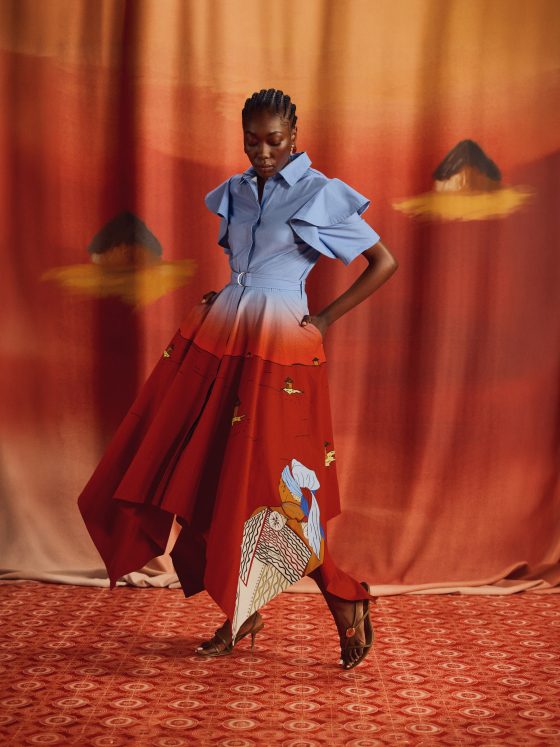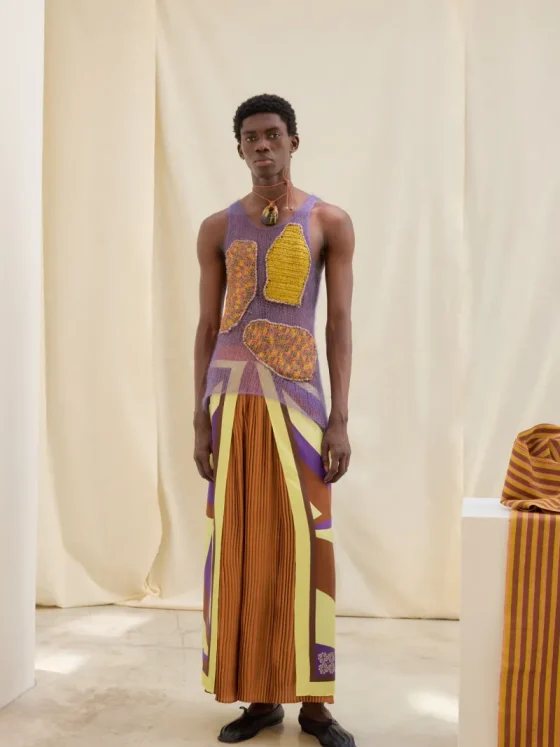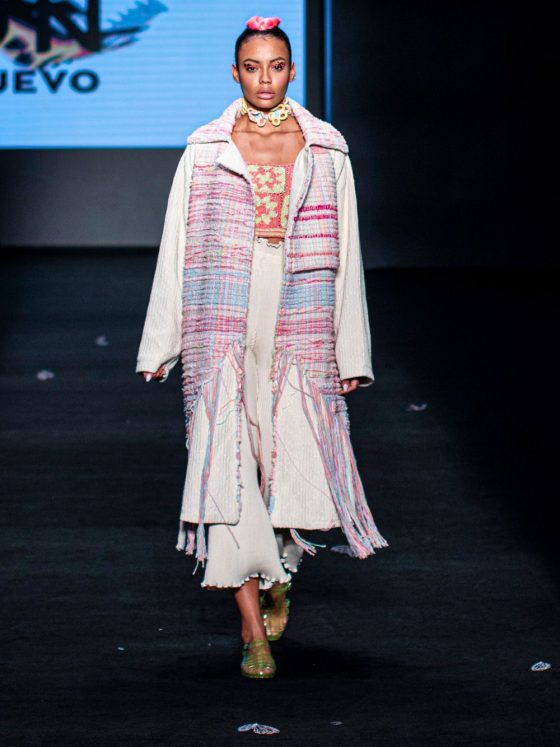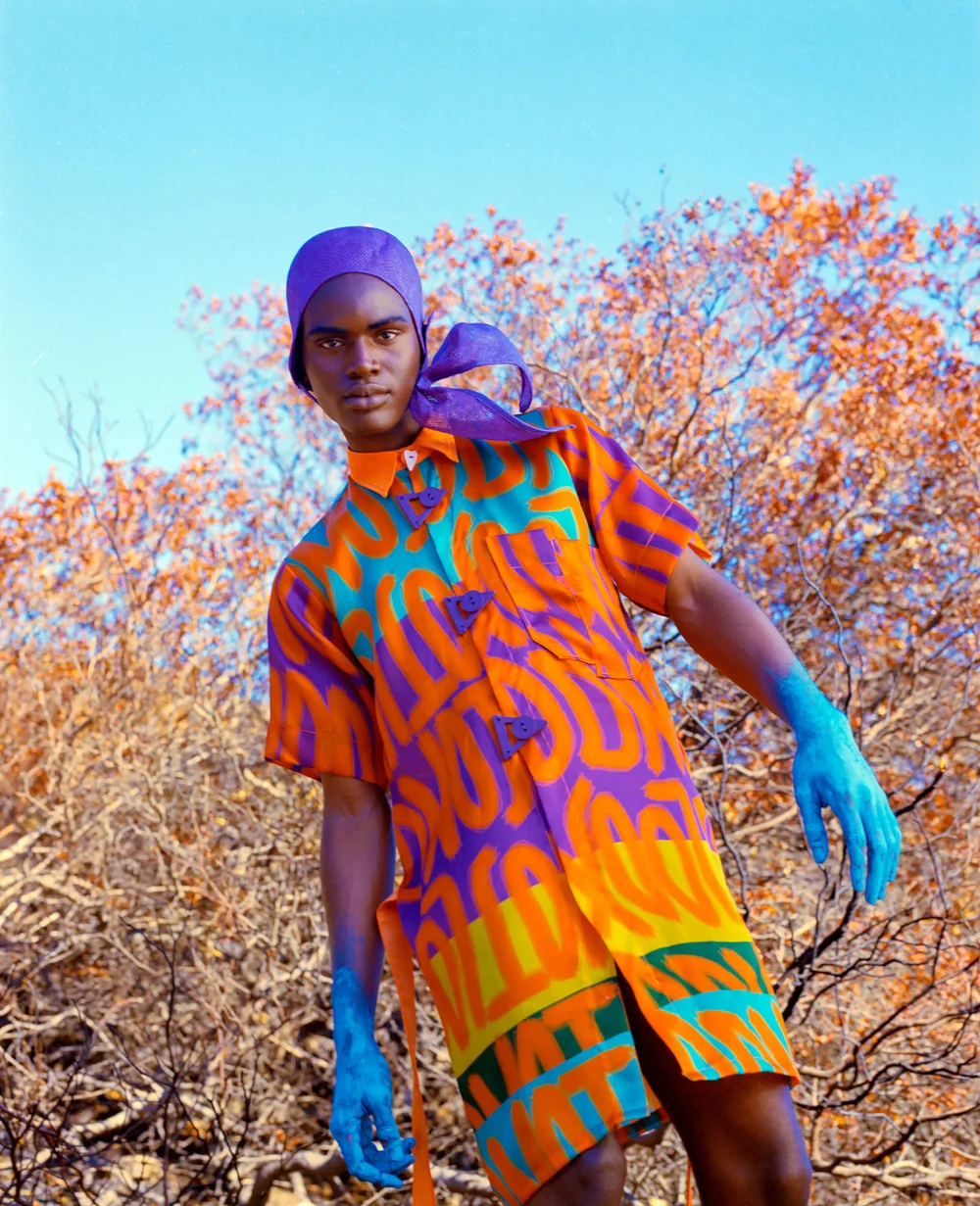
When fashion media wants to demonstrate that Africa has serious designers, it tends to reach for the same three names.
Thebe Magugu. Kenneth Ize. Orange Culture.
The repetition is not wrong. All three represent genuinely important practices that have earned international recognition through sustained creative and commercial work. The problem is what the repetition conceals.
Naming three designers as proof that African fashion has arrived lets the industry avoid harder questions. It uses individual achievement as evidence that the system is working, when each of those achievements actually reveals specific places where the system has failed to provide what European designers receive by default: production infrastructure, accessible capital, distribution networks, institutional support, media access, legal protection, and the accumulated advantages of operating inside fashion’s most historically powerful geographies.
African fashion infrastructure gaps are not abstract. They are the conditions that each of these designers has had to navigate, work around, or accept as a permanent constraint on their commercial ambitions. Understanding their careers in full means understanding what they have built, what it cost them when it should not have, and what would change if the infrastructure matched the talent.
Thebe Magugu, Kenneth Ize and Orange Culture have not succeeded because the system supported them. They have succeeded because they were exceptional enough to overcome it partially.
That distinction is the one Visibility Is Not Market Power identifies as the most important in African fashion: the gap between being seen and being able to build a commercially durable practice. All three designers have crossed into visibility. Each one continues to navigate an infrastructure that treats their success as an exception while making no serious effort to change the conditions that make exceptionalism necessary.
Thebe Magugu, Kenneth Ize and Orange Culture have built internationally recognised careers while operating without the infrastructure European designers inherit by default.
Thebe Magugu: The Intellectual Designer and the Institutional Gap
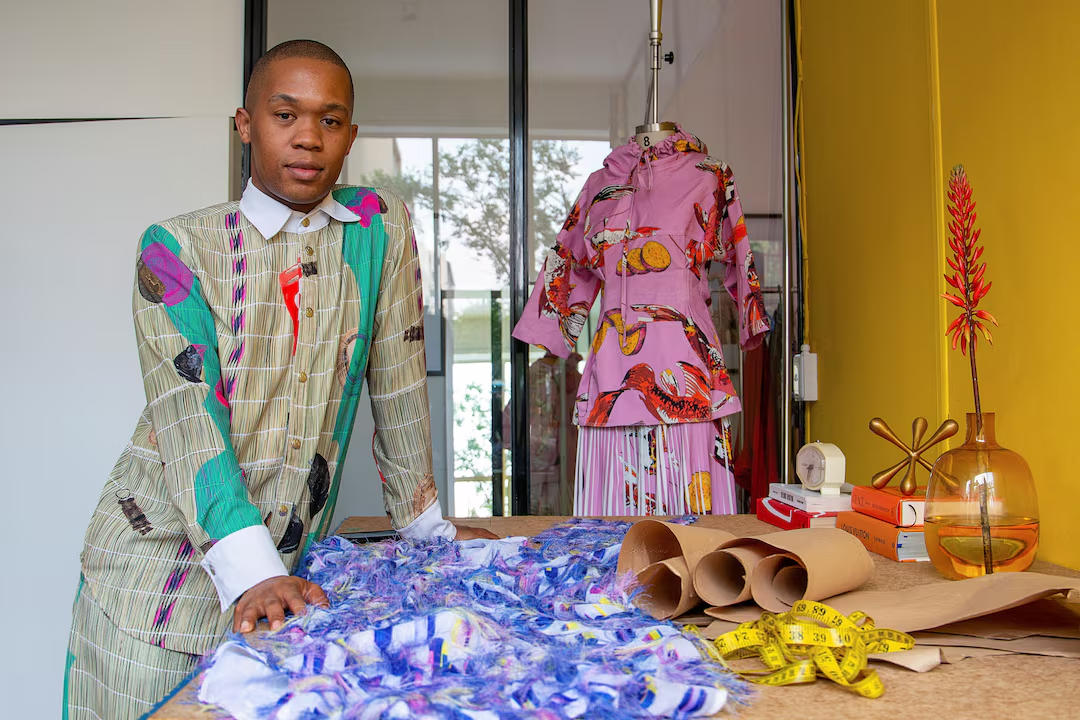
When Thebe Magugu won the 2019 LVMH Prize, he became the first African designer to do so and the youngest-ever winner. The recognition was immediate and significant. It opened doors to international press, retail conversations, collaborative possibilities and an expanded professional network.
Magugu’s practice deserves its reputation. His Johannesburg-based label uses fashion as a form of research. Collections have examined South African surveillance culture, Cold War-era espionage, feminist history, the politics of healing, and the archive as a method of documentation and resistance. He works with tailoring as a structural argument: seam placement, garment architecture and material choice all communicate specific ideas. Fashion Theory and fashion journalism have recognised him as one of the sharpest conceptual designers working internationally.
As Omiren Styles has documented in its full profile of Thebe Magugu, his work is analytical, research-driven and culturally resonant in ways that give it a different kind of authority to the runway spectacle favoured by many international fashion houses. His collections function as visual essays. The garments carry evidence of the thinking behind them.
What the LVMH Prize did not automatically provide was the infrastructure that European prize winners often access as a secondary consequence of institutional recognition. A Parisian designer winning a prestigious prize can leverage that win within an existing ecosystem: established showrooms, sample studios, press contacts who speak their language, buyers who can attend their presentation without incurring significant travel costs, legal advisers with fashion-industry expertise, and manufacturers who have worked with similar construction demands.
Magugu operates from Johannesburg. His manufacturing ecosystem, material supply chains, logistics infrastructure, and legal context differ from those available to a Parisian, Milanese, or London-based label. His collaborations with major houses, including Dior and AZ Factory, represent real commercial relationships. They are also evidence of a pattern widely documented in African fashion: institutional recognition precedes institutional infrastructure. The designer receives the prize. The working conditions that would allow the practice to scale sustainably at home do not automatically follow.
What would it look like if the infrastructure matched the intellectual ambition? A South African atelier network capable of producing construction-intensive tailoring at scale. Research grants for collection development. Legal infrastructure for design protection. A regional press ecosystem that can sustain critical dialogue about African fashion on its own terms, not only through the lens of European validation.
Magugu is doing extraordinary work inside a support structure that has not yet grown to match it.
Kenneth Ize: The Maker and the Production Barrier
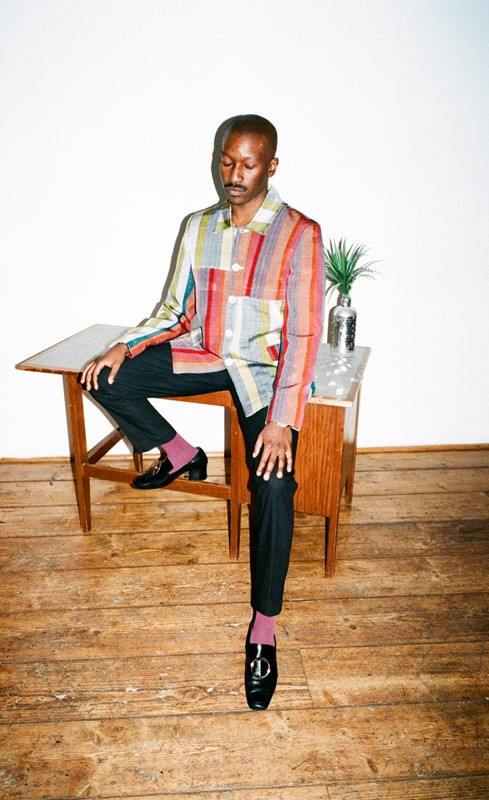
Kenneth Ize’s label builds from a specific and documented creative argument: aso-oke, the hand-woven fabric produced by skilled weaving communities in south-western Nigeria, can be the central material of a globally recognised contemporary fashion practice.
His official label, based in Lagos and Vienna, has shown at Paris Fashion Week, receiving critical recognition and establishing international stockist relationships with major retailers. His debut Paris show in February 2020 opened with Naomi Campbell on the runway. He was an LVMH Prize finalist in 2019. His own description of his ambition is precise: “I believe I am a professional in this industry, and I force myself to do more each season. I am telling the international audience it’s possible here.”
As Omiren Styles has documented in its analysis of “undone” dressing and high fashion, Ize builds collections from hand-woven aso-oke that carry the weave variation of their making directly into the final garment. The cloth does not pretend to be machine-produced. Its irregularity is its authority. That is not a compromise with industrial manufacture. It is an argument against the erasure of human craft that industrial manufacture has historically performed.
The production model this creates is both Ize’s greatest strength and one of his most demanding constraints. Hand-woven fabric cannot be scaled the same way that industrially produced cloth can. Weavers must be supported, paid and given enough lead time to produce the volumes a Paris Fashion Week presentation requires. Production planning must account for a material process that cannot simply be accelerated when order volumes increase.
At the same time, the aso-oke supply chain is rooted in Nigeria. Every collection involves cross-border logistics: fabric produced in south-western Nigeria; design and production across two cities and a continent; distribution through international retail networks; and press and sales conversations conducted primarily in European fashion capitals. The cost and complexity of that supply chain fall on the label in ways that a European designer using domestically produced materials and locally available manufacturing does not face in the same form.
Ize has solved these challenges through creative resilience and exceptional craft authority. What the industry has not done is build the equivalent of what it already provides to European labels: accessible production support, local-market retail infrastructure that values hand-woven textiles at their actual cultural and economic worth, and manufacturing investment that can help a community-rooted craft practice meet international commercial volumes without losing what makes it significant.
He is building a globally recognised fashion practice from a craft community that has yet to receive the institutional investment its quality demands.
Orange Culture: The Independent Brand and the Distribution Problem
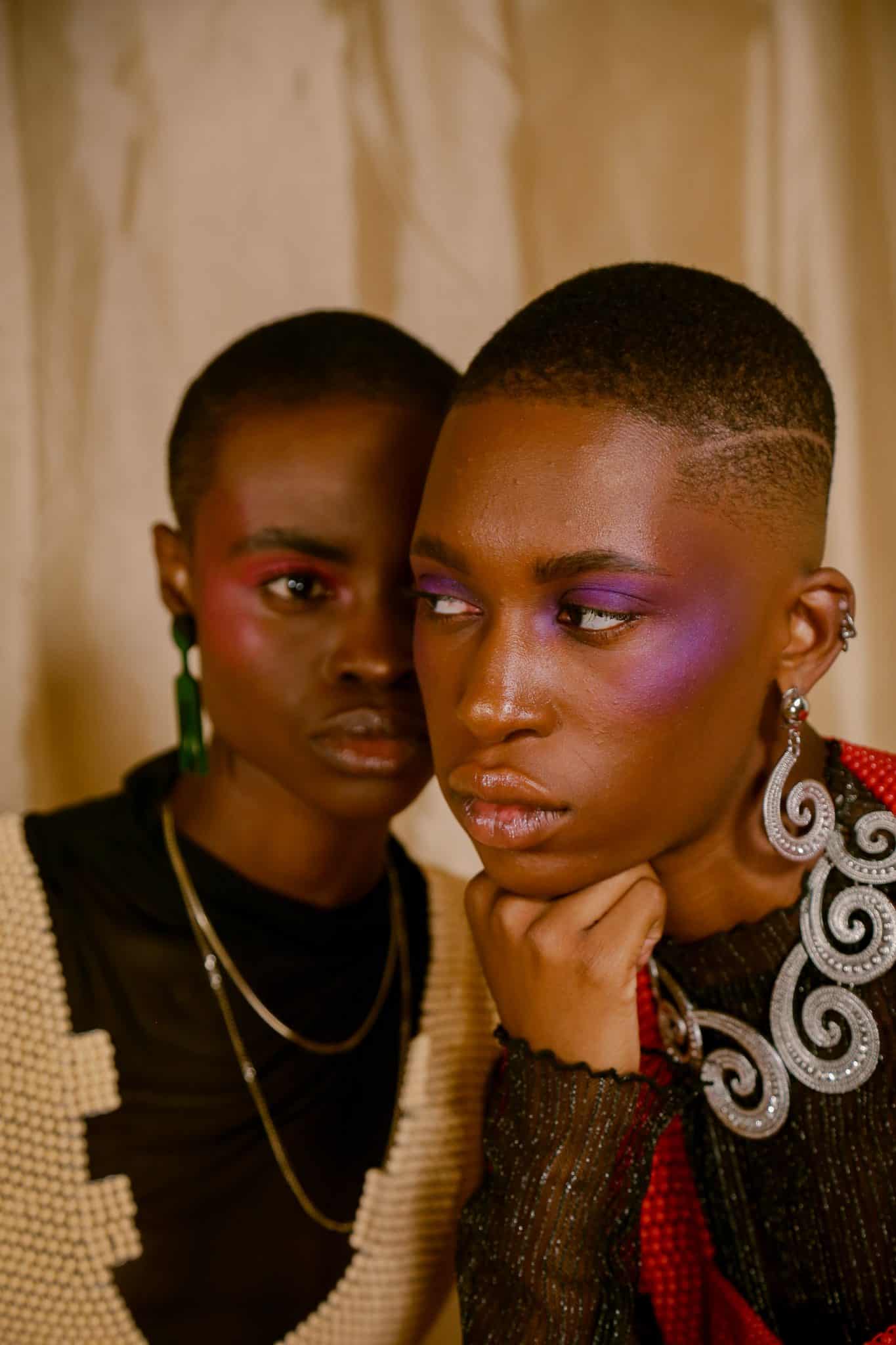
Adebayo Oke-Lawal launched Orange Culture in 2011 at the inaugural Lagos Fashion Week. The label presents a practice that has become one of the most internationally recognised contemporary African fashion brands: fluid, gender-transcendent tailoring that refuses conventional ideas of African masculinity, operates within the visual language of contemporary global fashion, and grounds its aesthetic in the specific cultural and emotional reality of growing up Black, Nigerian and queer in Lagos.
Its record is documented. As Omiren Styles has covered in its analysis of Lagos Fashion Week’s decade of impact, Orange Culture was an LVMH Prize finalist in 2014 alongside Simon Jacquemus and Simone Rocha. The label is now stocked at Browns, Farfetch, Temple Muse in Lagos, and Merchants of Long in South Africa. Oke-Lawal showed the collection at the Victoria and Albert Museum in London. He received the Beyoncé BeyGOOD grant.
Those achievements accumulated through sustained work across more than a decade. Each one required Orange Culture to operate across contexts that treat it differently: as an emerging label when seeking retail placements, as a cultural reference when the visual language it developed begins to circulate globally, and as a proving ground for questions about gender identity in Nigerian public life that the country’s cultural mainstream has not fully resolved.
The distribution question is central to where Orange Culture’s commercial potential has met structural limits. A Lagos-based brand stocking internationally must manage logistics, customs, import duties, international payment systems, currency conversion, returns, and wholesale terms designed around brands with European or North American production bases. The cost of building and maintaining that distribution infrastructure falls on the label in a way that a brand manufacturing close to its primary retail markets does not experience to the same degree.
As Omiren Styles has argued in its analysis of what makes a boutique successful in cities with growing fashion demand, building a strong regional retail base is one of the most important forms of commercial discipline an independent label can develop. Orange Culture has done that within Lagos and is extending to South Africa. The question the label continues to face is the same one that European luxury houses have not answered through their investment in Afrobeats cultural adjacency: who builds the distribution infrastructure that enables an independent African brand to capture more of its international commercial value without rebuilding the global logistics system on its own?
The brand has creative authority, commercial history, cultural relevance and international recognition. What it should not have to rebuild from scratch in every new market is the underlying infrastructure that European fashion brands inherit from two centuries of colonial trade advantage.
What These Three Cases Have in Common
Magugu, Ize and Oke-Lawal do not represent a single African fashion identity. Their practices are distinct: one research-driven and architecturally rigorous, one craft-rooted and material-specific, one emotionally political and gender-transcendent. Their geographies differ. Their commercial models differ. Their relationships with European fashion institutions differ.
What they share is this: each has built a serious, internationally recognised practice while operating without the manufacturing ecosystems, distribution networks, institutional support structures, legal infrastructure, locally available capital, and inherited trade advantages that European designers take as a default condition of working in their field.
That is not an argument that they are fragile or that their success is undeserved. The opposite is true. The fact that each has achieved international recognition and commercial viability under these conditions demonstrates the scale of talent within the African fashion industry.
The more uncomfortable argument is this: if the conditions were different, the gap between African and European fashion would not exist in the same form. The gap is not primarily creative. It is structural.
The international fashion press has been more willing to celebrate the exceptions than to interrogate the conditions that make exceptionalism necessary. As Omiren Styles has documented in its analysis of why the “emerging designer” label fails African fashion, the industry’s habit of positioning talented designers as “ones to watch” or “rising voices” can celebrate visibility while obscuring the structural conditions that make sustained commercial establishment so much harder than it should be. The Global South Made Fashion. It Just Never Got Credit. makes the same argument at the level of the entire hemisphere: creative contribution is absorbed while structural investment is withheld.
The Gaps in Specific Terms
Fashion media should name the gaps rather than rely on achievements to imply they do not exist.
Manufacturing infrastructure. African designers working with craft-intensive textiles, constructed tailoring or complex garment engineering often cannot access the specialised technical support, pattern services, grading, testing, quality control and volume production that European fashion cities have accumulated over generations. Building equivalent infrastructure on the continent requires institutional investment, not individual resilience.
Capital access. Fashion is a capital-intensive business that requires investment before revenue arrives. Sample development, fabric purchases, travel, showroom presentations, photography, digital infrastructure, and staffing all require financing before sales. The financial products available to African fashion businesses are often poorly suited to fashion’s seasonal cash-flow patterns. Purchase-order finance, invoice finance and working-capital credit structures designed for seasonal businesses with delayed revenue cycles remain limited in most African markets.
Distribution and logistics. Cross-border distribution requires customs management, international freight, returns infrastructure, international payment systems, wholesale term negotiation and trade-compliance documentation. Each of these has a cost that falls on the label. Brands operating from European manufacturing centres incur lower logistics costs to reach the world’s major retail markets. The economics of distribution are not neutral.
Press and critical infrastructure. A serious regional press capable of sustained critical dialogue about African fashion would change the conditions under which designers develop, are assessed, receive feedback and build their reputations. Fashion criticism that does not require European validation as a prerequisite for legitimacy is itself a form of infrastructure.
Legal protection. Design registration, trademark protection, intellectual property enforcement and contract negotiation require specialist legal support that fashion businesses in many African countries find difficult to access at fair prices. Unprotected designs are more vulnerable to copying, which erodes the commercial advantage of creative originality.
The Omiren Argument
The next time a fashion publication wants to demonstrate that African fashion is serious, it should not simply name Thebe Magugu, Kenneth Ize and Orange Culture.
It should ask what each of those designers still needs that they should already have: production infrastructure that matches the intellectual complexity of their work; capital instruments that understand fashion’s seasonality; distribution models that do not require rebuilding from scratch for every market; legal support that protects creative work at the speed the industry moves; and a regional critical press that can develop the discourse without waiting for European editors to start the conversation.
As Omiren Styles has argued in its analysis of Afrobeats investment and African fashion infrastructure, the most significant infrastructure investment in African fashion in recent years has come not from the European luxury houses that most publicly celebrate African creativity, but from Afreximbank and African institutions that recognise fashion as an economic sector rather than a cultural amenity.
Three designers built careers that should not have required the degree of difficulty they faced. The fashion industry’s task is not to keep producing biographical stories about exceptional individuals who overcame hard conditions. It is to change the conditions so that the next generation of designers across South Africa, Nigeria, Côte d’Ivoire, Ghana, Kenya, Senegal, Ethiopia, Rwanda and beyond can build serious commercial practices without paying the structural tax that Magugu, Ize and Oke-Lawal have been quietly paying throughout their careers.
As Omiren Styles has documented in its analysis of the Afrobeats ecosystem and its role in shaping global style, the cultural ecosystem in which designers such as these operate is extraordinarily generative. Lagos, Johannesburg and the African diaspora are producing creative energy that feeds global fashion. The infrastructure question is not whether that energy exists. It is whether the industry will build systems that allow the people generating it to capture a fair share of the value it produces.
ALSO READ
- Thebe Magugu: African Heritage Meets Global Luxury
- Meet the African Menswear Designers You Should Know Before the Rest of the World Does
- The Lagos Fashion Week Effect: What a Decade of Runway Has Actually Done for Nigerian Designer Revenue
- Visibility Is Not Market Power: Why Global Attention Still Fails Independent African Fashion Brands
- “Emerging Designer” Has Become Fashion’s Most Limiting Compliment
- Why European Luxury Houses Invest in Afrobeats Stars but Not African Fashion Infrastructure
Frequently Asked Questions
Who are Thebe Magugu, Kenneth Ize and Orange Culture?
Thebe Magugu is a South African designer based in Johannesburg who won the 2019 LVMH Prize, becoming the first African and youngest-ever winner. His research-driven practice uses fashion to examine South African history, politics, feminism and memory. Kenneth Ize is a Nigerian designer based in Lagos and Vienna who builds collections from hand-woven aso-oke fabric produced by weaving communities in south-western Nigeria. He showed at Paris Fashion Week and holds international stockist relationships with major luxury retailers. Orange Culture, founded by Adebayo Oke-Lawal in Lagos in 2011, presents gender-transcendent tailoring rooted in Nigerian identity and emotional politics. It was an LVMH Prize finalist in 2014 and now stocks at Browns, Farfetch and international boutiques.
What structural gaps do these designers reveal about the African fashion industry?
Each designer has built an internationally recognised practice while operating without infrastructure European designers access by default: manufacturing ecosystems capable of supporting complex construction, accessible capital instruments suited to fashion’s seasonal patterns, distribution and logistics networks that reduce cross-border complexity, legal infrastructure for design protection and contract management, and a regional press capable of sustaining critical fashion discourse without requiring European validation first. Their success is real and substantial. It is also exceptional in a way it should not need to be, given the scale of creative talent across the continent.
What makes Thebe Magugu’s practice significant beyond the LVMH Prize?
Magugu uses fashion as a form of research and documentation. Collections have examined South African surveillance culture, the politics of healing, feminist history and Cold War espionage. His garment architecture communicates specific intellectual arguments: seam placement, material choice and construction decisions all carry meaning. The LVMH Prize recognised creative authority that was already present. What the prize did not automatically provide was the manufacturing ecosystem, press infrastructure and institutional support network that would allow a research-intensive practice based in Johannesburg to scale at the same pace as an equivalent practice based in Paris or London.
How does Kenneth Ize’s use of aso-oke shape his commercial model?
Aso-oke is a hand-woven fabric produced by skilled communities in south-western Nigeria. As Omiren Styles has documented in its analysis of undone dressing and craft authority in high fashion, Ize treats the weave variation inherent in hand-produced cloth as the garment’s authority rather than as a flaw to be resolved. That creative argument is also a production argument: the fabric cannot be scaled the same way that industrially produced material can. Weavers require lead time, fair payment and consistent commissioning. Cross-border logistics between Nigeria and European retail markets create costs that fall on the label. The commercial model works because the craft quality is exceptional. It would work more efficiently if the production infrastructure matched the scale of international interest in the work.
What is the significance of Orange Culture’s gender politics within Nigerian fashion?
Adebayo Oke-Lawal founded Orange Culture to create fashion that challenges rigid ideas of Nigerian masculinity and makes space for gender-transcendent, emotionally resonant dress. That is a commercially and culturally significant position in a context where mainstream public discourse around gender and sexuality has been contested and, at times, legally hostile. Orange Culture operates not only as a fashion label but as a cultural argument about identity, visibility and belonging. The label has built an international following partly through its creative quality and partly through its willingness to hold a position that required courage in its originating context.
What would structural change look like for African fashion?
Structural change means building the conditions that are currently exceptional into the ordinary operating environment for African fashion businesses. It includes accessible production infrastructure capable of supporting complex technical work at volume; fashion-specific financial products designed for seasonal cash-flow patterns; cross-border distribution partnerships that reduce logistics costs for African-based labels; specialised legal support for design registration, intellectual property and contract negotiation; sustained institutional investment from both African and international bodies; and a regional critical press that develops fashion discourse on its own terms. None of these changes requires discovering new talent. All of them require building systems to support the talent that already exists.
EXPLORE MORE
Read the full The Lens and Fashion > Power sections at Omiren Styles for ongoing analysis of African fashion infrastructure, designer profiles and the structural conditions that shape how African creative work reaches the world. Discover travel and heritage intelligence across Africa at Rex Clarke Adventures.