Kenya occupies a position in the global fashion trade that is, on its face, a contradiction. It is one of Africa’s most significant garment exporters to the United States under the African Growth and Opportunity Act, and it is simultaneously one of the continent’s largest markets for imported second-hand clothing, a trade known locally as mitumba. The country manufactures garments for American retailers while its domestic consumers buy used jeans shipped from Europe and North America. Understanding why both of these things are true at the same time is the most direct route into Kenya’s fashion economy and the structural gap that sits at its centre.
Kenya exports garments to the US under AGOA and imports millions of tonnes of used clothing. Inside the trade contradiction that defines its fashion economy.
What AGOA Has Built
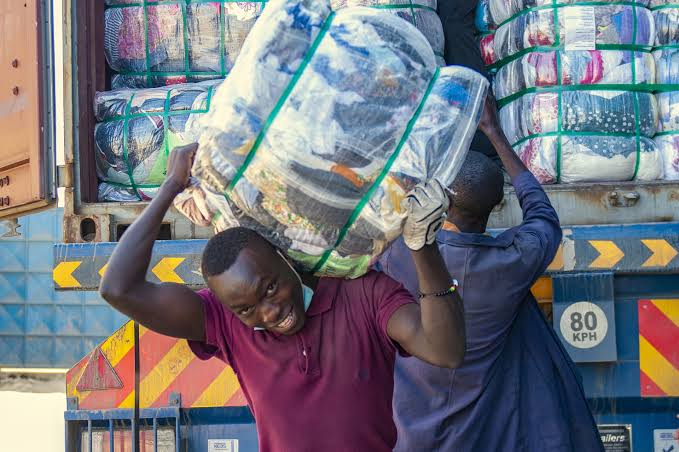
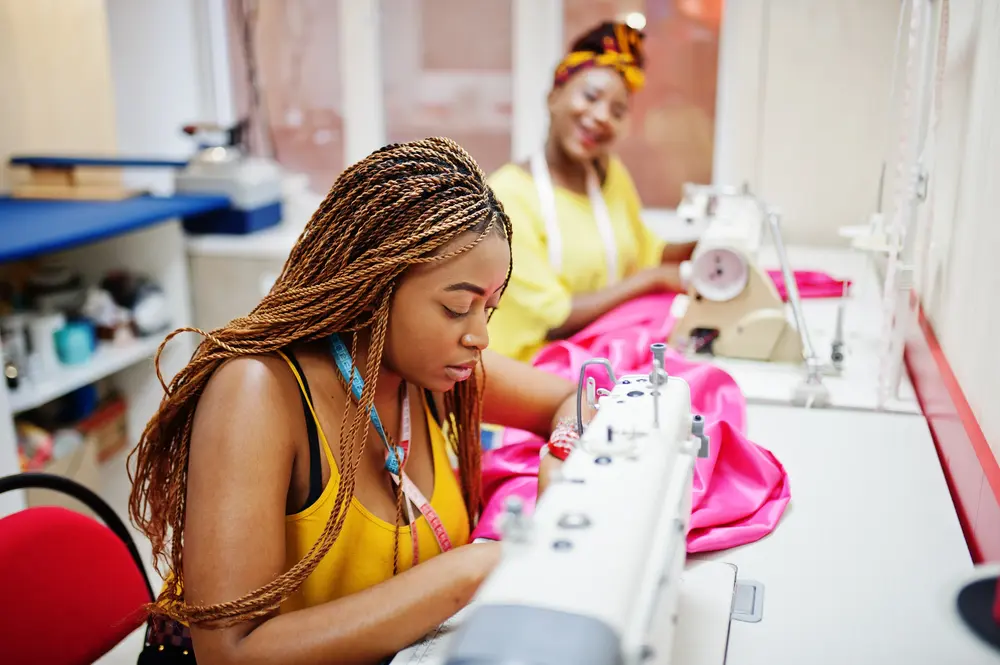
The African Growth and Opportunity Act, first enacted by the United States Congress in 2000 and renewed multiple times since, grants eligible sub-Saharan African countries duty-free and quota-free access to the US market for a range of goods, including textiles and apparel. Kenya has been among the most consistent beneficiaries of the apparel provisions. According to the Office of the United States Trade Representative, Kenya’s apparel exports to the United States under AGOA have consistently made it one of the top five African exporters under the programme. The AGOA.info trade portal documents Kenya’s AGOA exports at approximately $407 million in 2022, with apparel accounting for the dominant share. Export processing zones (EPZs), particularly the Athi River EPZ outside Nairobi, anchor this production capacity. The factories operating inside these zones assemble garments primarily for the American market, using imported fabric, under conditions that critics have documented as providing limited backward linkage to the domestic Kenyan economy.
The IFC’s January 2025 US$15 million package for Kenya’s Royal Apparel EPZ, which created 3,700 jobs and adopted EDGE-certified green manufacturing, represents the most recent documented institutional investment in this export infrastructure, as Omiren Styles has reported in its analysis of African fashion investment. That investment confirms continued international confidence in Kenya’s export manufacturing capacity. It does not address the domestic textile gap.
What Mitumba Is and How It Works
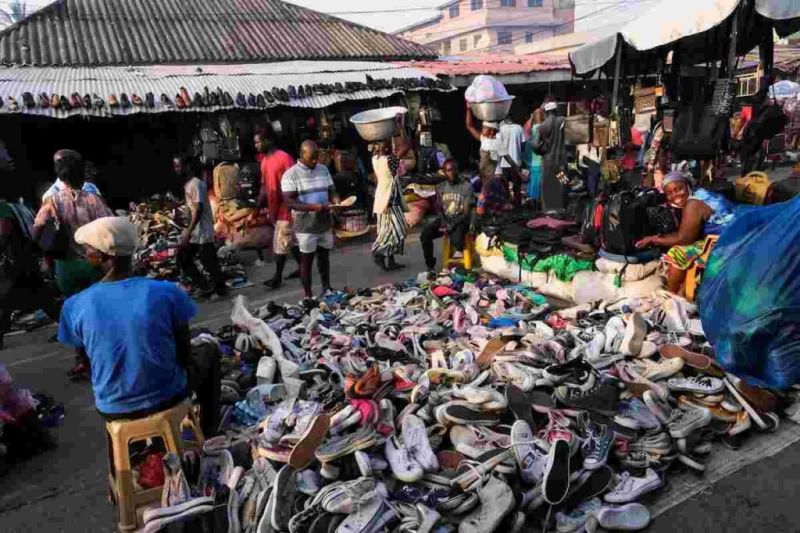
Mitumba, from the Swahili word for bale, refers to the imported second-hand clothing trade that has operated in Kenya since market liberalisation in the 1980s and 1990s made imported used garments more affordable than locally produced textiles. As Omiren Styles has documented in its analysis of Nairobi street style, the trade began as an economic necessity and evolved into something culturally distinctive. Buyers at markets like Toi Market in Nairobi’s Kibera, a six-acre second-hand market with over 5,000 booths that began in the 1980s when Nubian settlers started selling used goods on a small plot of land, develop considerable expertise in sourcing quality pieces from imported bales. Nairobi’s mitumba culture is not the same as thrifting in a Western city. It is a skilled practice.
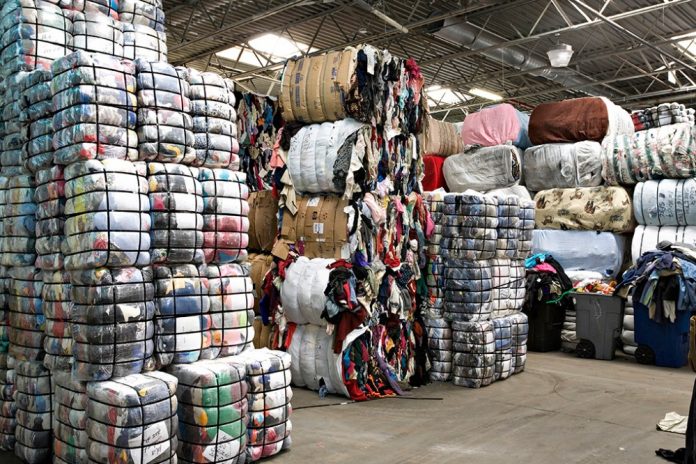
The scale of the trade is substantial. According to the UN Comtrade database, Kenya consistently ranks among the top five importers of used clothing globally, importing hundreds of millions of dollars’ worth of second-hand garments annually. The Mitumba Consortium Association of Kenya has documented that the trade employs an estimated 2 million Kenyans across the full value chain: importers, wholesalers, transporters, market traders, and tailors who alter and repair the imported pieces. Those 2 million livelihoods represent both the economic depth of the trade and the political complexity of any attempt to disrupt it.
“Mitumba is not an informal sector. It is a formalised informal economy. The distinction matters because it determines who has political standing when trade policy is under review.” — Mitumba Consortium Association of Kenya.
The Ban That Never Fully Happened
In March 2016, President Uhuru Kenyatta announced that Kenya, alongside Rwanda, Tanzania, and Uganda, would phase out second-hand clothing imports by 2019, with the stated goal of supporting domestic textile manufacturing. The announcement was made at an East African Community summit and positioned as a coordinated regional move toward textile sector development. Rwanda followed through on its own phase-out. Kenya did not. As the Office of the United States Trade Representative confirmed, the United States threatened to suspend Kenya’s AGOA eligibility if the ban on second-hand clothing imports was implemented, citing the impact on American charitable organisations that export used clothing to Africa. Kenya suspended its planned ban in 2018. The trade-off was explicit: continued duty-free access to the US market for Kenyan garment exports, in exchange for continued access to the Kenyan market for American second-hand clothing exports.
That decision crystallised the contradiction. Kenya retained AGOA benefits by agreeing to keep importing the used clothing that competes with the domestic textile sector that AGOA was supposed to help build. The diplomatic logic was coherent. The economic logic was circular. A country cannot develop a domestic clothing manufacturing base while simultaneously agreeing to keep that market open to a flood of subsidised second-hand imports.
The Domestic Textile Gap
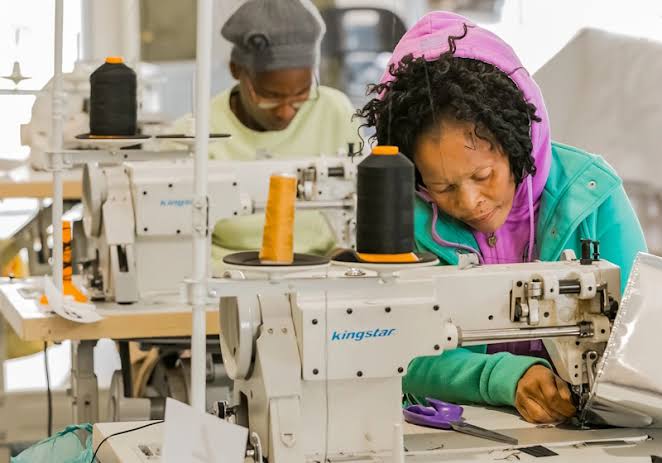
Kenya’s domestic textile industry once employed hundreds of thousands of workers. At its peak in the 1980s, before import liberalisation, the sector supported an estimated 500,000 jobs according to the Kenya National Bureau of Statistics. By the early 2000s, after two decades of import competition from both second-hand clothing and cheap new imports from Asia, that figure had collapsed to under 50,000 directly employed workers in formal textile manufacturing. The Rivatex East Africa textile mill in Eldoret, which the Kenyan government has invested in rehabilitating since 2017, represents the most visible attempt to rebuild domestic production capacity. As documented by the Kenya Export Promotion and Branding Agency, the sector’s rehabilitation depends on investment in both production infrastructure and raw material supply chains, particularly for cotton, whose cultivation collapsed alongside the factories that once processed it.
The domestic designer tier tells a different story from the manufacturing sector. As Omiren Styles has documented in its analysis of Kenyan menswear, designers like John Kaveke and Joy Wanja have built internationally visible practices from a Nairobi base, demonstrating that design intelligence and cultural authority exist in the Kenyan fashion ecosystem independently of the manufacturing gap. Kaveke’s practice draws on Kenyan textile heritage and ethnic prints. Wanja’s Kovu Couture designed the opening ceremony attire for Team Kenya at the Paris 2024 Olympics. Both build on a specific Kenyan cultural identity rather than on generic African aesthetic cues. The design capacity is present. The domestic production infrastructure to support it at scale is not.
Cotton: The Root of the Gap
Kenya’s domestic textile gap ultimately traces back to cotton. The country has the climate and land area to produce significant quantities of raw cotton, particularly in the western Nyanza region and parts of the Coast. Still, production volumes have declined sharply from historical levels. According to the Food and Agriculture Organisation of the United Nations, Kenya produced approximately 25,000 metric tonnes of seed cotton at its peak in the 1980s. By the 2010s, production had fallen below 10,000 metric tonnes, making it structurally impossible for domestic textile mills to source enough local raw material to compete on price with imported fabric or finished garments. Without a viable local cotton supply chain, domestic manufacturers face higher input costs than their competitors in Bangladesh, India, or China, which receive subsidised fabric prices that Kenyan mills cannot match.
The rehabilitation of the Rivatex mill and associated government-backed cotton farming revival schemes have attempted to address this gap. Progress has been slow. Cotton farming requires a multi-year investment in soil preparation, seed quality, pest control, and ginning infrastructure before viable volumes reach the mill. The 2 million Kenyans employed in the mitumba trade are a political reality that makes any rapid restructuring of import policy deeply difficult, regardless of what industrial policy logic would recommend.
What AfCFTA Changes and What It Does Not
The African Continental Free Trade Area, when its apparel and textile provisions are fully operational, is projected to increase intra-African textile trade by 33%, according to the African Development Bank. For Kenya, the AfCFTA presents a genuine opportunity: if intra-African trade in textiles and garments grows significantly, Kenyan manufacturers with existing export infrastructure and EPZ capacity could redirect some production toward regional African markets rather than depending entirely on US market access through AGOA. That diversification would reduce the political leverage that the AGOA-mitumba trade-off currently gives Washington over Kenyan trade policy decisions.
What AfCFTA does not change is the domestic cotton supply problem, the import competition from Asian garments, or the 2 million livelihoods currently sustained by the mitumba trade. A policy environment that can hold all of those realities simultaneously, protecting the mitumba economy while building domestic manufacturing, developing cotton supply chains while competing on export pricing, and maintaining AGOA benefits while asserting greater domestic market sovereignty, does not currently exist. It would need to be built deliberately, with investment timelines measured in decades rather than policy cycles.
The Omiren Argument
Kenya’s fashion economy is not confused. It is rational within the constraints it operates inside. Exporting garments to the US under AGOA while importing second-hand clothing for 2 million domestic livelihoods is not a policy failure. It is the outcome of a series of decisions made under specific economic and diplomatic pressures, most of which were not made in Nairobi. The 2018 suspension of the mitumba ban was not a Kenyan decision in any meaningful sense. It was a response to a US threat to revoke AGOA eligibility, made on behalf of American charitable organisations that export used clothing to Africa. As Omiren Styles has argued in their analysis of why European luxury houses invest in Afrobeats stars but not African fashion infrastructure, the structural forces shaping African fashion economies are rarely internal. They are external and deliberate.
The domestic textile gap is real. Kenya once had a manufacturing sector that employed 500,000 people. It now employs under 50,000 in formal textile production. That collapse was not accidental. It was produced by import liberalisation, diplomatic pressure, and decades of underfunding of the cotton supply chains that domestic mills required. Rebuilding it requires not just investment but a policy environment that currently does not exist and cannot be created without confronting the trade-off between AGOA access and domestic market sovereignty.
The contradiction at the heart of Kenya’s fashion trade is not a paradox. It is a policy. Until the policy changes, the contradiction will remain.
ALSO READ
- Nairobi Street Style: How Kenya’s Fashion Capital Builds Its Own Aesthetic Without Asking Permission
- Kenyan Menswear: Bespoke Tailoring, Olympic Kits, and the Designers Rewriting the Rules
- Why No Serious Investor Has a Pan-African Fashion Portfolio: The Cost of Institutional Blindness
- East African Kikoi: The Coastal Fabric Making Waves in International Fashion
Frequently Asked Questions
What is mitumba, and why is it important to Kenya’s fashion economy?
Mitumba, from the Swahili word for bale, refers to Kenya’s imported second-hand clothing trade. It employs an estimated 2 million Kenyans across the full value chain, from importers and wholesalers to market traders and tailors. As Omiren Styles has documented, the trade began as an economic necessity following market liberalisation in the 1980s and evolved into a skilled cultural practice. Markets like Toi Market in Kibera, with over 5,000 booths, are anchors of the urban fashion economy, serving consumers at every income level.
What is AGOA, and how does Kenya benefit?
The African Growth and Opportunity Act, first enacted by the US Congress in 2000, grants eligible sub-Saharan African countries duty-free and quota-free access to the US market for textiles and apparel, among other goods. Kenya is consistently among the top five African AGOA exporters, with apparel exports totalling approximately $407 million in 2022, according to the AGOA.info trade portal. Production is concentrated in export processing zones, particularly the Athi River EPZ outside Nairobi.
Why did Kenya not follow through on banning second-hand clothing imports?
In 2016, Kenya announced a planned phase-out of second-hand clothing imports alongside Rwanda, Tanzania, and Uganda. In 2018, Kenya suspended the planned ban after the United States Trade Representative indicated intent to suspend Kenya’s AGOA eligibility if the ban was implemented. The US objection was made on behalf of American charitable organisations that export used clothing to Africa. Kenya chose to preserve its AGOA benefits rather than implement the ban. Rwanda, which does not depend on AGOA to the same degree, proceeded with its own phase-out.
What caused the collapse of Kenya’s domestic textile manufacturing sector?
Kenya’s domestic textile industry employed an estimated 500,000 workers at its peak in the 1980s. Import liberalisation in the 1990s, combined with competitive pressure from cheap new garments from Asia and the established mitumba trade, caused formal sector employment to collapse to under 50,000 by the early 2000s. The root cause was the absence of a viable domestic cotton supply chain: without affordable local raw material, Kenyan mills could not compete on price. Cotton production, which once reached approximately 25,000 metric tonnes annually, fell below 10,000 metric tonnes by the 2010s.
What does AfCFTA mean for Kenya’s textile trade?
The African Continental Free Trade Area is projected to increase intra-African textile trade by 33% when its apparel provisions are fully operational, according to the African Development Bank. For Kenya, this represents a potential diversification away from exclusive dependence on the US AGOA market, reducing the diplomatic leverage that the AGOA-mitumba trade-off gives Washington over Kenyan trade policy. However, AfCFTA does not resolve the domestic cotton supply problem, the import competition from Asian garments, or the 2 million livelihoods sustained by the mitumba trade. As Omiren Styles has documented, building a durable fashion economy requires structural investment over decades, not trade agreement provisions alone.