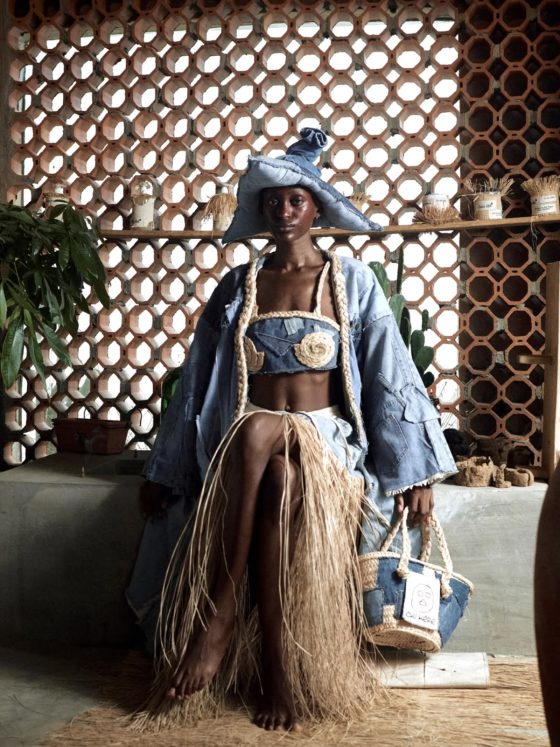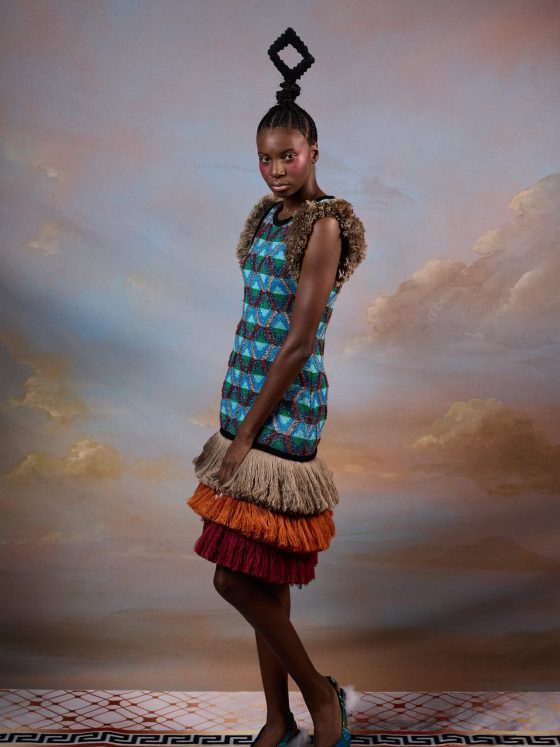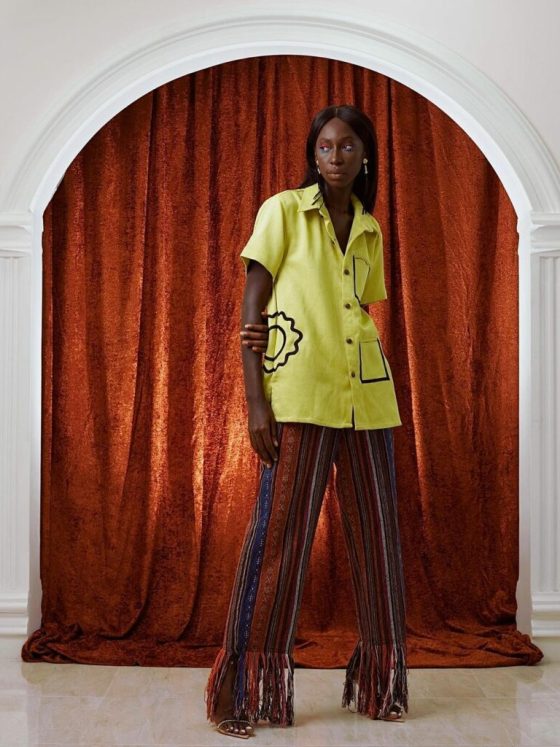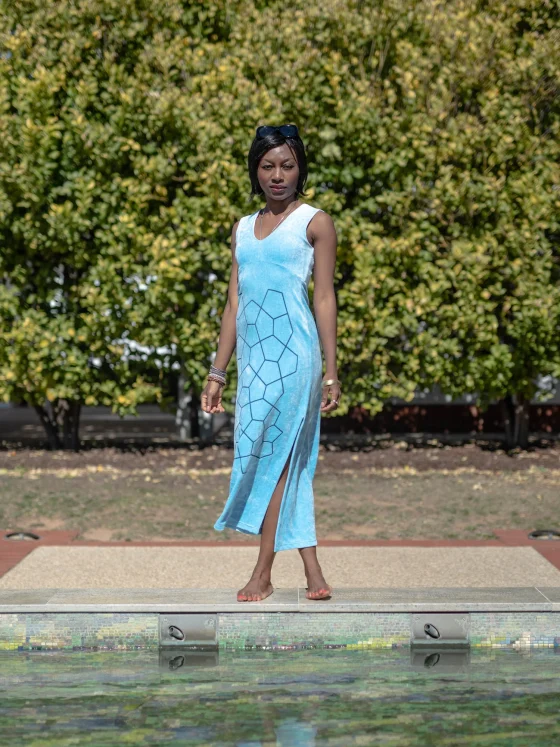
In June 2024, a call for applications was issued by Sème City, Benin’s government-built innovation hub. The programme was called FLY: Fashion Led by Youth. It offered twelve places. It received more than 700 applications in a few weeks.
The demand signal behind those 700 applications is not trivial. It represents the number of young designers, entrepreneurs, and fashion enthusiasts in Benin and across West Africa who were waiting for a structured entry point into the fashion industry and did not previously have one. The FLY programme, designed and delivered in partnership with the Institut Français de la Mode and funded by the World Bank, is Sème City’s answer to that unmet demand. Its first cohort of 19 brands graduated at a Demo Day on 17 June 2025. Its second cohort of 13 brands is now in progress, with a Paris immersion at IFM headquarters added to the programme. And Sème City is now developing a full fashion school in Cotonou, the first of its kind in Benin.
Sème City is Benin’s government innovation hub. Its FLY incubator trained 19 fashion brands in 2024-25 with IFM. Now it’s building a full fashion school. Here is the full story.
The Omiren Argument:
Sème City’s fashion investment is not peripheral to its innovation mandate. It is central to it. Fashion is the sector where African cultural identity, material heritage, and economic development converge most visibly, and Benin is the country in West Africa that has made the most deliberate institutional bet on building that convergence into a functioning industry.
What Sème City Is: Innovation Hub as Government Strategy
Sème City is one of 45 flagship projects in Benin’s Benin Revealed (Bénin révélé) development programme, launched in December 2016 by President Patrice Talon. The programme’s stated aim is to ensure inclusive and sustainable growth through increased collaboration with the private sector. Sème City is its knowledge and innovation pillar: an international city of innovation and knowledge, in French, Cité Internationale d’Innovation et de Savoir, dedicated to higher education, research, and entrepreneurship. It was established in 2017, and its permanent campus is being built in Ouidah on a site of more than 300 hectares, designed by a consortium led by Barcelona-based Taller de Arquitectura Ricardo Bofill and Cotonou-based Cobloc Architecture.
The campus design targets 30,000 students and researchers across five training clusters and multiple incubators. Its institutional and academic partners include the World Bank, the European Development Agency Enabel, Epitech, the École de Design Nantes Atlantique, Sorbonne University, the École Polytechnique Fédérale de Lausanne (EPFL), the Paris animation school Gobelins, the Institut Français de la Mode, and EbonyLife Media. The breadth of these partnerships reflects the hub’s mandate: not to replicate existing West African educational institutions but to bring international expertise into dialogue with Beninese and African contexts.
Managing Director Claude Borna, who has led Sème City since 2017, built her career in business strategy and marketing, including roles at Amazon and Sony Pictures in the United States and the United Kingdom before returning to support African start-ups and innovation ecosystems. Her description of Sème City’s FLY objective is unambiguous: “Our main objective is to identify and support emerging talent. We’re looking for people with innovative ideas. We want to support them in developing their projects right through to the marketing phase.”
Why Fashion: The Case Sème City Made Internally
When Sème City listed its initial programme focus areas, fashion appeared alongside digital technology, design, artificial intelligence, data science, and screen industries. This was not an obvious choice for an innovation hub. Technology and data science are standard inclusions. Fashion is not.
The internal case for fashion at Sème City is the same case that runs through the entire Beninese national strategy: Benin is Africa’s leading cotton producer, it has a documented royal textile tradition in kanvô, it has a government-backed fashion event in Benin Fashion Month, and it has a $1.5 billion industrial zone in GDIZ specifically processing cotton into garments. Fashion is not adjacent to Benin’s economic development priorities. It is central to them. An innovation hub that did not address fashion would be ignoring the sector with the most visible connection between Benin’s material culture and its economic ambitions.
Sustainable fashion was named specifically as a training area when Sème City first described its programme in 2017. This is worth noting because sustainable fashion in the Beninese context means something specific: garments made from locally produced natural fibres, working with artisan weavers, using natural dye processes, producing in limited quantities with no overstock. This is not a trend response. It is a description of what FARE, LOAN-H, and the FLY cohort brands were already doing before the international fashion industry decided to call it sustainability.
The FLY Incubator: Architecture of a Twelve-Month Programme
FLY (Fashion Led by Youth) is a twelve-month incubation programme that provides fashion entrepreneurs with intensive academic training from IFM teachers based in Paris, strategic mentoring and individual coaching tailored to each project, international networking, and access to a dedicated workspace on the Sème City campus. Applicants must be aged 18 to 35 and be interested in developing a fashion project in Benin — the nationality requirement is not Beninese, but the project location is. This distinction is deliberate: it ensures that the programme builds Beninese fashion capacity rather than serving as a general West African fashion scholarship that benefits other countries’ ecosystems.
The programme structure combines the IFM’s expertise in fashion business education with Sème City’s knowledge of the Beninese creative economy. IFM, the Institut Français de la Mode in Paris, is one of the world’s leading fashion business schools. Its presence in the FLY programme is not symbolic. It means that the brands completing FLY have received the same level of fashion business education as the students attending IFM’s Paris programmes, applied to the specific conditions and opportunities of the Beninese market.
The financial support attached to the programme is substantial. Claude Borna confirmed that participants have access to low-interest loans ranging from $50,000 to $850,000 to bring their projects to fruition. At the lower end, $50,000 represents meaningful start-up capital for a Beninese fashion brand. At the upper end, $850,000 is the amount required to build production infrastructure. The range reflects the different stages of development that the programme is designed to support.
The First Cohort: What Nineteen Brands in Twelve Months Produced
The first FLY cohort ran from June 2024 to June 2025. Nineteen brands completed the programme, primarily from Benin, with some from other African countries. The Demo Day on 17 June 2025 at Sème City was the formal public presentation of their work. Among the brands in the cohort was FARE, whose founder, Peter Toni-Basengula, described the programme as compressing three years of independent learning into one year of expert-guided development. He entered FLY already running a brand with three years of R&D behind it, which meant he could submit specific problems to the programme’s experts and receive targeted solution paths rather than generic advice.
Another first-cohort brand, Vognon, offers a different illustration of what FLY produces. Vognon reinterprets sequin work directly inspired by the colourful and intricate ceremonial costumes of the Egungun masquerade tradition. Siti Ben Boina, the FLY programme manager at Sème City, describes this as transforming a ceremonial garment into a high-end contemporary piece. This is exactly the creative argument that the Beninese fashion ecosystem has been making across multiple brands and traditions: the material and ceremonial culture of Benin is not a reference point for contemporary fashion. It is the starting point.
The FLY programme’s achievement with the first cohort is not only the 19 brands that completed it, but also It is the demonstration that a structured 12-month programme, combining IFM’s business education with Sème City’s local ecosystem knowledge and World Bank funding, can produce fashion brands capable of showing at Benin Fashion Month’s La Nuit de la Mode, dressing ODUMODUBLVCK, and building international client bases. The cohort is the evidence that the programme design works.
The Second Cohort: Scaling Up with a Paris Dimension
The second FLY cohort, running in 2026, is smaller in number but more advanced in design. Thirteen brands were selected, with the stated focus on scaling brands that already have existing commercial traction. While the first cohort helped brands develop from early ideas to Demo Day presentations, the second cohort works with brands that have already proven there is a market for their product and need the expertise to grow into it. The addition of a Paris immersion seminar at IFM headquarters gives the second cohort direct access to the Paris fashion industry infrastructure: buyers, the press, supply chain contacts, and the international community of fashion professionals who operate in the world’s best-documented fashion capital.
The evolution from the first to the second cohort reflects a standard incubator-scaling logic: prove the programme works with a broad cohort, then refine it for brands with the highest growth potential. The thirteen brands in the second cohort have passed two selection thresholds: the original FLY application process and whatever commercial traction they have demonstrated since. They represent Sème City’s current best estimate of which Beninese fashion brands are closest to international readiness.
The Paris immersion is not a field trip. It is an access provision: the kind of access to international fashion infrastructure that Beninese designers have historically had to build through personal networks, individual initiative, or luck. FARE’s connection to ODUMODUBLVCK came through a personal contact in Nigeria. The second FLY cohort’s Paris immersion is the systematic version of that: creating conditions in which the connection happens through institutional design rather than by personal accident.
ALSO READ
- FARE: The Cotonou Brand That Started in a Tech Hub and Ended Up in Paris
- Benin Fashion Month: The Government-Backed Festival Quietly Reshaping West African Fashion
- ACMB: The Beninese Association of Fashion Creators and How It Is Rebuilding the Sector
The Fashion School: Building What Does Not Yet Exist
The most significant fashion infrastructure development at Sème City is not the FLY incubator. It is the planned fashion school in Cotonou, currently in active development. Siti Ben Boina confirmed in a recent Africa Fashion Tour interview that Sème City is working on a fashion school that would cover the full spectrum of the industry: technical training from CAP (vocational qualification) to Bac+3 level to structure the workshop and craft professions; and managerial diplomas from Bac+3 to Bac+5 in partnership with international institutions to train the continent’s future artistic directors and product managers.
The problem the fashion school addresses is one that the FLY programme itself identified: Benin lacks skilled fashion workers. Brands that want to grow beyond artisan-scale production cannot find the pattern cutters, sample makers, production managers, and brand directors they need. The FLY incubator addresses the brand-founder level. The fashion school addresses the entire skills pyramid from craft worker to creative director.
The planned partnership with international institutions for the managerial level suggests that the school will operate on the same model as FLY: combining IFM-level expertise with the Beninese context, ensuring that graduates can operate within the global fashion industry while building specifically Beninese creative practices. A fashion school that produces Beninese graduates capable of working as product managers and artistic directors at international brands is not only an asset for skills development. It is a national talent pipeline that does not currently exist anywhere in the sub-region.
The timeline for the fashion school’s launch has not been publicly confirmed. What has been confirmed is that it is in active development and that Sème City has identified it as the answer to the most persistent structural problem in Beninese fashion: the gap between the creative ambition that the FLY incubator surfaces and the skilled workforce that ambition requires.
Sème City in the Ecosystem: The Connector Role
Sème City occupies a specific position in the Beninese fashion ecosystem that no other institution can fill. ADAC organises Benin Fashion Month. GDIZ processes cotton. ACMB represents designers. The Ministry holds policy authority. Sème City is the institution that translates global expertise into Beninese applications: it brings IFM to Cotonou, World Bank funding to fashion entrepreneurs, and proximity to Paris Fashion Week for FLY cohort brands.
This connector role is what makes Sème City’s fashion investment more significant than its scale alone suggests. The FLY incubator’s 19 first-cohort brands and 13 second-cohort brands are a small number in absolute terms. But the programme they completed connects them to IFM’s international network, World Bank funding infrastructure, and — through the Paris immersion — the global fashion industry’s commercial ecosystem. A brand that completes FLY is not simply a brand that received training. It is a brand that has been formally connected to the international fashion system through institutional channels that previously did not exist in Benin.
The 700+ applications for twelve places in the first cohort confirm that the connector role Sème City is playing is needed. Young designers across West Africa identified the programme as an access point they had not previously had. The second cohort’s expansion to 13 brands and Paris immersion is the next iteration of that access. The planned fashion school is the permanent infrastructure that ensures systematic rather than periodic access. If it opens, it will be the single most significant addition to Beninese fashion’s institutional capacity since the Benin Fashion Month was launched in 2018.
“Sème City’s fashion investment is not peripheral to its innovation mandate. It is central to it. Fashion is the sector where African cultural identity, material heritage, and economic development converge most visibly, and Benin is the country in West Africa that has made the most deliberate institutional bet on building that convergence into a functioning industry.”
Frequently Asked Questions
What is Sème City?
Sème City is one of 45 flagship projects in Benin Republic’s Benin Revealed development programme, launched in December 2016. Formally established in 2017, it is an international city of innovation and knowledge dedicated to higher education, research, and entrepreneurship. Its permanent campus is being built in Ouidah on a site of more than 300 hectares, designed by Ricardo Bofill and Cobloc Architecture. Its initial focus areas include digital technology, design, artificial intelligence, data science, screen industries, and fashion. Its managing director is Claude Borna, who has led it since 2017.
What is the FLY incubator?
FLY (Fashion Led by Youth) is a twelve-month fashion incubation programme run by Sème City in partnership with France’s Institut Français de la Mode and funded by the World Bank. It provides fashion entrepreneurs aged 18 to 35, working on projects based in Benin, with intensive IFM academic training, strategic mentoring, individual coaching, international networking, and access to the Sème City campus. Participants have access to low-interest loans ranging from $50,000 to $850,000. The first cohort of 19 brands completed the programme in June 2025. The second cohort of 13 brands is in progress in 2026, with a Paris immersion at IFM headquarters added.
Who is Siti Ben Boina?
Siti Ben Boina is the programme manager for the FLY incubator at Sème City, where she leads the acceleration of Benin’s emerging fashion generation. She has given documented interviews about the programme’s design, the first cohort’s outcomes, including the Vognon brand’s reinterpretation of Egungun ceremonial costume aesthetics, and Sème City’s plans for a full fashion school in Cotonou.
What is Sème City’s plan for a fashion school?
Sème City is actively developing a fashion school in Cotonou to address the skilled workforce gap in Beninese fashion. The planned school would cover the full spectrum of the industry: technical training from CAP (vocational certificate) to Bac+3 to produce pattern-cutters, sample-makers, and workshop craft professionals; and managerial diplomas from Bac+3 to Bac+5, in partnership with international institutions, to train future artistic directors and product managers. The school addresses the gap between the creative talent that the FLY incubator identifies and the skilled workforce that talent requires to scale.
How does Sème City connect to other Beninese fashion institutions?
Sème City occupies the connector role in the Beninese fashion ecosystem. ADAC organises Benin Fashion Month; GDIZ provides industrial supply chain infrastructure; ACMB represents designers professionally; the Ministry of Tourism, Culture and Arts holds policy authority. Sème City is the institution that translates global expertise into Beninese applications: bringing IFM to Cotonou, World Bank funding to fashion entrepreneurs, and proximity to Paris Fashion Week for FLY graduates through the Paris immersion programme. Brands that complete FLY are formally connected to the international fashion system through institutional channels that did not previously exist in Benin.
Which brands emerged from the first FLY cohort?
The first FLY cohort included 19 brands, primarily from Benin, who completed the twelve-month programme and presented at Demo Day on 17 June 2025 at Sème City. FARE, founded by Peter Toni-Basengula, is the most internationally visible graduate: it showed its Tailoring Ring capsule collection at Benin Fashion Month’s La Nuit de la Mode in July 2025 and has previously dressed Nigerian hip-hop artist ODUMODUBLVCK. Vognon is another confirmed first-cohort brand, reinterpreting sequin work inspired by Egungun ceremonial costume traditions. The full cohort list has not been publicly released.
Explore more from our Industry section, where Benin’s fashion infrastructure is reported with the institutional depth it demands.