The Zulu name for the love-letter beadwork tradition is ulove-letterse: one writes so that the other will reply. A woman in KwaZulu-Natal spends days, sometimes weeks, selecting and placing glass beads in a sequence that encodes a message for her recipient to decode and respond to. The fashion market has been selling this tradition as colourful African jewellery for fifty years. It has not read a single word of what the beads say. And one of those words, in the right context, could ruin a man’s reputation across two weddings and require him to wear a dog’s necklace to avoid being branded a coward.
The Zulu love letter is called ubhala abuyise: one writes so that the other will reply. This letter has been sealed for fifty years without a word being read. Here is the language.
The Language Before Writing
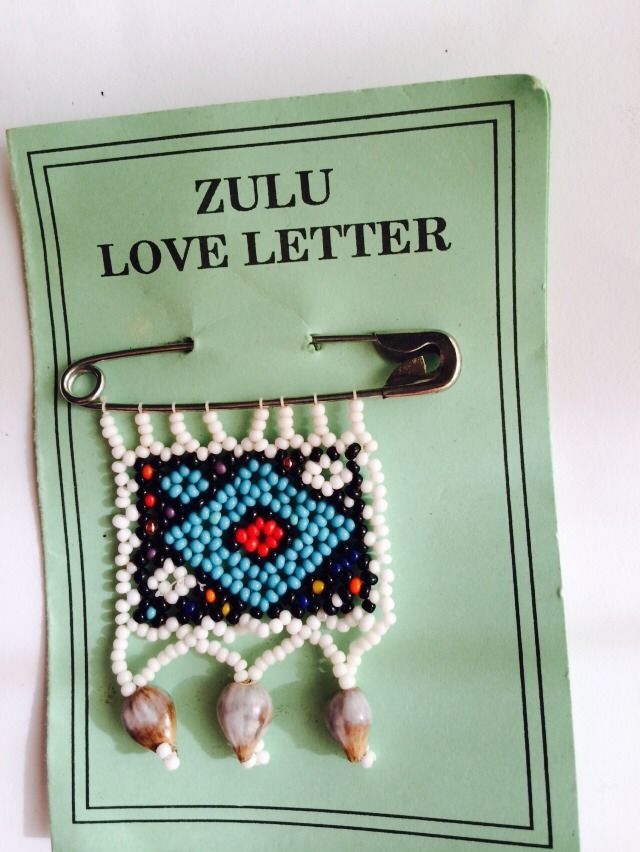
Before Christian missionaries introduced literacy to KwaZulu-Natal from the 1850s onward, and before that literacy gradually displaced the older communication systems that had operated in its absence, the Zulu had a written language. It was not written on paper. It was written in glass.
The Zulu beadwork communication system, most visible in the ucu and incwadi (love letters), but extending across every category of beaded object that Zulu women made and wore, is one of the world’s most sophisticated pre-literate visual languages. Its grammar is precise: seven colours, each carrying both a positive and a negative meaning depending on context and combination; geometric shapes encoding gender and marital status; sequences and patterns that modify the meanings of individual colours, and the way syntax modifies the meaning of individual words. The system was not a simple colour chart that anyone could read with a guide. It was a language, requiring fluency, requiring community membership, requiring the accumulated knowledge of what specific combinations had meant across generations of use. Scholar B.N. Mthethwa, documenting Zulu beadwork from within the KwaZulu-Natal tradition, described beadwork as an intrinsic form of communication that the missionary and tourist traditions have consistently failed to convey.
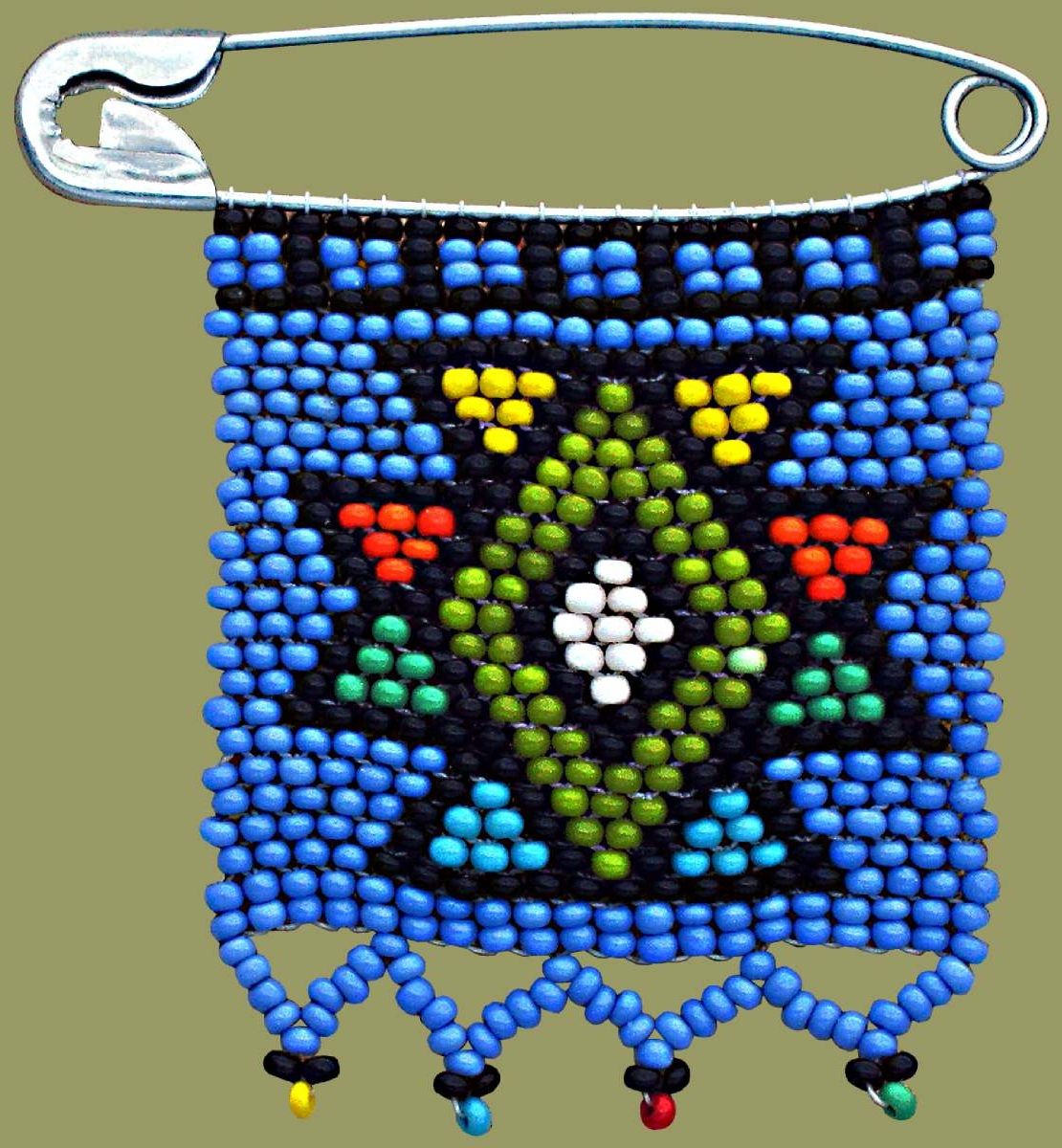
The ucu, a love letter necklace typically made of one or more strands of twisted beads, is the most intimate expression of this language. Its name, ubhala abuyise, translates precisely as “one writes so that the other should reply.” This is not decorative beadwork. This is correspondence. The young woman who makes an ucu for a young man she has feelings for is composing a letter in a medium that requires fluency from both the sender and the recipient. If he accepts the s it and the ars it, he has answered. If he does not, he has declined. No words are needed because none of the words is spoken.
In 1937, Daniel M. Malism, Chief Inspector of Native Education in Natal, South Africa, brought a Zulu beadwork love letter to the University of North Carolina at Chapel Hill as a visual aid on African education. He documented the grammar precisely: the white beads indicated the purity of the sender’s heart, the red beads showed that her heart was broken and bleeding for her beloved, and the four black squares represented. There are questions about their relationship that he must answer. This was 1937. The fashion market has been selling the same tradition as decoration since at least the 1970s, without recovering what Malcolm documented in a single lecture.
The Grammar of the Colours
The Zulu beadwork colour system uses seven colours, each with dual positive and negative valence. The meaning of any individual colour shifts depending on the colours placed next to it, the geometric pattern it forms part of, and the specific object it appears on. This is a vocabulary with rules of combination, not a simple code. As Omiren Styles has documented in the analysis of Ndebele beadwork, where each garment records life events publicly and permanently on the body, southern African beadwork traditions operate as complete semiotic systems. The Zulu system is the most linguistically precise of all.
White (obumhlophe): purity, faithfulness, true love. White has no negative valence. It is the most unambiguous colour in the system. A simple ucu of white beads with a white ring attached signals that the sender is a virgin who has accepted the beginning of a courtship. It is the opening sentence of a love correspondence.
Black (obumnyama): positive meaning, marriage and regeneration. Negative meaning, sorrow, despair, death, loneliness:s. The black married woman’s oxhide skirt, the isidwaba, woman’s. I am ready to marry. Black next to white means marriage. Black with a pale yellow in the specific shade called uthuvi benkonyane (the excreta of a calf, a Zulu euphemism for something rather more direct) is a humiliation in bead form, reserved for specific acts of social punishment.
Red (obubomvu): positive, intense love, passion. Negative, anger, heartache. ‘My heart bleeds with love for you’ and ‘my heart bleeds from what you have done to me’ are both expressible in red, with the surrounding colours and pattern determining which meaning is operative.
Blue (obujoli): positive, faithfulness, fidelity. Negative, loneliness. ‘If I were a dove, I would fly through blue skies to reach you’ is one of the traditional expressions associated with blue: the blue of the sky as the medium of faithfulness across distance.
Yellow (obuncombo): positive, wealth, fertility. Negative, jealousy, lovesickness. ‘If we marry, I will be hungry as you own no bul,l to slaughter’ is the negative yellow reading: a precise economic assessment rendered in bead form, commenting on the young man’s cattle holdings and therefore his suitability as a husband.
Green (obuluhlaza): positive, new life, contentment, fertility. Negative, lovesickness, jealousy. ‘I have become as thin as a blade of grass pining for you’ is the canonical green negative, the green of living grass as the image of a body wasting from unrequited desire.
Pink (obumpofu): positive, new life, fertility. Negative, abject poverty. ‘If you keep gambling and wasting money, you will never save enough for my lobola’: Pink’s negative reading is an explicit financial warning about the young man’s economic management.
These seven colours, in combination with geometric patterns and the specific type of object being made, constitute a complete communicative system. A triangle with its tip pointing upward means an unmarried girl. A triangle pointing downward means an unmarried boy. Two triangles forming a diamond mean a married woman. Two triangles meeting at their tips, an hourglass, means a married man. These shapes, embedded in any beadwork piece, communicate the maker’s and wearer’s status before a single colour meaning is decoded.
The Zulu love letter is not a decoration. It is a declaration. The young woman who placed each bead did so for a reason, according to the grammar. The fashion world has been selling the decoration without the declaration for fifty years.
ALSO READ
- Top 5 Traditional Styles for Ndebele Women in 2026: History, Beadwork, and Ceremony
- Maasai Beadwork: Meaning, Symbolism, and the Language of Identity
- Clothing as Cultural Identity: What African Communities Wear and What It Means
- African Hair Rituals: The Cultural Meaning of Hair Across the Continent
The Ucu: A Love Letter in Full
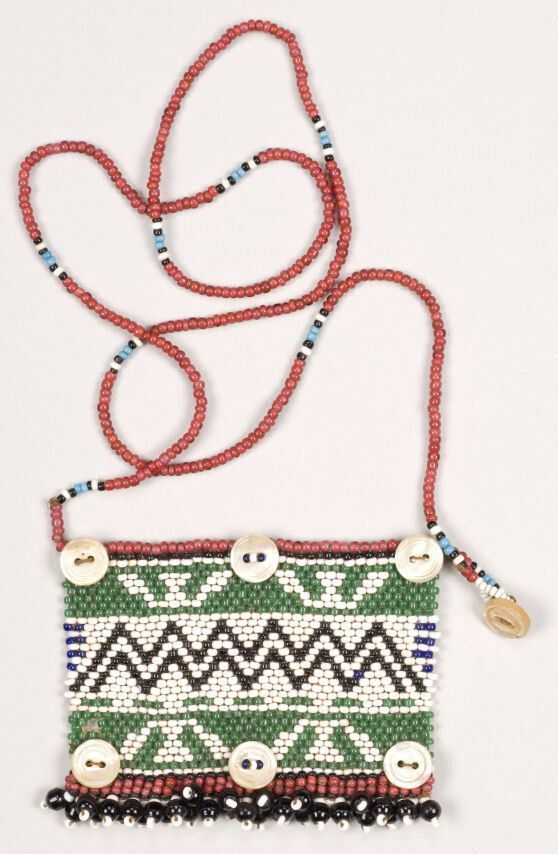
The UCU begins simply. At the start of UCU courtship, the young woman makes a UCUcu of twf twisted white bead strings to make a white ring. The white ring signifies her virginity. The white strings signify the purity and sincerity of her intentions. As documented in the Phansi Museum in Durban, one of the most significant repositories of Zulu beadwork in the world, an ucu by maker Khulekile Mkhize shows exactly this opening grammar: two white strands, one ring, the complete declarative opening of a correspondence. As the relationship progresses, she adds to it. A green ring indicates she is very young but has accepted the proposal. Each addition is a new sentence in the correspondence: the beadwork is not a static object but an evolving text that accumulates meaning as the relationship develops.
As her feelings deepen, the objects she makes for him multiply: armbands, waistbands, anklets, bandoliers worn across the chest, and elaborate coils of material sheathed in beadwork with geometric designs. A young Zulu man in a polygamous culture might wear the beadwork of several girls simultaneously, each piece a different letter, each letter a different stage of a different correspondence.
The formal engagement is marked by the injiza, which signifies the commitment to marry. The actual sign of intention to marry is a long chain of white beads, coiled around the neck. On the second day of wearing it, the ucu is doubled and twisted into a rope. Both the young man and the young woman wear this rope: a matching bead engagement announcement worn on the body, visible to the coina sentliziyo, literally the keeper of the heart, is among the objects exchanged during courtship. These were not private. They were public statements, legible to anyone in the community who could read the language.
When the Letter Is a Punishment
The most extraordinary dimension of the Zulu beadwork communication system is not what it can say to express desire. It is what it can say to express contempt.
If a young man jilts a young woman in a way the community deems unjust or cowardly, he deems it a remedy. They construct a specific ucu of black beads with a tassel in the pale yellow shade uthuvi benkonyane, and take it to Uthuvi Benkonyanellage. If he is not there, they take the next best option: they wind it around the neck of the first dog they find, and leave in silent contempt.
The dog wearing this specific bead composition is a public indictment. Every person in the village who sees it can read the message. The young man has been accused, in beads, of a specific social failure, and the accusation has been placed around the neck of the most socially contemptible animal in Zulu domestic culture. To avoid being branded a coward, the young man is required to wear the bead piece himself at a public occasion. The documented case: a young man who received such a piece subsequently wore it at two wedding ceremonies before selling it to a tourist, who received a genuinely significant cultural artefact without any idea that the composition around their neck was a public indictment of a young man’s romantic cowardice, worn twice at weddings to salvage his social reputation before being offloaded onto a foreigner.
The Married Woman’s Beadwork: What the Absence Communicates
The love letter tradition is primarily associated with courtship. Buisbeadwork is associated with not stopping at marriage. The married woman’s beadwork system is a parallel language, operating in the same colour vocabulary but communicating different social information.
The isicholo, the wide, flat, disc-shaped hat worn by married Zulu women, is worn with the umbhama: a beaded band worn above the forehead, a segment of large beads called amaqanda (eggs, symbolising fertility), as a sign of respect from the in-laws. Should a married woman appear in public without the umbhama, this communicates her availability for temporary adventure: the absence of the conventional ornament is itself a message, readable to anyone who knows the language.
The isidwaba, the black oxhide skirt worn by married women, says: I am ready to marry, and by extension: I am married. It is black because black in the Zulu system means ma, alongside regenera,tblack signifies the negation in the beadwork, the missing ornament, the omitted colour: all of these are as legible to a fluent reader as the positive statement they replace.
What Missionaries Did to the Language
Christian missionaries in KwaZulu-Natal, arriving in force from the 1850s with the Norwegian missionary Hans Schreuder’s establishment of the first Christian mission in Zululand in 1850 and the subsequent spread of mission schools through the region, viewed Zulu beadwork with suspicion. Many missionaries tried to prohibit the practice among converts, viewing the love letter tradition as sexually inappropriate and incompatible with Christian courtship norms. The suppression effort had a specific consequence: some mission schools began teaching girls to do beadwork resembling more lacework-style Victorian and Edwardian British beadwork, deliberately replacing the Zulu communicative grammar with a European decorative one. As Omiren Styles has documented in the case of the Herero dress of Namibia, where missionaries replaced pre-colonial dress with Victorian European silhouettes and the community transformed those silhouettes into acts of cultural defiance, the missionary encounter with African dress systems consistently produced the same result: the surface was replaced while the community’s investment in meaning continued by other means. In the Zulu case, the beads remained. The language they had been used to write was replaced with a pattern that said nothing.
As literacy became more common in KwaZulu-Natal, the use of beadwork as a vehicle for communication declined. The language that young Zulu women had used to navigate desire, commitment, and social status was gradually displaced by the written language. By the time beadwork became a tourist interest, the majority of the people selling it could not tell the buyer what the specific colours and patterns meant. The fashion market received the beads after this displacement. What it received was the visual result of a language that had already been substantially eroded.
What the Fashion Market Sold
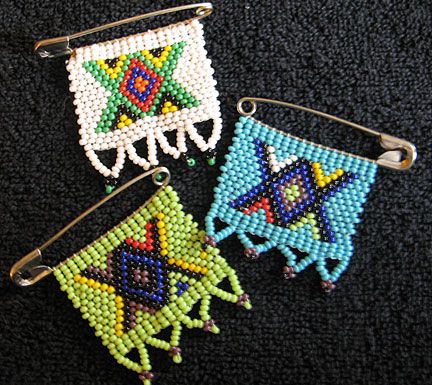
The global fashion market’s relationship with Zulu beadwork follows the pattern documented across this series: take the visual, leave the meaning. Zulu-inspired beadwork has appeared in collections by Louis Vuitton, Alexander McQueen, Valentino, and dozens of other houses over the past two decades, usually described as ‘African-inspired,’ occasionally as ‘Zulu-inspired,’ and rarely in terms of specific colours and patterns in the specific pieces actually communicate—a red and black bead combination in a Zulu context. The red-and-black bead combination represents selection; it is a colour choice. The difference between these two readings is the entire distance between cultural engagement and cultural extraction. As Omiren Styles has documented in the full account of how African aesthetic systems enter European luxury markets without credit, attribution, or investment returning to the communities that produced them, the Zulu beadwork case is among the most precisely documentable examples: a communicative system is extracted, its grammar is stripped, and the visual residue is sold at European luxury prices to buyers who have no access to the original vocabulary.
The tourist market is the more intimate version of the same problem. The ‘Zulu love letter’ necklace sold at the Victoria Street Market in Durban, or at the craft stalls along the N2 highway through the Zulu heartland, is usually accompanied by a simplified colour chart that gives the buyer the broad strokes. What it does not tell the buyer is the specific meaning of the piece in their hands, what the maker intended when she placed each bead, or what the person for whom it was made would have understood upon receiving it. As Omiren Styles has argued in its guide to shopping African fashion with cultural intelligence, the correct approach is not the purchase alone. It is the purchase made with the knowledge of what you are buying. The piece is sold. The meaning stays in KwaZulu-Natal.
ALSO READ
- The Diaspora Fashion Paradox: Who Gets to Wear What, and Who Gets to Decide
- Why European Luxury Houses Invest in Afrobeats Stars but Not African Fashion Infrastructure
- African Textile Museums: Preserving Memory in an Age of Fast Fashion
- The Zulu Reed Dance and the Dress That Carries a Nation’s Dignity
What Survives
Zulu beadwork has not died. It is not a relic. Skilled beadworkers are found across KwaZulu-Natal, and the tradition is maintained by makers and advocates who understand exactly what is at stake. Mbuso Zondi, a Zulu jewellery designer who has documented his work in Garland Magazine, states plainly: ‘My jewellery is inspired by Nguni ethnic Zulu beadwork, Zulu material culture and tradition. This is slowly vanishing because of Western, European and lately Asian influence on our people.’ The Phansi Museum ionDurban, founded by Paul Mikula through thirty years of sourcing work from traditional craftspeople across southern Africa, holds one of the most significant institutional collections of Zulu beadwork documentation available, including named maker attributions that preserve the individual voices behind the objects. The umemulo ceremony, the Zulu coming-of-age ceremony for young women, still requires an elaborate beaded costume specific to the occasion. Weddings still involve beadwork exchanges. Funerals still include burying beaded objects with the deceased.
What has the density of the readership been? The community of people who can decode a specific ucu, who know that black next to white means marriage, that red next to black means an aching heart, that yellow combined with red and black in a specific pattern means a person withering from jealousy, is smaller than it was before literacy and missionary intervention began replacing the language. As Omiren Styles has argued in the documentation of how African communities use dress as cultural resistance against forces specifically designed to make cultural maintenance difficult, the survival of a tradition is not the same as the survival of its full communicative density. The beads are still made. Fewer and fewer people hold the full grammar. The language of fashion has been selling a language it cannot read, to buyers who cannot read it, made by makers whose own community’s fluency in the language has been progressively eroded by the same colonial and missionary forces that drove the demand for authentic African jewellery in the first place. The ucu means: one writes so that the other should respond that the Zulu beadwork tradition deserves, from the fashion industry, from the museum system, from the buyers at the craft market, is not the purchase. It is the reading.
FAQs
What is the Zulu love letter, and how does it work?
The Zulu love letter, or ucu, is a beaded necklace made by a young Zulu woman to communicate desire, intention, and social status to a young man she has feelings for. The Zulu name for the tradition is ubhala abuyise, meaning one writes so that the other should reply, so that the shape and pattern in the beadwork carry a specific meaning readable to anyone fluent in the language. If the recipient accepts the UCU and wears it, they have responded to the UCU letter. If he does not, he has declined. No words are spoken. The exchange is entirely conducted through the beadwork.
What does ‘ubhala abuyise’ mean?
Ubhala abuyise is the isiZulu phrase that names the love letter beadwork tradition. It translates literally as one writes so that the other should reply, which captures the tradition’s essential nature: the ucu is not a decorative object but a message, composed in a precise visual language and sent with the expectation of a response. The fashion market has sold the visual form of this tradition for fifty years without understanding the communicative function referred to by this phrase.
What do the creferred to by the Zulu beadwork mean?
The seven colours each carry both positive and negative meanings, depending on context and combination. White represents purity and true love and has no negative valence. Black means marriage and regeneration in the positive, and sorrow, despair, and death in the negative. Red means intense love in the positive and anger and heartache in the negative. Blue means faithfulness and fidelity in the positive and loneliness in the negative. Yellow means wealth and fertility in the positive and jealousy and lovesickness in the negative. Green means new life and contentment in the positive and lovesickness and jealousy in the negative. Pink means new life and fertility in the positive and abject poverty in the negative. The meaning of each colour is always modified by what is placed next to it, the geometric pattern it forms part of, and the type of object it appears on.
What is the UCU necklace, and what does it communicate?
The ucu is a love token necklace made by a young Zulu woman for a young man she has feelings for. It typically begins with two strings of twisted white beads and one white ring, which signals the sender’s virginity and the sincerity of her intentions. As a courtship progresses, the sender adds to the ucu: a green ring signals she is very young but has accepted the proposal. The formal commitment to marry is marked by the injiza, a long single strand of white beads two or three metres long that both partners wear, doubled and twisted into a rope on the second day of wearing. The UCU is not private. It is a public statement, legible to the community, conducted entirely in the vocabulary of colour and form.
How did missionaries affect the Zulu beadwork tradition?
Christian missionaries arrived in KwaZulu-Natal from the 1850s with Norwegian Hans Schreuder esta, establishing the first mission in Zululand in 1850. Many missionaries attempted to prohibit beadwork among converts, viewing the love letter tradition as incompatible with Christian courtship norms. Some mission schools began teaching European-style decorative beadwork to replace the Zulu communicative grammar. The consequence was specific: the beads remained, but the language they carried was replaced with patterns that communicated nothing. As literacy spread across KwaZulu-Natal, the use of beadwork as a primary communicative vehicle declined further; beadwork became an object of significant tourist interest, and the majority of sellers could not fully explain what the specific colours and patterns in the pieces they sold meant.
What is the isicholo, and what does it communicate about, a woman’s status?
The isicholo is the wide, flat disc-shaped hat worn by married Zulu women, indicating their married status to anyone who sees it. It is worn with the umbhama, a beaded band worn above the forehead with a central segment of large beads called amaqanda (eggs, symbolising fertility), given as a sign of respect from the in-laws. If a married woman appears in public without the umbhama, the absence of the ornament is itself a message: it communicates her availability for temporary adventure. This is one of the most sophisticated dimensions of the tradition: the negative space, the missing element, speaks as clearly as the positive statement it replaces.
Are Zulu love letters still made today?
Yes. Skilled beadworkers make ucu and related beadwork across KwaZulu-Natal today. The umemulo coming-of-age ceremony still requiresa specific beaded costume. Weddings still involve beadwork exchanges. The Phansi Museum in Durban maintains a significant institutional collection of Zulu beadwork, including named maker attributions. Designers like Mbuso Zondi are actively working to maintain and extend the tradition in contemporary contexts. What has changed is the density of full linguistic fluency: the community of people who can decode the complete colour grammar of a specific piece is smaller than it was before missionary and colonial intervention began eroding the language. The beads are made. Fewer people hold the full grammar.