Leteisi is called Germany’s cloth. It arrived in southern Africa through German settlers in the Eastern Cape, was adopted by the Xhosa, passed to the Sotho, then to the Tswana, and became the national fabric of Botswana. The Tswana community of Zimbabwe’s Bulilima-Mangwe district, sitting directly on the Botswana border, maintains dress traditions that straddle two nations, wear it too. This is the fashion story that never gets told from the Zimbabwean side.
There is a pattern in this series that keeps emerging, and by the eighth article, it demands direct acknowledgement. Community after community in Zimbabwe’s minority tribal landscape wears a garment that arrived through, maintains contact with, and transforms it so completely into their own cultural expression that the garment’s external origin becomes secondary to its new meaning.
The Herero did it with Victorian missionary dresses, documented in Part 1 of this series: as Omiren Styles argued in The Dress That Survived a Genocide, the Victorian structure remained, but everything that gave it meaning was entirely Herero. The Sotho and Tswana did it using a German-print fabric. The Shangaan-Tsonga did it with Indian dhow-trade cloth. The pattern is not a coincidence. It is a strategy. When external powers control land and cattle. As a political authority, communities encode their identity in what they wear. And the garment that carries the encoding need not be indigenous to serve that function. It needs to be chosen, transformed, and made yours irreversibly.
The Tswana people did this with leteisi. And the Tswana of Zimbabwe, a community whose cultural world sits precisely on the Zimbabwe-Botswana border and the least-written-about Tswana community in southern Africa, did it quietly, thoroughly, and without a single fashion publication paying attention.
Leteisi arrived in southern Africa as a German cloth. The Xhosa gave it its first African name. The Tswana made it the national fabric of Botswana. The Tswana of Zimbabwe have worn it at ceremonies for generations. This is the story that was never told.
The Tswana of Zimbabwe: A Border Existence

The Batswana (singular: Motswana) are primarily associated with Botswana, where ethnic Tswana make up approximately 85% of the population, and with South Africa’s North-West, one of the least written-about regions. In Zimbabwe, Setswana is one of the sixteen official languages recognised in the 2013 constitution, and Tswana-speaking communities are concentrated primarily in the Bulilima-Mangwe district of Matabeleland South, the southwestern corner of Zimbabwe that borders Botswana directly.
These communities are the heirs of Tswana clans displaced during the Mfecane upheaval of the nineteenth century, particularly those who fled Ndebele raiding parties and found themselves in the borderland territories where Zimbabwe and Botswana now meet. Their cultural world does not stop at the Zimbabwe-Botswana frontier but flows across it, connected to Batswana communities on the Botswana side by shared language, shared ceremony, shared dress tradition, and shared memory of the clans and chiefdoms from which they descend.
The Setswana spoken in Bulilima-Mangwe is the same language spoken in Gaborone. The leteisi worn at a wedding in Matabeleland South is the same fabric. Still, it flowed at the wedding in Francistown. The bogwera and bojale initiation ceremonies are conducted on the Zimbabwean side of the border using the same cultural logic as on the Botswana side. The political boundary means very little to a dress tradition that predates the border and continues to ignore it.
Leteisi: The German Cloth That Crossed Four Nations
The story of Leteisi is one of the most thoroughly documented cases of colonial cloth transformation in southern Africa, and one of the least known outside the region. Indigo-dyed printed cloth first arrived on the African continent through the Cape of Good Hope seaport. The specific discharge-printed fabric that would become leteisi was introduced to the Eastern Cape by German settlers who had emigrated there in the mid-nineteenth century. These settlers adopted the fabric partly because it resembled their own cultural textile traditions, and it entered the lives of Xhosa women in the region, who incorporated it into their red blanket clothing and gave it a Xhosa name: ujamani, meaning the German. As Omiren Styles has documented in the history of how southern African communities transform imported cloth into indigenous identity, when a king chooses an imported cloth, wears it, assigns it prestige, and makes it visible at royal ceremonies, that act is cultural appropriation in the precise, original sense: the act of a community taking something external and making it structurally its own. That is exactly what happened at every stage of the leteisi journey.
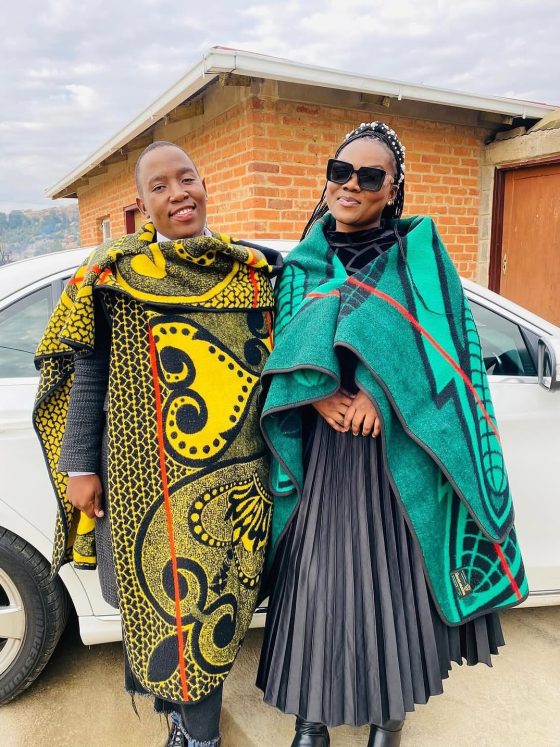
From the Xhosa, the fabric moved into broader southern African circulation. The Basotho adopted it when French missionaries presented King Moshoeshoe I with indigo-dyed cloth as a gift in the mid-1840s. The king’s endorsement drove adoption across the Basotho nation, where it became known as Shweshwe, a corruption of Shoeshoe, the Sotho rendering of the king’s name. From the Sotho, the fabric spread into Tswana communities through ongoing trade and cultural connections between Sotho and Tswana peoples across the southern African interior.
In Botswana and among Tswana communities, the fabric became known as leteisi. Its transformation from a German textile trade good into the fabric of Botswana’s national identity is now complete. What began as imported cloth from German settlers has become the single most recognisable symbol of Botswana’s national dress. South African production began in 1982 when UK company Tootal invested in the Da Gama Textiles factory in Zwelitsha. In 1992, Da Gama Textiles purchased the sole rights to the Three Cats range of designs and had all the original copper rollers, design library, and machinery shipped to Zwelitsha in the Eastern Cape, outside King William’s Town. Today, the factory employs approximately 580 people from the surrounding Zwelitsha settlement, and the fabric is still produced in the traditional way, 90 centimetres wide. Leteisi is worn at weddings throughout Bo. They had ethnic groups: Kalanga, Subiya, Yei, Birwa, Tswapong, Ngwato, and Mbukushu, not just Tswana-speaking communities.
The Tswana did not mistake leteisi for their own invention. They knew where it came from. They chose it anyway. The choice is the cultural act—the tradition.
This is the same story as the Herero dress in Namibia, the Basotho blanket in Lesotho, and the kanga cloth on the Swahili coast. In each case, a community encountered a foreign material, recognising something useful in it, absorbing it into their own aesthetic logic, and eventually making it so completely their own that the origin becomes a footnote to the meaning. As Omiren Styles has documented in the study of the kanga’s journey from Indian Ocean trade cloth to East Africa’s most politically charged textile, the question of who made the recognised ways less interesting than the absorption of what communities made of it. The Tswamadee of Leteisi is a national dress tradition that has spread across two countries and multiple ethnic groups.
ALSO READ
- The Dress That Survived a Genocide: How Herero Women Turned Colonial Cloth Into Cultural Defiance
- The Geometry of Heritage: Why Shweshwe Still Defines South African Fashion
- Kanga Cloth: The Fabric That Speaks
- African Textile Museums: Preserving Memory in an Age of Fast Fashion
The Full Dress System: What Leteisi Carries

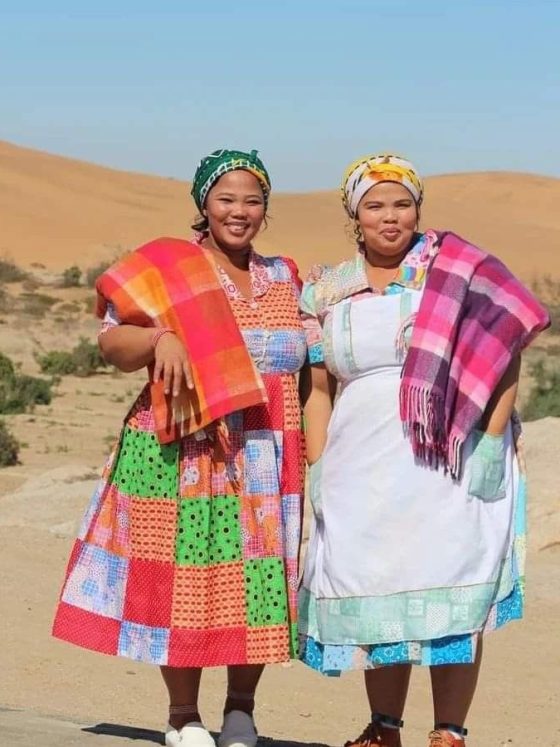
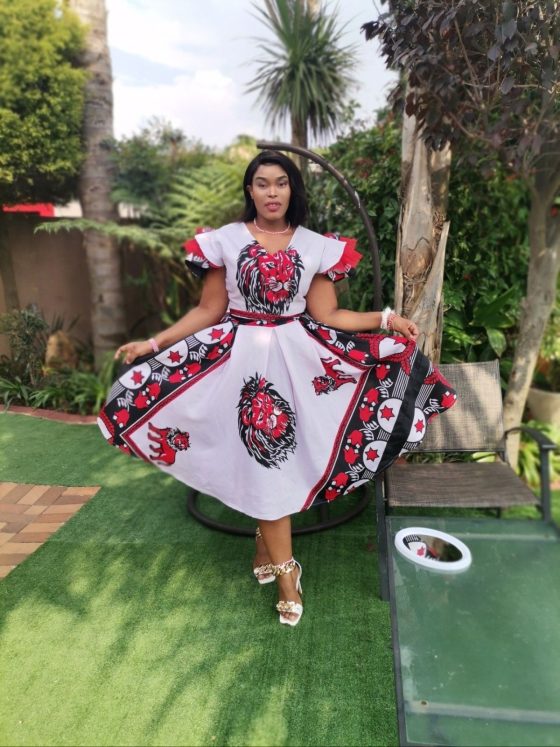
The leteisi dress ensemble for women is more architecturally complex than a single garment. The complete formal version consists of a headwrap called the tlele, a draped blouse, a long skirt, and sometimes an apron-like overlay. The silhouette is specific, the proportions are deliberate, and the combination of elements communicates the occasion and the wearer’s social position to anyone who shares the cultural knowledge to read it.
After the payment of bogadi, the bridewealth, a Tswana woman is dressed in the khiba, also called leteisi or mogagolwane, worn with a blue shawl on the shoulders. This traditional dress is strictly reserved for married women, distinguishing them from unmarried women and marking their new social status. The mogagolwane, a small checkered blanket, is also worn by married women during traditional baby showers and at funerals. The word for headscarves worn with the land wears ensemble, ditukwover, derives from the Afrikaans doeke, itself marking the linguistic layering embedded in Tswana material culture: traces of every contact, every trade, every imposition, every conscious choice of what to keep and what to reject.
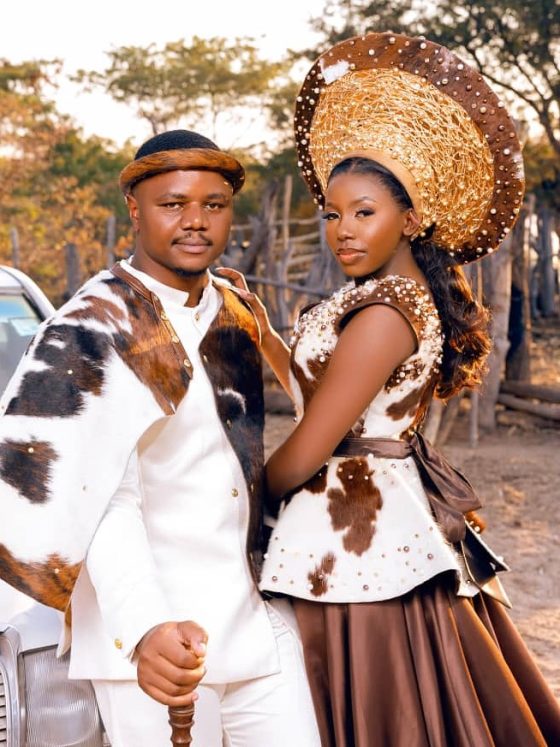
Men’s traditional dress includes the tshega, a blanket or kaross made from animal skin, worn on the loin for ceremonial purposes, alongside tailored jackets that have become the contemporary signifier of formal respect. The specific animal skin patterns historically communicated clan affiliation and social rank, a grammar that remains active in ceremonial contexts even as Western tailoring has become the default formal option. This layering of new formal dloins over preserved ceremonial vocabulary is documented throughout the Omiren archive as characteristic of Southern African dress systems under modernisation pressure: as the analysis of how African dress systems maintain their core grammar while adapting their surface forms documents, the capacity to hold ceremonial and contemporary registers simultaneously is not compromised. It is fluency.
Bogwera and Bojale: The Initiation Dress That Crosses the Border
The Tswana initiation system, bogwera for men and bojale for women, is a ceremony-dress system in which the garments worn communicate the initiate’s position in the transition from childhood to adulthood. The Wikipedia article on bogwera and bojale documents that the historically most important rites of passage of the Tswana people, which took place over several months, were required before adulthood was recognised. Everyone participating was grouped into an age set called a mophato that they remained part of for life.
The garments worn during initiation mark the liminal state with specific precision. During bogwera, boys wear the moetsana: a colourful sleeveless top, skin cap, and beaded accessories that reflect their cultural heritage and represent their transformation into responsible men. During bojale, girls wear the setabane, the traditional initiation attire that marks their transition from girlhood to womanhood. Historically, the ceremony included training in songs, community responsibilities, morality, and preparation for marriage and motherhood.
In Tswana communities in Zimbabwe’s Bulilima-Mangwe district, this ceremony is conducted using the same dress grammar as in Botswana, because the community on the Zimbabwean side of the border is, culturally, the same community as the one on the Botswana side. The political boundary between Zimbabwe and Botswana is irrelevant to the cultural geography of Tswana dress. A Motswana woman in Plumtree and a Motswana woman in Francistown wear the same leteisi to the same kind of ceremony for the same cultural reasons. As Omiren Styles has documented in the study of how cultural traditions resist political boundaries, the communities most likely to maintain dress traditions across borders are those whose cultural identity was defined before the borders existed and continues to be defined independently of them. The Tswana of Zimbabwe and Botswana are the clearest available example of this principle in dress tradition.
Under 10,000 People. Zero Coverage. The Same Dress.
The Tswana community in Zimbabwe’s Bulilima-Mangwe district is among the least documented in the country’s minority tribal literature. Academic studies of Tswana culture and dress focus overwhelmingly on Botswana and South Africa. The small Zimbabwean Tswana community, numbering under 10,000, does not generate the institutional cultural output that produces documentation. As Brand South Africa has documented in its coverage of shweshwe/leteisi’s cultural reach, the fabric has penetrated every community in the region, from royal ceremonies to everyday use. But the Zimbabwean Tswana dimension of this story does not appear anywhere in that coverage. This invisibility is not a reflection of cultural poverty. It is a reflection of the systematic relationship between community size, institutional support, and the production of documented cultural heritage.
This article is the first to discuss the Tswana dress tradition in Zimbabwe in a fashion editorial context. The leteisi worn in Bulilima-Mangwe has the same German-then-Xhosa-then-Sotho-then-Tswana origin story as the leteisi worn in Gaborone. The mogagolwane worn at a wedding in Matabeleland South carries the same meaning as the one worn at a wedding in Maun. The bogwera and bojale ceremonies in the border communities of southwestern Zimbabwe are conducted with the same dress code and the same cultural seriousness as those in Botswana’s rural districts.
The difference is only that nobody has been paying attention.
ALSO READ
- Top 5 Traditional Styles for Ndebele Women in 2026: History, Beadwork, and Ceremony
- How African Dress Is Worn as Cultural Resistance Across the Continent
- How African Identity Is Styled Differently Across Continents
- The Invisible Thread: How African Oral Tradition Shapes Fashion and Heritage Textiles
What the Cloth Crossed
Leteisi made a remarkable journey: from German textile mills to German settler communities in the Eastern Cape, to Xhosa women who gave it its first African name, to Sotho royal endorsement under Moshoeshoe I, to Tswana adoption across the southern African interior, to national fabric status in Botswana, to the wedding celebrations of a small Tswana community in Zimbabwe’s most southwestern district, a community whose border the fabric has always ignored.
That journey encodes, in a single piece of cloth, the entire history of southern African colonial contact, community adaptation, and cultural survival. It is the same journey that the Herero dress made, the same journey that Shweshwe made, the same journey that the Basotho blanket made. The difference is that leteisi’s journey crossed more hands, more communities, more borders, and more languages before it settled into meaning.
The Tswana of Zimbabwe wear that journey every time they dress for a ceremony. The cloth knows where it has been. The community that wears it knows what it means. The only people who did not know the story were the fashion publications that were never paying attention to Bulilima-Mangwe.
Now they do.
OMIREN ARGUMENT
Omiren Styles notes that as with the vaNambya and Sotho pieces in this series, named voices from within the Zimbabwean Tswana community of Bulilima-Mangwe specifically have not yet been secured for this article. The dress tradition descriptions draw on documentation of the broader Tswana and Batswana tradition from community sources, academic literature, and Da Gama Textiles’ own manufacturing records. The leteisi journey is documented from multiple Tier 1 sources, including Da Gama Textiles’ official corporate history, Brand South Africa’s cultural documentation, and the South African History Online archive. Omiren Styles is committed to adding named voices from the Bulilima-Mangwe Tswana community in a future update. A dress tradition that has survived this much deserves both the historical record and the living voice.
FAQs
What is leteisi fabric, and where does it come from?
Leteisi is a printed cotton fabric worn by Tswana people for traditional ceremonies and celebrations, most recognisably at weddings. It derives from the same cloth as South Africa’s Shweshwe: an indigo-dyed discharge-printed fabric introduced to the Eastern Cape by German settlers in the mid-nineteenth century. The Xhosa adopted it and called it ujamani (the German). French missionaries gave it to King Moshoeshoe I of the Sotho in the 1840s, where it became Shweshwe. Tswana communities adopted it from the Sotho and know it as leteisi. Since 1992, the fabric has been manufactured exclusively by Da Gama Textiles at their factory in Zwelitsha in the Eastern Cape, using traditional copper rollers and produced at 90 centimetres in width.
How did a German cloth become the national fabric of Botswana?
The Thranda sequence is known for community adoption spanning approximately 150 years. German settlers brought discharge-printed indigo cloth to the Eastern Cape in the mid-1800s. Xhosa women adopted it and called it ujamani. French missionaries gave it to King Moshoe, who I of the Sota, in the 1840s. His royal endorsement drove adoption across the Basotho nation. From the Sotho, it passed to Tswana communities through the cultural and trade connections between Sotho-Tswana peoples across the southern African interior. In Botswana, it is now worn at celebrations across all major ethnic groups, not just Tswana speakers. The choice is the cultural act. The transformation is the tradition.
Who are the Tswana of Zimbabwe, and where do they live?
Tswana-speaking communities in Abwe are concentrated primarily in the Sotho and Tswanagwe district of Matabeleland South, the southwestern corner of Zimbabwe that borders Botswana directly. They are the heirs of Tswana clans displaced during the Mfecane upheaval of the nineteenth century. The community numbers under 10,000. Setswana is recognised as one of Zimbabwe’s sixteen official languages in the 2013 constitution. Their cultural world straddles the Zimbabwe-Botswana border: the same language, ceremonies, and dress traditions are maintained on both sides.
What is the difference between leteisi and Shweshwe?
They are fabrics called by different names in different communities. The underlying cloth is the Three Cats discharge-printed indigo cotton manufactured by Da Gama Textiles in Zwelitsha, Eastern Cape. In South Africa, it is called Shweshwe (after King Moshoeshoe I). In Botswana and among Tswana communities, it is called leteisi (from letoitse in Setswana). The fabric is identical. The cultural grammar surrounding it, the specific ceremonies for which it is worn, the garments assembled from it, and the community-specific meaning it carries differ by community.
What do Tswana women wear for traditional ceremonies?
The primary ceremonial garment is the leteisi ensemble, consisting of a headwrap called the tlele, a draped blouse, a long skirt, and sometimes an apron-like overlay. After marriage, women wear the khiba, also known as leteisi or mogagolwane, with a blue shawl over their shoulders, a dress strictly reserved for married women to distinguish them from the unmarried. During girls’ bojale initiation, the setabane is the traditional attire worn to mark the transition from girlhood to womanhood.
What is the mogagolwane blanket, and when is it worn?
The mogagolwane is a small checkered blanket worn by married Tswana women during traditional baby showers, at traditional weddings, and at funerals. It marks the wearer’s status as a married woman and communicates membership in the community of women who stand witness to the community’s most significant life events. Like the leteisi ensemble, the mogagolwane worn in Zimbabwe’s Bulilima-Mangwe district carries the same meaning and is worn for the same occasions as it is by Batna women in Botswana.