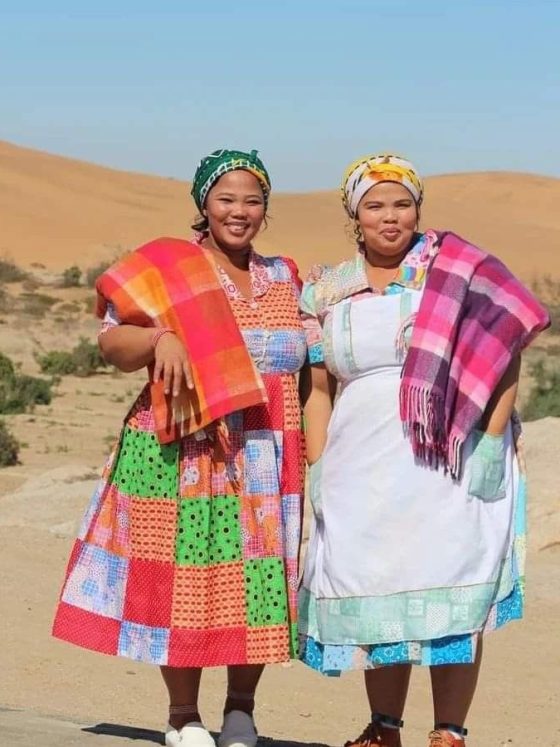
Until is a garment in southern Africa that makes noise when it moves. Not the incidental noise of fabric swishing, but a deliberate, designed percussion: a swoosh and swing built into the construction of the skirt itself, calibrated to the specific rhythm of Tsonga women’s hips. When a line of Shangaan women dance the xibelani in the Gonarezhou lowveld of southeastern Zimbabwe, the sound of the skirts is part of the music. The skirt is an instrument. The body that wears it is the musician.
This is the xibelani. And if you Xibelanien photographs of it, heard the Shangaan Electro genre it inspired, or watched videos of women in voluminous layered skirts moving with a precision that European club dancers have spent fifteen years trying to approximate, you have encountered the Shangaan-Tsonga dress tradition without knowing its name, its history, or the centuries of Indian Ocean trade connections embedded in the fabric it is made from.
That is the problem this article exists to solve.
The xibelani skirt went to #FeesMustFall. It powered Shangaan Electro to 190bpm. It has been photographed on three continents. It has never been written about seriously. Until now.
Who the Shangaan-Tsonga Are

The name is contested, and the contest is itself culturally important. Tsonga refers to a language, Xitsonga, and to the cluster of related peoples who speak its dialects: the Ronga, Hlengwe, Tswa, Chopi, Ndau, and others who occupied the coastal regions of what is now southern Mozambique and extended westward into the lowveld of Zimbabwe and the Limpopo region of South Africa. Shangaan refers to a political identity, the Gaza Kingdom established by Soshangane in the 1820s.
Soshangane was a Ndwandwe general who, after the Ndwandwe were defeated in the upheaval that established Zulu military dominance in the early 19th century, led his people southward into Mozambique and built a new empire by conquering and consolidating the Tsonga-speaking peoples under a new Nguni-influenced political order. The Shangaan-Tsonga identity is therefore layered: an ancient Tsonga cultural foundation, reshaped in the 19th century by the political architecture of the Gaza Kingdom, and maintained across a territory that today spans southeastern Zimbabwe, southern Mozambique, Limpopo Province in South Africa, and parts of Eswatini. Tsonga is the language. Shangaan refers to the kingdom that unified the Tsonga sub-groups under one political system. The MaChangana communities are concentrated in the region surrounding Gonarezhou National Park, one of Africa’s most ecologically significant wild areas and part of the Great Limpopo Transfrontier Conservation Area straddling Zimbabwe, Mozambique, and South Africa. This geographic positioning is not incidental to the dress tradition. The Shangaan-Tsonga are a people whose cultural territory, like their national park, refuses to respect political borders.
The Xibelani: Architecture of a Dancing Skirt
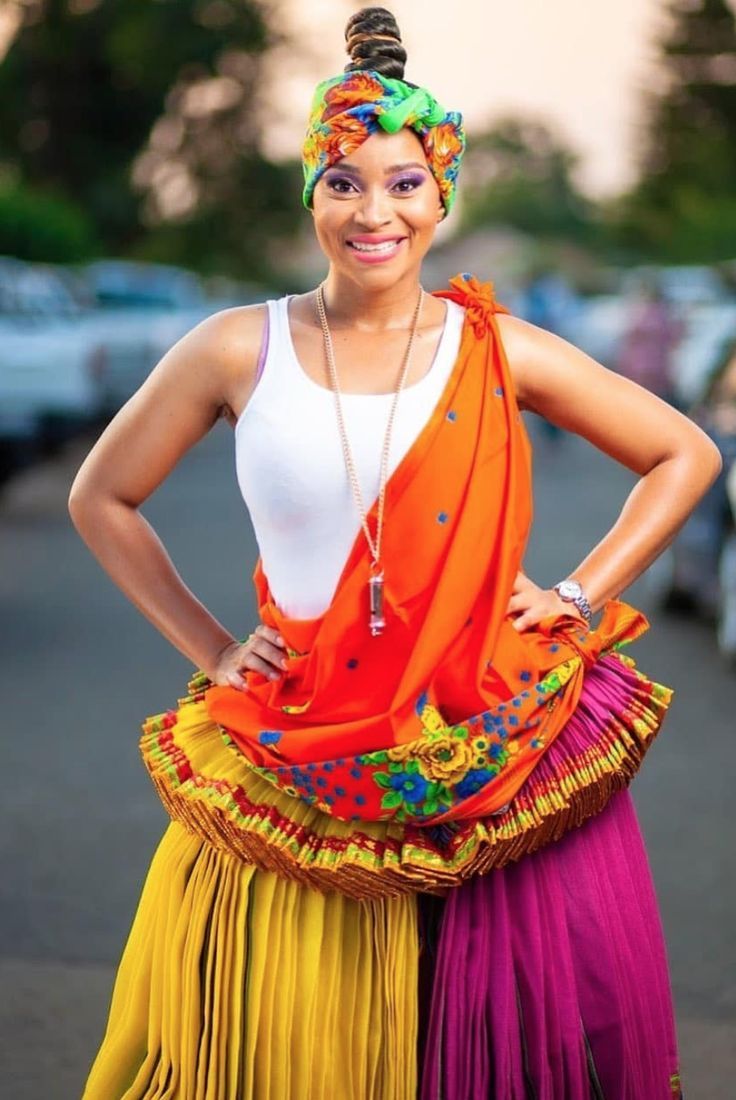
The xibelani is not one thing. It is a category: a deeply gathered, heavily layered skirt designed specifically to amplify movement. The ship movements swirl and amplify hip motions, creating a visually striking effect central to the performance. The construction is deliberate in its relationship to movement. The skirt is worn beneath bright Tsonga wraps for daily and ceremonial purposes, then revealed and displayed when dancing or for special occasions. The flaring is engineered into the depth of the gathering, the weight of the layers, and the relationship between the skirt’s mass and the speed of the hip movement it is designed to follow. The xibelani is a kinetiXibelani. Its full meaning only becomes available when the body wearing it is in motion.
The fabric carries one of the more extraordinary trade stories in southern African dress history. The traditional Xibela material is called salempore in the Gonarezhou communities: a striped, woven cloth originally sourced from India through the east coast of Africa dhow trade, still used today in MaChangana communities as a delightful blend of coloured stripes. Indian Ocean. The dhow trade, which connected the Swahili coast to the Arabian Peninsula, the Indian subcontinent, and China, left its material signature in a skirt still worn in the Zimbabwean lowveld today. When a Shangaan woman dances the xibelani in Gonarezhou, she is wearing the physical evidence of a trade network that was already centuries old by the time Europeans arrived on the African coast.
The beads are equally cosmopolitan in origin. The beads traditionally used in xibelani decoration are Chinese Xibelani beads, reflecting the enduring influence of ancient trade on the culture. Not European trade beads, not missionary beads: Chinese glass seed beads, arriving through the same Indian Ocean network that brought the salempore fabric, were incorporated into Tsonga decorative tradition and made entirely the community’s own over generations of application. As Omiren Styles has documented in the analysis of the Swahili coast’s kikoi cloth, the Indian Ocean trade network was not a European-led system. It was a centuries-old web of exchange that connected India, China, Arabia, and the African coast long before Portuguese ships rounded the Cape, leaving material traces in the dress traditions of communities across the entire southern African interior. The xibelani skirt worn at a cultural festival in the Gonarezhou area carries trade memories of Hangzhou and Mumbai and the dhow routes that connected them to the Mozambican coast. Fashion media has never once discussed this.
ALSO READ
- East African Kikoi: The Coastal Fabric Making Waves in International Fashion
- Maasai Beadwork: Meaning, Symbolism, and the Language of Identity
- The Geometry of Heritage: Why Shweshwe Still Defines South African Fashion
- The Reed Dance and What Eswatini’s Umhlanga Ceremony Tells the Fashion World About Collective Dress
What the Body Says: The Xibelani Dance
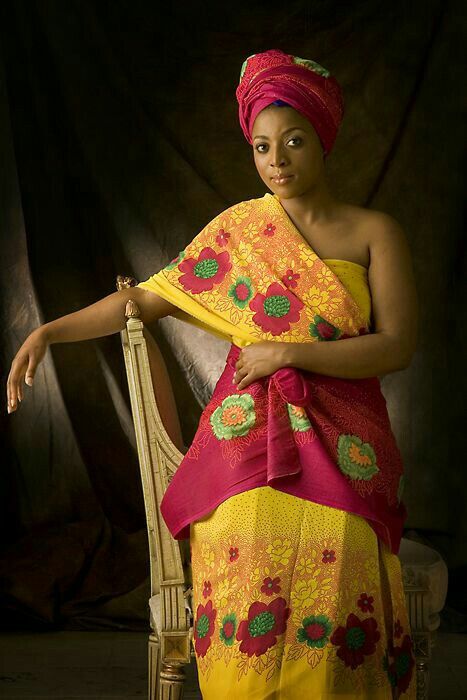
The xibelani dance is an indigenous form performed primarily by Tsonga women, characterised by energetic hip-shaking movements, intricate footwork, and rhythmic coordination that emphasise balance and physical discipline. Dancers typically perform in groups of six to twelve, taking turns in a communal setting, with movements synchronised to the beat of traditional percussion, including the xigubu co, wide drum, and mbila xylophone, accompanied by hand clapping, whistles, and call-and-response singing.
The hip movement that defines Xibelani dancing is Xibelanirative. It is technically demanding, requiring core strength, precise rhythm, and the ability to isolate hip movement from the rest of the body with a speed and accuracy that casual observation makes look effortless. The skirt amplifies this skill: a small imprecision in hip movement becomes visible in its response. The xibelaitshnical instrument that rewards mastery and reveals inadequacy. It is, in the precise sense, a performance garment.
The songs accompanying the dance are structured as a call-and-response format in the Thanga language, with themes centred on fertility and everyday life. The vocal dimension is inseparable from the dress: the skirt moves to the rhythm the singers set, and the singers respond to the energy the dancers generate. Historically, xibelani was performed by young unmarried women to demonstrate cultural knowledge, physical discipline, and readiness for adult life. That social function remains active today alongside the dance’s expanded contemporary contexts.
The xibelani skirt does Xibelaniorm for an audience. It performs with the body wearing it. The dancer and the dress are a single instrument, and the skirt keeps score.
The Full Dress Vocabulary
The Xibelani is an Xibelani piece, but the Shangaan-Tsothe nga dress is a complete system. Women’s ceremonial attire incorporates exquisite beaded necklaces, bracelets, and anklets. The vuhlalu and ti queeni are common jewellery pieces, alongside headbands called tindzilo, which are adorned with beads and feathers. The colour palette is specific and joyful: bright pinks, oranges, blues, and yellows evoke joy, femininity, and cultural unity, while geometric patterns, floral motifs, and zigzag designs carry ancestral symbolism.
Men’s ceremonial dress uses animal skins alongside the mbhaco, a beaded apron whose geometric beadwork carries cultural symbols and stories. Tsonga beadwork reflects a diversity of patterns characteristic of the various Tsonga chiefdoms, with asymmetric patterning a characteristic feature that distinguishes it from the more symmetrical traditions of neighbouring Ndebele or Sotho beadwork. The asymmetry is not an error. It is a design choice that runs consistently through Tsonga beadwork and gives it a visual language distinct from anything else in the region.
The three major fabric prints used in contemporary Tsonga dress, the xibelani, miceka, and motjeka, are all worn with bangles and constitute the contemporary expression of a tradition that has absorbed Indian Ocean trade cloth, Chinese glass beads, Nguni political identity, and Mozambican coastal aesthetics into a single coherent dress system.
The Global Moment That Never Got Named
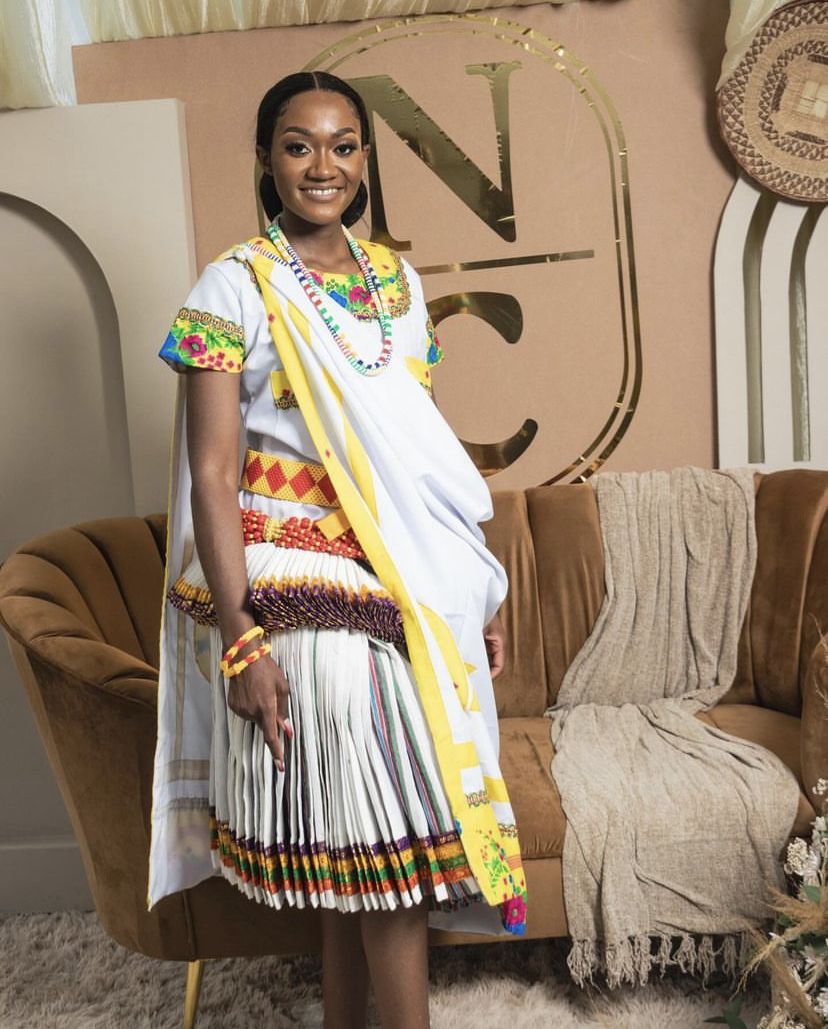
The Xibelani has already achieved global circulation. In 2016, a group of Tsonga women wore xibelani skirts to the #FeesMustFall protests, using the garment as a form of protest and activism: wearing their cultural identity into a political confrontation with a South African university funding system they considered hostile to Black students’ rights. The skirts became a symbol of resistance and unity. The photographs circulated internationally. Nobody wrote an article about the Xibelani.
Shangaan Electro, a muXibelani that takes the xibelani’s energy and accelerates it into beats of up to 190 bpm, is the clearest example of what happens when a dress tradition travels without its story. The genre was created and popularised by producer Nozinja, real name Riwhose chard Mtheis thwa, based in Limpopo and later Johannesburg. In 2010, New York afropop producer Wills Glasspiegel discovered Nozinja through YouTube videos of Shangaan dancers and brought his music to London label Honest Jon’s Records, whose compilation Shangaan Electro: New Wave Dance Music From South Africa introduced the genre to international audiences. Nozinja subsequently signed to Warp Records, one of electronic music’s most prestigious labels, for his 2015 solo album Nozinja Lodge. He described the work to The List magazine in terms that directly show fans how to dance to our music; the shaking of the waist, moving arms and legs in the right way. It’s truly an art form at its best and they need to share the feel, the sense of doing it with us.” As Omiren Styles has documented in the analysis of how African music builds its own fashion aesthetic from within, the relationship between an African music genre and its dress tradition is never incidental. Shangaan Electro’s international moment was a fashion moment that nobody in fashion media covered.
This is the pattern that defines Xibelani’s garment: the garment is present everywhere the culture has reached, and the culture has reached further than most people know. But the dress has never been given the analytical attention that would allow the people encountering it to understand what it carries: the Indian Ocean trade connections in the fabric, the Chinese glass in the beadwork, the century-old performance tradition in the hip movement, the political courage in the protest photograph. Fashion media gave it the photograph. Fashion media owes it the story.
The Zimbabwe Dimension
The MaChangana communities of southeastern Zimbabwe, living in the lowveld corridor between the Save River, Gonarezhou National Park, and the Mozambican border, maintain the dress tradition in a context that is simultaneously remote and internationally connected. The annual Budula Festival (also called the MaChangana Cultural and Arts Festival) held in the Gonarezhou area is one of the few spaces where xibelani dress, traditional female initiation (khomba), male initiation (ngomeni), and the full range of MaChangana material culture are displayed and transmitted in their proper geographic and cultural context. As Omiren Styles has documented in the broader argument about how African identity operates differently across diaspora and home communities, the communities that have maintained a dress tradition without institutional support, without museums, design schools, or fashion weeks, are often the communities doing the most important work of cultural continuity. The Gonarezhou MaChangana are a precise example. The Xibelani has Xibelani apartheid’s homeland system in South Africa, Portuguese colonialism in Mozambique, Rhodesian colonialism in Zimbabwe, and independence in all three countries that have not always prioritised minority cultural traditions.
It survived because it is made to move. The skirt that sounds like a celebration has been celebrating continuously, through all of it.
THE UNFINISHED STORY
The xibelani is the most globally travelled garment in this series. It has been at a protest. It has been on international stages. It has inspired a music genre that reached Warp Records. And at no point in that journey has it received serious analytical attention from fashion media. The salempore fabric’s Indian Ocean origins, the Chinese glass seed beads, the Soshangane political history, the technical discipline of the dance itself, none of it has been written about as the civilisational record it represents. The xibelani’s global moment is unfiXibelani ‘sause the story that would complete it has not yet been told.
Omiren Styles documents the Shangaan-Tsonga dress tradition here because it represents the most acute version of a problem this series exists to address: the gap between a dress tradition’s global reach and the analytical attention it receives. The Xibelani has done the work of going global. The story was always there. Fashion media simply chose not to look at what the skirt was carrying. This article is the beginning of that look.
ALSO READ
Top 5 Traditional Styles for Ndebele Women in 2026: History, Beadwork, and Ceremony
How African Identity Is Styled Differently Across Continents
African Textile Museums: Preserving Memory in an Age of Fast Fashion
FREQUENTLY ASKED QUESTIONS (FAQs)
What is the xibelani skirt, and where does it come from?
The xibelani is a deeply gathered, heavily layered skirt worn by Shangaan-Tsonga women, designed specifically to amplify hip movements during dance. It is made from salempore, a striped woven fabric originally sourced from India via the Indian Ocean trade, and decorated with Chinese glass seed beads that also arrived through the same trade network. The Xibelani belong to the Xibelanina (Shangaan-Tsonga) people of southeastern Zimbabwe, southern Mozambique, and Limpopo in South Africa, whose cultural territory spans the Great Limpopo Transfrontier Conservation Area.
What makes the Xibelani fabric significant in trade history?
The Xibelani’s traditional fXibelani’sled salempore in Gonarezhou communities was originally sourced from India through the east coast of Africa dhow trade network that connected the Swahili coast to India, Arabia, and China centuries before European ships arrived on the African coast. The beads decorating the skirts are traditionally Chinese glass seed beads from the same network. The Xibelani, therefore, carries Xibelani evidence of pre-colonial Indian Ocean trade routes in its material construction, making it one of the most historically documented cross-cultural garments in southern Africa.
What is the connection between the Xibelani and ShangaaXibelani?
Shangaan Electro is a music genre created and popularised by producer Nozinja (Richard Mthethwa) from Limpopo, South Africa, which accelerates traditional Tsonga music to tempos of up to 190 bpm. The genre’s visu190 bpmthetic is inseparable from xibelani dress: dancers in Shangaan Electro performances wear the skirt at maximum velocity, and the hip movement the xibelani amplifies is the same movement the music is calibrated to drive. The genre reached international audiences in 2010 through a compilation released by London label Honest Jon s Records after New York producer Wills Glasspiegel discovered Nozinja through YouTube videos via African dancers.
Why were xibelani skirts worn at Xibelani’s Must Fall protests?
In 2016, a group of Tsonga women wore xibelani skirts to the #FeesMustFall protests in South Africa, which aimed to challenge tuition costs and promote equality in higher education. The choice was deliberate: the skirts served as a form of cultural protest and activism, bringing Tsonga identity explicitly into a political confrontation and signalling that the struggle for access to education was also a struggle for the recognition of Black South African cultural authority. The photographs circulated internationally, but no fashion media covered what the garment was or what it carried.
Where is the Shangaan-Tsonga dress tradition maintained in Zimbabwe?
The MaChangana communities of southeastern Zimbabwe maintain the xibelani tradition in the lowveld corridor surrounding Gonarezhou National Park, one of Africa’s most significant wildlife conservation areas. The annual Budula Festival (also known as the MaChangana Cultural and Arts Festival), held in the Gonarezhou area under the custodianship of the lowveld chiefs, is the primary institutional space where xibelani dress, tradition, and the full range of MaChangana material culture are displayed and transmitted. The community straddles the Zimbabwe-Mozambique border, maintaining connections to the same dress tradition on both sides.
How does the S of the borderhangaan-Tsonga dress differ from other southern African traditions?
Several features distinguish it. The Xibelani’s kinetic design amplifies hip movement and produces deliberate percussion when in motion, and has no direct equivalent in other southern African dress traditions. The Indian Ocean’s fabric and beads are documented in the Indian Ocean trade edition and traceable rather than assumed. Tsonga beadwork is characterised by asymmetric patterning, distinguishing it from the more symmetrical beadwork of Ndebele or Sotho traditions. The dress system has also achieved a form of global cultural circulation through the Shangaan Electro music genre that most other traditional southern African dress traditions have not, making it the most internationally travelled garment in this series.