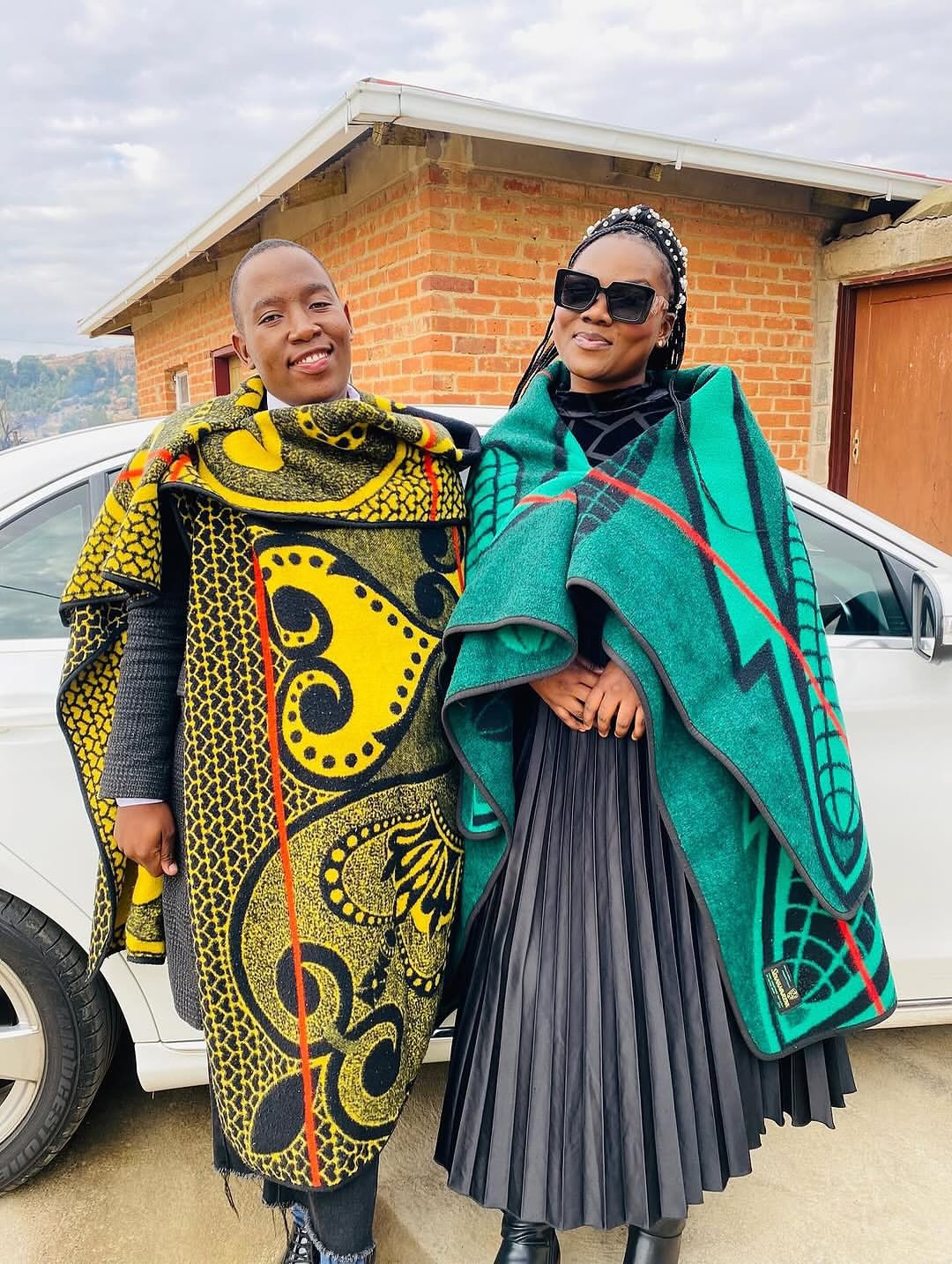
The Sotho of Zimbabwe did not choose to be here. The Mfecane, the great nineteenth-century upheaval that shattered the Sotho-Tswana world, scattered communities northward across the Limpopo, into territories that would become Zimbabwe. They brought their language. They brought their ceremonies. They brought their dress. It is still here.
Of all the communities in Zimbabwe’s official sixteen-language constellation, the Sotho occupy perhaps the most particular position. They are not indigenous to the Zimbabwean plateau in the way that the Shona, Kalanga, or BaTonga are. They are here because a century of war broke their world apart, and some of the pieces landed north of the Limpopo. They are a diaspora within a diaspora: a community defined by a dispersal that happened two hundred years ago and that still shapes where they live, what they speak, and what they wear when ceremony requires them to be fully themselves.
The story of the Sotho dress in Zimbabwe is inseparable from the story of the Mfecane. And the story of the Mfecane is, among other things, a story about what people carry when everything around them is collapsing.
The Mfecane scattered the Sotho north across the Limpopo into Zimbabwe. They brought their blankets, their ceremonies, and their dress. Two hundred years later, it is still here. This is what it carries.
The Mfecane and the Northward Scatter
The Mfecane, known in the Sesotho language as the Difaqane, meaning “forced migration” or “forced dispersal,” refers to a period of intense military conflict and migration across southern Africa, roughly spanning the 1810s to the 1840s. South African History Online documents the Mfecane’s causes as a convergence of Zulu state expansion under Shaka, pressure on neighbouring peoples, drought and resource competition, and the destabilising effects of European encroachment from the south. For the Sotho-Tswana peoples, it was a catastrophe that scattered clans across an enormous geographic area.
Some groups moved south, where Moshoeshoe I’s extraordinary diplomatic and military skill gathered the fragments into the Basotho nation that became the Kingdom of Lesotho. Others moved north. One group, the Kololo under Sebetwane, crossed the Zambezi in 1823 and eventually conquered Barotseland in what is now western Zambia, ruling it until the Lozi reasserted control in the 1860s.
The Sotho communities that ended up in Matabeleland arrived during or shortly after the period when Mzilikazi’s Ndebele state was consolidating its control of the region. In the course of the Ndebele migration north, itself part of the Mfecane, Mzilikazi absorbed large numbers of conquered and allied peoples, including Sotho-Tswana groups, into the Ndebele nation. These absorbed communities adopted the Ndebele language and cultural practices while retaining, at varying degrees, elements of their own traditions, including dress. As Omiren Styles has documented in the history of Ndebele beadwork and cultural survival, the longest-running act of cultural defiance in Southern African history is expressed precisely through what communities choose to wear. The Sotho of Zimbabwe know this as well as any community in the region.
The Sotho communities that retained a distinct identity in Matabeleland, concentrated particularly in areas near the Botswana border, where the cultural geography of the Sotho-Tswana world naturally shades into the Zimbabwean lowveld, are the communities whose dress traditions this article concerns. Their language, chiSotho, is recognised as one of Zimbabwe’s sixteen official languages in the 2013 constitution.
ALSO READ
- Top 5 Traditional Styles for Ndebele Women in 2026: History, Beadwork, and Ceremony
- The Geometry of Heritage: Why Shweshwe Still Defines South African Fashion
- African Textile Museums: Preserving Memory in an Age of Fast Fashion
- How African Identity Is Styled Differently Across Continents
The Dress System: What the Basotho Carried North

The Sotho dress is one of southern Africa’s most layered traditions, layered in the literal sense of multiple garments worn simultaneously, and in the metaphorical sense of multiple meanings compressed into each garment.
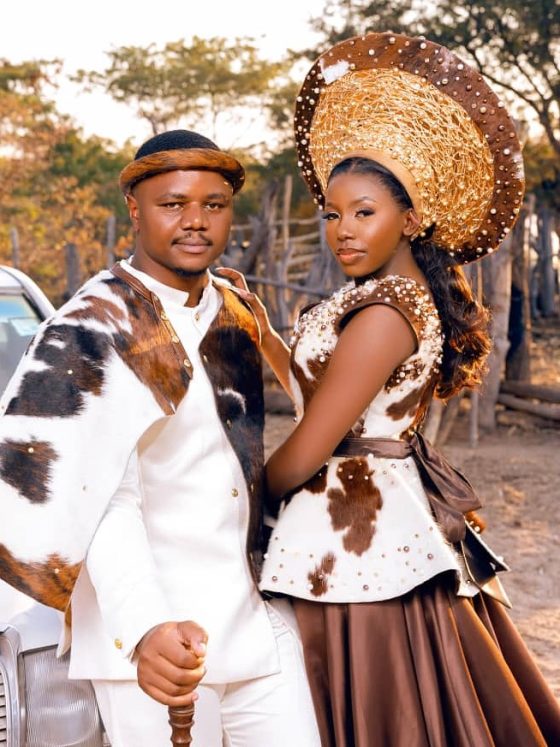
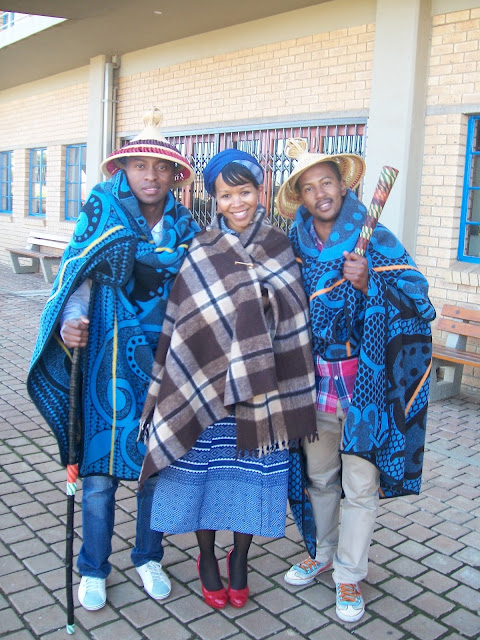
The most famous element is the lesela, the Basotho blanket, a woollen blanket produced in specific patterns that carry historical and social meaning, worn draped over the shoulders or wrapped around the body. As scholars writing in the Journal of the Royal Anthropological Institute have documented, the Basotho blankets are ingrained in the ritual and mundane reproduction of Basotho life, their value deriving from a foundational cultural world whose practices invested them with specific meaning long before global fashion took notice. Different blanket patterns mark different occasions and life stages: the Moholobela is worn by young men preparing for Lebollo initiation; the Lekhokolo marks the transition to adulthood after initiation is complete; the Seana Marena is reserved for chiefs and royalty, its name meaning “to swear by the king”. The blanket’s presence among Zimbabwe’s Sotho communities is the most important single fact about how Sotho material culture survived the Mfecane: it was carried across the Limpopo with the people, and it is still worn at ceremonies in Matabeleland today.
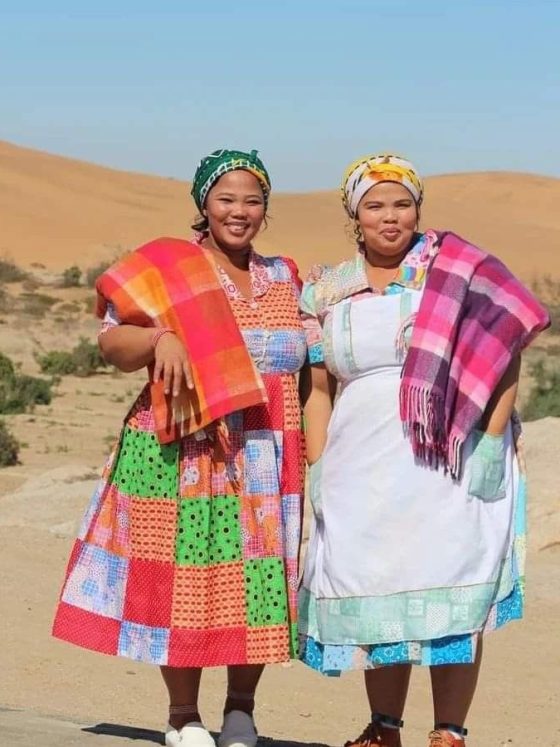
The Seshoeshoe, the traditional Basotho dress worn by women at weddings and important celebrations, is made from printed cotton cloth layered and trimmed with ribbon. Its history is directly parallel to the transformation of Shweshwe cloth documented in the Omiren archive: as Omiren Styles has recorded, Moshoeshoe I received printed cotton as a diplomatic gift and made it so central to royal ceremony that the fabric became known as Moshoeshoe cloth. Women often wrap a long print cloth or a small blanket around the waist as a second garment over the Seshoeshoe, and the full ensemble remains the most complete expression of Sotho women’s dress for ceremonial occasions.
Lebollo: When Ceremony Is an Act of Cultural Persistence
The Lebollo, the Sotho initiation system, is one of the most precisely dress-coded ceremonial traditions in southern Africa. Every stage of the initiation process has its own specific garments, worn by the initiates to communicate their position in the transition from childhood to adulthood. Understanding the dress requires understanding the ceremony. The two cannot be separated.
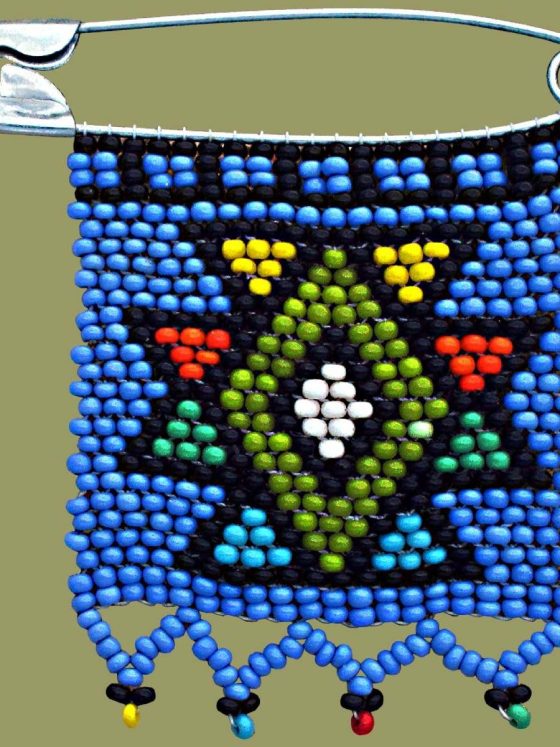
The female initiation, Lebollo la basadi, is attended by girls who wear the thethana, a beaded waist skirt worn alongside grey blankets and goatskin skirts. Art historian David M. M. Riep’s documented study of the thethana tradition confirms that the fringe of certain thethana (the plural form) is dyed with letsoku, a mixture of ochre and fat, producing a brick-red hue that signals a change in social status in Sesotho society. Knots in the thana communicate whether the wearer has completed Lebollo or is still unmarried; unknotted examples are worn by the unwed. When a young woman completes Lebollo, she receives a new and longer thetha, indicating her adult status and eligibility for marriage. Female initiates also produce tejana, woven mats on which miniature lithethana are pinned as proof of their competency in the arts taught during initiation. The thetha is worn specifically by young women who are virgins, and its meaning is precise: it marks the initiate’s liminal status between girlhood and womanhood.
The male initiation, Lebollo la banna, is attended by boys who wear the tshea, a sheepskin loincloth, alongside colourful blankets. The tshea marks the boy as someone who has been separated from childhood but has not yet completed the passage to manhood. The initiation school lasts several weeks to six months in secluded areas, and throughout this period, the dress communicates the initiate’s status to anyone who encounters them.
Traditional Sotho healers wear the bandolier: strips and strings of leather, sinew, or beads that form a cross on the chest, with pouches of ritual medicines attached for specific ceremonies. The San people are believed to have adopted the bandolier attire from Sotho healers during periods when the Basotho and San traded, intermarried, and developed ties. San rock paintings from the 1700s depict figures wearing the bandolier, making this a garment whose history bridges two of southern Africa’s most distinct cultural traditions. The capacity of dress to carry and transmit cultural knowledge across communities and generations is documented throughout the Omiren archive, including analyses of how African oral tradition shapes the transmission of dress knowledge and heritage textiles. The bandolier is one of the most precise examples available of how that transmission works in practice: a garment crosses a cultural boundary through a relationship, takes root in a new community, and carries its meaning forward in that community for centuries.
A dress tradition can survive without a homeland. The Sotho of Zimbabwe are the proof. Two hundred years after the Mfecane scattered their ancestors north across the Limpopo, they still dress their initiates in the specific garments that mark the transition from childhood to adulthood in the Sotho tradition.
ALSO READ
- Maasai Beadwork: Meaning, Symbolism, and the Language of Identity
- The Invisible Thread: How African Oral Tradition Shapes Fashion and Heritage Textiles
- The Zulu Reed Dance and the Dress That Carries a Nation’s Dignity
- The Reed Dance and What Eswatini’s Umhlanga Ceremony Tells the Fashion World About Collective Dress
The Blanket as the Most Portable Civilisation
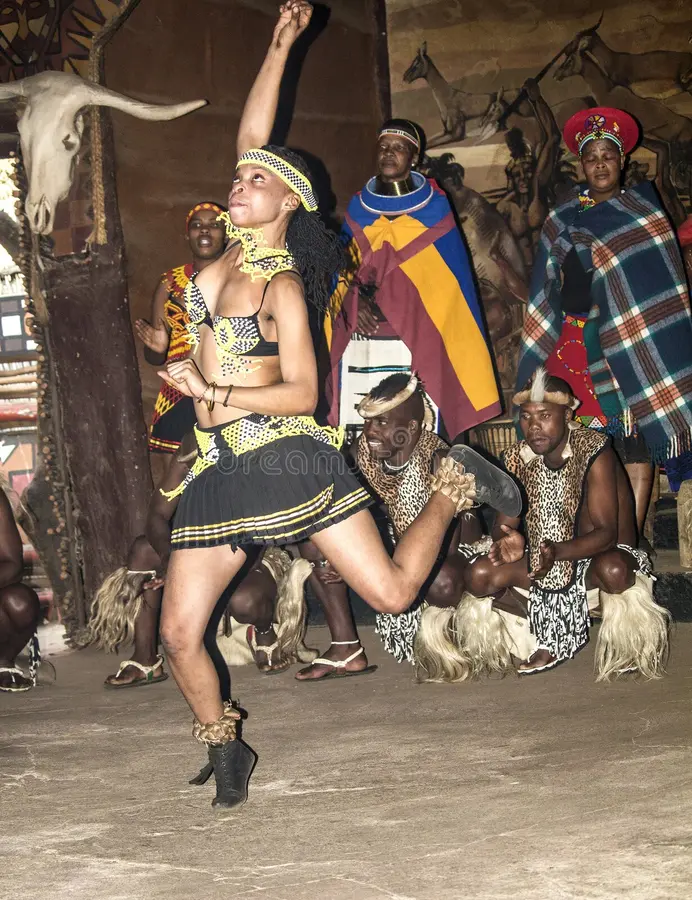
The Basotho blanket deserves special attention in the context of the Sotho diaspora in Zimbabwe because it embodies a broader truth about how mobile communities maintain cultural identity across distance and time. A Sotho family that walked north across the Limpopo during the Mfecane upheaval could wrap their children in a Basotho blanket and know, precisely, that they were still Sotho. The blanket was the most portable piece of civilisation they carried. This is why the Basotho blanket has become the single most recognised symbol of Sotho cultural identity globally: because it is tied to a people rather than a place, and the people took it wherever they went. As Omiren Styles has documented in the analysis of the kanga cloth tradition, a cloth that carries its meaning independent of geography is the most powerful cultural identity tool a mobile community possesses. The Basotho blanket is the clearest illustration of that principle in Southern Africa.
The Seana Marena pattern, the Motlatsi, and the Pitsi: each blanket pattern carries a history not tied to a geographic location. It is tied to a people, and the people took it with them wherever they went. The Sotho of Zimbabwe are among the most striking examples of how far a blanket can travel and still mean the same thing.
The Two-Hundred-Year Dress
There is something that the Sotho diaspora in Zimbabwe demonstrates that the larger Basotho communities in Lesotho and South Africa do not need to demonstrate in the same way: that a dress tradition can survive without a homeland.
The Basotho nation in Lesotho has state structures, a monarchy, national holidays, and a government that actively maintains and celebrates Sotho cultural identity. The Sotho of Zimbabwe have none of these institutional supports. They have their ceremonies, their initiation schools, their blankets, and their beadwork. They have Lebollo’s specific dress requirements, which require them to make the thethana, the tshea, and the bandolier, or to forgo the ceremony that gives the dress its meaning.
When a Sotho family in Matabeleland holds a Lebollo ceremony, the specific dress requirements are not merely custom. They are the proof that the community is still Sotho. In a context where the dominant language is isiNdebele, and the dominant cultural framework is Ndebele, the dress of Sotho initiation is an act of cultural persistence that announces: we are still here, and we are still who we have always been. As Omiren Styles has argued in the documentation of cultural resistance across Southern Africa, dress is the cultural record that survives conditions specifically designed to make cultural survival difficult. The Sotho of Zimbabwe are doing exactly that, in exactly those conditions, two hundred years after the dispersal that brought them here.
They have maintained both the dress and the ceremony. Two hundred years after the Mfecane scattered their ancestors north across the Limpopo and deposited them in what would become Zimbabwe, the Sotho community in Matabeleland still dresses its initiates in the specific garments that mark the transition from childhood to adulthood in the Sotho tradition. The dress is proof that the community survived. And in this part of the world, where the Mfecane, the Ndebele state, colonial Rhodesia, and independence-era Zimbabwe have all, at various points, created conditions that challenged minority cultural survival, survival is not a small thing. It is the whole argument.
THE OMIREN ARGUMENT
Omiren Styles notes that the Zimbabwe Sotho community is among the smaller and less institutionally supported communities documented in this series. Named voices from within the Matabeleland Sotho community have not yet been secured for this article, unlike the vaNambya piece, which carries the voice of Gabriel Shokodema, or the BaTonga series, which carries voices from Binga Craft Centre weavers. The dress tradition descriptions in this piece draw on the academic record for Sotho dress, including David M. M. Riep’s documented study of the thethana tradition (Smarthistory), South African History Online’s documentation of the Mfecane and its impact on Sotho-Tswana communities, and the broader ethnographic literature for Basotho ceremonial practice. Omiren Styles is committed to adding community-sourced voices from Zimbabwe’s Sotho community in a future update. A tradition of this seriousness deserves both the academic record and the living voice.
The Sotho of Zimbabwe are a diaspora within a diaspora. This community carries a specific cultural identity across two borders: the Limpopo River, which separates them from their historical homeland, and the cultural landscape of Mata, which surrounds them in Zimbabwe. The dress they have maintained over two centuries of this double displacement is one of the most precise illustrations of what the Omiren Styles series has been arguing from the beginning: that African dress systems are not incidental to cultural survival. They are how cultural survival happens. The blanket crossed the Limpopo. Two hundred years later, it is still here.
FREQUENTLY ASKED QUESTIONS (FAQs)
Who are the Sotho of Zimbabwe, and how did they get there?
The Sotho of Zimbabwe are descendants of Sotho-Tswana communities that were scattered northward across the Limpopo during the Mfecane, the period of intense military conflict and forced migration across southern Africa, roughly spanning the 1810s to the 1840s. As documented by South African History Online, the Mfecane saw Mzilikazi’s Ndebele state absorb large numbers of Sotho-Tswana peoples as it consolidated control of Matabeleland. Some retained a distinct Sotho identity, concentrated particularly in areas near the Botswana border. Their language, Chisota, is recognised as one of Zimbabwe’s sixteen official languages in the 2013 constitution.
What is the Mfecane, and why does it matter to understanding Sotho dress?
The Mfecane, known in Sesotho as the Difaqane or forced dispersal, was a period of intense upheaval across southern Africa in the 1810s to 1840s, driven by Zulu state expansion, resource competition, drought, and European encroachment. What communities carried with them during this dispersal is where dress becomes historically significant: the Basotho blanket, the initiation garments, and the ceremonial dress requirements of Lebollo all survived the northward crossing because they were physically carried. The Sotho of Zimbabwe are the proof that this kind of portable cultural identity is possible.
What is Lebollo, and what do initiates wear during the ceremony?
Lebollo is the Sotho initiation system. The female initiation, Lebollo la basadi, requires girls to wear the thethana, a beaded waist skirt, alongside grey blankets and goatskin skirts. Art historian David M. M. Riep’s academic study documents that the fringe of certain lithethana is dyed with letsoku (ochre and fat), producing a brick-red hue signalling a change in social status. A new, longer than the mark Lebollo completion. The male initiation, Lebollo la banna, requires boys to wear the tshea, a sheepskin loincloth, alongside colourful blankets. The initiation school runs from several weeks to six months in secluded areas.
What is the Basotho blanket, and does it exist among the Zimbabwe Sotho community?
The lesela, or Basotho blanket, is a woollen blanket produced in patterns that carry historical and social meaning. As scholars in the Journal of the Royal Anthropological Institute have documented, the blankets are ingrained in the ritual and mundane reproduction of Basotho life, their value deriving from a cultural world whose practices invested them with specific meaning. Yes, the blanket exists among Zimbabwe’s Sotho community: it was carried across the Limpopo during the Mfecane and is still worn at ceremonies in Matabeleland today. The Seana Marena, Motlatsi, and Pitsi are among the named patterns, each carrying specific historical and ceremonial associations.
How is the Sotho dress in Zimbabwe different from the Sotho dress in Lesotho?
The garments are the same: the thethana, the tshea, the lesela blanket, the Seshoeshoe dress, and the bandolier healer’s attire are all maintained in both contexts. The difference is political. In Lesotho, Lebollo is the state ceremony of a sovereign people, supported by an institutionally backed monarchy and a government that actively celebrates Sotho cultural identity. In Zimbabwe, Lebollo is a minority community performing its own cultural survival in a context where the dominant language is isiNdebele, and the surrounding cultural framework is Ndebele. The dress is the same. The political weight of wearing it is different.
Where do the Sotho communities in Zimbabwe live today?
Zimbabwe’s Sotho communities are concentrated primarily in Matabeleland, particularly in areas near the Botswana border, where the cultural geography of the Sotho-Tswana world extends naturally into the Zimbabwean lowveld. The Sotho language, chiSotho, is recognised as one of Zimbabwe’s sixteen official languages under the 2013 constitution. The exact population is not precisely documented, but the community numbers in the thousands, making the preservation of their dress tradition an act of particularly deliberate cultural maintenance.