Most dress traditions carry cultural meaning. Venda dress carries cosmological meaning. The difference is not a matter of degree. It is a matter of what kind of universe the cloth is being asked to hold.
There is a lake in the Soutpansberg Mountains of Limpopo, near the border where South Africa meets Zimbabwe, that has no visible outlet. The Mutale River feeds it. The water rises. And yet the lake never overflows. Hydrologists have explanations for this. The Vhavenda people have a different one: the lake is sacred, home to the White Python, the god of fertility, whose presence in the water regulates the world above it, and nothing that enters Lake Fundudzi leaves without permission.
This is the cosmological centre of Venda culture. And it is inseparable from everything the Venda wear.
To write about the Venda dress without writing about Lake Fundudzi, the White Python, and the three-stage female initiation system that culminates in the domba ceremony is to describe the surface of a cloth without knowing what it was woven to say. The nwenda, the Venda’s signature wrap cloth, is not merely a garment. It is the material in which a woman’s transition from girlhood to womanhood is encoded, stage by stage, until the final ceremony at which she emerges as a person fully constituted within the Vhavenda understanding of what it means to be a woman in the world.
Global fashion has photographed the domba dance. It has not yet understood the dress.
The Venda dress the body the way they build their cosmology: in layers, each carrying meaning the last cannot hold alone. At the centre of it all is Lake Fundudzi, a White Python, and a cloth called nwenda.
The Vhavenda: A People at the Border of Two Worlds
The Venda people, Vhavenda in their own language, Tshivenda, occupy a geographic border that mirrors their cultural one. Their homeland straddles the South Africa-Zimbabwe frontier, concentrated in what is now Limpopo Province but extending northward into Matabeleland. Approximately 3.5 million Venda speakers live in South Africa, according to the 2011 census; approximately 600,000 live in Zimbabwe. In Zimbabwe, Vhavenda communities are found in the southwestern districts, maintaining traditions that share a common origin with their South African counterparts but have evolved across a divided geography, much as the BaTonga traditions diverged across the Kariba boundary.
The Vhavenda are historically one of southern Africa’s most culturally distinct peoples. Their language is unique among Bantu languages of the region, incorporating click sounds more commonly associated with Khoisan traditions. Their cosmology is elaborate and specific: a belief system in which water is not merely a resource but a spiritual medium, in which ancestors reside beneath lake surfaces, and in which the White Python at Lake Fundudzi governs fertility, rainfall, and the continuity of life.
This cosmological architecture is not the background to Venda dress. It is the reason the dress exists in the form it does. Every garment worn at every stage of a Venda woman’s life is a response to a specific spiritual and social position she occupies within this framework. As Omiren Styles has documented in the case of Ndebele women’s dress, a woman’s beadwork is a running biography, and different garments signal different thresholds in her life. For the Vhavenda, the same principle applies: each garment in the dress sequence does not replace the last but adds to it, layering meaning onto the body the way the community layers meaning onto time.
The Dress System: Garments That Mark Who You Are Becoming
Venda women’s dress is not a single tradition. It is a sequence, a system of garments that changes as a woman moves through the stages of her life, each phase marked by different clothes, adornment, and ceremonial contexts.
Young girls wear the maredo: narrow strips of material hanging between the legs over a girdle, front and back. It is the dress of early girlhood, minimal and practical, communicating the incompleteness of a girl who has not yet entered the first initiation school. Before puberty, some girls also wear the musenzhe, a skirt made of leaves threaded on a cord.
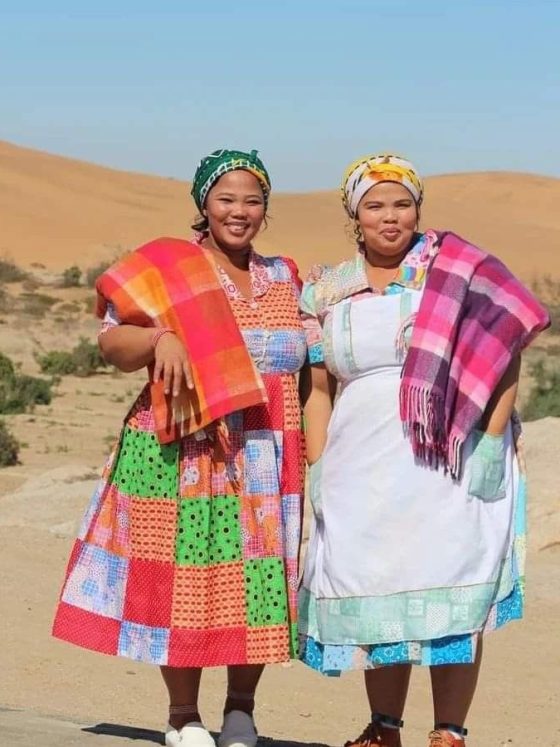
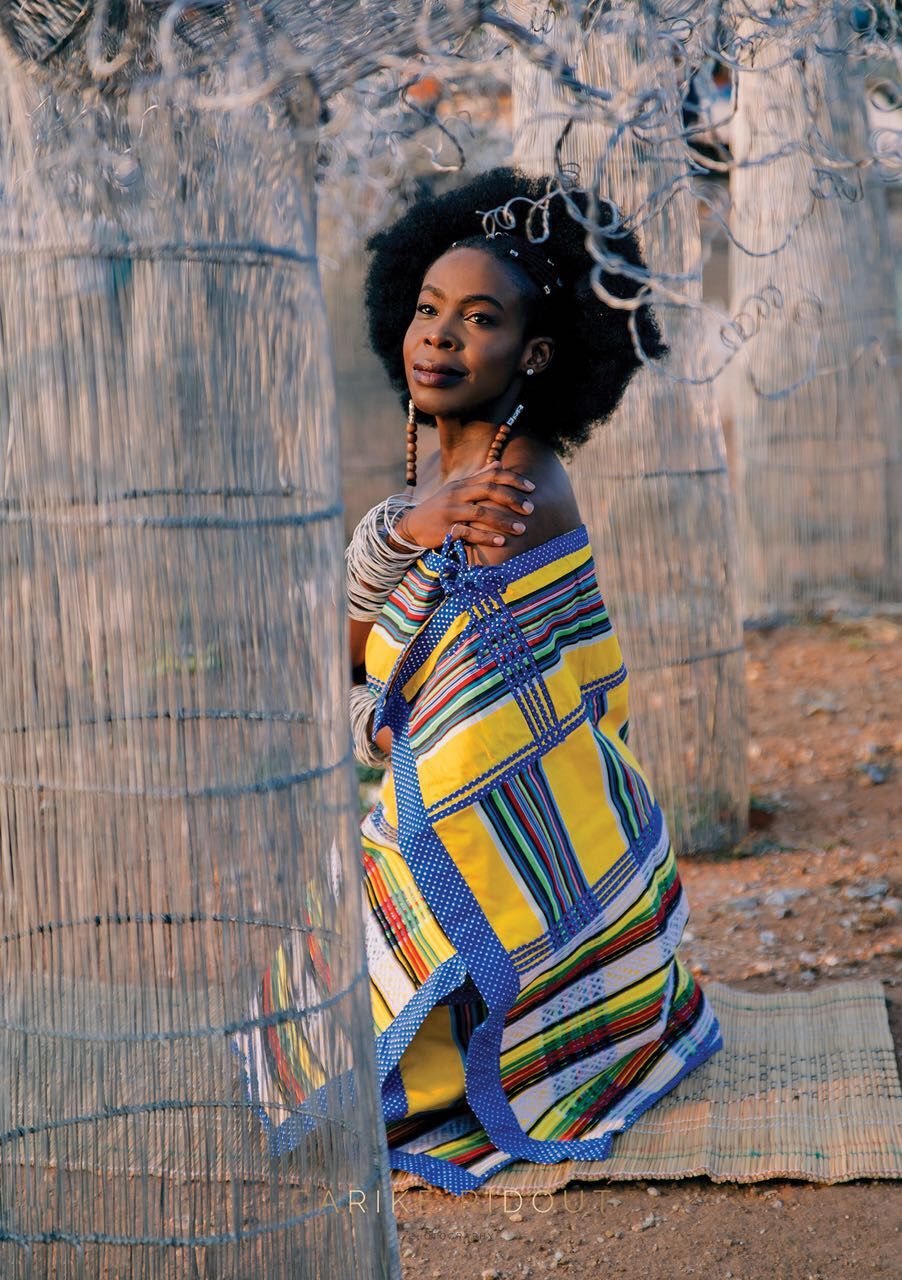
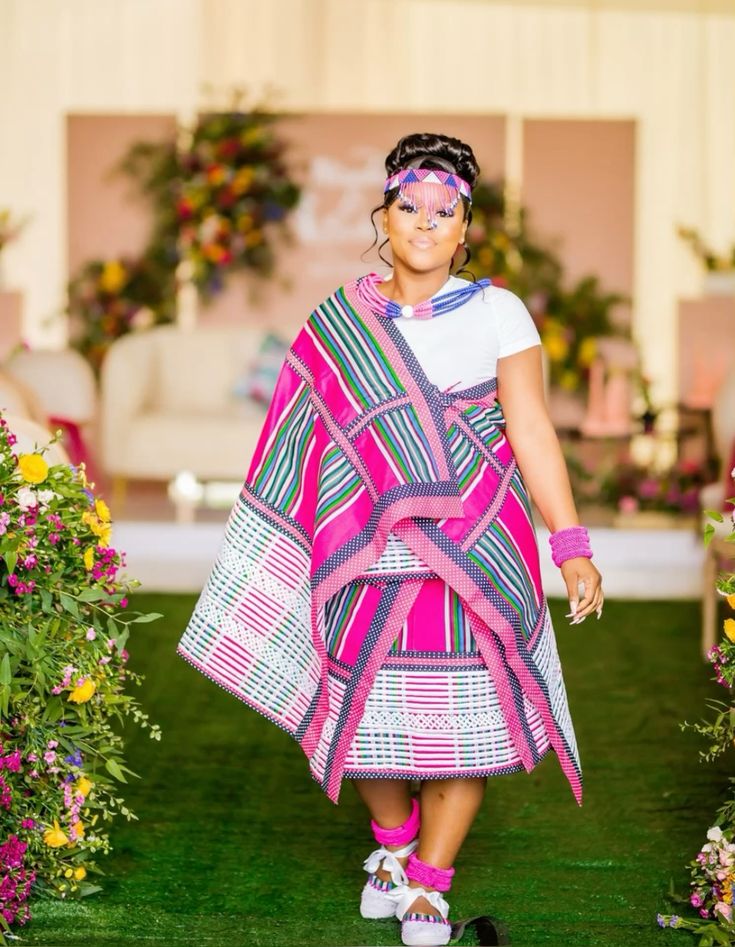
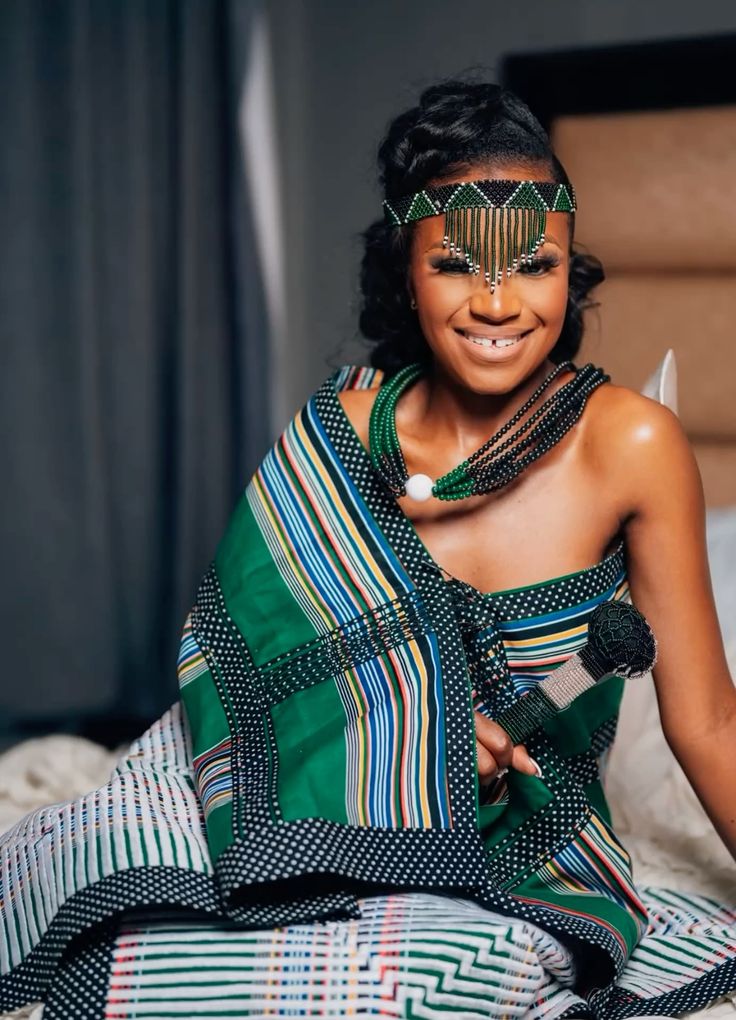
At puberty, when a girl develops breasts, the nwenda enters the picture. The nwenda, brightly coloured wrap cloth worked in striped and geometric patterns, is worn around the waist or over one shoulder. It marks the beginning of a girl’s formal transition into womanhood. The nwenda is worn, u tou kanyeliwa, wrapped around the hips and tucked at the waist. Crucially, the cloth communicates relationship status through its embroidery: a girl who is not yet engaged wears a nwenda with a single line of embroidery. The minwenda, with multiple embroidery lines, indicates engagement. The cloth is not just a garment. It is a status declaration readable by everyone in the community who knows the grammar.
The tshirivha, worn by married women, is made from sheep or goat skin, softened by rubbing with cow dung, and shaped to the wearer’s body. Older women wear the phale, a similar garment that signals passage beyond childbearing age, in darker colours that, as the academic literature on Tshivenda female attire notes, signify that their time for making themselves attractive to the opposite sex has since expired. Each garment in this sequence is not a replacement for the last but an addition: Venda dress layers meaning onto the body the way the community layers meaning onto time.
A Venda dress is not about looking a certain way. It is about being placed correctly in the world. The cloth tells your community who you are, where you are in life, and what you are preparing to become.
ALSO READ
- Top 5 Traditional Styles for Ndebele Women in 2026: History, Beadwork, and Ceremony
- The Geometry of Heritage: Why Shweshwe Still Defines South African Fashion
The Three Schools and the Garments That Govern Them
The depth of Venda women’s dress tradition cannot be understood outside the three-stage female initiation system that structures the transition from girlhood to adulthood.
The first school, Vhusha, begins at puberty. It is sanctioned by the royal family and held at the royal palace. Girls learn about womanhood, modesty, and their place in the community’s social and spiritual hierarchy. The nwenda is present, but the full ceremonial weight of the Venda dress has not yet been applied.
The second school, Tshikanda, reinforces the Vhusha and expands the young woman’s knowledge of Venda history and social structure. The Tshikanda ladies go to Lake Fundudzi once a year to perform rituals of thanks to the ancestors. It marks a deepening of the initiate’s position within the female community.
The third and final school is Dombani, where Venda dress reaches its most extraordinary expression. The dombani is held under the authority of a chief of Singo royal descent, at the chief’s request, towards the end of winter. It is a pre-marital initiation ceremony, marking the final transition from girlhood to marriageable adulthood. The sacred fire lit at the royal village at the beginning of the Dombani remains burning throughout the Dombani. Everything used in the ceremony is treated with protective medicines. All initiates are shaved at the start. And at the culmination of the dombani, the initiates perform the domba, the python dance.
The Domba: When the Body Becomes the Sacred Python
The domba dance is the most visually powerful expression of Venda dress culture, and it is the moment at which dress, cosmology, and the body fuse into a single act. As Omiren Styles has documented in the case of the Zulu Reed Dance, dress and ceremony are not separate elements in African initiation culture: the garment, the movement, and the spiritual framework are a single system, and understanding any one of them requires understanding all three. The domba is the sharpest example of this principle available in southern Africa.
The initiates form a long chain, each woman holding the forearm of the woman in front of her, and move clockwise around a sacred fire to the deep beat of the ngoma and murumba drums. These drums bear personal names and are played by women: the only exception is during possession dances, when men play them. The chain of bodies undulates rhythmically, hips in contact, arms flowing in a movement that mirrors the coiling motion of the White Python. The chain itself is the python: the courtyard is Lake Fundudzi, the cosmological womb, and the initiates moving through it are the sacred creature whose presence brings fertility and continuity to the Vhavenda world.
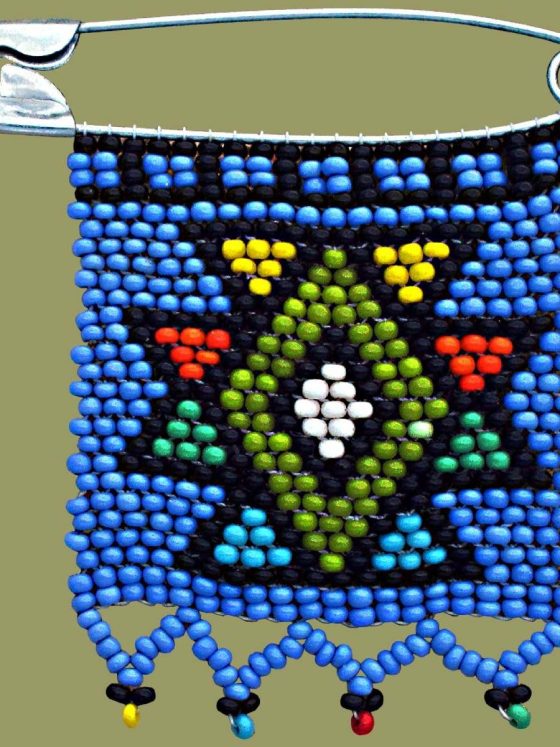
For the domba, the initiates wear the shedu, a piece of cloth passed between the legs to form an apron at the front and a panel at the back, along with beaded belts, metal bracelets and anklets that catch the firelight as they move. The tshithuzwa, a specific form of nwenda cloth used for the tshigombela ceremonial dance, is tied at the waist. Each element of the dress is precisely calibrated to the ceremony. Nothing is worn casually, and nothing is accidental.
The Vhavenda believe that each girl carries a small snake within her body, a representation of the White Python, which is awakened by the domba dance and whose movements within her mirror those of an infant in the womb. The dance does not abstractly symbolise fertility. It enacts it. The dress worn during the domba is the garment in which a woman’s body becomes, for the duration of the ceremony, the living expression of the Vhavenda’s creation myth.
At the domba ceremony, a chief traditionally chooses his wife from among the initiates. The woman selected has completed all three schools, demonstrated the full range of Venda womanhood, and worn the full sequence of Venda dress from the maredo of early girlhood through the nwenda of initiation to the shedu of the domba. She is, in the precise sense the Vhavenda intend, fully dressed: not in the Western sense of being covered, but in the cultural sense of having completed the dress sequence that makes her a constituted adult within the Vhavenda world.
The Nwenda Cloth: What It Carries in Daily Life
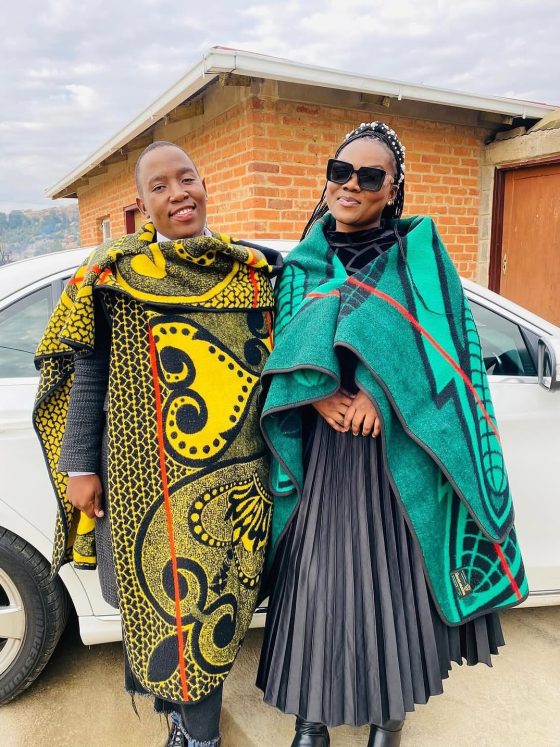
Beyond ceremony, the nwenda is the fabric of everyday Venda identity. Women wear it wrapped around the waist as a skirt, or draped over the shoulder, in brightly coloured striped and geometric patterns that communicate membership in the Vhavenda community to anyone who shares that knowledge. Contrary to popular misconceptions, the Vhavenda made cotton cloth long before the arrival of European traders and colonialists. The nwenda pre-dates colonial contact as a Vhavenda textile tradition, even if the salempo striped material that arrived through European trade networks became absorbed into the minwenda vocabulary. As Omiren Styles has documented in the story of Shweshwe, if a cloth enters through a ceremony and becomes the fabric of initiation, marriage, and public identity, it is no longer a commodity. It is infrastructure. The nwenda is the clearest illustration of this principle available in the Vhavenda world: whatever the material origins of any individual cloth, the cultural grammar it carries is entirely Vhavenda.
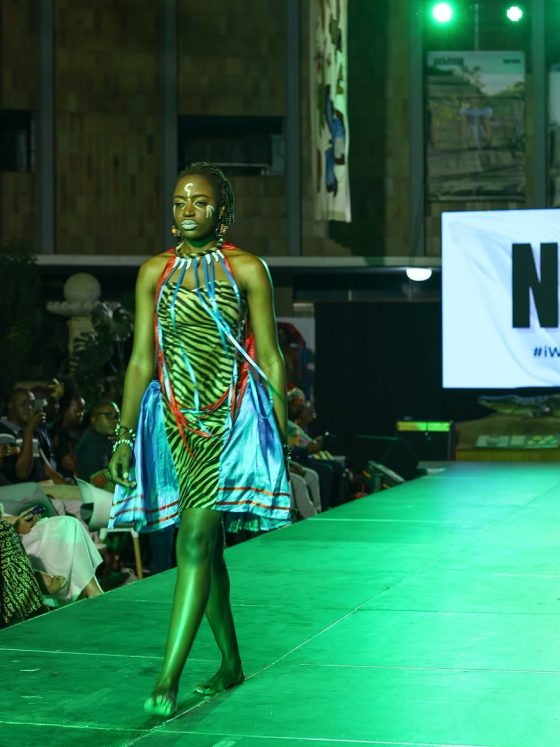
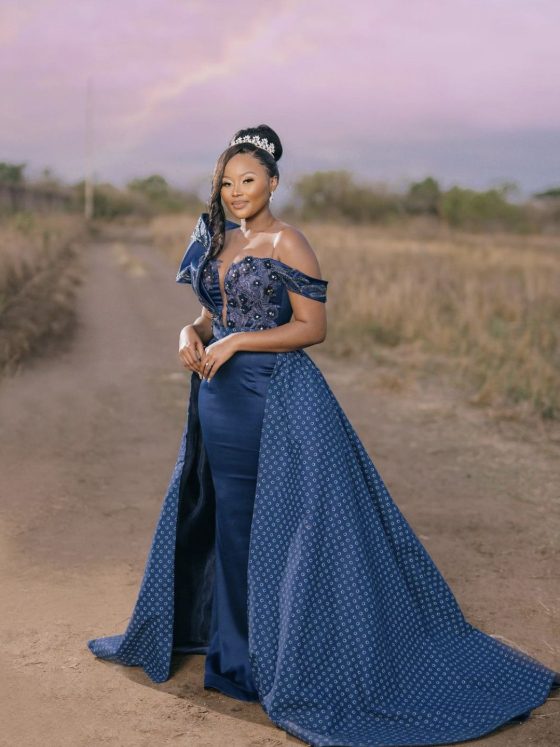
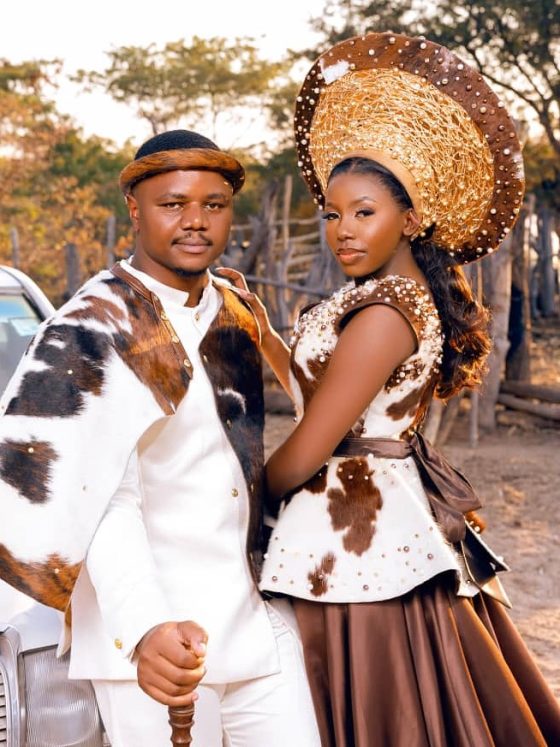
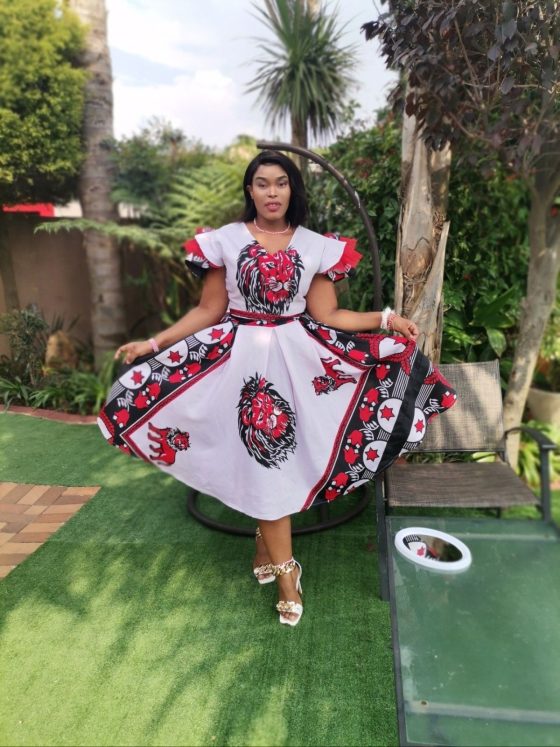
The contemporary Venda dress has evolved without losing this foundation. Designers working in the Nwenda tradition produce minwenda in an expanding range of colours and patterns while maintaining the wrap structure and geometric vocabulary that make the cloth recognisably Venda. The fashion market for nwenda has grown substantially, with lobola day ceremonies, weddings, and heritage celebrations driving demand for both traditional forms and modern interpretations. What sets the Venda dress apart from most other southern African textile traditions is that its contemporary evolution has been largely driven from within the community rather than through external design influence.
ALSO READ
- The Zulu Reed Dance and the Dress That Carries a Nation’s Dignity
- The Reed Dance and What Eswatini’s Umhlanga Ceremony Tells the Fashion World About Collective Dress
The Border That Doesn’t Divide Them
The Vhavenda community in Zimbabwe occupies a position that mirrors the BaTonga situation documented in the previous article in this series: a people divided by a political boundary that cuts across a cultural identity. The South Africa-Zimbabwe border runs through Venda country, and Vhavenda communities on both sides maintain connections to the same origin traditions, the same initiation system, and the same cosmological relationship to water and the White Python.
The existing coverage of Venda dress is almost entirely focused on South African Vhavenda communities in Limpopo. The Zimbabwean Vhavenda, smaller in number and less visible in international coverage, who maintain the same traditions across different political circumstances, remain essentially undocumented in the global fashion conversation. The nwenda crosses that border. The domba is performed on both sides of it. Lake Fundudzi is on the South African side, but the White Python’s spiritual authority does not stop at the fence.
What the Cloth Holds
There is a practical test that some visitors to Lake Fundudzi are still asked to perform when approaching the sacred water for the first time: they must turn their backs to the lake and view it through their spread legs, a posture of humility and submission to the authority of the place before them. It is not a tourist ritual. It is an acknowledgement that what you are entering is more powerful than you are.
Venda dress asks something similar of anyone who encounters it seriously. It requires turning away from the assumption that what is being worn is simply clothing, and looking instead at what the clothing is holding: a complete cosmology, a three-stage initiation system, a sacred relationship to water and the White Python, and centuries of cultural knowledge encoded in the embroidery lines of a wrap cloth that communicate engagement status as plainly as text, and in the movement of a chain of women who are, for the duration of the domba, the living body of the sacred python moving through the womb of the world.
Global fashion has spent decades photographing the domba dance. The photographs are extraordinary. But a photograph of the domba, without knowing what the shedu means, what the nwenda’s embroidery communicates, and why the chain of women moves clockwise around a sacred fire, is like a photograph of Lake Fundudzi without knowing what lives beneath the surface.
The cloth holds the python. That is not a metaphor.
WHAT IS THE CLOTH HOLDING
Venda dress is one of the most coherent clothing systems in southern Africa precisely because it does not separate the spiritual from the social or the cosmological from the practical. The nwenda carries engagement status in its embroidery lines. The maredo communicates a girl’s incompleteness. The tshirivha marks a married woman’s authority. The shedu and tshithuzwa worn in the domba transform a woman’s body into the living expression of a creation myth. This is a dress tradition in which nothing is accidental, and everything is legible to those who know how to read it.
Omiren Styles documents the Vhavenda dress tradition in this series because it represents the strongest available illustration of a principle the series is building towards: that southern African dress systems are not decorative traditions added to cultural life. They are the infrastructure of cultural life itself. The nwenda is not clothing that happens to carry meaning. It is a meaningful delivery system that happens to take the form of clothing. Global fashion will eventually understand the difference. This piece ensures there is a record when it does.
FAQs
What is the Nwenda cloth, and why is it significant?
The nwenda is the Vhavenda’s signature wrap cloth, worn by women from puberty onwards. It is brightly coloured, worked in striped and geometric patterns, and wrapped around the waist or over one shoulder. It is significant because it does not merely cover the body: it communicates the wearer’s social and relationship status through its embroidery. A single embroidery line indicates an unmarried girl; multiple embroidery lines (minwenda) indicate engagement. The Vhavenda made cotton cloth before European traders arrived, making the Vhavenda a pre-colonial Vhavenda textile tradition.
What is the domba dance, and what does it mean?
The domba is the culminating ceremony of the three-stage Vhavenda female initiation system. Initiates form a long chain, each holding the forearm of the woman in front, and move clockwise around a sacred fire to drums played by women. The chain enacts the movement of the White Python, the god of fertility who lives in Lake Fundudzi, and the courtyard represents the sacred lake itself. The Vhavenda believe that each girl carries a small snake inside her body, representing the White Python, which the dance awakens, mirroring the movement of an infant in the womb. The dance does not symbolise fertility: it enacts it.
What are the three stages of Vhavenda female initiation?
The first stage, vhusha, begins at puberty and is sanctioned by the royal family. It teaches girls about womanhood, modesty, and their social and spiritual position. The second stage, tshikanda, deepens this knowledge and includes an annual visit by female initiates to Lake Fundudzi to perform ancestral rituals. The third stage, dombani, is the pre-marital initiation held at the request of a chief, culminating in the domba python dance. At the domba, the chief traditionally chooses a wife from among the initiates who have completed all three stages.
What is Lake Fundudzi, and why is it sacred to the Vhavenda?
Lake Fundudzi is a natural lake in the Soutpansberg mountains of Limpopo, fed by the Mutale River but with no visible outlet. The Vhavenda believe it is home to the White Python, the god of fertility, and other spiritual presences. The lake’s apparent inability to overflow despite the river’s continuous feeding is taken as evidence of the python’s presence and power. Sacred protocols govern how people approach the lake, including a requirement to view it with one’s legs spread as a gesture of humility and submission to its authority.
How does Venda dress differ in Zimbabwe compared to South Africa?
The core traditions are shared: the same initiation stages, the same nwenda cloth, the same domba ceremony, and the same cosmological relationship to Lake Fundudzi and the White Python. The South Africa-Zimbabwe border runs through Venda country, but the cultural system does not stop at the political line. Approximately 600,000 Vhavenda live in Zimbabwe, primarily in the southwestern districts, maintaining the same dress traditions in different political circumstances. They remain essentially undocumented in the global fashion conversation, which has focused almost exclusively on South African Vhavenda communities in Limpopo.
What makes the Venda dress different from other southern African dress traditions?
The completeness of its cosmological integration distinguishes the Venda dress. Every garment in the sequence communicates a specific social and spiritual position: the maredo marks incompleteness; the nwenda marks puberty and communicates relationship status through embroidery; the tshirivha marks marriage; and the shedu worn in the domba ceremony transforms the wearer’s body into a living expression of the creation myth. The dress system is also unusual in that its contemporary evolution has been driven largely from within the community rather than through external design influence, maintaining its spiritual and social grammar while adapting its material expressions.