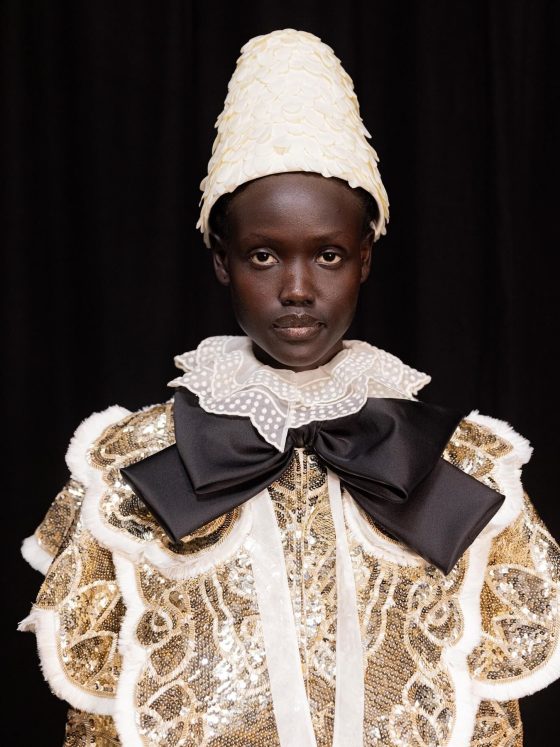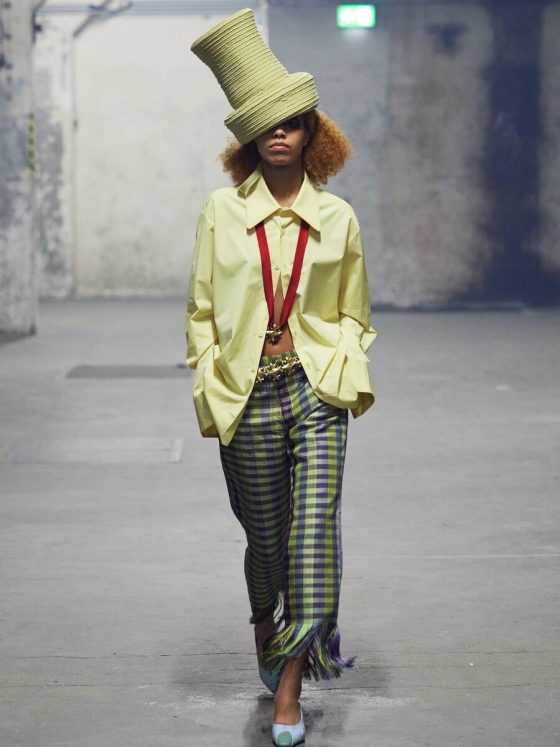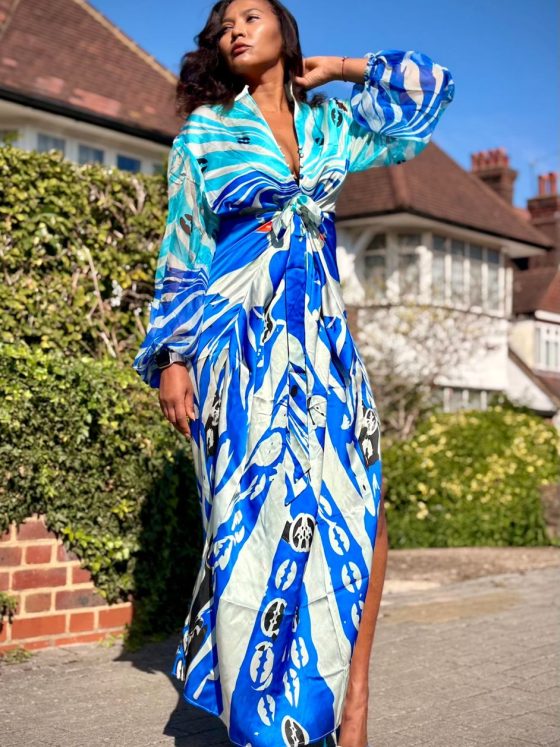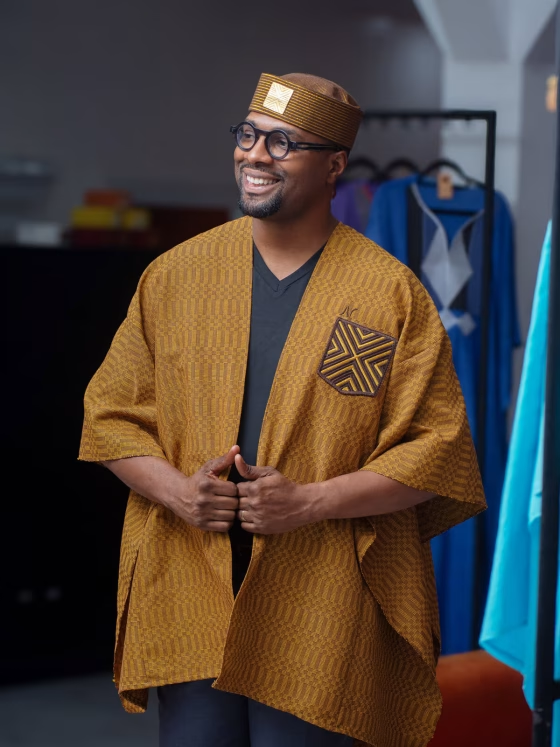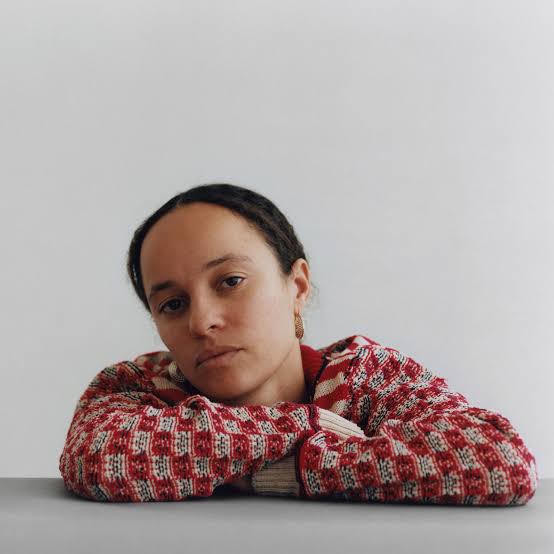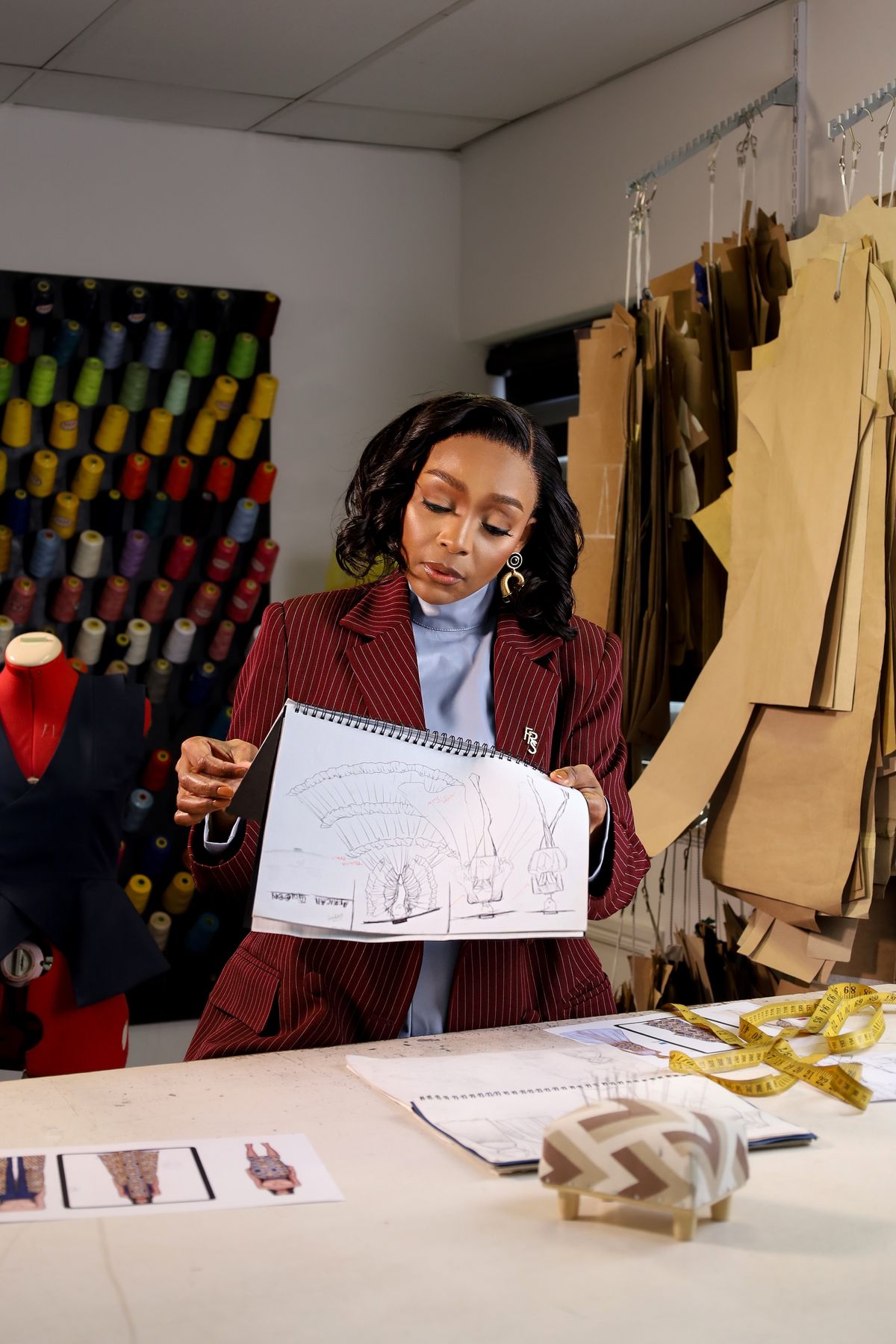
Priya Ahluwalia describes the way her three inheritances work in her collections with unusual clarity. She is Indian-Nigerian and was born and raised in London. The mix does not sit in her work as a theme to be deployed. It operates as a logic. ‘My mood boards are huge and filled with creative research that always comes from different elements of thinking about the Black and Brown diasporas,’ she has said. ‘The London influence is more instinctive: when I’m designing, because I’m thinking about the people that I know, there’s a sensibility that comes through naturally.’ She has also described the relationship between the three cultures as active rather than decorative: ‘They fuse to create collections that are serious and playful at the same time.’ That fusion is not a style direction. It is a structural logic that governs every material and silhouette decision she makes.
This is what second-generation African designers are actually doing, and it is not what the fashion industry usually calls it. It is not heritage dressing, not multicultural styling, not the use of African, South Asian or Caribbean inspiration as visual reference. It is a translation, a discipline as demanding and as precise as any technical design training. It is the practice of carrying a culture across a generation, across a migration, and across a design system that was not built with that culture in mind, and making something coherent from all three.
Second-generation diaspora designers are not just borrowing from heritage. They are learning how to work inside a culture that arrived before their own creative choices did. That makes their practice different from both direct tradition and pure invention. Inherited culture is not passive material. It is active, demanding, and sometimes contradictory. For second-generation African designers, fashion becomes a form of interpretation as much as expression. They are not simply saying where they come from. They are deciding what parts of inherited culture can be carried, reworked, or refused.
Second-generation African designers are not borrowing from heritage. They are translating it. Priya Ahluwalia, Bianca Saunders, Foday Dumbuya, Tolu Coker, and Mowalola show what it looks like when inherited culture becomes a design discipline.
Inheritance Is a Creative Load
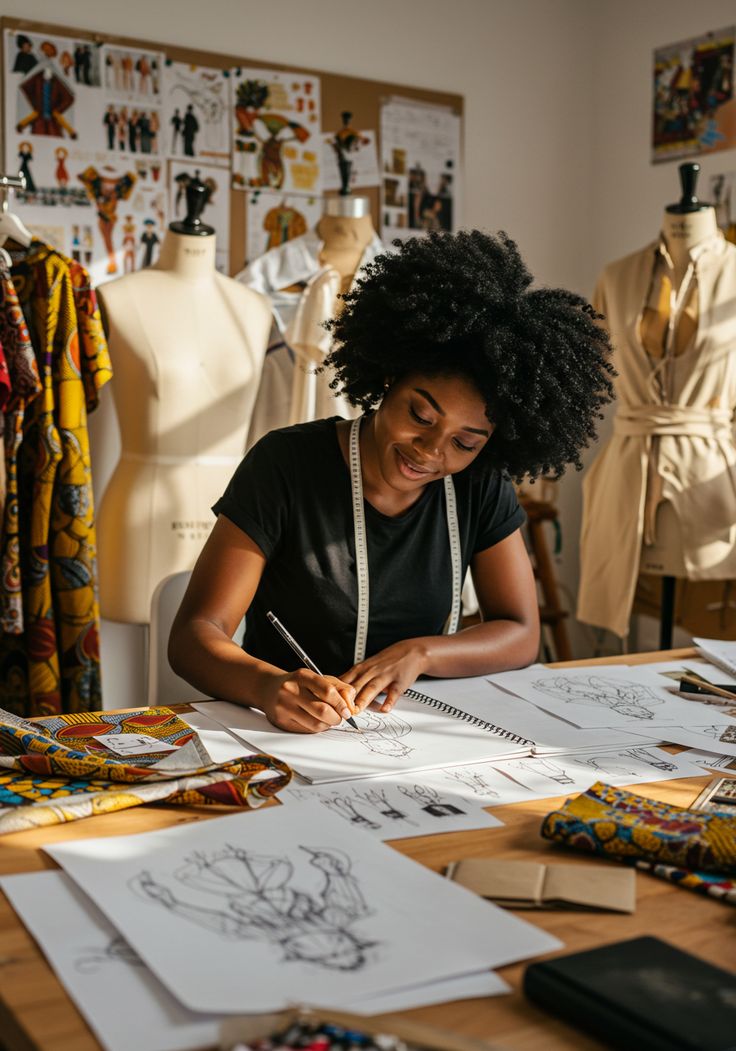
Inheritance can be a gift, but it is also a load. Many second-generation African designers inherit stories, symbols, dress codes, and expectations that were already formed before they began designing. That means they often enter fashion with a stronger cultural vocabulary, but also with a stronger sense of obligation. They are not just making clothes. They are managing cultural meaning. Ahluwalia has acknowledged this weight explicitly: ‘In both Indian and Nigerian cultures, it is tradition to pass clothes and personal effects down from generation to generation.’ That tradition does not arrive in a second-generation designer’s studio as nostalgia. It arrives as a question: what do you do with what was passed to you? As Omiren Styles has documented in the analysis of how the African diaspora redesigns inherited style rather than merely preserving it, the key distinction is between inheritance as archive and inheritance as active creative practice. The designers reviewed in this piece are practising the second.
This is where the concept of the third space, developed by cultural theorist Homi Bhabha to describe the in-between territory where cultures meet and produce new meaning, becomes useful as a design framework. These designers are not working within only two poles: the origin and the host country. They are working in the space created between them, where identity is negotiated every day. That space has its own logic, because it asks questions that neither homeland culture nor mainstream fashion fully answers.
For many African-British designers, that pressure becomes part of the work. A garment may need to communicate heritage to one audience while still feeling contemporary enough for another. It may need to honour family memory without becoming nostalgic. It may need to read as fashionable in London, Lagos, Accra, or Paris without losing the cultural code that made it meaningful in the first place.
Foday Dumbuya, who founded Labrum London after growing up in the UK with Sierra Leonean heritage, consistently works with ideas of African movement, diaspora identity, and modern menswear storytelling. Tolu Coker uses clothing, print, and storytelling to explore cultural memory in a way that feels intentional rather than decorative. Both show that inheritance can become a system of design thinking, not just a source of visual reference.
ALSO READ
- The Diaspora Did Not Preserve African Style. It Redesigned It.
- Does Wearing Your Culture Make You Exotic? The Diaspora Fashion Paradox
- How African Identity Is Styled Differently Across Continents
The Third Space Has Rules
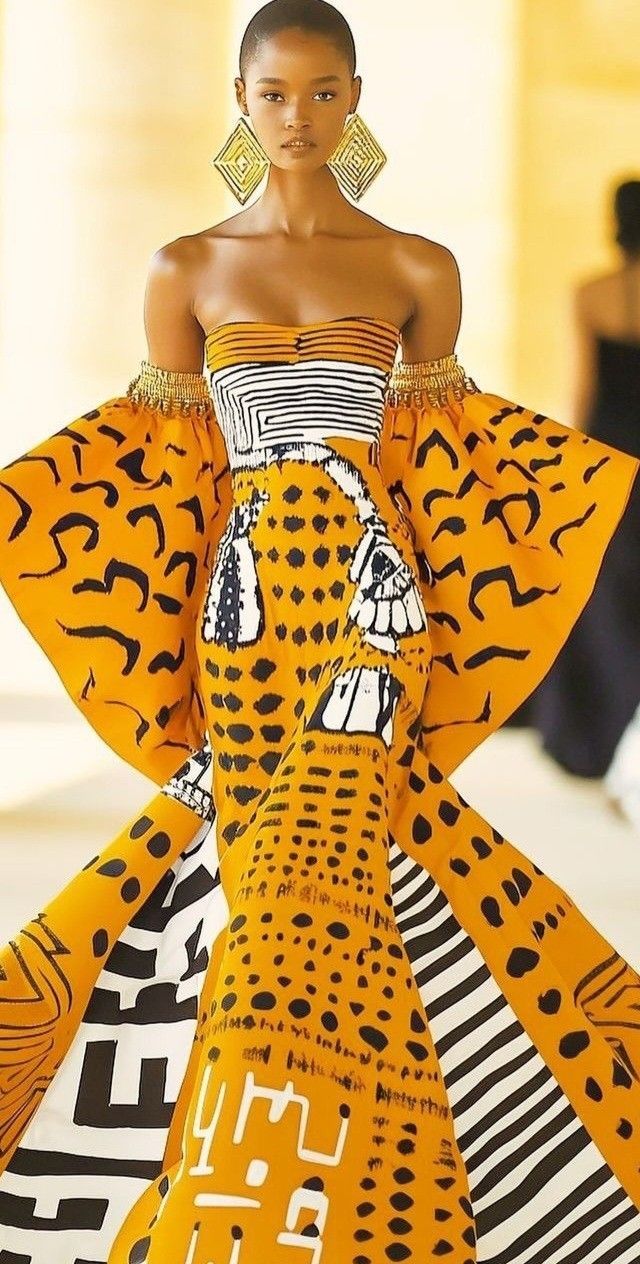
The third space that second-generation designers occupy is often misunderstood as confusion, but it is usually the opposite. It is a highly structured creative environment where questions of authenticity, taste, class, and belonging are constantly being negotiated. Designers working there often develop a sharper eye because they know that every choice will be read culturally, not just aesthetically.
That means the work becomes a discipline of selection. What do you keep? What do you update? What do you translate for the market, and what do you leave intact? These are not simple design questions. There are questions about how identity survives migration, adaptation, and generational change. The best designers do not answer them once. They answer them repeatedly through their collections.
Priya Ahluwalia’s description of how this works in practice is precise: ‘When you have a natural sense of who you are, decision-making becomes easier. I know I’m a London girl, and that flows into the work.’ The clarity she describes is not simplicity. It is the clarity that comes from having worked out the translation. The third space is not a compromise. It is a training ground for exactness.
Bianca Saunders approaches this from a different angle. Her label is rooted in British Caribbean identity and what she describes as the social tapestry of Anglo-Caribbean relations. Her menswear is characterised by precision, restraint, and cultural depth: clothes that do not shout heritage but carry it with confidence. The work demonstrates that the third space produces not only a distinctive aesthetic but a distinctive relationship with the audience, one based on knowing that some readings of the garment will go deeper than others, and designing for that layered legibility.
Identity Becomes Method
For second-generation designers, identity is rarely just a story. It becomes a method. That means heritage influences not only what they make, but how they make decisions. The choices become structural: how to drape, what materials to reuse, how to build a silhouette, how to balance visibility and subtlety, how to speak to multiple audiences without collapsing into cliché.
This method often produces work that feels more considered than identity-led work from outside the culture, because the designer is not using identity as a surface narrative. They are living its complexity while designing, and the work carries that complexity in its construction. Mowalola Ogunlesi’s work is instructive here, not because it shares an aesthetic with Ahluwalia or Bianca Saunders, but because it demonstrates the same underlying discipline. Her refusal to simplify or soften Nigerian-British identity, her use of confrontational silhouette and sexuality that references Lagos music culture directly, is also a translation: just a more destabilising form of it. She was documented in the earlier Omiren Styles analysis of what diaspora designers do with inherited style in London, specifically as building work that sharpens the original reference rather than softening it for export. That is what the third space produces when the designer has fully committed to its logic.
This is also where second-generation designers differ from first-generation or purely external interpretations of African style. They are not only answering the question ‘Where are you from?’ They are answering ‘What do I owe, what can I transform, and what must remain?’ That deeper set of questions creates a more disciplined design culture, one that often produces quieter but more durable influence.
The discipline is not confined to London. Olivier Rousteing, who is of Ethiopian origin, was adopted into a French family as an infant and rose to become creative director of Balmain in Paris at twenty-five, has spoken extensively about navigating African heritage inside one of the most institutionally European fashion houses in the world. The translation required in that context is more extreme than most, but the discipline is recognisable: the same need to decide what to carry, what to transform, and what to refuse.
They are not only answering the question ‘Where are you from?’ They are answering ‘What do I owe, what can I transform, and what must remain?’
Translation Is the Discipline
Inheriting a culture you did not choose is its own creative discipline because second-generation diaspora designers are not merely drawing from heritage. They are actively translating it inside the third space of identity. Second-generation African designers often work between family memory, host-country fashion systems, and the pressure to represent culture clearly. That makes their work structurally different from both direct traditional dressmaking and mainstream Western fashion.
The common assumption is that authentic fashion comes from direct inheritance without mediation. But diaspora designers show that mediation itself can produce depth, especially when culture has to be carried across generations and reinterpreted with care. Priya Ahluwalia, Bianca Saunders, Foday Dumbuya, Tolu Coker, and Mowalola Ogunlesi each demonstrate that identity can become a method rather than a motif. Their work shows that the discipline lies not in displaying heritage, but in deciding how heritage should live in contemporary form.
Second-generation diaspora designers are not diluted versions of the source. They are specialists in translation, and translation is a discipline as demanding as any technical design training.
ALSO READ
- Five Black British Designers Who Are Building the Future of London Fashion
- The British-African Designers Rewriting London Fashion Week From the Inside
FAQs
What does it mean to inherit a culture you did not choose?
It means growing up inside traditions, symbols, dress codes, and expectations that were already established before you began making creative decisions. For second-generation designers like Priya Ahluwalia, that inheritance is active rather than decorative: ‘In both Indian and Nigerian cultures, it is tradition to pass clothes and personal effects down from generation to generation.’ For second-generation African designers, that inheritance becomes part of the work itself, shaping how they understand identity, style, and responsibility, and requiring a continuous set of decisions about what to preserve, what to transform, and what to refuse.
Why is second-generation diaspora fashion called a creative discipline?
Because working with an inherited culture requires the same kind of sustained, systematic decision-making as any formal design training, Priya Ahluwalia describes how identity clarity becomes structural: ‘When you have a natural sense of who you are, decision-making becomes easier. I know I’m a London girl, and that flows into the work.’ The discipline lies not in choosing whether to use heritage, but in deciding how it should live in contemporary form. Designers have to decide what to preserve, what to modernise, what to translate, and what to leave alone, and they have to make those decisions repeatedly through every collection.
What is the ‘third space’ that second-generation designers occupy?
The third space is a concept developed by cultural theorist Homi Bhabha to describe the in-between territory produced when two cultures meet and negotiate meaning. For second-generation African designers, it describes the creative environment between homeland culture and the host country, where neither set of inherited rules fully answers the questions the work needs to address. That environment is not confusing: it is a highly structured creative territory that requires exactness. Bianca Saunders, whose label is rooted in British Caribbean identity, produces work that carries heritage with confidence precisely because she has worked out the third space’s logic, rather than trying to resolve it into one or the other culture.
Which designers best represent this idea?
Priya Ahluwalia, born in London to Indian and Nigerian parents, builds collections from creative research that spans the Black and Brown diasporas, with a London sensibility that flows through naturally. Bianca Saunders explores British Caribbean identity through refined menswear characterised by restraint and cultural depth. Foday Dumbuya of Labrum London works with ideas of African movement and diaspora identity rooted in his Sierra Leonean-British background. Tolu Coker uses print and storytelling to explore cultural memory with deliberate intention. Mowalola Ogunlesi treats Nigerian-British identity as something to be destabilised and reassembled rather than smoothed for export. Each is working in the same discipline from a different direction.
Is diaspora fashion less authentic because it is filtered through another generation?
No. It is different, but no less authentic. In many cases, the act of translation creates new forms of depth because designers are working through memory, distance, and interpretation rather than simply repeating inherited forms. Ahluwalia has described how having clarity about her three inheritances makes her decision-making more precise, not less. What the filter of a generation adds is a set of questions that direct inheritance does not always require: What do I owe this culture? What can I transform? What must remain? Those questions produce a more disciplined design culture, one that often results in quieter but more durable influence.
Why does this topic matter now?
Second-generation African and diaspora designers are increasingly shaping what global fashion looks like in London, Paris, and New York simultaneously. Their work reflects the realities of migration, identity negotiation, and cultural continuity in ways that connect directly to how millions of people in those cities actually live. The third space they design from is not niche: it is the lived reality of first and second-generation diaspora communities across the world’s major fashion capitals. Fashion that understands this is fashion that has the most current intelligence about what belonging, heritage, and identity actually feel like in 2026.