Desmo has been practising fashion in Lomé since 1996. This is the fact that precedes everything else. Before FIMO 228 existed. Before Togo Yeye existed. Before the English-language fashion press noticed Lomé. Before sustainable fashion became the global industry’s most marketed value. Desmo was in his atelier in Lomé, making clothes from foam mattresses, naming collections after the red laterite soil of West Africa, training students who would go on to name him as their primary influence, and arguing that what Africa discards is the raw material of its own fashion future.
His full civil name is Modeste Messan Mensah. He was born in Libreville, Gabon. The name Desmo is an anagram of Modeste, as he explained in a direct interview: “Desmo est un anagramme du prénom Modeste.” His brand, Desmo Design, has been operating in Lomé since 1996, making it one of the longest-running fashion practices in Togo. The designers who have come after him were trained by people he trained. The ecosystem his practice helped build predates almost every institutional structure that now claims credit for it.
Desmo — Modeste Messan Mensah — has been practising fashion in Lomé since 1996. His upcycling practice predates the global trend by decades. This is the full story.
The Omiren Argument:
Desmo did not discover sustainable fashion. He has been doing it since before the phrase existed in the context of global fashion discourse. When he showed an upcycling collection at FIMO 228’s 9th edition in 2022, it caused a sensation and prompted Africanews to cover Togo’s eco-responsible fashion movement; he was not responding to a trend. He was demonstrating a practice that had been the foundation of his work for a quarter century.
Formation and Return: Dakar, Laye Diarra, and the Road Home
Modeste Messan Mensah grew up with a passion for fashion that his family wanted him to trade for a life in Europe. He refused. As he told the Like Gold blog in a direct interview: “Je me félicite tous les jours de leur avoir opposé un refus catégorique car je voulais apporter quelque chose à mon continent.” Instead of leaving, he went to Dakar in the early 1990s to train as a stylist in the atelier of Laye Diarra, a Senegalese couturier known for the rigour of his training and the quality of his finishing. Diarra’s influence on Desmo is traceable in everything that defines the Desmo Design practice: the insistence on perfect finition, the emphasis on construction quality over surface decoration, and the conviction that serious fashion training is the foundation of a sustainable practice.
He opened his atelier in Dakar in 1994 after completing his training. In 1996, homesickness brought him back to Togo. He arrived in Lomé not as an unknown: within a year of his return, he had won the Meilleur Jeune Styliste Ciseaux d’Or prize at a young creators’ competition in 1997. The same year, the Miss Togo committee approached him for a collaboration. He was establishing the professional presence that would define the next three decades of his practice.
In 1998, the FIMA Festival International de la Mode Africaine invited him to share the runway with the great Alphadi, the Niger-born designer who had built FIMA into West Africa’s most significant independent fashion platform. To share a runway with Alphadi, for a designer who had returned to Lomé just two years earlier, was a statement of where Desmo stood in the regional fashion hierarchy. In 1999, he signed a five-year contract to dress King Mensah, Togo’s most celebrated recording artist and a cultural ambassador whose work spans Afrobeats, kpanlogo, and traditional Togolese music. The designer and the musician held the same public space for five years.
The Collections: Named Things and Found Materials
Desmo’s collection names are a record of his creative philosophy. In 2000, his first major collection was called Les Lignes du Millénium: the lines of the millennium. In 2001, La Latérite was named after the red iron-rich soil that defines the visual landscape of West Africa, a material so specific to the continent that it functions as a geographic signature. In 2002, Verdure: green, growth, the living world. The 2002 Verdure collection featured Satya Oblette as a guest — the Indian-born, French-adopted model who had become the male face of Kenzo and Jean-Paul Gaultier in the 1990s, and one of the most celebrated Black male models of his generation. In 2003, the Lomé défilé brought Jocelyn Labylle, a Martiniquaise zouk star, to the runway as mannequin-vedette. These collaborators are not incidental. They place Desmo’s 2000s practice at an intersection of West African fashion culture and the Francophone Atlantic creative world. These are not marketing names. They are arguments. Each collection is named after something already present in the Togolese environment, something that does not need to be imported or borrowed, something that is, if anything, overlooked rather than prized. The laterite road, the green of the wet season, the simple forward line of a new century: these are the raw materials of his aesthetic vocabulary.
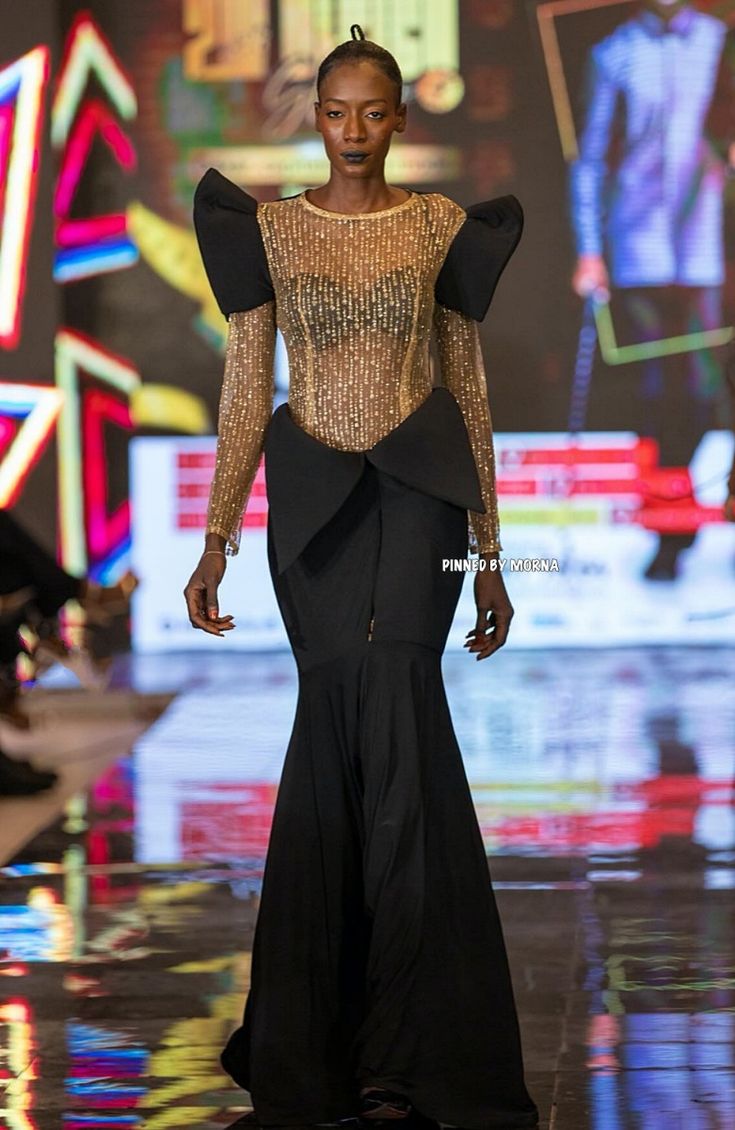
His fétiche accessoire, as he described it to Like Gold, is foam from mattresses. He uses mattress foam to sculpt the shapes of his garments. This is not resourcefulness in the face of limited materials. It is a considered technical choice: foam sculpts garments in ways that conventional interlinings do not, and it comes from what the city produces and discards. The material is already there. The skill is in seeing what it can become. This is the logic that would later show up in his upcycling work at FIMO 2022, but it begins here, in the atelier, in the choice of a material that no fashion school textbook recommends.
His design influences, as he puts it, are John Galliano and Jean-Paul Gaultier: designers known for creative liberation from convention, for the refusal to treat fashion as a bounded discipline, and for the willingness to make things that provoke debate rather than deliver comfort. He acknowledged that his community in Lomé had named him an avant-gardiste. He accepted the label with his characteristic precision: the avant-garde is not about novelty; it is about being ahead of where the conversation is going. In Lomé’s fashion community, Desmo has been ahead of the conversation since 1996.
The Atelier-École: Teaching as Practice

One of the most significant dimensions of Desmo’s practice is his atelier-école: the workshop school where he trains the next generation of Togolese fashion practitioners. His pedagogical position, stated directly in the Like Gold interview, is precise: “mon cheval de bataille sera la formation de la reliève. Il faut qu’elle soit formée à la standardisation des vêtements et, surtout, à soigner les finitions! Il faut faire comprendre que toute la magie est là! Une finition parfaite!” If he had the power to change one thing, it would be the formation of the next generation, trained in standardisation and finishing. The magic is in the finish. Everything else is preliminary.
This position is not abstract. The Like Gold blog’s series of interviews with Togolese designers profiles several practitioners who cite Desmo Design as a formative influence or training context. One interviewee, describing her entry into fashion, names Desmo Design directly as the atelier where she sought to professionalise after her university studies. Another describes attending the Lomé Fashion Week primarily in the context of Desmo’s collections. The ripple effect of his teaching practice is documented in the public record of Togolese fashion, even when the direct line of influence is not always named.
His showroom, opened in late 2021 at Agoe Fiovi in Lomé, was described by linterview.info as the first of its kind in Togo of the “Habilleur conseil” category: a stylist-consultant space where clients can discover collections and prototypes of made-in-Togo work. The concept reflects the same philosophy as the atelier-école: build infrastructure locally, use local materials, and demonstrate that quality and vision are already present in Lomé.
FIMO 2022 and the Eco-Responsible Argument
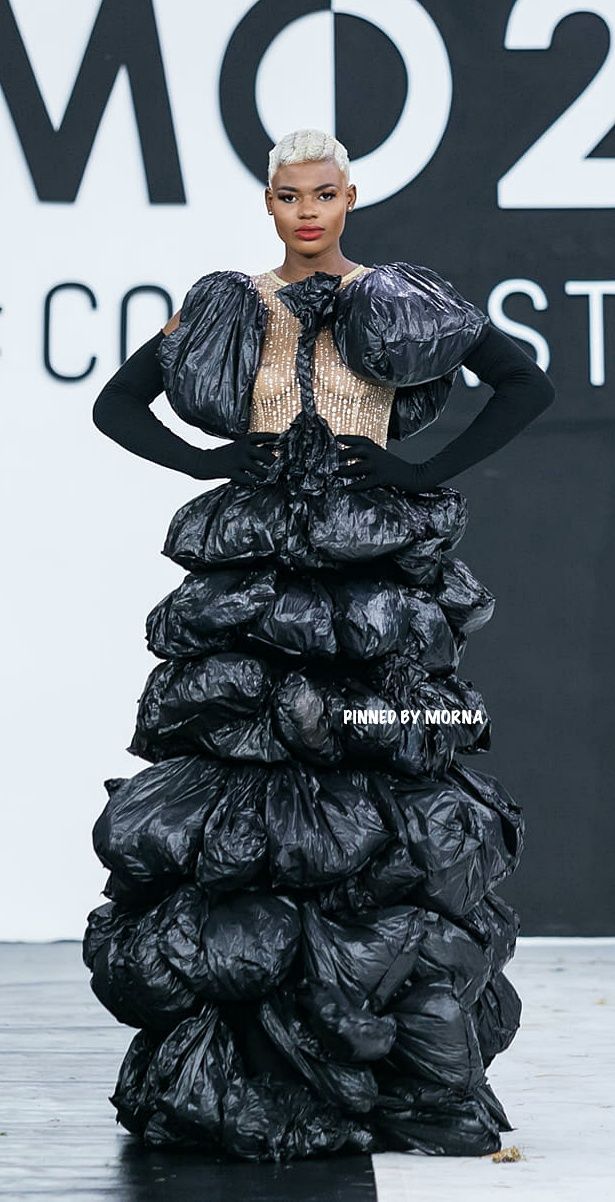
At the 9th edition of FIMO 228 in February 2022, Desmo showed a collection alongside French designer Marrousia Rebeca that became the most-discussed work of the festival. Africanews described the two as upcycling enthusiasts: a recycling method that gives a second life to used clothes and fabrics, transforming them into new pieces. The 9th edition’s central theme was environmental protection and eco-responsible fashion, chosen by FIMO 228 founder Jacques Logoh in response to what he described as the growing urgency of pollution awareness across the design community.
Desmo’s statement at the festival was his most direct public articulation of the environmental practice he had been building into his collections for years: “And so for a few years now, I’ve been committed to presenting one or two pieces in my collections that raise people’s awareness on environmental protection. So, with this dress, I intend to change people’s minds because I know it will provoke debate afterwards. And we’ll be able to debate around it to raise awareness.” The language is precise: not performance, not decoration, but provocation that leads to debate. The dress is a question addressed to the audience.
The 9th edition of FIMO brought 58 designers from across the continent to Lomé. Of those 58, the collection that Africa.com, Fashion Ghana, and Africanews all identified as causing a sensation was Desmo and Rebeca’s upcycled work. This is significant. At a festival featuring 58 international designers, the piece that drew the widest press attention was made from reclaimed materials by a designer who had been working this way since before the phrase “sustainable fashion” entered the mainstream vocabulary.
ALSO READ:
- Togolese Fashion Designers: The Creative Community Shaping Lomé’s Style
- Culture as Currency: How Africa’s Fashion Economy Works
- Why Some African Styles Feel “Timeless” and Others Disappear
EZO NAKE and the Material Philosophy
Beyond the atelier, Desmo’s material philosophy extends into a separate creative practice: EZO NAKE, his concept for repurposing found wood into handcrafted lamps. EZO means “fire” in his working vocabulary; NAKE means “wood”. He described it to me like gold, as wood he collects and sublimates, giving it a second life as a lamp. The practice is a direct extension of the same logic that drives his fashion work: material the city discards is material with the potential for something else. The wood that becomes a lamp is the foam mattress that becomes a garment. The principle does not change when the material changes.
The EZO NAKE practice was planned as Desmo’s first exhibition, showcasing his interior design elements alongside his fashion practice. This expansion into material objects beyond garments is consistent with the position he staked out in the Like Gold interview: he is not only a fashion designer but a practitioner whose creative logic applies across any material he encounters. The boundary between fashion and design, between the garment and the lamp, is not where his practice stops. It is where it becomes interesting.
What Desmo Represents in the Togolese Ecosystem
Jacques Logoh built the institutional infrastructure of Togolese fashion from 2011 forward. Desmo built the creative foundation from 1996 forward. These are not the same project, but they are complementary ones, and the Togolese fashion ecosystem that now draws international attention is the product of both. Logoh gave Togo a platform for a fashion festival. Desmo gave Togo’s fashion community a practitioner who, before the platform existed, demonstrated that the practice was possible and that the materials were already there.
The designers who trained at Desmo’s atelier-école entered the community with a foundation in finishing and standardisation that he considers the core of serious fashion practice. The collectors and clients wear Desmo Design’s workwear garments made from materials that most fashion houses would not consider. The audience that watched his 2022 FIMO collection and debated it saw something that the global fashion industry had just begun to describe as innovative. Desmo would have described it, with his characteristic precision, as something he had been doing since before they had a word for it.
“Desmo did not discover sustainable fashion. He has been doing it since before the phrase existed in the context of global fashion discourse. When he showed his upcycling collection at FIMO 2022, he was not responding to a trend. He was demonstrating a practice that had been the foundation of his work for a quarter century.”
Frequently Asked Questions
Who is Desmo?
Desmo is the professional name of Modeste Messan Mensah, a Togolese fashion designer born in Libreville, Gabon. Desmo is an anagram of his first name, Modeste. He trained as a stylist in Dakar in the early 1990s under Senegalese couturier Laye Diarra, known for rigorous training and finishing quality. He opened an atelier in Dakar in 1994, returned to Togo in 1996, and has operated Desmo Design in Lomé ever since, making it one of the country’s longest-running fashion practices. He won the Meilleur Jeune Styliste Ciseaux d’Or prize in 1997, collaborated with Alphadi at FIMA in 1998, and dressed singer King Mensah for five years from 1999.
What is Desmo Design known for?
Desmo Design is known for its avant-garde creative position, its use of unconventional materials, including foam from mattresses to sculpt garments, its long-running commitment to eco-responsible and upcycled fashion, and its role in training the next generation of Togolese designers through an atelier-école. Desmo’s collections are typically named after elements of the West African material and natural environment: La Latérite (laterite soil), Verdure (green growth), Les Lignes du Millénium. At FIMO 228’s 9th edition in 2022, his upcycled collection with French designer Marrousia Rebeca drew the widest press coverage of any work at the 58-designer festival.
What is Desmo’s approach to sustainable fashion?
Desmo’s sustainable practice predates the global fashion industry’s adoption of the term. He uses mattress foam as a structural material to sculpt garments, works with locally available materials, and has built eco-responsible pieces into his collections for years, explaining that he commits to presenting one or two pieces per collection that raise awareness about environmental protection. His EZO NAKE project extends this logic into interior design: found wood is repurposed into handcrafted lamps. EZO means fire, and NAKE means wood. The practice is consistent across both disciplines: material the city discards has creative potential.
What collections has Desmo produced?
Confirmed named collections from Desmo Design include Les Lignes du Millénium (2000), La Latérite (2001), Verdure (2002, with guest Satya Oblette), Virginité Perdue (2016, shown at Lomé Fashion Week), and the Zédéka collection. He also showed a major eco-responsible upcycled collection at FIMO 228’s 9th edition in February 2022 alongside French designer Marrousia Rebeca. The collection caused the most significant press attention of that festival edition and was documented by Africanews, Africa.com, and Fashion Ghana.
How does Desmo connect to Togo’s broader fashion community?
Desmo is one of the foundational figures in Lomé’s fashion community, having practised there since 1996, years before the institutional infrastructure of FIMO 228 or the international profile it created. His atelier-école has trained multiple Togolese designers who form part of the current ecosystem. He is cited as an influence and training reference by other practitioners documented in Togo’s fashion record. He has shown at FIMO 228 and at Lomé Fashion Week. His showroom at Agoe Fiovi in Lomé, described as the first habilleur conseil space of its kind in Togo, opened in late 2021.
What are Desmo’s views on African fashion?
Desmo’s stated views, confirmed in direct interviews, include: that African fashion is defined by its specific textiles and that the mode Made in Africa is practised seriously; that the inability of African designers to legally protect their creations from international appropriation causes genuine harm to the ecosystem; that the core of serious fashion practice is in the finition, the finishing quality, which must be taught and standardised; that training the next generation is his primary long-term ambition; and that the fashion of Africa’s future lies in ready-to-wear produced locally with local materials. He was nicknamed l’avant-gardiste in Lomé’s fashion community.
Explore more from our Industry section, where Togo’s fashion practitioners are documented from the beginning of their public record to the present.