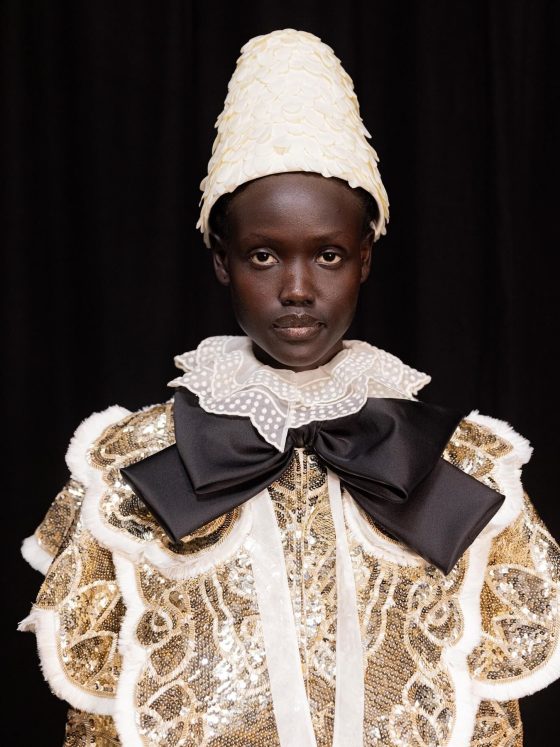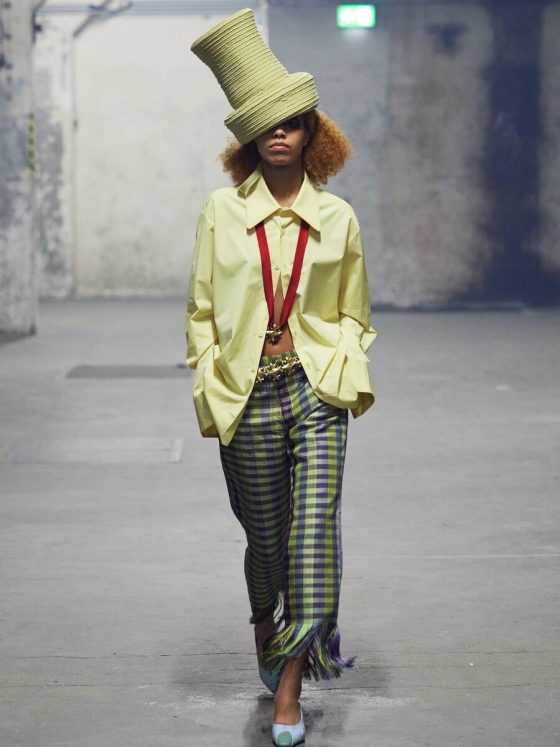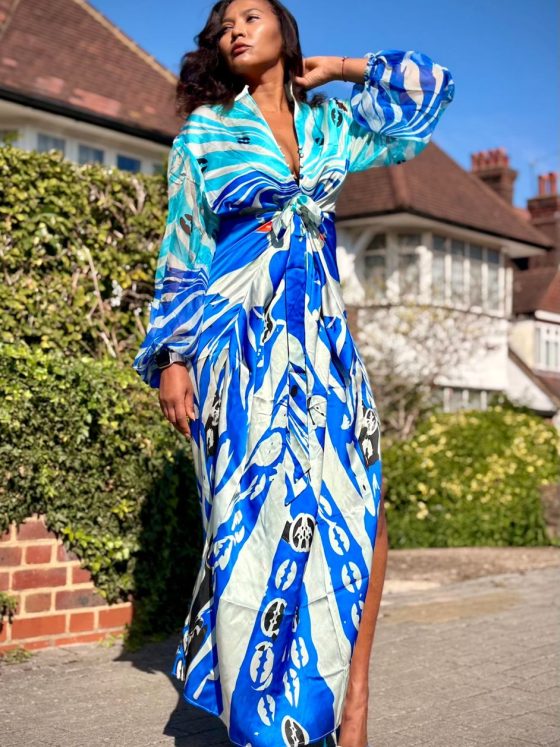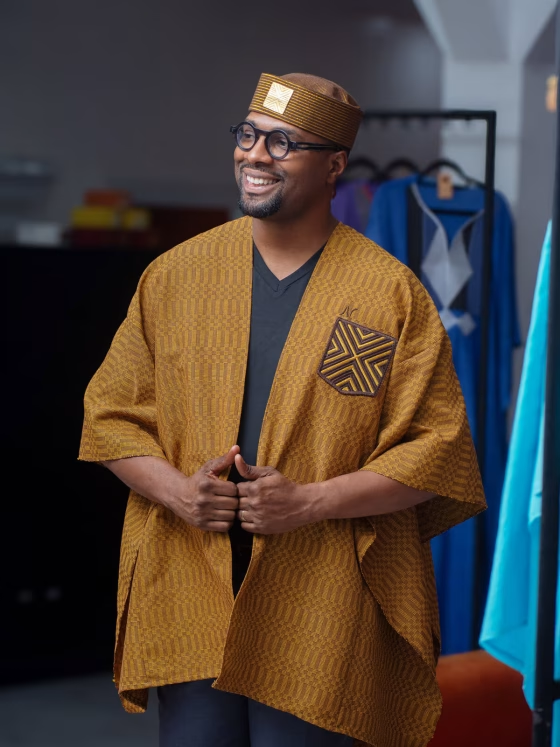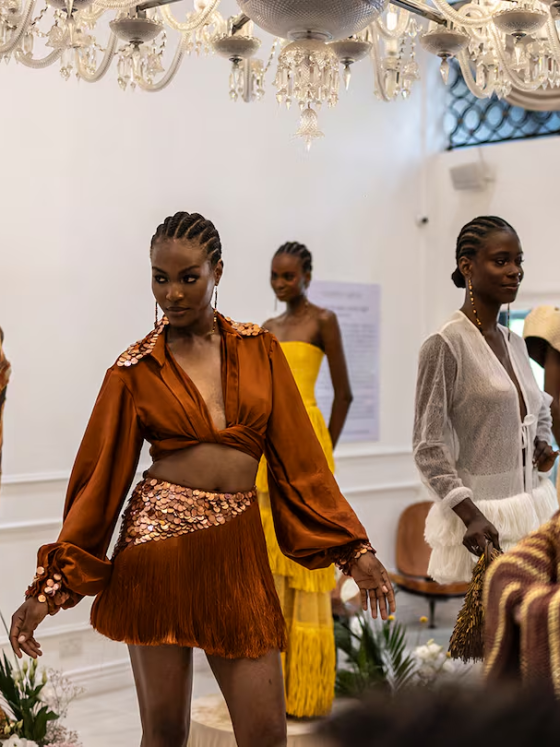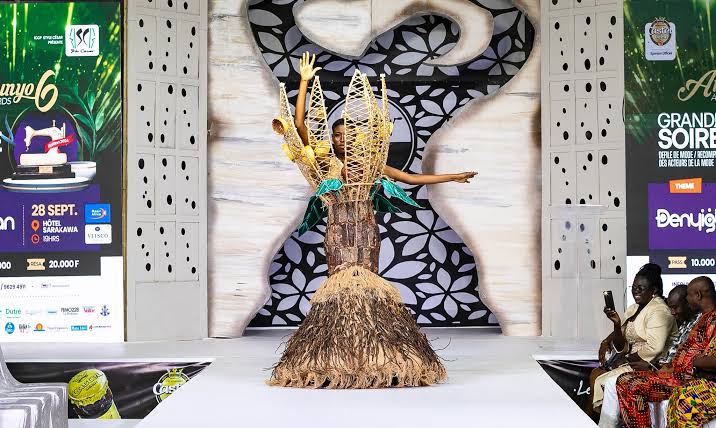
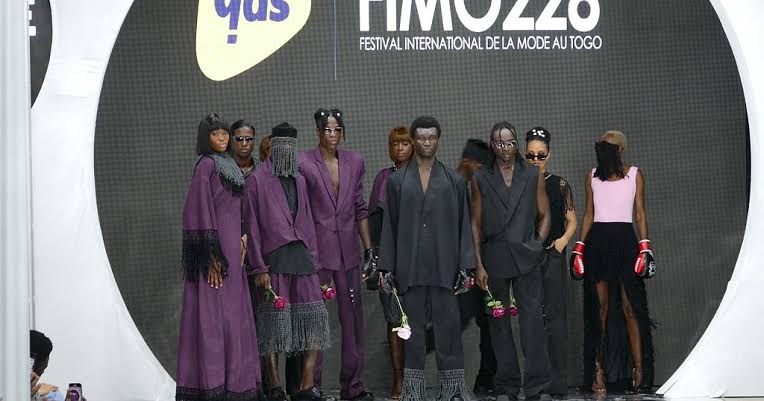
On 3 April 2025, Eugénie Guidi Ayawa, a young Togolese designer, presented her collection, La Vie en Couleur, at FIMO 228’s 12th edition in Lomé. The collection was made from pagne Kenté Gold, a locally sourced fabric that weaves gold thread into a kente-style pagne available in Lomé’s Grand Marché. The models who wore it were full-figured women. Guidi Ayawa was, according to Africa’s Vibes’ documentation of the event, the only designer in the 48-designer programme to cast full-figured models.
That single fact carries the article’s argument. Not because the collection was notable only for who wore it, but because the decision to cast full-figured models in a fashion festival programme is not a styling choice. It is a structural argument about whose body the fashion industry decides is worth dressing. Guidi Ayawa made that argument on a runway shared with 47 other designers, in front of ministers, ambassadors, and a large public at the ONOMO Hotel gardens in Lomé. The argument was the design.
The Omiren Argument: Eugénie Guidi Ayawa did not show a collection about plus-size fashion. She showed a collection about what it means to decide that African women’s bodies, specifically their full and curved forms, are worth designing for at the highest level of public visibility available to a young Togolese designer. La Vie en Couleur translates as ‘Life in Colour’. The colour is not a decoration. It is the argument: life, in full, without reduction, in the specific and abundant form that African women’s bodies take.
Eugénie Guidi Ayawa showed La Vie en Couleur at FIMO 228 in April 2025 as the only designer to cast full-figured models. Her argument was precise and to the point.
La Vie en Couleur: What Eugénie Guidi Ayawa’s Collection Said
Guidi Ayawa’s own description of the collection’s intent is the clearest available account of what it was built to do. As she stated directly on Afrique-sur-7: “J’ai mis l’accent sur le pagne Kenté Gold de chez nous, mais aussi sur les formes. La rondeur, surtout la rondeur africaine, est au cœur de ma création. C’est un message d’amour aux femmes africaines : « Vous êtes magnifiques, soyez fières de vos courbes.” I focused on the pagne Kenté Gold from here, from us, but also on shapes. Roundness, especially African roundness, is at the heart of my creation. It is a message of love to African women: you are magnificent, be proud of your curves. The shorter formulation, confirmed by Africanews, as is equally precise: “I, focused on shapes, particularly African roundness.”
These quotes contain the full architecture of the collection’s argument. Fabric first: pagne Kenté Gold, locally sourced, specifically described as “de chez nous”. Then shape: roundness, qualified as “surtout la rondeur africaine” – especially African roundness. Not roundness as a generic category, but as a specifically African form with a contested relationship to the beauty standards enforced by mainstream fashion production. Then the message: you are magnificent, be “You’d have your curve. It is a love letter addressed to African women at large. Love letters can be political documents, and this one is.
Africa’s Vibes described the collection as aiming to break stereotypes and encourage African women to embrace their curves with pride. The stereotype being broken is the assumption, built into the architecture of mainstream fashion, that the body worth designing for is thin, that full curves are a departure from the norm rather than a definition of it, and that African women whose bodies do not conform to European modelling standards are not the primary audience for serious fashion. Guidi Ayawa placed that assumption directly in front of an audience at FIMO.
The Fabric: Pagne Kenté Gold and the Logic of Local Material
The choice of pagne Kenté Gold as the primary fabric for La Vie en Couleur is not incidental. In Lomé’s fabric market, pagne Kenté Gold refers to a premium wax print or kente-style pagne incorporating gold thread into the weave, producing a fabric whose luminosity registers at runway distances visible, which is distinct from the handwoven strip-woven Ewe kente documented in this series – it is a commercially available pagne variety, not a handwoven ceremonial textile. Still, it carries the cultural weight of kente’s gold-threaded aesthetic into a fabric that is locally produced and locally available. Guidi Ayawa’s emphasis on “de chez nous” signals that the fabric choice is also a choice of fabricment: this collection was made from what Lomé produces.
The combination of gold-threaded local pagne and full-figured models creates a specific visual statement. Gold is the colour of celebration, of ceremony, of value in West African aesthetic tradition. To wrap full-figured bodies in gold pagne on a runway is not a neutral act. It places those bodies in the register of celebration rather than correction. The collection does not say that these bodies can also be fashionable. It says: these bodies are already magnificent. The title, La Vie en Couleur, holds both meanings: life in colour as a phrase of celebration, and colour as the specific gold of the locally sourced fabric that made the argument visible.
The Made in Togo philosophy that runs through this series – from Fall Touré’s insistence on locally produced textiles at FAALT, to Desmo’s use of found local materials, to Amah Ayivi’s reversal of the textile waste circuit – is present in Guidi Ayawa’s fabric choice. She did not import her material. She named where it came from. That is a consistent position across the Togolese designers documented here.
Body Politics on the Runway: Why This Argument Matters at FIMO
FIMO 228’s 12th edition was themed around breast cancer awareness. The theme created a programme context in which bodies, health, and survival were already in conversation. Guidi Ayawa’s La Vie en Couleur did not address the theme of breast cancer directly. It addresses the same body that breast cancer affects: the specific, full, curved body of African women, celebrated rather than treated, honoured rather than diagnosed. The two positions occupied the same conversation from different angles, and both angles are necessary.
The fact that Guidi Ayawa was the only designer among 48 to cast full-figured models places her argument in sharp relief. A programme of 48 designers is a significant sample. When only one of them makes the casting choice she made, the choice is not a design trend. It is a position. Fashion weeks, including African fashion weeks, have historically reproduced the same body standard enforced by European and American runways. The casting norm – a specific thin silhouette the industry treats as neutral despite its being a particular and exclusionary choice – travels across borders and persists even in contexts where the audience does not reflect those proportions.
Guidi Ayawa broke that norm in Lomé in April 2025. On the evening dedicated to young Togolese designers, in front of an audience that included government ministers and ambassadors, she sent full-figured women down the FIMO runway in gold pagne. The documentation of this moment in Africanews, Africa’s Vibes, and Afrique-sur-7 makes it part of the permanent record of Togolese fashion history. The argument she made at FIMO 2025 will be the argument attributed to her name whenever the question of body representation in African fashion is assembled from its primary sources.
ALSO READ
- Togolese Fashion Designers: The Creative Community Shaping Lomé’s Style
- Ewe Kente Styles: A Complete Guide
- Clothing as Cultural Identity: How African Dress Carries Meaning
The FIMO 12th Edition: Where Eugénie Guidi Ayawa Made Her Argument
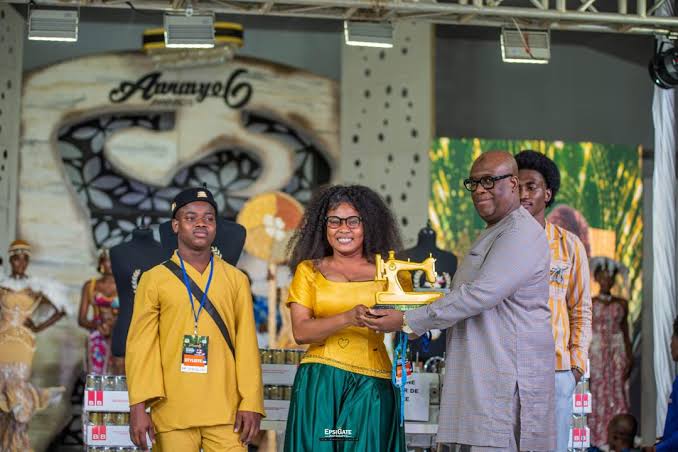
FIMO 228’s 12th edition ran from 1 to 5 April 2025 at the Institut Français and the ONOMO Hotel gardens in Lomé. Forty-eight designers from across the continent presented approximately ten looks each to a large audience. The programme ran in three stages: the 3 April evening for young Togolese designers, the 4 April evening for designers from across the continent, and the grand haute couture finale “Apothéose” on 5 April. Guidi Ayawa showed on 3 April, identified as a young Togolese designer – a programme category that places her in the ecosystem of emerging Togolese creative talent that this series documents.
Other designers who drew coverage at the 12th edition included Gabonese designer Olivia Mangue with her Moa (Model of Africa) collection, described as elegant and contemporary suits for a new generation of working women, and Equatorial Guinean designer José Aniceto, whose collection addressed the breast cancer theme directly. Ivorianner Nina Bornier of G’nantin by Nini showed Panacea, named for a universal remedy. The closing night, Apothéose, was opened by Togolese singer Afia Mala. The 12th edition was the largest in FIMO’s history at 48 designers. The title sponsor was Yas. In this context, La Vie en Couleur was one of many arguments made at FIMO 2025. What distinguished it was its specificity: while other collections addressed the festival’s health theme, hers made a precise structural argument about representation that the fashion industry at large has not resolved. She made it at the highest-profile public fashion event available to a young Togolese designer, and she made it as the only perwas programme willing to make it in that specific so
What Eugénie Guidi Ayawa Represents in Togolese Fashion
The Togolese fashion ecosystem documented in this series has produced institution-builders, long-standing practitioners, internationally recognised designers, and cultural platforms. Eugénie Guidi Ayawa represents a different category: a designer at the beginning of her documented public record, making an argument through a single collection precise enough to contribute to the conversation regardless of what comes next.
The English-language fashion press has not yet profiled her beyond coverage of the FIMO 12th edition. Her training background and work before April 2025 are not documented in the available records. This article records that. What is documented is the collection she showed, the argument she made, and the fact that she was the only designer in a 48-designer programme to make that specific argument in that specific way. For a designer at the beginning of her public record, that is the beginning of a position in the Togolese fashion conversation. What follows – the collections she makes next, the platforms she shows on, the argument she continues or develops – will determine what that position becomes. This series has documented where it started. The record for Eugénie Guidi Ayawa is now open.
“Eugénie Guidi Ayawa did not show a collection about plus-size fashion. She showed a collection about what it means to decide that African women’s bodies are worth designing for at the highest level of public visibility available to a Togolese designer. The argument was the design.”
Frequently Asked Questions
Who is Eugénie Guidi Ayawa?
Eugénie Guidi Ayawa is a young Togolese fashion designer based in Lomé, documented as a participant in FIMO 228’s 12th edition in April 2025. She showed her collection La Vie en Couleur on the evening of 3 April 2025, dedicated to young Togolese designers, as part of a 48-designer programme at the Institut Français and the ONOMO Hotel gardens in Lomé. Africa’s Vibes documented her as the only designer in that edition to cast full-figured models. Her collection, made from locally sourced pagne Kenté Gold fabric, was built as a tribute to African women and the specific roundness of African women’s forms.
What is La Vie en Couleur?
La Vie en Couleur, meaning “Life in Colour,” is the “collection Eugé” Nie Guidi Ayawa showed at FIMO 228’s 12th presentation in April 2025. The collection was made from pagne Kenté Gold, a locally sourced fabric woven with gold thread in that weaveste-style pagne. Guidi Ayawa described its purpose directly: “Roundness, especially African roundness, is at the heart of my creation. It is a message of love to African women: you are magnificent; be proud of your curves.” The collection was shown on full-figured models, making her the only designer in the 48-designer programme to make this casting choice.
What is Pagne Kenté Gold?
Pagne Kenté Gold is a fabric available in Lomé’s Grand Marché that incorporates gold thread into a kente-style wax-print pagne, making it visible at a runway distance. It is distinct from the hand-woven strip-woven Tradition, which is a ceremonial and artisanal textile. Pagne Kenté Gold is a commercially available fabric that draws on kente’s gold aesthetic in wax print form. Guidi Awax-printed her fabric as “pagne Kenté Gold de chez nous” – from here, from us – signalling that the collection was built from locally produced Togolese material rather than imported fabric.
What was the FIMO 228 12th edition?
The 12th edition of FIMO 228 ran from 1 to 5 April 2025 in Lomé, Togo. Forty-eight designers from across the continent participated. The theme was breast cancer awareness. The programme included three stages: a young Togolese designers’ evening on 3 April, an Afrocentric evening on 4 April, and the grand haute couture finale, Apothéose, on 5 April, attended by Togolese singer Afia Mala. The title sponsor was Yas Togo. Venues were the Institut Français and the ONOMO Hotel gardens. The 12th edition was the largest in FIMO’s history by designer count.
Why is La Vie en Couleur significant for African fashion?
La Vie en Couleur is significant because it made a documented argument about body representation at the most prominent fashion event available to a young Togolese designer. By casting full-figured models as the only designer among 48 to do so, and by explicitly framing her collection as a tribute to African women’s curves, Eugénie Guidi Ayawa placed the question of whose body the fashion industry considers worth dressing into the public record of FIMO 2025. The argument was documented by Africanews, Africa’s Vibes, and Afrique-sur-7, giving it a permanent place in the English and French-language record of Togolese fashion.
How does Eugénie Guidi Ayawa connect to the Togolese fashion ecosystem?
Eugénie Guidi Ayawa connects to the broader Togolese fashion ecosystem through her participation in FIMO 228, founded by Jacques Logoh, which has been the primary runway platform for Togolese and African designers since 2013. Her commitment to locally sourced fabric aligns with the Made in Togo philosophy documented across this series, from Fall Touré’s FAALT curriculum to Desmo’s use of local materials. Her focus on African women’s bodies as the primary audience for her design is consistent with the alignment across this series that, throughout fashion, is built for African people first.
Explore more from our Industry section, where Togo’s fashion practitioners are documented from the beginning of their public record to the present.