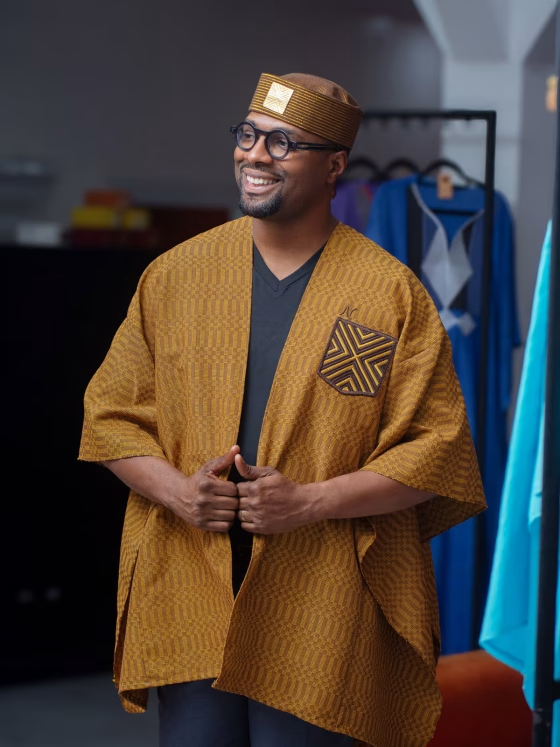
Helmer Joseph launched his first collection in Montreal in 1982. He was the same person who, forty-four years later, stood at a podium at the Institut Français de Lomé on 25 February 2026 and told a room of Togolese designers, students, and models that a model is not there to present themselves but to present the garment. He is the interpreter of the creator. The sentence is simple. It took forty-four years of practice to earn the authority to say it in that room.
Between 1982 and 2026, Helmer Joseph trained at the Chambre Syndicale de la Couture Parisienne, the Lesage embroidery school, and ESMOD in Paris. He did contract work for Louis Vuitton, Dior, Chloé, Thierry Mugler, John Galliano, Karl Lagerfeld, and Christian Lacroix during twenty years in the city that defines what those names mean. He returned to Montreal in 2004 and built his own practice. FIMO 228 found him in 2023 and brought him to Lomé. By 2026, he will be teaching there. His relationship to FIMO 228 is the clearest single example in this series of what Jacques Logoh built the festival to do: bring the world to Lomé, so that Lomé can become part of the world.
Helmer Joseph trained at Dior, Vuitton, and Mugler in Paris for 20 years. FIMO 228 brought him to Lomé. By 2026, he was teaching there.
The Omiren Argument:
Helmer Joseph is not a Togolese designer. He is the international designer whose repeated presence at FIMO 228 demonstrates, more precisely than any other evidence, that the festival has achieved the standing to attract and retain serious international creative talent. His HANAYA line at FIMO228 France in September 2025 connected Haitian roots to African craftsmanship. His masterclass at FIMO 13 in February 2026 transmitted twenty years of Parisian couture practice to the next generation of Togolese practitioners. This is the exchange Jacques Logoh described when he founded FIMO: not a Togolese fashion show with international guests, but an international conversation that happens to be held in Lomé.
The Formation: From Gonaïves to Paris to Montreal

Helmer Joseph was born in Gonaïves, Haiti, the city where Haitian independence was declared in 1804. He came to Montreal with his family and enrolled at LaSalle College to study fashion design, launching his first collection in Montreal in 1982. The following year, aged 27, he moved to Paris and immersed himself in the city’s haute couture infrastructure for the next two decades. His training institutions, as documented by the McCord Stewart Museum, included the École de la Chambre Syndicale de la Couture Parisienne, the École de l’atelier de broderie Lesage – the world’s most prestigious embroidery school – and ESMOD.
His contract work across the Paris couture houses covered the full range of what that phrase means. At Dior, the house whose directional authority sets the standard for all haute couture. At Louis Vuitton, the technical requirements of leather goods and accessories demand a different level of precision from those of garment construction. At Chloé, the emphasis is on femininity and movement. At Thierry Mugler, theatre and structure are the vocabulary. At the houses of John Galliano, Karl Lagerfeld, and Christian Lacroix, where imagination is the discipline. Twenty years in those rooms is not a credential. It is an education in the full range of what serious fashion practice requires.
He returned to Montreal in 2004 and established his own practice under the Helmer label, producing collections twice yearly for a niche clientele that lives across the world. His workshop and store on St. Lawrence Boulevard opened in 2009. His work entered the permanent collections of the McCord Museum in Montreal and the Musée de la civilisation in Québec City. In 2020, the McCord Stewart Museum commissioned him to recreate three 1959 Dior evening gowns from archival patterns – a commission that reflects precisely the combination of technical mastery and historical knowledge that twenty years in Paris produces. He described the process: “It was like breathing life into ghosts.”
HANAYA: The Brand That Connects Haiti to Africa
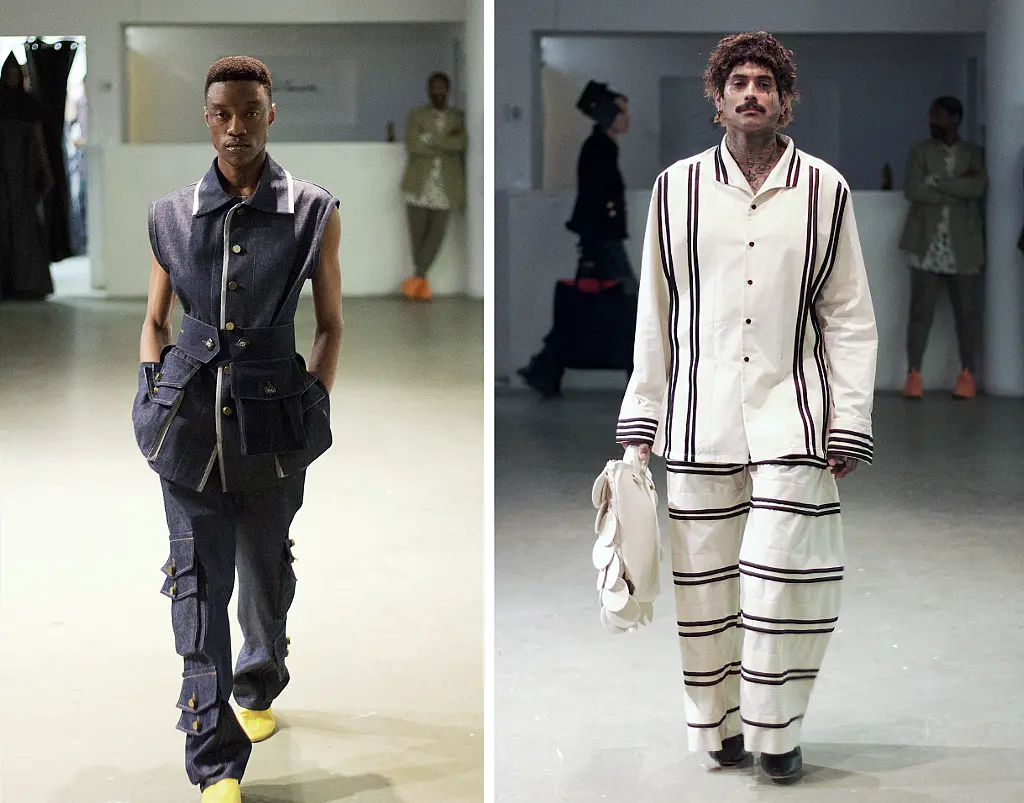
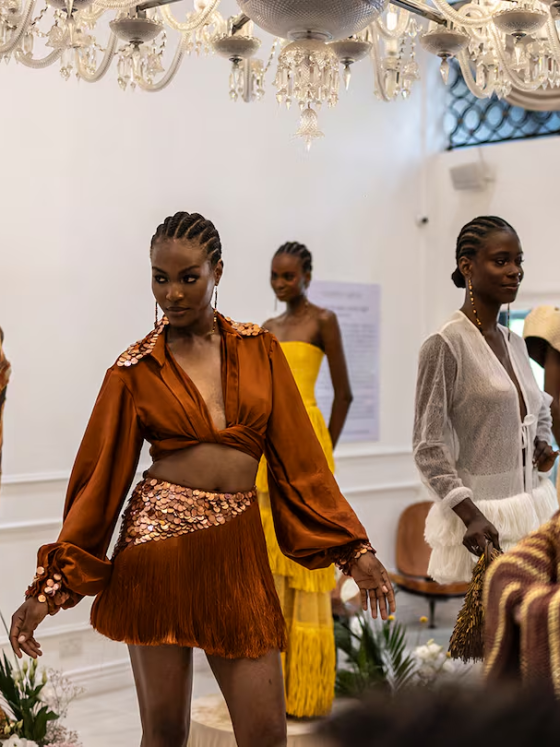
The HANAYA label represents the phase of Helmer Joseph’s practice in which his Haitian identity and his interest in African craftsmanship converge explicitly. The brand name and its positioning were most clearly documented in Africa’s Vibes’ coverage of the FIMO228 France Paris edition in September 2025, which described: “Helmer Joseph (HANAYA), meanwhile, elevated traditional craftsmanship through an architectural and artisanal approach – a true bridge between memory and innovation.” The description “true bridge between memory and innovation” is the most precise available account of HANAYA’s creative position.
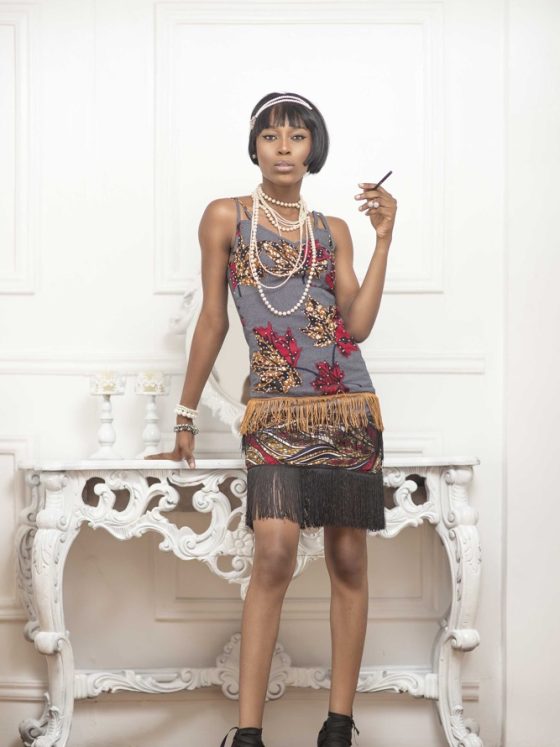
The Cotton Route of Haiti collection, launched at WIP Montréal in February 2024, honoured Haiti’s historical cotton legacy. Haiti was one of the world’s most significant cotton and sugar producers before the 1804 revolution that made it the first Black republic; the “Cotton Route” title invokes that history and reclaims it as a creative foundation. The collection was described as connecting Haitian roots to continental African connections – the same movement that HANAYA performs at FIMO: a Haitian designer, trained in Paris, showing work that bridges Caribbean and African textile traditions at a festival in Lomé.
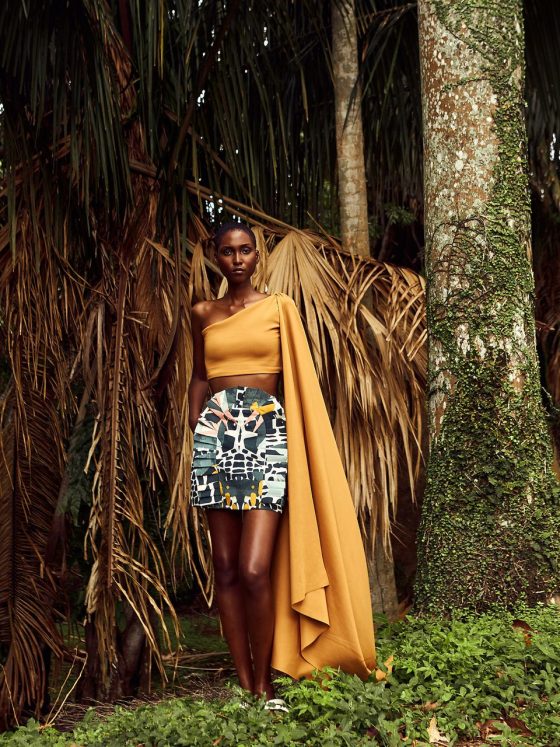
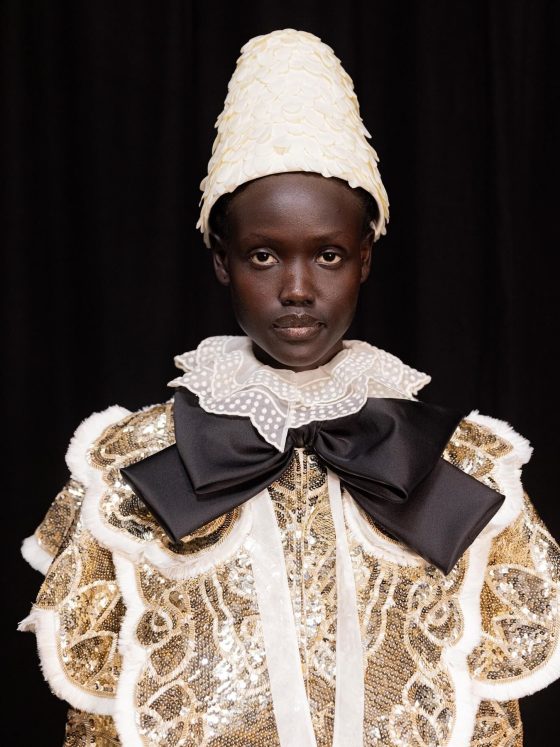
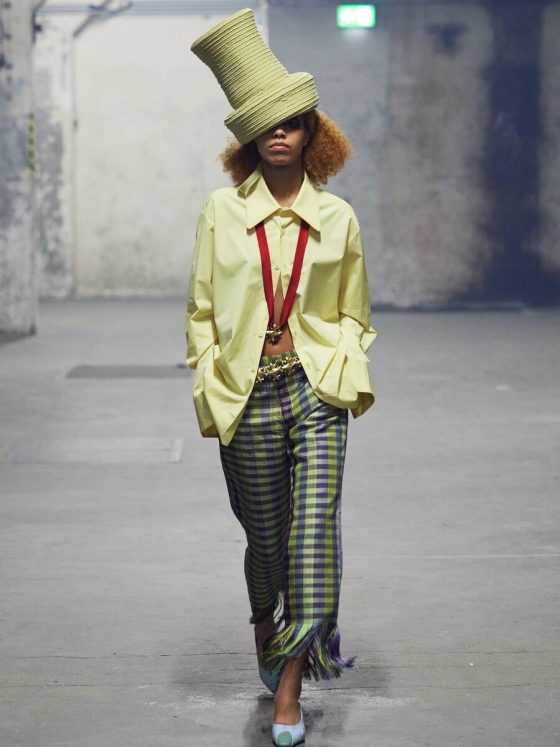
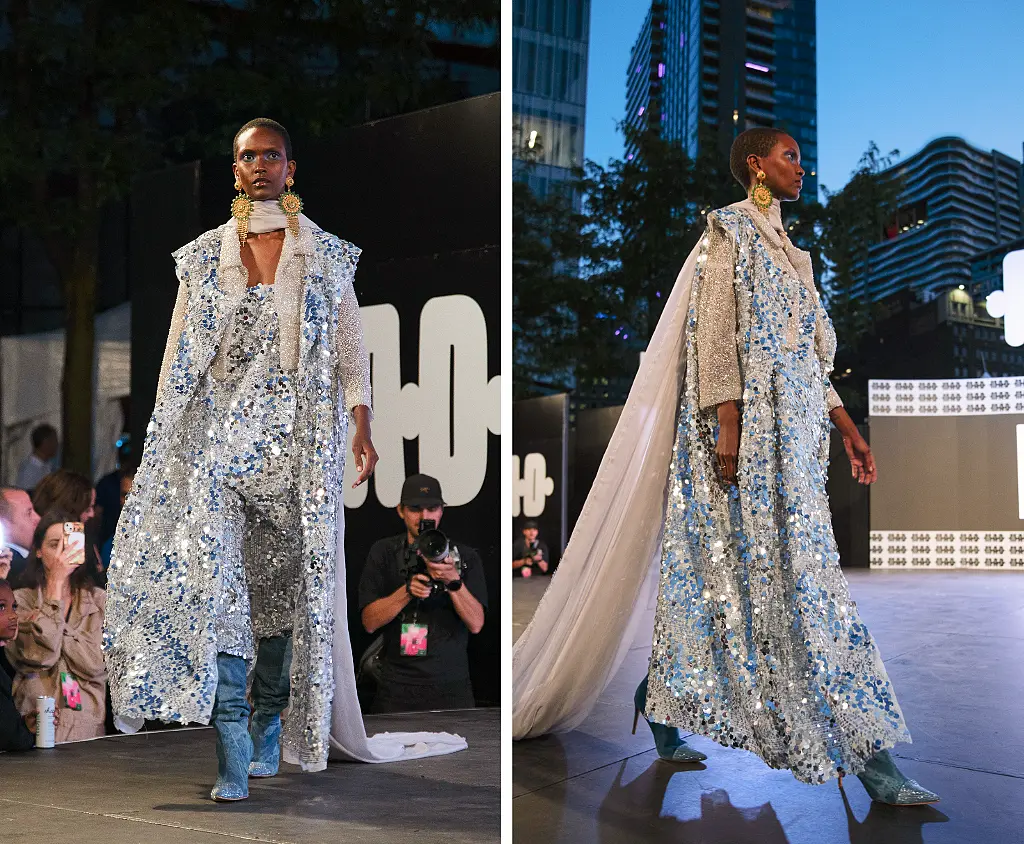
The architectural quality of HANAYA’s runway work, documented at FIMO 12 in April 2025 in Lomé, reflects the Parisian couture training that produced it: Africa’s Vibes described “sculptural designs and stunning fabric layering.” These are couture-level construction terms. Sculptural silhouettes require pattern construction skills that the Lesage and Chambre Syndicale curricula specifically develop. Fabric layering at the level of “stunning” is the result of twenty years in houses where that technique is practised daily. HANAYA at FIMO is not a guest collection. It is the full weight of that formation applied to an Afrocentric and Caribbean material conversation.
Helmer Joseph at FIMO 228: Four Editions, One Argument
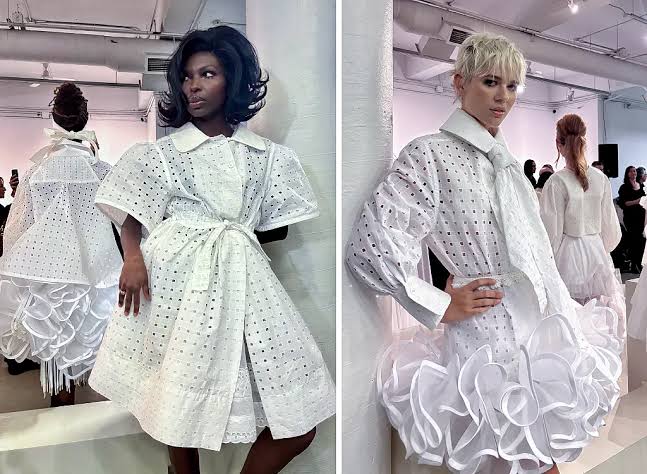
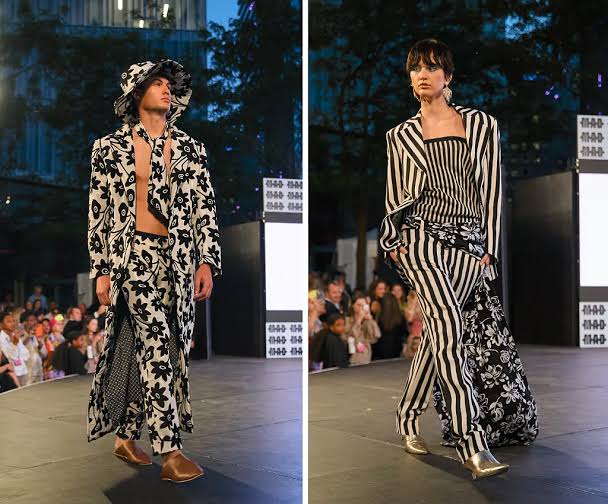
Helmer Joseph has participated in FIMO 228 across four documented editions. At the 10th edition in February 2023, he was listed by quefairealome.com among the international designers as “Helmer Joseph du Canada.” At the 12th edition in April 2025 in Lomé, Africa’s Vibes named him one of the standout designers, alongside Jacques Logoh himself. At FIMO228 France in September 2025, HANAYA showed at the Orangerie d’Auteuil at Roland-Garros during Paris Fashion Week. At the 13th edition in February 2026 in Lomé, he led two masterclass sessions for models and designers.
This is not a festival appearance. It is a sustained creative relationship across three years. The designer who shows up once is a guest. The designer who returns four times is a partner. Helmer Joseph’s repeated presence at FIMO demonstrates that the festival’s creative argument – that Lomé is a legitimate international fashion conversation rather than a local event with international decoration – is convincing enough to bring back a designer of his stature, edition after edition.
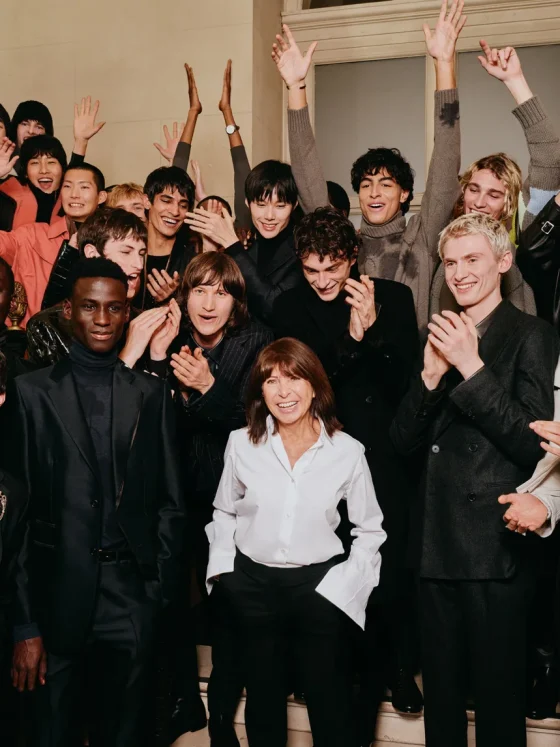
His role at the 13th-edition masterclass was not a runway performance. It was a transmission. The February 25, 2026, masterclass at the Institut Français de Lomé addressed model training: how to present a garment rather than present oneself; how to read a designer’s universe and serve it rather than override it; and how posture and movement encode the meaning of the clothes. These are the codes of Parisian haute couture practice, being transmitted directly to the next generation of Togolese fashion practitioners by a designer who spent twenty years learning them in the rooms where they were invented. The masterclass is the argument for FIMO 228 made in its most direct form.
ALSO READ
- FIMO 228: Inside Lomé’s International Fashion Festival
- Togolese Fashion Designers: The Creative Community Shaping Lomé’s Style
- African Identity in Fashion: How Dress Carries Cultural Meaning
The Masterclass and What It Represents for Togolese Fashion
Jacques Logoh described the masterclass function of FIMO 228 precisely in a statement confirmed by Icilome during the 13th edition: “Chaque année, nous invitons des créateurs internationaux pour favoriser un véritable échange avec les jeunes du Togo et de l’Afrique. La mode est un secteur économiquement porteur. Il faut de la détermination, du professionnalisme et une identité forte pour se faire une place à l’international.” Each year, we invite international designers to foster genuine exchange with young people in Togo and across Africa. Fashion is an economically dynamic sector. You need determination, professionalism, and a strong identity to make your mark internationally. The masterclass model that FIMO 228 has built is one of its most significant contributions to the Togolese fashion ecosystem, and Helmer Joseph is its most documented practitioner.
Helmer Joseph’s direct statements at the masterclass, corroborated by five independent Togolese sources from February 2026, are among the most specific accounts of couture practice in the documented record of FIMO 228. The statement on models presenting the garment rather than themselves: a fashion philosophy that runs from Balenciaga’s famous silence to the HANAYA runway at the Orangerie d’Auteuil. The statement on returning to sources – “revenir aux sources permet de réinterpréter les matériaux locaux et souvenirs d’enfance dans ses créations” – is the creative position that connects his Gonaïves childhood, his Caribbean-African material vision, and his FIMO presence in Lomé into a single coherent argument.
The Togolese designers, students, and models who sat in the Institut Français of Lomé on 25 February 2026 and heard that argument received something specific: the direct transmission of a practice built in the houses that define contemporary couture, applied to a creative philosophy rooted in the Caribbean and African material worlds they share. This is the exchange that FIMO 228 produces. Helmer Joseph is its clearest evidence.
What Helmer Joseph Represents in the Togo Series
Every other profile in this series covers a Togolese practitioner. Helmer Joseph is the exception, and the exception is the point. FIMO 228’s value to the Togolese fashion ecosystem is not only what it produces internally. It is what it attracts externally. The international designers who participate in FIMO bring creative practices, professional standards, and industry networks that the Lomé-based community gains access to through the festival. Helmer Joseph, trained at the most demanding institutions European haute couture has ever produced, returning to FIMO four times over three years and leading masterclass sessions, is evidence that FIMO has achieved the level of international creative standing where such quality of exchange is possible.
His presence also illuminates the Caribbean-African fashion connection that this series, focused on Togo and the West African creative ecosystem, has not previously documented. The Haitian designer whose practice bridges Caribbean and African textile traditions, who shows at a festival in Lomé and teaches at its masterclass, is part of the same Afrocentric creative conversation that Togo Yeye, the Vlisco campaign, and the Palais de Lomé’s Design in West Africa exhibition are also part of. FIMO 228 is the institution that makes Lomé the place where these conversations meet.
“Helmer Joseph is not a Togolese designer. He is the international designer whose repeated presence at FIMO 228 demonstrates, more precisely than any other evidence, that the festival has achieved the standing to attract and retain serious international creative talent. His masterclass in Lomé in 2026 transmitted twenty years of Parisian couture practice to the next generation of Togolese practitioners.”
Frequently Asked Questions
Who is Helmer Joseph?
Helmer Joseph is a Haitian-born, Montreal-based luxury fashion designer and the creative force behind the HANAYA label. Born in Gonaïves, Haiti, he came to Montreal with his family and studied at LaSalle College before launching his first collection in 1982. He moved to Paris in 1983 and spent twenty years working in the haute couture houses of Louis Vuitton, Dior, Chloé, Thierry Mugler, John Galliano, Karl Lagerfeld, and Christian Lacroix. He returned to Montreal in 2004, establishing his own label and a workshop on St. Lawrence Boulevard. His work is held in the McCord Museum in Montreal and the Musée de la civilisation in Québec City. He has participated in FIMO 228 in Lomé, Togo, across four documented editions from 2023 to 2026.
What is HANAYA?
HANAYA is Helmer Joseph’s fashion label, characterised by an architectural and artisanal approach that connects Haitian heritage with African craftsmanship. Africa’s Vibes described HANAYA at FIMO228 in France in September 2025 as “a true bridge between memory and innovation.” At FIMO 228’s 12th edition in Lomé in April 2025, HANAYA was described as displaying sculptural designs and stunning fabric layering. The Cotton Route of Haiti collection, launched in February 2024, honoured Haiti’s historical cotton legacy and explicitly connected Caribbean roots to African textile traditions. HANAYA has shown at FIMO228 in Lomé and at FIMO228 France at the Orangerie d’Auteuil during Paris Fashion Week.
How many times has Helmer Joseph shown at FIMO 228?
Helmer Joseph has four documented participations in FIMO 228. At the 10th edition in February 2023 in Lomé, documented by quefairealome.com. At the 12th edition in April 2025 in Lomé, Africa’s Vibes documented one of the standout designers. At the 3rd France edition in September 2025 at the Orangerie d’Auteuil in Paris during Paris Fashion Week, documented by Africa’s Vibes. At the 13th edition in February 2026 in Lomé, where he led two masterclass sessions for models and designers at the Institut Français, documented by five independent Togolese news sources, including Icilome, Togo Scoop, and Djena.tg.
What did Helmer Joseph teach at the 13th edition of FIMO 228’s masterclass?
At the masterclass held at the Institut Français de Lomé on 25 February 2026, Helmer Joseph addressed two themes. On model training: the fundamental distinction between presenting oneself and presenting the garment. He stated: “Un mannequin n’est pas là pour se mettre en avant, mais pour présenter le vêtement. Il est l’interprète du créateur.” A model is not there to put themselves forward but to present the garment. They are the interpreter of the creator. On creative identity: “Revenir aux sources permet de réinterpréter les matériaux locaux et les souvenirs d’enfance dans ses créations.” Returning to one’s roots allows reinterpretation of local materials and childhood memories in creative work.
What is Helmer Joseph’s connection to African fashion?
Helmer Joseph’s connection to African fashion operates through two channels. First, the HANAYA label explicitly bridges Haitian and African craftsmanship traditions: Africa’s Vibes described the September 2025 Paris FIMO edition as featuring HANAYA’s “structured tributes to African craftsmanship, connecting Haitian roots to continental connections.” Second, his repeated participation in FIMO 228, across four editions from 2023 to 2026, has made him the festival’s most consistently documented international designer, providing the quality of creative exchange that Jacques Logoh described as FIMO’s core purpose: genuine interchange between international designers and the next generation of Togolese and African fashion practitioners.
Why does the Togo fashion series include a profile of a non-Togolese designer?
The Togo fashion series profiles Helmer Joseph because his sustained relationship with FIMO 228 across multiple editions is the most precise evidence available that the festival has achieved genuine international standing. FIMO 228’s value to the Togolese fashion ecosystem is not only internal; it also determines the quality of international creative exchange possible. A designer trained for twenty years at Dior, Vuitton, Mugler, Galliano, Lagerfeld, and Lacroix, returning to FIMO four times and leading masterclasses for Togolese practitioners,s is evidence that FIMO’s creative argument is working. The profile also illuminates the Caribbean-African fashion connection that FIMO enables: a Haitian designer whose practice bridges both traditions, showing in Lomé at a festival positioned at the intersection of African and global fashion.
Explore the full Omiren Styles Togo series: 22 articles that document every practitioner and institution in Togo’s fashion ecosystem.