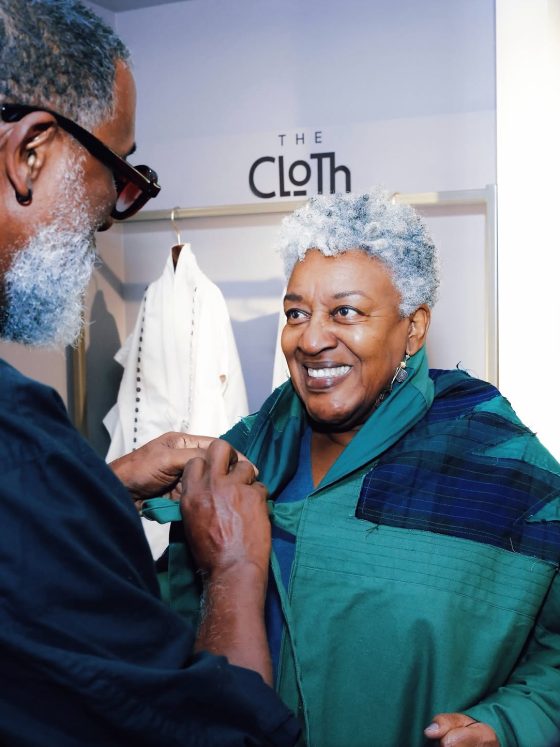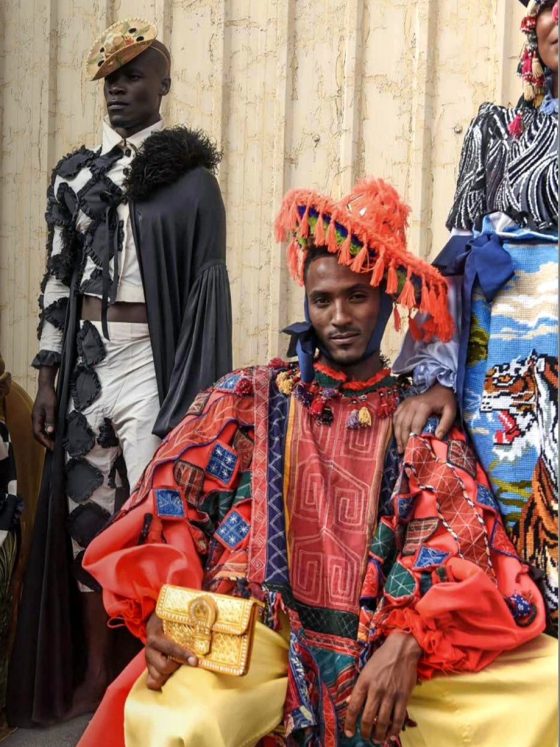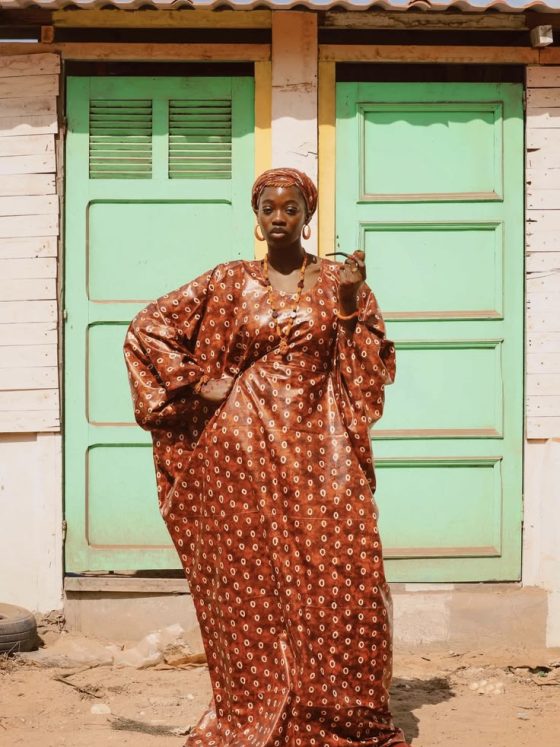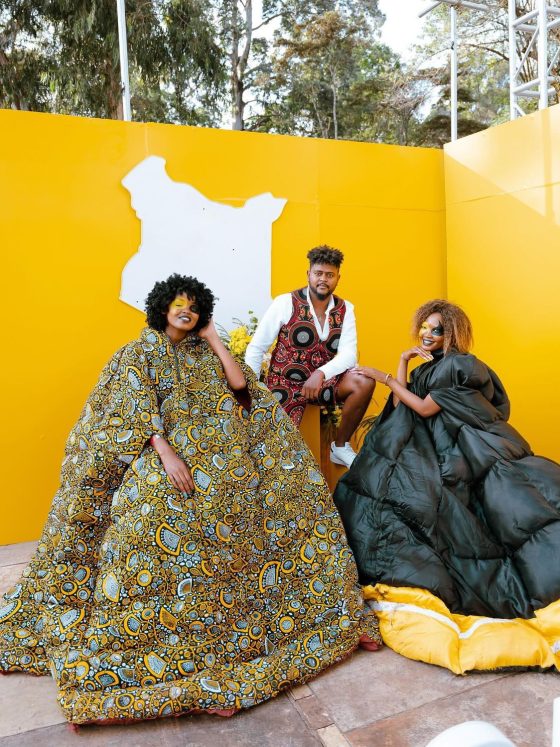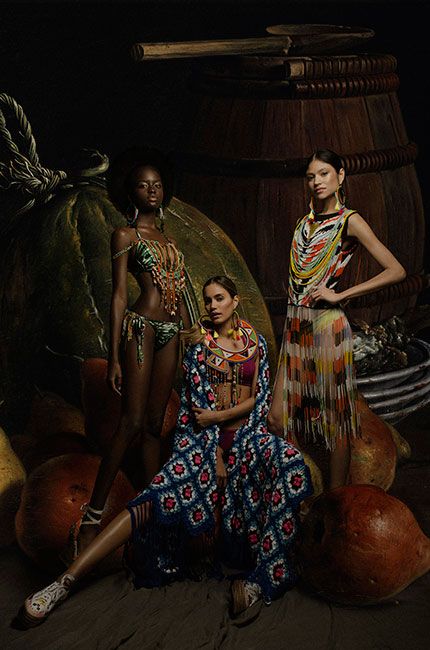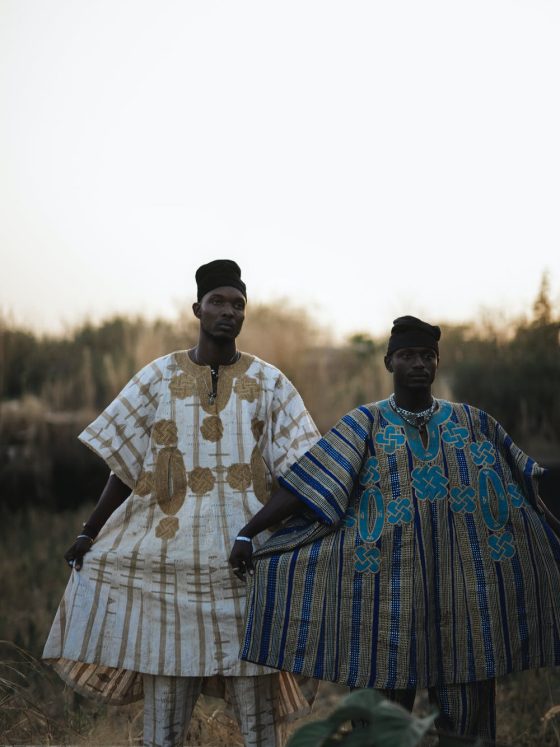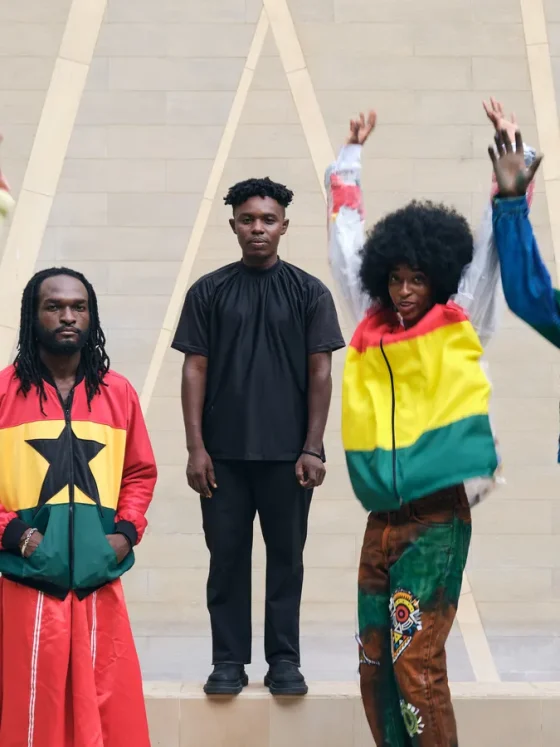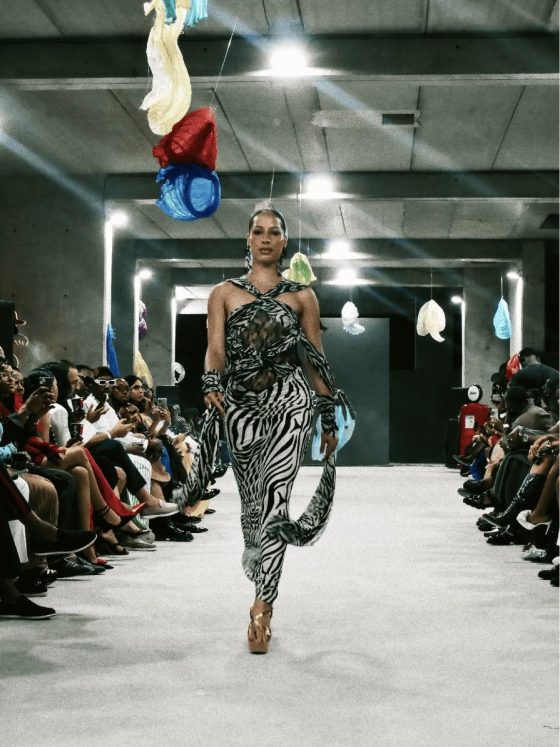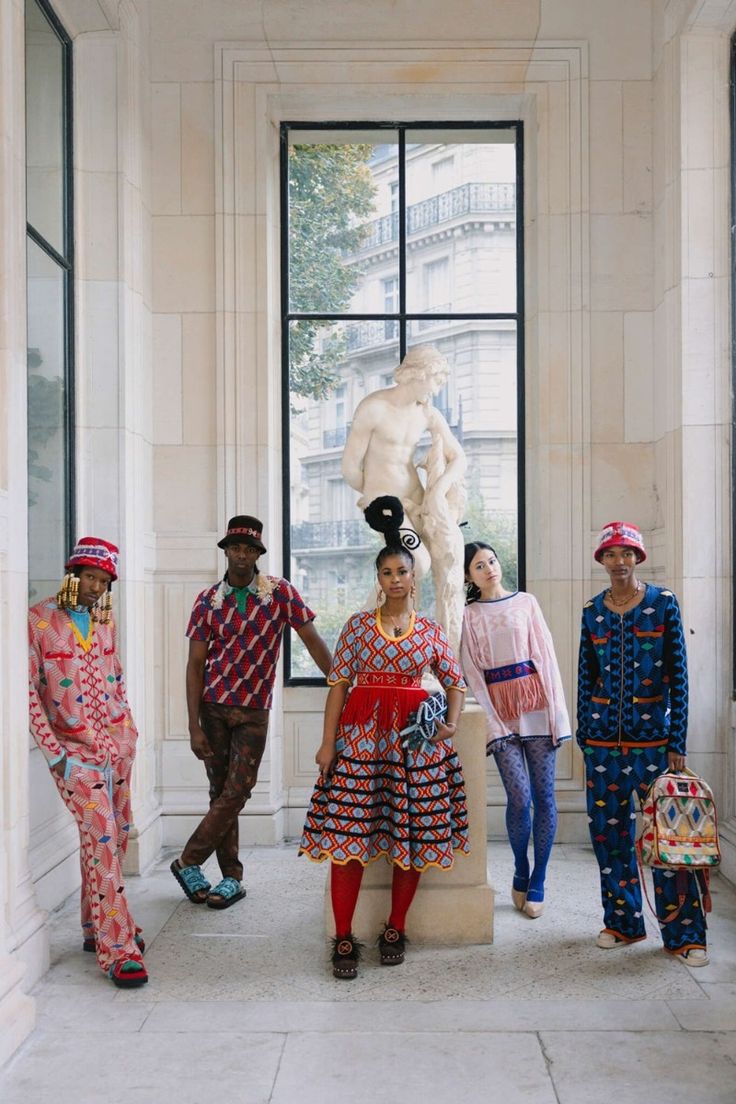
Someone in Lagos decided how you dress.
Not necessarily a designer whose name sits on a luxury invitation. Perhaps it was a tailor in Surulere cutting a jacket to sharpen the shoulders without making them stiff. Perhaps it was a trader in Balogun Market judging an Ankara print by scale, colour balance and social occasion. Perhaps it was a woman choosing fabric for a Saturday event because every choice, from the motif to the wrapper’s fall, carried a message about family, confidence and belonging.
That decision did not begin as a trend forecast. It began as fashion has often begun: with people using clothing to negotiate identity, status, place, memory and desire.
Global South fashion has shaped the way the world dresses for generations. Yet the global fashion industry has repeatedly treated those contributions as raw material rather than authorship. A silhouette becomes “new” once it reaches Paris. A colour language becomes “bold” once it arrives in a European campaign. A textile system becomes “artisanal inspiration” once a luxury house extracts it from the community that built it.
The industry has a polished vocabulary for this process: influence, homage, collaboration, discovery, inspiration. The language sounds generous. The economics rarely are. As Omiren Styles has documented in its analysis of why European luxury houses invest in Afrobeats stars but not African fashion infrastructure, the cultural visibility that African design generates is being extracted commercially while structural investment has not followed.
The Global South did not merely influence fashion. It built visual languages, production systems and style codes that the industry continues to use without properly naming their makers.
This is not an argument against exchange. Fashion has always travelled across borders, oceans, trade routes, migrations and diasporas. The argument concerns the terms of that exchange. Who gets credited? Who gets paid? Who becomes a global authority? And whose knowledge gets converted into “inspiration” only after someone else has made it profitable?
Omiren begins with those questions because documentation changes the balance of power. What the fashion system has left vague, this publication will name.
Global South fashion shaped global style long before Europe claimed the credit. Omiren traces the systems, makers and industries behind it.
The Myth of Where Fashion Comes From

Fashion’s official history still travels through a narrow corridor: Paris, Milan, London and New York. These cities have powerful institutions, established media networks, luxury conglomerates, fashion weeks, museums, schools, buyers and publicity machines. Their importance is real. Their claim to be fashion’s sole or primary source is not.
The familiar story suggests that creativity moves outward from a small group of Western capitals. Everyone else becomes an audience, a supplier, a cultural reference point or an emerging market waiting to be discovered. This version of fashion history makes the centres the stage and the rest of the world the backdrop. It is not simply incomplete. It is structurally false.
West African dress has long offered complex systems of silhouette, tailoring, colour and social communication. Caribbean dancehall developed a visual language of performance, glamour, body-conscious styling, shine and streetwear long before global brands learned to package similar codes for international consumption. Indigenous textile systems across Latin America developed sophisticated approaches to weaving, dyeing, symbolism and construction that luxury fashion now praises as exceptional craft, often without equal attention to ownership or consent. As Omiren Styles has documented in its analysis of how cultural resistance shaped global style movements, these traditions did not become significant when a fashion editor noticed them. They already had aesthetic authority, technical depth and cultural purpose.
The problem is not that fashion borrows. Fashion always borrows. The problem begins when borrowing becomes an erasure machine. A garment, print, hairstyle or styling code moves from a community into the global image economy, but the origin story falls away somewhere between the mood board and the runway. The source becomes a vague continent, a generic reference, an unnamed artisan, or worse, a marketing fantasy. What is lost is not only credit. Context disappears too.
Fashion Is an Edited Record
The global fashion industry is not a neutral archive of creativity. It is an editing system.
It decides which designers become authors and which communities become references. It decides whose craft receives investment and whose work is described as informal. It decides whether a garment belongs in a museum, a luxury campaign, a local market or a heritage category that rarely receives the same commercial respect as European design. As Omiren Styles has argued in its investigation of clothing as cultural identity, the global popularity of Ankara prints in streetwear and high fashion exposes exactly this gap: the questions of credit, authorship and economic participation follow the fabric wherever it travels, but rarely get answered.
The result is a distorted record. Aesthetic ideas from the Global South often reach mainstream fashion stripped of the people, economies and histories that made them possible. If a European brand presents a textile-derived motif without naming the originating community, it does not merely miss a footnote. It changes how consumers understand value. The brand appears inventive; the community appears invisible. The luxury house accumulates cultural capital while the original makers face limited recognition, weak negotiating power, and few avenues for financial return.
Mexico’s government has repeatedly challenged international brands over the unauthorised use of Indigenous textile expressions. In 2021, Mexico’s Ministry of Culture raised concerns about the use of designs associated with Indigenous communities in Oaxaca, framing the issue as a matter of collective cultural property. Mexico’s cultural patrimony policy documentation confirms that Mexican law has since strengthened protections around the unauthorised reproduction and commercial exploitation of cultural heritage.
The legal debate matters, but law alone cannot solve the editorial problem. As Cambridge scholarship on cultural appropriation and the global fashion industry has documented, intellectual-property systems often struggle to protect collective, intergenerational knowledge. Traditional designs may not fit rules designed around individual authorship, short commercial timelines and clearly identifiable owners. That is why fashion journalism has a responsibility: when law cannot fully recognise a creative source, reporting must.
Lagos and Aba: The Infrastructure Fashion Ignores

Nigeria’s fashion economy does not need to be romanticised. It needs to be accurately described.
Too much international coverage treats African fashion production as either luxury spectacle or small-scale handicraft. That binary cannot explain places such as Aba, the manufacturing city in Abia State whose garment and leather clusters support large networks of makers, traders, suppliers and service businesses.
A cluster-mapping report on the Aba fashion and leather economy identified separate but interconnected garment and leather-goods clusters, estimating that the leather and garment industries directly employed up to 25,000 people, alongside wider supporting activity. That is not an anecdote about local ingenuity. It is industrial infrastructure.
Aba’s production system includes specialist labour, informal and formal supply networks, repair knowledge, market distribution, materials trading and local commercial intelligence. It makes garments, footwear, bags, belts and uniforms for Nigerian and regional markets. Yet global fashion media often cannot see it because it expects manufacturing legitimacy to arrive through European ownership, export-facing branding or the visual codes of a factory it recognises. Fashion cannot claim to understand global production while treating African manufacturing as peripheral to its story.
The same question applies to fabric. The Omiren analysis of who really owns Ankara documents the full complexity: European industrial printing, Indonesian batik influences, African consumer demand, West African adaptation and generations of social meaning. Its story refuses simple ownership claims. But that complexity does not justify vagueness. It demands better reporting about trade, power, cultural adoption, design rights and the communities that transformed printed cloth into a deeply legible language of identity.
Who has the right to profit from a textile that millions have made meaningful? Fashion has avoided that question for too long because the answer would require more than a seasonal campaign.
Caribbean Style Is Commerce, Not Decoration

The Caribbean is often celebrated by fashion at the moment it becomes visually useful. Carnival feathers appear in editorials. Dancehall styling surfaces in music videos. Island colour becomes a resort collection. Then the industry moves on, leaving the systems behind the image largely unexamined.
Carnival costume-making requires design direction, wire bending, engineering, pattern cutting, beadwork, featherwork, textile sourcing, fitting, production management, logistics, photography, performance planning, and client coordination. A finished costume can be the endpoint of months of labour across multiple specialist roles. It is not a decorative afterthought. It is a commercial design system with its own annual cycles, aesthetic schools and technical demands.
The fashion industry knows how to applaud labour when it occurs in an atelier. It should learn to recognise it when it happens in mas camps, studios, homes, workshops and diasporic networks across Trinidad, Jamaica, London, Toronto, New York and beyond.
Jamaican dancehall style developed through nightlife, sound-system culture, music, performance, street commerce and the visual confidence of people who understood that dress could be both personal armour and public spectacle. Its codes include body-conscious silhouettes, bold colour, sportswear, high-shine materials, designer references, customisation and a distinctive tension between glamour and defiance. As Omiren Styles has documented in its analysis of how Afrobeats became the world’s unspoken style language, these codes travelled through diaspora communities and global music culture to influence how London, Toronto, New York and Miami styled nightlife, streetwear and performance. But influence has often moved without adequate attribution.
Caribbean aesthetics circulate globally, but the economic reward frequently accumulates elsewhere. Global brands may borrow the visible language of dancehall while failing to commission Caribbean stylists, photographers, designers, researchers and image-makers who could provide authorship rather than mere reference. Fashion does not need more Caribbean mood boards. It needs better credit, contracts, commissioning and investment.
Latin America’s Textile Systems Are Not Trends
Latin America’s fashion economies expose the same gap between visibility and recognition.
Indigenous textile traditions in Mexico, Peru, Guatemala and across the region contain techniques, symbols, dye knowledge and pattern systems developed and maintained over generations. They often hold community-specific meaning. A motif may signal place, history, cosmology, belonging or collective memory. It does not become “bohemian embroidery” because a retailer removes the context.
The debate around appropriation often becomes trapped in the question of intention. Did a brand mean to honour a community? Did a designer know the history? Those questions matter, but they are not enough. The more serious question is whether the community had agency, consent, credit, payment and control over how its cultural knowledge entered the market. That is the standard fashion must learn to meet.
Latin America also contains major contemporary production and style centres that the global press consistently underestimates. Brazilian streetwear, Colombian denim, Peruvian alpaca, Mexican design and technical manufacturing across the region form a production landscape far larger than the global fashion imagination allows.
A supply chain becomes visible to fashion media when it serves luxury’s interests. It becomes invisible when its makers demand recognition as more than suppliers. That is a journalistic failure as much as an industry failure.
The Cost of an Incomplete Map
The argument for a different fashion record is often made in the language of justice. That language is correct. It is not sufficient on its own.
There is also an intelligence problem. Fashion makes weaker creative and commercial decisions when it operates from a partial map of where style comes from. Trend forecasters may identify as “emerging” a colour code, silhouette or styling practice that communities in Lagos, Kingston, Oaxaca or São Paulo have refined for decades. Buyers may praise novelty where there is actually a long and documented design lineage. Ignorance is not originality.
The industry’s habit of placing a European intermediary between a source community and the global market creates false narratives of innovation. It overvalues discovery and undervalues knowledge. It rewards the person who translated an existing visual language for powerful institutions rather than the people who built that language in the first place.
Designers working from Africa, the Caribbean and Latin America confront this imbalance directly. Thebe Magugu, Tongoro and Orange Culture each demonstrate that African fashion is not a single category, silhouette or market proposition. Their work moves through distinct questions of tailoring, gender, image, cultural reference, production and global ambition; what they build matters partly because they do it without many of the inherited advantages available to European luxury brands: established institutions, deep capital, generational supply chains, guaranteed press and networks that make international attention feel automatic.
Their achievement should not be framed as exceptional merely because they succeeded against barriers. It should force a more useful question: what would happen if the infrastructure, capital and editorial attention matched the depth of talent already present?
The Omiren Argument
This essay is a position, but it is also a publishing commitment. The next task is evidence. Omiren will examine Ankara and the contested politics of ownership. It will map Aba as a manufacturing system rather than a footnote in Nigeria’s fashion story. It will treat Carnival costume-making as design labour and commercial infrastructure. It will trace dancehall’s role in global streetwear without pretending that influence arrived from nowhere. It will report on East African textile authorship as a system with makers, rights and histories, not as a seasonal print story. It will follow São Paulo’s streetwear scene on its own terms. It will investigate the production corridors that make global fashion possible while receiving almost no cultural recognition.
It will document designers, artisans, photographers, stylists, manufacturers, traders and communities as authors of fashion history. That work is not advocacy disguised as journalism. It is journalism that refuses to accept an incomplete archive. The political dimension cannot be softened because fashion’s existing record is political. Its omissions are political. Its credit systems are political. Its decisions about whose work counts as luxury, craft, streetwear, heritage or trend are political. As Omiren Styles has argued in its investigation of the artisan fashion economy, recognising artisan origins ensures communities receive credit and economic benefit when their craft techniques influence global fashion. When artisans remain invisible while their techniques circulate globally, cultural authorship is diluted.
The Global South did not merely influence fashion. It developed material cultures, industrial systems, aesthetic languages and visual economies that continue to shape the world’s clothes. Omiren exists to document that work, name its builders and make the record harder to erase.
ALSO READ
- Who Actually Owns Ankara: The Legal and Cultural Argument the Fashion Industry Has Been Avoiding
- How Cultural Resistance Shaped the World’s Most Powerful Style Movements
- The Artisan Economy: Why Buying Handmade Is One of the Most Political Acts in Fashion
- Kanga Cloth: The Fabric That Speaks — East Africa’s Living Language
- “Emerging Designer” Has Become Fashion’s Most Limiting Compliment
- Visibility Is Not Market Power: Why Global Attention Still Fails Independent African Fashion Brands
Frequently Asked Questions
What does “Global South fashion” mean and why does it matter?
“Global South fashion” refers to the dress systems, textile industries, visual languages, and style cultures produced across Africa, the Caribbean, and Latin America — regions whose creative contributions the global fashion industry has historically undervalued, mislabelled, or extracted without adequate credit or payment. It matters because these regions have not merely influenced global fashion. They have built the visual codes, manufacturing systems, and aesthetic economies that continue to shape how the world dresses, often without receiving the authorship, recognition, or financial return that European fashion institutions take as a default.
How has the fashion industry taken credit for Global South creative work?
The fashion industry credits Global South creativity through a selective vocabulary: influence, inspiration, homage, discovery and collaboration. These words acknowledge a source while minimising it. A garment, print, silhouette or styling code moves from a community into the global image economy, and the origin story falls away between the mood board and the runway. The source becomes a vague continent, an unnamed artisan or a generic aesthetic category. The brand accumulates cultural capital while the originating community faces limited recognition, weak negotiating power, and few avenues for financial return from the work it created and maintained across generations.
What is the Aba fashion economy and why does global fashion media ignore it?
Aba is a manufacturing city in Abia State, Nigeria, whose garment and leather clusters form a significant industrial system. A cluster-mapping study of the area estimated that the leather and garment industries directly employed up to 25,000 people, alongside wider supporting activity in specialist labour, supply networks, materials trading and market distribution. Global fashion media ignores it because it expects African manufacturing to arrive through the visual and institutional codes of European-owned or export-branded production. A thriving Nigerian industrial cluster does not fit the frame fashion has built for African creativity: it is neither luxury spectacle nor artisanal handicraft, so it remains largely unreported.
Why is Caribbean dancehall described as a fashion system rather than just a style?
Dancehall is a fashion system because it contains every element that fashion recognises as serious in European contexts: design direction, specialist labour, production management, seasonal cycles, distinct aesthetic schools, commercial distribution, and cultural authority. The styling codes of Jamaican dancehall, including body-conscious silhouettes, high-shine materials, bold colour, performance wear and customisation, developed through nightlife, sound-system culture, street commerce and diasporic networks. Those codes have directly shaped global streetwear, sportswear and performance fashion. The fashion industry has borrowed the image without sufficiently crediting the system, its makers or the communities that built and continue to maintain it.
What is wrong with how fashion handles Latin American textile traditions?
The core problem is that fashion treats Latin American indigenous textile traditions as visual resources rather than as systems with makers, rights, histories and living custodians. Indigenous textile traditions in Mexico, Peru, Guatemala and across the region contain techniques, symbols, dye knowledge and pattern systems developed over generations. A motif may signal place, history, cosmology or collective memory within the originating community. When a retailer removes that context and sells the aesthetic as a seasonal print or “bohemian” style, it does not honour the source. It converts collective intergenerational knowledge into private commercial value. Mexico’s government has responded with strengthened cultural patrimony protections, but law alone cannot correct an editorial and journalistic failure.
What is Omiren’s position on Global South fashion authorship?
Omiren’s position is that the Global South did not merely influence fashion. It built visual languages, production systems, aesthetic economies and material cultures that continue to shape global dress. Omiren documents that work, names its builders and refuses to accept an incomplete archive. That means treating Aba as a manufacturing system, Carnival as design labour, dancehall as a style origin, East African textiles as authored knowledge and Latin American weaving traditions as legal and cultural property. It means reporting on designers working from Africa, the Caribbean and Latin America as fashion’s authors rather than its discovery category. Documentation changes the balance of power.
EXPLORE MORE
Read the full The Lens and Fashion > Power sections at Omiren Styles for ongoing analysis of authorship, credit, cultural ownership and the political economy of global fashion. Discover travel and heritage intelligence across Africa and the diaspora at Rex Clarke Adventures.