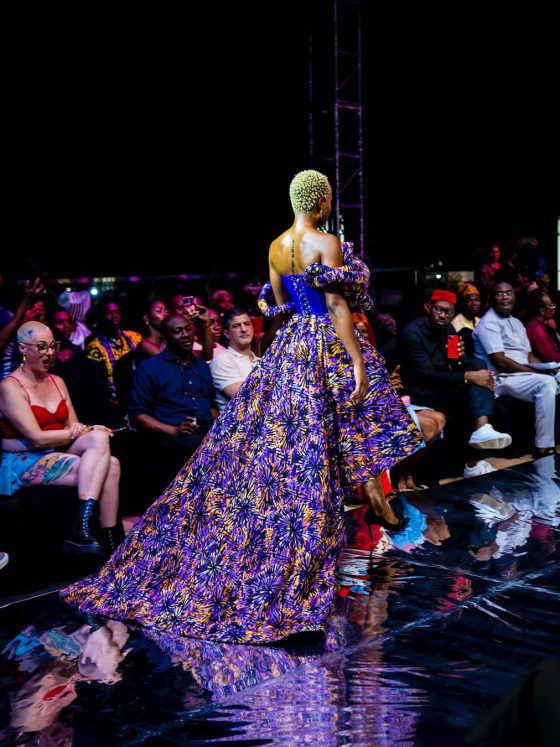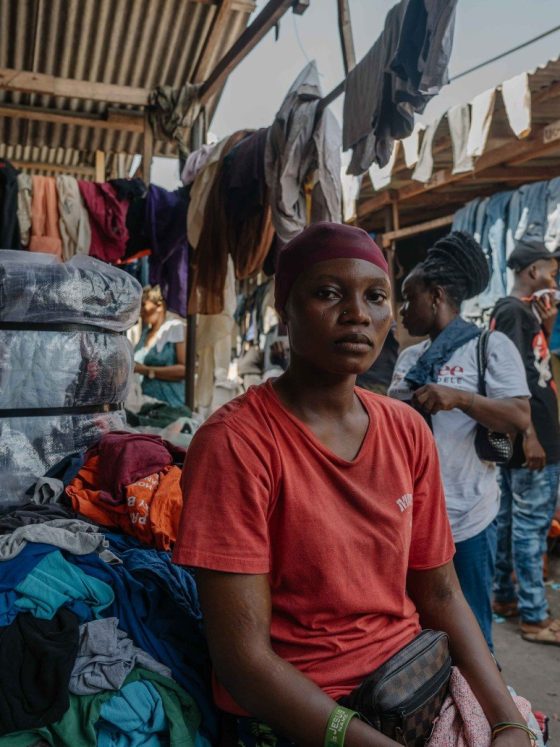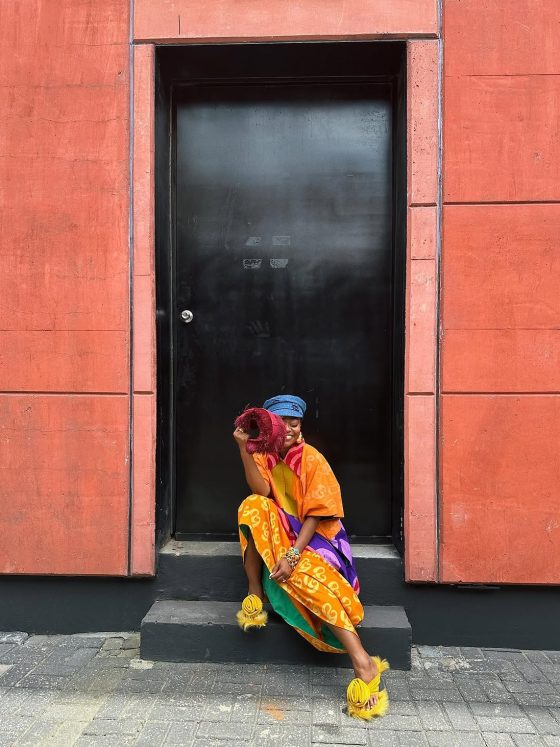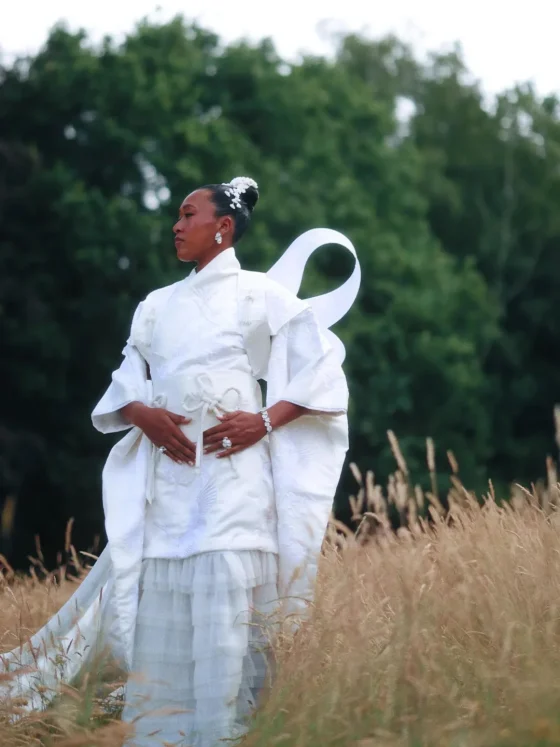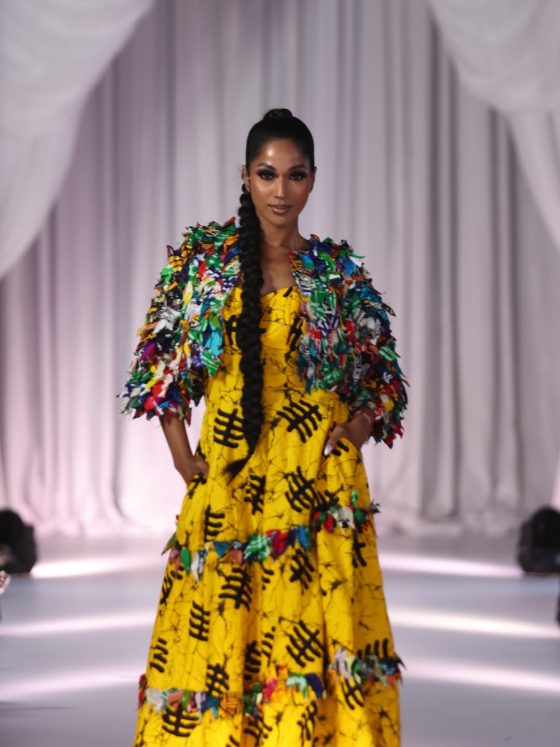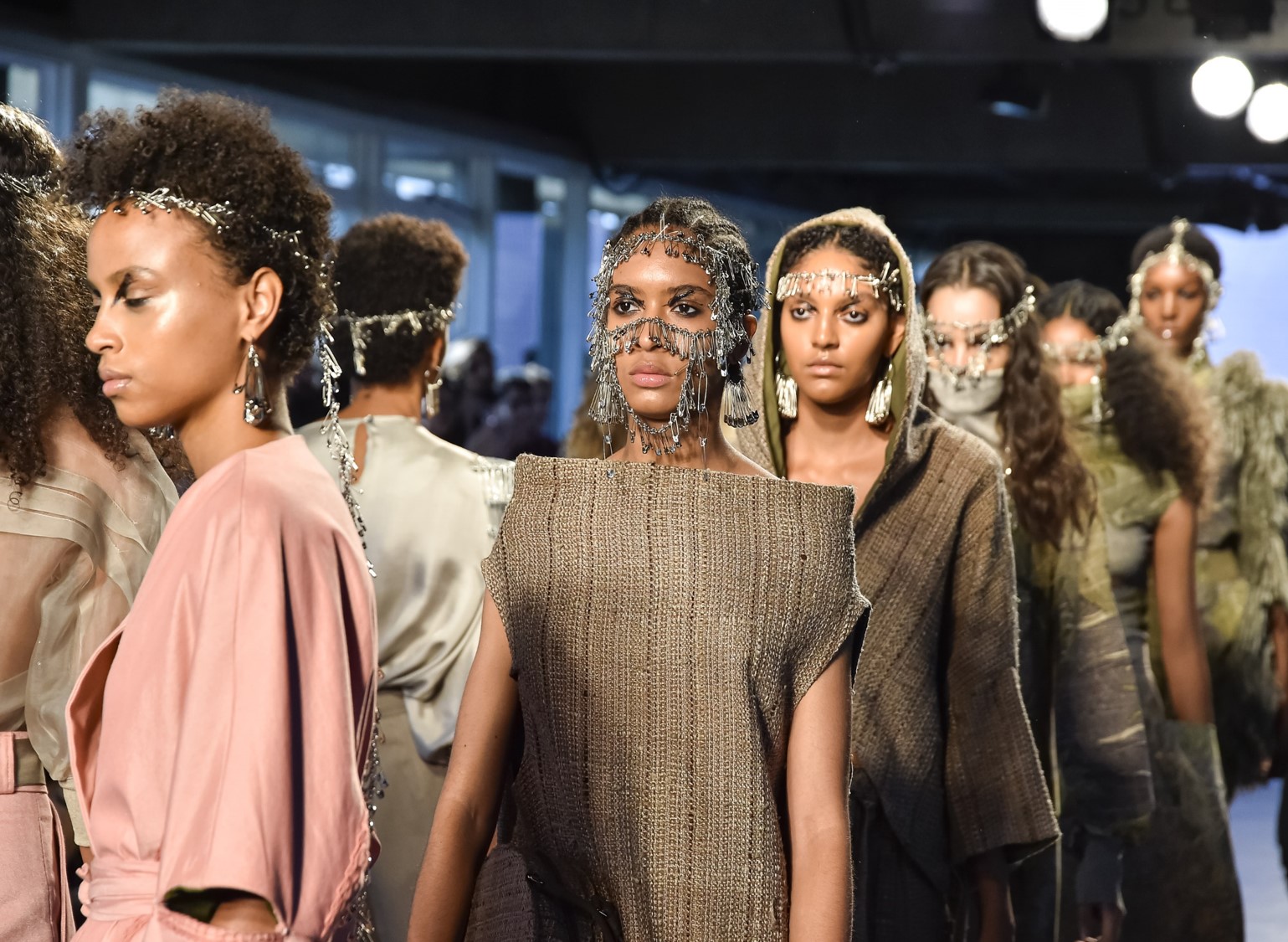
In the Pelourinho district of Salvador, Bahia, the cobblestones were once the site of the largest slave market in the Americas. Today, directly adjacent to the colonial architecture that housed that market, you will find a neighbourhood whose cultural fabric is woven from West African influence so direct that its food comes from Ghana, its music from Nigeria, its religion from the Yoruba, Fon, and Bantu peoples who arrived in chains and built a civilisation from what they carried. Salvador is the most African city outside of Africa. Its fashion is the most direct evidence that African craft tradition did not end at the shore.
Brazil received nearly six million enslaved Africans during the Atlantic slave trade. It was the last country in the Americas to abolish slavery, in 1888. More than 50 per cent of Brazil’s current population of 216 million identifies as Black or Brown. In Salvador, that figure exceeds 80 per cent. The designers working from this context are not making fashion inspired by Africa. They are making fashion from Africa, in the body of a country that has never fully reckoned with what that means.
Brazil received nearly six million enslaved Africans. What survived in the cloth is now on the runway. Meet the Afro-Brazilian designers building fashion from that inheritance.
What the Atlantic Trade Left Behind in the Cloth
The connection between West African textile and dress traditions and Brazilian fashion is not metaphorical. UNESCO’s Brazil office documents that the majority of Africans brought to Brazil were Yoruba and Bantu people from present-day Nigeria, Benin, Angola, and the Congo region. They brought with them their knowledge of weaving, dyeing, beadwork, and the specific dress traditions of Candomble, the Afro-Brazilian religion whose garments, colours, and textile protocols encode the full grammar of Yoruba orixas in cloth.
The Bahiana dress, the white layered skirt and headwrap worn by the women who sell acaraje in Salvador’s streets and who lead Candomble ceremonies in the terreiros, is a West African dress that has survived. As the Harvard ReVista documents through the curatorial work of Hanayrá Negreiros at the Museu de Arte de São Paulo (MASP), the history of dress among Afro-Brazilians is a history of survival under systematic suppression: white elites banned African-coded clothing and accessories from public spaces between 1905 and 1913, and police raided Candomble terreiros and confiscated their sacred objects throughout the 20th century. The fashion that emerged from this suppression was fashion as resistance, not fashion as aesthetic choice.
Africa’s A Country notes that for the first time in 2024, Brazil commemorated National Black Consciousness Day as a federal holiday on November 20, a date marking the death of Zumbi dos Palmares, the leader of the largest quilombo resistance community in Brazilian history. The quilombos, the communities founded by escaped enslaved Africans in the Brazilian interior, were the original spaces where African dress, religion, and culture were maintained outside colonial surveillance. Their descendants, the Quilombolas, number approximately 16 million people in around 5,000 rural communities across Brazil, according to the Fundação Cultural Palmares.
“I make my clothes for the Black people who want to reclaim their connection to their African heritage.” Renato Carneiro, Katuka Africanidades, Salvador
Salvador: The City That Never Stopped Wearing Africa
Salvador, Bahia, is the creative and cultural centre of Afro-Brazilian fashion. Fashionista’s investigation into Afro-Brazilian fashion identifies it as a city where more than 90 per cent of the population identifies as Black or brown and where food from Ghana, music from Nigeria, and fashion from Senegal are woven into the everyday fabric of its streets. The fashion that emerges from this context is distinct from fashion produced elsewhere in Latin America precisely because it is rooted in living African cultural practice, not in heritage references.
Renato Carneiro and Katuka Africanidades
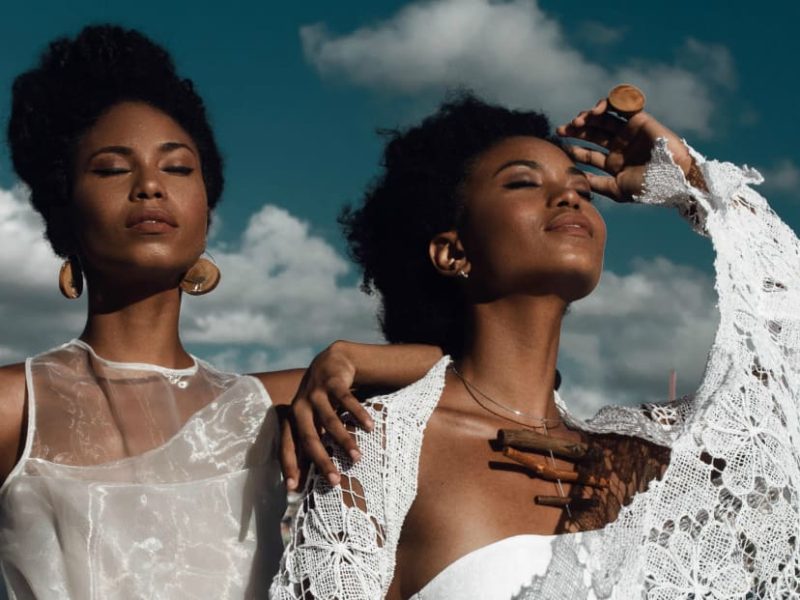
Renato Carneiro has been based in Salvador for more than a decade and is originally from São Paulo. His label, Katuka Africanidades, is built on fabrics sourced directly from Nigeria, Senegal, and Benin, and on the specific visual language of African women’s dress as Carneiro encountered it through Afro-Brazilian religious and cultural life in Bahia. “I wanted to create a place that affirmed the plurality of all our lives when it comes to things like identity and sexuality,” he has said. “A place that focused on the heritage of Afro-Brazilians, people in the diaspora and in Africa.” His clothing is not inspired by West African dress. It is made from West African fabric for people whose African heritage was systematically denied to them.
Aline Barreto and Andrea Lopes
Two other Salvadoran designers documented in Fashionista’s account of Afro-Brazilian fashion in Salvador represent the intellectual and activist dimension of the practice. Aline Barreto became the first Afro-Brazilian to show at Black Fashion Week in Paris. She is also a professor of gender studies and feminism at the Federal University of Bahia, a columnist for RAÇA Magazine, and an activist whose work explicitly positions fashion as an anti-racist political practice. “My work as an artist and researcher deals with the relationship between fashion, feminism and anti-racist activism,” she says. Andrea Lopes has shown at Columbia College’s African Heritage Celebration in Chicago and at the Axe Bahia Exposition at UCLA’s Fowler Museum. Neither had, at the time of their documentation, been invited to show at São Paulo Fashion Week, Latin America’s largest fashion event. The exclusion is structural, not incidental.
São Paulo Fashion Week and the Sankofa Project
For most of São Paulo Fashion Week’s history, Afro-Brazilian designers were absent from its official calendar. ADJOAA’s analysis of memory and identity in Afro-Brazilian fashion documents the shift: only from 2021 did Afro-Brazilian brands begin to have visibility at SPFW, a change catalysed by the global reckoning around racism that followed the death of George Floyd in the United States. Today, brands with Black designers represent more than 30 per cent of the event’s line-up, though that number still does not reflect a Brazilian population where more than half identify as Black or Brown.
The Sankofa Project, created by the Pretos na Moda movement and the social innovation startup VAMO (Vetor Afro Indigena na Moda), in partnership with SPFW, has placed eight Black and Indigenous designers on the official SPFW calendar, with mentorship from established designers. Its name, Sankofa, draws from the Akan concept of looking back to move forward: the idea that understanding your origin is a prerequisite for building your future. That concept governs what the Afro-Brazilian designers in this project produce.
Naya Violeta
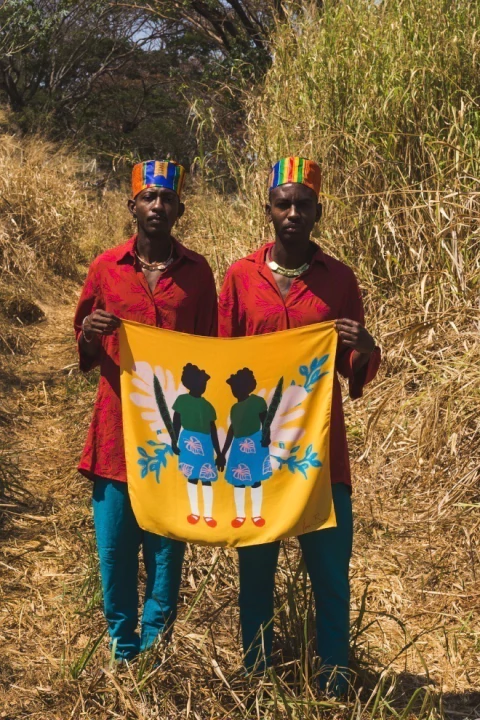
Naya Violeta was the first designer from the state of Goias and the first woman from that state to present a collection at São Paulo Fashion Week. She is part of the Sankofa Project’s inaugural cohort. Her collections centre on what she calls “afroafetividade”, a Portuguese construction meaning Afro-affectivity: the emotional and aesthetic grammar of Black Brazilian life rooted in African cultural inheritance. Her collections reference Candomble orixas directly: one collection was built around the figure of Iroko, the orixá-tree through which the gods descended to earth in Yoruba cosmology. The fabrics she uses are natural fibres, primarily cotton and linen, in cuts that accommodate bodies that conventional Brazilian fashion has historically refused to dress. “I don’t only make clothes,” she has said. “The clothes I make carry a communication and an afroafetividade that is how I want to leave my legacy.”
Atelie Mao de Mae

Atelie Mao de Mae, also a Sankofa Project participant, works in crochet: the same fibre craft tradition that Rachel Scott of Diotima traces from Jamaica back to its West African origins. In Bahia, crochet is not a decorative technique. It is a Candomblé tradition, encoded in the garments worn by the women who serve the terreiros. ADJOAA’s account of the label’s SPFW presentation describes pieces made with exposed crinoline structures, the same structure used to give volume to the traditional Bahiana women’s skirt, alongside contemporary cuts that carry the same visual language into entirely new silhouettes.
Also Read:
- Meet the Afro-Latino Designers Bridging West Africa and the Caribbean on the Runway
- Renato Carneiro and Katuka Africanidades: When Fashion Becomes an Act of Civilisational Memory
- How African Heritage Designers in Paris Are Challenging the Maison System
- The African Designer Gift Guide: 10 Brands Worth Giving
The International Dimension: Africa Fashion Week Brazil
In May 2023, the Expo Centre Norte in São Paulo hosted Africa Fashion Week Brazil, organised by Queen Aderonke Ademiluyi-Ogunwusi (wife of the Ooni of Ife) in collaboration with businesswoman Silvana Saraiva. Africa Fashion Week Brazil 2023 featured Nigerian designers, including Ejiro Amos Tafiri, who presented Adire Oodua textiles, with support from the Nigerian Export Promotion Council. The event explicitly framed itself as a platform for Black emancipation and as a strengthening of the economic and cultural ties between Nigeria and Brazil, two countries whose African connection runs through the same Yoruba communities that were separated by the Atlantic slave trade in the 17th and 18th centuries.
The event points toward a longer conversation that Afro-Brazilian designers are now making audible: the return of African textiles to Brazil is not an import. It is a homecoming. The Yoruba fabric that Renato Carneiro sources from Nigeria and puts on the bodies of Black Bahians is the same fabric that Yoruba enslaved people wore to Salvador in the 1700s. The Minority Rights Group’s profile of Afro-Brazilians documents that generations of Brazilians of African descent preserved their cultural heritage and religions through centuries of state-sponsored suppression, and that Candomble and its traditions are central to the lives of many Afro-Brazilians. The fashion emerging from El Salvador is inseparable from that of religious and cultural survival.
THE OMIREN ARGUMENT
Afro-Brazilian fashion is not African-inspired. It is African, rerouted through 400 years of Brazilian survival. When Renato Carneiro sources fabric from Senegal and Nigeria and puts it on the bodies of Black Bahians who are the descendants of Yoruba and Bantu enslaved people from those same regions, he is not referencing Africa. He is completing a circuit that the slave trade interrupted. When Naya Violeta builds a collection around Iroko, the Yoruba orixá-tree, she is not drawing on cultural inspiration from a distant continent. She is speaking the cosmological language that nearly six million enslaved Africans brought to Brazil, and that survived in the terreiros and the quilombos and the dress of the Bahiana women through two centuries of state-sponsored suppression.
The context is the fashion industry, both in Brazil and internationally, that has systematically excluded Black Brazilian designers while appropriating the visual language of Afro-Brazilian culture. The white elite of São Paulo Fashion Week spent decades presenting the culture of a country that is majority Black through the aesthetic of a country that wishes it were majority white. The Sankofa Project is not a diversity initiative. It is a structural correction of a structural lie.
The disruption is the designers themselves: Aline Barreto, the first Afro-Brazilian to show at Black Fashion Week in Paris, who is simultaneously a professor of feminist and anti-racist scholarship at the Federal University of Bahia. Naya Violeta, the first Goiana designer at SPFW, describes fashion explicitly as a political tool. Renato Carneiro, who sources his fabric from the African continent, names this sourcing as an act of cultural reclamation. ADJOAA’s account of Afro-Brazilian fashion frames it correctly: the designers present at SPFW are creating beauty from memory, festivity, and the culture of their territories. They are making fashion from what Africa left in Brazil and what Brazil tried to erase. The erasure did not work. The cloth remained.
Frequently Asked Questions
What is Afro-Brazilian fashion?
Afro-Brazilian fashion is fashion produced by designers of African descent in Brazil that draws on the textile, dress, and aesthetic traditions that survived the Atlantic slave trade in Brazilian communities. It has its strongest cultural roots in Salvador, Bahia, where more than 80 per cent of the population identifies as Black or Brown and where West African cultural influence is direct and continuous. Fashionista’s documentation of Afro-Brazilian fashion in Salvador describes it as rooted in an eclectic use of styles, prints, and fabrics from African countries, alongside additions distinct to Black life in Brazil. Candomble, the Afro-Brazilian religion derived primarily from Yoruba traditions, is central to much of this fashion tradition.
How large is the Afro-Brazilian population?
More than 50 per cent of Brazil’s population of approximately 216 million identifies as Black (preto) or Brown (pardo). Brazil received nearly six million enslaved Africans during the Atlantic slave trade, more than any other country in the Americas, and was the last to abolish slavery, in 1888. The majority of enslaved Africans brought to Brazil were Yoruba and Bantu peoples from present-day Nigeria, Benin, Angola, and the Congo region. Their cultural inheritance, including dress traditions, religious practice, cuisine, and music, is documented by UNESCO’s Brazil office as the foundation of much of what is recognised as distinctively Brazilian culture.
What is the Sankofa Project at São Paulo Fashion Week?
The Sankofa Project is a programme created by the Pretos na Moda movement and social innovation startup VAMO (Vetor Afro Indigena na Moda) in partnership with São Paulo Fashion Week. It selects Black and Indigenous designers to present collections at SPFW with mentorship from established designers. Business of Fashion’s coverage of SPFW documents its participants, including Naya Violeta, Atelie Mao de Mae, and six other designers from its inaugural cohort. The name Sankofa is drawn from the Akan concept, represented by a bird looking back over its shoulder, meaning that understanding your origin is necessary to building your future.
Who is Naya Violeta, and why is she significant?
Naya Violeta is a Goiás-born fashion designer who was the first designer from her state, and the first woman from Goiás, to present a collection at São Paulo Fashion Week. She is part of the Sankofa Project’s inaugural cohort. Her design practice is built around what she calls “afroafetividade”, the emotional and aesthetic grammar of Black Brazilian life rooted in African cultural inheritance. Her collections reference Candomble cosmology directly, use natural fibres exclusively, and are designed for bodies that conventional Brazilian fashion has excluded. She describes her work as a political tool and states that clothes that carry afroafetividade are her intended legacy.
What is the relationship between Brazilian and West African fashion traditions?
The relationship is genealogical, not stylistic. The majority of enslaved Africans brought to Brazil were Yoruba from present-day Nigeria and Benin, and Bantu from the Angola-Congo region. They brought with them their knowledge of weaving, dyeing, beadwork, and the specific dress traditions of Yoruba religion, which survived in Candomble and in the everyday dress of Afro-Brazilian communities, particularly in Bahia. The Bahiana dress, the traditional garment of Salvador’s women, is a West African dress that survived the Atlantic crossing. NDAANE’s documentation of Afro-Latino and Afro-Caribbean designers situates this within the broader pattern of African craft traditions surviving intact in diaspora communities across Latin America and the Caribbean, where they were maintained through generations despite systematic colonial suppression.
The Diaspora Is the Story
Omiren Styles documents African fashion and culture across all 54 nations, the Caribbean, Latin America, and the global diaspora. The Diaspora Connects series maps what of Africa never left. Subscribe for editorial intelligence that takes the long view.