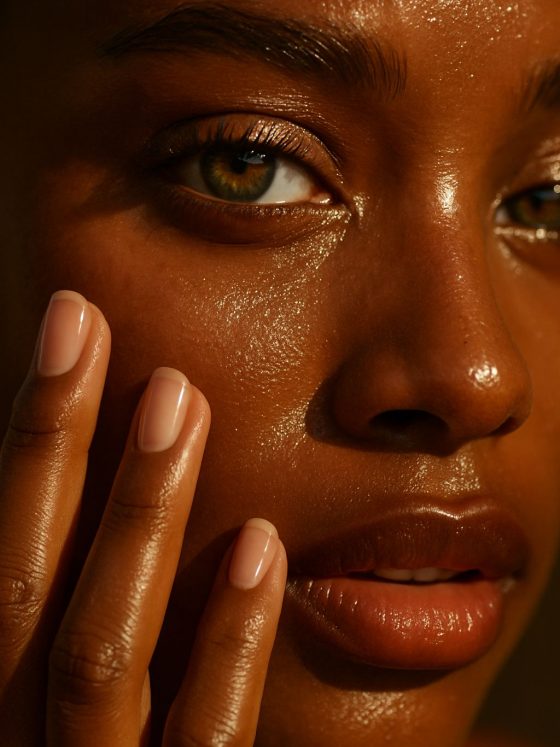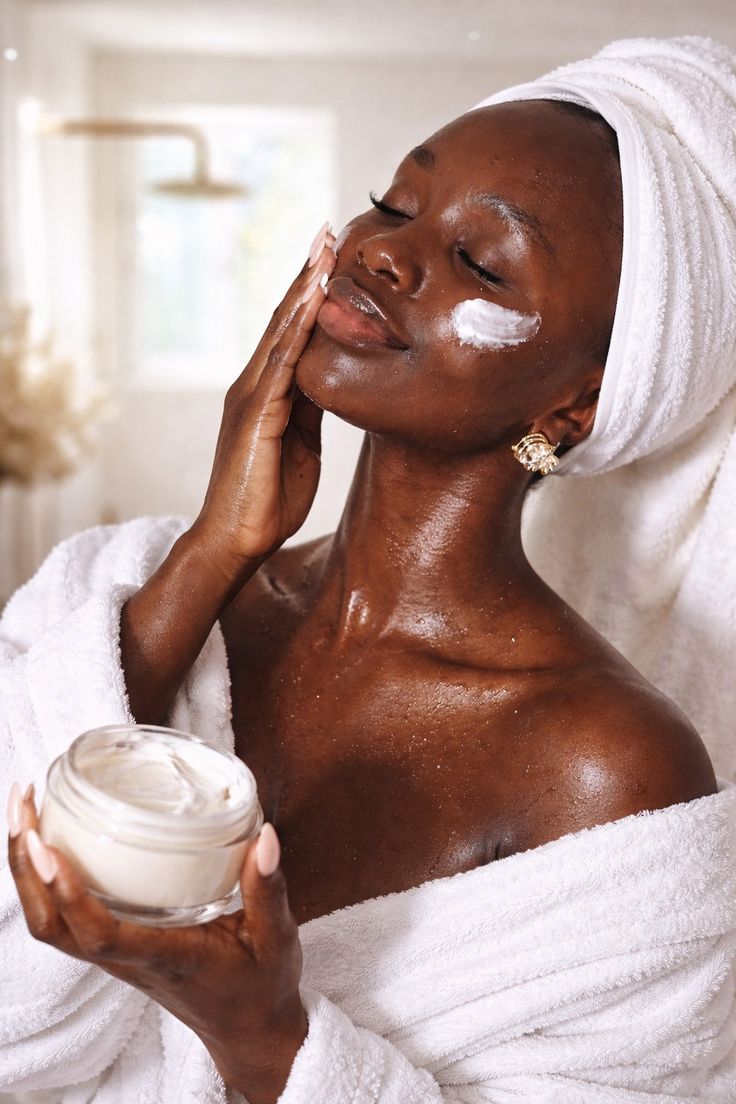
Vogue was founded in 1892. It published its first cover in an era before radio, before television, before the internet existed to circulate an image faster than a magazine could print one. For 127 years, across thousands of covers, the magazine’s visual archive of who counts as beautiful did not include a single person with albinism. In April 2019, Vogue Portugal put Thando Hopa, a South African model, lawyer, and activist, on its cover. She was the first person with albinism in the magazine’s history to appear there. Hopa described what that absence had meant to her before it ended: ‘As much as that was an achievement, it was also a reminder of the historic absence and anonymity people with albinism have experienced on such platforms.’
That sentence is the argument of this piece, stated by the person who lived it. The face is never just a face in African media. It is read as status, gender, desirability, health, class, and identity all at once, which is why beauty rituals and skin politics carry such heavy meaning. The face functions as an archive: it stores cultural ideas about beauty, difference, respectability, and belonging, and those ideas are constantly being rewritten in public view. Hopa’s cover did not simply add one face to that archive. It exposed how long the archive had been incomplete, and how normal that incompleteness had come to feel.
Vogue was over a century old before a person with albinism appeared on its cover. Thando Hopa’s 2019 Vogue Portugal cover is the archive metaphor lived in practice: one hundred years, one kind of face. This is what African media’s beauty archive is still missing, and why.
What the Face Archives
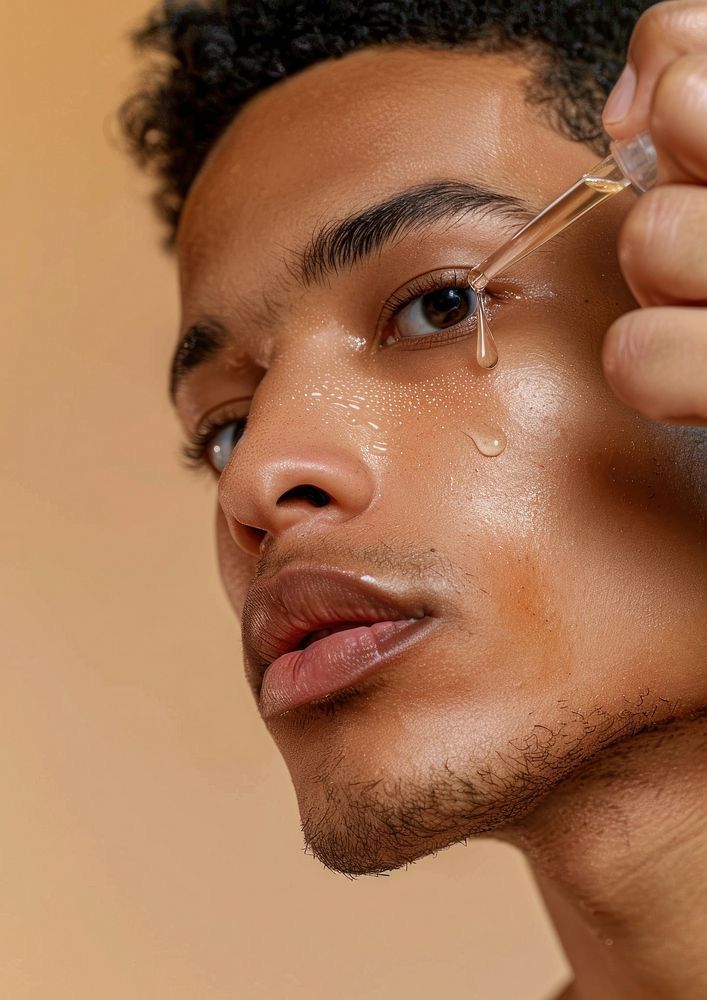
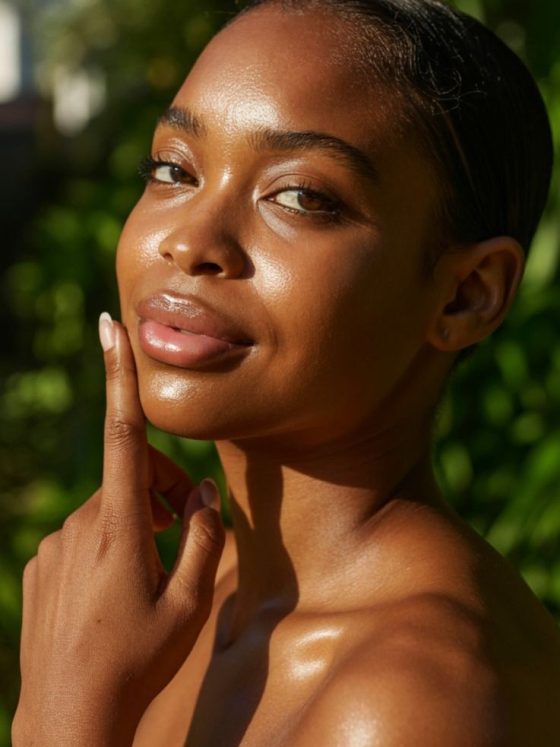
The face archives more than individual expressions. In many African societies, it becomes a surface where beauty norms, ethnic markers, class assumptions, and moral judgements are projected. People are often read before they are known, and the face is one of the first places where that reading happens. That is why beauty rituals matter so much. Skincare, makeup, grooming, headwear, and choices about restraint or embellishment all contribute to how the face is interpreted. These rituals are not superficial. They help people place themselves within cultural expectations and social environments.
The archive metaphor is useful because it explains how memory works through appearance. A face can remind viewers of family resemblance, regional identity, youth, authority, or aspiration. It can also trigger bias. African media intensifies this process. The camera, caption, editorial frame, and social feed all shape whether a face is treated as ordinary, idealised, exotic, or othered. What gets shown repeatedly becomes what is understood as normal. Hopa named exactly this mechanism when she reflected on her own career: ‘Right now I’m known as Thando the model with albinism. I want there eventually to be a day when I am known not as someone with albinism, but just as Thando.’
Beauty Rituals and Skin Politics
Skin politics enters when certain tones, textures, or features are privileged over others, and the media reinforces those preferences by repeatedly circulating narrow ideals of beauty. This is not an abstract claim. The World Health Organisation’s African Region documented in a November 2023 analytical fact sheet that between 25% and 80% of women across African countries regularly use skin-whitening products, with prevalence ranging from 25% in Mali to 77% in Nigeria, 50% in Senegal, and 66% in Congo-Brazzaville. The same report traced the practice to roots in the transatlantic slave trade and its continuation through European colonisation, meaning today’s skin-lightening market is not a contemporary trend. It is the ongoing commercial expression of a beauty hierarchy established centuries ago and never fully dismantled.
Over time, people learn which faces are rewarded with visibility and which are treated as less photogenic, less glamorous, or less marketable. A repeated image can become a standard, and a standard can become a gatekeeper. Beauty rituals can resist that pressure, but they can also reproduce it. The important point is that the face is never politically innocent. African beauty culture is much broader than the single visual grammar often used to represent it, but media attention does not always reflect that breadth.
It shapes how people see themselves. It shapes what children learn to admire. It shapes what brands choose to promote. It shapes who feels visible enough to participate without apologising for their appearance.
Albinism and Visibility
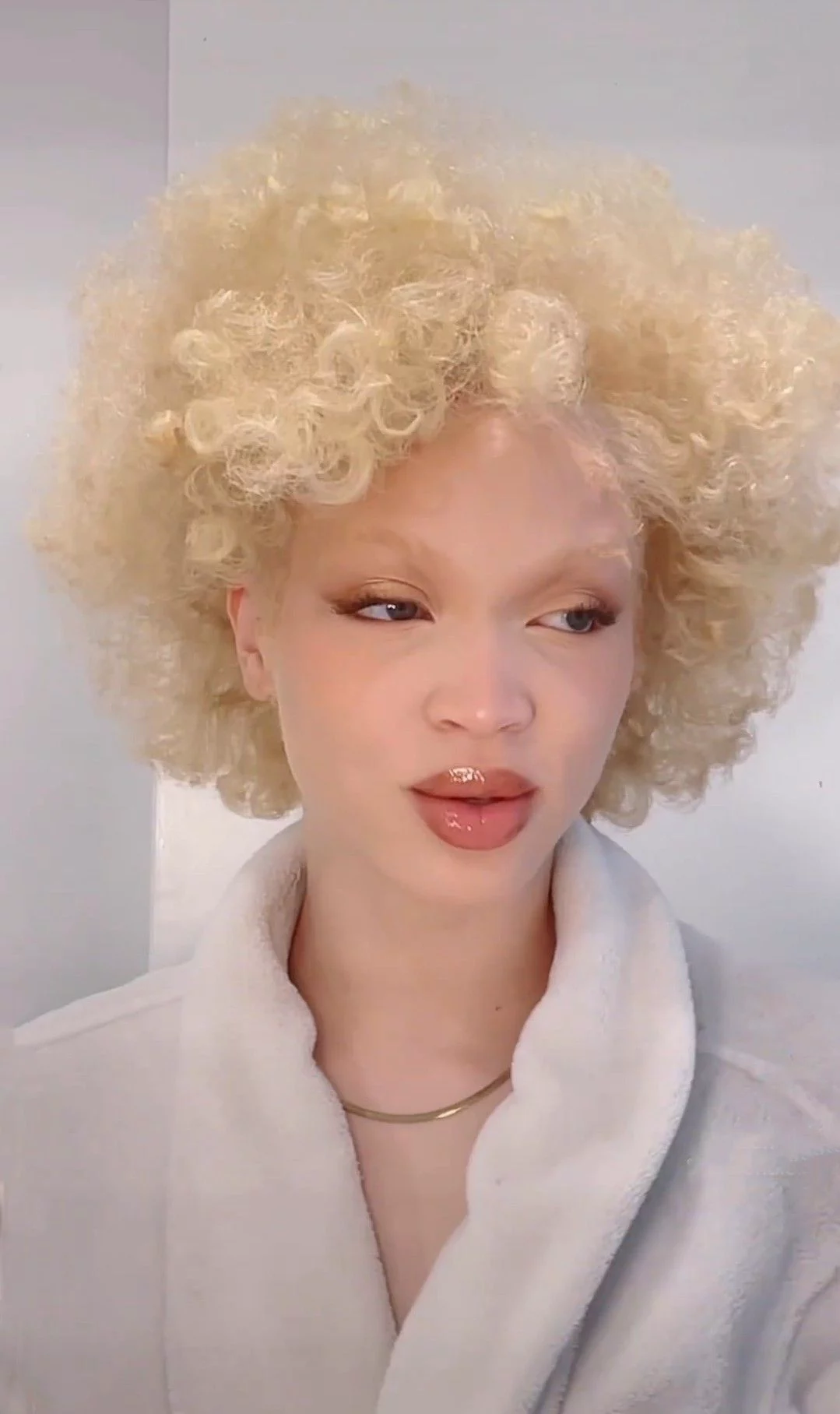
Albinism makes the politics of visibility especially sharp. In African media, people with albinism are often either hypervisible as symbols of difference or invisible in everyday beauty narratives. Both forms of treatment are damaging in different ways. Hypervisibility can turn a person into a spectacle: a face becomes something to be explained, consumed, or discussed as an exception rather than lived as an ordinary human presence. Invisibility is just as serious. If people with albinism only appear in media as rare examples, inspirational figures, or cautionary stories, they are not being represented as part of the normal range of African beauty and identity. They are being positioned outside the main picture.
Refilwe Modiselle, South Africa’s first professional fashion model with albinism and the face of the LEGiT campaign in 2012, has described the stakes of this positioning directly: ‘Many clients don’t believe their market is ready for an albino model.’ That statement names the gatekeeping mechanism precisely. The market was never asked whether it was ready. The assumption was made on its behalf by the people deciding who gets cast.
Diandra Forrest, the US model with albinism who appeared at Africa Fashion Week in 2012 alongside Modiselle, put the stakes in similarly direct terms: ‘It matters a lot to me to be here, because I want to change the way people see girls with albinism on the continent.’ The challenge these women were naming is the shift from spectacle to respect: showing people with albinism as participants in beauty culture, fashion, family life, work, and public life, rather than as exceptions outside the norm. Albinism forces a larger question: who gets to be considered beautiful in the first place? If the answer is too narrow, the media is not describing beauty. It is enforcing a filter.
ALSO READ
- The Cultural Codes of Dressing Well: What Every Society Understands About Style and Respect
- How African Identity Is Styled Differently Across Continents
What African Media Gets Wrong
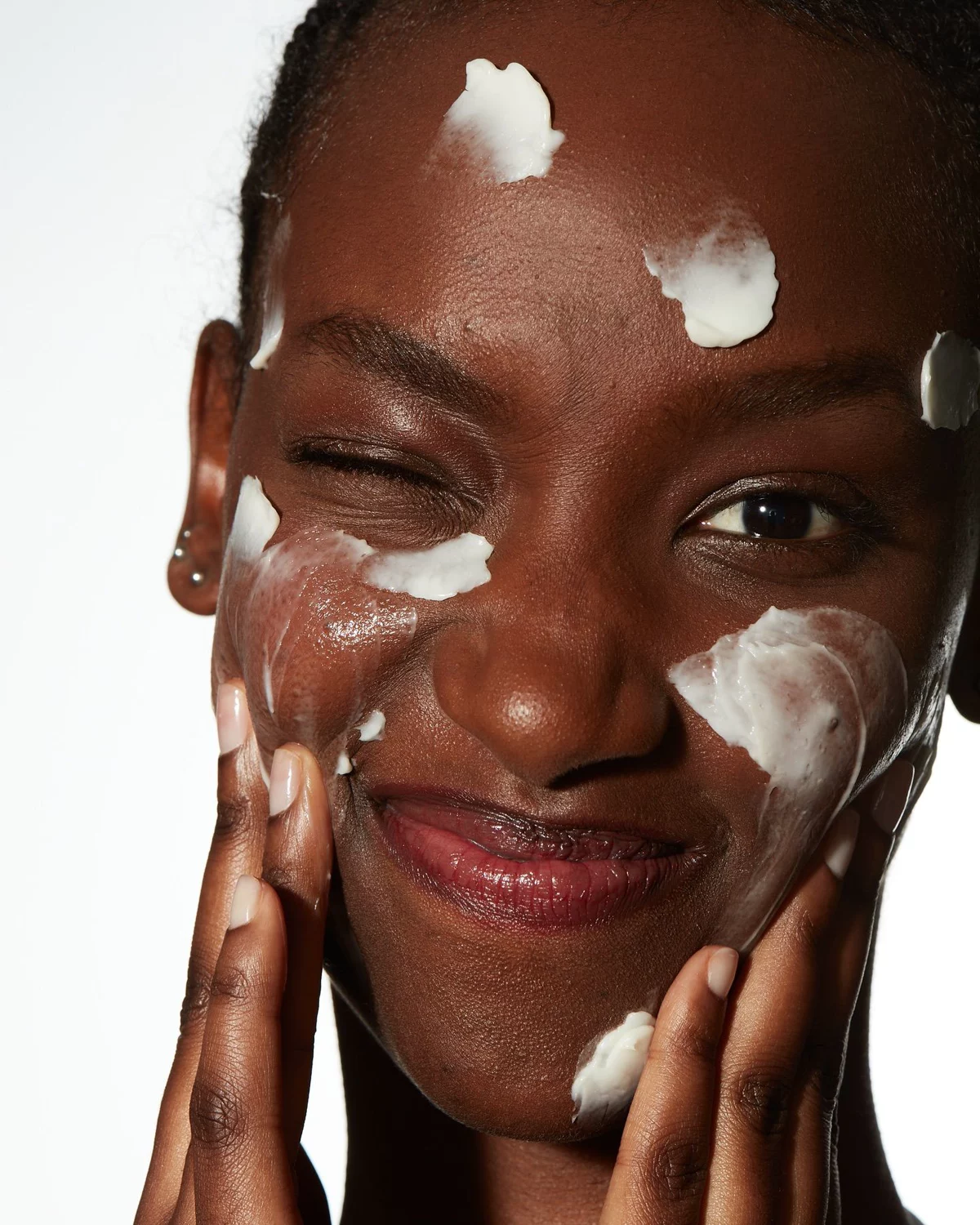
African media can sometimes reproduce the same exclusions it claims to challenge. It may praise diversity in principle while still circulating the same narrow facial ideals in practice. This happens when beauty coverage relies too heavily on familiar templates: symmetry, brightness, youth, and conventional glamour. Albinism then becomes a point of difference rather than a normal part of the beauty landscape. The result is an incomplete public archive. If the same kinds of faces are constantly celebrated, the media trains viewers to think those faces are the standard. Everyone else becomes a variation instead of a full expression of beauty.
Hopa’s ambition, stated plainly, is to be known not as someone with albinism, but simply as herself. That ambition is not a rejection of her condition. It is a rejection of a media archive that has only ever had room for her as an exception. The archive metaphor matters because archives are never neutral. They preserve some things and forget others. If African media only preserves one kind of face, it is not documenting beauty truthfully.
What a Fuller Archive Looks Like
A fuller archive would show many kinds of faces with equal seriousness. It would not reserve beauty for one complexion, one texture, one level of symmetry, or one kind of camera-ready polish. It would treat albinism as part of the ordinary range of African life rather than as a visual interruption. It would also change how editors and journalists write about appearance: instead of framing difference as surprise, they would frame it as reality.
Modiselle described what that change would mean in practice when she reflected on her own work alongside Forrest: ‘I really feel that the work Diandra and I are doing is the beginning of a real change.’ This would not require lowering standards. It would require widening them, which is a very different task. It means improving representation by refusing to confuse familiarity with truth.
THE OMIREN ARGUMENT
The face functions as an archive because it carries the cultural record of who is considered beautiful, visible, and worthy of recognition. In 2019, Thando Hopa became the first person with albinism to appear on the cover of Vogue. The magazine was over a century old. As Hopa said herself: ‘As much as that was an achievement, it was also a reminder of the historic absence and anonymity people with albinism have experienced on such platforms.’ That sentence is the archetypal metaphor lived in practice. One hundred years of visual culture. One kind of face.
Beauty rituals, skin politics, and media selection are not separate systems. There are three mechanisms of the same gatekeeping process, and the WHO’s documentation that between a quarter and four-fifths of women across African countries regularly use skin-whitening products is evidence of how deep that gatekeeping runs, not a footnote to it. African media must expand the archive of beauty not because it would be generous or progressive to do so, but because its current archive is factually incomplete. Omiren’s position is that visibility must become a form of dignity, not an act of exception.
Frequently Asked Questions (FAQs)
What does it mean to call the face an archive?
It means the face stores and reflects cultural ideas about beauty, identity, class, belonging, and value, and that those ideas are recorded and rewritten every time a face is chosen for visibility or excluded from it. Thando Hopa’s 2019 Vogue Portugal cover demonstrated this directly: the magazine had operated for 127 years without a person with albinism on its cover, meaning its visual archive of beauty had a documented, century-long gap that only became visible once it was filled.
Why is Thando Hopa important to this discussion?
Thando Hopa, a South African model, lawyer, and activist, became the first person with albinism to appear on the cover of Vogue when she was featured on the April 2019 issue of Vogue Portugal. She described the achievement and its weight together: ‘As much as that was an achievement, it was also a reminder of the historic absence and anonymity people with albinism have experienced on such platforms.’ Her cover is the clearest documented example of how African and global beauty media can make a person hypervisible as an exception while having failed, for over a century, to represent that same identity with ordinary dignity.
What do the skin-lightening statistics reveal about African beauty standards?
The World Health Organisation’s African Region reported in a November 2023 fact sheet that between 25% and 80% of women across African countries regularly use skin-whitening products, with country-level prevalence ranging from 25% in Mali to 77% in Nigeria. The same report traces the practice to roots in the transatlantic slave trade and European colonisation, meaning the contemporary market for skin-lightening products is the continuation of a beauty hierarchy imposed centuries ago rather than a recent trend. This data confirms that skin politics in African media is not a matter of individual preference but a documented, historically rooted, and still-active system.
How do beauty rituals relate to visibility in African media?
Beauty rituals, including skincare, makeup, grooming, and styling choices, shape how people present themselves and how they are read in public and media spaces. The media reinforces certain preferences by repeatedly circulating narrow ideals of beauty, and over time, those repeated images become standards. Refilwe Modiselle, South Africa’s first professional fashion model with albinism, named this mechanism directly: ‘Many clients don’t believe their market is ready for an albino model.’ That statement shows how gatekeeping decisions are made on behalf of an audience that was never consulted, relying on assumptions rather than evidence.
Why does this matter specifically for African media?
Because African media has the same power as any other media to decide who is seen as beautiful, and the archive it builds through those decisions shapes how millions of people understand themselves. Diandra Forrest, who appeared at Africa Fashion Week in 2012, described her presence there as an attempt to change how girls with albinism are seen on the continent. Refilwe Modiselle described her own work alongside Forrest as the beginning of a real change. Both statements confirm that expanding the archive is not a request for charity. It is a correction of a record that has been incomplete for as long as it has existed.