This article contains affiliate links. We may earn a small commission if you purchase through our links at no extra cost to you.
Sunscreen is often described as a universal, straightforward, necessary, and non-negotiable step. However, it has never been easy for people with deep skin tones. A visible trade-off, such as a white cast, grey undertones, or a dull, ashy finish that changes the skin’s appearance, frequently breaks the promise of protection.
This is not a small annoyance. It is a formulation-and-application issue that has been routinely disregarded. The majority of SPF products are developed and evaluated without prioritising melanin-rich skin. Consequently, the user now bears the responsibility not only for selecting the appropriate product but also for figuring out how to make it function.
The point of failure is layering. Sunscreen is rarely used by itself. It is layered over oils, serums, and moisturisers, and each layer influences how it absorbs, mixes, and looks in the end. Inadequate layering not only diminishes effectiveness on deep skin tones, but it also shows up right away.
The selection of sunscreen is not the main topic of this write-up. It emphasises how to properly apply SPF on deep skin tones because, in many cases, the procedure rather than the product is what distinguishes protection from avoidance.
Struggling with white cast or ashiness? Learn the correct way to layer SPF on deep skin tones for smooth, invisible protection without compromising your glow.
White Cast Is a Formulation Issue: Ashiness Is an Application Issue
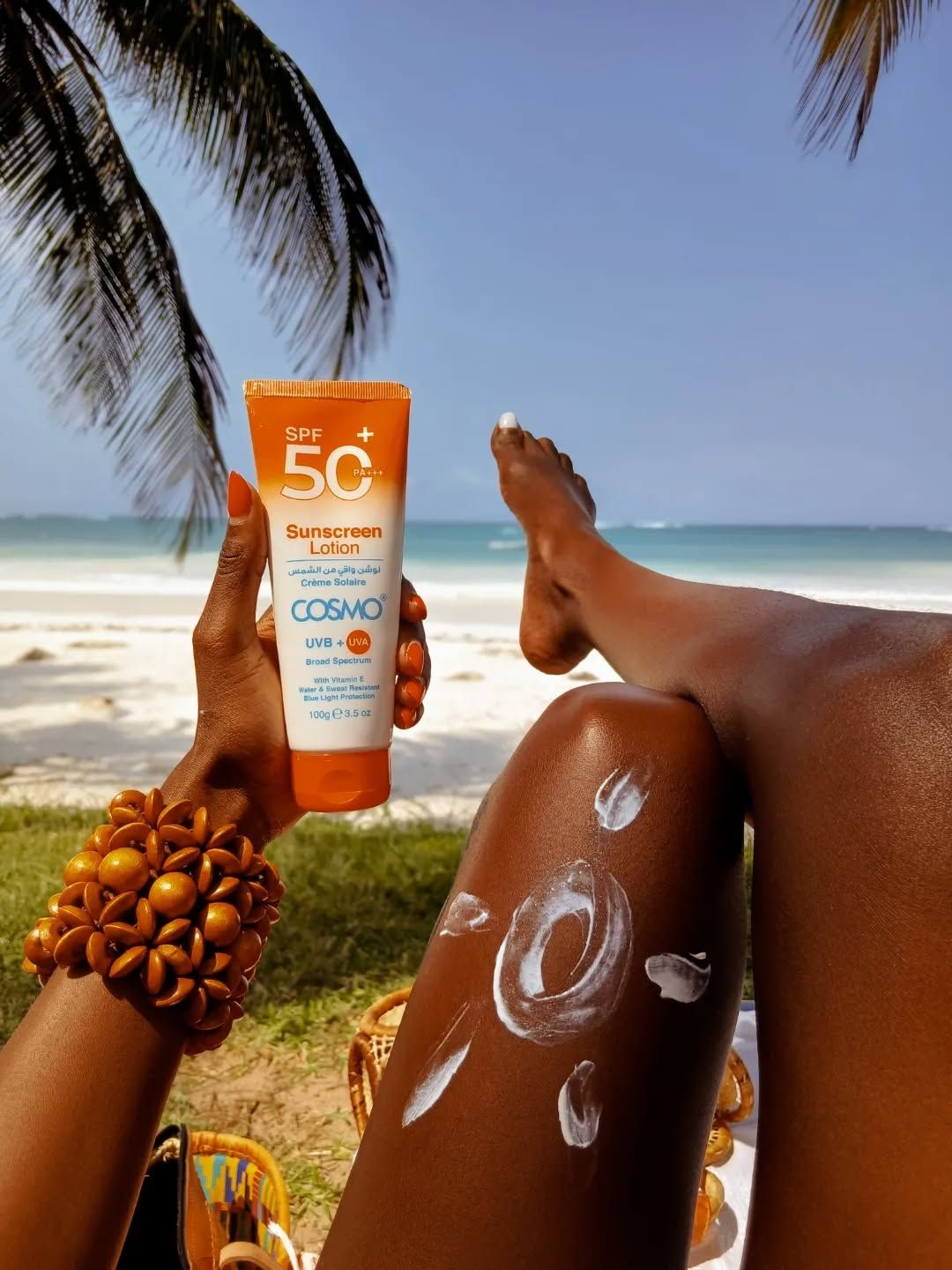
Ashiness and white cast are sometimes lumped together as the same issue, which is precisely why many procedures don’t work on people with deep skin tones. They come from distinct stages of the process, and you can’t adequately solve them if you don’t separate them.
White cast is essentially a formulation issue. It is mostly caused by mineral UV filters that rest on the skin’s surface to reflect UV light, such as zinc oxide and titanium dioxide. These components work well, but their visibility depends on their concentration, dispersion, and particle size. This visibility may be negligible or disregarded on lighter skin. Deep skin tones make it instantly apparent, transforming what ought to be an imperceptible layer of defence into a noticeable disruption of the skin’s appearance.
This exact problem makes most people with darker skin tones skip SPF altogether, which can be more damaging in the long run. But the good news is there are formulations that actually work for deeper skin tones. These are some of the most consistently recommended ones —
Ashiness, however, is more nuanced. It’s important to consider what the sunscreen is reacting with rather than just what it is. When sunscreen is applied to an unstable base, it results in ashiness. This includes skin that is dry beneath surface oil, oils that produce a slick surface, and moisturisers that have not been completely absorbed. Sunscreen dries unevenly under these circumstances, resulting in spots that reflect light differently. That irregularity appears as greyness or dullness in people with deep skin tones.
Because of this, individuals often believe that sunscreen is harmful, but in reality, the problem lies in how layers interact. When applied to the wrong base, a product that works effectively on bare skin may utterly fail. The opposite is also true: even a difficult sunscreen can sit better on a well-prepared base.
Climate is another aspect of this problem. Product movement on the skin is affected by increased sweat and sebum production in warmer African climates. Under real-world conditions, a sunscreen that appears stable in a controlled setting may migrate, separate, or oxidise. This movement further exacerbates unevenness and apparent residue.
The Correct Layering Method Is a System, Not a Step
The majority of SPF recommendations stop at apply generously and reapply every two hours. However, the problem is not understanding what to do for people with deep skin tones. It is knowing how to do it in a way that yields a consistent, undetectable outcome.
Applying sunscreen in layers is not the last step. The system starts even before the SPF comes into contact with the skin.
Preparation is the first step. Skin needs to be hydrated but not oversaturated. This distinction is sometimes overlooked. Skin that feels balanced and has absorbed moisture is considered hydrated. Conversely, an active product remains on the surface of saturated skin. When sunscreen is applied to saturation, it causes slippage, which makes distribution uneven.
Getting your layering in the right order will make a real difference in how your SPF performs and how your skin looks. A lightweight hydrating serum underneath helps the SPF blend better and last longer. This formula works well for melanin rich skin — lightweight hydrating serum.
Here, timing becomes crucial. There needs to be a useful, not random, pause after applying moisturiser or serum. The skin must settle. Rather than remaining distinct layers, this settling allows goods to become part of the skin. Sunscreen develops a third layer on top of two unstable layers if this step is skipped.
Controlled application is the second phase. One of the primary reasons for unevenness is applying sunscreen in a single motion, spreading a significant amount across the face. This results in concentrated areas where the product accumulates before it is evenly distributed across deep skin tones.
Sectional layering is a more efficient technique. Apply smaller amounts gradually, dividing the face into zones such as the chin, cheeks, and forehead. This makes it possible to distribute evenly without going overboard. To ensure uniformity throughout the face, each section is blended before going on to the next.
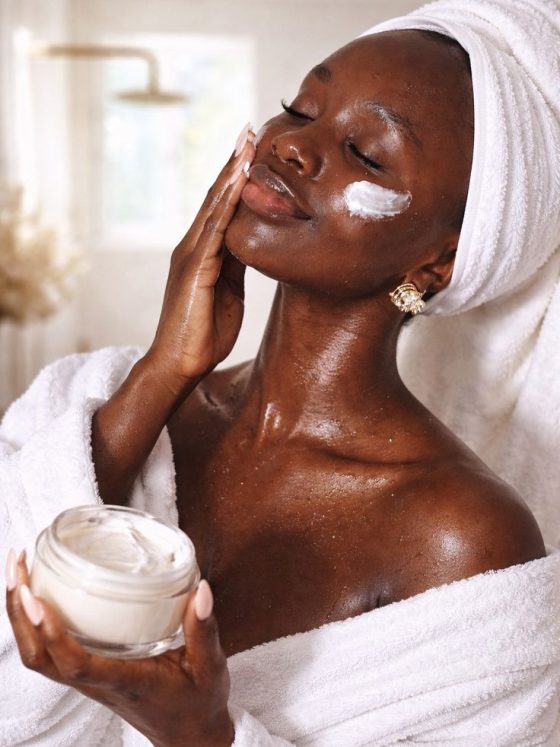
Technique is the third step. Most people use rubbing, which creates friction and disturbs the layers beneath. On the other hand, smoothing and pressing help the sunscreen blend into the skin without moving. This technique greatly enhances finish and lessens streaking.
Environmental aspects also need to be taken into account. The skin is rarely static in hot climates. Shortly after application, sweat starts to develop, and oil production rises during the day. This means that before exposure to these conditions, sunscreen needs to be applied correctly. Stability decreases when rushing out right after application.
Chemical sunscreens tend to leave less visible residue because they absorb into the skin rather than sit on top of it. However, well-formulated mineral or tinted sunscreens can also work effectively without leaving a white cast.
If you have been avoiding mineral SPF because of the white cast issue, you can try a tinted mineral formula. The tint neutralises the cast completely and it blends seamlessly on deeper skin tones. This one blends seamlessly.
Companies like Suki Suki Naturals create regimens that reduce the complexity of layering, which facilitates SPF’s uninterrupted operation. Lulu & Marula specialises in breathable formulas that enhance sunscreen rather than rival it.
A second level of complexity is introduced by reapplication. When sunscreen is applied over perspiration, oil, or makeup without first cleaning the skin, the same issues arise. Maintaining uniformity requires blotting, light cleaning, or the use of matching materials.
All of this leads to a distinct change: applying layers of sunscreen is not a last resort. It is a methodical procedure. And when used this way, it fixes most of the problems that have made using SPF on deep skin tones challenging.
ALSO READ:
- Hyperpigmentation on Dark Skin: What the Global Skincare Industry Gets Wrong Every Time
- The Skin Barrier and Why African Climates Demand a Completely Different Routine Logic
- Why African Skincare Has Always Been Ahead of the West & Why the World Is Only Now Catching Up
The Problem Was Never Just SPF: It Was Who SPF Was Built For

Often, the challenge of applying sunscreen to those with deep skin tones is framed as a technical problem involving ingredients, mixing, and finish. However, it is fundamentally a design problem.
Deep skin tones were not the main consideration when SPF was first introduced as a category. Since white cast was inconsistently evident across the skin tones used in testing and development, it was not prioritised. This established a baseline for measuring efficacy without taking into consideration each user’s looks.
This becomes a structural restriction for those with deep skin tones. A product can be both practically useless and clinically effective. Sunscreen reduces willingness to use it when it changes the skin’s appearance unpleasantly. This resistance eventually results in decreased protection, uneven application, and decreased acceptance.
In response, the industry has gradually improved dispersion technologies, refined textures, and introduced tinted sunscreens. Although they are reactive, these are improvements. They deal with the result without completely reevaluating the beginning.
An increasing number of African and diaspora firms are taking a different stance on SPF, viewing it as a product designed with melanin-rich skin in mind from the outset rather than as a universal product that needs to be adjusted. While Okoko Cosmétiques incorporates performance and finish as equally significant KPIs, brands like Nubian Skin push inclusion beyond shade ranges to encompass the product experience.
This change is minor but important. SPF shifts from adaptation to intention as a result.
Because layering becomes simpler, blending becomes organic, and invisibility becomes the norm rather than the objective when a product is created with deep skin tones in mind.
For deeper, precision-driven analysis of African skincare systems, ingredient intelligence, and the structural gaps that shape how products are designed and used, visit Omiren Styles, a publication built on clarity, not convenience.
Omiren does not repeat industry advice. It interrogates it, breaking down where global skincare fails, where African systems provide answers, and what it actually takes to build products and routines that work across real conditions, not controlled assumptions.
Frequently Asked Questions (FAQs):
- Why does sunscreen leave a white cast on dark skin?
White cast is usually caused by mineral UV filters like zinc oxide and titanium dioxide sitting on the skin’s surface. On deep skin tones, these particles reflect light more visibly, especially if the formula is not properly micronised or tinted. - How can I apply sunscreen without looking ashy?
To avoid ashiness, apply sunscreen after your skincare has fully absorbed, not on wet or greasy skin. Use a sectional application (small amounts per area), press and smooth rather than rub, and allow each layer to settle before moving to the next. - Is chemical sunscreen better than mineral sunscreen for deep skin tones?
Chemical sunscreens tend to leave less visible residue because they absorb into the skin rather than sit on top of it. However, well-formulated mineral or tinted sunscreens can also work effectively without leaving a white cast. - Can I mix sunscreen with my moisturiser to reduce white cast?
No. Mixing sunscreen with other products can dilute its effectiveness and reduce its protective power. It is better to apply sunscreen as a separate, final layer using proper technique. - Why does my sunscreen pill separate on my skin?
Pilling happens when products underneath the sunscreen have not fully absorbed or are incompatible in texture. Too many layers, heavy creams, or silicone-based products can interfere with how SPF sits on the skin. - How long should I wait before applying sunscreen after moisturiser?
You should wait until your skin feels hydrated but not wet, usually about 1–3 minutes, depending on the product. The goal is to let the moisturiser settle so the sunscreen can be applied evenly. - How do I reapply sunscreen on dark skin without ruining my look?
Before reapplying, blot excess oil or sweat. Then apply sunscreen in light layers or use compatible formats like sunscreen sticks or sprays designed for reapplication to avoid buildup and uneven texture. - Do people with dark skin really need sunscreen every day?
Yes. While melanin provides some natural protection, it does not prevent UV damage, premature ageing, or hyperpigmentation. Daily sunscreen use is essential for maintaining even skin tone and overall skin health.
The SPF Edit for Deep Skin Tones — No White Cast, No Compromise
These are the SPF options that actually work on deeper skin tones and it is tested and recommended specifically for melanin rich skin.
| Product | Best For | Formula Type | Why We Pick It | Where to Buy |
|---|---|---|---|---|
| Tinted Mineral SPF 50 Dark Skin | Natural glow | Mineral tinted | Daily wear under makeup | View on Amazon → |
| Chemical SPF Lightweight | Invisible finish | Chemical | Sport and outdoor wear | View on Amazon → |
| SPF Moisturiser Melanin Skin | Dewy finish | Hybrid | Hydration and protection combined | View on Amazon → |
| Hydrating Serum to Layer Under SPF | Better SPF Performance | Serum | Improves SPF performance | View on Amazon → |
| Setting Spray with SPF Refresh | Matte finish | Chemical | SPF refresh throughout day | View on Amazon → |
This article contains affiliate links. We may earn a small commission if you purchase through our links at no extra cost to you.