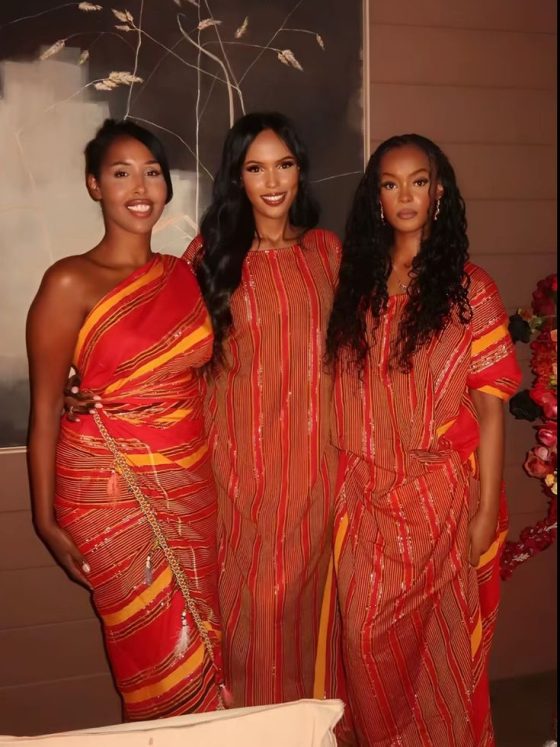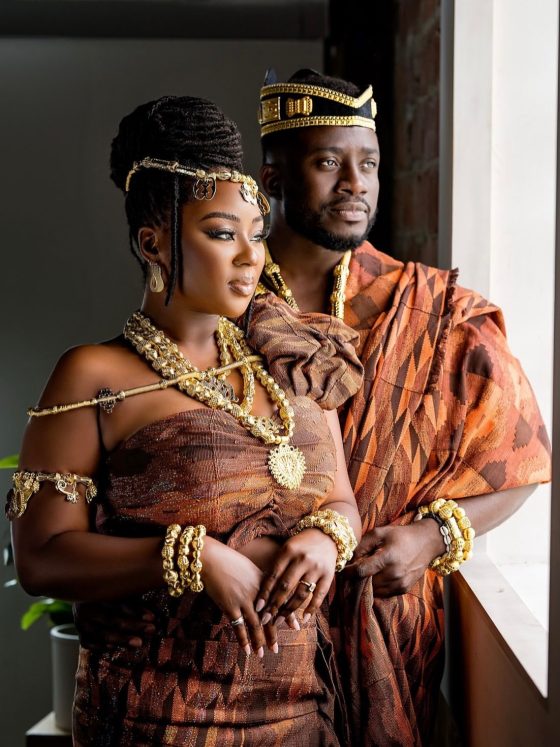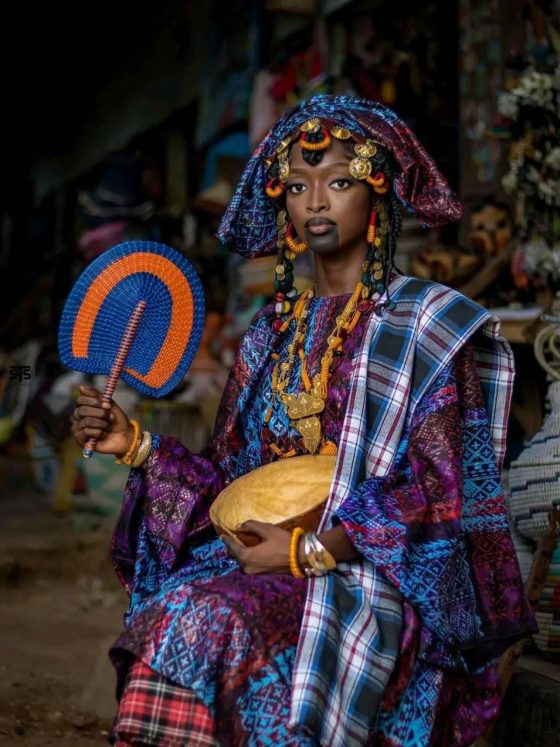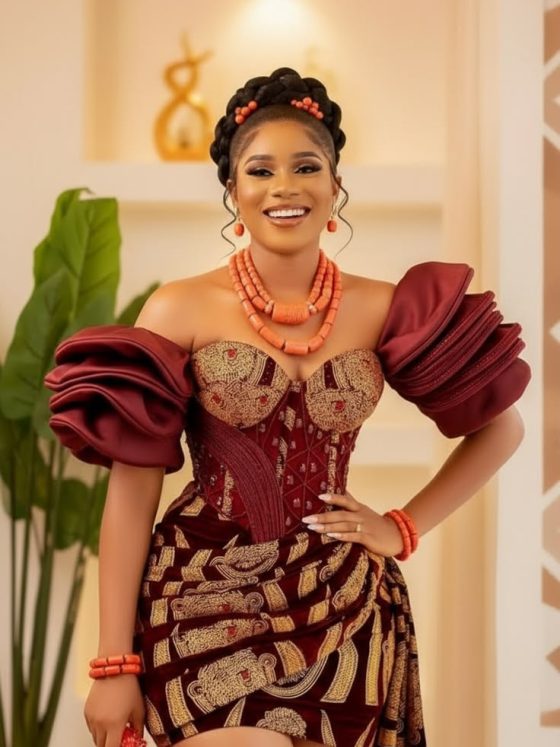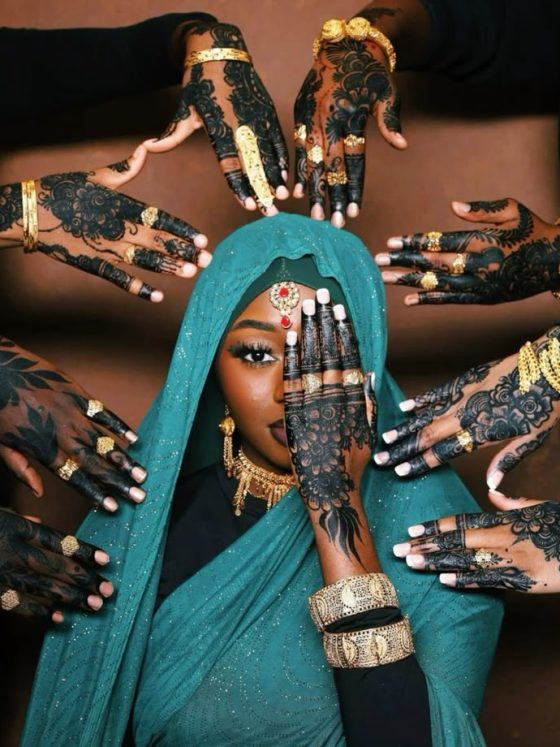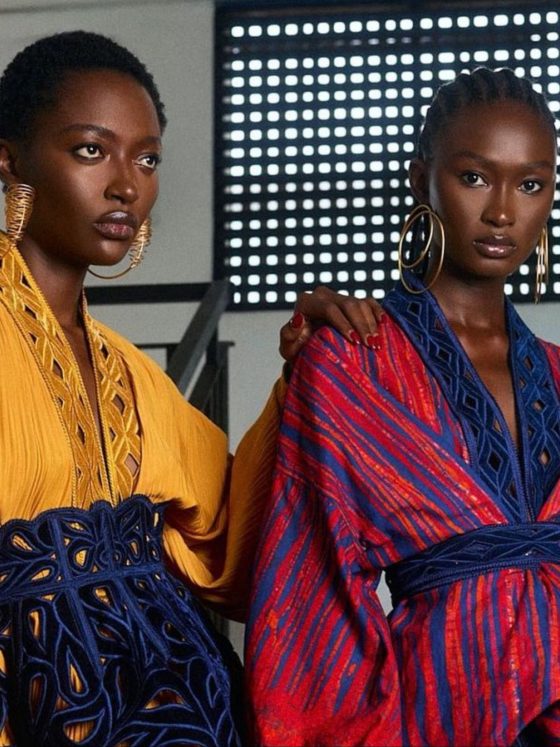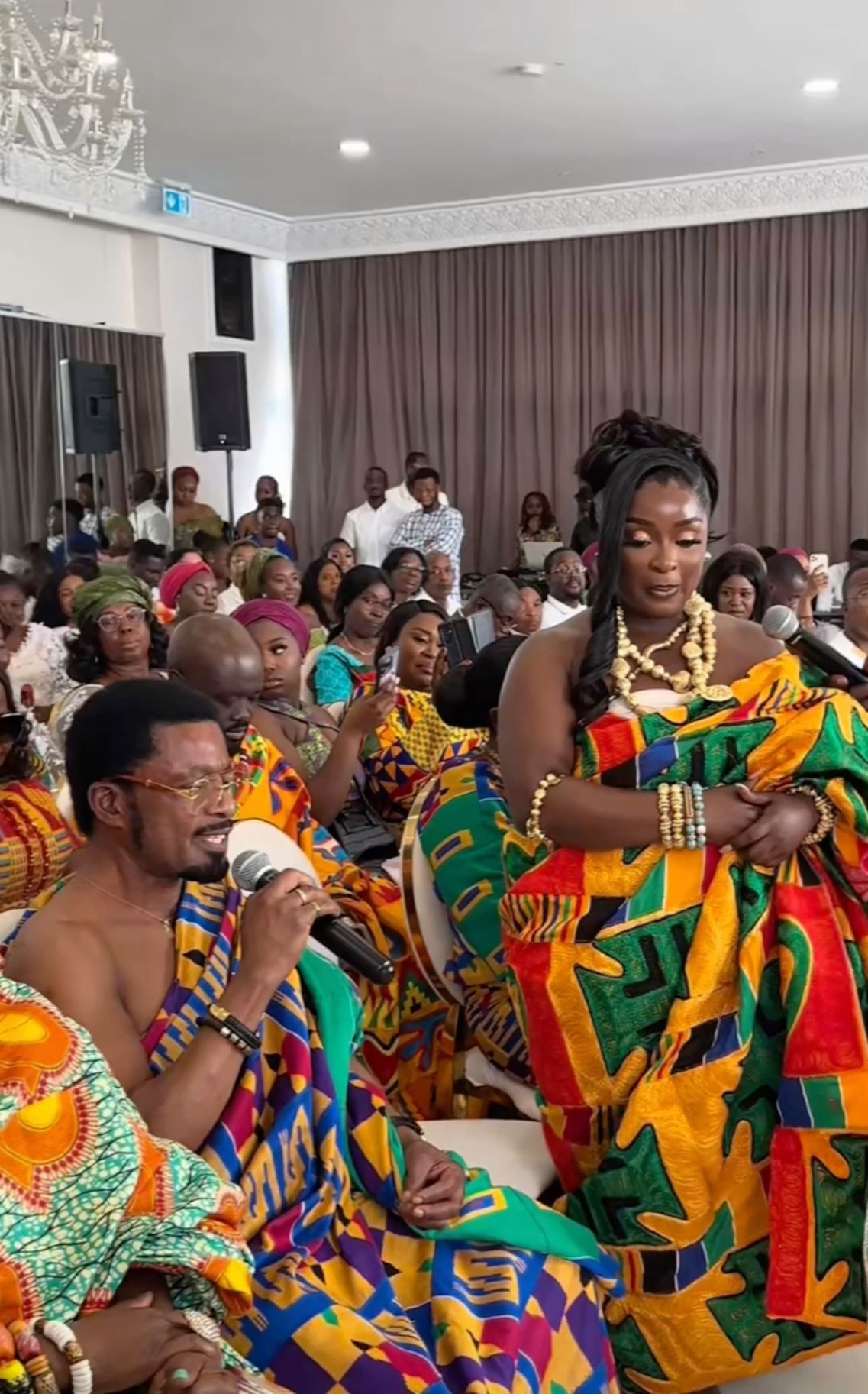
At an Akan traditional knocking ceremony, the okyeame, the family’s spokesperson, presents the akontasekan, the formal monetary offering, to the bride’s family before any discussion of a single garment. The bride who emerges from that negotiation wears kente once reserved exclusively for royalty, a tekua crown-shaped headdress, ahenema sandals, and gold jewellery specific to her family’s status. None of this is decoration added to a wedding. It is the wedding. The ceremony and the dress are the same act.
Accra’s bridal designers are not simply updating wedding fashion for a newer audience. They are restoring balance to a bridal culture that was narrowed over time, then mistaken for tradition itself. What many people now call a modern take is often closer to a return to the logic of older African dress, one that was interrupted, simplified, and reshaped by colonial influence.
This is why Accra matters so much in African bridal wear today. The city’s designers are not just making gowns look beautiful. They are reintroducing fullness, symbolism, texture, and ceremonial presence into Ghanaian wedding fashion. In doing so, they are correcting a distortion that affected how bridal identity was imagined in much of West Africa.
Accra’s bridal designers are restoring a fuller African ceremonial language that colonial dress codes had narrowed to a white, minimalist Western standard. This is what was distorted, and what correction actually looks like.
Bridal Fashion Was Narrowed
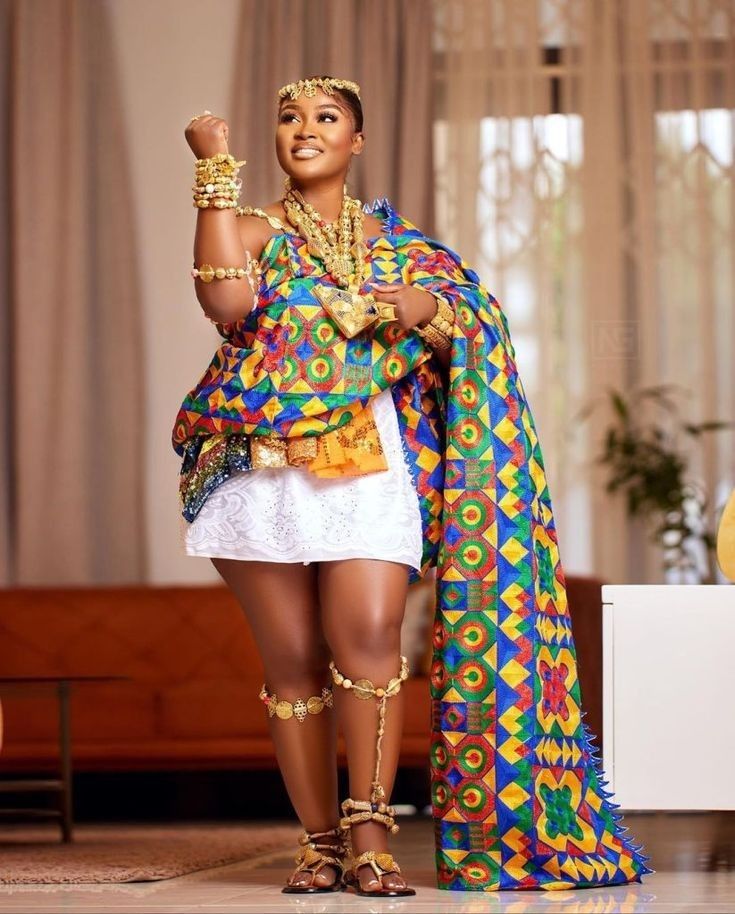
The present-day bridal standard reflects a historical narrowing of what a wedding dress could be. The Akan traditional marriage ceremony, documented across Ghanaian ethnographic and cultural sources, was never minimal. The kente cloth worn by both the bride and groom was originally reserved for royalty and eminent individuals before its use expanded; each colour carried a symbolic meaning that couples deliberately selected to communicate their specific intentions and aspirations. The bride wore the tekua, a crown-like headdress, alongside ahenema sandals and gold jewellery whose specific form varied by family and tribe. As one academic study of Akan marriage performance has documented, the wedding was understood as a celebration of unity, continuity, and the amalgamation of two lineages, not a private romantic event between two individuals. The dress reflected that scale of meaning.
Colonial influence helped narrow those options by privileging modesty codes, imported silhouettes, and a European wedding imagination that came to dominate formal dress across much of the continent through the nineteenth and twentieth centuries. That history matters because it explains why so much of African bridal fashion came to be read through a distorted lens. What was once a broad ceremonial language, with multiple garments, ceremonies, and symbolic registers, was reduced to a few acceptable forms centred on a single white gown. In that reduction, many local traditions were treated as extra, folkloric, or alternative, rather than central to bridal culture.
Accra bridal designers are responding to that history by refusing the idea that bridal elegance must be minimal to be modern. Their work often restores fullness, ornamentation, and a sense of textile seriousness to the wedding look. This is not a rejection of refinement. It is a rejection of the idea that refinement only exists in imported form.
Aisha Ayensu, founder of Christie Brown, named after her grandmother, a Ghanaian dressmaker, launched her brand in March 2008 at 21, while still studying psychology at university. Her stated intention has remained consistent: ‘My true desire is to create pieces that are at par with the international trends, but grounded in our heritage.’ Christie Brown is especially useful here because it shows how Ghanaian fashion can hold ceremonial weight while still feeling polished and current. Aisha’s work helps shift bridal dress away from imitation and back toward cultural authorship. In that sense, the designer is not inventing something new out of nowhere. She is recovering a visual language that was never supposed to disappear.
This is not a rejection of refinement. It is a rejection of the idea that refinement only exists in imported form.
ALSO READ
- The Ghanaian Women Redefining Fashion on Their Own Terms
- Top Ghanaian Fashion Designers Shaping Africa’s Global Fashion Narrative
- African Sacred Textiles: Adire, Kente, Aso-Oke, and Bogolan Reclaim Global Luxury
- Vintage and Heritage Fashion Dominance Across African Cities
Tradition Was Always Bridal
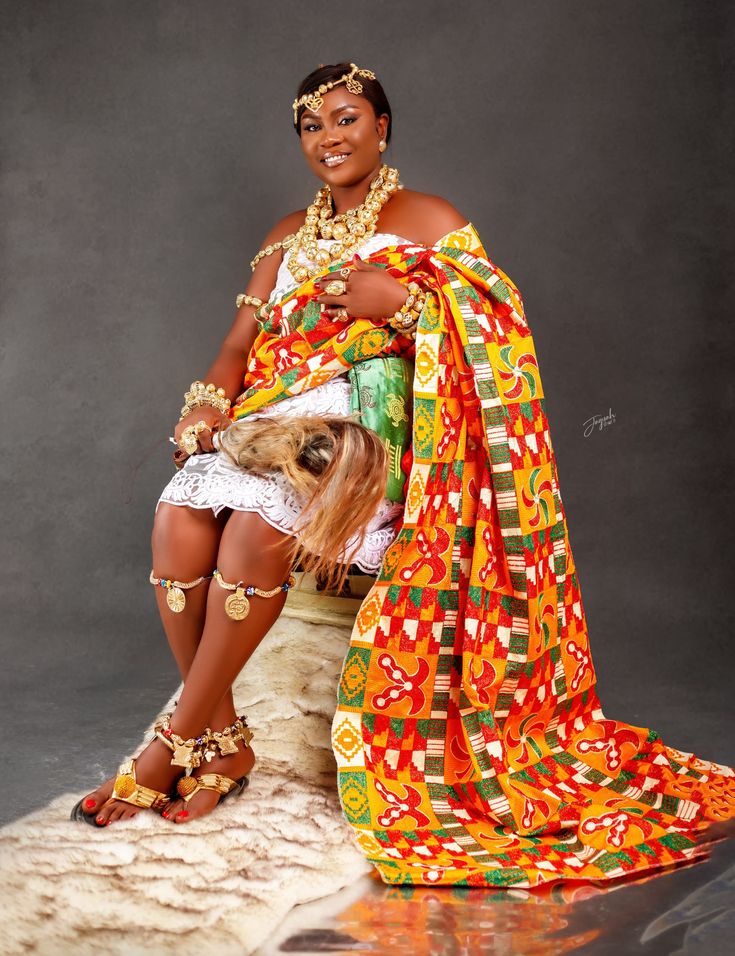
One of the most important things Accra designers are doing is reminding audiences that tradition was never outside bridal culture. In the Akan context specifically, the wedding was always a space for textiles, colour, ornament, and social display. The bride was not meant to disappear into a neutral white ideal. She was meant to appear as a public symbol of family, lineage, and transition, dressed in cloth whose pattern and colour had been deliberately chosen to say something specific to everyone present who could read it.
That is why so-called modern bridal looks from Accra often feel more historically grounded than the supposedly traditional ones that came before them. When designers use sculptural sleeves, structured draping, beadwork, wrapped cloth, or richly textured fabrics, they are not adding culture as an accent. They are bringing the ceremony back into the centre of the bridal dress.
Sima Brew has become a bridal powerhouse in this exact register, dressing celebrities and redefining what a Ghanaian bride looks like by elevating lace beyond its traditional decorative use into sculptural, high-fashion statements. Her own articulation of the standard is precise: ‘A bride should look like a dream, but also like herself.’ That is not a generic aspiration. It is a specific rejection of the idea that a bridal dress requires the bride to disappear into an imported template. Pistis, founded in 2008 by husband-and-wife duo Kabutey Dzietror and Sumaiya Dzietror, works the same territory from a different angle: intricate lacework, meticulous beading, corseted bodices, and dramatic trains that merge old-world bridal tradition with contemporary glamour. Duaba Serwa and Kiki Clothing offer different versions of the same contemporary Ghanaian elegance while keeping an eye on occasion, presence, and refinement specific to celebration dress rather than everyday wear.
In this section, Duaba Serwa and Kiki Clothing are especially relevant because they reinforce the idea that tradition is not old-fashioned when it remains culturally specific. It is simply being re-read by designers who know where the visual authority comes from.
ALSO READ
- The Aso-Ebi Economy: How Nigerian Celebration Culture Is Funding a Global Fashion Industry
- Sustainable Fashion in Ghana: Upcycling, Craftsmanship, and the Future of African Design
- How African Identity Is Styled Differently Across Continents
- The Diaspora Did Not Preserve African Style. It Redesigned It.
Accra Is Reframing Bridal Authority
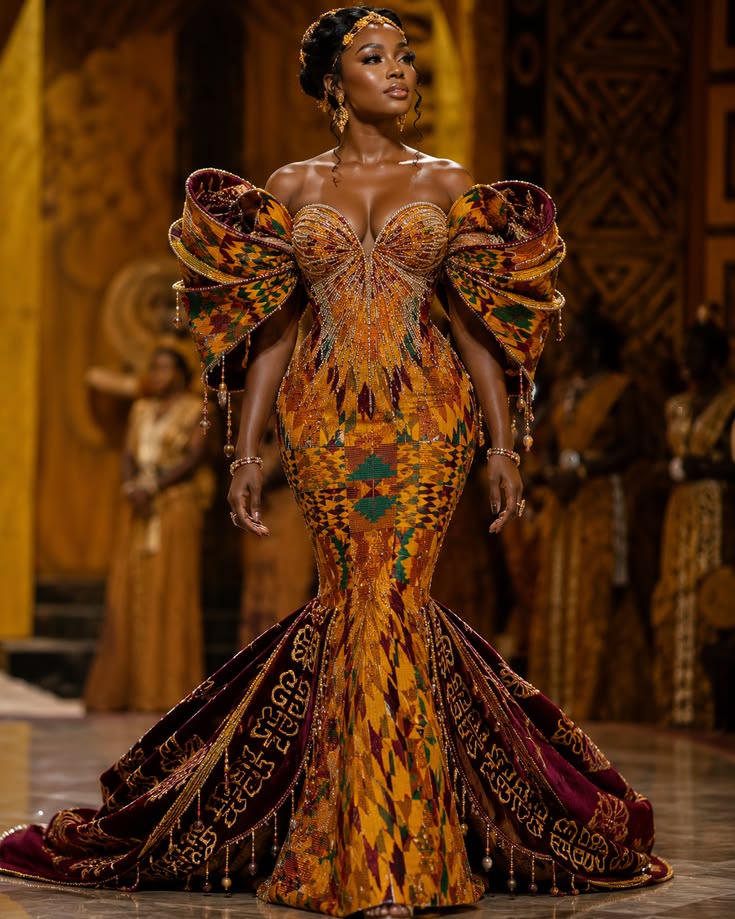
Accra’s importance goes beyond individual designers. The city itself is becoming a place where bridal authority is being rewritten. Through fashion weeks, lookbooks, bridal campaigns, and editorial styling, Accra is making a case for Ghanaian wedding fashion as a serious cultural category rather than a niche aesthetic.
That is why platforms like Ghana Fashion Week and bridal showcases tied to the city matter so much. They help normalise the idea that African bridal wear can be expansive, conceptual, and deeply rooted at the same time. When these looks appear on runways or in editorial spreads, they teach audiences how to see bridal clothing differently.
This reframing also matters commercially. Brides today want fashion that feels personal, symbolic, and photo-ready, but also reflects where they come from. Designers in Accra are well-positioned to meet that demand because they work from a cultural archive that already understands celebration as spectacle, meaning, and social memory. Brands such as Yartel and Larry Jay are useful reference points in this broader ecosystem because they show how Ghanaian design continues to move between tradition, contemporary tailoring, and high visual impact. Whether or not every brand focuses on bridal wear directly, they contribute to the larger fashion environment that makes bridal correction possible.
This argument is not specific to Accra alone. Lagos aso-ebi culture, Nairobi’s growing bridal design scene, and Dakar’s couture houses are making versions of the same correction across the continent: refusing the assumption that African elegance requires Western minimalism to be taken seriously. Accra is simply the most advanced and most documented current case study.
The Restoration That Fashion Media Calls Modernisation
Accra’s bridal designers are not modernising tradition. They are correcting a distortion caused by the colonial narrowing of the African bridal dress. African wedding fashion once carried broader ceremonial meaning, articulated through kente, tekua, ahenema, and the formal okyeame-led negotiation between families, but imported bridal ideals reduced much of that visual language to a simplified Western model. Accra’s designers are restoring the fuller logic of African bridal dress by returning ceremony, symbolism, and textile presence to the centre of the bride’s look.
The assumption that modern bridal fashion must be white, minimal, or structurally restrained is historically incomplete. Designers in Accra are challenging that idea by making bridal wear feel more African, more ceremonial, and more complete rather than less modern. This is not only about aesthetics. It is about correcting a historical imbalance in the representation of African elegance. When Accra bridal designers use fuller silhouettes, richer cloth, and more expressive styling, they are reclaiming bridal authority from a narrowed standard.
Accra is not updating bridal fashion from tradition to modernity. It is restoring bridal fashion to a richer African standard that was there before the distortion. The most important shift is that bridal fashion is becoming less about imitation and more about cultural restoration.
FAQs
Why are Accra bridal designers said to be correcting a distortion?
Much of what is now considered modern bridal fashion in African contexts was shaped by imported Western standards introduced through colonial-era modesty codes and missionary dress conventions. The pre-colonial Akan wedding involved a fuller ceremonial dress code: kente cloth, once reserved for royalty; the tekua crown headdress; ahenema sandals; and gold jewellery specific to family status, all worn during a formal ceremony led by the okyeame, the family spokesperson. Accra designers, including Aisha Ayensu of Christie Brown and Sima Brew, are restoring this fuller, more ceremonial African bridal language that existed before colonial influence narrowed the field to a single white-gown standard.
What makes Ghanaian wedding fashion different from Western bridal style?
Ghanaian wedding fashion, particularly in the Akan tradition, includes stronger symbolism, richer textiles, bolder ornamentation, and more visible family and cultural meaning. The kente cloth worn at a traditional wedding carries specific colour symbolism selected deliberately by the couple. The ceremony itself, beginning with the okyeame’s formal presentation of the akontasekan to the bride’s family, treats the wedding as a union between two lineages and communities, not solely two individuals. It is designed to communicate status and identity, not only romance or purity.
Is this trend only about traditional clothing?
No. It is about rethinking bridal fashion through African values, not simply copying older outfits. Designers including Aisha Ayensu, Sima Brew, and the husband-and-wife duo behind Pistis combine contemporary tailoring techniques, sculptural silhouettes, and structured draping with heritage logic, producing bridal wear that is unmistakably current while remaining culturally rooted. The result is not a costume recreation of historical dress. It is a contemporary design language built on the same ceremonial principles that governed pre-colonial Akan bridal dress.
Which Ghanaian brands are relevant to this conversation?
Christie Brown, founded by Aisha Ayensu in 2008, holds ceremonial weight while feeling polished and globally current. Sima Brew elevates lace into sculptural, high-fashion bridal statements, with the guiding principle that a bride should look like a dream but also like herself. Pistis, founded by Kabutey and Sumaiya Dzietror in 2008, merges intricate lacework, beading, and dramatic trains with old-world bridal tradition. Duaba Serwa and Kiki Clothing offer contemporary occasion-ready elegance that keeps tradition culturally specific rather than decorative. Yartel and Larry Jay contribute to the broader Ghanaian fashion environment that makes this bridal correction commercially and culturally possible.
Why is Accra important in African bridal culture?
Accra is an active fashion city with runway platforms including Ghana Fashion Week, editorial visibility, and designers who understand both cultural memory and market demand. That combination makes it one of the strongest places for bridal fashion to evolve without losing its roots. The argument Accra is making is not unique to Ghana: Lagos aso-ebi culture, Nairobi’s bridal design scene, and Dakar’s couture houses are pursuing similar corrections. Accra is currently the most documented and most advanced case study of this continental shift.
What should readers look for in future Accra bridal fashion?
Readers should look for fuller silhouettes, ceremonial layering, richer use of textiles, including kente and lace, and a stronger sense of African authority in the bridal image. They should also expect designers to name and credit the specific Akan, Ga, or Ewe ceremonial elements they draw from, rather than treating heritage as a generic aesthetic mood. The most important shift is that bridal fashion is becoming less about imitating an imported standard and more about the cultural restoration of a ceremonial language that was never actually absent from African tradition, only narrowed by it.