Cape Verde was uninhabited until 1460. The Portuguese arrived first. The Africans who built everything that followed, including the clothing, the music, and the Creole identity the world now calls Cape Verdean, were brought there in chains. That is not background. That is the story.
Understanding Cape Verdean traditional clothing means starting with that fact and following it honestly. The archipelago’s fashion culture did not emerge from two equal forces meeting on neutral ground. It emerged from West African weavers, enslaved for the quality of their craft, creating something entirely their own under conditions that were not designed for cultural survival. What they built became one of the most distinct fashion identities on the continent.
Explore the Omiren Selection: Some links in this article are affiliate links. Omiren Styles may earn a small commission at no extra cost to you.
Discover how traditional clothing in Cape Verde reflects a unique blend of African heritage, Portuguese influence, and Creole cultural identity.
The Pano d’Obra: The Cloth That Built Cape Verde’s Identity
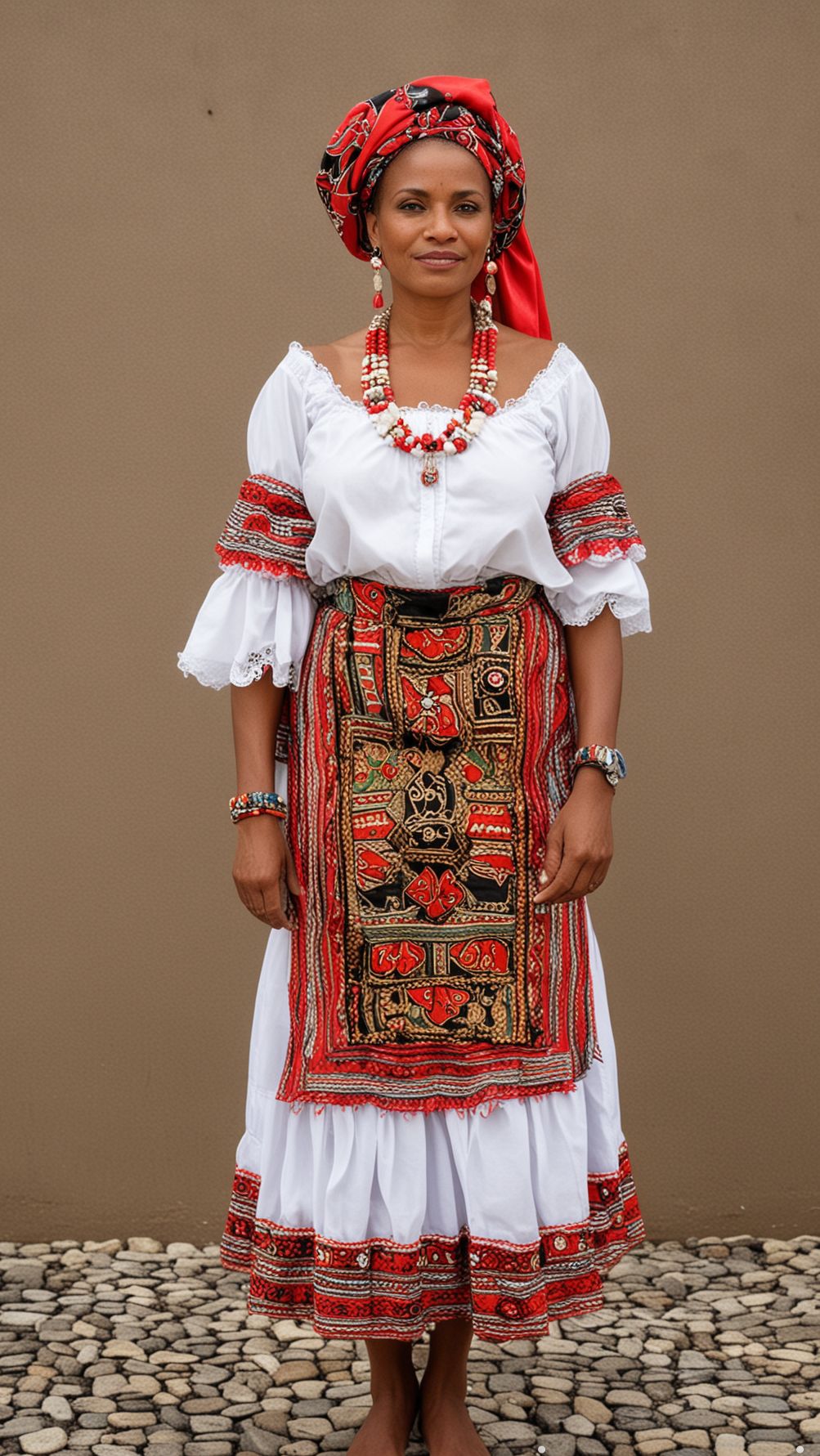
At the heart of Cape Verdean traditional clothing is the Pano d’Obra, or Panu di Téra in Kriolu, which translates as cloth of the earth. This hand-woven cotton textile, characterised by complex geometric patterns in indigo, white, and sometimes black, has been produced on the islands of Santiago and Fogo for over five centuries. It is not a craft tradition that arrived with settlers. It arrived with the enslaved.
The weaving technique was introduced to the islands by Guinean weavers who were enslaved specifically because of their skill. They wove using a narrow-strip horizontal loom, an instrument practically identical to that used by Manjak-Papel communities of the Upper Guinea Coast, encompassing modern-day Guinea-Bissau and Senegal. As documented by Leila Atelier’s textile history of Pano d’Obra, the cloth was woven in strips of approximately 15 centimetres, then stitched along the selvedge in the West African tradition to form larger pieces used for ceremonial attire, baby wraps, blankets, and trade. For readers drawn to the visual language of indigo and geometric weaving, explore handwoven indigo and African-inspired textile pieces on Etsy for contemporary interpretations of similar textile traditions.
By the 1600s, thousands of Pano d’Obra were required annually to meet demand. The cloth served as currency in the transatlantic slave trade: woven in Santiago, it was carried back to West Africa and used to purchase additional enslaved people. That history is documented by the Nantucket Historical Association’s research on the Cape Verde archipelago, which records that the islands of Santiago and Fogo were centres of production with roots back to the late 1400s, and that pano weaving continued for domestic use long after the slave trade ended. The Pano d’Obra was not a cultural product of exchange. It was a product of forced African labour that also fuelled the machinery of enslavement.
After Cape Verdean independence in 1975, Pano d’Obra production was deliberately revived as an expression of nationhood and re-Africanisation. At the Centre for Arts and Crafts of Trás di Munti in Tarrafal, Santiago, weavers still build their looms from wood, stone, and rope and produce the traditional indigo-and-white geometric patterns using methods unchanged for five centuries. As Omiren Styles has argued in Why Culture Is the Foundation of Style in African and Global Fashion, clothing is never just fabric. It carries stories, identity, and intention. The Pano d’Obra is the clearest evidence of that principle in the Cape Verdean context.
For readers who want to explore Cape Verde beyondclothing and textiles, browse books on Cape Verdean history, culture and society on Amazon
The Pano d’Obra is not a symbol of cultural blend. It is evidence of African creative survival. Guinean weavers did not contribute to Cape Verdean fashion identity. They founded it.
The Batuque and What Women Wore to Survive
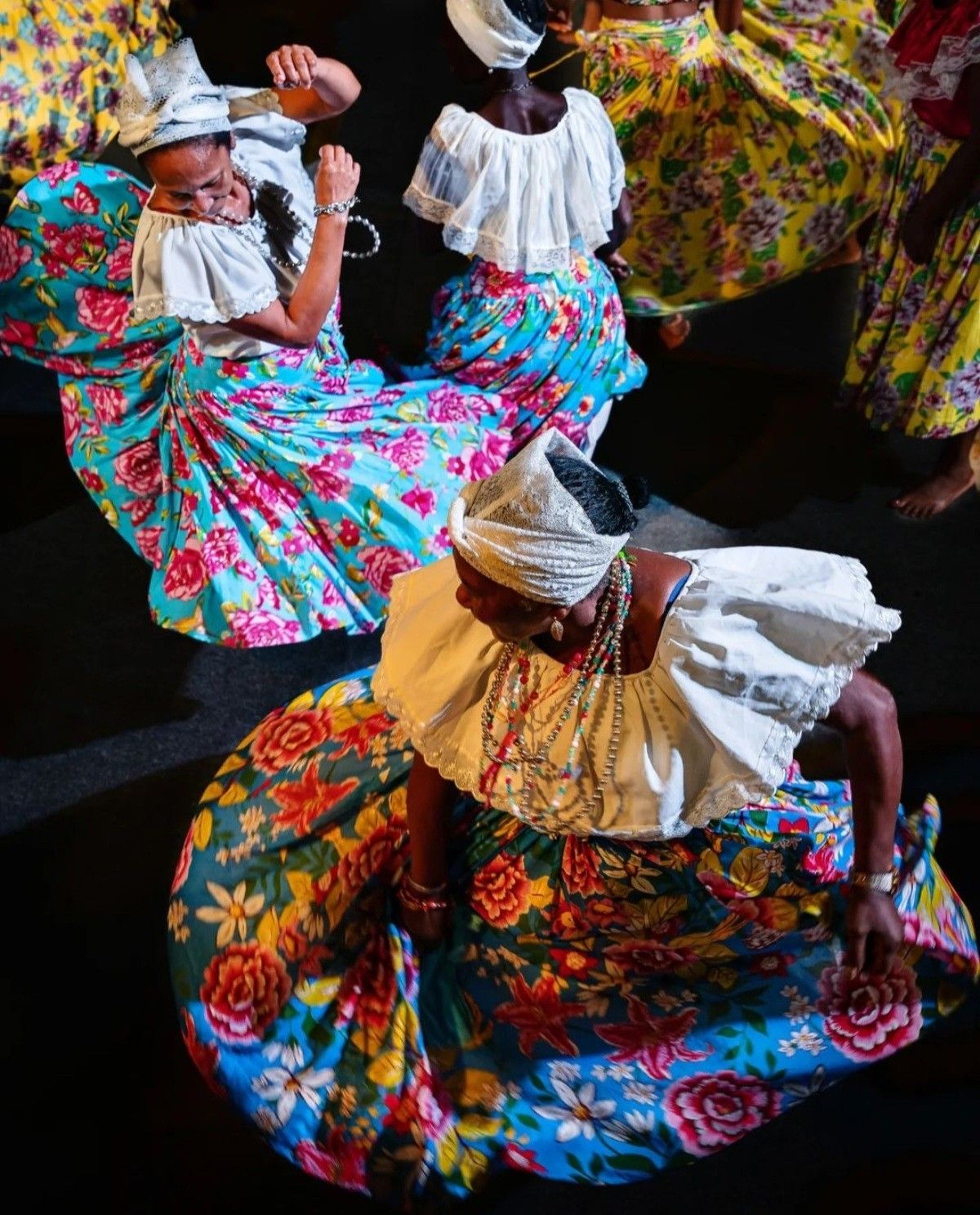
On Santiago Island, where the African imprint on Cape Verdean culture is deepest, batuque is the oldest surviving cultural practice. By 1580, Santiago’s population consisted of 14,000 enslaved people and only 2,000 free inhabitants. The Portuguese colonial authorities and the Catholic Church banned drums among the enslaved, viewing them as instruments of rebellion. Batuque was the response. As Sal Cabo Verde’s research on the great rhythm of resistance documents, women gathered in circles, bound loincloths into tight bundles called tchabeta, held between their thighs, and struck them to create percussion. The cloth itself became the instrument.
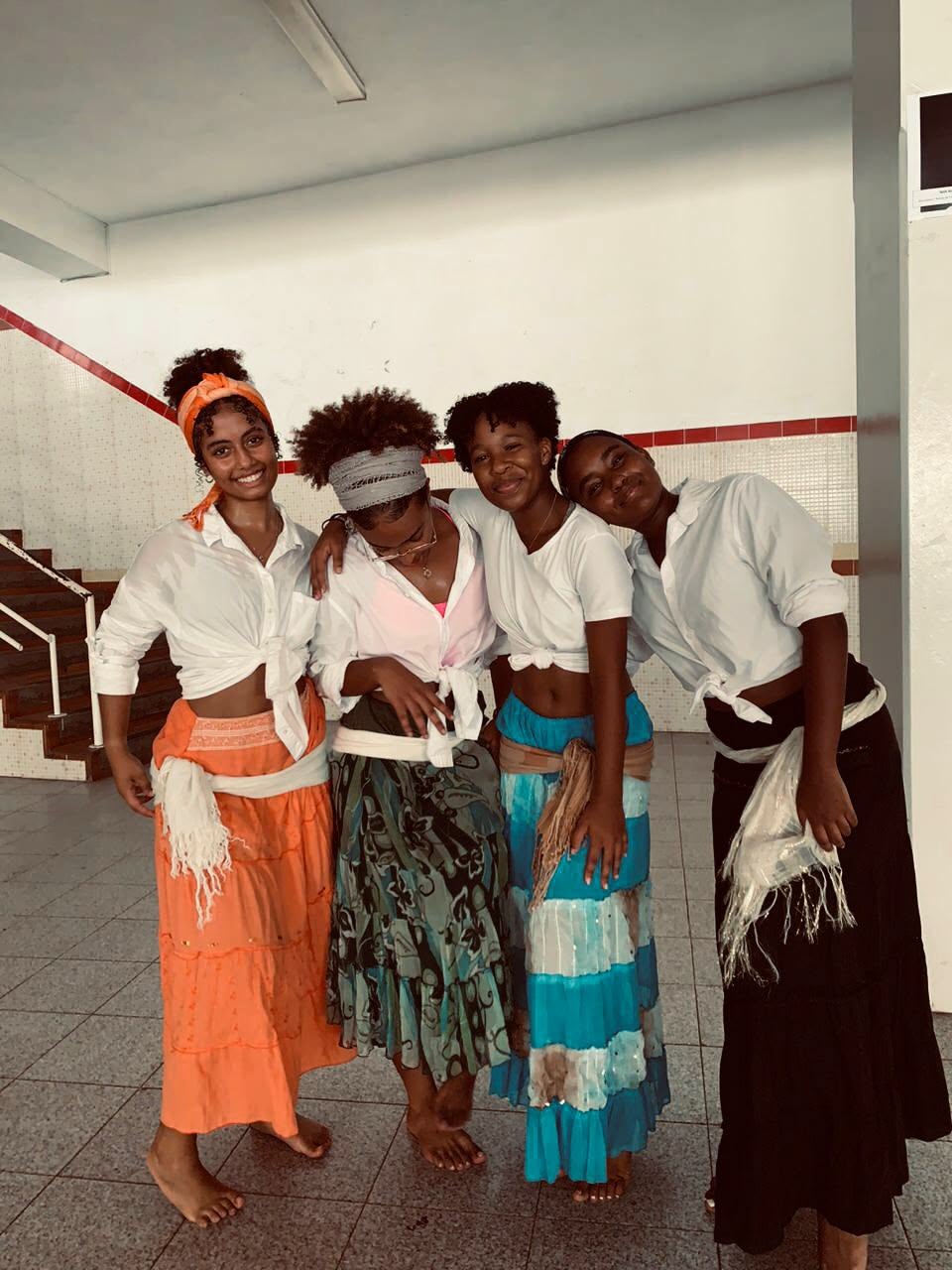
The dress worn at Batuque performances directly reflects that origin. Long, flowing skirts in strong colours, tied or wrapped at the hip to accentuate the movement of the performance. Headscarves, beaded necklaces, and bracelets complete the attire. Nothing about the batuque dress is decorative in origin. Every element was functional within a ceremony that existed because other forms of cultural expression had been banned. For readers interested in incorporating similar elements into contemporary styling, explore headscarves and African-inspired beaded accessories on Etsy
Batuque is specific to Santiago. The island carries a different cultural identity from São Vicente in the north, where the morna tradition, slower and more Portuguese-influenced, shapes a different relationship to dress and performance. São Vicente’s cultural life centred around the cosmopolitan port town of Mindelo, shaped by maritime trade. Its traditional dress reflects those influences: more tailored, more European in silhouette. The difference between Santiago and São Vicente is not a matter of degree. It is a distinction between two islands that built different cultural identities from the same colonial history.
The batuque costume, like the ceremonial dress across the continent, performs a function beyond aesthetics. As Omiren Styles documents in Fashion and Ritual: How Celebrations Shape African Style Practices, ceremonial clothing is performative history. When dancers move, their textiles narrate ancestral knowledge. The batuque skirt does precisely that. Its wrap and tie are not stylistic choices. They are the shape of a ceremony invented under duress.
How Portuguese Influence Entered Cape Verdean Dress
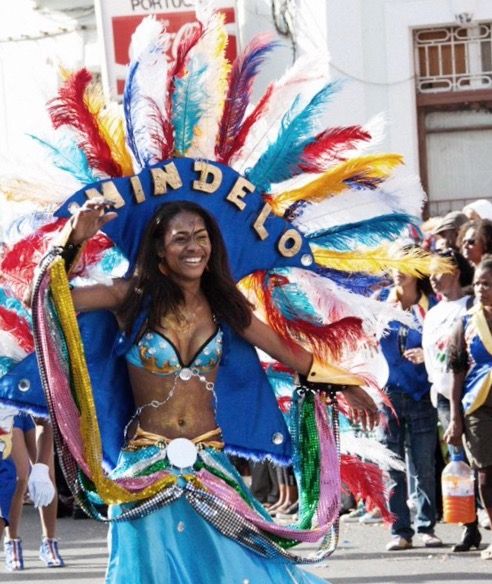
Portuguese colonial history did leave a mark on Cape Verdean fashion, particularly in garment construction. European-style blouses with fitted bodices, embroidered decorations, and layered skirts entered women’s dress. Men’s formal attire adopted structured shirts, trousers, and coats for ceremonial occasions. These are not contested facts.
What matters is the mechanism. Portuguese stylistic elements did not replace African ones. They entered a fashion culture that Africans had already built and were absorbed on African terms. The long saia skirt, worn with a headscarf and blouse, combined African approaches to modesty and colour coordination with European garment construction. The result was neither African nor European in the way either category is usually understood. It was Creole: something that did not exist before, built from circumstances that were not chosen.
This is where Cape Verdean fashion offers a genuinely instructive case for contemporary design. South African designer Thebe Magugu’s research-led collections are documented in depth in Thebe Magugu Has a Brand Strategy. Most African Designers Do Not operate from a comparable premise: that African fashion is most powerful when it names its specific history directly rather than softening it into universal appeal. Cape Verdean fashion does this structurally, not by design. The Pano d’Obra exists because enslaved Guinean weavers were brought to the islands. That specificity is the culture.
ALSO READ
- Traditional Clothing in the Benin Republic: Culture, Royalty, and Identity
- Traditional Clothing in Togo: Cultural Identity Through Fashion
- The Future of Fashion in Burkina Faso: Sustainability and Innovation
- Fashion and Ritual: How Celebrations Shape African Style Practices
Cape Verde Clothing in Music, Festivals, and Cultural Life Today
Traditional Cape Verdean dress remains in active use because it is still attached to living cultural forms. The morna, the funaná, the coladeira, and the batuque are not archival genres. They are performed regularly, and performers dress accordingly. At carnival celebrations across the islands, elaborate costumes combine Pano d’Obra geometric patterns with contemporary materials and construction. These occasions are not museums of tradition. They are its continuing production.
Younger Cape Verdean designers, both on the islands and in diaspora communities in Lisbon, Rotterdam, Boston, and Providence, are incorporating Pano d’Obra motifs and Kriolu aesthetic references into their contemporary work. The cloth’s tourist market has grown significantly, though, as the Buala cultural journal’s analysis of Panu di Téra and national identity notes, that market creates risks around quality and authenticity, with industrially printed imitations flooding local markets. The challenge for Cape Verdean fashion is the same one facing every tradition that becomes commercially desirable: keeping the original practice alive while the copies multiply.
This tension between preservation and commercialisation is not unique to Cape Verde. As Omiren Styles documented in Traditional Clothing in Ghana: Beyond Kente, Batakari, Fugu, and Cultural Identity, West African textile traditions face similar pressures when their visual vocabulary outpaces the cultural knowledge behind it. What distinguishes Cape Verde is that the Pano d’Obra’s origin in enslaved labour makes its revival a political act, not merely a cultural one. Weavers in Tarrafal are not preserving a heritage. They are asserting an origin.
THE OMIREN ARGUMENT
The inherited assumption about Cape Verdean fashion is that it represents a blend of African and European cultures, a synthesis of two influences that met and produced something new. That framing is wrong, and the wrongness matters.
The Portuguese arrived in 1460 on uninhabited islands. The Africans who followed did not arrive as cultural contributors to a shared project. They arrived as enslaved people, bringing their weaving techniques, their music, their clothing traditions, and their knowledge under conditions of total coercion. The Pano d’Obra was woven by Guinean weavers, who were enslaved specifically because they were skilled at it. The batuque ceremony used bundled cloth as percussion because drums had been banned. These are not acts of cultural blending. They are acts of cultural survival.
Calling Cape Verdean fashion a blend is a way of distributing credit that history does not support. The African contribution to Cape Verdean cultural identity was not a cultural influence. It was a foundation built under duress by people who had no choice but to be there. What they built was not a compromise between two cultures. It was a creation.
Cape Verdean fashion does not sit between African and European. It proves that the binary was always a colonial construction. What the enslaved Guinean weavers built on Santiago Island was not a blend. It was something that did not exist before and has not existed anywhere since.
The Pano d’Obra’s revival since independence in 1975 is not a return to tradition. It is a political statement about where the culture actually came from. When weavers in Tarrafal build their looms from wood, stone, and rope and produce indigo-and-white geometric patterns in 15-centimetre strips, they are not preserving a heritage. They are asserting an origin. That is what traditional clothing in Cape Verde has always done. The question worth asking is why the fashion world still insists on calling that a blend.
Frequently Asked Questions
What is traditional clothing in Cape Verde?
Traditional clothing in Cape Verde centres on the Pano d’Obra (Panu di Téra in Kriolu), a handwoven cotton textile produced on the islands of Santiago and Fogo for over five centuries. Characterised by complex geometric patterns in indigo, white, and black, the cloth is woven in narrow 15-centimetre strips using a technique brought to the islands by enslaved West African weavers from the Upper Guinea Coast. Traditional dress also includes long saia skirts, blouses, and headscarves for women; tailored trousers and structured shirts for men; and the specific attire worn at batuque performances on Santiago Island.
How has African culture influenced Cape Verdean fashion?
African culture did not influence Cape Verdean fashion. It found it. The Pano d’Obra was introduced by Guinean weavers who were enslaved for their weaving skills, using a narrow horizontal strip loom identical to that used by Manjak-Papel communities in modern-day Guinea-Bissau and Senegal. The batuque ceremony dress of Santiago Island emerged because enslaved Africans were banned from using drums and instead created percussion instruments from bundles of cloth called tchabeta. West African approaches to colour, layering, head coverings, and ceremonial dress all predate Portuguese stylistic influence in Cape Verdean clothing.
Did Portuguese culture influence traditional clothing in Cape Verde?
Yes, but through absorption rather than replacement. Portuguese colonial presence introduced tailored garment structures, fitted bodices, embroidered decoration, and European silhouettes that were incorporated into local dress. The long saia skirt combines European construction with African approaches to colour and modesty. Portuguese elements entered a fashion culture that Africans had already built and were reinterpreted through existing cultural practices rather than adopted wholesale.
Why is traditional clothing important in Cape Verde?
Traditional clothing in Cape Verde, particularly the Pano d’Obra, carries the specific history of how Cape Verdean cultural identity was created. The cloth was woven by enslaved Guinean craftspeople whose technique formed the foundation of what became a national symbol. Since Cape Verdean independence in 1975, Pano d’Obra weaving has been deliberately revived as an expression of nationhood and re-Africanisation. Wearing traditional dress at festivals, music performances, and ceremonies is an act of cultural assertion about where the identity came from.
Is traditional clothing still worn in Cape Verde today?
Yes. Traditional attire appears at carnival celebrations, batuque and morna performances, religious events, national commemorations, and cultural festivals across the islands. At the Centre for Arts and Crafts of Trás di Munti in Tarrafal, Santiago, weavers still produce Pano d’Obra using traditional looms built from natural materials. Younger Cape Verdean designers, both on the islands and in diaspora communities in Lisbon, Rotterdam, and the United States, are incorporating Pano d’Obra motifs into contemporary work. However, imitation prints produced by industrial producers in Senegal and elsewhere pose challenges to the original craft’s long-term viability.
Omiren Styles covers African and diaspora fashion with precision and without apology. Explore more cultural intelligence across all 54 African nations, the Caribbean, and Latin America at omirenstyles.com. African fashion and culture are not emerging. They are foundational.
Explore the Omiren Selection: Some links in this article are affiliate links. Omiren Styles may earn a small commission at no extra cost to you.