Fabrics and craftsmanship in Sierra Leonean fashion are visible in the textures, colours, and production methods that distinguish local dress. Whether woven into country cloth or expressed through the layered patterns of gara, fabric production remains closely connected to how clothing is made and valued across the country.
Behind these textiles are specialised craft processes that involve weaving, dyeing, embroidery, and tailoring. Different regions have developed their own techniques and aesthetic preferences.
This creates fabrics that carry both practical and cultural significance. To understand Sierra Leonean fashion, one would have to look beyond finished garments to the materials and skills that shape them.
Fabrics and craftsmanship in Sierra Leonean fashion reflect the skills of weavers, dyers, and tailors. This article shows how they shape Sierra Leonean style.
Country Cloth Weaving and Its Role in Sierra Leonean Fashion
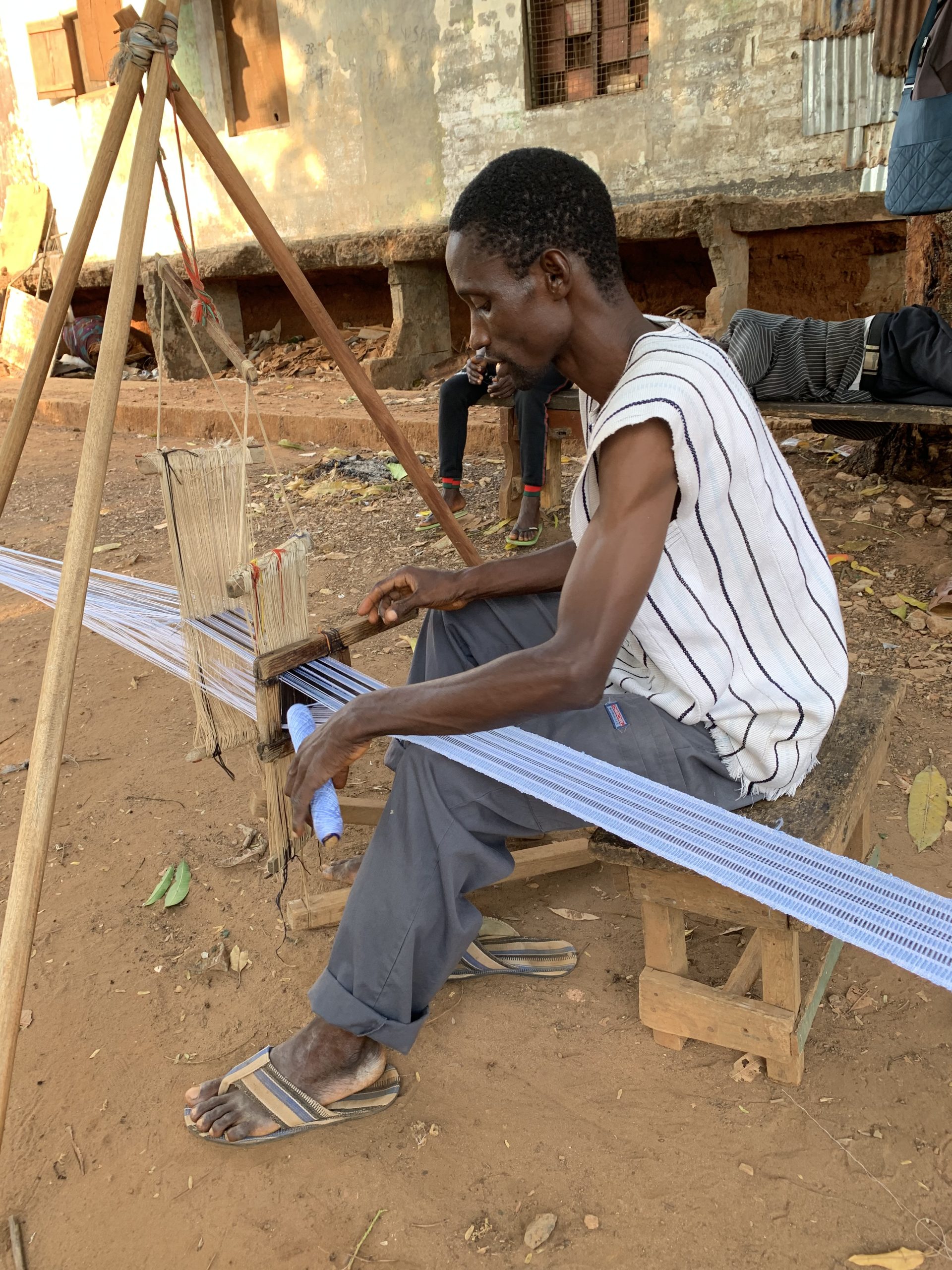
Country cloth weaving forms one of the central foundations of fabrics and craftsmanship in Sierra Leonean fashion. Mende weavers in the southern and eastern regions produce this heavy, durable textile locally known as kpokpo.
They weave cotton strips on distinctive tripod looms found almost exclusively in Sierra Leone and neighbouring Liberia. Women traditionally card and spin locally grown cotton on drop spindles into yarn.
Men then weave the yarn into narrow four-inch strips on these looms. Artisans sew the strips edge-to-edge to create larger cloths valued for their textured strength. The entire process demands considerable time and precision.
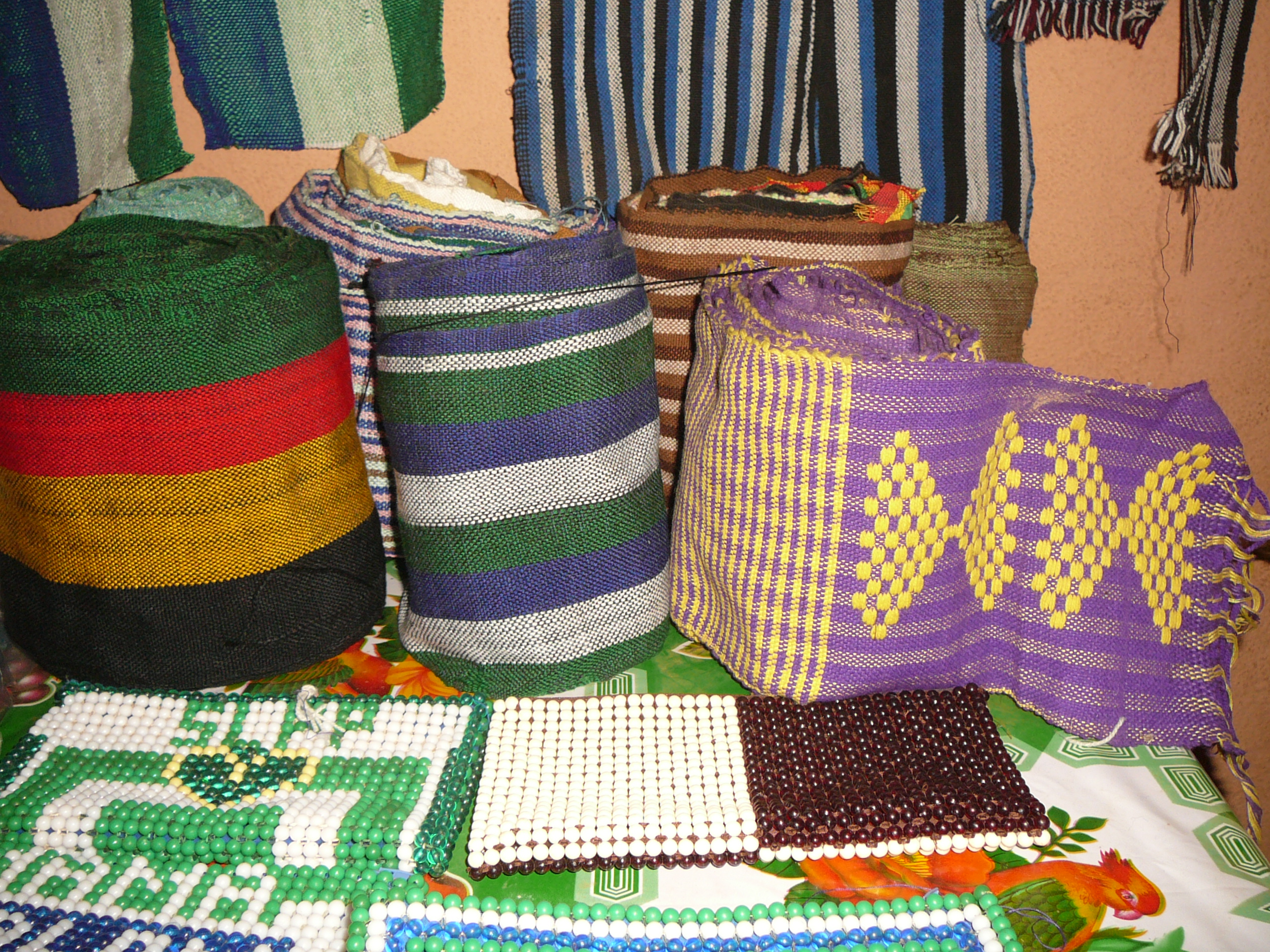
A single high-quality piece can take several days to complete. Patterns often incorporate symbolic motifs or stripes using natural plant-based dyes.
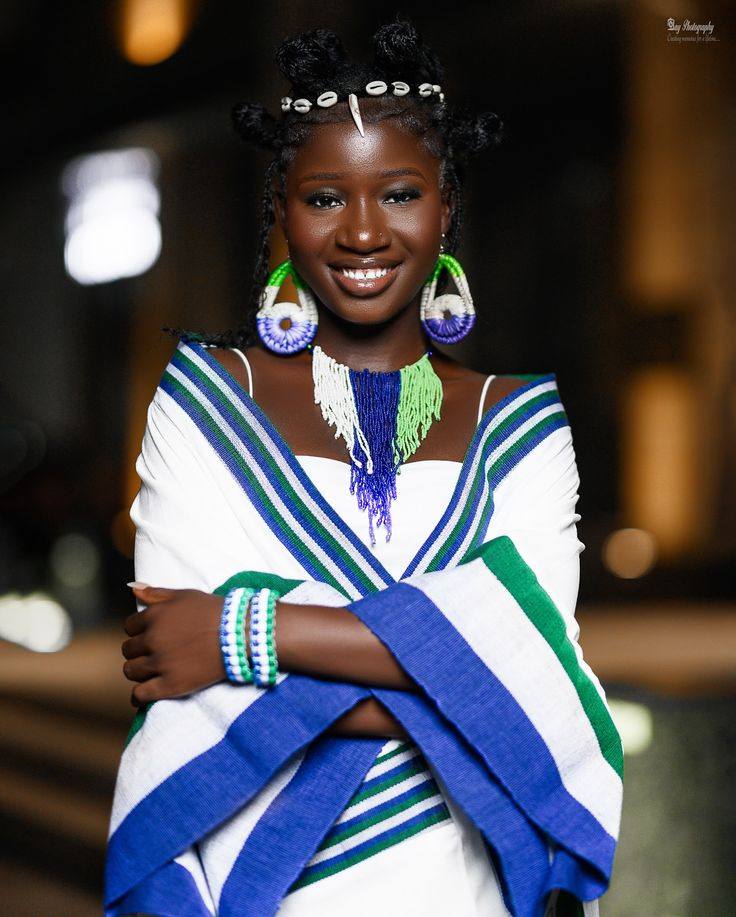
This technique supports key garments such as the gbari robe for men and wrapper skirts for women. Communities wear these items during initiations, weddings, and chieftaincy ceremonies.
Although local cotton cultivation has declined in recent decades and many weavers now incorporate imported thread, the practice continues to anchor ceremonial life. It transmits intergenerational knowledge within family compounds and small workshops.
Gara Dyeing Techniques and Artisan Practices
Gara dyeing techniques form a vital part of fabrics and craftsmanship in Sierra Leonean fashion. Temne women artisans in the northern regions, particularly around Makeni in Bombali District, lead this practice.
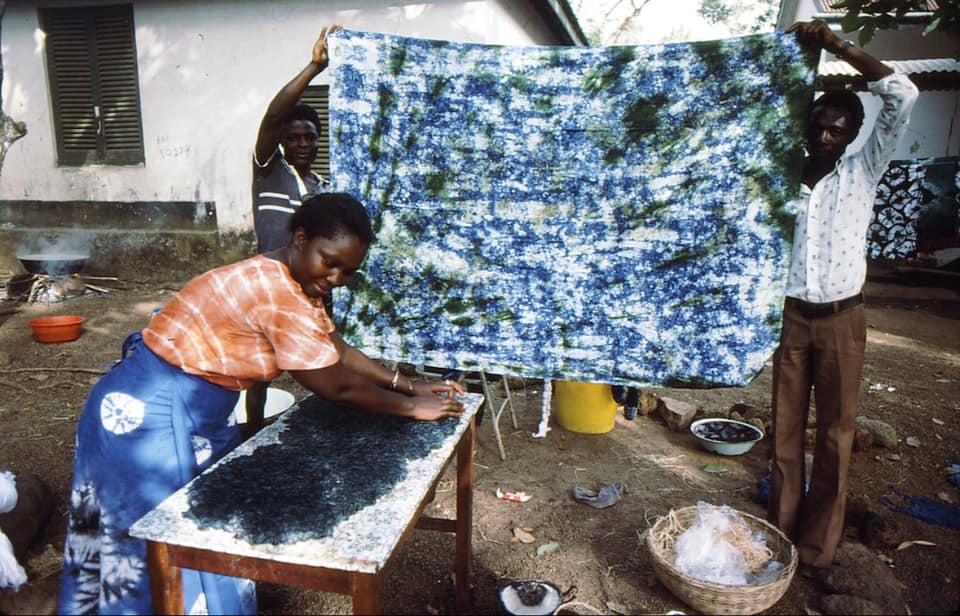
They transform cotton and damask fabrics into patterned cloth using tie-dye, stitch-resist, and wax-resist block-stamping methods. Artisans prepare the cloth by folding, tying, or stitching intricate designs before they immerse it in natural dye baths.
They primarily use indigo extracted from the gara leaf for deep blues and kola nut for warm terracotta and rust tones. Multiple dips create layered colours, after which they untie the fabric and often pound it to achieve a distinctive sheen. This labour-intensive process requires years of accumulated skill to control pattern clarity and colour depth.
These women operate small workshops and cooperatives where they train apprentices. They balance production with other responsibilities while adapting techniques to incorporate synthetic dyes to meet market demands.
Gara cloth is worn for both everyday wear and ceremonial occasions such as weddings and naming ceremonies. It supports female-led economic activity in the region despite challenges from imported textiles.
The Work of Sierra Leonean Textile Artisans
Sierra Leonean textile artisans drive fabrics and craftsmanship in Sierra Leonean fashion through their control of production processes. Women predominate in spinning, dyeing, and finishing, while men often handle country cloth weaving.
These artisans operate in small family workshops and cooperatives across rural and urban areas, where they manage the full cycle from raw fibre preparation to final cloth.
In gara production, women in the northern regions fold, tie, and dye cloth with indigo and kola nut extracts. They pound finished pieces for sheen and train apprentices in the techniques.
Country cloth weavers, mainly in Mende communities, assemble narrow strips into durable fabrics. Many artisans combine this work with farming and household duties. They face persistent economic pressures because each piece requires days or weeks of labour. Income remains modest and irregular due to competition from imported textiles, inconsistent electricity, and limited market access.
Cooperatives such as Country Cloth help address these constraints. They organise training, improve sales channels, and connect artisans to urban tailors and diaspora buyers.
This structure allows artisans to sustain technical standards across generations while adapting production methods to current realities. Their daily efforts keep these textile systems functional for both ceremonial and everyday needs.
Also Read:
- Traditional Clothing in Sierra Leone: Culture, Identity, and Style
- Traditional Clothing in Senegal: The Elegance of Boubou and Cultural Identity
- Wax Prints and Beyond: Fabrics Defining Ivorian Fashion
Fabrics and Craftsmanship in Sierra Leonean Fashion Among Mende and Temne Communities
Mende and Temne communities sustain distinct yet complementary textile traditions that strengthen fabrics and craftsmanship in Sierra Leonean fashion. Mende artisans in the southern and eastern regions focus on producing country cloth.
They weave narrow cotton strips on tripod looms and sew them into larger kpokpo cloths prized for their weight and durability. These cloths appear frequently in gbari robes and wrapper sets for initiations and chieftaincy events.
Temne artisans in the northern regions lead gara dyeing. Women dominate this work around Makeni, where they apply tie-dye, stitch-resist, and block-stamping techniques using indigo and kola nut dyes. Their patterned cloths provide both daily garments and ceremonial wear, such as naming-ceremony outfits.
While Mende practices centre on structural weaving, Temne methods emphasise colour and pattern complexity. Production in both groups occurs mainly in family workshops where elders pass skills to younger generations.
Artisans adapt to reduced local cotton supplies and competition from imported thread by developing hybrid approaches that maintain cultural relevance. These parallel traditions support local economies and reinforce ethnic identities without remaining fixed in the past. They evolve through practical responses to market demands while preserving technical knowledge.
The Omiren Argument
Sierra Leonean country cloth and gara traditions function as precarious, labour-intensive economic systems rather than timeless cultural treasures.
Mende weavers and Temne dyers maintain sophisticated techniques that support ceremonial life, yet face declining local cotton availability, cheap imports, and irregular incomes due to high production costs and poor infrastructure.
This reality disrupts romantic notions of unbroken heritage. The most effective response lies in female-led cooperatives that connect rural artisans to Freetown tailors and diaspora markets.
Sierra Leonean fashion will only retain material autonomy if practitioners prioritise scalable organisational and infrastructural improvements over reliance on sporadic ceremonial demand. Without this shift, these textile systems risk gradual erosion despite their continued relevance.
Frequently Asked Questions
- What is the traditional fabric in Sierra Leone?
The main traditional fabric in Sierra Leone is country cloth, a heavy handwoven textile made from cotton strips produced on tripod looms. It is primarily made by Mende artisans in the southern and eastern regions.
Another key fabric is gara, a tie-dyed and resist-dyed cloth often made by Temne women in northern regions using natural indigo and kola nut dyes.
- What is the traditional clothing in Sierra Leone?
Traditional clothing in Sierra Leone includes garments made from country cloth, such as the gbari robe for men and wrapper skirts for women, commonly worn during ceremonies like initiations and weddings. Gara-dyed fabrics are also widely used for everyday and special occasion outfits, including blouses, skirts, and matching sets known as ashobi for events.
- What is Sierra Leone best known for?
Sierra Leone is increasingly celebrated for its beautiful coastline, warm hospitality, and cultural depth. Many visitors and locals highlight its resilience and untapped tourism potential.
- Does Sierra Leone have a cloth?
Yes, Sierra Leone has its own distinctive traditional cloth known as country cloth, which is handwoven from cotton in narrow strips, then sewn together. The country also produces gara, a patterned tie-dye fabric, both of which play important role in cultural expression and local garment production.
- What are the 8 types of fabric?
Common fabric types worldwide include cotton, linen, silk, wool, polyester, nylon, rayon, and spandex, though classifications vary by source and context.