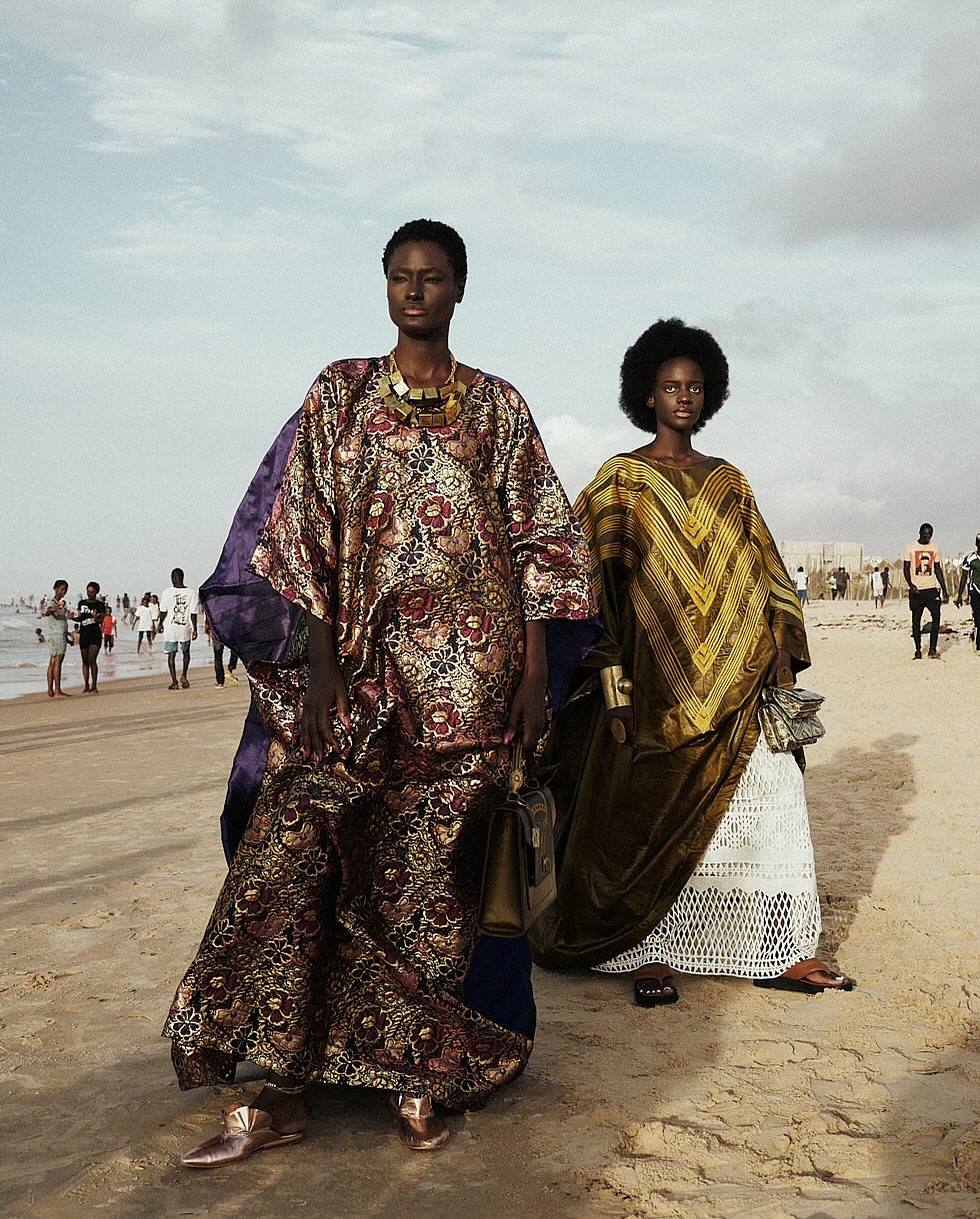
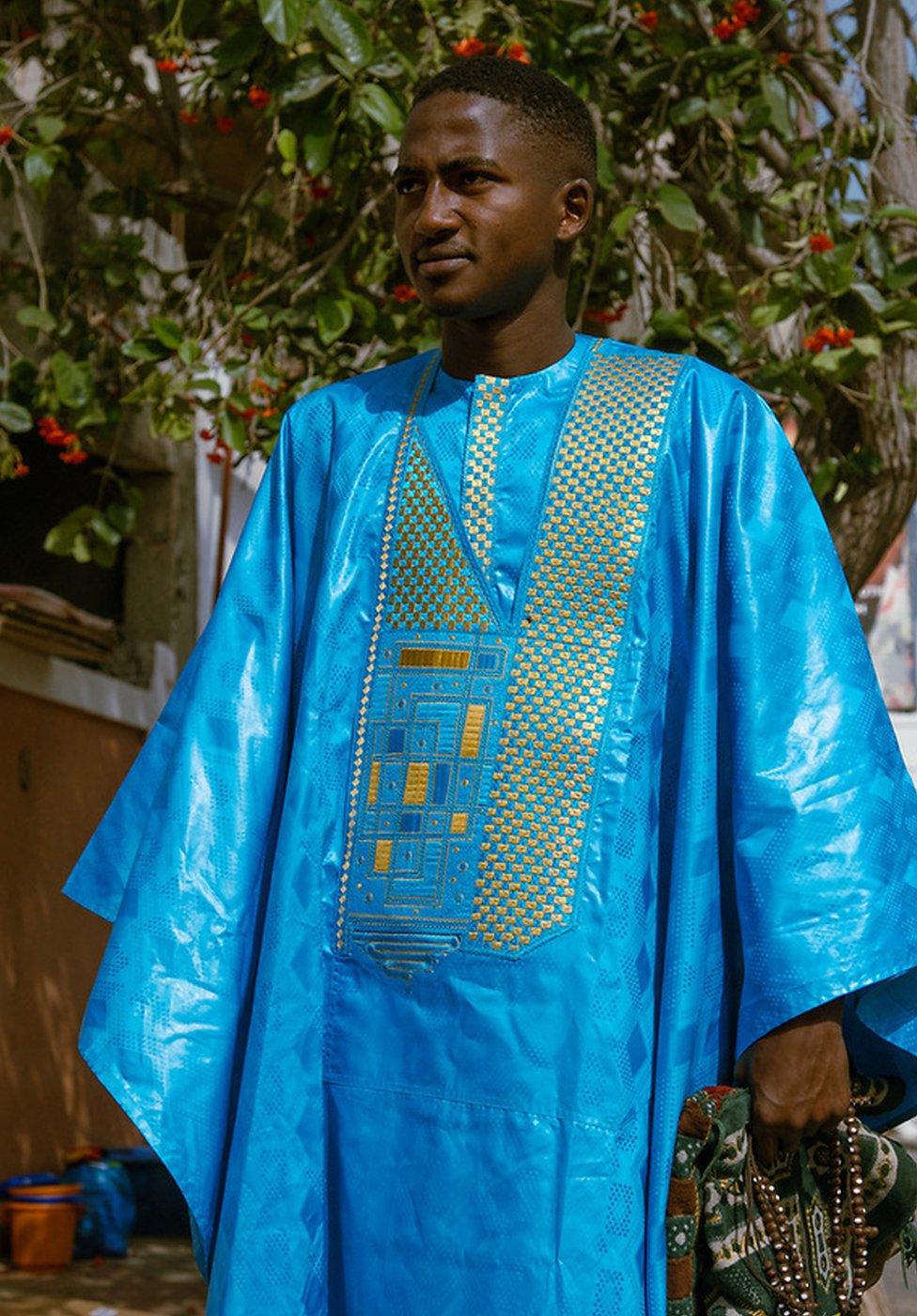
In the bustling streets of Dakar, a Senegalese man strides towards a Friday prayer gathering, his grand boubou sweeping the ground with each measured step.
The wide sleeves fall in elegant folds, the intricate embroidery catching the light as he greets neighbours and elders. Nearby, a woman adjusts her moussor head tie while her own flowing boubou moves with purpose through the market.
Traditional clothing in Senegal is no relic confined to ceremonies or museums. Senegalese people wear the boubou daily as they navigate offices, family obligations, and political meetings. It signals social rank, marital status, and personal dignity in the moment.
This is clothing as an active cultural practice. It isn’t a frozen tradition but a dynamic tool through which Senegalese society continually redefines who they are and how they wish to be seen.
Traditional clothing in Senegal reflects identity, ceremony, and evolving social codes shaped by boubou traditions and contemporary urban tailoring.
The Centrality of the Boubou in Senegalese Life
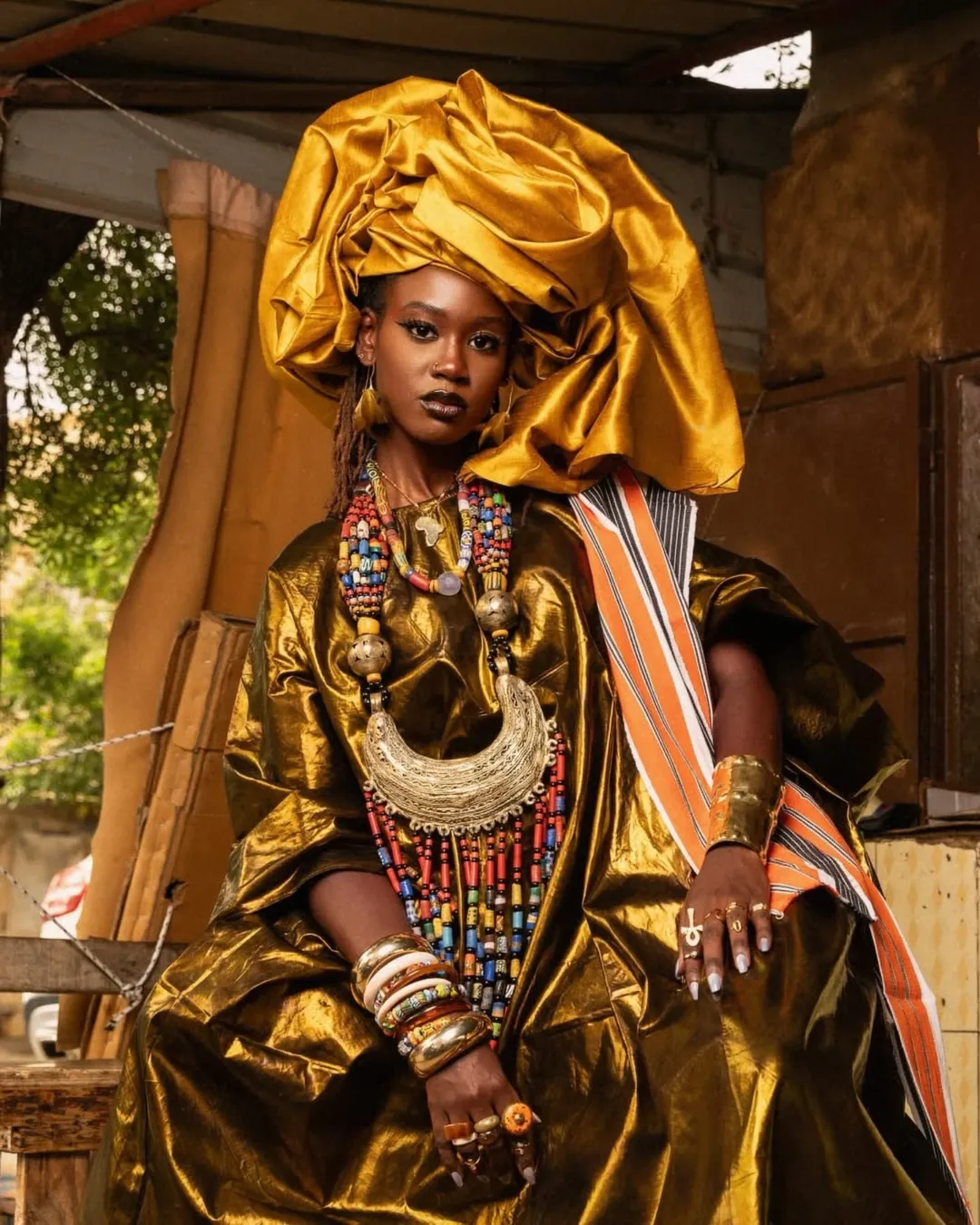
The boubou’s dominance in Senegalese dress culture stems more from how it is constructed and adapted to everyday life than from symbolism alone.
Its wide, flowing form is created through expansive fabric panels that allow the garment to drape loosely over the body and circulate air in Senegal’s heat.
In cities such as Dakar, where movement between offices, markets, and religious spaces shapes daily life, this practicality matters as much as appearance.
Unlike fitted garments, the boubou relies on volume and movement. It shifts with the wearer instead of restricting them. This explains why it remains common across professions, generations, and social settings.
What changes isn’t the silhouette but the fabric and finish. Everyday versions are made from cotton or printed textiles suited to repeated use. While formal occasions favour polished bazin cloth enhanced with detailed broderie around the neckline and sleeves.
Within Senegal’s tailoring culture, the boubou functions as a flexible garment framework rather than a fixed style. Tailors reinterpret fabric, embroidery, and finishing techniques.
They do this without abandoning the structure that makes the garment immediately recognisable across both daily and ceremonial life.
Wolof Traditional Dress and the Language of Status and Identity
As Senegal’s largest ethnic group, the Wolof have strongly influenced how dress is understood within both urban and ceremonial life.
In Dakar, especially, Wolof traditional dress shapes expectations around presentation, coordination, and public respectability.
Clothing is rarely approached as casual self-expression alone. It reflects discipline, maturity, and awareness of social settings. Embroidery, known locally as broderie, plays a central role in Wolof clothing aesthetics.
Tailors stitch detailed patterns around the neckline, chest, and sleeves to distinguish garments according to occasion and formality.
Dense embroidery often appears during weddings, religious celebrations, and public gatherings where appearance carries communal significance.
Women’s dress also incorporates the moussor, a structured head tie wrapped with precision to complement the boubou.
Furthermore, fabric pairing, jewellery selection, and wrapping style can indicate age group, marital status, and seniority within social spaces. Generational differences have also reshaped how these codes are interpreted.
Younger Senegalese women increasingly experiment with fabric combinations and modern tailoring influences. On the other hand, older generations often maintain more restrained styling associated with seniority and established social roles.
These distinctions show how the traditional clothing of Senegal’s ethnic groups continues to evolve without losing its cultural logic.
With all this, dress remains tied to social interpretation, but the forms through which people express identity continue to shift within contemporary Senegalese society.
For readers interested in the textile side of African dress, exploring the fabrics themselves offers another way to understand how much of the garment’s character comes from material, pattern and finish. Explore selected African textiles and fabrics
Ethnic Diversity in Traditional Clothing: Senegal Ethnic Groups
While the boubou remains widely recognised across the country, traditional clothing in Senegal does not operate through a single national aesthetic.
Different ethnic communities maintain distinct dressing traditions shaped by religion, geography, occupation, and ceremony. These differences matter because they prevent Senegalese fashion culture from being reduced to one visual identity or historical narrative.
Traditional Senegalese Clothing for Different Ethnic Groups
Among the Serer, elements of Serer clothing identity appear most clearly during rites of passage.
It also appears during agricultural celebrations,l and family ceremonies where dress reinforces communal belonging rather than individual display. For this group, fabric coordination and restrained tailoring often carry greater significance than heavy ornamentation.
Fulani communities, known locally as Peul, have historically favoured flowing garments suited to pastoral mobility and Sahelian climates. Their clothing traditions frequently incorporate layered wrappers.
It also incorporates long tunics and carefully balanced jewellery arrangements that prioritise proportion and movement over volume.
In southern Senegal, Diola dress traditions remain closely tied to ceremony and regional textile practices. This happens in Casamance communities, where clothing continues to function in ritual and communal life.
Mandinka communities similarly maintain distinct approaches to fabric use and ceremonial presentation shaped by regional exchange and intergenerational continuity.
These distinctions reveal that traditional Senegalese clothing functions through multiple cultural systems operating simultaneously.
Ceremonies, Religion, and the Social Life of Traditional Clothing in Senegal
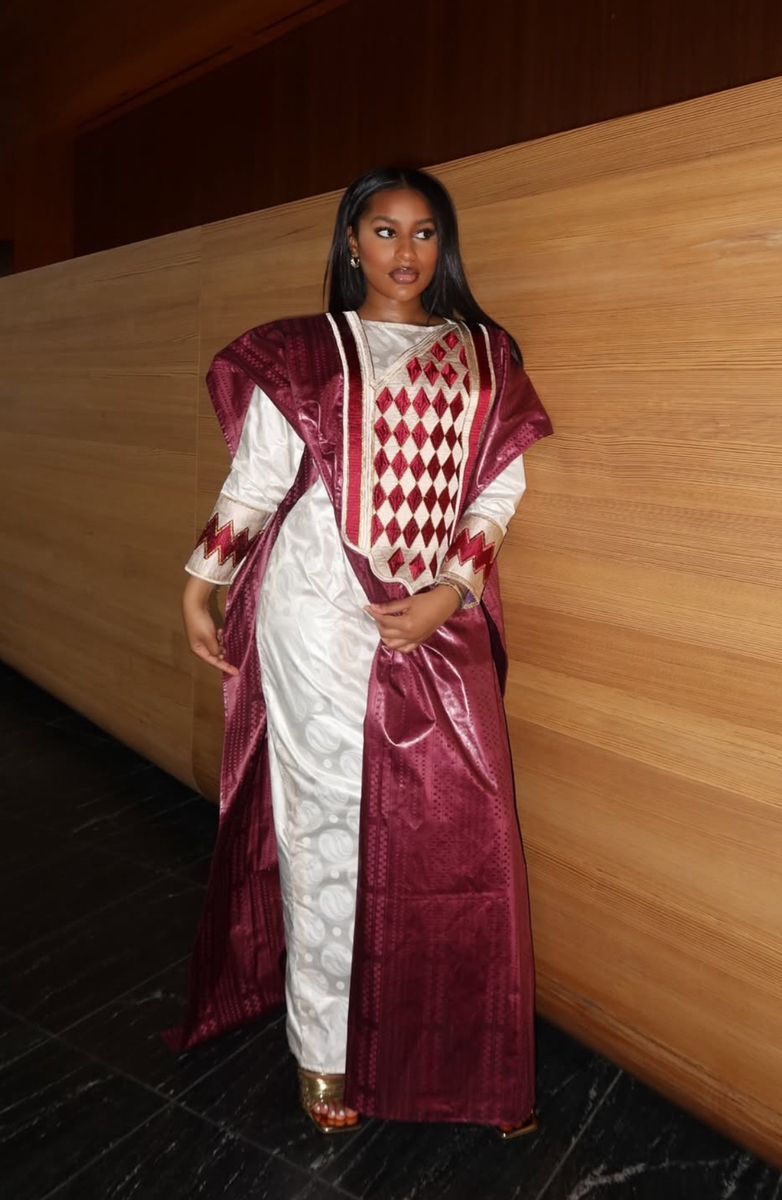
In Senegal, the cultural significance of the boubou Senegal becomes especially visible during ceremonies.
These ceremonies organise family and religious life around preparation, gathering, and public presence. For example, Baptêmes and weddings often begin long before the event itself, with relatives commissioning garments, selecting fabrics, and coordinating tailoring schedules weeks in advance.
During Tabaski and Eid celebrations, households treat traditional Senegalese clothing as part of the occasion’s social preparation. Tailors experience increased demand as families order matching or complementary outfits.
These outfits are designed specifically for prayer gatherings, home visits, and communal celebrations. Clothing in these moments helps structure participation in the event itself.
On the other hand, funerary settings follow a different visual rhythm. Darker tones, simpler garments, and restrained embroidery create a quieter mode of presentation shaped by mourning customs and collective respect.
The reduction of ornament signals awareness of the occasion rather than a lack of care in appearance.
These ceremonial practices also reveal how traditional clothing in Senegal continues to adapt to urban schedules and contemporary lifestyles.
Also Read:
- Traditional Clothing in the Benin Republic: Culture, Royalty, and Identity
- Traditional Clothing in Ghana: Beyond Kente, Batakari, Fugu, and Cultural Identity
- Afar (Adal) Women’s Dress: Danakil Culture and Desert Adornment
- Why Style Choice Is About How the Body Is Seen, Shaped, and Understood
Evolving Meanings in Traditional Clothing in Senegal
The meaning of traditional clothing in Senegal is now shaped by the conditions under which garments are produced rather than by their inheritance as fixed cultural continuity.
In Dakar’s tailoring economy, clothing is increasingly commissioned for specific social moments, where timing, demand, and occasion determine design decisions.
This shift embeds change within the system itself. Shorter production cycles, varied fabric circulation, and responsive tailoring practices mean that the dress is no longer transferred as a static inheritance.
Instead, it’s constructed in response to immediate social needs. Across traditional Senegalese clothing, adjustments in fabric choice, silhouette, and detailing reflect not a departure from tradition. It’s a reorganisation of how tradition operates in practice.
The Omiren Argument
Traditional clothing in Senegal is often described as an inherited cultural expression tied to identity and ceremony.
Across Wolof tailoring systems, Serer ceremonial restraint, Fulani pastoral dress logic, and Diola ritual practices, clothing functions as a structured social code rather than a fixed cultural relic.
But this system is not preserved unchanged. It is actively reorganised through Dakar’s tailoring economy, compressed ceremonial timelines, and shifting fabric circulation that allow garments to be commissioned, adjusted, and reinterpreted in real time.
What appears as continuity is a negotiation between established dress structures and present-day production conditions.
Meaning is produced at the point of wearing rather than being inherited intact.
Traditional clothing in Senegal isn’t a preserved system of identity. But it’s a continuously reconstructed practice of social meaning shaped through use.
Senegalese dress culture reveals how identity isn’t stored in fabric but activated through practice. To fully understand West African fashion, follow how these systems shift across regions, cities, and generations in the wider series on Omiren Styles.
Frequently Asked Questions
-
What Is Traditional Clothing in Senegal?
Traditional clothing in Senegal revolves around the boubou, a loose, wide-sleeved robe crafted from a large single piece of fabric. Both men and women wear it regularly for its ability to provide comfort in warm conditions while conveying dignity and a sense of social presence.
-
How To Dress as a Woman in Senegal?
Senegalese women typically wear a boubou combined with a matching wrapper and a carefully styled moussor head tie. Daily outfits often feature lightweight cotton or wax prints, while formal and ceremonial occasions call for stiffer bazin fabric with rich embroidery.
-
What Are Senegalese Dresses Called?
The signature garment is the boubou, frequently referred to as the grand boubou. Women also wear the m’bar, a specific female version of the boubou, along with tailored blouses paired with a pagne wrapper.
-
Do You Have To Wear a Hijab in Senegal?
No. Senegal is a secular country, even with a Muslim majority population. Wearing a hijab is entirely a personal or family choice. Many women prefer the traditional moussor head tie as part of their cultural outfit rather than as a religious covering. There is no legal or widespread social obligation to wear one.
-
How Do Men Dress in Senegal?
Men usually wear the grand boubou over a simple tunic and loose trousers. This combination offers both practicality in the heat and a strong sense of cultural authority. Everyday versions use lighter fabrics, while ceremonial and formal settings feature heavier bazin with detailed embroidery. The overall look emphasises presence and respectability.
Further Reading
The history of traditional clothing in Senegal sits within the wider story of African textiles, fashion, identity, and cultural exchange.
For readers who want to explore these subjects beyond the garments themselves, we’ve selected books covering African fashion, textile traditions, cultural history, and the wider African diaspora.
Explore books on African fashion, textiles and cultural history
Some links in this article are affiliate links. If you purchase through one of these links, Omiren Styles may receive a small commission at no additional cost to you.