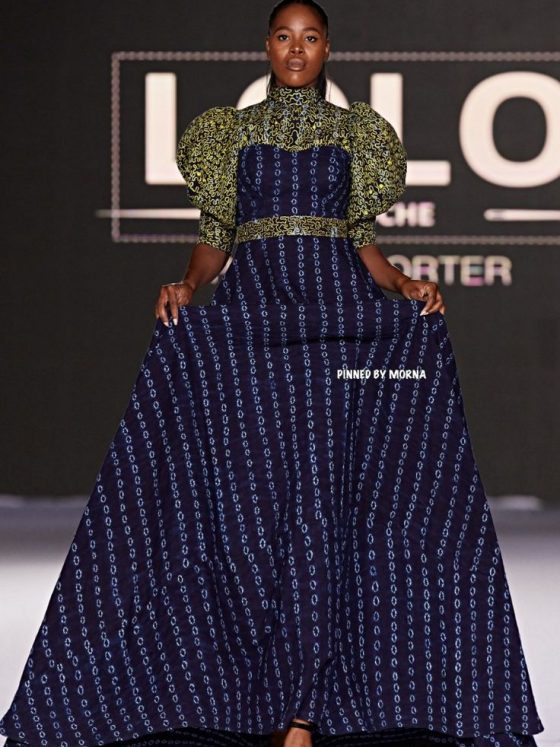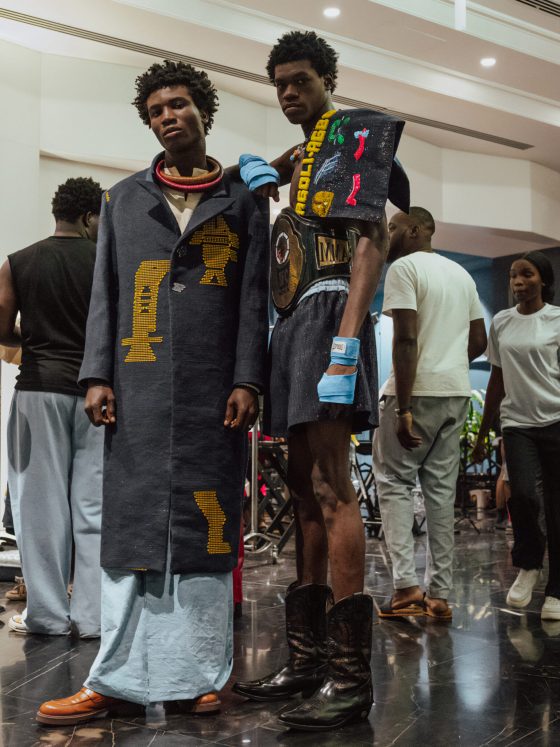


Before Maison Sitou became a label, Samir de Dravo was making clothes for himself. Working as a model, he wanted a wardrobe that expressed his personality but had little money to spend. He turned to his mother’s fabrics, his grandmother’s sewing machine, and local tailors and artisans. In a July 2022 interview with NDAANE, he dated those experiments to 2010. People responded to the clothes. Men and women recognised something in his style, encouraging him to imagine a wider audience for locally made pieces with what he called “effortless singularity.” A decade later, during lockdown in France, he decided to develop the idea into Maison Sitou. The label launched in June 2020.
Its early development raised a practical question: how could a founder living and working in France build a label through a team in Benin? His 2022 account, alongside a collaborator’s record of the Spring/Summer 2021 launch, traces the work of translating personal taste into a collection, a public image and an online shop.
Trace Maison Sitou’s early development, from Samir de Dravo’s personal wardrobe experiments to a Benin-made label coordinated from Paris since 2020.
From the Family Wardrobe to a Label

Clothing was familiar territory in de Dravo’s family. His father sold fabrics, shoes and accessories, and he credited both parents with introducing him to fashion. They did not, however, expect it to become his profession. For a time, neither did he. Modelling changed that expectation. It gave him an entry into the industry and made personal presentation part of his work. The clothes he began putting together responded to that setting: he wanted a distinctive appearance without the budget to buy it ready-made. That origin is important because the design impulse preceded the business. He first had a particular wearer to satisfy (himself) and a practical network of materials and makers through which to experiment.
In March 2020, lockdown supplied the moment to act on the larger project. De Dravo described returning to his roots and learning about Beninese craftsmanship before launching Maison Sitou that June. The name also carried a personal connection. He explained that “Sitou,” or “Sitù,” means “grace” among the Minȧ people, his mother’s ethnic group. For him, the word could signify both a blessing and a confident state of mind.
A Design Language Built Around Ease
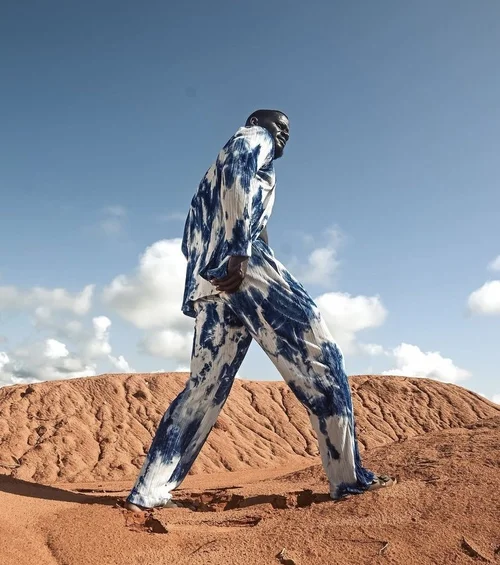
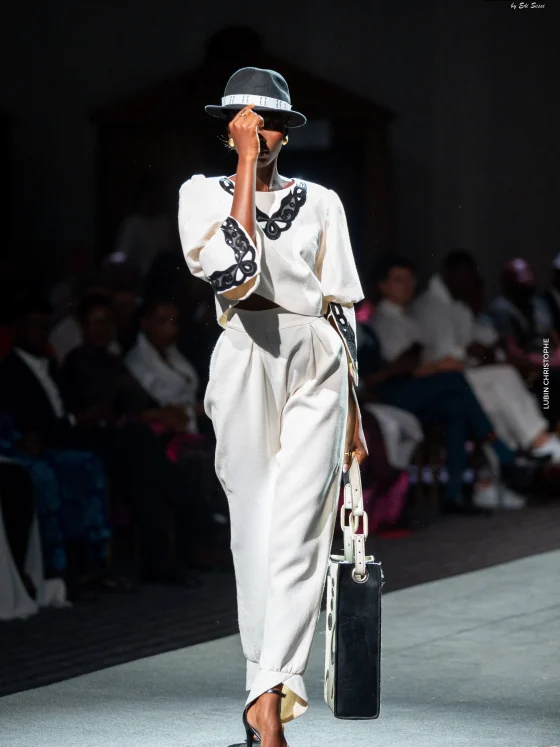
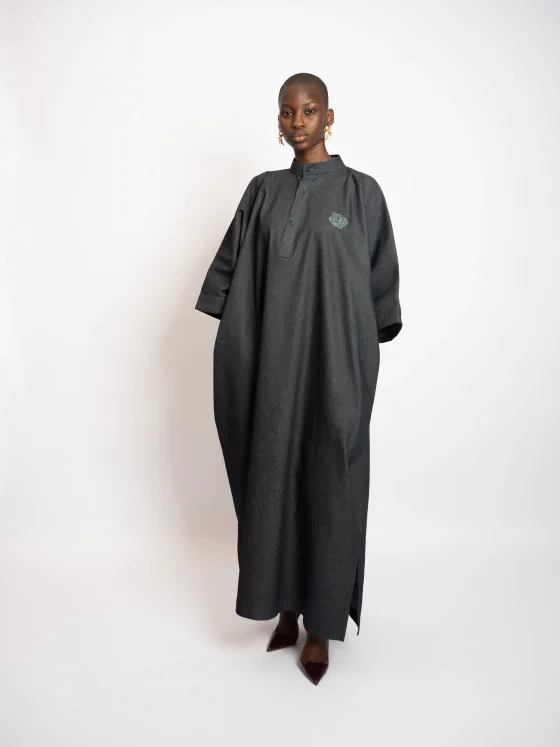
De Dravo described Maison Sitou through softness, fluidity, colour and pattern. “Effortless individuality” was central to the effect he wanted, alongside a rejection of the expectation that African labels should fit an “ethnic” stereotype. The distinction was between drawing on culture and being confined by an outside category. He identified Benin’s ethnic groups, traditions, rituals and values as continuing sources of inspiration, while describing his experience in France as another influence on how he presented the work. The early profile names several pieces: the Osiri Suit, Fisher Set, Allada Shirt and Ayele Dress. Together, they establish a range spanning coordinated dressing, a shirt, and a dress, rather than a label organised around one signature product.
Their presentation was also personal. De Dravo wore the Fisher Set himself; Hugues Akpovi appeared in the Allada Shirt; and artist Toyinwhatagain wore the Ayele Dress. Aïsha Fadonougbo received photographic credits for the Osiri Suit and Allada Shirt images. The public identity of the clothes was being developed through a circle of wearers and image-makers as well as through the garments.
Giving the Collection a Public Form
By Spring/Summer 2021, Maison Sitou was investing in how customers would encounter the label online. AHOMÉ’s project account records de Dravo commissioning a website redesign for that collection’s launch. The brand already had a visual identity; the task was to renew its digital presentation in line with his next goals. The work focused on the website, the overall shop structure, and graphics promoting the collection. The shop structure had a practical purpose: de Dravo and his team needed to operate it themselves. That detail moves the story beyond branding as appearance. The digital presentation also had to become a tool the business could use.
It was one identifiable contribution within a broader collaboration. In the NDAANE interview, de Dravo named a group of young creatives involved from the Spring/Summer 2021 collection, including Willina Sossou, Fadonougbo and Akpovi. He described sharing the label’s platform with collaborators and building an ongoing team. The website project and credited photography make that collective effort tangible. Different people handled different parts of the label’s public face.
Coordinating Between France and Benin

By July 2022, de Dravo had lived in France for eight years. He said he was working as a personal stylist at Christian Dior Couture while developing Maison Sitou through a team in Benin. He did not describe the arrangement as easy. Asked how he managed both commitments, he called it his biggest challenge and acknowledged that it could be emotionally draining. Days off, holidays and breaks went back into the label. His response centred on the team: finding people who understood the direction, communicating expectations and developing consistency. Distance made those relationships essential to how he worked.
De Dravo also connected his Paris employment with what he wanted Maison Sitou’s customers to experience. The lesson he emphasised was service. If he could provide a high level of attention in his work in Paris, he argued, customers of his own label deserved the same seriousness. This ambition was to transfer professional experience, not simply attach prestige to the brand. In his account, the relevant standards concerned how the customer was treated and how the clothing was presented. The Benin-based collaborators supplied another kind of knowledge: the making, photography and creative work through which the label took shape. Maison Sitou depended on those contributions, not solely on a founder directing from abroad.
What “Made in Benin” Meant in the Early Account

In the 2022 interview, de Dravo described Maison Sitou as “100% made in Benin”. He linked that position to aspirations around employment, fair trade and environmental responsibility. The production claim and the wider ambitions should remain distinct. His account locates the making in Benin; it does not provide a complete inventory of material origins or an independent assessment of labour and environmental practices. What it does document is a founder building a business around work carried out in his home country. He spoke about highlighting craftspeople, sharing visibility and advising younger designers who approached him.
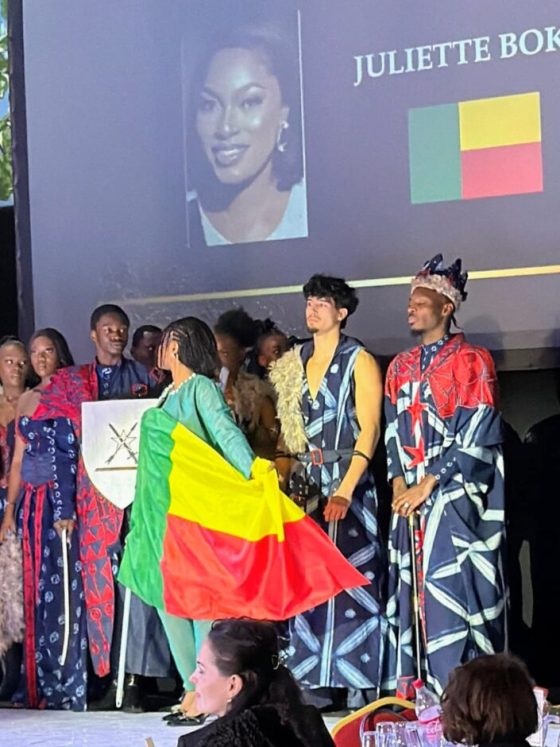
Within the wider Beninese designer landscape, that gives Maison Sitou’s beginnings a specific character. It was a diaspora-led project whose founder’s working life was in France, while the label’s production and much of its creative collaboration remained connected to Benin.
The Omiren Argument
Maison Sitou’s early story is strongest where an individual wardrobe becomes shared work. De Dravo supplied the initial point of view, but making the label public required garments, photographs, graphics, an online shop and a team able to carry the project forward.
The Paris–Cotonou relationship was therefore not just a biographical detail. It was the operating challenge at the centre of his account: how to maintain a recognisable direction across distance without treating the people realising it as invisible.
The early record shows that challenge being addressed through named collaborators and specific projects. That is a more useful foundation for understanding Maison Sitou than a general claim about bridging continents.
Also Read:
- What Is Maison Château Rouge? The Paris Brand Built on African Diaspora Memory
- How African Heritage Designers in Paris Are Challenging the Maison System
- Togolese Designers Making Waves in African Fashion
- Cape Verdean Designers and the Global Reach of Island Fashion
Frequently Asked Questions
Who founded Maison Sitou?
Samir de Dravo founded Maison Sitou and was identified as its creative director in NDAANE’s July 2022 interview. Before the label, he made clothes for himself while working as a model, using his mother’s fabrics, his grandmother’s sewing machine, and local tailors and artisans. He dated those experiments to 2010.
When did the label launch?
De Dravo dates its launch to June 2020, after he decided to develop the project during lockdown that March. He described returning to his roots and learning about Beninese craftsmanship first. By Spring/Summer 2021, the label had commissioned AHOMÉ to redesign its website for that collection’s launch.
What does the name mean?
According to the founder, “Sitou,” or “Sitù,” means “grace” among the Minȧ people, his mother’s ethnic group. He associates it with both blessing and confidence, explaining that the word could signify a blessing as well as a confident state of mind.
How did the label operate between France and Benin?
In his 2022 account, de Dravo described living and working in France while coordinating a team and clothing production in Benin. He said he was a personal stylist at Christian Dior Couture, called the arrangement his biggest challenge, and put days off, holidays and breaks back into the label.