
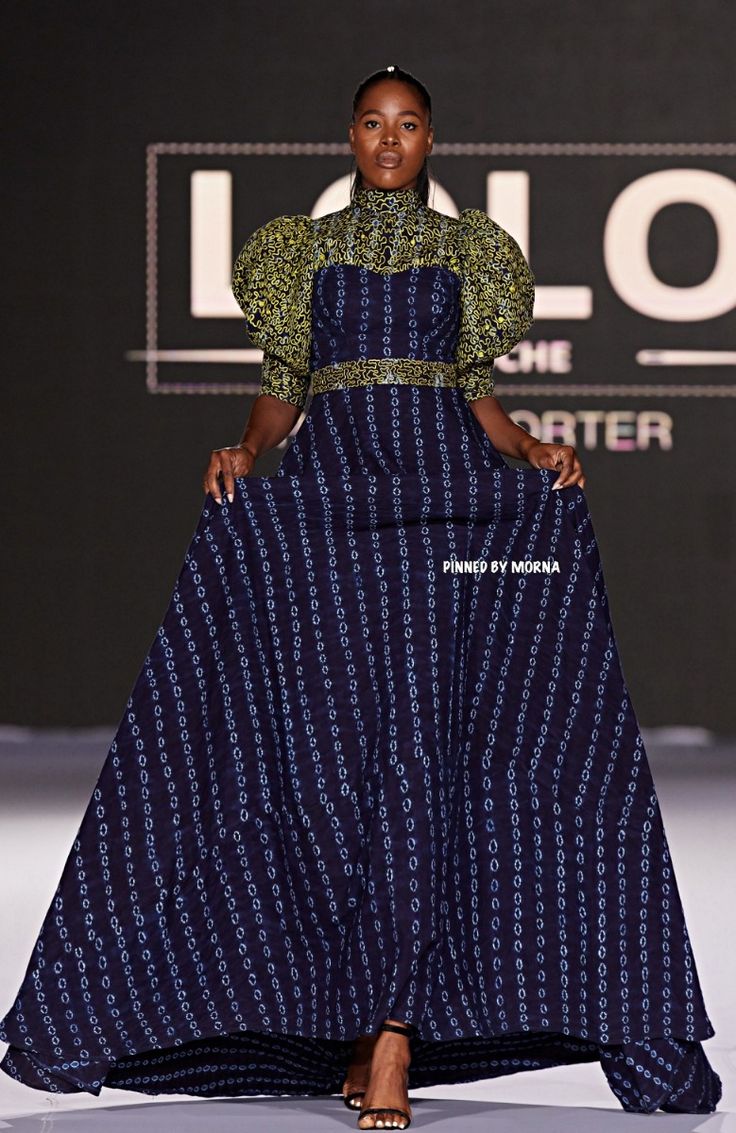
During a June 2026 interview at his Cotonou workshop in Agontinkon, Lolo Andoche paused the conversation to settle a decision about a shirt: which colour button should finish it? An account of the designer’s working life published by WATHI places him between telephone calls, orders and sewing machines, still involved in the details of garments bearing his name. It is an instructive introduction to a house whose history cannot be separated from the work of making clothes.
Founded in 1993 by Charlemagne Andoche Amoussou, the Lolo Andoche fashion house has spent more than three decades developing Beninese ready-to-wear. The name itself is personal: according to the WATHI account, “Lolo” comes from “Charlo”, a childhood nickname for Charlemagne. The house’s significance lies in connecting textile identity to production: commissioning cloth, constructing garments, training workers and reaching customers. Kanvô is part of that practice, but the larger story concerns how a designer builds a continuing business around clothing people will buy and wear.
That story belongs to a larger economy. UNESCO’s 2023 report on the fashion sector in Africa put the market value of clothing and footwear in sub-Saharan Africa at US$31 billion in 2020. Within that $31 billion African fashion market, Lolo Andoche’s career offers a specific case of what it takes for a Beninese label to make, sell and keep selling clothing at home.
Explore Lolo Andoche’s Beninese fashion house, where kanvô, workshop training and garment production connect textile identity with everyday clothing.
From Apprenticeship to Ready-to-Wear
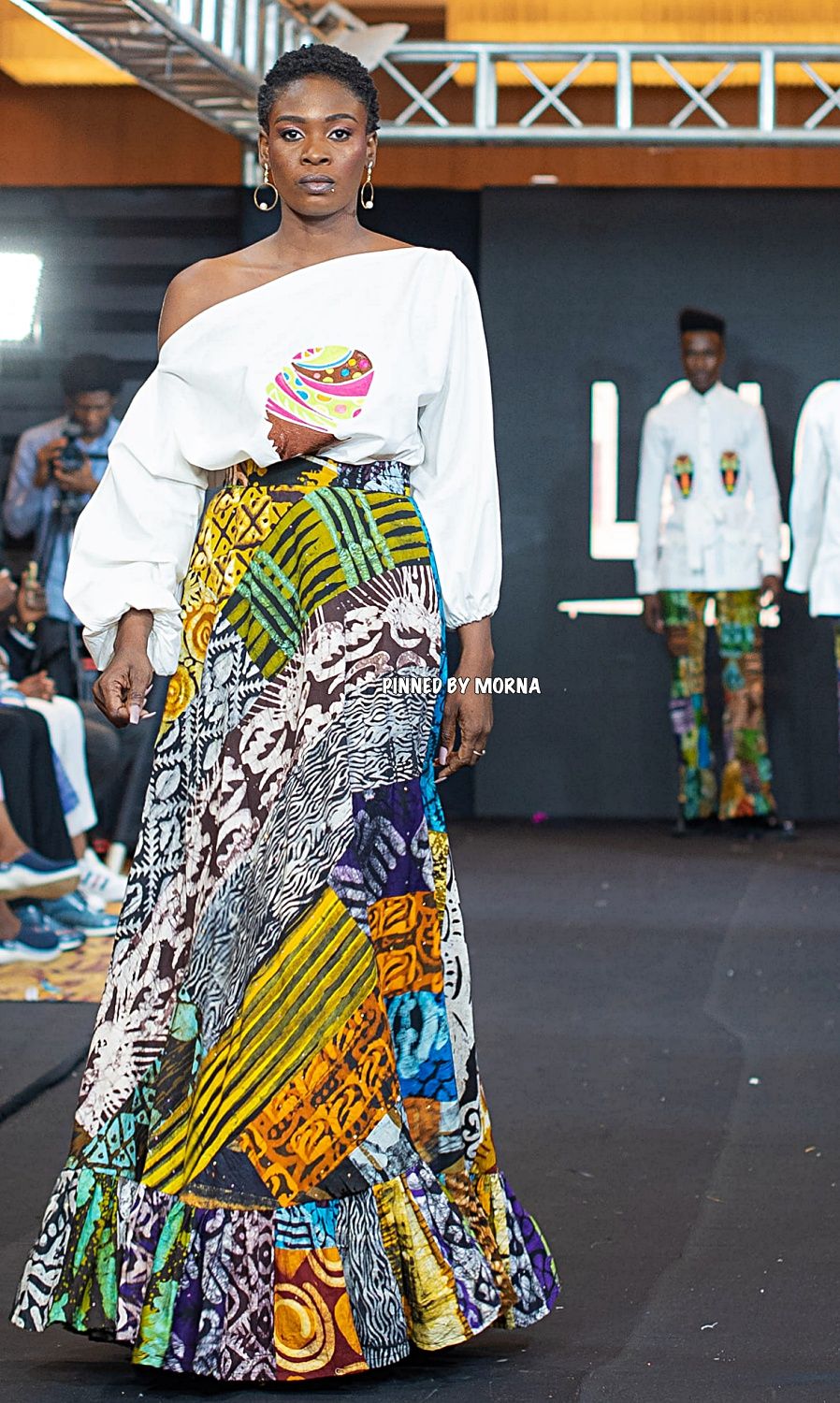
Andoche’s route into fashion began during the disruption of Benin’s 1988–1989 school year, a blank year marked by political, social and economic crisis. Already interested in dress, dancing and drawing clothes, he asked his father for permission to learn sewing. He entered the workshop of Beninese designer Peter Toss and stayed for three years. What initially seemed an additional skill became a profession as friends, themselves affected by the blank year, began buying garments he made during his apprenticeship.
His background joined making with commerce. His mother sold pagnes and gave him a taste for trade, while his father’s police career took the family between different towns. In the WATHI interview, Andoche describes a growing ambition to move beyond individual commissions and produce clothing in greater quantities. He counts himself among the pioneers of “Made in Africa” ready-to-wear.
That distinction shaped the house established in 1993. In a 2019 interview marking 26 years of the label, given when he received the Prix des étoiles from the press group Guérite TV Monde, he recalled a market offering three main options: conventional ready-to-wear, second-hand clothing and direct orders from tailors. Educated professionals favoured formal Western dress, and young people preferred jeans and T-shirts, so African ready-to-wear was a risky bet. His proposition was clothing that could enter professional and everyday wardrobes. A major fashion presentation at the turn of 2000 widened his contacts, and subsequent opportunities included entrepreneurial training in Belgium through a project of the Chamber of Commerce and Industry of Benin.
Making Textile Identity Wearable
For Andoche, kanvô offered a way to make Beninese clothing recognisable through material, not simply through a designer’s nationality. He recalled attending international events where other West African countries were recognised through their textiles while Beninese designers lacked an equally immediate identifier. In response, he worked with the country’s handwoven cloth.
Omiren Styles’ guide to kanvô and its place in Beninese textile history examines its wider background, from its introduction to the Dahomey court by King Agonglo at the end of the eighteenth century to its contemporary revival, and notes that Andoche has opened a dedicated kanvô boutique in Cotonou. The cloth sits within a longer dress history that Omiren Styles has traced in its account of traditional clothing in the Benin Republic. Within Andoche’s practice, the immediate question is what happens when that cloth becomes a shirt or jacket.
November 2026 reporting by Ibrahim Oredola Falola describes the house working with kanvô alongside linen and silk, and pairing handwoven strips with cuts that are both fluid and structured. The report identifies stiffness and limited production as practical obstacles to ready-to-wear and notes that improved dyeing now helps the house’s cotton pieces keep their colour in the wash. Andoche also recalls presenting shirts and jackets during the C4 conference to demonstrate the textile’s possibilities beyond exceptional occasions.
These details matter because a material-led fashion practice must do more than display cloth. Weight affects movement; construction determines how a garment sits; dye performance influences care. The design challenge is to retain kanvô’s texture and identity while making kanvô clothing appropriate to its intended use.
The Weavers Behind the Garments
The house says it works with Beninese weavers, particularly in Tori-Bossito, about 45 kilometres from Cotonou, and prioritises locally grown, hand-woven cotton. This connects the finished garment to skills and production beyond the Cotonou workshop. In Falola’s Bird Story Agency report on kanvô’s contemporary uses, Andoche identifies the time invested in weaving as a source of value rather than an inconvenience to be hidden. An artisan can take about a day to weave barely a metre, and his summary is brief: “craftsmanship is luxury.”
That relationship also involves limitations. Mélia Adjovi, an interior designer and Lolo Andoche client, describes the difficulty of finding qualified weavers who can produce different, unique patterns, while noting developments that can now give kanvô a denim-like appearance. Experimentation therefore concerns the textile itself, not only the silhouette it forms.
This is the business-level connection within the wider story of cotton and Beninese fashion identity: agricultural material becomes woven cloth, and woven cloth becomes a product through decisions shared between different makers. The designer’s contribution depends on those relationships rather than replacing them.
Training a House, Not Just a Designer
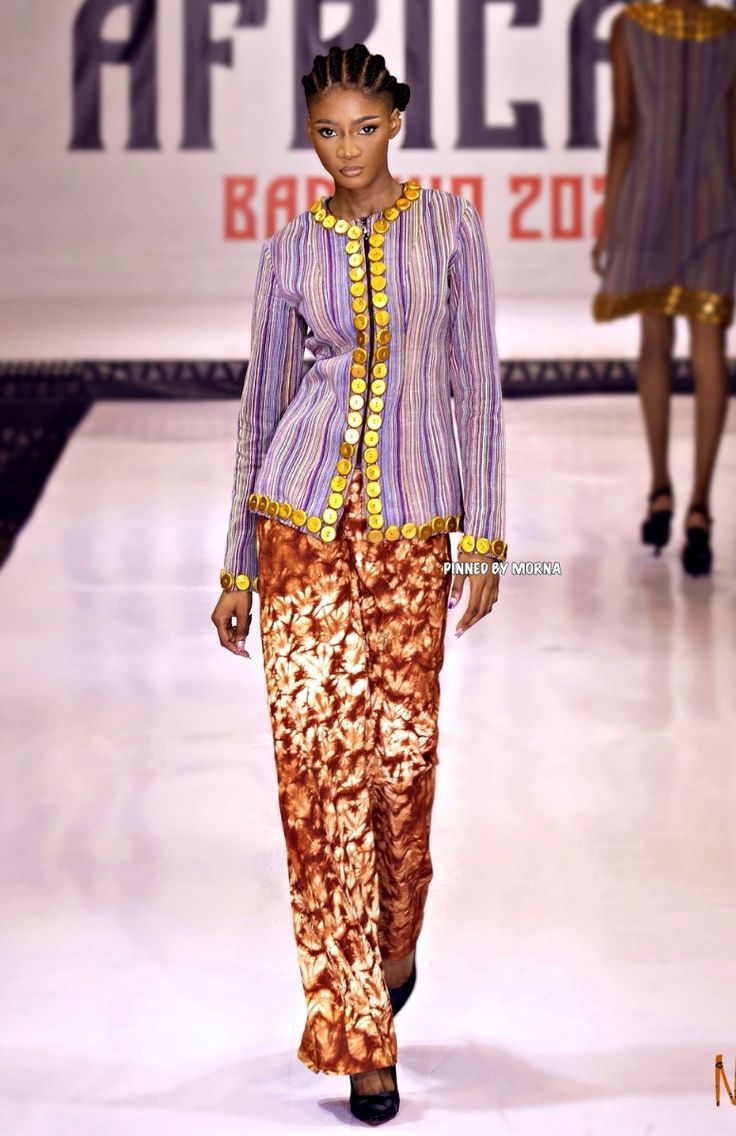
The workshop is where that collaboration becomes an organised sequence. Falola describes garments moving through cutting, sewing, overlocking and quality checks before buttons, ironing, folding and packaging. Andoche supervises cutting, pattern-making and design, while younger dressmakers develop their skills within production. The report describes approximately 100 skilled workers, both temporary and full-time.
The apprenticeship connection is significant. Andoche credits Peter Toss as a mentor and a tireless worker; his own advice to beginners now emphasises internships and practical placements, since most learning happens there and training centres vary in quality. Knowledge moves between generations through repeated work, correction and responsibility.
The Ethical Fashion Initiative’s designer programme for World Cotton Day 2024, held in the Novotel garden in Cotonou, described him as an icon of Beninese fashion with 30 years of experience, working mainly with dyed cotton. He showed alongside designers including FARE, Atelier V.O., Couleur Indigo and Edi Sessi. His participation places the house within a wider professional community, not above a supposedly absent Beninese fashion industry. Omiren Styles has also noted his role as godfather of Benin Fashion Month and a sponsor of SOB Fashion Week.
The Price of Wearing Local
Andoche’s defence of craft does not mean he believes all locally made clothing should occupy a luxury price bracket. In the WATHI interview, he distinguishes labour-intensive kanvô pieces, which cannot be cheap when a metre can take a full day to weave, from basic garments that could be produced industrially in larger quantities. His ambition is for locally manufactured clothing to reach customers across different income groups.
That exposes a productive tension. The time required for handweaving helps establish kanvô’s value, but the same labour makes broad affordability difficult. Andoche’s response is not to erase the distinction between craft and industry. He argues for a clothing economy that can support both.
Retail makes that ambition practical. The November report records five shops in Benin and two in Togo, alongside an October 2026 campaign offering a 15% discount for two weeks to encourage local purchases. These details establish routes to customers, not proof of profitability. They still move the discussion beyond visibility toward the recurring transactions on which production depends. The Togo shops place the house within a cross-border trade that Omiren Styles has examined in its account of the Grand Marché de Lomé, where buyers from Benin and across West Africa have long come for cloth.
The house belongs within Omiren Styles’ broader account of Beninese designers and fashion businesses, but its particular contribution becomes clearest at this intersection of material, production and retail. For readers following Cotonou fashion, it offers a rare long view. A textile’s cultural recognition and a garment’s commercial life are related questions, not interchangeable achievements.
What Three Decades Show
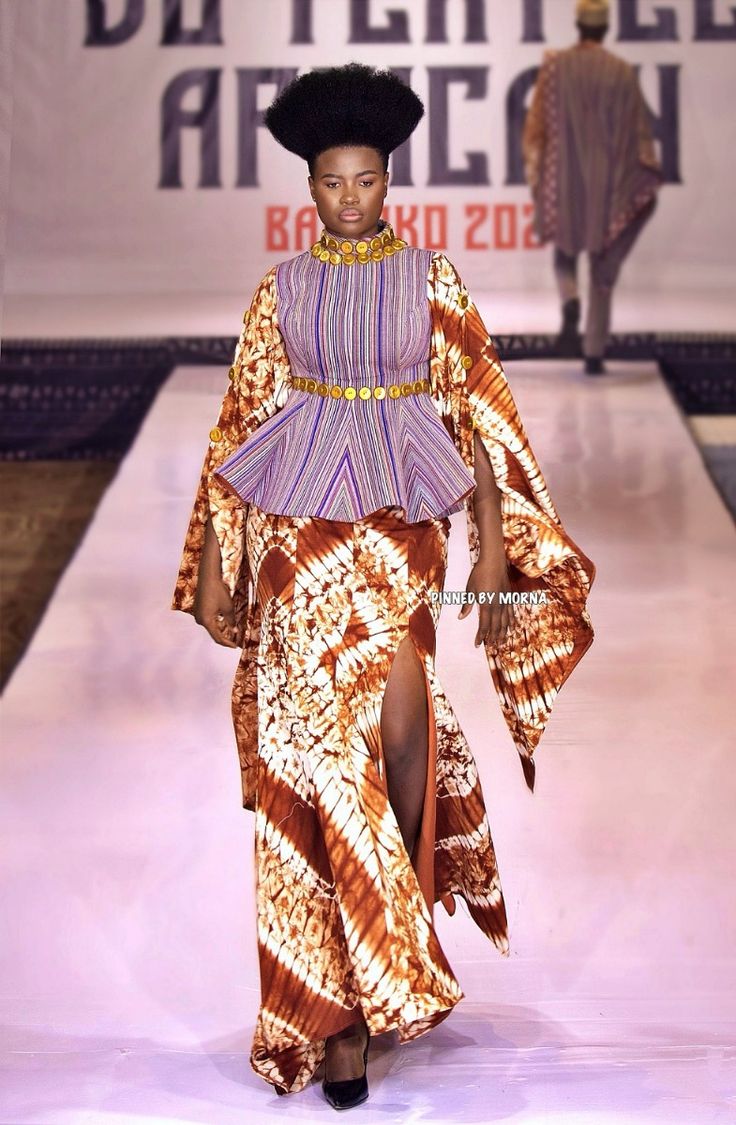
Read together, the sources describe a house that has solved different problems at different moments. In 1993 the problem was demand: persuading professionals and young people who preferred Western suits, jeans and T-shirts that African ready-to-wear belonged in their wardrobes. Around the turn of 2000 it was reach, as a major presentation and training in Belgium widened his contacts. In recent years it has been material, making kanvô soft enough, colourfast enough and plentiful enough to become everyday clothing.
Each of those problems required a different kind of work. The first was commercial and cultural; the second was about networks and business skills; the third depended on weavers, dyers and a workshop that can repeat a garment reliably. No single collection or season of attention solved any of them. Each one was addressed through years of ordinary production, sales and correction.
That sequence is useful for younger Beninese labels. It suggests that a recognisable textile is a starting point, not a business model on its own, and that the slower, less visible work of training staff, keeping weavers in work and opening shops is what allows a label to last. Lolo Andoche’s three decades are less a story of arrival than of continuous adjustment to the market he set out to serve.
The Omiren Argument
Lolo Andoche’s place in Beninese fashion rests on more than longevity. The house connects a material proposition with the organisation needed to sustain it: weaving relationships, garment construction, training and retail. Its history challenges an account of African fashion that begins whenever a new audience discovers an established practice.
The point is not that Andoche alone preserved Kanvô. Textile heritage becomes a continuing clothing practice through repeated work by many people. The designer’s name identifies the house; its significance also belongs to the makers and customers who keep it operating.
ALSO READ:
- Elvira Akplogan and LOAN-H: Bringing Kanvô Back to the World Stage.
- Beninese Bridal Fashion: Fabric, Ceremony, Identity.
- Streetwear in Benin: Youth Culture and Contemporary Style.
- Why Lomé Should Be on Every African Fashion Investor’s Map.
Frequently Asked Questions
Who is Lolo Andoche?
Lolo Andoche is the professional name of Beninese designer Charlemagne Andoche Amoussou and the name of his Cotonou fashion house, founded in 1993. “Lolo” comes from “Charlo,” a childhood nickname. He trained for three years with designer Peter Toss after the 1988–1989 blank school year, and his practice now brings together clothing design, garment production, workshop training and kanvô.
How does Lolo Andoche use Kanvô?
The house incorporates handwoven kanvô into contemporary garments such as shirts and jackets, combining it with linen and silk and pairing the woven strips with fluid and structured cuts. It works with weavers in Tori-Bossito and prioritises locally grown cotton, while addressing the cloth’s stiffness, limited production and dye performance so that pieces suit everyday wear rather than only special occasions.
How large is the Lolo Andoche business?
November 2026 reporting describes a workshop of around 100 skilled workers, both temporary and full-time, and a production sequence running from cutting and sewing to quality checks, ironing and packaging. The same report records five shops in Benin and two in Togo. These figures show the scale of production and retail, but they do not measure profitability.
Why does Lolo Andoche matter to Beninese ready-to-wear?
His career documents a sustained effort, since 1993, to develop locally made clothing beyond individual commissions, at a time when buyers chose between Western ready-to-wear, second-hand clothing and tailors. He connects a recognisable textile practice with workshop organisation, skills transmission and retail, and argues for a clothing economy that supports both handwoven craft and affordable basics.