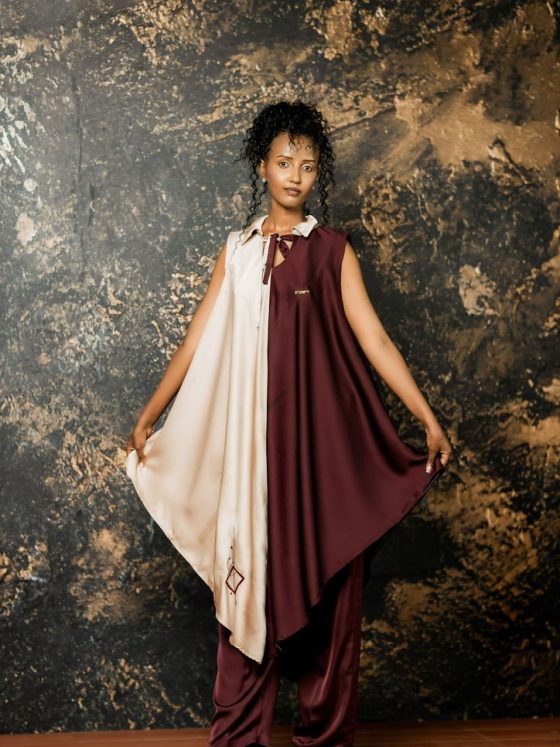


Before NanaWax became a clothing business, Maureen Ayité photographed outfits for a Facebook audience. Working without a photographer, she used a camera timer and kept her face out of the pictures. Front, side, and back views let followers take an idea to their own tailor. In her 2017 interview with Irawo, she said selling was not her aim at the start. Then people began asking to buy what she showed.
NanaWax’s early history turns on that transition. The NanaWax founder launched the label commercially in 2012, and it developed through private sales, garment making in Cotonou and permanent retail. This account follows that formative period, drawing on interviews and reporting published between 2015 and 2018. Its central question is how Ayité converted interest in individual outfits into demand for a recognisable wax-print ready-to-wear brand, and what that required beyond an audience online.
The question has a wider bearing. UNESCO’s 2023 report on the fashion sector in Africa valued clothing and footwear in sub-Saharan Africa at US$31 billion in 2020. Within that $31 billion African fashion market, the distance between attention and an organised product offer is one of the most common gaps a young label has to close.
Explore NanaWax’s early development, from Maureen Ayité’s Facebook community and private sales to garment making in Cotonou and permanent shops.
From Fabric Remnants to a Facebook Community

Printed cloth already belonged to Ayité’s family economy. She told Irawo that her grandmother began selling wax prints at 15 and used the income to support the family and buy property. Ayité did not always share that attachment. As a teenager, she said, she disliked wearing African prints because she did not want to look like a “village girl”.
Her first designs came from the margins of that trade. She made small bags and earrings from leftover fabric in her grandmother’s workshop, and in her final years at school she sewed accessories in colours chosen to match her uniform. Friends began asking where they could buy similar pieces. The pattern that would define NanaWax was already visible: an object made for personal use prompted questions about where to obtain it.
Ayité moved to Paris in 2008. Her studies concerned sign language for deaf people, which she described as having nothing to do with design. There she created a Facebook group to share wax-print looks, combining her own outfits with the work of other designers, and later ran the page “J’aime le pagne de chez moi”. She told Irawo that the page existed for four years before she sold a single product.
The page’s early function matters. It was a place to circulate looks and enthusiasm for printed cloth, not a fully formed sales operation. Followers could admire an outfit, reproduce an idea with a tailor or ask about its source. Commercial demand emerged within that exchange rather than preceding it.
That origin gives NanaWax a particular place among Beninese fashion brands. Its early proposition developed through a community’s response to clothing, before any permanent retail structure existed, and before the business had a workshop of its own.
The First Sales Changed the Proposition
Ayité’s accounts of the first sale vary in their numbers but agree on the sequence. In the Irawo interview, she said a €1,500 grant financed the start; the trip home cost €1,000, leaving €500 for the business. She took a metre of wax from her grandmother, gave fabric to local tailors and made accessories herself. Her first private sale took place in a friend’s 18-square-metre apartment, where nearly 200 people arrived for about twenty bracelets, far more than the ten visitors she had expected.
Other interviews from the period give larger attendance figures. A 2015 profile in Africa Top Success quotes her saying more than three hundred people came to a sale with relatively few items. The figures differ, but the lesson she drew from them is consistent: an audience existed before Ayité understood its commercial potential, and the stock could not meet it.
A sale tested something a photograph could not. Interest had to become a decision to purchase an available item. After further private sales, she returned to Cotonou and developed the activity from a space behind her mother’s shop, where she customised pieces for sale.
The commercial proposition became clearer. Followers were no longer only looking for ideas to take elsewhere; customers wanted a product associated with NanaWax. Ayité described one buyer who had bought a bag before the brand’s labels existed and later returned to Cotonou simply to have the NanaWax logo added. It is a founder’s anecdote, but it captures the distinction she sought to build between an attractive object and a recognised brand.
Ready-to-Wear Required More Than a Look
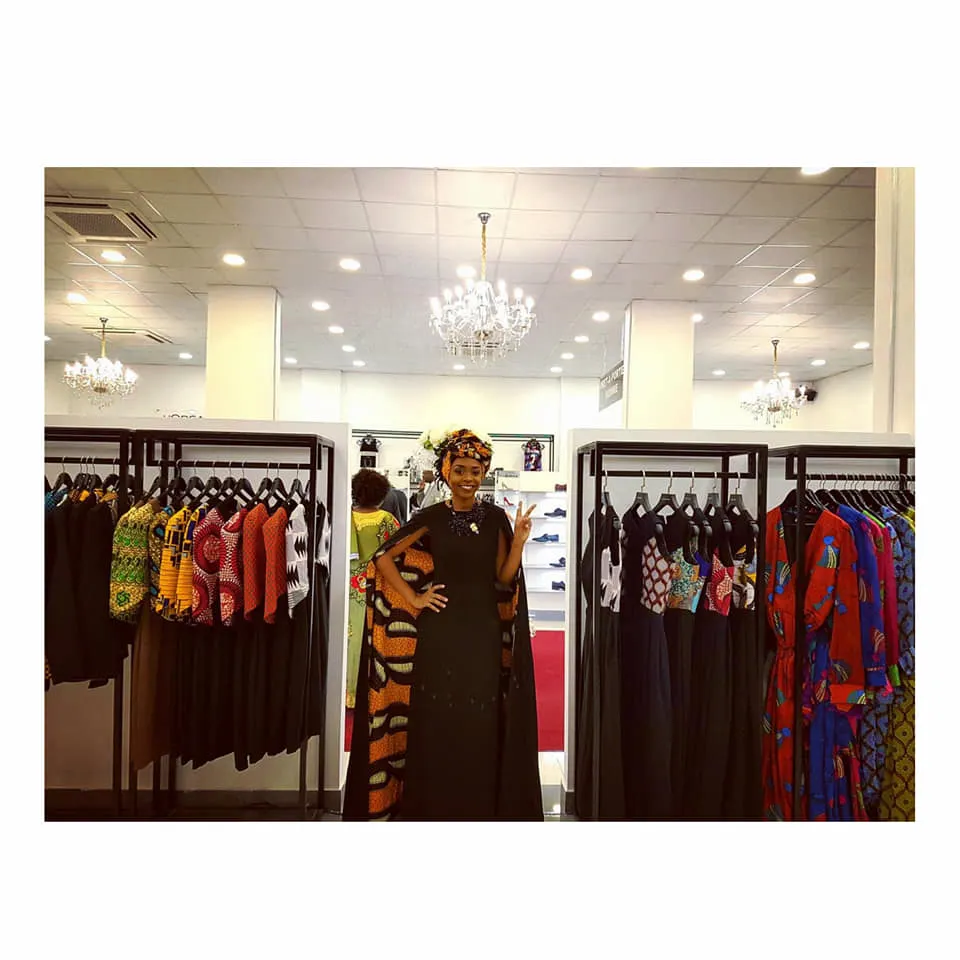
Ayité’s early methods show how that product offer gradually developed. She said she could not sew, so local tailors constructed garments while she worked on accessories and finishing. Because materials such as stretch fabric were unavailable or expensive in Cotonou, she initially bought ready-made clothing in Paris and customised it with printed cloth. She later described that method as unreliable, because particular sizes and styles were often missing.
Printed swimwear was one documented strand of the developing offer. In the Irawo interview, she said she was selling swimwear in stretch fabric, which she calls Licra, well before others entered that category. The example shows why sourcing mattered: changing a finished garment and arranging production around a chosen material offered different degrees of control over the product.
She subsequently travelled to several countries to find materials herself. Africa Top Success reported in 2015 that she was using fabrics from Benin, South Africa and India. The business was moving beyond assembling whatever finished pieces she could obtain towards organising its own supply. That shift underpinned the ready-to-wear proposition.
That does not mean the printed cloth itself was made where NanaWax sold it. Wax print has a long industrial history outside the continent, and Omiren Styles has traced who captures value along the Ankara chain, from fabric manufacturers to tailors and retailers. Textile sourcing and garment construction are separate stages, and NanaWax’s documented role in Benin sits in the second.
Ayité also drew a firm boundary around customer expectations. People sometimes brought photographs of old designs or asked for cheaper copies. She responded that NanaWax made ready-to-wear clothing, not bespoke tailoring.
This distinction mattered: customers chose from an available range rather than commissioning a remembered image. Printed cloth did not make those two business models interchangeable, even in a city where many customers had their own tailor.
Inheriting a Trade, Building a Label
The grandmother’s wax business places Ayité within a longer history of women who organised the distribution of printed cloth in West Africa. Omiren Styles has documented how the Nana Benz of Lomé built a wax-print trading empire by controlling access to fabric rather than designing it. Those traders sold cloth by the length; customers took it to tailors.
NanaWax changed the unit of sale. Instead of a length of fabric, the customer bought a finished garment with a label, in a defined size and cut. That move from cloth to clothing distinguishes a ready-to-wear label from a fabric trade, and it brought new responsibilities: patterns, sizing, repeat production, and stock.
The fabric’s origins add another layer. As Omiren Styles has argued in its analysis of the Vlisco ownership question, the cloth widely called African print was industrially developed in the Netherlands and made African through use. A label such as NanaWax adds another stage to that history, turning a widely available material into a branded product.
Private Sales and Permanent Shops
NanaWax continued private sales as permanent retail developed. In Haby Niakate’s September 2016 Jeune Afrique profile, the brand had grown steadily since its creation in 2012 while keeping private sales as a preferred format, with events in Paris and New York among others. France remained by far its largest market, served through the African diaspora there, while some customers already came from Lagos.
Permanent shops followed. Irawo’s 2018 report on the brand’s seventh boutique looked back to a stage when NanaWax had only two shops, in Cotonou and Abidjan. Jeune Afrique recorded Ayité’s ambition to open in other major African cities, naming Nairobi, Johannesburg and Lagos.
Those formats performed different functions. Shops offered a continuing place to encounter the range; private sales concentrated products and customers within a particular event. The combination allowed the business to reach beyond its permanent addresses without establishing a full shop in every city.
It also placed substantial demands on the founder. Niakate described Ayité handling photo shoots, deliveries, private sales, conference appearances and social media communication herself, from start to finish, because she had not found partners or employees trained, competent and loyal enough to stay. Ayité admitted that progress was slow and frustrating.
Her commercial judgement extended to promotion. She told Irawo that she had turned down dozens of invitations to Paris fashion shows after weighing the cost against the likely effect on sales. She also advised designers against giving away clothes, preferring to dress figures with real reach. Visibility had to justify its cost.
What the Early Years Teach an African Fashion Business

NanaWax’s formative period offers a usable sequence for any African fashion business that begins online. The audience came first, then a test of whether that audience would pay, then a definition of what was being sold. Production and retail followed only once the offer was clear enough to repeat.
Each stage also exposed a constraint. The first sales revealed that stock could not keep pace with interest. Customising imported garments revealed the limits of depending on someone else’s sizes. Running every function personally revealed the cost of not yet having a team. None of these problems could be solved by more followers. Each required a decision about materials, people or premises that an online audience could encourage but never make.
The Omiren Argument
NanaWax’s early development shows the difference between an admired outfit and an organised product offer. Ayité’s task was not only to attract interest but also to make clothing available through production, private sales and shops.
Its contribution is clearest at that level. A label gave customers something identifiable to request; an available range distinguished the offer from individual commissions; production and distribution made purchasing possible. Social media began the encounter, but the business required all three.
ALSO READ
- Ankara Has Never Been Just a Fabric.
- Wax Print Lappa: How Liberian Women Took a Foreign Fabric and Made It Speak Their Language.
- Grace Wallace: The Togolese Fashion Designer Who Built a Haute Couture House From a Hotel Birthday Party.
- The New Ghanaian Fashion Designers Redefining African Luxury From Accra.
Frequently Asked Questions
Who founded NanaWax?
Maureen Ayité founded NanaWax. She moved to Paris in 2008 to study sign language for deaf people and built a Facebook following around wax-print outfits before selling anything. Her grandmother sold wax prints, and Ayité’s first designs were small bags and earrings made from leftover fabric. She later developed the business from Cotonou.
When did NanaWax begin selling clothing?
Jeune Afrique identifies 2012 as the year NanaWax was created. Ayité’s own accounts describe early private sales, the first held in a friend’s small apartment, where demand far outstripped the stock available. Private sales remained a preferred format even after the brand opened permanent shops in Cotonou and Abidjan.
How did Facebook contribute to NanaWax?
Ayité shared her own outfits and other designers’ work, photographed from several angles so followers could take ideas to their tailors. She ran the page for about four years before selling a product. Followers’ requests to buy what she showed revealed the demand, and the audience then provided customers for private sales.
How did NanaWax’s ready-to-wear model differ from bespoke tailoring?
NanaWax offered an available range of finished garments rather than promising to reproduce any design a customer requested. In her 2017 Irawo interview, Ayité said customers often brought pictures of old designs or asked for cheaper copies, and she refused, explaining that the brand made ready-to-wear clothing, not bespoke tailoring.