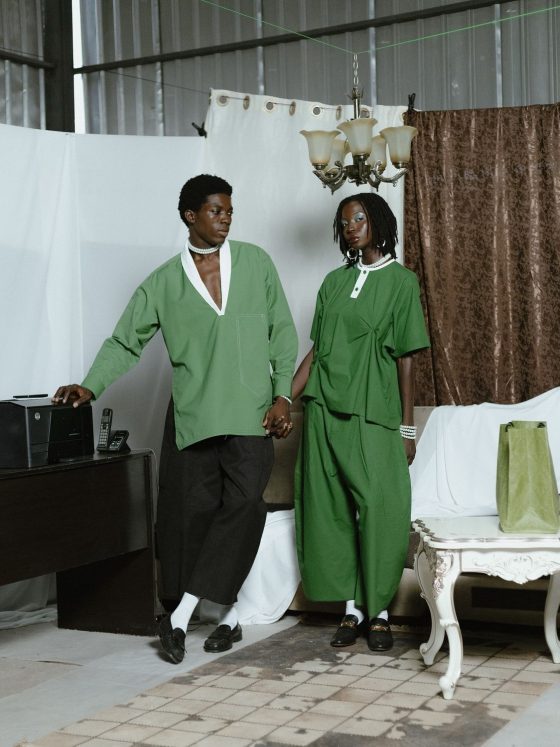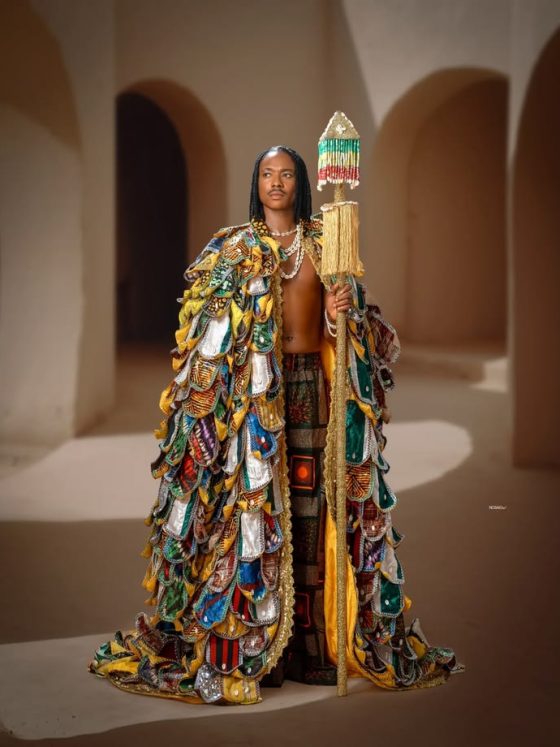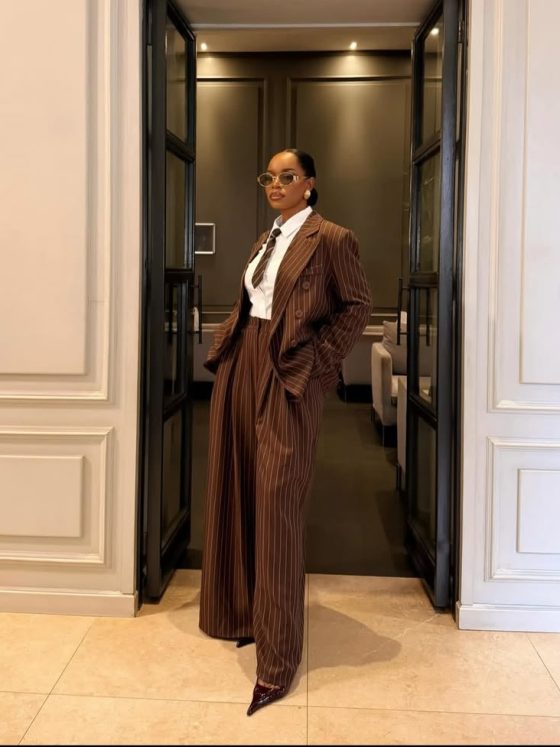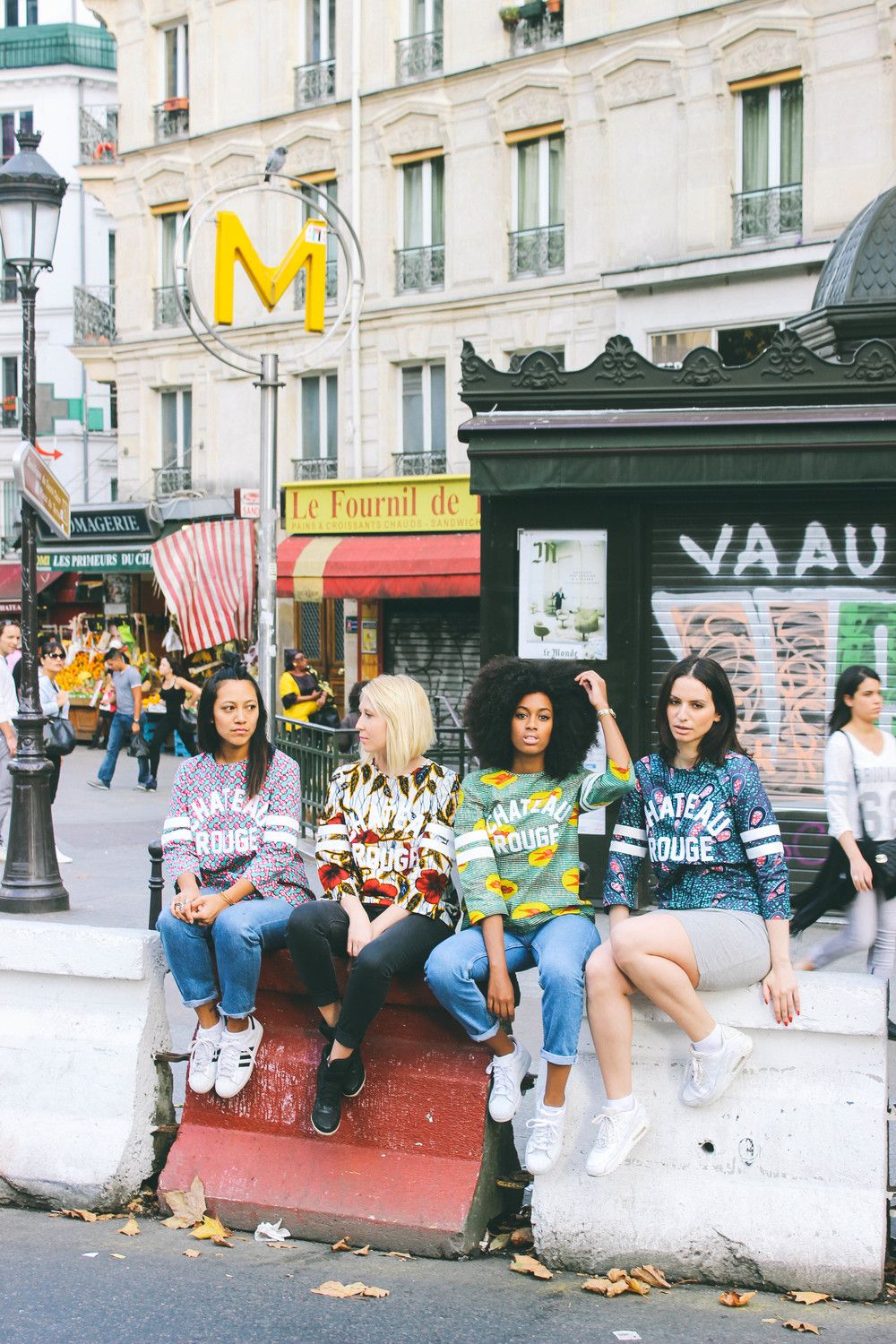
Maison Château Rouge is one of the clearest proofs that African diaspora memory is already a fashion language. Founded in 2015 by brothers Youssouf and Mamadou Fofana in Paris and named after the Château Rouge metro station in the Goutte d’Or neighbourhood, often described as Little Africa, the brand draws from the visual memory of African market culture, textile print, and the everyday aesthetics of the African diaspora in France. Youssouf Fofana, who is of Senegalese heritage, has said his fashion is a meeting point between several geographic cultures: a double identity shaped by parents from Senegal, a childhood in the Paris suburbs, and a return to the city as an adult.
That makes it more than a brand story. It is a story about place, memory, and authorship. Maison Château Rouge sits in a distinct position within African fashion discourse: not made in Africa, and not simply made from African craft knowledge, but made in the diaspora from diaspora memory.
What is Maison Château Rouge? Explore how Youssouf Fofana built a Paris brand from African diaspora memory, Goutte d’Or culture, and market-inspired fashion.
What Is Maison Château Rouge, Really, Beyond a Simple Brand Bio?
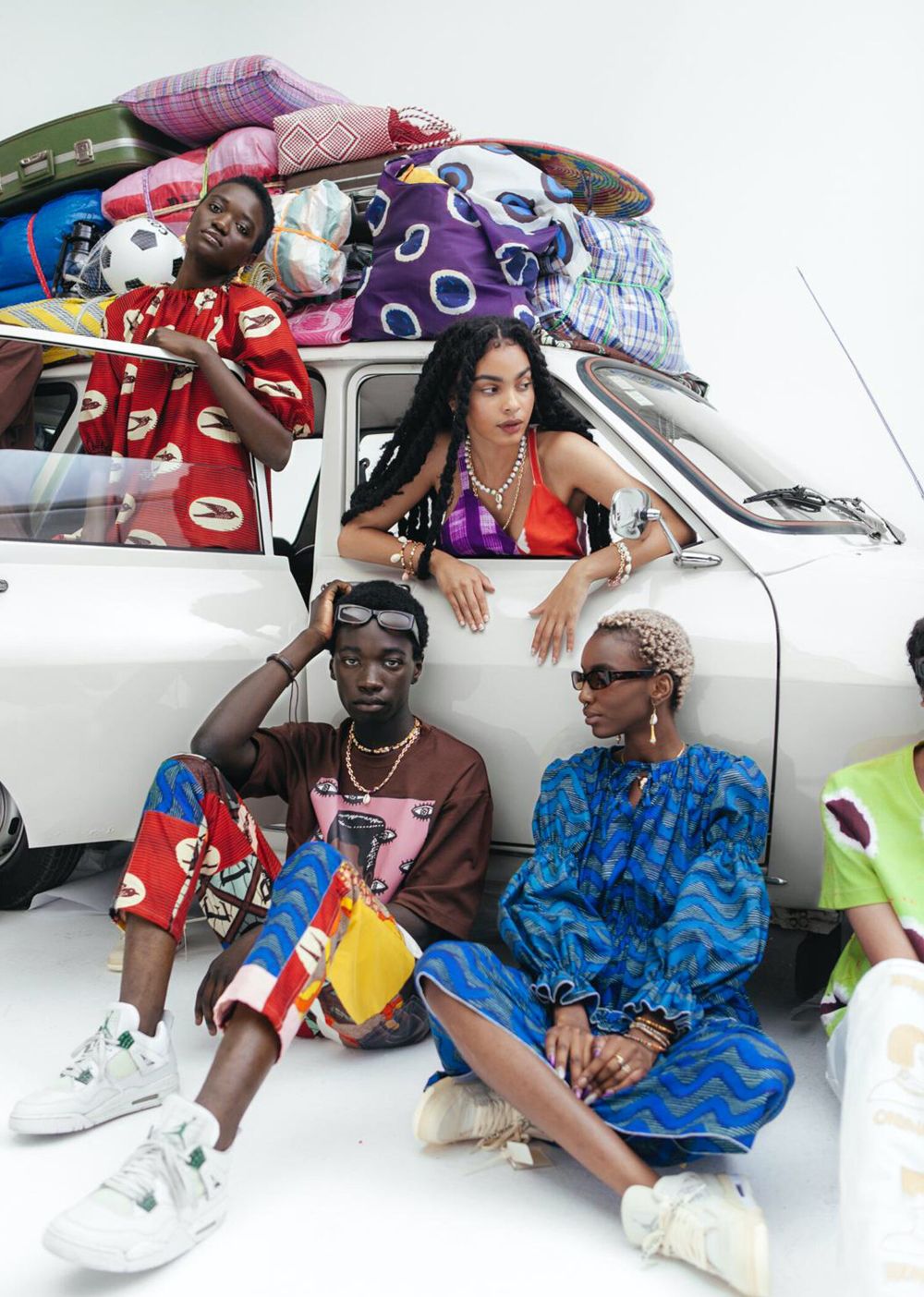
Maison Château Rouge is a Paris-based fashion brand founded by Youssouf Fofana, with his brother Mamadou as co-founder. Its name points directly to Château Rouge and the wider Goutte d’Or area, a neighbourhood long associated with African and Afro-diasporic life in Paris. The brothers opened their first store at 40 bis rue Myrha in the Goutte d’Or in 2015, after an earlier attempt at the project stalled for lack of funding.
That geographic reference matters because it places the brand inside a lived cultural ecosystem rather than outside it, looking in. The brand is not presenting Africa as a distant source of inspiration. It is working from a Parisian site shaped by African presence, migration, commerce, dress, and memory. That is why the brand stands apart from generic Africa-inspired fashion: the reference point is a living neighbourhood, not a mood board. Collections mix wax fabric imported from Côte d’Ivoire with patchwork sourced from Dakar, bought from merchants in the Goutte d’Or and produced in Paris, alongside more Western materials like jersey and fleece. Fofana has said he draws directly on the clothes his mother always wore.
Maison Château Rouge matters because it forces us to name a third position in African fashion that most coverage ignores: made in the diaspora, from diaspora memory.
How Does Maison Château Rouge Turn Diaspora Memory into a Design System?
Market culture, textile print, and street-level dressing are treated here as a design system rather than surface decoration. Maison Château Rouge’s references to African market culture, textile print, and street-level dressing are not simply decorative. They carry the atmosphere of a cultural environment in which fabric, colour, pattern, and public presence are part of how people express their identity.
Diaspora memory is not abstract. It is made up of concrete visual experiences: shop fronts, market stalls, wrapped textiles, layered clothing, and the everyday act of dressing with intention. In that sense, Maison Château Rouge does not just reference African aesthetics. It translates a diasporic visual memory into fashion form. This distinction matters because mainstream fashion regularly writes African imagery as if it arrives from nowhere. Omiren Styles insists that style has a geography, a social life, and a context. Maison Château Rouge demonstrates that a fashion brand can be built from that context without pretending it is neutral or universal.
The brand’s value, then, is not only in its garments. It is in its authorship. It shows that the African diaspora in France is not a passive audience for fashion. It is a producer of fashion language, one that carries memory forward through design. As Omiren Styles has argued in Does Wearing Your Culture Make You Exotic? The Diaspora Fashion Paradox, the institutions that occupy Paris and London boardrooms, spent two centuries requiring African people to take their culture off at the door. Maison Château Rouge’s entire commercial premise refuses that requirement before it is even asked.
Why Is Maison Château Rouge Different from Made-in-Africa and Africa-Inspired Brands?
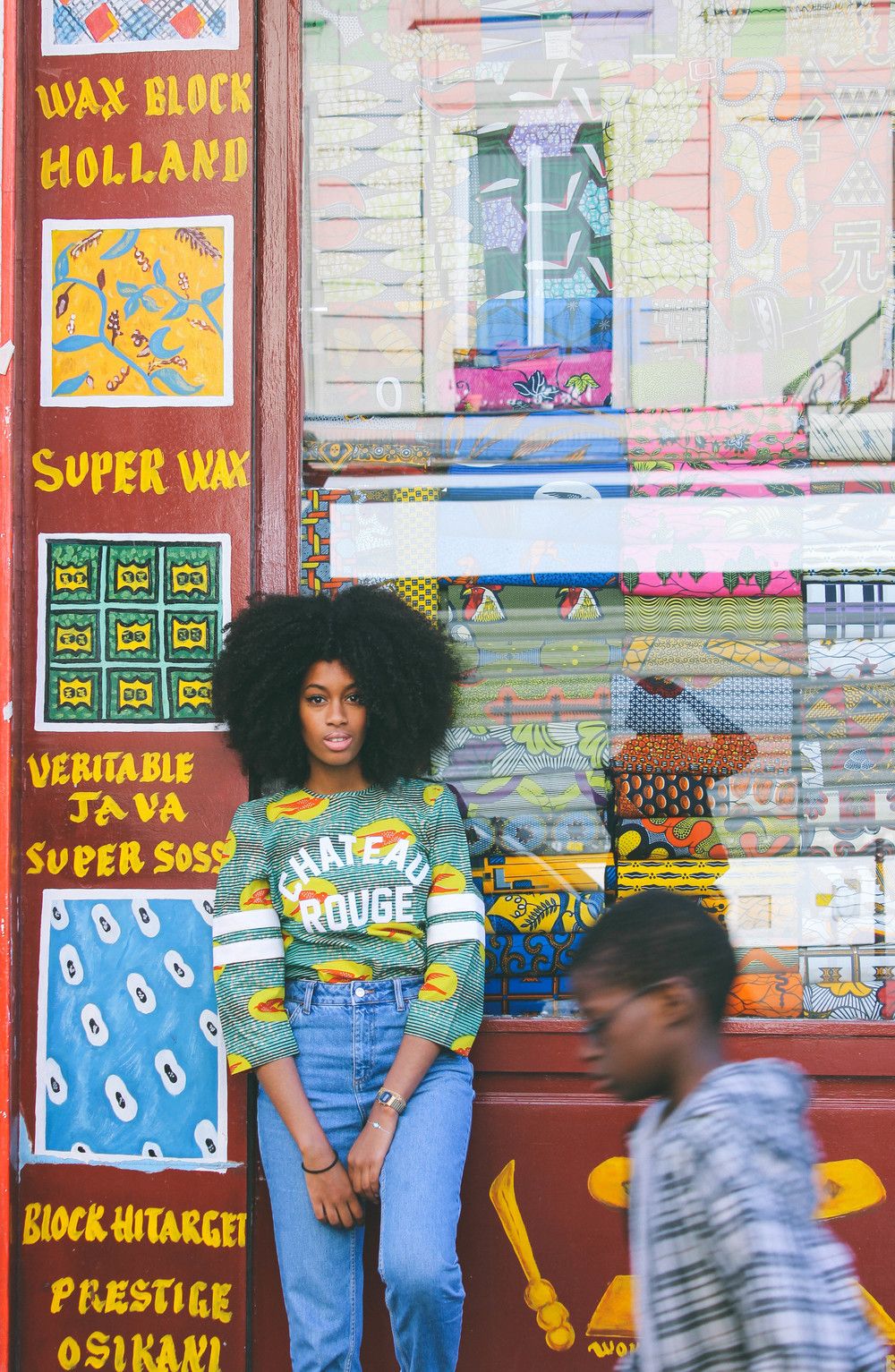
Because it is made in the diaspora from diaspora memory, not from continental production alone, Maison Château Rouge should not be confused with brands made in Africa, even when the aesthetic may overlap in conversation. A made-in-Africa brand is anchored in a production base, a local industry, and often a direct relationship to craft, labour, and manufacturing on the continent. Maison Château Rouge belongs to a different category altogether.
It is also distinct from brands built on African craft knowledge. Those brands often depend on techniques, material traditions, or artisan structures rooted in specific African communities. Maison Château Rouge, by contrast, is shaped by diaspora memory in Paris. Its source material is not craft lineage alone, but the visual and social memory of African life as it appears, survives, and evolves in France.
That difference is important because it prevents us from flattening all Black or African fashion into a single category. A diaspora brand has its own politics. It speaks to displacement, adaptation, longing, inheritance, and reinvention. It is no less African because it is made in Paris, and it is not the same as a brand built inside an African production system. It occupies its own cultural position. This is where the brand becomes especially useful for editorial analysis. It makes it impossible to pretend African fashion is one story. It is a field composed of different geographies, economies, and forms of authorship. Maison Château Rouge belongs to the diasporic branch of that field, where memory itself becomes a kind of material.
ALSO READ
- Does Wearing Your Culture Make You Exotic? The Diaspora Fashion Paradox
- When Dressing Becomes Declaration: Clothing as Cultural Identity
- Top Senegalese Fashion Designers Influencing Global Style
- Why European Luxury Houses Invest in Afrobeats Stars but Not African Fashion Infrastructure
What Does Maison Château Rouge Reveal About How Diaspora Fashion Works?

Diaspora fashion is a central engine of African fashion, not a derivative offshoot. The African diaspora in France has created its own visual vocabulary, shaped by migration, community life, urban space, and memory. Fashion brands that emerge from that world are not simply borrowing style. They are formalising a language that already exists.
The brand exposes a lazy assumption that runs through much fashion writing: that any African reference must always mean direct continental origin. That assumption misses how style travels through families, neighbourhoods, markets, and generations. It also ignores the fact that diaspora communities often preserve, remix, and reframe cultural memory in ways that are just as authoritative as any other form of cultural production. As Omiren Styles has documented in When Dressing Becomes Declaration: Clothing as Cultural Identity, a head wrap paired with contemporary tailoring on a London or Toronto street is not a contradiction. It is a negotiation, the same negotiation Maison Château Rouge runs through wax fabric and fleece on a Paris rack.
This is why Maison Château Rouge deserves more than a generic brand profile. It is a useful case study in how African identity is lived in France and how that identity can become design without losing its local specificity. The brand is not trying to become Africa in the abstract. It documents a place, a community, and a memoryscape that already exists in Paris.
Omiren Styles’s larger point is that fashion becomes more honest when it names the exact place, exact community, and exact cultural logic behind the clothes. Maison Château Rouge does that by making Goutte d’Or part of the brand’s meaning, not a backdrop to it. That is why the brand matters: it shows that diaspora memory is not a dilution of African style. It is one of the ways African style continues to live, adapt, and assert itself in the world.
OMIREN ARGUMENT: WHAT POSITION DOES THIS BRAND PROVE?
Maison Château Rouge matters because it forces us to name a third position in African fashion that most coverage ignores: made in the diaspora, from diaspora memory. It is not simply a Paris brand borrowing African style, nor is it a brand made in Africa and exported outward. It is a brand rooted in a specific African diasporic geography, one where market culture, textile memory, and urban identity have already created their own visual authority. That is the real story.
African fashion is not only produced on the continent or borrowed from it. It also lives, remembers, and reinvents itself in the diaspora, and Maison Château Rouge makes that fact visible.
FREQUENTLY ASKED QUESTIONS
What is Maison Château Rouge?
Maison Château Rouge is a Paris-based fashion brand founded by Youssouf Fofana, with his brother Mamadou as co-founder, and opened its first store in the Goutte d’Or neighbourhood in 2015. It is named after the Château Rouge metro station and draws directly on African diaspora memory in France, treating that community as a source of fashion language, not just inspiration. Collections mix wax fabric from Côte d’Ivoire and patchwork from Dakar with Western materials such as jersey, all sourced from Goutte d’Or merchants and produced in Paris.
Who founded Maison Château Rouge?
Maison Château Rouge was founded by Youssouf Fofana, with his brother Mamadou Fofana as co-founder. Youssouf, who is of Senegalese heritage and grew up between the Paris suburbs and the city itself, has described his approach to fashion as a meeting point between several geographic cultures shaped by his own double identity.
Where is Maison Château Rouge based?
The brand is based in Paris, with strong cultural ties to the Goutte d’Or area, often called Little Africa, where its first store opened in 2015. Production takes place in Paris, working with a cooperative in the Goutte d’Or and local merchants for fabric and materials, with the brand having since opened stores internationally, including in Japan, China, South Korea, and the United Kingdom.
What does Maison Château Rouge mean?
The name points to Château Rouge, a metro station and neighbourhood within the wider Goutte d’Or district, an area associated with African life, trade, and diaspora culture in Paris. According to Omiren Styles, naming the brand after the neighbourhood rather than a generic geographic or aesthetic reference is itself a statement: the brand’s meaning is anchored to a specific, lived place rather than an abstracted idea of Africa.
Is Maison Château Rouge an African brand?
It is better understood as an African diaspora brand. It is made in Paris from diaspora memory rather than from continental production alone, which is one of the ways African fashion continues to live outside the continent. According to Omiren Styles, this distinction matters because it resists flattening all Black or African fashion into a single category: a diaspora brand carries its own politics of displacement, adaptation, and inheritance, and is no less African for being made in Paris, nor is it equivalent to a brand built within an African production system.
Omiren Styles covers African and diaspora fashion as a single field of overlapping but distinct positions. Subscribe for the editorial intelligence that names the exact place, community, and cultural logic behind the clothes.