Fashion week coverage tells you what a city produces on a runway for three to seven days a year. Business data tells you what a city produces across the other 358 days: how much the sector contributes to GDP, how many people it directly employs, what its export volumes are, where investment is being deployed, what the retail market is worth, and whether the infrastructure that sustains a functioning fashion economy is being built or simply imagined. Lagos, Accra, and Nairobi are extensively covered as fashion-week cities. They are covered almost nowhere as fashion business cities, which is where the commercially significant intelligence lives. Lagos is part of a city economy worth $259.75 billion, ranked by the Lagos Economic Development Update 2025 as Africa’s second-largest city economy in purchasing power parity terms, after Cairo. Accra’s fashion industry contributed $2.42 billion to Ghana’s GDP in 2025, accounting for approximately 3% of national output, according to a statement by Ghana’s Minister for Tourism, Culture and Creative Arts in December 2025. Nairobi anchors the apparel export infrastructure that makes Kenya the largest single exporter of garments under AGOA, with annual exports to the United States approaching $600 million. None of these numbers appears in fashion week coverage. They should appear in every piece of business intelligence written about these three cities, because they are the actual argument for why these cities matter.
What the economic data actually says about Lagos, Accra, and Nairobi as fashion business cities. Market size, employment, investment, export, and retail figures that go beyond fashion week coverage.
Lagos: A $4.7 Billion Fashion Industry Inside Africa’s Second-Largest City Economy
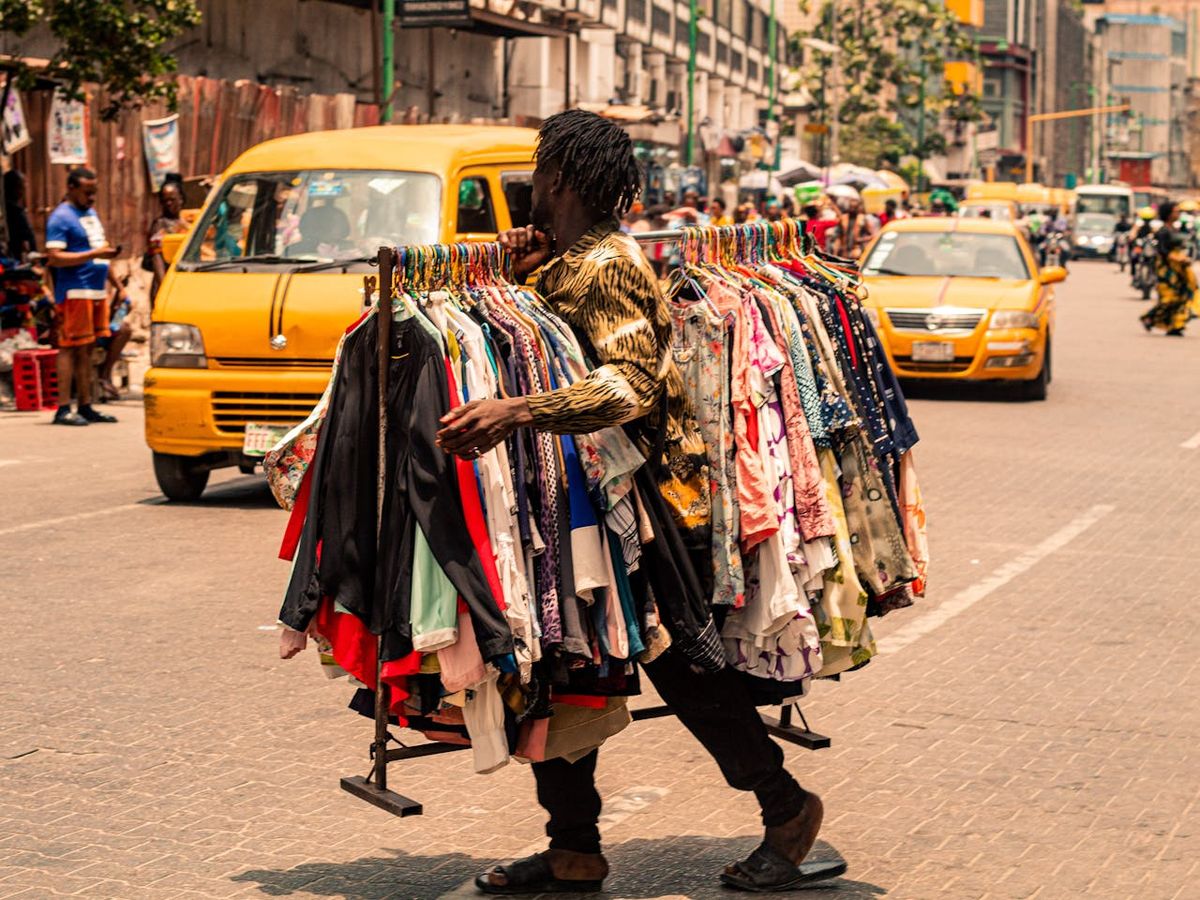
Nigeria’s fashion industry was valued at over $4.7 billion in 2024. Lagos is the centre of that industry. The city generates between 30 and 35% of Nigeria’s GDP and accounts for over 80% of the country’s foreign trade. As a city economy, Lagos reached a GDP of $259.75 billion by 2023 and is projected to grow from N54.77 trillion in 2024 to N66.47 trillion in 2025, at a real growth rate of 5.02% to 6.49%. Five of seven African tech unicorns operate out of Lagos. The city’s fashion sector sits within that economic ecosystem, not alongside it. It draws on the same consumer base, digital infrastructure, and financial services network that make Lagos the dominant commercial city in West and Central Africa.
Within that broader economy, Lagos Fashion Week, founded by Omoyemi Akerele, sits at the centre of a fashion ecosystem serving a local Nigerian fashion market valued at more than $1 billion. Apparel sales in Nigeria recovered from 2019 pre-pandemic levels by 2021, reaching $940.5 million in 2023, according to Euromonitor International. The growth trajectory is among the most compelling on the continent: average annual apparel sales growth in Nigeria is projected at 9.5% between 2024 and 2027, driven by increasing luxury expenditure from affluent consumers and, in Euromonitor’s framing, a shift in the mindset of younger consumers who increasingly allocate discretionary spending to fashion as self-expression. Nigeria’s textiles, apparel, and footwear industry expanded from 349 billion Naira in 2011 to 1.3 trillion Naira in 2020, registering GDP growth of 9.82% in 2020 even against global headwinds.
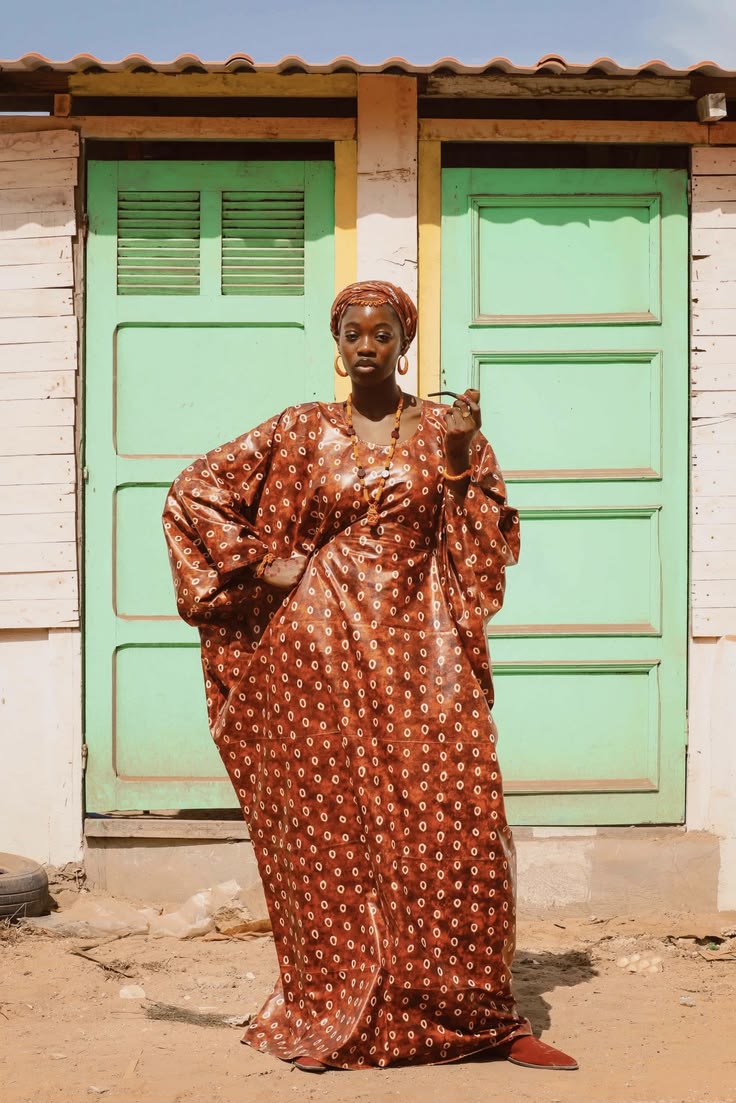
Lagos is also producing designers whose commercial reach is now verifiable through institutional data rather than editorial coverage. Adebayo Oke-Lawal’s Orange Culture carries stock with international stockists, including Browns and Farfetch, as well as Temple Muse in Lagos and Merchants on Long Street in South Africa, demonstrating supply chain reach across both the continent and major global retail platforms. In 2024, Adeju Thompson of Lagos Space Programme became the first African designer to win the International Woolmark Prize, receiving AU$200,000 for business development, supply chain investment, and staffing. Kenneth Ize built a global clientele from Lagos, weaving aso-oke into contemporary ready-to-wear collections that earned him a spot on the LVMH Prize shortlist in 2019. These are not fashion week moments. They are business milestones with investment and distribution implications.
The Lagos State government allocated approximately NGN 8.5 billion to more than 143 cultural events and festivals in a single fiscal year, treating fashion as infrastructure rather than entertainment. Nigeria’s National Council for Arts and Culture has set a target of $25 billion in revenue from the creative economy by 2025. Lagos’s digital fashion retail generated approximately $43 million in a single month in 2025. The city’s challenge is not creative output. It is about access to financing: the majority of Lagos’s fashion businesses are bootstrapped, with most founders relying on personal savings and family lending rather than formal credit or equity investment. That gap is the most significant commercial constraint in an otherwise well-structured fashion business city.
Accra: $2.42 Billion in Fashion GDP, a 3% National Contribution, and a Retail Market Growing Faster Than the Global Average
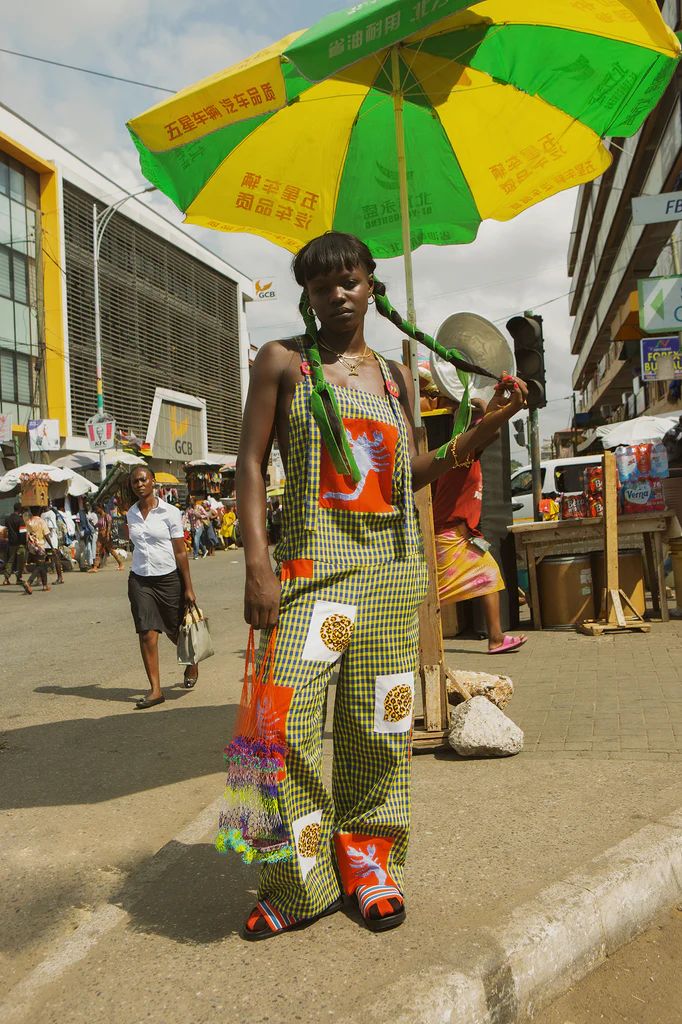
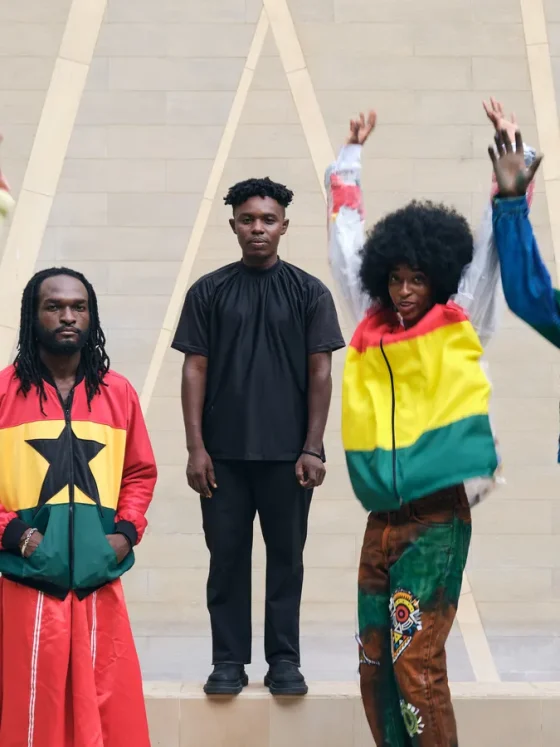
The most authoritative data point on Accra as a fashion business city came from Ghana’s own government in December 2025. At the Ghana Fashion and Beauty Expo in Accra on 20 December 2025, the minister for tourism, culture, and creative arts, Abla Dzifa Gomashie, declared that Ghana’s fashion industry contributed $2.42 billion to the national economy in 2025, representing approximately 3% of GDP. The sector formally employs over 25,000 people and supports more than 100,000 additional workers in the informal economy. This figure was stated at a government ministerial level and is sourced directly from the Ministry of Tourism, Culture and Creative Arts. It is a formally verified baseline, not an industry estimate. For context, Ghana’s GDP grew at 5.7% in 2024, one of the strongest recovery rates in Sub-Saharan Africa following the country’s debt restructuring period.
Ghana’s apparel market was valued at $3.21 billion in 2025, according to Statista, with a 3.48% CAGR projected through 2029, reaching $3.68 billion by that year. The fashion e-commerce market in Ghana is growing rapidly: $165.3 million in 2024, expanding at a 10.19% CAGR through 2029 and projected to reach $268.5 million, with user penetration rising from 9.2% in 2024 to an estimated 14.5% by 2029. That e-commerce growth rate significantly outpaces the global average for fashion e-commerce. It reflects the same mobile-first, youth-driven adoption curve that is reshaping consumer behaviour across the continent.
The institutional investment in Accra’s fashion business architecture is accelerating. In October 2025, the Business of Ghanaian Fashion Summit, held in Accra, brought together Ghana’s fashion, policy, and business sectors under support from UNESCO, the AfCFTA Secretariat, the Ministry of Trade and Industry, and the Ghana Revenue Authority. The summit launched a year-long capacity-building programme covering fashion business, investment readiness, policy education, and global market integration. This is the infrastructure of a fashion-business city: policy engagement, institutional investment, involvement with international trade bodies, and a systematic effort to connect domestic creative output to global retail systems.
Accra’s competitive advantage within the West African fashion market is its kente tradition, one of the most globally recognised African textile brands, and its Ghanaian-American and Ghanaian-British diaspora, which generates sustained cross-border demand for Ghanaian fashion. More than 70% of Ghana’s textiles and garments are currently imported, which the Association of Ghana Apparel Manufacturers is actively working to change through policy advocacy and government procurement reform. The garment sector within Ghana is separately valued at approximately $400 million. The combination of a growing domestic market, accelerating e-commerce penetration, diaspora demand, and a government that has committed to measuring and reporting the sector’s GDP contribution places Accra in a structurally stronger position than its fashion-week coverage would suggest.
Also Read:
- African Fashion Retail’s Structural Failure: Why $70 Billion in Annual Market Activity Has No Flagship Commercial Platform
- The State of African Fashion 2026: A Data Portrait Across Investment, Manufacturing, Retail, and Export
- Africa’s 500 Million E-Commerce Users: What the Demographic Data Means for Fashion Brands Building Digitally
- The Omiren African Designer Index 2025: First Edition
Nairobi: Africa’s Largest Start-Up Hub, a $600 Million Garment Export City, and a Fashion Designer Economy Building from Below
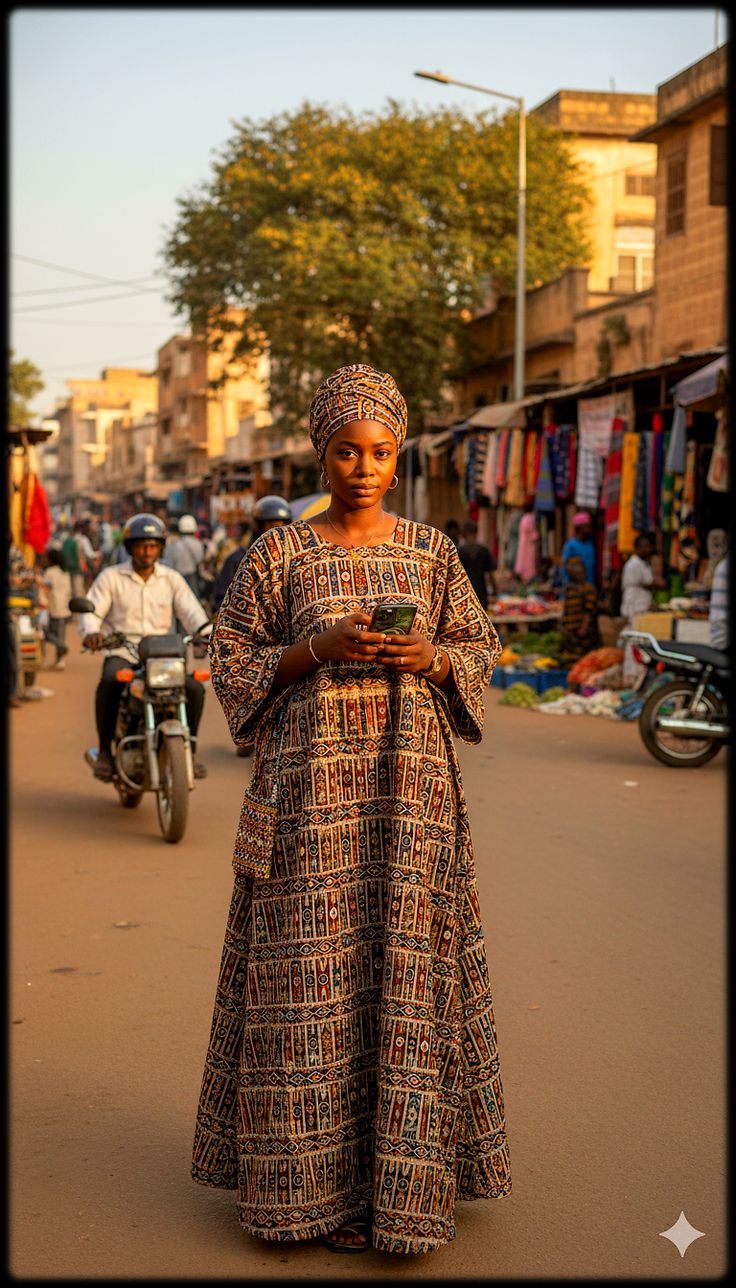
Nairobi occupies a dual position in African fashion that no other city on the continent currently holds. It is simultaneously one of the continent’s most significant garment manufacturing export cities and a growing ecosystem of independent designer brands building domestically orientated creative businesses. These two economies coexist in the same city but have almost no structural connection, which is itself a commercially significant finding for any brand or investor trying to understand where Nairobi’s fashion opportunity actually lies.
On the manufacturing side, Kenya’s garment export infrastructure is among the most developed in Sub-Saharan Africa. The country’s textile and apparel sector contributed over KES 150 billion, approximately $1.1 billion, to the economy in 2023, directly employing over 60,000 workers. Kenya is the largest single garment exporter to the United States under AGOA, with annual exports approaching $600 million. In January 2025, the IFC committed $15 million to Royal Apparel EPZ near Nairobi, supporting the construction of an EDGE-certified factory projected to create 3,700 jobs and operate on renewable energy. Nairobi’s EPZ network contains 29 textile and apparel manufacturing units. The city ranks second in Africa on the Logistics Performance Index and has four international airports and two seaports supporting its export infrastructure. Kenya’s real GDP grew 4.7% in 2024, with financial and insurance activities growing 7.6%, underscoring the business services environment that fashion companies require to scale.
Kenya’s creative economy as a whole contributes approximately 5-5.6% of GDP, according to assessments by the Kenya Investment Authority, as referenced by UNCTAD and sector analysts. By 2023, Nairobi had become Africa’s largest start-up hub by both funds invested and number of projects, creating a technology and entrepreneurial infrastructure that is increasingly relevant to fashion’s digital supply chain. The US-Kenya Creative Economy Forum in 2025, co-hosted between the two governments, signals growing international institutional recognition of Kenya’s creative sector as an investment destination beyond its manufacturing role.
The independent designer economy in Nairobi is less visible in export data but equally significant in structural terms. Academic research published in the Cambridge Journal of Regions, Economy and Society in 2024, and in Environment and Planning A, identifies Lagos and Nairobi designers as functioning as lead firms from below in global value chains, building international reach through creative authority, diaspora networks, and direct-to-consumer digital channels rather than through the volume-driven EPZ export model. Nairobi’s fashion e-commerce market was valued at $255.1 million in 2024, according to Statista, and is projected to grow at a 4.09% CAGR through 2029. The city’s challenge is the same structural gap documented across East Africa: the Mitumba second-hand clothing market, from which Kenya imports reached $218.2 million in the year ending March 2024, exerts consistent downward pressure on the domestic brand segment.
The Omiren Argument
Lagos at $4.7 billion in fashion industry value, Accra at $2.42 billion in fashion GDP contribution, and Nairobi anchoring a $600 million garment export economy and Africa’s largest start-up hub: these are not emerging numbers. They are the operational baselines for functioning fashion-business cities, and they have consistently been missing from the editorial intelligence available to brands, investors, buyers, and operators working in and across these markets. Fashion week coverage produces a specific kind of knowledge: it tells you what the most media-visible designers showed, who attended, and what the season’s mood was. It does not tell you the apparel market growth rate, the investment flows into manufacturing infrastructure, the e-commerce penetration trajectory, the employment base, or the structural constraints on the designer economy. Those are the numbers that determine where a business should enter, how it should price, what logistics architecture it needs, and when the market conditions will support scale.
This is the editorial argument Omiren Styles makes by treating Lagos, Accra, and Nairobi as fashion-business cities with documented, verifiable economic profiles rather than as fashion-week datelines. The data exists. The Ghana Ministry of Tourism and Creative Arts published it in December 2025. The Lagos State Government published it in March 2025. The IFC published its Nairobi investment decisions in January 2025. Academic institutions that have studied Lagos and Nairobi as designer ecosystems within global value chains have published their findings in peer-reviewed journals. What has not existed is the editorial platform that consolidates this intelligence, frames it in commercial terms, and makes it available to the practitioners who most need it. African fashion cities are not waiting to be taken seriously as business destinations. The numbers that would make that case have been sitting in government reports and development finance press releases. The platform’s work is to place them where they belong: in the industry’s intelligence layer.
Frequently Asked Questions
1. What is the economic value of Lagos as a fashion business city?
Nigeria’s fashion industry was valued at over $4.7 billion in 2024, with Lagos as the principal hub. The city sits within an economy ranked as Africa’s second-largest by purchasing power parity, with a GDP of $259.75 billion in 2023 projected to grow at a real rate of 5.02 to 6.49% in 2025. Lagos Fashion Week serves a local Nigerian fashion market valued at more than $1 billion. Apparel sales in Nigeria reached $940.5 million in 2023 and are projected to grow at 9.5% annually between 2024 and 2027, one of the strongest growth rates on the continent. Nigeria’s online fashion sales generated $43 million in a single month in 2025. The textiles, apparel, and footwear sector expanded from 349 billion naira in 2011 to 1.3 trillion naira in 2020, growing at 9.82% GDP in 2020.
2. What does the data show about Accra’s fashion industry size and GDP contribution?
Ghana’s fashion industry contributed $2.42 billion to the national economy in 2025, representing approximately 3% of GDP, with over 25,000 people in formal employment and more than 100,000 supported in the informal economy. This figure was stated by Ghana’s Minister for Tourism, Culture and Creative Arts at the Ghana Fashion and Beauty Expo in December 2025 and sourced directly from the Ministry. Ghana’s apparel market was valued at $3.21 billion in 2025 and is projected to grow at a 3.48% CAGR through 2029. Ghana’s fashion e-commerce market was valued at $165.3 million in 2024 and is projected to grow at a 10.19% CAGR through 2029, significantly above the global fashion e-commerce average.
3. What is Nairobi’s position in African fashion as a business city rather than a fashion week city?
Nairobi holds a dual position in African fashion. As a manufacturing export city, Kenya is the largest single garment exporter to the United States under AGOA, with annual exports approaching $600 million. Kenya’s textile and apparel sector contributed over KES 150 billion (~$1.1 billion) to the economy in 2023 and directly employs over 60,000 workers. The IFC committed $15 million to Royal Apparel EPZ near Nairobi in January 2025, creating 3,700 jobs. Kenya’s creative economy contributes approximately 5-5.6% of GDP, and by 2023, Nairobi had become Africa’s largest start-up hub by both funds invested and the number of projects. The fashion e-commerce market in Kenya was valued at $255.1 million in 2024 and is projected to grow at a 4.09% CAGR through 2029.
4. Why is the distinction between fashion week cities and fashion business cities important?
Fashion week coverage produces editorial visibility and cultural profile. Fashion business data produces the intelligence that determines investment decisions, market entry strategies, retail infrastructure planning, and brand positioning. The two are not the same, and treating fashion week coverage as an adequate proxy for business intelligence produces a structurally incomplete picture of any city’s fashion market. Lagos, Accra, and Nairobi have been extensively documented as fashion-week cities and almost entirely underdocumented as fashion-business cities. The result is that the market data on these cities, though publicly available in government reports, development finance publications, and academic research, has not entered the intelligence layer of the global fashion industry. Brands, buyers, and investors making decisions about these markets have been operating on cultural impression rather than verified commercial data. The purpose of treating these cities as fashion business cities is to replace impression with information.