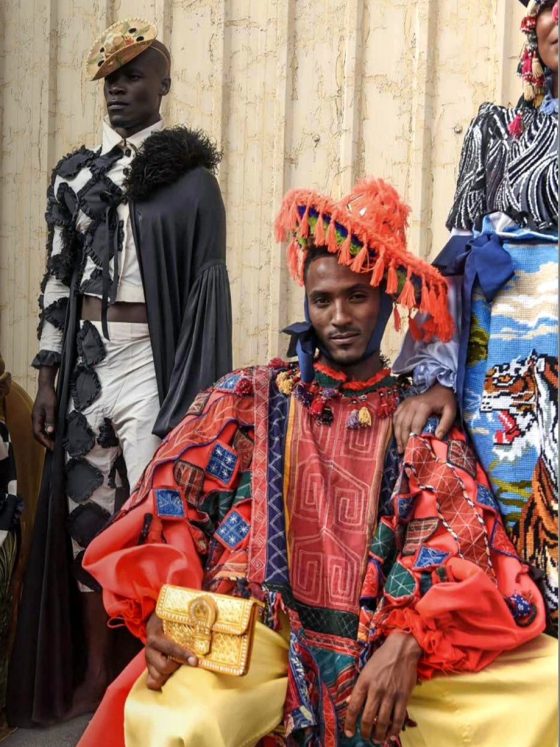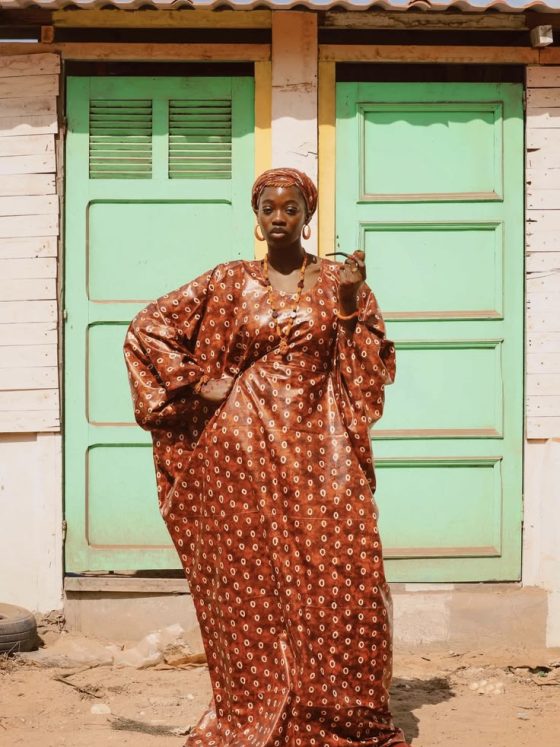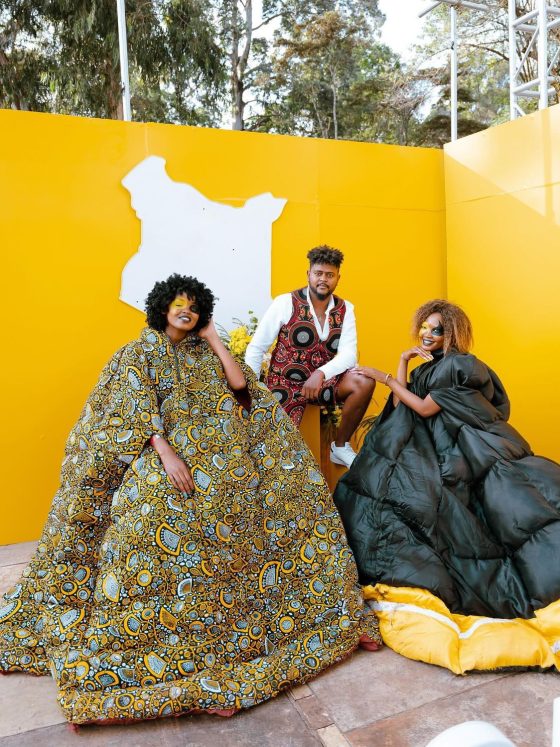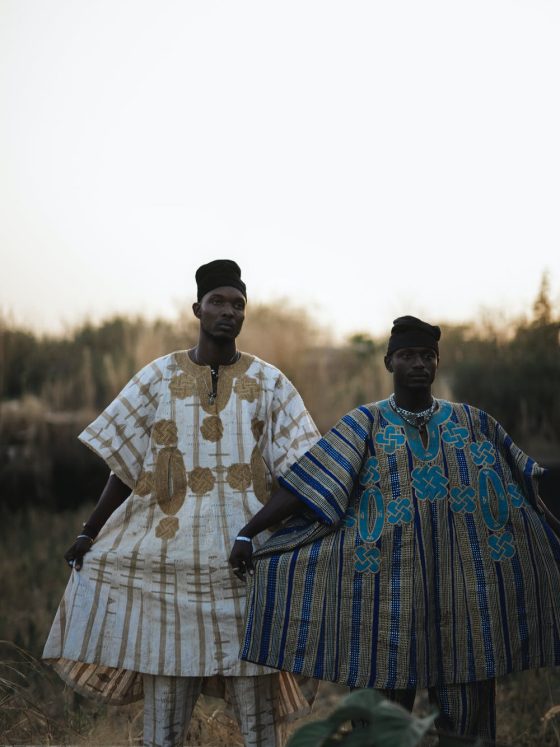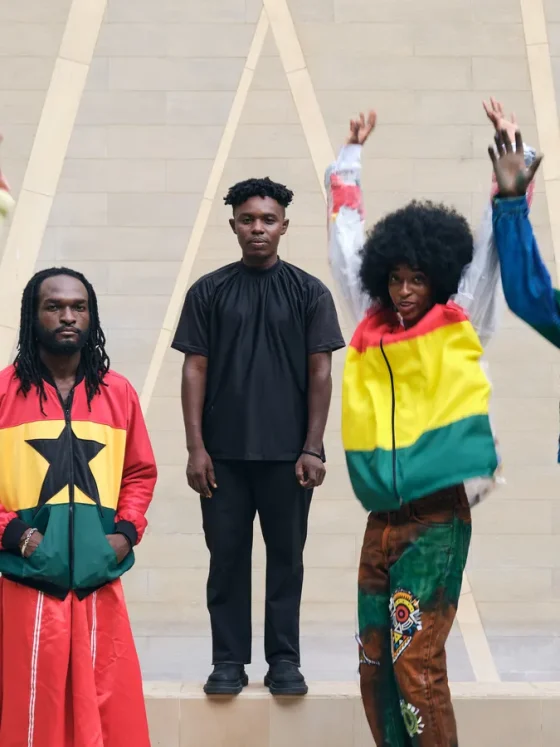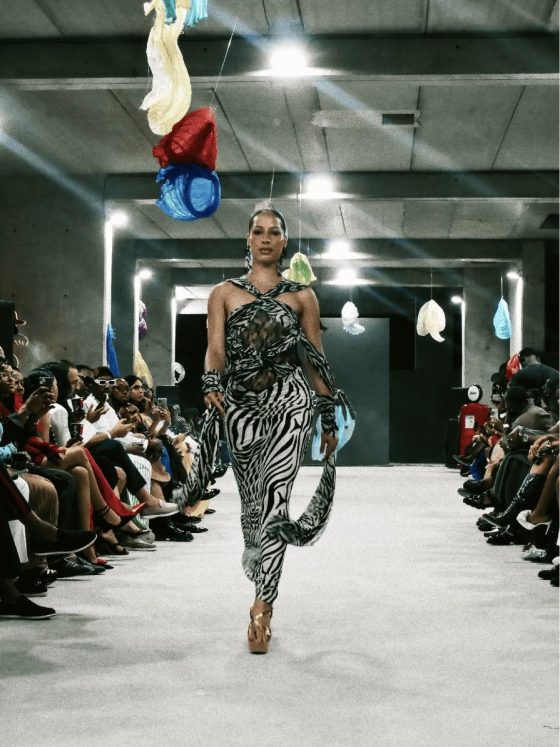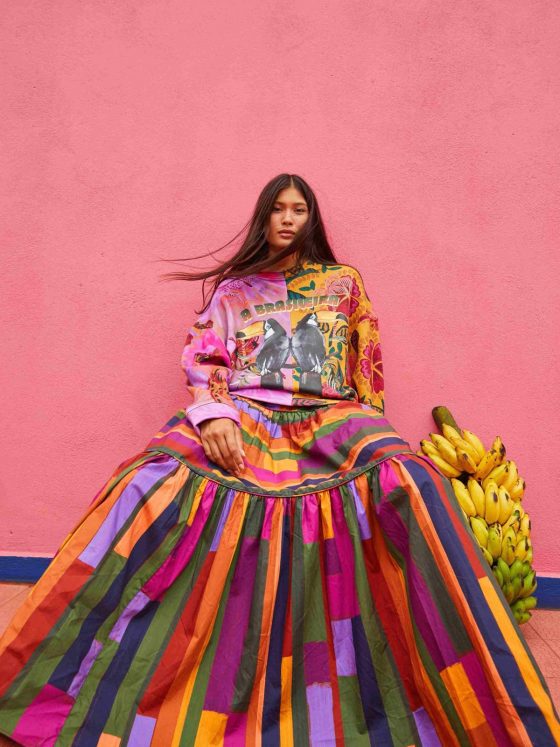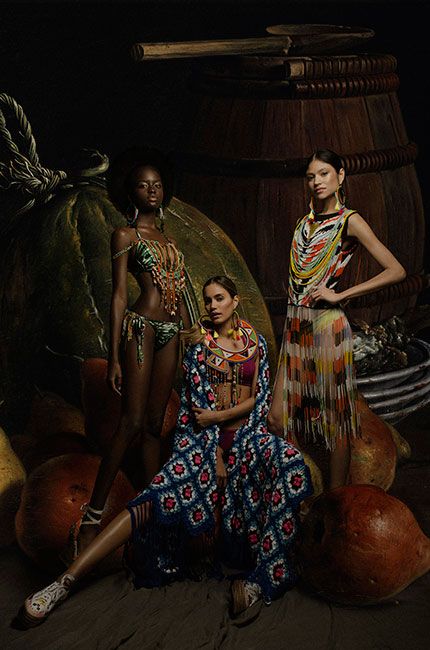
São Paulo Fashion Week is the fifth-largest fashion event in the world. Brazil is home to the largest Afro-descendant population outside the African continent. These two facts have coexisted in the same country for decades without producing anything resembling a proportional relationship. In 2020, three Black models shared personal accounts of racism inside the industry during a broadcast conversation that lasted several hours. The conversation was the first of its kind at SPFW. It ended with the adoption of a rule that 50% of models on SPFW runways must be Black, Afro-descendant, or Indigenous. This happened in 2020. The world’s fifth-largest fashion week had never had such a rule before. That is not an oversight. It is a structural portrait. And that portrait extends well beyond Brazil. Latin America’s fashion apparel market was valued at $87.9 billion in 2024, growing at 4.4% CAGR through 2031 and projected to reach $131 billion by that year. Afro-descendants represent approximately 33% of Latin America’s total population, or 150 million people, according to the Inter-American Development Bank. The United Nations estimates 200 million people of African descent live across the Americas as a whole. The question this article addresses is not whether those people buy clothes. They do. The question is how much of that $87.9 billion flows back through them as designers, founders, creative directors, and beneficiaries of the capital that industry generates. The answer, when examined market by market, is a study in structural invisibility.
Latin America’s fashion apparel market is valued at $87.9 billion. This data portrait examines where Afro-descendant brands sit within that economy and where “structural invisibility” is the more accurate term.
The Market: What $87.9 Billion Actually Represents
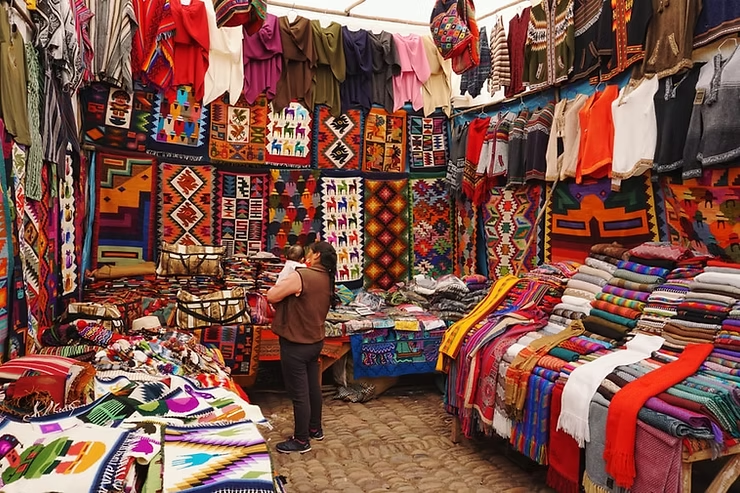
The $87.9 billion figure is a 2024 valuation of Latin America’s fashion apparel market published by Cognitive Market Research. It encompasses Brazil, Mexico, Argentina, Colombia, Chile, and the rest of the region. Brazil is the dominant force: its fashion apparel market was valued at $37.6 billion in 2024, accounting for approximately 43% of the regional total, and is projected to grow at a 5.0% CAGR through 2031. The broader Latin fashion market, which includes accessories and footwear alongside apparel, was valued at $168.4 billion in 2025 across all geographies where Latin-inspired fashion is consumed, including the United States Hispanic market. Latin America itself accounted for $69.6 billion of that total, approximately 41.3%.
Within the regional market, the growth drivers are structural. Urbanisation is accelerating. The middle class is expanding in Brazil, Mexico, Colombia, and Chile. E-commerce penetration in Latin America reached 15% of total apparel retail value in 2024, according to Euromonitor, and is growing sharply. The Boston Consulting Group estimates the Global South could generate $14 trillion in trade by 2033, growing at nearly double the rate of advanced economies, with Latin America’s fashion sector positioned as a significant contributor to that figure. These are market mechanics that produce opportunities for those with access to capital, distribution, and creative infrastructure. The critical question is who controls those levers.
The answer is not Afro-descendant communities. In Brazil, Colombia, Ecuador, Panama, Peru, and Uruguay combined, Afro-descendants represent 38% of the total population but account for approximately half of all people living in extreme poverty, according to a World Bank report. Afro-descendants across Latin America are 2.5 times more likely to live in chronic poverty than whites or mestizos. In Brazil specifically, where the Afro-descendant population is approximately 54% of the total, Black workers earn less than half of what white workers earn for equivalent employment. The IDB has calculated that Brazil alone could expand its economy by more than one-third if people of colour were fully included in the workforce at equal economic participation. Fashion is not a separate economy insulated from these structural realities. It is produced within them.
Brazil: The Largest Afro-Descendant Fashion Market on Earth, and Its Most Visibly Unequal
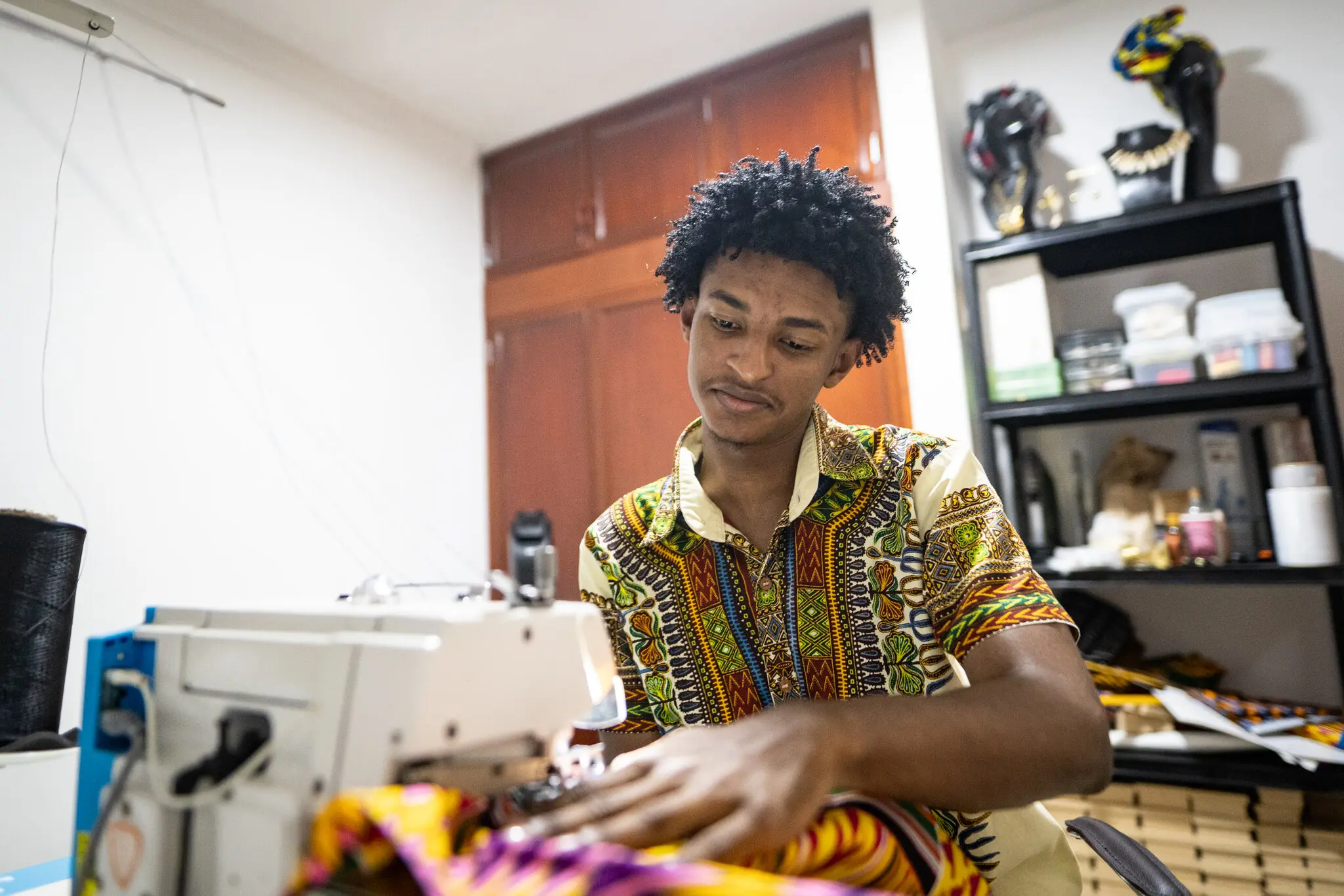
Brazil presents the sharpest version of the contradiction. More than half of the population is Black or biracial. The country has the world’s largest Afro-descendant population outside Africa. Its fashion apparel market is $37.6 billion and growing. São Paulo Fashion Week is a global institution. And the creative infrastructure of Brazilian fashion has been, by design and by practice, largely inaccessible to the people whose cultural traditions it has drawn from most heavily.
Historically, 70% of Brazilian fashion models came from three southern states: Rio Grande do Sul, Santa Catarina, and Paraná, states with strong colonial ties to German and Italian immigration and lower rates of miscegenation. Scouts deliberately sought out areas with European ancestry. The result was that Brazilian fashion’s international face was largely white while Brazil’s actual population was not. When Afro-Brazilian rapper and designer Evandro Fióti arrived at SPFW on the day his brand was scheduled to launch, he was denied entry by security. The incident was widely read as emblematic of an industry that drew on Black culture while excluding Black creators at its institutional events.
The appropriation pattern has a specific character in Brazil. Afro-Brazilian fashion, including turbans, candomblé-influenced white lace garments, quilombo references, and capoeira aesthetics, has become increasingly popular as a style. The most recognised protagonists of this mode are, in many cases, not Afro-Brazilian. As Fashionista documented, white designers have claimed Afro-Brazilian fashion as inspiration in ways that render the politics of race invisible and inequality obsolete. The cultural material is extracted; the economic benefit accrues to those with pre-existing access to capital and institutional validation.
Against this pattern, Afro-Brazilian designers have built brands through alternative channels. Emicida’s Lab Fantasma, founded in 2009, began as a music label and evolved into a streetwear brand that explicitly engages quilombo history, capoeira culture, and Afro-Brazilian visual art. Its collections function as material arguments rather than seasonal offerings. Luiza Brasil created Mequetrefismos in 2015, an editorial platform and curation practice dedicated specifically to promoting Black fashion, beauty, and lifestyle creators. Naya Violeta became one of the first Black designers from Brazil’s Midwest region to achieve national prominence. Carol Barreto, an Afro-Brazilian artist and fashion designer who also teaches gender studies at the Federal University of Bahia, has framed the problem precisely: in a country where most of the population is Black, the exclusion of large numbers of Black creators from the most important vehicles of cultural and social expression is not a gap. It is an institutional choice.
Colombia: Afro-Colombian Fashion and the Pacific Coast Creative Economy
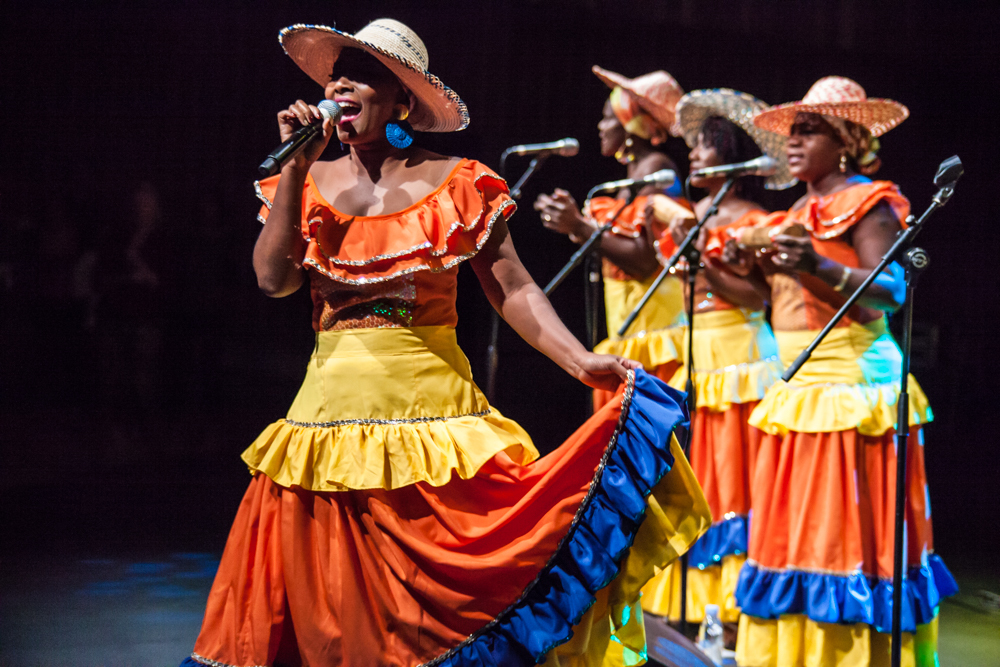
Colombia’s Afro-descendant population is conservatively estimated at 18% of the total population, though government documents have placed it as high as one-third. The Afro-Colombian population is concentrated heavily in the Pacific coastal region, specifically the departments of Chocó, Nariño, and Valle del Cauca, and along the Caribbean coast, particularly in Cartagena and Barranquilla. These regions are among the most economically marginalised in the country. The Afro-Colombian population is 2.5 times more likely to live in chronic poverty than the national average, according to World Bank data, and between 65 and 80% of Afro-descendant women in Colombia are employed in informal jobs, most without social security.
Within this context, several Afro-Colombian designers have built significant practices. Johana Bahamón’s brand Priah is built around Afro-diasporic identity, ethical production, and traditional weaving techniques from the Pacific coast. Priah employs formerly incarcerated women in its production, integrating social purpose with high design in a model that reflects both the cultural specificity of the Colombian Pacific and the material conditions facing Afro-Colombian women in the formal economy. Bahamón has been recognised as one of the Most Influential People of African Descent in Colombia. Colombian designer Maygel Coronel, based in Cartagena, where the Caribbean coast and luxury meet, has built an international swimwear and resort wear label that draws directly on the aesthetic and geographic identity of one of Colombia’s most historically Afro-descendant cities. The Afro-Colombian turbante, a head-wrap tradition rooted in African textile culture and worn by baianas, Palenqueras, and Afro-Colombian women across the country, was stigmatised for generations under colonial and post-colonial racial hierarchies before being reclaimed as one of the most politically charged fashion items in Latin America.
Colombia’s government cultural programme, Economía Naranja (the Orange Economy), has provided funding, training, and international exposure to creative-sector entrepreneurs, and some Afro-Colombian designers have accessed these resources. But the structural conditions remain unchanged. The fashion industry’s most visible institutions, including its fashion weeks, luxury retail infrastructure, and major brand investment ecosystems, remain inaccessible to the majority of Afro-Colombian creative practitioners working at community or artisanal scales in the Pacific and Caribbean coastal regions where the most sustained Black aesthetic traditions survive.
Also Read:
- The Turbante and Afro-Colombian Identity: A Head Wrap That Carries History
- Afro-Brazilian Fashion in Salvador: The Sacred Resistance of Black Dress
- The Afro-Latin Designer Index: Who Is Building, Who Is Funding, and Who Is Watching
- From Candomblé to the Runway: How Afro-Brazilian Dress Traditions Enter Global Fashion Without Credit
The Wider Pattern: Cultural Extraction Without Economic Return
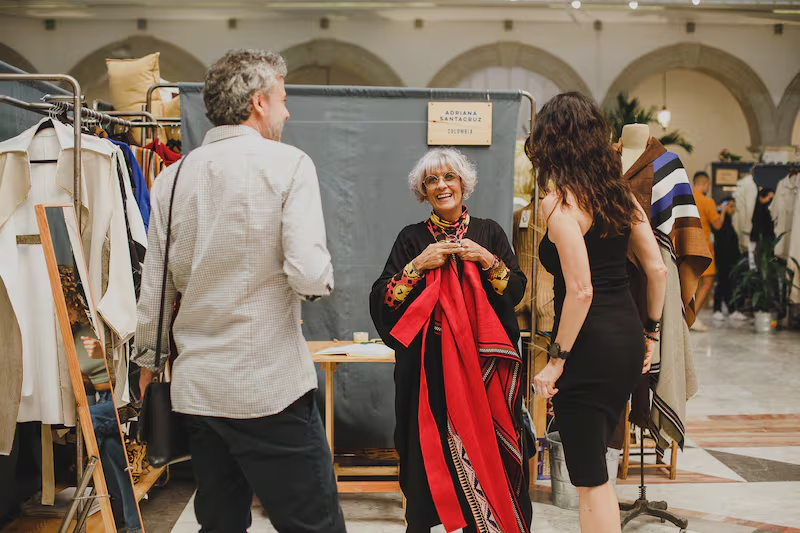
The structural dynamic at work across Latin America’s fashion markets is not unique to fashion. It is the application to the creative economy of a pattern documented by the World Bank, the IDB, the UN, and PAHO across every sector: Afro-descendants produce cultural material that enters the commercial economy, and the economic returns of that material accumulate disproportionately to those with pre-existing access to capital, networks, and institutional legitimacy. This is not a theory. It is documented in sector after sector, country after country, across the region.
In fashion, the mechanism takes a specific form. Afro-descendant aesthetic traditions, from the turbante to the baiana dress to the quilombo aesthetic to Afro-Colombian Pacific weaving, enter the design vocabulary of the broader market through the process that fashion calls inspiration and that cultural analysis calls appropriation. The designers who commercialise these traditions at scale are predominantly not from the communities whose traditions they draw upon. The models who represent the resulting collections have, historically, not been Afro-descendant. The brand founders, creative directors, and investors who capture the value chain of that process have, systemically, not been Afro-descendant.
Latin America’s fashion industry lacks no Afro-descendant creative talent. It lacks the structural conditions that allow that talent to access the mechanisms of commercialisation. The NYU Latinx Project’s analysis of fashion archives established that major museum fashion archives, including the Met’s Costume Institute, preserve the dominant tastes of white and economically privileged designers. In contrast, the fashion produced by collective labour in Indigenous and racialised communities remains largely absent. When communities appear in these archives at all, they appear as unnamed collaborators attached to a named white designer rather than as creative authors. This is the archive structure that determines which design traditions are treated as fashion history and which are treated as folk craft.
The Omiren Argument
Latin America’s $87.9 billion fashion market is not one market. It is two economies occupying the same geography, shaped by the same aesthetic traditions, and producing radically different outcomes for different populations based on racial position. The first economy is visible: São Paulo Fashion Week, the Lojas Renner retail chain, the luxury boutiques of Mexico City’s Polanco and São Paulo’s Jardins, the international swimwear labels of Cartagena, and the e-commerce platforms reaching 15% of regional apparel sales. The second economy is invisible in the sense that fashion media and fashion capital have made it invisible, not in the sense that it does not exist. It exists in every turban worn at a Palenquera market in Cartagena. It exists in every quilombo-referenced garment produced in Salvador, Bahia. It exists in the Pacific coast weaving cooperatives whose textiles enter global supply chains without attribution or fair return. The invisibility is not accidental. It is the product of specific institutional decisions made over decades: about which designers get runway access, which aesthetics get institutional validation, which communities get capital, and which traditions get named.
This is why Omiren Styles exists as a platform and why the coverage of Afro-Latin fashion is not a niche exercise in this publication. Afro-descendants make up a third of Latin America’s population and a majority in the continent’s largest fashion market. Their aesthetic traditions are among the most creative, most complex, and most globally influential in the Americas. What they have not been granted is proportional economic participation in the industry built on those traditions. The editorial work of naming Afro-descendant designers Lab Fantasma, Priah, Naya Violeta, the Palenquera turbante tradition, and the baiana dress as political architecture is inseparable from the economic argument that an $87.9 billion market that excludes its creative foundation operates at a fraction of its civilisational potential. The visibility question and the investment question are the same.
Frequently Asked Questions
1. How large is Latin America’s fashion market, and which country leads?
Latin America’s fashion apparel market was valued at $87.9 billion in 2024 and is projected to grow at a compound annual growth rate of 4.4% through 2031, according to Cognitive Market Research. Brazil is the dominant national market, accounting for approximately 43% of the regional total at $37.6 billion in 2024. Mexico is the second largest market, followed by Argentina and Colombia. The broader Latin fashion market, which includes the US Hispanic segment and international Latin-inspired fashion, was valued at $168.4 billion in 2025, with Latin America itself representing $69.6 billion of that figure.
2. What is the Afro-descendant population in Latin America, and what is their economic position?
Approximately 150 to 200 million people of African descent live in the Americas, with the majority concentrated in Brazil, Colombia, Venezuela, Cuba, Mexico, and Ecuador. The Inter-American Development Bank estimates that Afro-descendants represent approximately 33% of Latin America’s total population. The World Bank’s June 2025 LAC Equity Lab data confirm that in Brazil, Colombia, Ecuador, Peru, and Uruguay, a higher percentage of Afro-descendants live in poverty than in the general population. Afro-descendants across the region are 2.5 times more likely to live in chronic poverty than whites or mestizos. In Brazil, the continent’s largest fashion market, Afro-descendants constitute approximately 54% of the population but earn less than half of what white workers earn for equivalent work.
3. Who are the leading Afro-descendant fashion designers and brands in Latin America?
Verified Afro-descendant brands and practitioners operating with a documented presence in the regional market include Lab Fantasma (Brazil, founded by rapper Emicida, built around Afro-Brazilian heritage, quilombo history, and capoeira aesthetics); Priah (Colombia, founded by Johana Bahamón, rooted in Afro-Colombian Pacific coast weaving traditions and ethical production); Naya Violeta (Brazil, among the first Black designers from the Midwest region to achieve national prominence); and Carol Barreto (Brazil, designer and gender studies academic at the Federal University of Bahia). The Mequetrefismos platform, founded by Luiza Brasil, has provided editorial infrastructure for Black creators in Brazilian fashion since 2015. Afro-Colombian turbante and Palenquera dress traditions represent some of the most historically sustained Black aesthetic practices in the Americas, though they remain largely unmonetised at the community level.
4. What structural barriers prevent Afro-descendant designers from accessing Latin America’s fashion economy?
The structural barriers are documented across multiple institutions. Access to capital remains the primary constraint: Afro-descendants are systematically under-represented in formal credit, venture capital, and government business support programmes relative to their share of the population. Institutional access is the second barrier: SPFW, the fifth-largest fashion week in the world, did not adopt a 50% rule for Black, Afro-descendant, or Indigenous models until 2020, reflecting decades of institutional exclusion from the industry’s most visible validation infrastructure. Cultural appropriation is the third: Afro-Brazilian and Afro-Colombian aesthetic traditions have been commercialised by designers and brands not from those communities, capturing the economic return of cultural production without returning value to the originating communities. The NYU Latinx Project’s 2024 analysis of major museum fashion archives identifies a further structural dimension: the fashion archive itself systematically excludes collective Indigenous and racialised labour while privileging white designers, determining which traditions are treated as fashion history and which are rendered invisible.