In 2020, the McKinsey Global Fashion Index valued the African fashion industry at approximately $31 billion and projected it could cross $50 billion by 2030 if investment and infrastructure aligned with demand. In 2026, we are halfway through that decade. The numbers that have followed are not simply confirmatory. They are structural. The continent’s apparel market reached $70.6 billion in 2024. Its textile sector is valued at $39.21 billion in 2025 and is forecast to reach $49.41 billion by 2030. The e-commerce fashion segment is on course to generate $6.53 billion in 2025, growing at 7.96% annually. These are not aspirational projections. They are industry-verified baselines. But behind the headline figures lies a more complex portrait. African fashion in 2026 is an industry caught between extraordinary civilisational potential and structural deficits in financing, manufacturing integration, and export infrastructure that remain stubbornly unresolved. This article maps that portrait across four dimensions: investment, manufacturing, retail, and export. The data is sourced across multiple verified industry reports, development finance institutions, and trade bodies. Nothing here has been taken on assertion alone.
A data-driven portrait of the African fashion industry in 2026: verified statistics on investment flows, manufacturing capacity, retail growth, and export performance across the continent.
Investment: Capital Is Moving, but Not Evenly
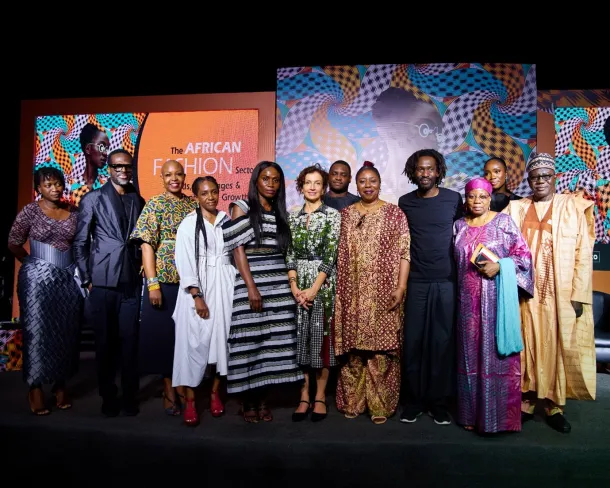
The most decisive financial institution shaping investment in African fashion in 2026 is not a venture capital firm. It is Afreximbank, the Cairo-based African Export-Import Bank, which launched its $2 billion Creative Industries Programme, Canex, to fund export initiatives across fashion, film, music, and art over three years. Within fashion, Canex has funded pop-up showrooms for African designers at Paris Fashion Week, co-financed textile and garment manufacturing clusters in cotton-producing nations, and supported export market access programmes covering trade show costs for emerging brands from Ghana, Kenya, Nigeria, and beyond. In October 2025, Ghanaian brand Boyedoe and Nigerian brand Wuman were among those selected to show at Tranoi during Paris Fashion Week, a collaboration between Afreximbank and Galeries Lafayette.
At the venture capital level, the picture is more constrained. According to the Partech 2024 African VC Report, venture capital firms invested $3.2 billion across Africa in 2024. Nearly half went to fintech. Fashion received a fraction. The structural reason is direct: as Tendai Shamu, angel investor and managing director of First Serve Ventures, noted plainly, venture capital rarely backs traditional fashion unless there is a significant technology component. This has driven the most successful funding stories into fashion-tech territory. The Folklore, a platform connecting African and diasporic designers to global retailers including Nordstrom, Saks Fifth Avenue, and Bergdorf Goodman, raised $3.4 million in seed funding led by Benchstrength with participation from Techstars, Black Tech Nation Ventures, and Slauson & Co. ANKA, the Ivorian e-commerce platform formerly known as Afrikrea, had raised $8.3 million by 2022, serving over 7,000 sellers from 47 African countries and exporting more than ten tonnes of cargo monthly. The International Finance Corporation subsequently invested directly in ANKA, treating it as infrastructure for African artisans reaching global markets.
On the manufacturing side, the IFC has been the most active institutional lender. In January 2025, it extended a $15 million package to Kenya’s Royal Apparel EPZ to build an EDGE-certified factory projected to create 3,700 jobs and operate on renewable power. In November 2024, it loaned $8 million to DTRT Apparel in Ghana to expand capacity and pilot recycled-fibre spinning. In July 2024, IFC supported Star Garments in securing $15 million to construct Togo’s first large-scale apparel plant, projected to add 4,520 jobs and connect to local cotton. This pattern reflects a development finance logic: equity investment in design brands remains limited and high-risk; equity investment in manufacturing capacity is increasingly justifiable on the grounds of jobs, logistics, and trade terms.
The African Development Bank’s Fashionomics Africa programme has trained at least 7,000 fashion entrepreneurs, 4,550 of them women. The programme focuses on building business competence rather than just creative output, addressing the AfDB’s own finding that 70% of African designers struggle to access funding and 60% cite logistics as a barrier to international expansion. Birimian Ventures, the Abidjan- and Paris-based private equity firm, continues to provide long-term capital to African-heritage luxury brands. However, it remains one of the few firms with an explicit pan-African luxury mandate in the private equity space.
Manufacturing: Industrial Parks Are Delivering, but the Value Chain Remains Broken
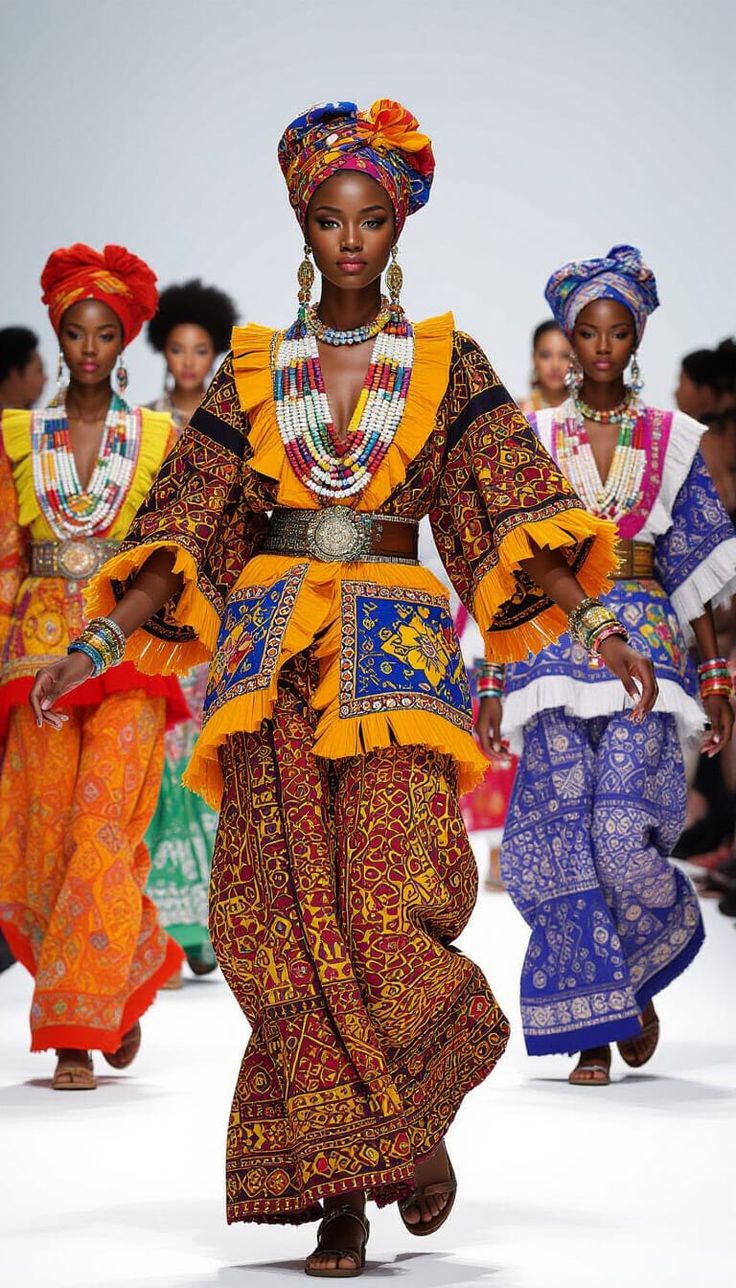
Africa’s apparel manufacturing story in 2026 is defined by geographic concentration, structural asymmetry, and a persistent upstream gap. The continent produces roughly 6% of the world’s cotton supply. According to verified data, 90% of that raw cotton is exported for processing elsewhere before re-entering the continent as finished or semi-finished goods. The result is an industry with a significant raw-material endowment and limited capacity to add value domestically.
Egypt leads the continent’s textile manufacturing sector with approximately 18.5% of the African market share in 2024. It produces nearly 4,000 tonnes of high-quality long-staple cotton annually and holds a vertically integrated value chain from cotton cultivation to spinning, weaving, and garment production. Egypt’s textile market was valued at $3.9 billion in 2024, supported by proximity to the EU and the Euro-Mediterranean Association Agreement. Morocco is the continent’s principal nearshoring hub for European fast fashion. In 2025, Morocco’s textile and clothing exports were estimated at approximately MAD 32 billion ($3.2 billion), with the EU accounting for the majority of buyers. Morocco has positioned itself at the intersection of North African labour costs and proximity to Europe, hosting major factories in the Tangier Free Zone and the Casablanca Apparel Park.
South of the Sahara, Ethiopia’s Hawassa Industrial Park remains the continent’s most cited manufacturing showcase. At full capacity, it targets $1 billion in annual exports and employs 25,000 workers, operating on near-zero-cost hydropower. Rwanda’s textile and apparel output expanded from approximately $23.5 million in 2017 to $106 million in 2024, demonstrating the pace of growth achievable when policy, SEZ infrastructure, and export-market access align. Kenya’s EPZs contributed over KES 150 billion (~$1.1 billion) to the economy in 2023 and directly employed over 60,000 workers. In 2025, IFC-backed expansions added 3,700 new jobs to Kenya’s apparel workforce.
Benin’s Glo-Djigbé Industrial Zone (GDIZ) has become a case study in cotton-to-garment integration. The zone processes local cotton into finished garments, including leggings supplied to French retailer Kiabi, illustrating the regional loop that AfCFTA proponents argue can displace Asia as the primary processor of African raw materials. Togo, Lesotho, Madagascar, and Eswatini continue to serve export-oriented roles leveraging AGOA and EU duty-free windows, though high freight costs temper their competitiveness relative to Asian manufacturing hubs.
The critical structural deficit in African manufacturing is not at the assembly stage. It is upstream. Currently, even if all of Africa’s existing yarn and fabric exports were redirected internally, they would satisfy only 20% of current continental yarn import demand and 9% of fabric import demand, according to research cited in the ODI Global AfCFTA Implementation Report, 2025. The continent’s capacity gap is in spinning, weaving, and finishing. Without capital investment in those stages, garment factories in African SEZs will continue to operate on imported fabric, limiting both the value retained on the continent and the depth of industrial linkages that drive development.
Retail: Consumption Is Growing, Informality Dominates, Digital Is Shifting the Structure
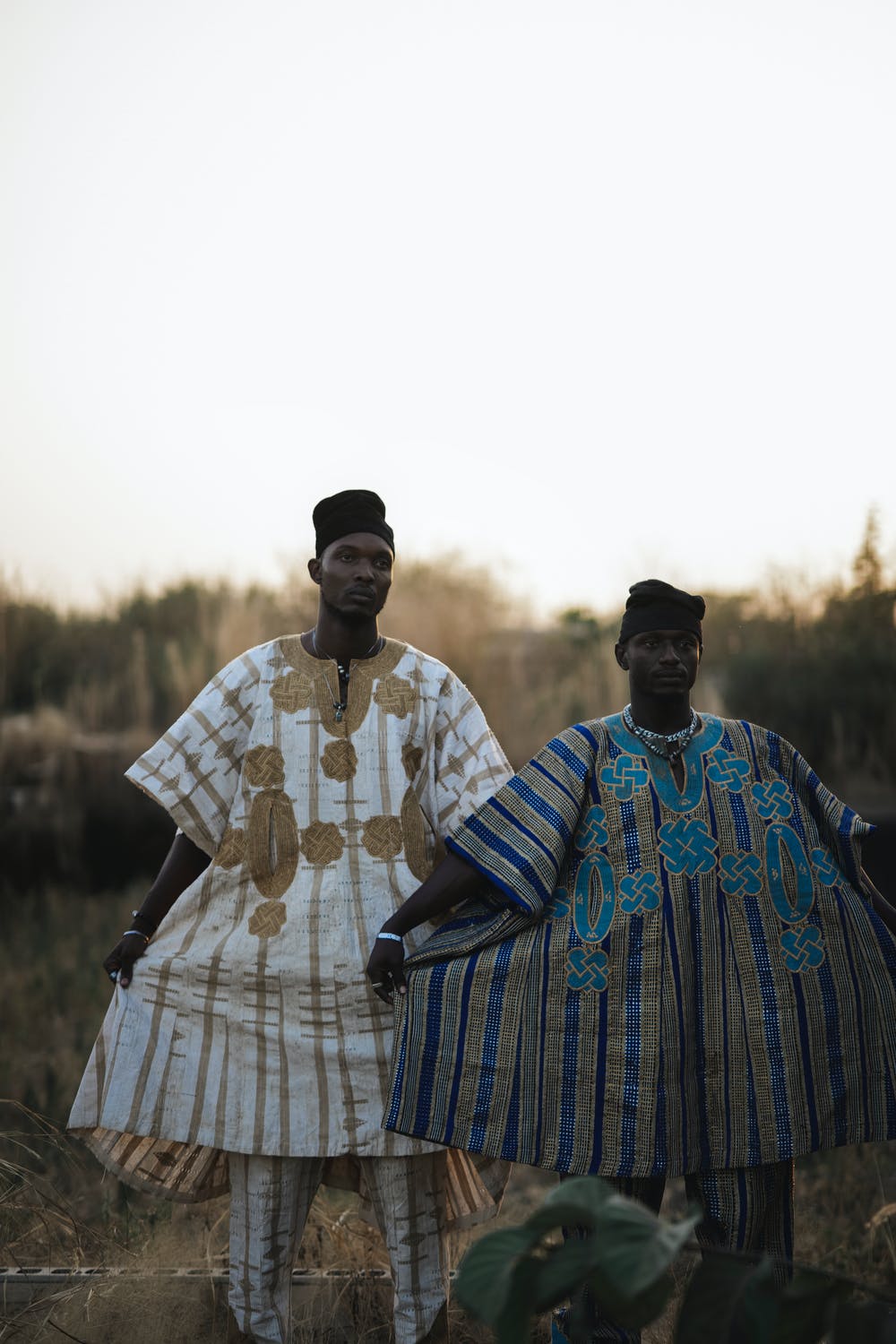
Africa’s total apparel market reached $70.6 billion in 2024, according to market data aggregated from Statista and multiple industry analysts. Projections place the market at $89 billion by 2029, driven by urbanisation, a growing middle class, and the continent’s exceptionally young demographic profile. Over 60% of Africa’s population is under 25. The African Development Bank projects that consumer spending across the continent will surpass $2 trillion by 2025. These are conditions that produce structural demand expansion, not cyclical fluctuation.
The retail landscape is bifurcated. In markets like Nigeria, the dominant force dressing up to 80% of the population is the second-hand clothing trade, known locally by various names and driven by affordability pressures compounded by the fact that 133 million people live in multidimensional poverty. In Kenya, second-hand imports, known as Mitumba, reached $218.2 million in the year ending March 2024, a 14.5% year-on-year increase representing 206,580 tonnes of clothing. These are not peripheral figures. They are the retail reality of the African fashion market’s base, and any serious portrait of the industry must account for them alongside the premium designer sector.
The formal retail segment is being restructured by digital commerce. Africa’s e-commerce fashion market is projected to reach $6.53 billion in 2025, growing at 7.96% annually through to 2029. South Africa’s online fashion market was valued at $964 million in 2024, the largest in Sub-Saharan Africa, with SHEIN and Temu together recording approximately R7.3 billion in sales, accounting for 37% of the country’s online clothing, textiles, footwear, and leather market. Jumia’s gross merchandise value reached $641.9 million in 2024, with around 14% attributable to fashion. Nigeria’s online fashion sales generated approximately $43 million in a single month in 2025. The continent was forecast to surpass half a billion e-commerce users in 2025.
The IFC estimates that Africa’s e-commerce market could grow by $14.5 billion between 2025 and 2030, with textiles among the fastest-growing categories. Mobile money infrastructure is critical to this trajectory. In Kenya, 70% of apparel consumers use mobile money for transactions. The challenge, repeatedly identified by practitioners including ANKA co-founders and logistics entrepreneurs across the continent, is last-mile delivery. Nigeria, with a fashion industry valued at approximately $4.7 billion and e-commerce fashion set to reach $546.3 million by 2025, illustrates both the ceiling of digital retail potential and the floor imposed by inadequate logistics networks outside major urban centres.
Also Read:
- Maasai Clothing and Dress: Culture, Identity, and the Red That Commands Attention
- African Fashion Designers Redefining the Global Runway
- The Kente Cloth of Ghana: History, Meaning, and Contemporary Power
- Aso Oke and the Architecture of Yoruba Dress
Export: AGOA’s Uncertainty Exposed a Strategic Vulnerability
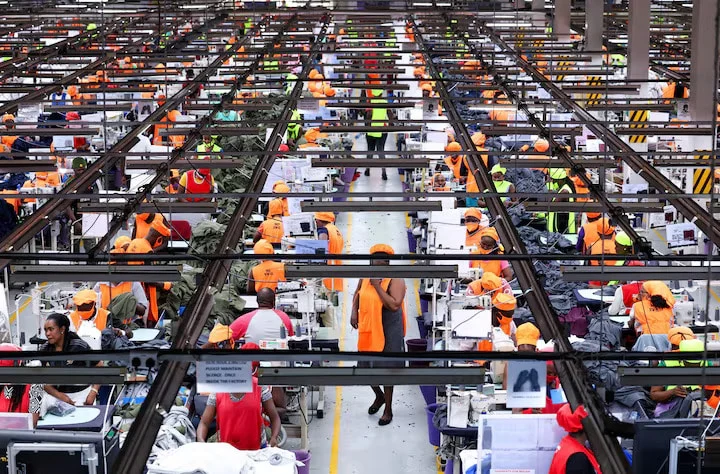
The most consequential structural event in African fashion exports between 2024 and 2025 was not a trade win. It was the impending expiration of the African Growth and Opportunity Act (AGOA) on 30 September 2025. The act, which granted duty-free access to the US market for qualifying African apparel, had been the primary engine of garment export growth in Sub-Saharan Africa since its inception in 2000. Kenya’s apparel exports to the United States grew from approximately $55 million in 2001 to $603 million by 2022 under AGOA, accounting for nearly 68% of Kenya’s total US exports. Ethiopia’s Hawassa Industrial Park attracted over $1 billion in FDI since 2018, primarily on the promise of AGOA-facilitated export access.
The uncertainty surrounding AGOA’s renewal led to a measurable contraction in trade before the deadline was reached. US apparel imports under AGOA fell 21% in value in 2023 compared to 2022. In the first five months of 2024, imports from AGOA suppliers dropped a further 13.1% year-on-year. Approximately 30% of US fashion company respondents surveyed by the US Fashion Industry Association explicitly stated they had reduced sourcing from AGOA members due to the uncertainty. The number of Sub-Saharan African countries from which US companies sourced dropped from seven in 2024 to six in 2025 as the expiry drew nearer.
Direct exports of textiles and apparel from Africa to the US under AGOA reached $1.4 billion in 2022, the last fully stable baseline year. Kenya’s apparel exports to the US under AGOA alone were approximately $510 million in 2023. Morocco’s textile and clothing exports to Europe stood at approximately $3.2 billion in 2025, with the EU accounting for the majority. Tunisia’s textile exports to the EU exceeded €2.5 billion in 2024, supporting a workforce of over 160,000 in the sector. Finished garment exports from Africa overall were projected at €5.8 billion by 2026, with the broader textile market growing at approximately 4% CAGR through 2030.
The African Continental Free Trade Area presents the most significant long-term restructuring opportunity for African fashion exports. The AfCFTA began facilitating tariff-free trading in 2021. The World Bank predicts the agreement will boost intra-African trade by 81% by 2035. The African Development Bank reports a 47% rise in textile exports under regional accords, reaching $1.6 billion in 2023. The AfCFTA is predicted to increase intra-African textile trade by 33%, and its rules of origin now allow yarn, fabric, and garments to circulate duty-free among signatories. Benin’s Glo-Djigbé zone, supplying Kiabi with locally processed cotton garments, is among the earliest demonstrable examples of this regional loop functioning at a commercial scale. In June 2024, the Africa Finance Corporation signed a declaration with UNIDO, the WTO, and other partners to establish regional textile hubs leveraging West African cotton.
The Omiren Argument
The data portrait of African fashion in 2026 makes a single argument legible across all four dimensions: the industry is growing, but growth without structural integration is accumulation without compounding. Africa produces cotton that is exported in raw form and then returned as imported fabric. It trains designers who cannot access credit. It builds garment factories that source yarn from Asia. It generates retail demand that is largely met by secondhand imports and Chinese ultra-fast-fashion platforms. Every structural deficit identified in this portrait is not simply a market gap. It is a record of value that left the continent at one stage in the supply chain and was captured elsewhere. The capacity exists. The consumer base exists. The cultural authority exists. What has not yet been built is the financial and industrial architecture that allows these forces to compound in each other’s favour rather than leak outward.
The civilisational stakes of this gap are not abstract. Fashion is not a luxury category in the African context. It is one of the largest employment sectors on the continent, surpassed only by agriculture. It is the vehicle through which cultural identity is produced, circulated, and commercialised across generations. When Benin processes its own cotton into garments for European retail, when Kenya’s garment workers generate value that stays within an integrated regional supply chain, when a Lagos or Accra designer accesses the same financial infrastructure available to a Milan or Seoul counterpart, these are not industry wins. They are assertions of economic sovereignty. The state of African fashion in 2026 is not one of emerging promise. It is one of the demonstrated capacities delayed by structural choices. The choices that follow will determine whether the next decade compounds or continues to leak.
Frequently Asked Questions
1. How large is the African fashion and apparel market in 2026?
Africa’s total apparel market reached $70.6 billion in 2024 and is projected to grow to approximately $89 billion by 2029. The formal textile manufacturing sector is separately valued at $39.21 billion in 2025. Africa’s e-commerce fashion segment is forecast to reach $6.53 billion in 2025 alone, growing at 7.96% annually through 2029. These figures span both the formal and informal sectors across 54 nations.
2. Which countries lead African fashion manufacturing in 2026?
Egypt leads with approximately 18.5% of the African textile market share in 2024, backed by vertically integrated cotton production. Morocco is the dominant nearshoring hub for European fashion, with approximately $3.2 billion in textile exports to the EU in 2025. Ethiopia’s Hawassa Industrial Park is Sub-Saharan Africa’s most significant export-oriented garment facility, targeting $1 billion in annual exports at full capacity. Kenya, Rwanda, Togo, Lesotho, and Madagascar are significant secondary manufacturers, largely operating within AGOA and EU duty-free frameworks.
3. What is the AfCFTA’s impact on African fashion trade?
The African Continental Free Trade Area, which began facilitating tariff-free trading in 2021, is forecast by the World Bank to boost intra-African trade by 81% by 2035. The African Development Bank reported a 47% rise in textile exports under regional accords in 2023, reaching $1.6 billion. The AfCFTA is predicted to increase intra-African textile trade specifically by 33%, enabling yarn, fabric, and finished garments to circulate duty-free among member states. Early cases, such as Benin’s Glo-Djigbé Zone supplying French retailer Kiabi with locally processed cotton garments, illustrate the practical realisation of intra-African supply chains.
4. Why is venture capital investment in African fashion limited?
Venture capital in Africa is concentrated in fintech, accounting for nearly half of the $3.2 billion invested by VC firms across the continent in 2024. Fashion receives limited VC funding because traditional fashion brands do not meet the high-growth, scalable, and technology-driven criteria that define a VC investment thesis. The most successfully funded African fashion enterprises have technology at their core, including platforms such as The Folklore (B2B wholesale software, $3.4 million raised) and ANKA (e-commerce infrastructure, $8.3 million raised by 2022). Development finance institutions, including the IFC, Afreximbank, and the African Development Bank’s Fashionomics Africa programme, remain the primary sources of capital for the development of manufacturing and design ecosystems.