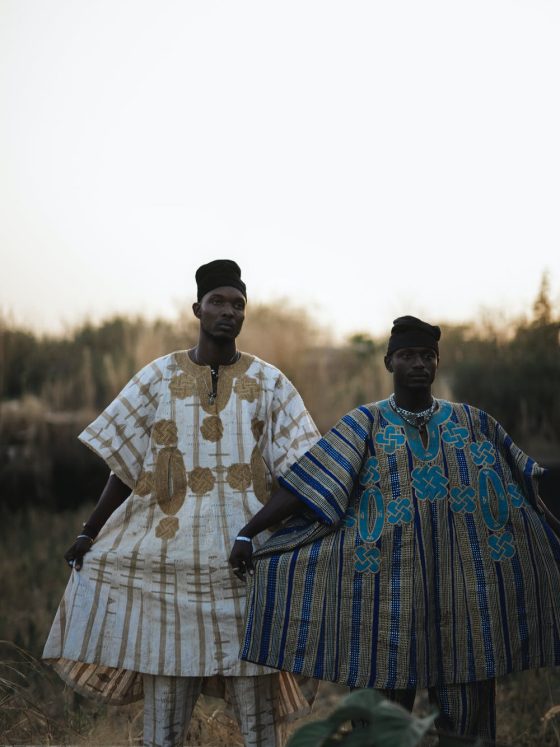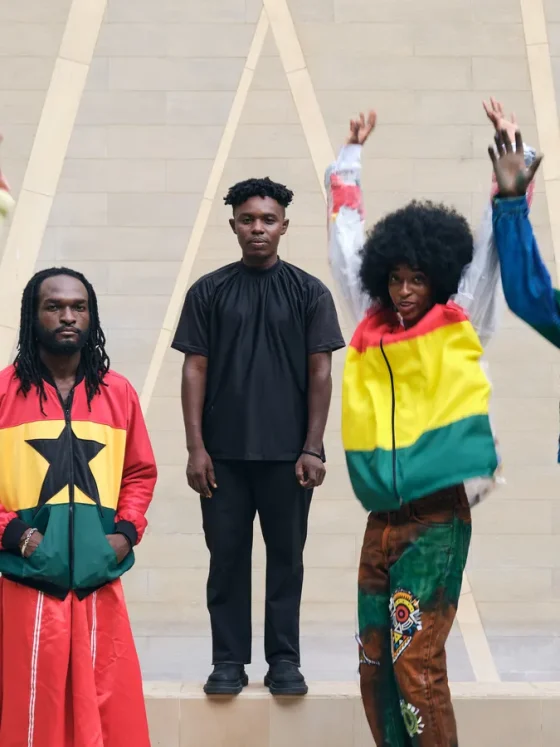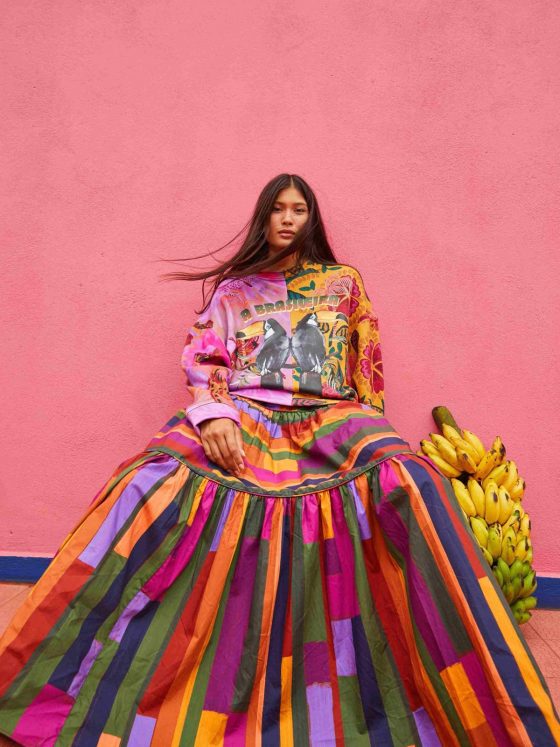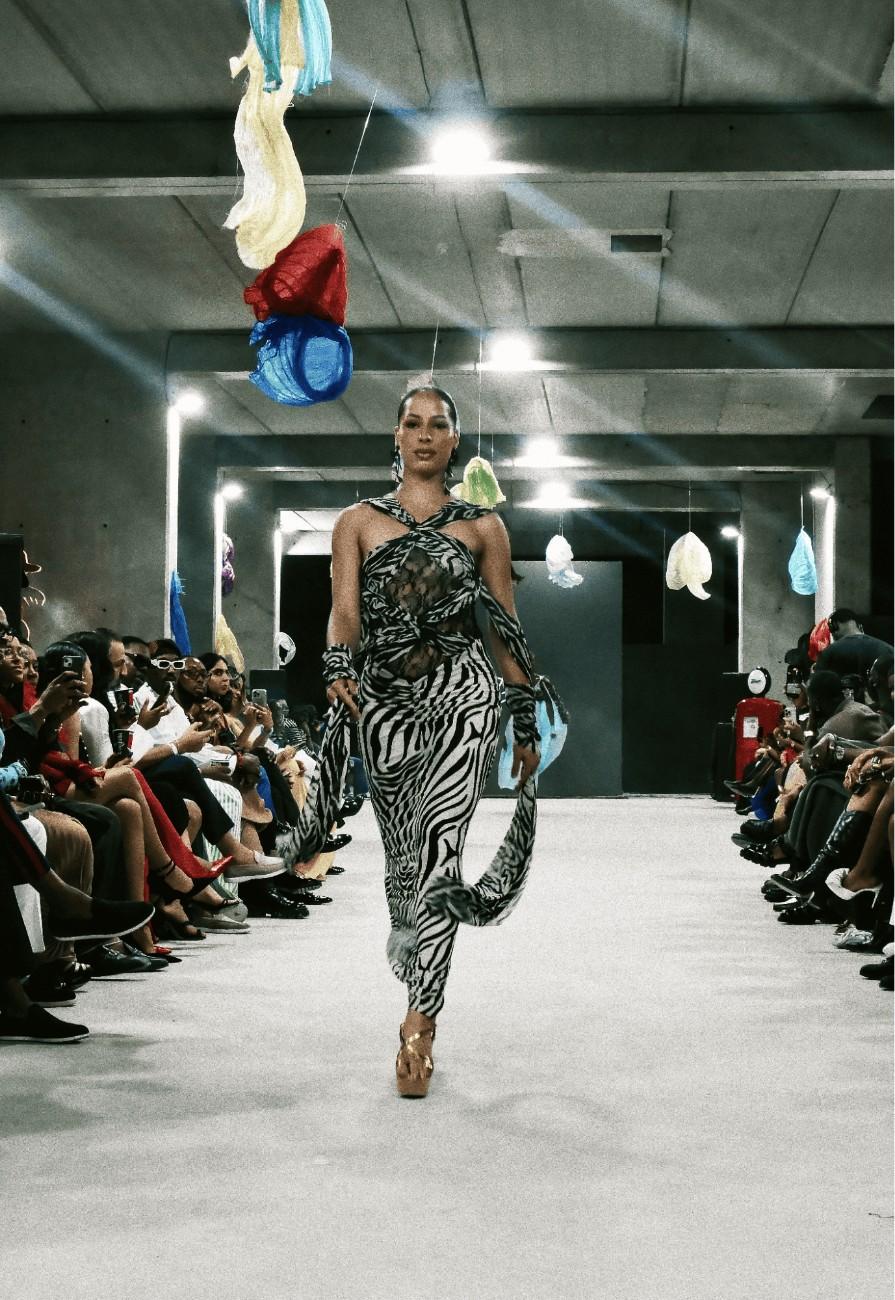
On 5 November 2025, at the Museum of Tomorrow in Rio de Janeiro, Lagos Fashion Week was named one of five winners of the Earthshot Prize, receiving £1 million in the Build a Waste-Free World category. It was selected from nearly 2,500 nominations across 72 countries. The platform beat Bogota, which had reduced air pollution by 24% over six years. It beat international government treaties and forest restoration programmes operating across tens of thousands of hectares. The prize, established by Prince William, is one of the most scrutinised environmental awards in the world. And Lagos Fashion Week won it. This is the same Lagos Fashion Week that the global fashion industry has spent fifteen years describing as an emerging platform, an African market to watch, and a regional event with international potential. The Earthshot judges called it a transformative climate solution. The fashion industry has yet to decide whether to call Lagos a fashion capital.
Lagos generates more designers and more original fashion output, and won a global environmental prize. The West will not officially acknowledge it as a fashion capital because doing so would undermine the criteria.
What the Fashion Capital Designation Actually Is
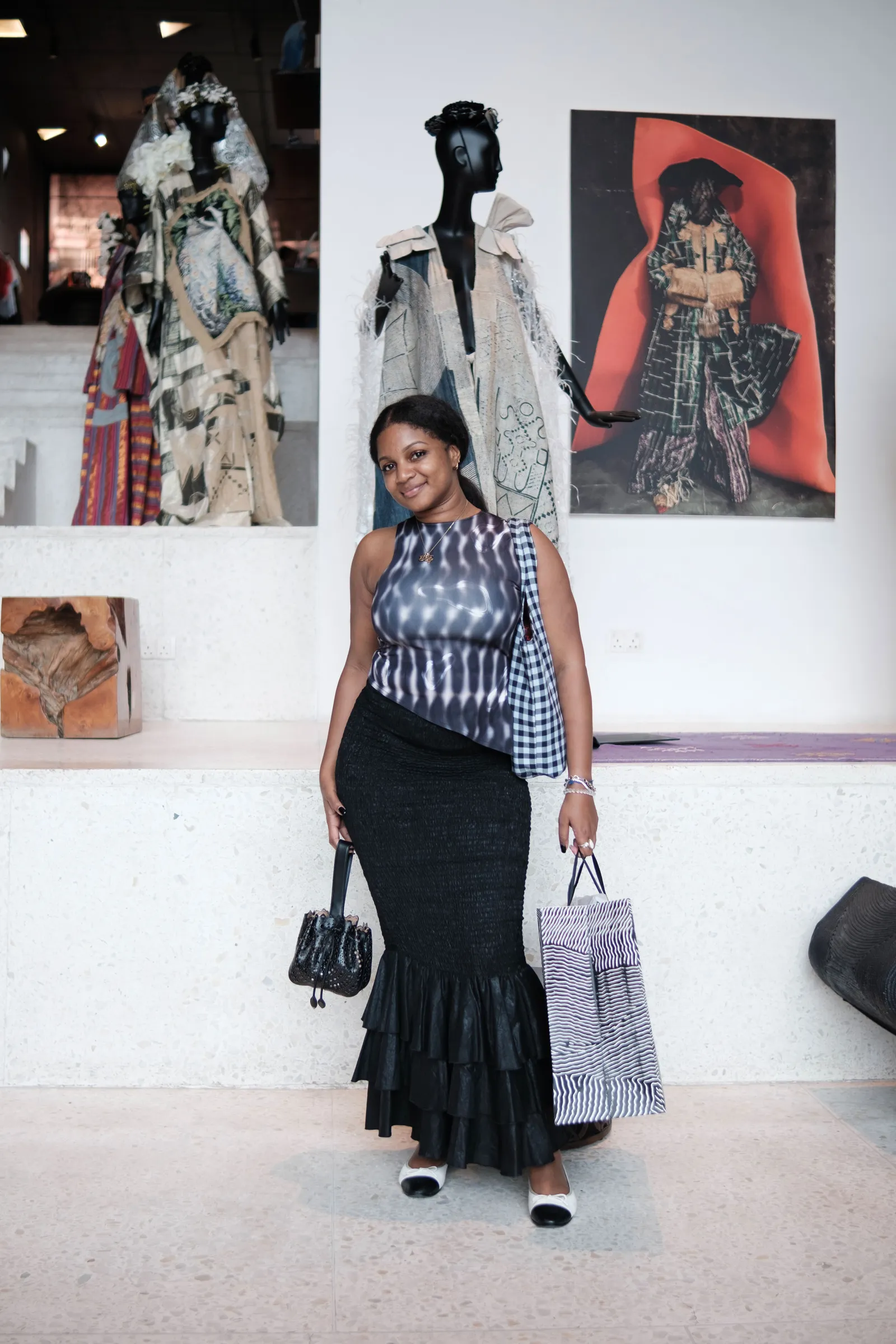
The Big Four fashion capitals, Paris, Milan, London, and New York, are not a natural phenomenon. They are commercial and institutional constructs built at a specific historical moment by specific institutions with specific interests in maintaining the hierarchy they created. The CFDA, founded in 1962, organised New York Fashion Week and established the commercial infrastructure through which American designers access the global market. The Fédération de la Haute Couture et de la Mode, which has governed Paris since 1868, has protected French fashion as French cultural and commercial property. The Camera Nazionale della Moda Italiana and the British Fashion Council served equivalent functions for Milan and London, respectively. Each of these institutions was built to protect the commercial interests of designers in its home city, and each defined the criteria for fashion capital status in ways that served those interests.
None of these criteria was designed with Lagos in mind. They were not designed with any African city in mind. The standards for what constitutes global fashion authority, which fashion weeks matter, whose press coverage counts, which trade shows produce legitimate wholesale relationships, and which prizes confer designer credibility, were established by organisations whose geographic and commercial scope was entirely European and American. The exclusion of Lagos from the designation system is not a judgment about the quality of what Lagos produces. It is a reflection of who built the system and what they built it to protect.
This distinction matters because the conversation about Lagos as a fashion capital is frequently framed as a question of readiness: Is Lagos ready yet? Does Lagos have the infrastructure yet? Has Lagos produced enough internationally recognised designers yet? These questions accept the existing criteria as the correct standard and ask whether Lagos meets them. The correct question is whether the criteria themselves are valid and whether an industry that generates $6.1 billion in contribution to Nigeria’s GDP, that hosts Africa’s largest fashion event, that has produced designers showing in Paris, New York, Milan, London, and Dubai, and that won a global environmental prize selected from 2,500 nominations needs permission from Paris or New York to be named.
What Lagos Fashion Week Has Actually Built
Lagos Fashion Week, founded in 2011 by Omoyemi Akerele through her agency, Style House Files, is, by measurable standards, Africa’s largest fashion event. It showcases over 60 Nigerian and African designers to a global audience of more than 40,000 retailers, media, and consumers annually. It has launched internationally recognised careers, including Lisa Folawiyo, whose garments are stocked at Selfridges, Moda Operandi, and MatchesFashion; Orange Culture, whose designer Adebayo Oke-Lawal counts stockists at Browns and Farfetch; Kenneth Ize, an LVMH Prize finalist who built a textile factory in Ilorin to produce the aso oke integral to his work; and Lagos Space Programme, Emmy Kasbit, Onalaja, and Bridget Awosika, all of whom have achieved international press and commercial recognition. Lagos Fashion Week’s runway footage was featured in the Victoria and Albert Museum’s Africa Fashion exhibition in 2022, and Akerele gave the keynote address at the private view and served as an advisor to the curatorial team.
The platform’s sustainability infrastructure is not a recent addition designed to attract international attention. Akerele embedded formal sustainability requirements into Lagos Fashion Week’s production standards over the course of more than a decade. Every designer wishing to show must demonstrate commitment to sustainable practice across sourcing, dyeing, production, and transport. The Green Access programme, launched in 2018, provides selected designers with workshops and mentoring on sustainable business models. The Woven Threads initiative, launched in 2020, runs alongside the main showcase and focuses on circular design, waste reduction, and the revival of traditional textiles. These are not brand values stated in a press release. They are operational requirements embedded in the event’s institutional structure, built over 15 years and audited every season.
The Earthshot Prize judges, selecting from 2,500 nominations across 72 countries, including major government-backed initiatives with significantly larger resources, chose Lagos Fashion Week because its model was evidence-based and scalable. The £1 million prize is earmarked for replicating the Lagos sustainability model across fashion weeks in Kigali, Dakar, and Accra by 2030. The platform is not being celebrated as an African achievement. It is being recognised as a global solution to a global problem.
“Lagos does not need the fashion capital designation to be a fashion capital. It needs the designation to be stripped of its false universality. The real story is not whether Lagos will be admitted to an existing category. It is whether the category itself can survive contact with what Lagos has already built.”
The Designers Who Made the Case Without Waiting for the Category
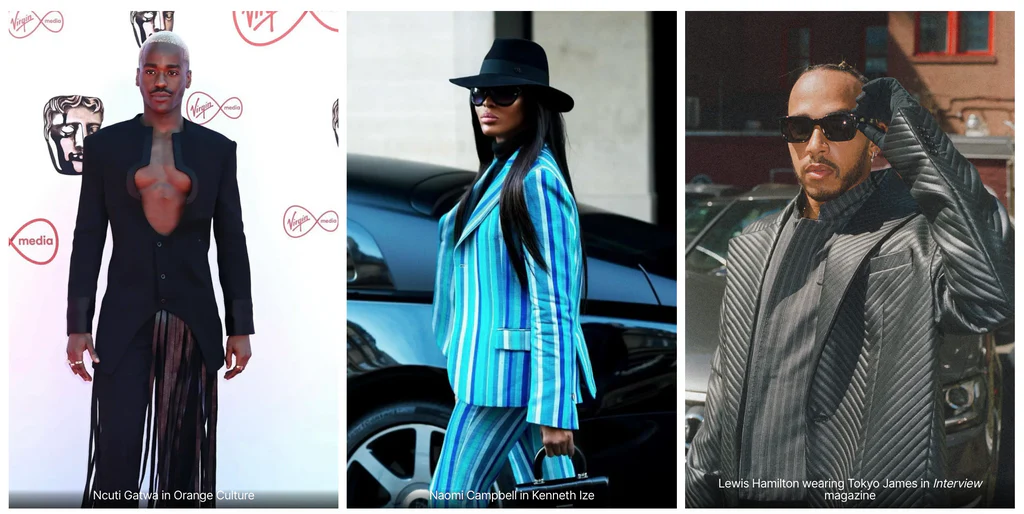
The international commercial trajectory of Lagos-rooted designers is no longer a story about potential. It is a story about documented achievement across multiple market tiers and geographic markets simultaneously.
Lisa Folawiyo founded her label in 2005 and has built it into a brand whose garments require an average of 240 hours of handcrafting per piece. She has shown in Lagos, New York, Paris, Milan, and London. Her work has been worn by Lupita Nyong’o and Solange Knowles and covered in Vogue, Harper’s Bazaar, and The New York Times. She is stocked at Selfridges and Moda Operandi. In 2022, pieces from her collection were selected for the V&A Africa Fashion exhibition. In 2012, she won the African Fashion Awards alongside Maki Oh and Kofi Ansah. None of these achievements occurred because a Western institution declared Lagos a fashion capital. They happened because the quality of the work was inarguable.
Kenneth Ize built a textile factory in Ilorin, in Kwara State, to produce the aso oke fabric central to his design language. He became an LVMH Prize finalist. Thebe Magugu, from Johannesburg and having launched his label after training at LISOF in South Africa, became the first African to win the LVMH Prize in 2019. South African President Cyril Ramaphosa commended his win. Tokyo James, a Lagos-based designer of mixed Nigerian and British heritage, was selected as an LVMH Prize finalist while building his label in the Lagos market. Orange Culture, under Adebayo Oke-Lawal, has been showing at Lagos Fashion Week since its early editions and now counts stockists at Browns London and Farfetch alongside its Lagos retail presence at Temple Muse.
These are not isolated cases of African designers making it despite the absence of Western institutional support. They are a pattern. The pattern demonstrates that Lagos is producing designers who are commercially viable in multiple global markets simultaneously, and that this commercial viability was built on work developed and refined within the Lagos fashion ecosystem. The ecosystem produced the designers. The designers proved the ecosystem. The designation system has not caught up because its criteria were not built to process this evidence.
The Market Scale the Designation Ignores
The Nigerian fashion industry contributes approximately $6.1 billion to the country’s GDP, as confirmed by Nigeria’s Minister of Art, Culture, and Creative Economy. The Nigerian apparel market, valued at $940.5 million in 2023 according to Euromonitor International, exceeded the billion-dollar threshold in 2024 when footwear and accessories are included. Business of Fashion’s analysis of the Nigerian market projects average apparel sales growth of 9.5 per cent annually between 2024 and 2027, driven by rising luxury spending among affluent consumers and a generational shift in spending patterns among younger Nigerians. This growth trajectory outperforms several of the markets whose cities currently hold fashion capital designation.
Africa as a whole exports textiles, clothing, and footwear valued at $15.5 billion per year, according to UNESCO’s 2023 report on the African fashion sector. The same report projects a 42% increase in demand for African haute couture over the next decade and documents 32 fashion weeks held across the continent annually. The African fashion market is not approaching global significance. It is already there. The designation system’s failure to acknowledge Lagos is not a time lag between achievement and recognition. It is a structural decision about which cities are permitted to be recognised as fashion capitals and which are not, determined by criteria written before Lagos emerged as a fashion-industry power and not updated to reflect what Lagos has become.
The cultural infrastructure reinforces the economic case. Alara, the concept store founded by Reni Folawiyo on Victoria Island in 2014, in a building designed by Ghanaian-British architect David Adjaye, operates simultaneously as a retail environment, a cultural hub, and a statement of aesthetic authority. Temple Muse, founded in 2008 by Avinash and Kabir Wadhwani, is the Lagos multi-brand retail ecosystem through which both local and international designers reach the Lagos consumer. The Native Magazine has built an editorial identity rooted in Nigerian and African culture that commands international press respect without requiring validation from Vogue Paris or AnOther magazine. The creative infrastructure supporting Lagos fashion is not preliminary. It is mature.
December in Lagos and the Global Visibility Question
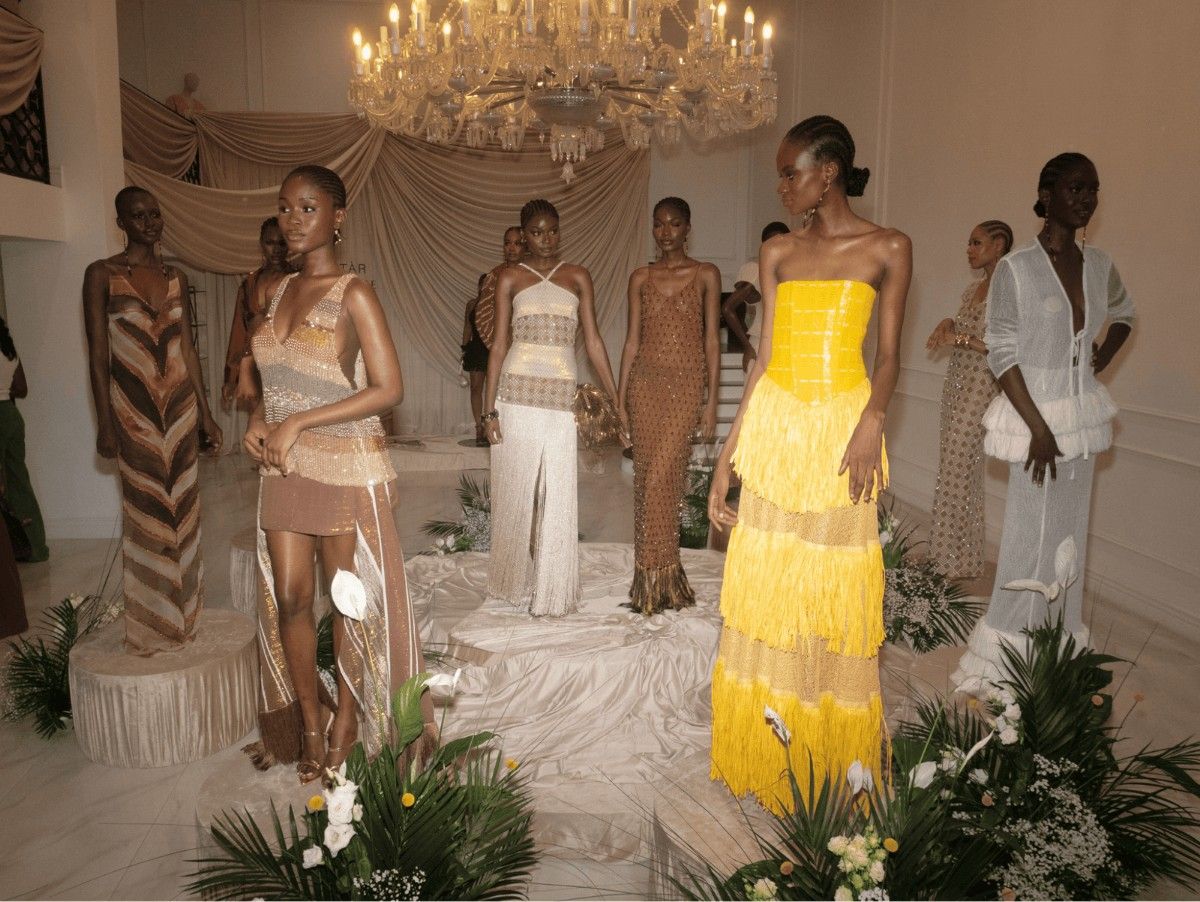
The Detty December phenomenon, through which Nigerians in the diaspora return to Lagos annually between Christmas and the New Year, has become one of the most culturally significant fashion moments in Africa and one of the most undercovered by Western fashion media. The period brings together Nigerian communities from London, New York, Houston, Toronto, and across the continent in a concentrated display of dress culture that has no equivalent in the Western fashion calendar for the same combination of scale, creativity, and cultural specificity.
The fashion produced for and during Detty December is not emerging street style being documented for Western consumption. It is the full range of the Lagos fashion ecosystem operating at its highest intensity: the aso-ebi coordination of family groups, the luxury ready-to-wear of Nigerian designers worn to industry events, the streetwear of the Lagos youth market, the ceremonial dress of the Yoruba and Igbo and Ijaw communities whose members are returning from diaspora, and the international luxury labels worn by the Nigerian affluent class that makes Lagos one of the highest-value consumer markets for European and American luxury brands on the continent.
Western fashion media covers this period primarily as a lifestyle story, noting that international musicians perform in Lagos and that celebrities from the African diaspora attend parties. It does not present it as a fashion week, even though the dress culture generated during this period is as original, commercially significant, and globally influential as that produced by any European fashion capital in a comparable, concentrated period. The absence of a fashion capital designation for Lagos means that the creative and commercial output of the Lagos fashion ecosystem is consistently covered as an exotic spectacle or a diaspora narrative rather than as primary fashion news. The framing is the problem. The framing is inseparable from the designation.
ALSO READ
- → New York’s African Diaspora Fashion Week: What It Means and Why It Matters
- → Paris Through an African Lens: The Designers and Creatives Changing French Fashion
- → Does Wearing Your Culture Make You Exotic? The Diaspora Fashion Paradox
The Criteria Must Be Dismantled, Not Satisfied
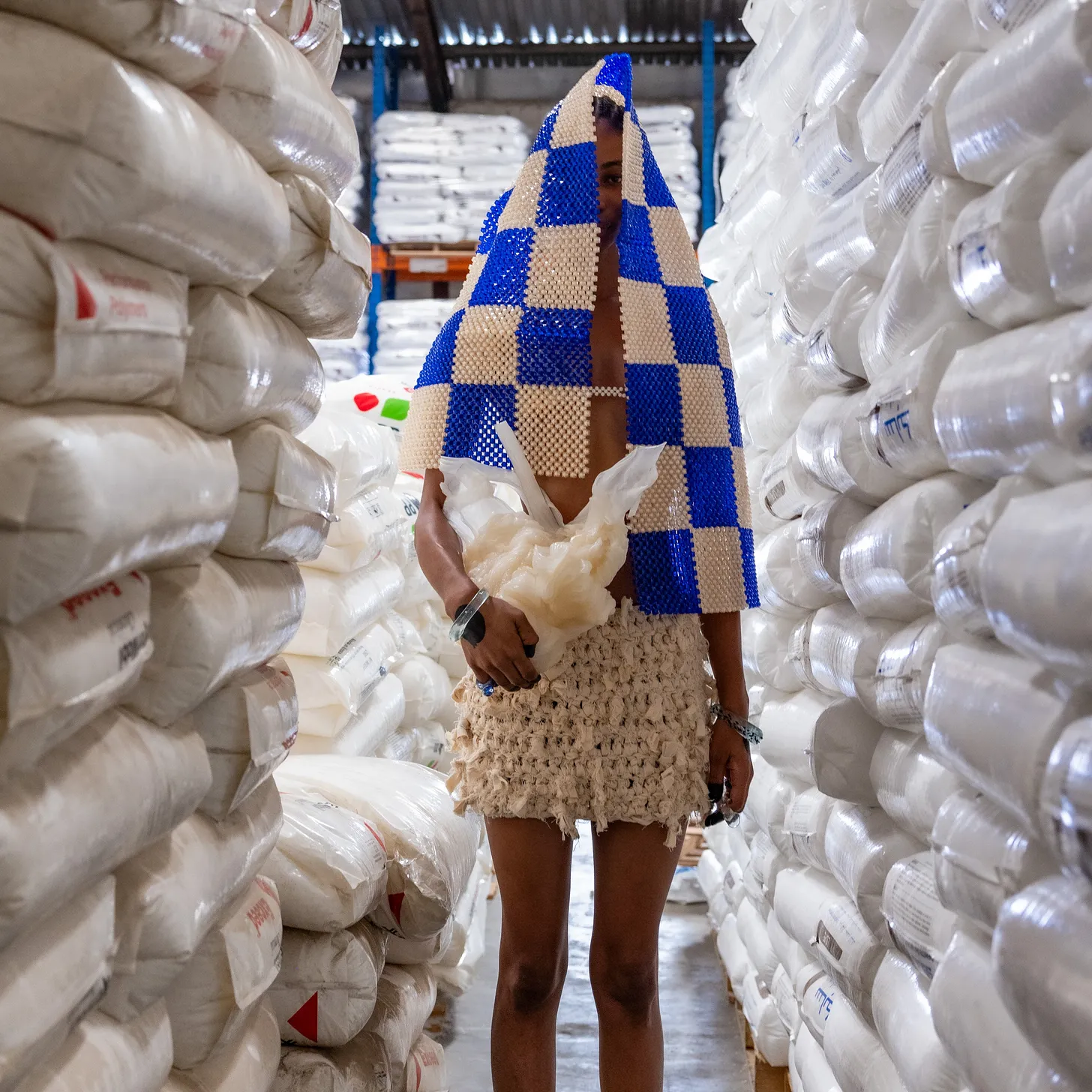
The response to the Lagos fashion capital question that the Western fashion industry currently gives is no. It is not yet, but watch this space, and the industry is evolving, and Africa is having a moment. These responses are structurally identical to no. They defer recognition indefinitely while preserving the authority to grant it on terms that the existing capitals control. Lagos satisfying the existing criteria for fashion capital designation would not change the power relationship. It would simply mean that Lagos had performed well enough within a framework that was designed to exclude it, and had been permitted to join on the terms of those who built the exclusion.
The more significant development is that the Lagos fashion industry has largely stopped asking. Lagos Fashion Week does not orient itself toward NYFW or London Fashion Week as the standard against which it should be measured. It has its own calendar, its own criteria, its own awards infrastructure, its own press ecosystem, and its own international buyer relationships. Akerele’s statement on winning the Earthshot Prize did not mention the Big Four. It addressed the community of designers, artisans, and young people who had built the platform, and it spoke about what African fashion has to offer the world. That is not the language of a city seeking admission to someone else’s category. It is the language of a city that has decided the category is no longer the relevant question.
What the West will not officially admit is not primarily that Lagos is creatively significant. Western fashion media has been covering Lagos’s creative output for years. What it will not admit is that the criteria for fashion capital designation are arbitrary, that they were designed to protect existing commercial hierarchies, that they have no objective basis as a measure of fashion culture authority, and that admitting Lagos would require acknowledging that the entire framework was built on geopolitical power rather than aesthetic merit. That admission would destabilise not just the designation of Lagos but the entire architecture through which the Big Four maintain their authority over the global fashion conversation. The West will not admit Lagos as a fashion capital because doing so would require dismantling the criteria. And the criteria are all that the designation has ever been.
THE OMIREN ARGUMENT
Lagos is not the new fashion capital. Lagos is a fashion capital that the existing designation system lacks the architecture to process. The global fashion capital designation was built by Western institutional bodies to protect Western commercial fashion interests, using criteria that were written before Lagos existed as a fashion industry power and have not been updated to reflect the $6.1 billion contribution to Nigeria’s GDP, the 40,000-plus attendees at Lagos Fashion Week, the fifteen years of international designer launches, the LVMH Prize finalists, the V&A exhibition, or the Earthshot Prize selected from 2,500 global nominations. The West will not officially admit Lagos as a fashion capital not because it is not one, but because admission would require either changing the criteria or acknowledging that the criteria were never about creative quality. They were about geopolitical power. And the geopolitical power arrangement that produced the Big Four has not changed enough to permit the honest conversation about what that arrangement has always excluded.
Lagos does not need the fashion capital designation to be a fashion capital. It needs the designation to be stripped of its false universality, its claim to represent a neutral global standard for what fashion excellence looks like and where it is permitted to live. The real story is not whether Lagos will eventually be admitted to an existing category on terms the existing capitals control. It is whether the category itself can survive contact with the reality that Lagos, Accra, Dakar, Nairobi, and Johannesburg have been producing the world’s most culturally significant fashion for decades, without permission, without the designation, and without needing either. The fashion capitals of Africa are not the new Big Four. They are evidence that the Big Four was never the whole story.
Frequently Asked Questions
Why is Lagos not officially recognised as a fashion capital?
The ‘global fashion capital’ designation, applied to Paris, Milan, London, and New York, is a commercial and institutional construct built by Western fashion councils, including the CFDA and the Federation de la Haute Couture et de la Mode. The criteria for the designation were established to protect the commercial interests of designers in those cities and were not designed to include African cities. The exclusion of Lagos is not a judgement about the quality of what Lagos produces. It reflects who built the designation system, what those builders were protecting, and the fact that the criteria have not been updated to reflect the commercial and creative reality of what Lagos has become.
What is the scale of the Lagos fashion industry?
Nigeria’s fashion industry contributes approximately $6.1 billion to the country’s GDP, confirmed by Nigeria’s Ministry of Art, Culture, and Creative Economy. The Nigerian apparel market exceeded the billion-dollar threshold in 2024. Lagos Fashion Week, founded in 2011 by Omoyemi Akerele, showcases over 60 designers to a global audience of more than 40,000 retailers, media, and consumers annually. In November 2025, Lagos Fashion Week won the Earthshot Prize in the Build a Waste-Free World category, receiving £1 million after selection from nearly 2,500 nominations across 72 countries. Average apparel sales growth in Nigeria is projected at 9.5% annually between 2024 and 2027, according to Euromonitor International.
Which Lagos designers have achieved international commercial recognition?
A documented generation of Lagos-rooted designers has achieved international commercial viability across multiple markets. Lisa Folawiyo’s garments are stocked at Selfridges, Moda Operandi, and MatchesFashion and have been worn by Lupita Nyong’o and Solange Knowles. Orange Culture under Adebayo Oke-Lawal counts stockists at Browns and Farfetch. Kenneth Ize was an LVMH Prize finalist and built a textile factory in Ilorin to produce aso oke for his collections. Thebe Magugu, from Johannesburg, became the first African to win the LVMH Prize in 2019. Tokyo James was selected as an LVMH Prize finalist while building in Lagos. Lagos Space Programme, Emmy Kasbit, Onalaja, and Bridget Awosika have all achieved significant international press and commercial recognition.
What did Lagos Fashion Week winning the Earthshot Prize mean for African fashion?
Lagos Fashion Week’s win of the Earthshot Prize in November 2025, selected from nearly 2,500 nominations across 72 countries, represents a substantive global assessment of the platform’s work rather than regional recognition. The prize was awarded for the platform’s decade-long embedding of circular-fashion requirements into its operational standards: every designer showing must demonstrate sustainable sourcing, production, and transportation practices. The £1 million prize is earmarked for replicating the Lagos sustainability model across fashion weeks in Kigali, Dakar, and Accra by 2030. The win established that Lagos Fashion Week is not a regional event with international potential. It is a global solution to a global problem, recognised as such by one of the world’s most scrutinised environmental prizes.
Omiren Styles covers African fashion, identity, and culture from inside the continent and its diaspora. Read more at omirenstyles.com.