Fashion has long insisted on geography.
If a designer wanted legitimacy, there was a route to follow. Show in New York. Show in London. Show in Milan. Show in Paris. Secure invitations, attract editors, earn buyers, and slowly climb the hierarchy that has governed fashion for decades.
The runway was never just a runway.
It was access.
It was validation.
It was proof that a designer had entered the room.
Then, in May 2020, a Congolese-American designer disrupted that assumption without stepping onto a single fashion week calendar.
Anifa Mvuemba presented Hanifa’s Pink Label Congo collection through a fully digital 3D runway experience on Instagram Live. Garments floated through space on invisible models. There was no venue. No front row. No physical audience. Yet within hours, the presentation had become one of the most discussed fashion events in the world.
The industry initially treated the moment as a pandemic innovation.
Six years later, it looks more like a structural challenge.
Because what Mvuemba demonstrated was not simply a new way to show clothes.
She exposed how much of fashion’s power depends on controlling who gets access to the stage.
How Anifa Mvuemba transformed fashion presentation with Hanifa’s groundbreaking 3D runway, redefining visibility, access, and power for diaspora designers.
The Show That Was Never Supposed to Need a Runway
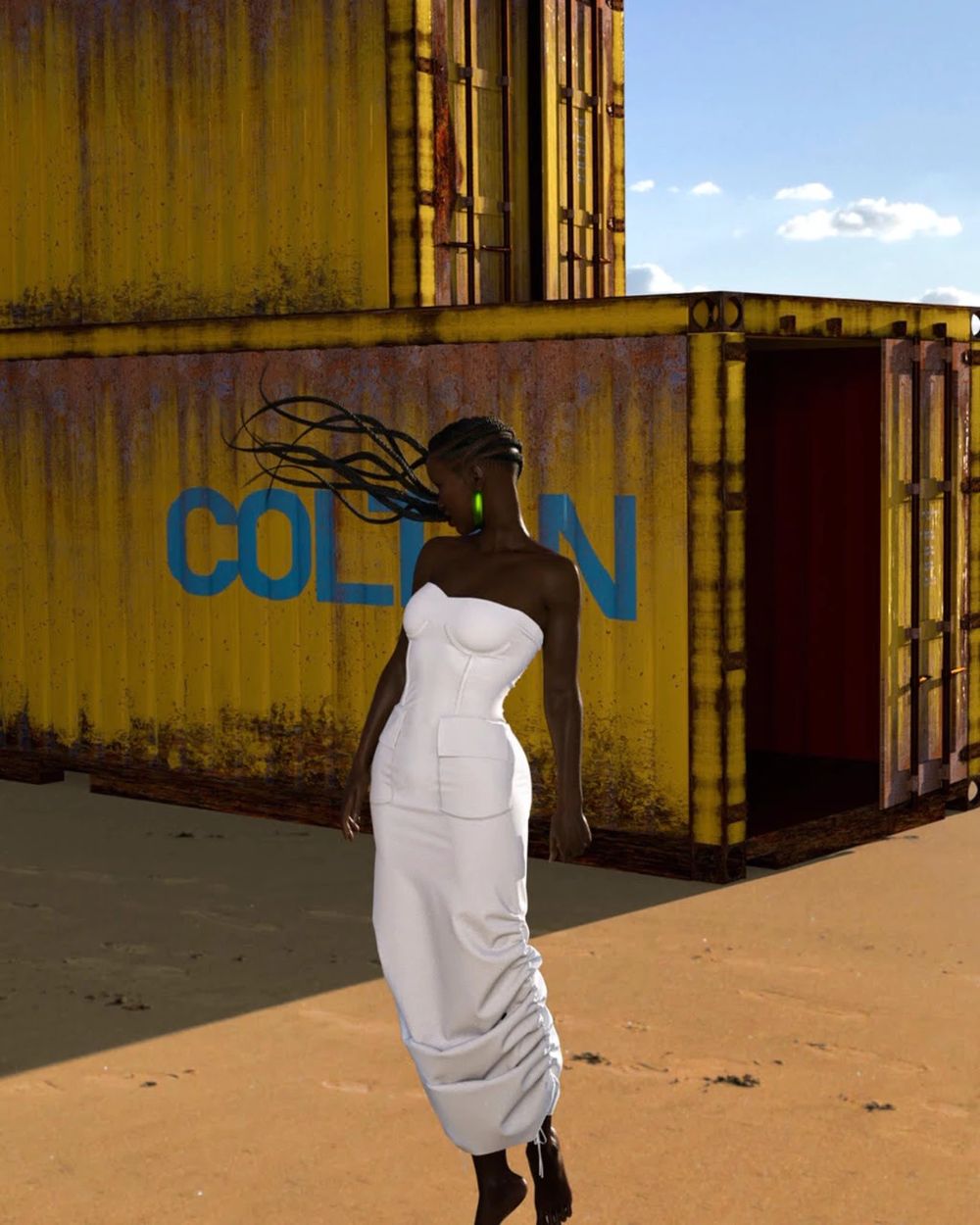
When Hanifa debuted Pink Label Congo in May 2020, the fashion industry was already in crisis. Shows were being cancelled globally, and brands were scrambling to adapt. Yet Mvuemba’s digital presentation was not merely a reaction to lockdown conditions.
The concept had been planned before the pandemic.
Instead of physical models, viewers watched digitally rendered garments move across a virtual space. The collection appeared almost suspended in the air. Pleated dresses expanded and contracted. Tailored silhouettes walked without bodies. The clothes became the sole focus.
For audiences accustomed to traditional runway formats, the effect felt startlingly futuristic.
More importantly, it felt independent.
The collection did not require approval from fashion week organisers. It did not require a venue sponsor. It did not require a guest list.
It only required an internet connection.
More than 10,000 viewers joined the livestream, and millions would eventually encounter clips of the presentation online.
A Collection About Congo, Not Technology
One of the most misunderstood aspects of the Hanifa presentation is that it is often remembered primarily as a technology story.
Technology was the vehicle.
Congo was the subject.
The Pink Label Congo collection was inspired by the Democratic Republic of the Congo and included references to the country’s history, landscape, and ongoing struggles. Before the show began, viewers were introduced to exploitative mining practices and the human costs associated with the minerals used in global electronics production.
The colours throughout the collection referenced the Congolese flag. Mvuemba explained that red represented suffering, blue represented peace, and yellow represented hope.
This mattered.
While much of fashion was discussing digital transformation, Mvuemba was using digital presentations to direct attention to a place that global fashion rarely centres on its own terms.
The technology attracted viewers.
The story gave the collection purpose.
What Fashion Week Actually Sells
The common understanding of fashion week is that it exists to showcase clothes.
That is only partially true.
Fashion week functions as infrastructure.
It brings together editors, buyers, photographers, stylists, investors, retailers, and media organisations in one physical space. The runway itself is often less important than the network surrounding it.
For decades, designers outside established fashion capitals have struggled to access that infrastructure.
This challenge is especially familiar to African and diaspora designers.
Talent alone has rarely been enough.
Access has often depended on proximity to institutions that were built elsewhere.
Mvuemba’s digital presentation challenged that dependency.
If a designer could generate global attention without entering the traditional system, then the system itself suddenly appeared less inevitable.
The Diaspora Designer’s Dilemma
For many African diaspora designers, visibility and validation have historically been linked to European and American fashion institutions.
A collection could be culturally significant, commercially successful, and creatively innovative while still being treated as peripheral because it had not passed through the right channels.
This creates a paradox.
Designers are encouraged to bring new perspectives to fashion while simultaneously being evaluated through structures they did not create.
Hanifa represented a different possibility.
Rather than seeking legitimacy from the runway system, Mvuemba built her own attention and let the industry come to her.
That reversal was significant.
It shifted the question from “How does a diaspora designer gain access?” to “Why should access remain controlled by the same institutions?”
From Viral Moment to Business Model
Many viral moments disappear.
Hanifa did not.
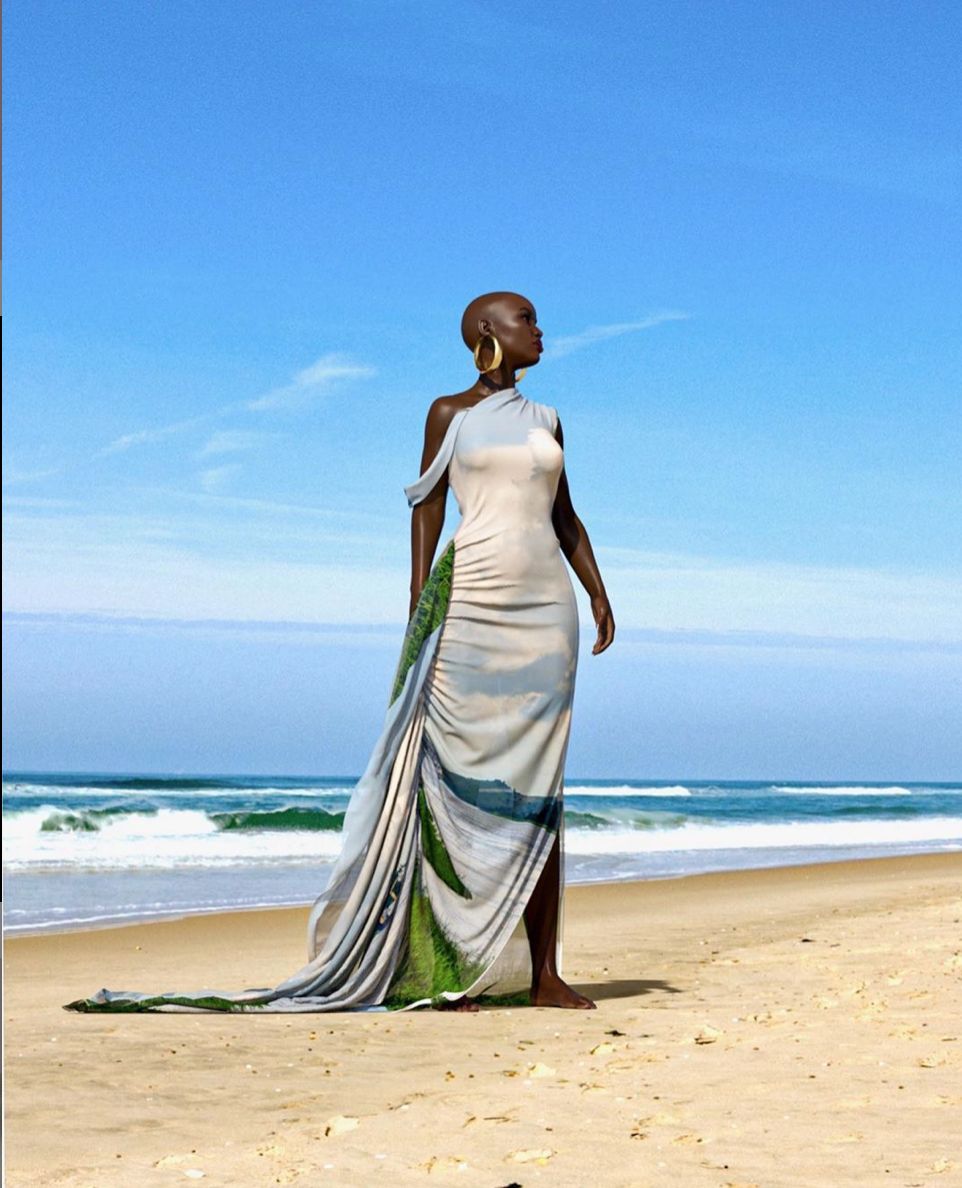
Following the success of the digital presentation, the brand expanded its international visibility, attracted celebrity clients, and strengthened its position within contemporary fashion. Mvuemba continued experimenting with digital storytelling while building a recognisable brand identity centred on inclusivity, strong tailoring, and distinctive silhouettes.
This distinction matters.
The Pink Label Congo presentation was not successful because it went viral.
It was successful because it translated attention into long-term brand equity.
The technology generated a conversation.
The business sustained it.
The Question Hanifa Forced the Industry to Answer
Fashion has always justified exclusivity by arguing that certain experiences cannot be replicated digitally.
The front row matters.
The atmosphere matters.
The physical presence matters.
And to some extent, that remains true.
Yet Hanifa exposed another reality.
Much of what fashion week provides is not creative value. It is an institutional value.
It tells people what deserves attention.
Mvuemba bypassed that mechanism.
Her collection became important before the institutions could decide whether it was important.
That may be the most disruptive aspect of the entire story.
READ ALSO:
- Laduma Ngxokolo: Crafting the Future of Xhosa Luxury
- Taibo Bacar: Designing Elegance for Men and Women on a Global Stage
A Blueprint for the Next Generation
The significance of Hanifa extends beyond a single designer or a single collection.
It offers a blueprint.
Not every emerging designer can afford Paris. Not every independent label can secure invitations to major fashion weeks. Not every creative entrepreneur has access to established industry networks.
Digital presentation does not eliminate those inequalities.
But it changes the terms of engagement.
It allows designers to build audiences directly.
It creates alternative pathways to visibility.
And it weakens the assumption that legitimacy must always travel through the same gates.
OMIREN Argument
The fashion industry likes to describe Hanifa’s 2020 presentation as innovation.
That description is accurate but incomplete.
The real disruption was not technological.
It was institutional.
For decades, fashion week functioned as a gatekeeping mechanism disguised as a cultural event. Designers needed the runway because the runway controlled access to visibility, credibility, and commercial opportunity.
Anifa Mvuemba exposed another possibility.
She demonstrated that attention could be built outside the traditional system. That audiences could be reached without fashion capitals. That cultural relevance could be established before institutional approval arrived.
The lesson of Hanifa is not that fashion weeks are obsolete.
The lesson is that they are no longer the only route to legitimacy.
For African and diaspora designers, this matters enormously.
Because exclusion has often been justified as a temporary problem to be solved through inclusion.
Hanifa suggests a different approach.
Instead of waiting for access, build alternative infrastructure.
Instead of asking for a seat at the table, redesign the room.
That is why the Pink Label Congo presentation remains important six years later.
Not because it predicted the runway’s future.
But it questioned whether the runway should remain the centre of fashion at all.
Frequently Asked Questions (FAQs)
- Who is Anifa Mvuemba?
Anifa Mvuemba is a Congolese-American fashion designer and the founder of Hanifa, known for pioneering digital fashion presentations and championing inclusive design.
- What was Hanifa’s Pink Label Congo collection?
It was a 2020 collection inspired by the Democratic Republic of the Congo, presented through a groundbreaking 3D digital fashion show.
- Why was Hanifa’s virtual runway important?
The presentation challenged traditional fashion week structures by proving that global attention could be achieved without a physical runway.
- Was Hanifa the first digital fashion show?
Hanifa’s 2020 presentation is widely recognised as a pioneering 3D virtual fashion show that helped redefine digital fashion presentation.
- What does Hanifa’s success mean for African diaspora designers?
It demonstrates that designers can build visibility, audiences, and influence outside traditional fashion gatekeeping systems.