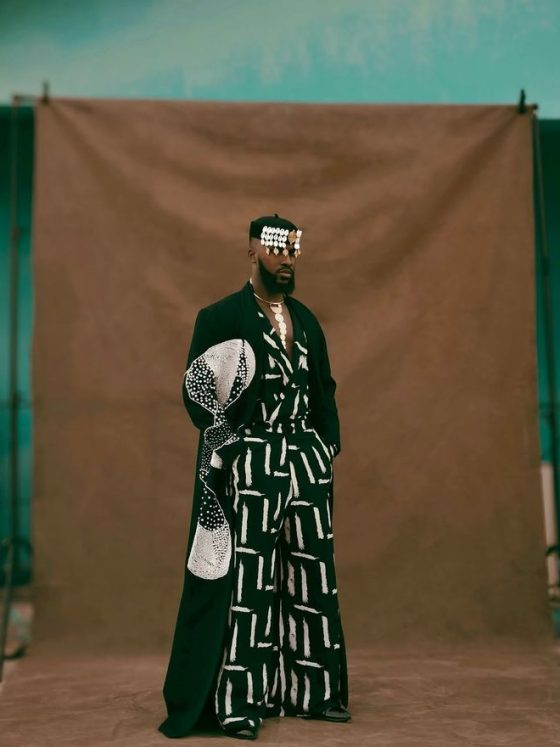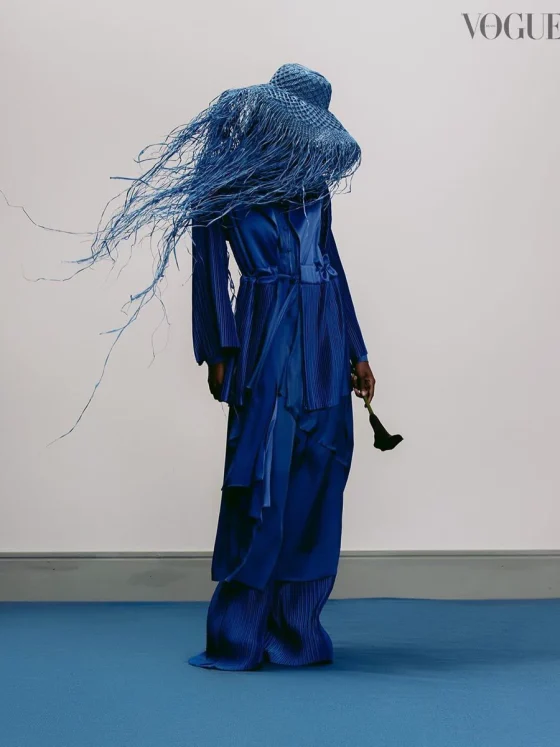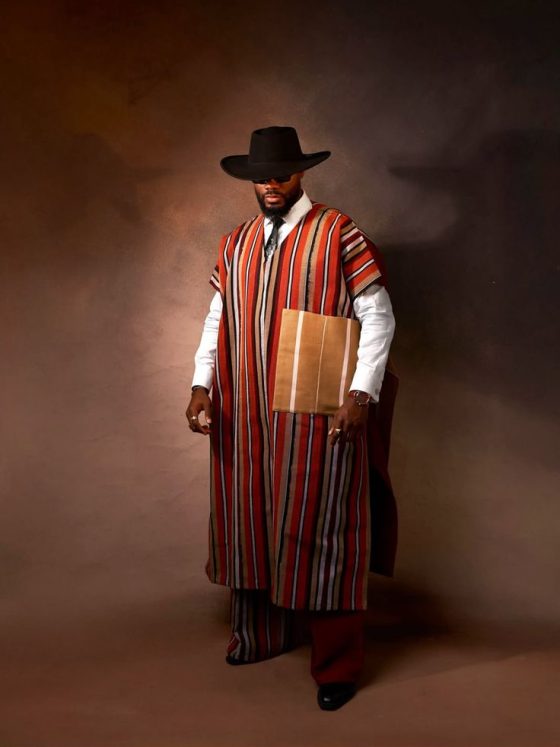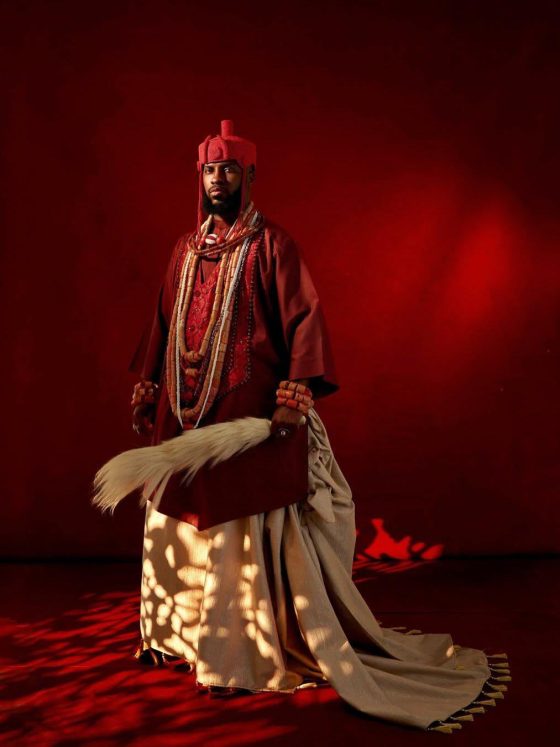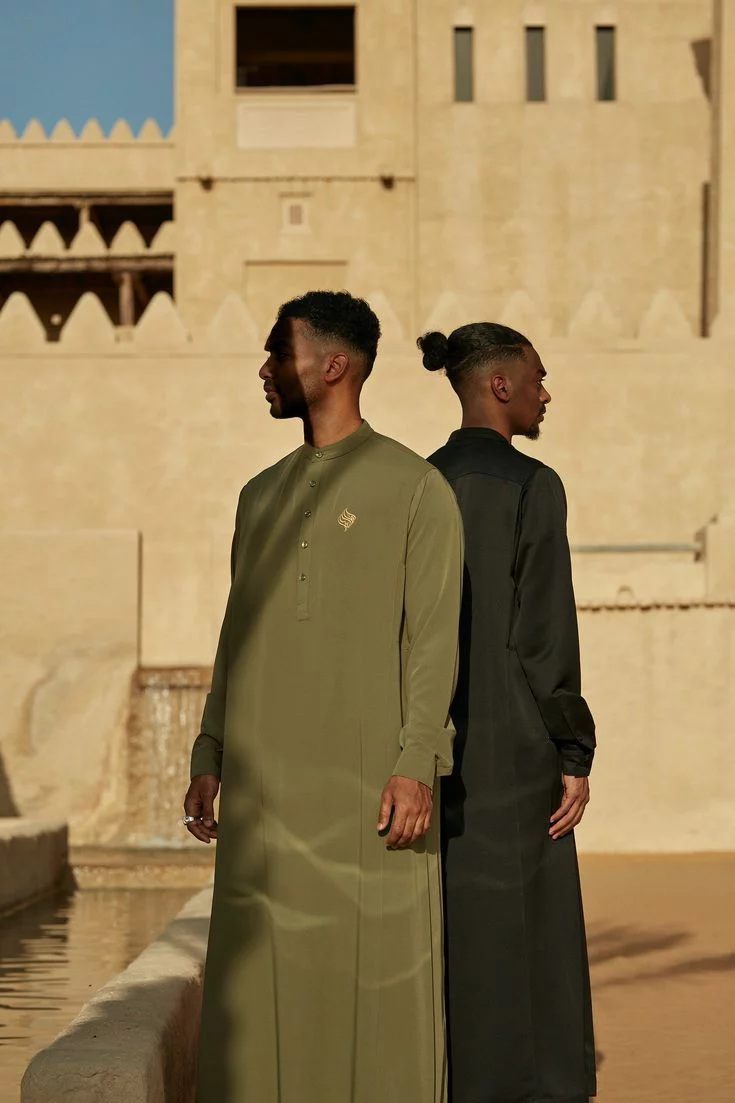
On a Friday afternoon in Lagos, Kano, or Dakar, men are dressed in a way that no trend report anticipated. The agbada, the riga, the boubou, the kanzu: these garments appear in their millions every week, worn for Jumu’ah prayer, for chieftaincy ceremonies, for funerals, for naming days. The men wearing them are not making a fashion statement. They are continuing a practice that was in place before the fashion industry existed, that was shaped by theological tradition, by political authority, by the visual grammar of courts and mosques and community gatherings that required dress to carry more than appearance. They are dressed by faith.
Fashion media encounters these garments and tends to describe them in one of two ways: as traditional attire, which positions them as archaic and separate from the contemporary, or as inspirations for modern design, which positions them as source material for someone else’s creativity. Both framings miss what the garments actually are: a living tradition of men’s dress whose authority derives not from a designer or a runway but from a religious and ceremonial inheritance that predates European fashion by centuries.
The agbada’s volume communicates status in the Yoruba tradition. The Hausa riga’s embroidery signals Islamic scholarship. The kanzu marks devotion. Fashion did not invent these garments. Faith commissioned them. This is the documented history that fashion media consistently misses.
The Agbada: Volume, Authority, and the Yoruba Spiritual Vocabulary
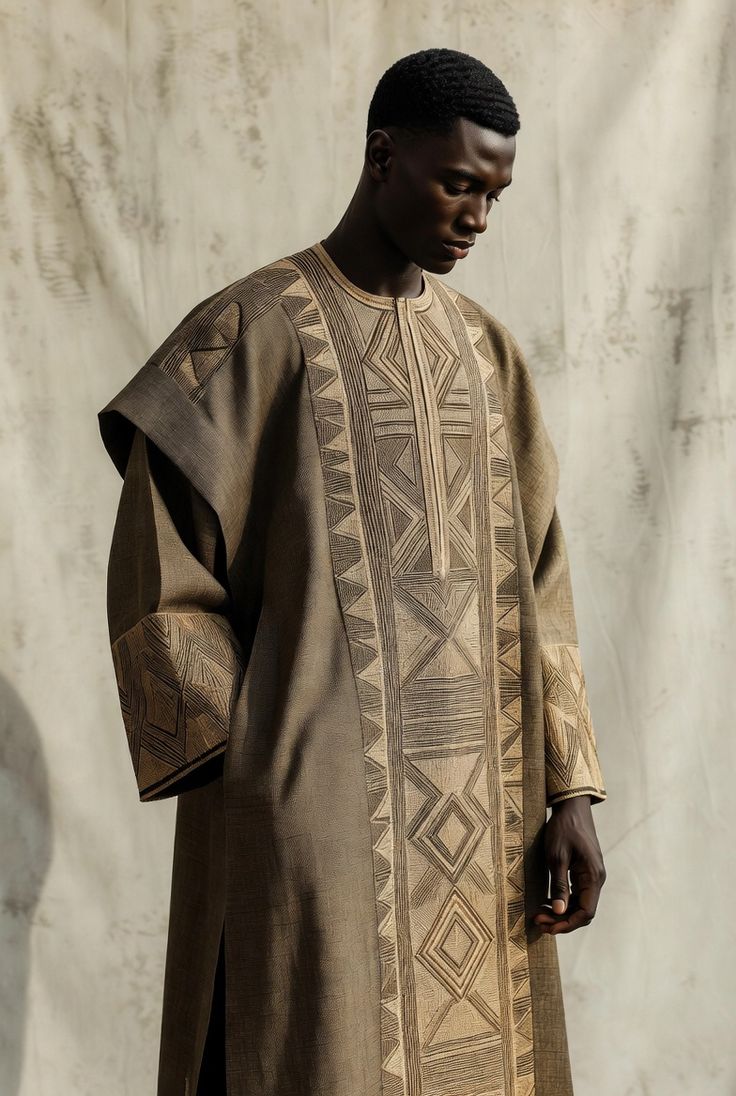
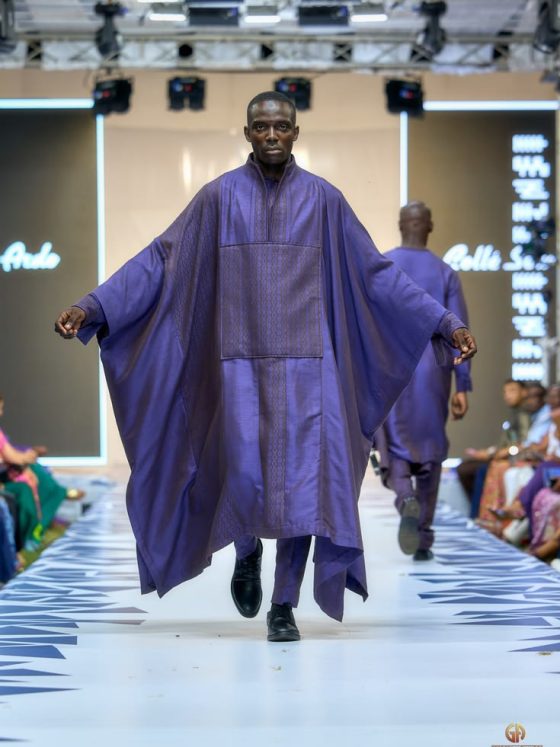
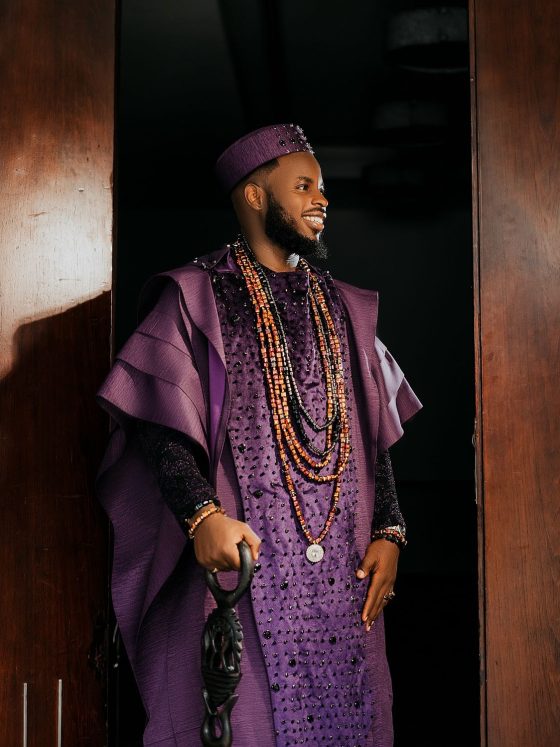
The agbada is the most widely recognised formal garment of Yoruba men’s dress. Its defining feature is volume: the wide-sleeved outer robe that can span more than three metres of fabric, worn over an inner robe and trousers. That volume is not decorative. It is communicative. In the Yoruba tradition, the agbada’s size signals the wearer’s capacity to carry responsibility, his abundance in both material and social terms, his readiness to receive and to give. As the Harvard scholar Jacob Kehinde Olupona has documented in his research on Yoruba sacred dress and royal objects, the garments worn by Yoruba men in formal and ceremonial settings are not simply indicators of status. They are instruments of it. The dressed body communicates to the community what the wearer’s social and spiritual position requires.
The agbada’s formal variants are associated with specific occasions and specific registers of authority. The full ceremonial agbada, worn for chieftaincy installations, weddings, and funerals, is distinct from the everyday agbada in its fabric, embroidery, and tailoring precision. The colour white is associated with spiritual purity and with the higher echelons of traditional religious authority. Gold embroidery signals wealth and royal proximity. The garment is not chosen to look impressive. It is chosen because the occasion demands that the wearer communicate a specific relationship to his community, his lineage, and the spiritual framework within which the occasion takes place.
When the agbada appears at a Lagos Fashion Week show or in a European luxury editorial, it typically arrives stripped of this specific grammar. The volume is retained because it is visually striking. The social and spiritual vocabulary that the volume was developed to carry is absent because the editorial context has no framework to receive it. This is the consistent failure of fashion media coverage of African menswear: it reads the surface of the garment and misses everything the surface was designed to say.
The Hausa Riga: Embroidery as Theological Statement
In the Islamic scholarship traditions of northern Nigeria, Niger, and the broader Sahel, the embroidered robe worn by learned men carries specific visual information about the wearer’s religious and scholarly status. The Hausa riga, a wide-sleeved robe with elaborate embroidery concentrated at the chest and collar, developed its characteristic visual language in part through the Islamic court cultures of the Sokoto Caliphate, founded in 1804, and the earlier Hausa city-states whose scholarship traditions extended back to the fourteenth century. The embroidery patterns are not decorative in the fashion sense. They are a documented system of visual communication whose conventions were established in court and mosque contexts, where the garment functioned as a credential. The British Museum holds documented examples of Hausa court dress, including embroidered robes from the nineteenth century whose visual vocabulary connects directly to the garments worn for Jumu’ah in Kano today.
The Islamic tradition of modest dress, codified in the concept of libas al-taqwa, or the garment of piety, shaped the form of men’s dress across West Africa with the spread of Islam from the seventh century onward. The loose silhouette, the covered arms, the preference for white and earth tones in devotional contexts: these are not aesthetic preferences developed in isolation. They are the visible expression of a theological position about the relationship between the dressed body and divine authority. When a Hausa scholar wears his riga to Jumu’ah, he is not dressing up. He is dressing within a framework of meaning that has been built and transmitted across more than a thousand years of Islamic practice in West Africa.
Fashion media reads the surface of these garments and misses everything the surface was designed to say. The embroidery is not decoration. It is a credential.
The Kanzu and the East African Devotional Tradition

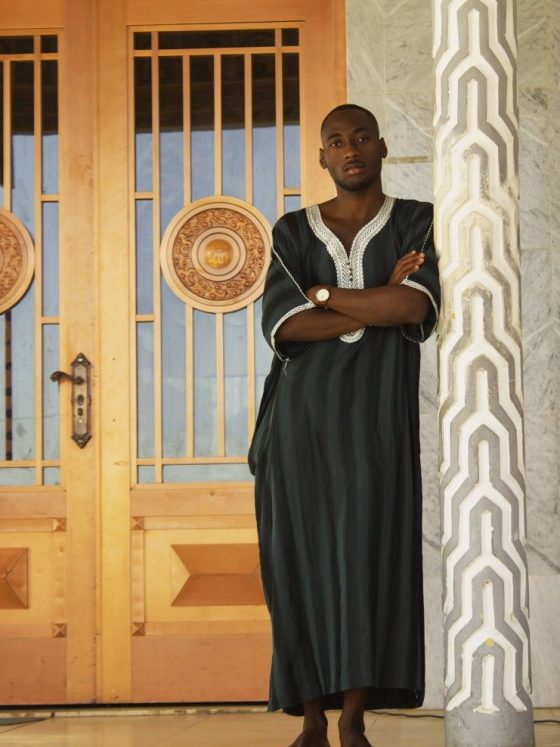
The kanzu, the white floor-length robe worn by men in East Africa, particularly in Tanzania, Kenya, Uganda, and the Swahili coast, carries a devotional history that reaches back to the arrival of Islam on the East African coast in the seventh century CE. The garment’s simplicity is its theological statement: white for purity, loose for modesty, floor-length for the respect owed to sacred space. In Swahili coast communities, the kanzu worn for Friday prayer is distinct from the everyday kanzu in its fabric quality and precise tailoring. As documented by the National Museum of Tanzania and East African cultural heritage institutions, the kanzu has been present in East African coastal culture for more than a millennium, carried along trade routes connecting the Swahili coast to Arabia, India, and the broader Indian Ocean world.
The kanzu also intersects with the La Sape tradition in a different register: the white elegance of Congolese sappe, which emerged partly from the encounter between Central African dress traditions and European colonial tailoring, shares with the kanzu a preoccupation with white as a marker of distinction and devotion. The sappe is secular in its contemporary expression. Still, its roots in the sacred significance of white within Central African spiritual traditions, including the white worn in Kongo and Pende initiation ceremonies, give it a religious depth that fashion analysis rarely names.
Why Fashion Media Consistently Misses the Theological Dimension

The fashion industry and its media infrastructure developed within a European secular context in which the relationship between dress and religious practice had been largely privatised. The concept of fashion as a commercial cycle of seasonal trends is fundamentally incompatible with the concept of dress as a devotional practice: one requires constant change, the other requires continuity. When fashion media encounter African men’s dress traditions, it applies the fashion framework because that is the only framework it has. The result is a systematic misreading.
The agbada becomes a fashion trend rather than a ceremonial garment. The riga becomes an influence rather than a theological credential. The kanzu becomes a silhouette rather than a devotional practice. In each case, the garment is understood as an aesthetic input into a design conversation it was never part of and was never designed to enter. The designers who are cited as inspired by these garments are not, in most cases, working within the religious and ceremonial traditions that produced them. They are working from the visual surface of garments whose depth they have not entered.
This is why the work of designers who are working from inside these traditions, who are Muslim, who dress for Jumu’ah in the garments their collections develop from, who understand the Yoruba ceremonial vocabulary because they have participated in it, carries a different authority than the work of designers who use these garments as reference material. As Omiren Styles has argued in analysing the distinction between African menswear as archive and as aesthetic, working from within a tradition produces a different garment than borrowing its visual language from outside. The theological dimension of African men’s dress is one of the most important dimensions that the archive-versus-aesthetic distinction protects.
THE OMIREN ARGUMENT
African men’s style has been discussed for decades as if it emerged from cultural traditions that fashion could encounter, adopt, and reframe. The theological dimension of the agbada, the riga, and the kanzu is not a footnote to their fashion significance. It is the reason they exist in the form they do. The agbada was developed to communicate spiritual and social authority in a Yoruba context where dress and ceremony are inseparable. The embroidery of the riga was developed within an Islamic scholarly tradition in which the visual credentials of the learned man were established through the garment he wore. The kanzu’s white simplicity is a theological statement about purity and modesty, not a design choice arrived at through creative minimalism. Fashion did not invent these garments. Faith commissioned them. Fashion encountered them and drew inspiration from them. That description is extractive.
The distinction matters beyond semantics. When a European fashion house cites the agbada as an inspiration for a wide-sleeved collection, it is taking the visual surface of a garment whose authority derives from a religious and ceremonial tradition and removing that authority in the act of translation. The resulting garment may be beautiful. It carries none of the meaning that made the original worth citing. The Yoruba community, whose ceremonial tradition produced the agbada, receives no credit, no economic benefit, and no acknowledgement that their theological inheritance was the source. This is the pattern that Omiren Styles documents and names: the theological inheritance of African men’s dress is one of the most significant and most consistently ignored dimensions of the archive that African menswear is building. When fashion media accurately cover that archive, it will cover faith. Until then, it is covering a surface it does not understand.
ALSO READ
- African Menswear Is Building an Archive, Not Borrowing an Aesthetic
- African Menswear Was Never Just Fashion. It Was a Record.
- African Royal Dress Is Not Decoration. It Is Governance.
Frequently Asked Questions (FAQs)
How did faith shape African men’s dress traditions?
Across West and East Africa, Islamic tradition shaped men’s dress through the concept of libas al-taqwa, the garment of piety, which established loose silhouettes, covered arms, and a preference for white and earth tones in devotional contexts. This tradition spread with Islam from the seventh century onward, influencing the agbada in Yoruba contexts, the riga in the Hausa-Fulani Islamic scholarship tradition, and the kanzu in Swahili coast communities. In Yoruba traditions, the agbada’s volume was also shaped by the dress vocabulary of royal and ceremonial authority in which the dressed body communicates social and spiritual position to the community.
What does the volume of the agbada communicate?
In the Yoruba tradition, the agbada’s wide-sleeved volume signals the wearer’s capacity to carry responsibility, his abundance in both material and social terms, and his readiness to receive and to give. As documented by Harvard scholar Jacob Kehinde Olupona in his research on Yoruba sacred dress and royal objects, the garments worn by Yoruba men in formal and ceremonial settings are instruments of status, not merely indicators of it. The dressed body communicates to the community what the wearer’s social and spiritual position requires. White agbada is associated with spiritual purity and higher religious authority. Gold embroidery signals wealth and royal proximity.
What is the Hausa riga, and what does its embroidery mean?
The Hausa riga is a wide-sleeved embroidered robe worn by men in northern Nigeria, Niger, and the broader Sahel, whose visual language developed through the Islamic court cultures of the Sokoto Caliphate, founded in 1804, and the earlier Hausa city-states whose scholarship traditions extended to the fourteenth century. The embroidery concentrated on the chest and collar is not decorative in the fashion sense. It is a documented system of visual communication whose conventions were established in court and mosque contexts, where the garment functioned as a scholarly and spiritual credential. The British Museum holds documented examples of Hausa court dress from the nineteenth century whose visual vocabulary connects directly to the garments worn for Jumu’ah in Kano today.
What is the kanzu, and where does it come from?
The kanzu is a white floor-length robe worn by men in East Africa, particularly in Tanzania, Kenya, Uganda, and the Swahili coast, with a devotional history reaching back to the arrival of Islam on the East African coast from the seventh century CE. Its white colour signals purity, its loose form signals modesty, and its floor-length cut signals respect for sacred space. The kanzu has been documented in East African coastal culture for more than a millennium, carried along the Indian Ocean trade routes connecting the Swahili coast to Arabia and India. The Friday prayer kanzu is distinguished from the everyday garment by its fabric quality and precise tailoring.
Why does fashion media miss the theological dimension of African men’s dress?
Because the fashion industry and its media infrastructure developed within a European secular context in which dress and religious practice had been largely separated. The fashion framework, organised around commercial cycles of seasonal trends, is fundamentally incompatible with devotional dress practice, which requires continuity rather than change. When fashion media encounters African men’s dress traditions, it applies the fashion framework because that is the only one available to it. The agbada becomes a trend, the riga becomes an influence, the kanzu becomes a silhouette. In each case, the garment is reduced to its visual surface, and the theological depth that produced and sustained that surface is lost.
What is the Omiren Styles argument about faith and African menswear?
The theological inheritance of African men’s dress is not a footnote to its fashion significance. It is the reason the garments exist in the form they do. Fashion did not invent the agbada, the riga, or the kanzu. Faith commissioned them. When a European fashion house cites the agbada as inspiration, it is taking the visual surface of a garment whose authority derives from a religious and ceremonial tradition and removing that authority in translation. The Yoruba community, whose theological inheritance produced the agbada, receives no credit and no economic benefit. Accurately covering African menswear requires covering the faith that produced it. Until that happens, fashion media is covering a surface it does not understand.