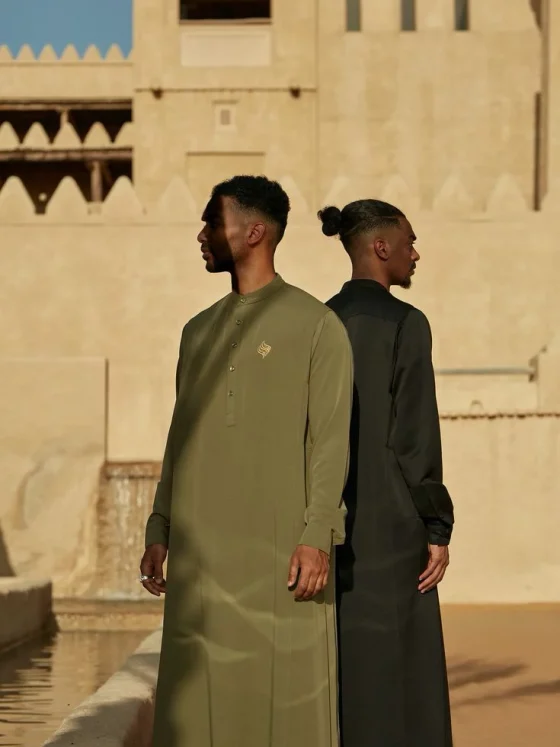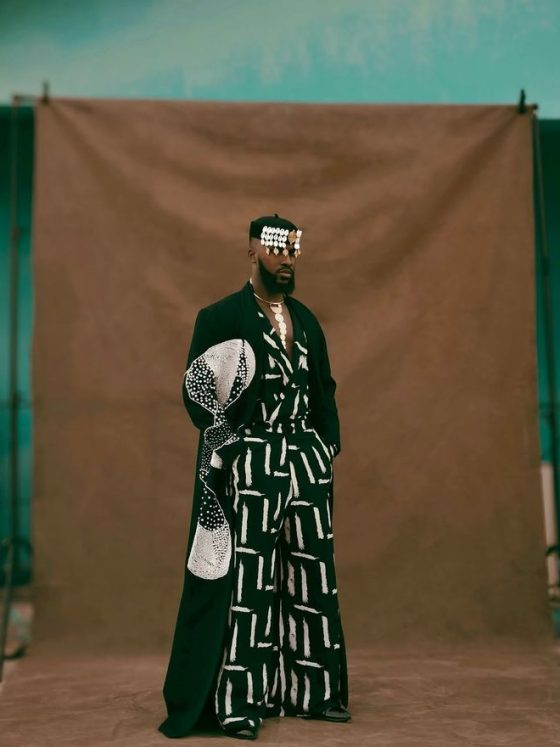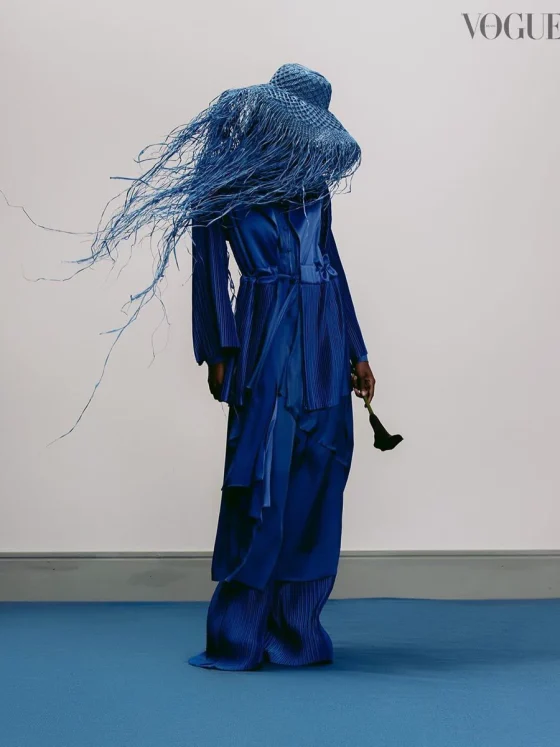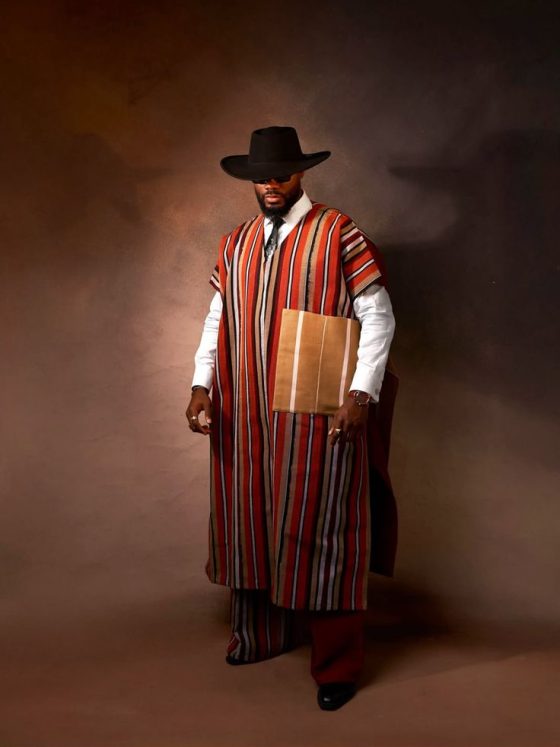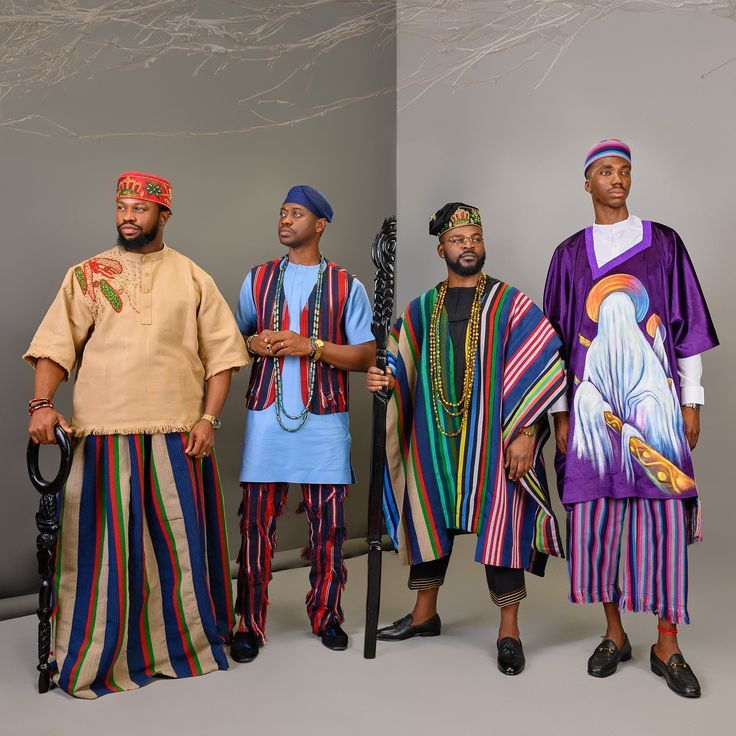
They were told to dress for the room. They decided to dress themselves. The room is adjusting.
On a Tuesday morning in Peckham, a man in a pale blue agbada waits for the 345 bus. The garment is immaculate: the wide sleeves folded across his forearm, the embroidery at the neckline catching the light. He is not going to a wedding. He is not dressed for a naming ceremony or a church service. He is going to work. The people around him register the garment with the particular attention that Londoners reserve for things they have not yet decided how to categorise. He does not offer them a category. He boards the bus, takes his seat, and the agbada settles around him as the garment has always known where it was going.
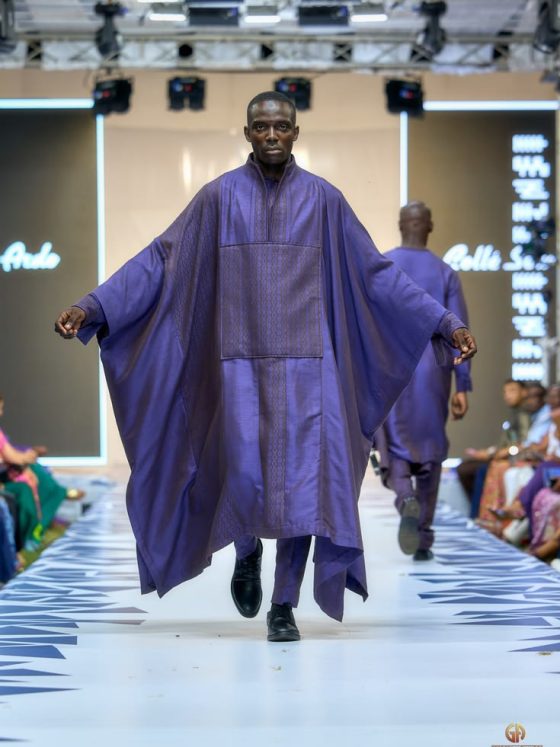
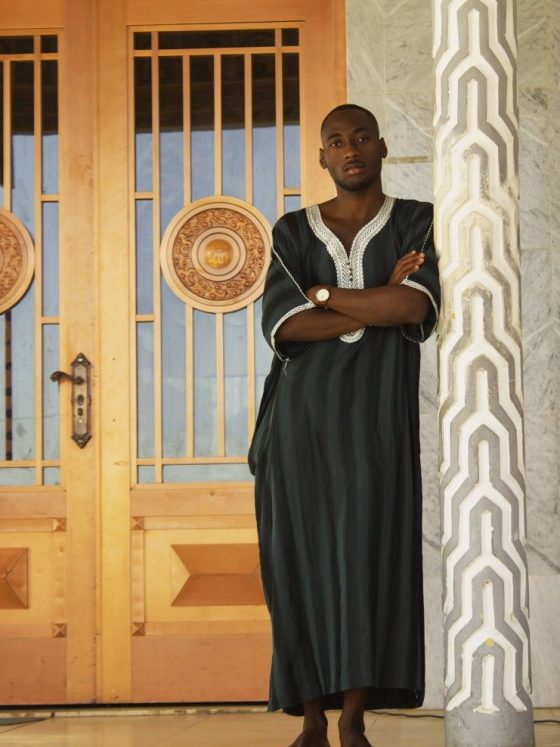
Something is shifting in how African diaspora men dress. Across London, New York, Toronto, and Paris, a generation of men is reaching past the wardrobe of assimilation and pulling out something older, more specific, and considerably more authoritative. The agbada, the dashiki, the grand boubou, the Kente co-ordinate, and the kufi: garments that were worn for generations only for weddings and church services and significant occasions are appearing in offices, on public transport, at restaurants and galleries and street corners, worn without occasion, worn because the men who wear them have decided that Tuesday is occasion enough.
This is not the first time African and African-descended men have used dress as a cultural declaration. The men who stepped off the HMT Empire Windrush in June 1948 arrived in Britain in trilby hats, patterned ties, and immaculately tailored suits, dressed with a deliberateness that was itself a statement of self-respect in a country that had not extended respect in advance. In 1960s New York, the dashiki was lifted out of West African everyday dress. It made a symbol of Black cultural pride during the Civil Rights Movement, worn as visible solidarity with an African heritage that American institutions had worked to sever. The 2025 Met Gala anchored its entire cultural theme to this history, mounting a Costume Institute exhibition titled Superfine: Tailoring Black Style, the museum’s first menswear-focused exhibition in more than two decades, which traced 250 years of Black men using dress to navigate, resist, and define identity across the Atlantic diaspora. What is happening now is the same conversation, conducted in a different generation’s voice.
From an agbada on a Tuesday in Peckham to Kente co-ordinates on the London Underground, African diaspora men are wearing traditional dress as everyday attire. This is not nostalgia. It is a deliberate, generational reclamation of what it means to be dressed.
The Omiren Argument
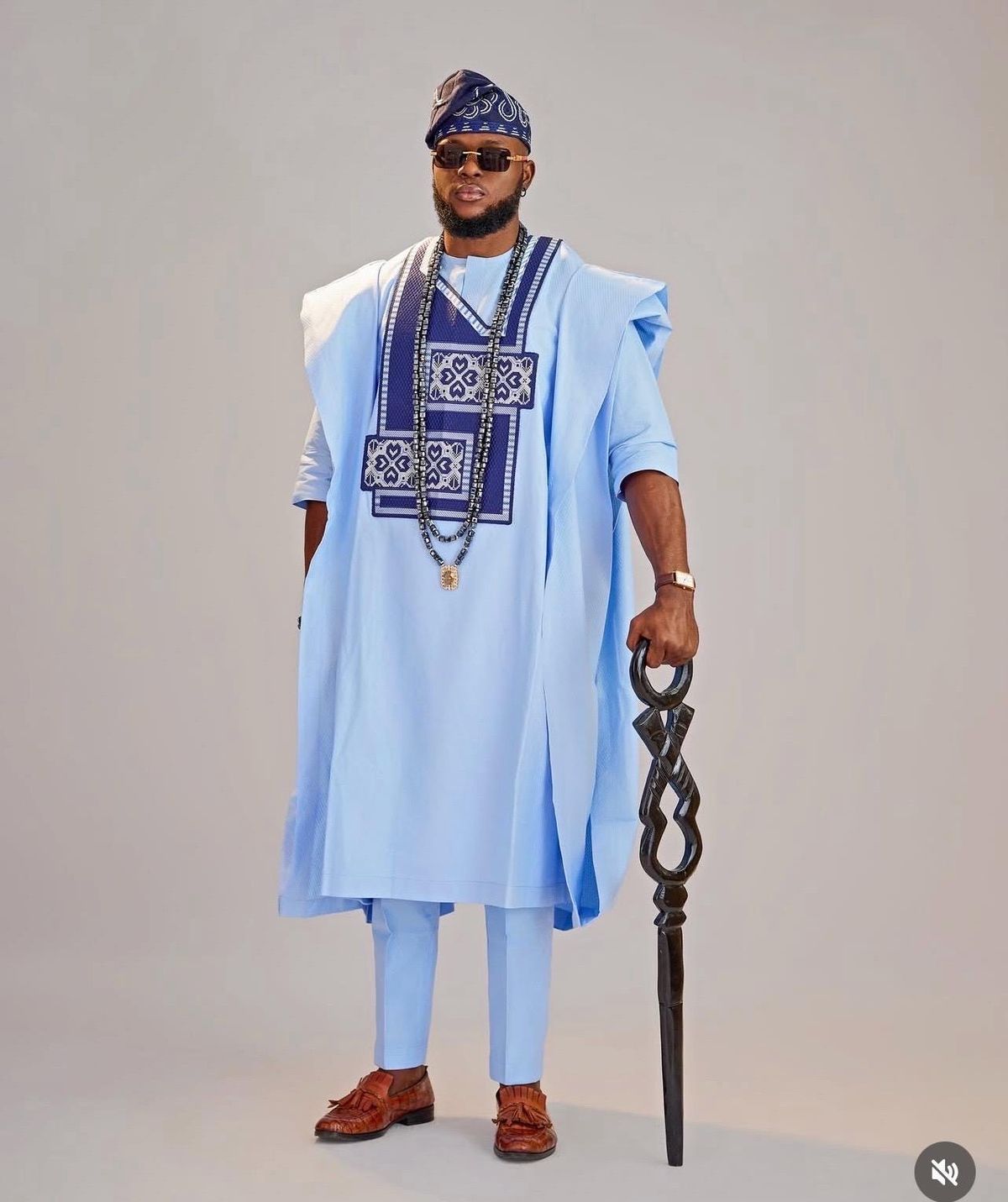
The narrative that African traditional dress is ceremonial and therefore occasional is a colonial inheritance, not a cultural truth. The agbada was worn by the nobility of 12th-century West African empires as everyday dress, communicating status, lineage, and authority in the same way that a European court suit did for European audiences. The dashiki was a practical working garment before it was a political symbol. The grand boubou was the default dress for Saharan and Sahelian men who needed garments that functioned across climates, classes, and occasions. The idea that these garments belonged only to ceremonies was imposed by the logic of assimilation, which required African men to treat their own aesthetic traditions as special-occasion wear to pass in European-coded professional and social environments. African diaspora men wearing traditional dress on a Tuesday morning are not breaking with tradition. They are restoring it.
What the fashion industry describes as a trend, diaspora communities understand as a correction. When a second-generation Nigerian man in London wears an agbada to a gallery opening or a Ghanaian-British man wears a kente co-ordinate set to a job interview, they are calculating that previous generations were often not in a position to make: that the cost of suppressing cultural identity in professional and public spaces is higher than the cost of wearing it visibly. That calculation is generational. It reflects a diaspora that has watched its aesthetic traditions become globally desirable while simultaneously being pressured to treat those same traditions as inappropriate for everyday use. The reversal is deliberate and will not be reversed.
Garments With Centuries of Authority
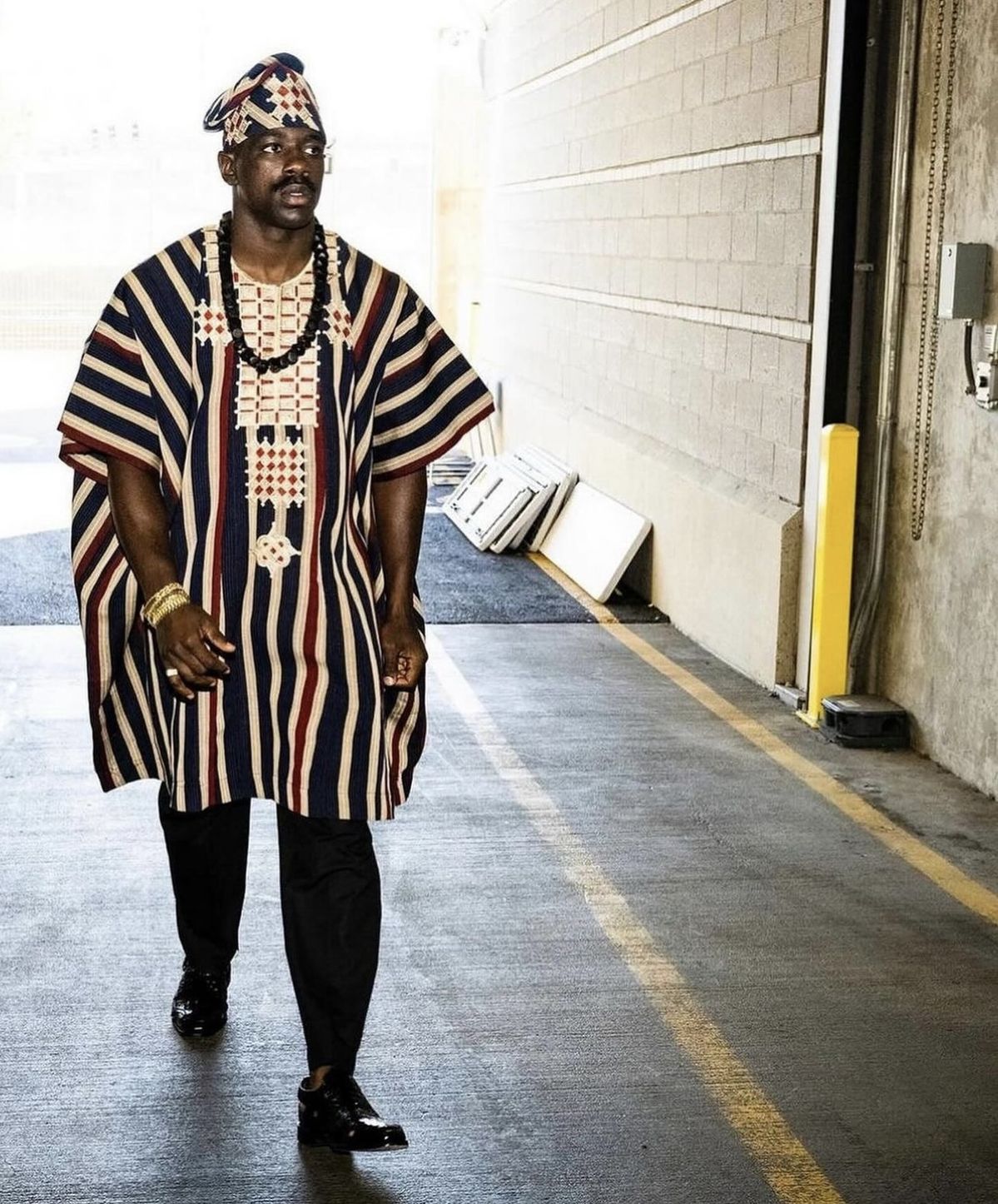
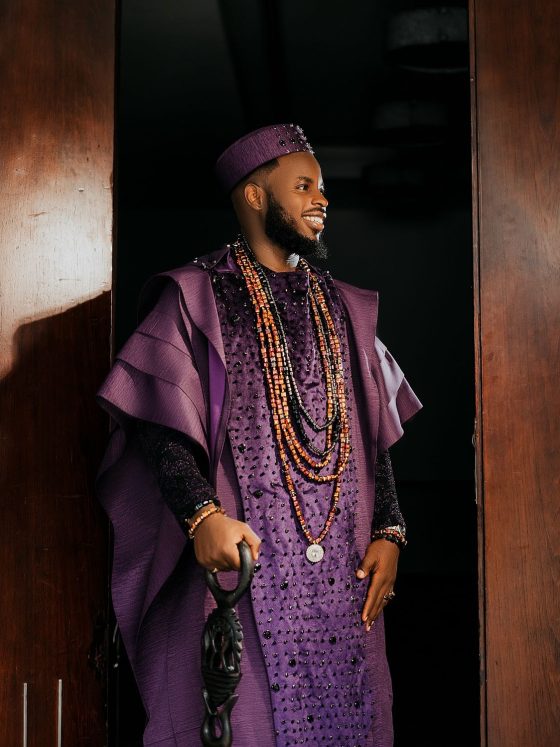
The agbada is the most immediately recognisable garment in this conversation. A flowing three-piece robe worn by Yoruba men, consisting of an outer gown (awosoke), an undervest (awotele), and wide-legged trousers (sokoto), the agbada is thought to have its origins among the nobility of 12th and 13th-century West African empires, where embroidered robes communicated rank with the same precision that European heraldry communicated lineage. The embroidery at the neckline and chest of a well-made agbada is not decoration. It is a signature. Different embroidery styles signal different things to those who can read them: the Grand Knot motif, the pocket placement, the density and colour of the stitching all carry information that a Yoruba elder can interpret at a glance. The garment has been adapted across West Africa under different names, the babban riga among the Hausa and the grand boubou among Wolof and Mandinka communities, each variation carrying its own regional vocabulary while sharing the underlying grammar of status and occasion.
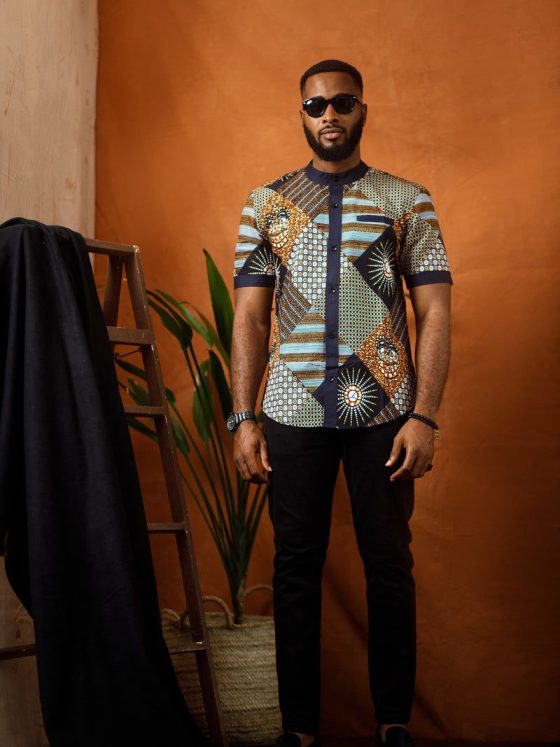
The dashiki carries a different history. Derived from the Hausa term “dan ciki”, meaning “underneath” or “shirt”, the dashiki was originally a practical, loose-fitting pullover made from breathable cotton, designed for the West African climate and worn across the region for daily use. Its transformation into a global symbol of Afrocentric cultural pride began in 1960s New York, where the Black Power movement adopted it as a wearable expression of solidarity with the African continent at a moment when that solidarity was being explicitly constructed as a political force. That political history is now part of the garment’s fabric, and the men who wear dashikis in London or Paris in 2025 are wearing both the shirt and its biography simultaneously. Kente cloth, originally woven exclusively for Akan royalty in Ghana, where every strip carries a pattern name and a proverb, has a similar double inheritance: a textile system of extraordinary sophistication that became a global symbol of Black pride and is now being worn as coordinated everyday dress by diaspora men who know both dimensions.
Also Read:
- How West African Print Became a Global Style Language
- How the Diaspora Is Styling Adire for the Modern City
- Afrocentric Style and the New Professional Authority
The Designers Building the Language
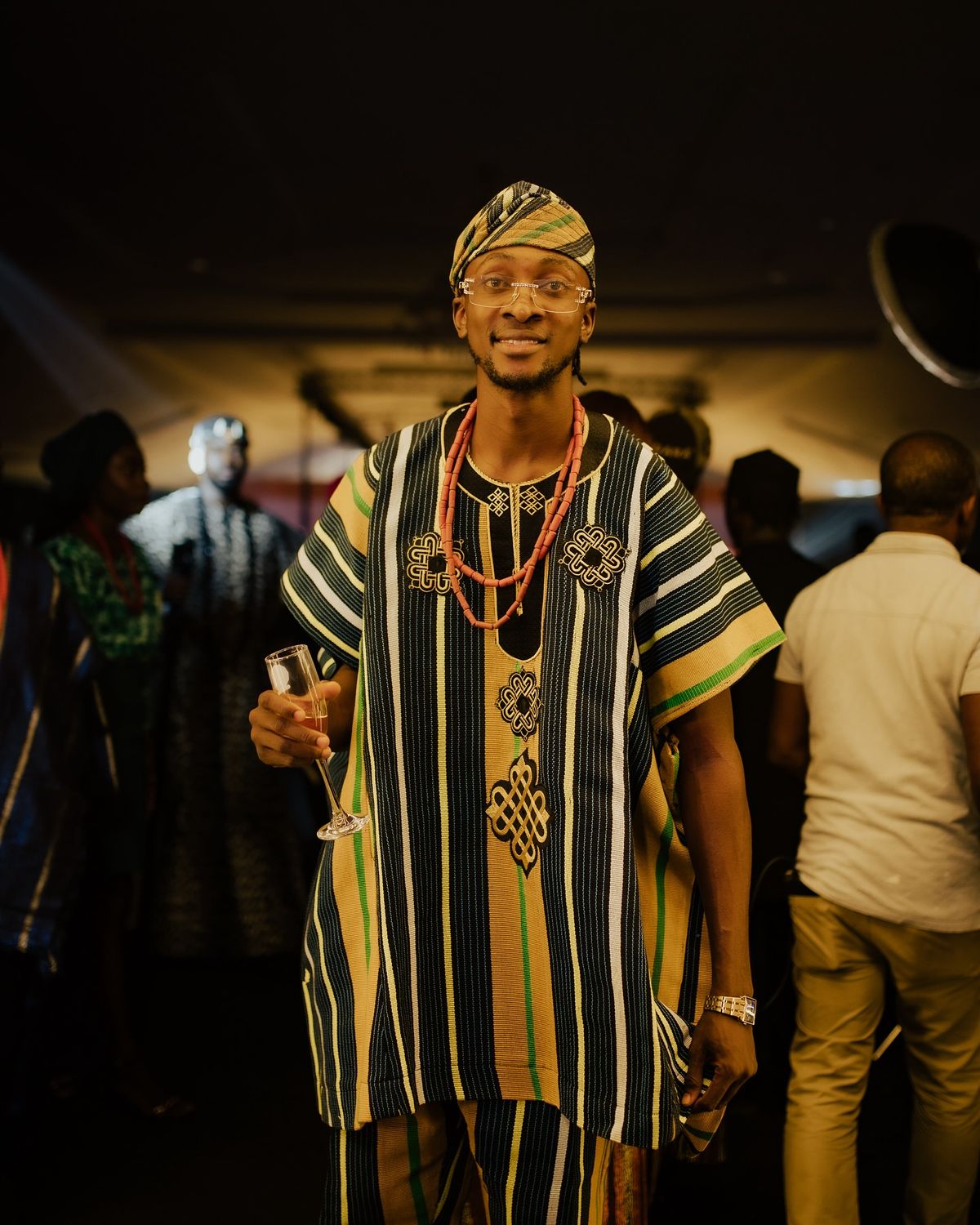
The architects of this shift are visible across the design landscape. In London, Foday Dumbuya of Labrum London builds collections that fuse precise British tailoring with the West African heritage of Sierra Leone, his country of origin, producing garments that carry Afrocentric cultural knowledge inside the structure of contemporary menswear. Grace Wales Bonner, whose work was represented at the 2025 Met Gala Superfine exhibition through a suit adorned with cowrie shells, symbols of African heritage and trade, has built an international reputation on the intersection of Afro-Atlantic cultural inquiry and elevated tailoring. Tokyo James, founded by Iniye Tokyo James, brings refined tailoring into conversation with bold cultural sensibility. Jehucal, founded by Emay Enemokwu from Newham, fuses streetwear with Nigerian heritage to create pieces explicitly designed for everyday city wear.
These designers are not translating African garments for Western audiences. They are building a contemporary African diaspora menswear vocabulary that does not require translation because it speaks directly to the men who wear it and allows them to be fully legible to themselves in spaces that have not always permitted that legibility. The 2025 Superfine exhibition at the Metropolitan Museum of Art in New York, curated with scholar Monica Miller, whose 2009 book Slaves to Fashion provided its intellectual foundation, framed this entire tradition as Black dandyism: the practice of using dress as a vessel for identity, resistance, and cultural authority, traced across 250 years of the Atlantic diaspora. The exhibition ran for eight weeks longer than any previous Costume Institute show, a measure of how much the conversation had expanded beyond the institution’s expectations.
How It Is Being Styled for the City
The contemporary diaspora approach to traditional African menswear is neither costume nor costume drama. Men are wearing agbadas with clean white trainers and no additional styling pressure. Dashikis are being paired with dark, slim-cut trousers and worn to university lectures and creative-industry workplaces. Kente co-ordinate sets in structured, contemporary cuts are appearing at networking events and on social media feeds with the same casualness that a linen suit might in a comparable context. The kufi, the brimless cap worn across West African Muslim communities and adopted more broadly as a symbol of Afrocentric identity, is worn with everything from full traditional dress to jeans and a printed shirt.
Second-generation men, in particular, are styling these garments with the confidence of people who have processed the assimilation pressure of their parents’ generation and reached a different conclusion about what it costs. A man whose father wore his agbada only to church and family occasions is wearing his to the office on Fridays, to Saturday markets, and to the kind of social events where the garment’s authority is felt rather than explained. Social media has been the accelerant. Styling content showing agbadas worn with contemporary footwear, grand boubous belted and structured into city silhouettes, and kente patterns incorporated into everyday wardrobe rotation has created a visual archive of possibilities that simply did not exist in the same volume or visibility a decade ago.
The man in the pale blue agbada boards the 345 bus without explaining himself. He does not need to. The garment has been explaining itself for centuries, in the courts of 12th-century Yoruba kingdoms, in the churches and community halls of the Windrush generation, in the galleries, boardrooms, and street corners where African diaspora men now wear it on ordinary mornings. The question was never whether the garment belonged in the city. The question was always whether the city was ready to understand what it was looking at. The men wearing it have decided that the city’s readiness is no longer a condition of their dress.
Frequently Asked Questions
Why are African diaspora men wearing traditional dress for everyday occasions?
A growing number of African diaspora men are choosing to wear traditional garments, including the agbada, dashiki, grand boubou, and kente coordinates, as everyday dress rather than reserving them for ceremonies and special occasions. This reflects a generational shift in how second-generation Africans in cities like London, New York, and Toronto relate to their cultural heritage. Where previous generations often felt pressure to assimilate into European-coded dress codes for professional and social acceptance, younger men are increasingly choosing to wear Afrocentric garments visibly and without occasion, treating the suppression of cultural identity in dress as a cost higher than any professional or social adjustment required by wearing it.
What is the historical significance of garments like the agbada and dashiki?
The agbada is a flowing three-piece Yoruba robe whose origins can be traced to the nobility of 12th- and 13th-century West African empires, where embroidered robes signified rank, lineage, and status. Its embroidery is a system of visual information readable by those who know its vocabulary. The dashiki, derived from the Hausa “dan ciki,” meaning “shirt,” was originally a practical, everyday West African garment that was adopted by the Black Power movement in 1960s New York as a symbol of Afrocentric cultural pride and solidarity with the African continent. Kente cloth, originally woven exclusively for Akan royalty in Ghana, carries named patterns and proverbs in every strip. Each of these garments carries both a material history and a political biography.
Which designers are shaping contemporary African diaspora menswear?
Key figures include Foday Dumbuya of Labrum London, who fuses precise British tailoring with West African heritage; Grace Wales Bonner, whose Afro-Atlantic cultural inquiry has earned international recognition, including representation at the 2025 Met Gala Superfine exhibition; Tokyo James, who brings refined tailoring into conversation with bold cultural sensibility; and Jehucal, founded by Emay Enemokwu, which fuses streetwear with Nigerian heritage for everyday city wear. These designers are building a contemporary African diaspora menswear vocabulary that speaks directly to men navigating both African cultural identity and city life.
What was the 2025 Met Gala Superfine exhibition, and why does it matter for African menswear?
Superfine: Tailoring Black Style was the Metropolitan Museum of Art’s Costume Institute exhibition in 2025, the museum’s first menswear-focused exhibition in more than two decades. Curated by Andrew Bolton with scholar Monica Miller, whose 2009 book Slaves to Fashion provided its intellectual foundation, the exhibition traced 250 years of Black men’s use of dress to navigate, resist, and define identity across the Atlantic diaspora, through 12 conceptual sections, including Heritage, Ownership, Freedom, and Cosmopolitanism. It ran for eight weeks longer than any previous Costume Institute exhibition. Its cultural significance for African diaspora menswear lies in its institutional confirmation of what diaspora communities have always known: that Black men’s relationship to dress is a sophisticated, historically rooted practice of identity formation, not a fashion trend.