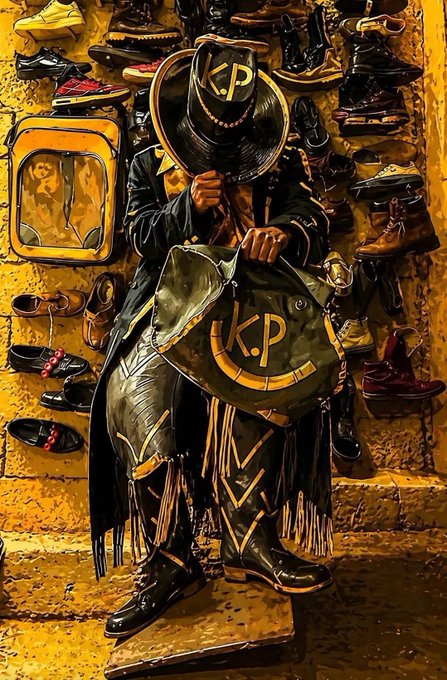
There is a wall in Mekelle, Ethiopia. It is weathered and sun-bleached, draped with worn shoes, torn fabric scraps, and dusty bags, the kind of detritus a city leaves behind. For most people, this wall is a backdrop to daily life, unremarkable and invisible. For a young man named Kaleb, it is a runway.
He steps out in a two-piece suit assembled from white plastic bags, cinched and draped with the architectural precision of a Balenciaga atelier. He walks with a cane. He tips a cowboy hat. He does not smile, or if he does, it is the smile of someone who has already won an argument the world has not yet caught up with. Then he posts it to TikTok, and the internet breaks.
This is Kalu Putic. And he may be the most important fashion story of 2026.
Meet Kaleb, the young designer from Mekelle, Ethiopia, whose upcycled avant-garde looks have captivated 1.5M+ followers and earned co-signs from SZA and Timbaland, inside the story of Africa’s most electric new fashion voice.
The Rise: From TikTok to Global Phenomenon

Kaleb, known online as @kalu.putic and @kaluputics, launched his TikTok account in December 2025. By April 2026, he had surpassed 810,000 followers on TikTok and 700,000 on Instagram, approaching 1.5 million combined followers in a matter of weeks. To understand the velocity of that growth, consider that most fashion creators toil for years building a fraction of that audience. Kaleb did it with no PR team, no brand deal, no stylist, and no studio, only discarded rubber, plastic sheeting, old textiles, and cardboard boxes found across his hometown of Mekelle, in the Tigray region of northern Ethiopia.
His videos follow a consistent, wordless grammar. He constructs a garment. He steps in front of his wall. He walks. The outfit speaks. The silence is the point.
His rise has been covered across major publications. Black Enterprise described his work as a masterclass in resourceful creativity, while Addis Insight compared his cultural velocity to Khaby Lame’s conquest of the global internet. Fashion Sizzle noted that he is not following trends; he is building an entirely original visual language.
“Style is an inherent talent, not a luxury purchase. Kalu Putic did not wait for an invitation to the gala; he built his own world and let the world come to him.”
That world has come running. A-list musicians, including SZA and legendary producer Timbaland, have publicly reacted to his work. Fashion journalists across three continents have filed dispatches. Ethiopian media, which initially treated his rise as a charming local story, now covers him as a national phenomenon.
The Craft: Fashion as Alchemy

To call what Kaleb does “upcycling” is technically accurate and aesthetically insufficient. Upcycling, as the sustainable fashion movement has defined it, suggests a modest corrective gesture, taking something unwanted and giving it new, functional life. What Kaleb does is a transformation. It is closer to alchemy than to recycling.
Consider the inventory of a single Kalu Putic look: discarded rubber fragments that flex and hold like neoprene; old denim from one pair of jeans, woven into a second pair of jeans; cardboard constructed into a boombox prop that conjures 1980s New York; beads and plastic sheeting layered into a sculptural, all-blue structured hood that looks like it belongs at Rick Owens or Iris van Herpen. The materials cost nothing. The vision is priceless.
Each outfit arrives with its own complete aesthetic world. Baggy denim with a bucket hat, a waistcoat and a tie. A balaclava and a bomber jacket. A Matrix-era trench coat in non-leather material that somehow captures the leather’s menace. A rubber two-piece. The range is staggering, and it never feels random. Kaleb has an internal taxonomy of style that most trained designers spend careers trying to develop.
“In his world, luxury is not a price point. It is a point of view.”
His philosophy sits squarely within the growing global movement of sustainable, upcycled design. Upcycle Fashion Week has championed this approach for years, arguing that the future of fashion lies in working with what already exists rather than extracting more. The Business of Fashion’s sustainability tracker documents how the industry is, slowly, often reluctantly, moving in this direction. Kalu Putic is not waiting for the industry to arrive. He is already there.
Observers across the fashion industry have begun to whisper that established luxury labels may be drawing aesthetic inspiration from his designs without credit, a conversation that the industry must urgently and honestly have.
For a deeper look at how upcycled aesthetics are influencing mainstream luxury, see our related feature: Upcycled Fashion: The Designers Building the Future from the Past.
The Omiren Argument: Why the Industry Owes Him More Than Admiration

OPINION
Let us be direct about something the fashion industry has long obscured: Kalu Putic is not a curiosity. He is not a feel-good story. He is not content. He is a designer, a serious, original, visionary designer, and the question the industry must now answer is whether it will meet him with opportunity or with exploitation.
The pattern is well-documented. A creator from the Global South, from Africa, from Southeast Asia, or from Latin America develops an aesthetic vocabulary that is raw, original, and culturally specific. Western media amplifies it. Western brands absorb it. The creator is celebrated briefly, then bypassed as the aesthetic they pioneered gets laundered through European ateliers and sold back to the world under expensive new labels.
Kalu Putic’s story must not follow that arc. The argument here is not sentimental; it is structural. The fashion industry, which has spent a decade loudly committing to sustainability, authenticity, and diversity, now has a living proof of concept on its hands. A designer who has built an entire aesthetic philosophy around sustainability, not as a marketing position but as an economic reality. A designer who has bypassed every traditional gatekeeper and reached a global audience on pure creative merit. A designer who, crucially, has not yet signed anything.
This is the moment, not after he is picked up by a European house and repackaged, but now, when the industry should be asking, ‘What does Kaleb want?’ What would his own label look like? What would it mean to fund a design studio in Mekelle rather than flying him to Paris and asking him to sand down his edges? The Ethical Fashion Initiative has long argued for exactly this kind of investment in creators within their own communities rather than the extraction of talent into existing Western structures.
“The most powerful designs do not come from what we buy. They come from what we imagine. Kalu Putic has already proven this. The industry must now prove it is listening.”
The Omiren argument, named for the principle that originators of creative movements deserve recognition and material support commensurate with their cultural contribution, demands that we move beyond admiration. Admiration is free. It costs the industry nothing. Investment, mentorship, equitable partnership, and intellectual property protection are the currencies that actually change lives and reshape industries.
For context on how IP protection operates, and often fails, for creators in the Global South, see this analysis from the World Intellectual Property Organisation and our own feature on How African Creatives Are Fighting for Their Ideas.
Kalu Putic has done the hardest part. He has made the world look. Now the question is what the world will do next.
ALSO READ:
- Trinidadian Carnival Masquerade Is a Fashion System. It Is Time the World Called It That | Omiren Styles
- Why Culture Is the Foundation of Style in African and Global Fashion | Omiren Style
- Fashion and Ritual: How Celebrations Shape African Style Practices | Omiren Styles
- How Emerging Fashion Weeks Are Redefining Global Fashion | Omiren Styles
Roots and Resistance: Ethiopia’s Fashion History

Kalu Putic did not emerge from a vacuum. He emerged from Ethiopia, and Ethiopia’s relationship with clothing, textiles, and adornment is one of the oldest, richest, and most politically charged on the planet.
Woven Into History: The Habesha Kemis and the Shamma
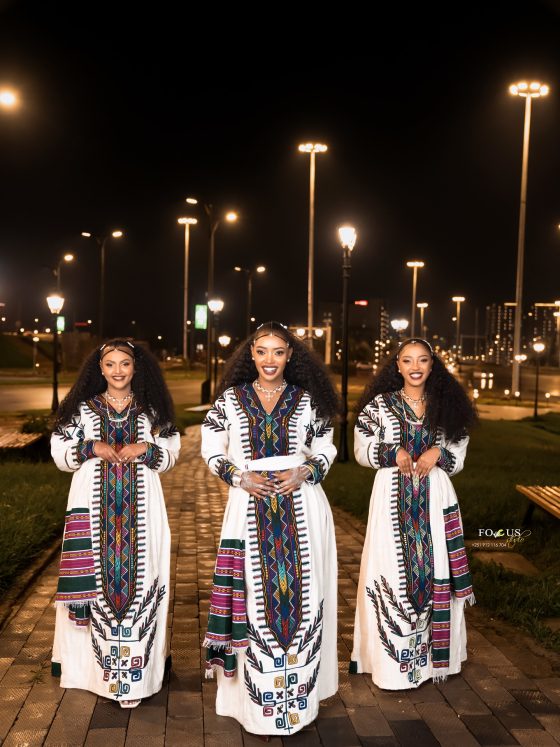
Ethiopian textile culture stretches back millennia. The shamma, a lightweight, handwoven cotton cloth with a coloured border, is one of the country’s most enduring garments, worn by men and women alike and adapted across Ethiopia’s more than 80 ethnic groups into a dizzying variety of regional forms. The Habesha kemis, a white dress embroidered at the hem and cuffs with the distinctive tilf pattern, is as close to a national garment as the country possesses.
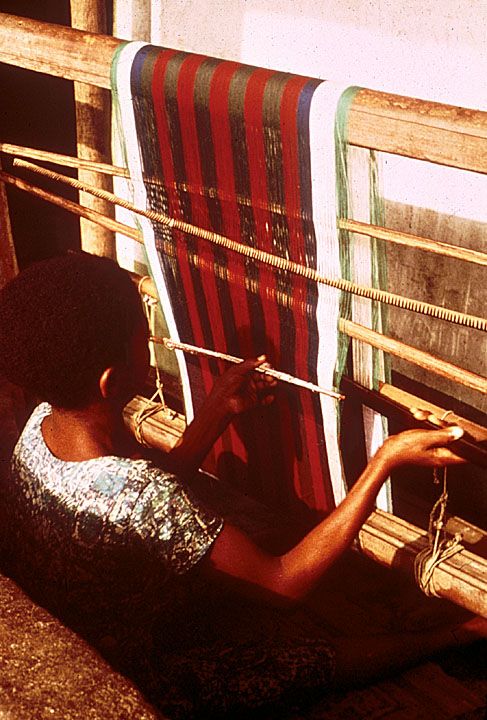
These textiles were not merely decorative. They were political, spiritual, and social documents, their colours, weaves, and embroidery patterns communicating status, lineage, region, and faith. Ethiopian weaving traditions, particularly the tilet loom technique, are among the most technically sophisticated in Africa, producing fabrics that combine warmth and delicacy at a fraction of the cost of imported cloth.
For a comprehensive visual guide to Ethiopian traditional textiles, see our archive feature: Ethiopian Textile Traditions: A Complete Visual Guide. The Smithsonian’s African Textile Collection also offers important historical context for the region’s weaving heritage.
Resistance Dressed in Cloth: Fashion and the Adwa Legacy
Ethiopia’s fashion history cannot be separated from its history of resistance. In 1896, at the Battle of Adwa, Ethiopian forces under Emperor Menelik II defeated the Italian colonial army, the first decisive military victory of an African nation over a European colonial power. The warriors who fought at Adwa wore traditional garments: the shamma over their shoulders, the embroidered uniformity of a people who had not accepted that their dress, or their dignity, was anyone else’s to define.
The image of Ethiopian soldiers in traditional dress defeating a colonial army became one of the most powerful symbols of Pan-African resistance. Across the continent and the diaspora, Ethiopia became a symbol of the principle that Africa’s culture, tradition, and aesthetic identity needed no European approval to be valuable, let alone magnificent.
This is not a distant history. It is a living inheritance, and it breathes directly into the work of creators like Kalu Putic, who fashions defiance from discarded materials and makes the Western fashion establishment look both ways before crossing the street.
The 20th Century: From Imperial Court to Modernism
Under Emperor Haile Selassie, Ethiopia’s fashion elite occupied a peculiar space: imperial court dress combined traditional Ethiopian ceremonial garments with European military and aristocratic silhouettes, creating a hybrid aesthetic that was simultaneously deeply Ethiopian and globally legible. Selassie’s regal presentation, photographed on the covers of Time magazine, received by world leaders, and addressed at the League of Nations, made Ethiopian style visible on a world stage that had rarely focused its lens on African dress as anything other than ethnographic curiosity.
The Derg military regime (1974–1991) suppressed much of this aesthetic complexity, imposing military dress codes and curtailing the traditional textile economy. But the craft never died. It retreated into homes, markets, and the Ethiopian diaspora communities in Washington D.C., London, and Stockholm, where the shamma and habesha kemis became markers of identity, pride, and connection to a homeland enduring violence. That survival instinct, culture persisting through suppression, is the thread that connects the weavers of the tilet loom to a young man in Mekelle building a fashion empire from what the city discards.
Ethiopia’s Growing Fashion Industry: Built on Creativity and Resistance

In the 21st century, Ethiopia has emerged as one of Africa’s most dynamic fashion economies, a development that is simultaneously organic, industrial, and politically complex.
The Manufacturing Base
Ethiopia became Africa’s fastest-growing garment manufacturing hub through the 2010s, attracting global brands including H&M, PVH Corp, and Primark to its industrial parks, particularly the Hawassa Industrial Park, a purpose-built textile and garment zone designed to employ tens of thousands of workers. Ethiopia’s competitive advantages include low production costs, proximity to European markets, and preferential trade access under the African Growth and Opportunity Act (AGOA).
The ethical complexities of this boom are significant and well-documented. Labour advocates at organisations, including the Worker Rights Consortium, recorded wages among the lowest of any garment-producing nation. The manufacturing boom created jobs but also created dependency on foreign contracts and Western fast-fashion supply chains, the very system that creators like Kalu Putic implicitly critique when they make luxury from waste.
The Designer Uprising: Ethiopia’s Own Fashion Week
Parallel to the industrial garment sector, a vibrant homegrown designer community has been quietly building in Addis Ababa. The Addis Ababa Fashion Week has given runway space to designers who blend traditional Ethiopian textiles with contemporary silhouettes. Designers like Mahlet Afework of MAFI have gained international attention for work that treats the habesha kemis not as a historical costume but as a living design language open to reinvention.
The city’s Piazza and Merkato districts have long been hubs of informal fashion creativity, with tailors constructing any garment from a photograph, fabric traders dealing in everything from imported silk to hand-loomed netela, and second-hand clothing markets (known locally as ‘fanta’) where global overstock gets reimagined. This informal economy of creative repurposing is the direct ancestor of Kalu Putic’s practice. For more on Africa’s formal and informal fashion economies, the African Fashion Foundation offers a comprehensive industry perspective, and our feature The Rise of Sustainable Street Fashion Across the African Continent examines how this creative energy is reshaping global trends.
What Comes Next
The internet is full of viral moments that evaporate, creators who spike and plateau, and aesthetics that get absorbed and discarded. The question with Kalu Putic is whether his moment hardens into a career and whether the infrastructure to support that transition exists.
The signals are encouraging. Unlike many viral creators, his appeal is not built on a single recurring format or visual gimmick. Each post is a different look, a different material, a different era of cultural reference. The vocabulary is expanding, not contracting. He is not repeating himself. He is developing a body of work.
What he needs now is what every serious designer needs: a studio, resources, legal counsel to protect his intellectual property, and a platform that centres his vision rather than filtering it through the priorities of a Western sponsor. The Ethical Fashion Initiative and organisations like Fashion Revolution represent the kind of values-led infrastructure that could support a creator like Kaleb on genuinely equitable terms. Whether the broader industry is capable of the same remains the defining question.
Kalu Putic has already answered every question that was his to answer. He has shown the world what he can do. The wall in Mekelle has already become a runway. The rest of the world is just catching up.
Frequently Asked Questions
1. Who is Kalu Putic?
Kalu Putic, real name Kaleb, is a young Ethiopian fashion creator from Mekelle, Tigray, Ethiopia. He creates avant-garde outfits from discarded materials, including rubber, plastic, cardboard, and worn-out clothing, which he models on a makeshift runway and posts to TikTok and Instagram. He went viral in early 2026 and has amassed nearly 2 million combined followers across platforms.
2. Where is Kalu Putic from?
Kalu Putic is from Mekelle, the capital city of the Tigray region in northern Ethiopia. He creates and photographs his work against the walls and streets of his hometown, using materials sourced locally.
3. What materials does Kalu Putic use to make his outfits?
He uses discarded and recycled materials, including old plastic bags, rubber fragments, worn-out denim, cardboard, old textiles, and beads. He also creates his own accessories, chains, boomboxes, and turntables from scratch using similar found materials.
4. How many followers does Kalu Putic have?
As of April 2026, Kalu Putic has over 810,000 followers on TikTok and more than 700,000 on Instagram, approaching 2 million combined. His following grew at extraordinary speed, reaching these numbers within months of his first viral posts.
5. Has Kalu Putic been noticed by celebrities or the fashion industry?
Yes. Grammy-winning artist SZA and legendary producer Timbaland have both publicly reacted to his work. Fashion journalists across multiple continents have covered his rise, and observers have noted that established luxury brands may be drawing aesthetic inspiration from his designs.
6. What is the significance of Kalu Putic’s work in sustainable fashion?
Kalu Putic practises radical sustainability, not as a marketing strategy, but as an economic and creative reality. By constructing high-fashion-calibre looks entirely from discarded materials, he demonstrates that sustainability and aesthetic ambition are not in tension. His philosophy aligns closely with the work of Upcycle Fashion Week and other sustainability-driven design movements.
7. What is Ethiopia’s fashion history?
Ethiopia has one of Africa’s richest and oldest fashion traditions. The shamma (a handwoven cotton wrap) and habesha kemis (embroidered dress) are iconic traditional garments deeply tied to national identity and resistance, most notably through the 1896 Battle of Adwa, in which Ethiopian warriors in traditional dress defeated Italian colonial forces. In the modern era, Ethiopia developed both a major industrial garment manufacturing sector and a growing homegrown design community centred in Addis Ababa.
8. What is the Omiren argument as it applies to Kalu Putic?
The Omiren argument holds that creators who originate significant cultural and aesthetic movements deserve recognition and material support, not merely viral fame. Applied to Kalu Putic, it argues that the global fashion industry must move beyond admiring him as content and toward offering equitable investment, intellectual property protection, and partnerships that centre his vision and keep the creative and economic value of his work in his hands.
9. Is Kalu Putic signed to any fashion house or brand?
As of April 2026, Kalu Putic has not publicly announced any partnership with a fashion house or major brand. He operates independently, which has been central to both his authenticity and his vulnerability.