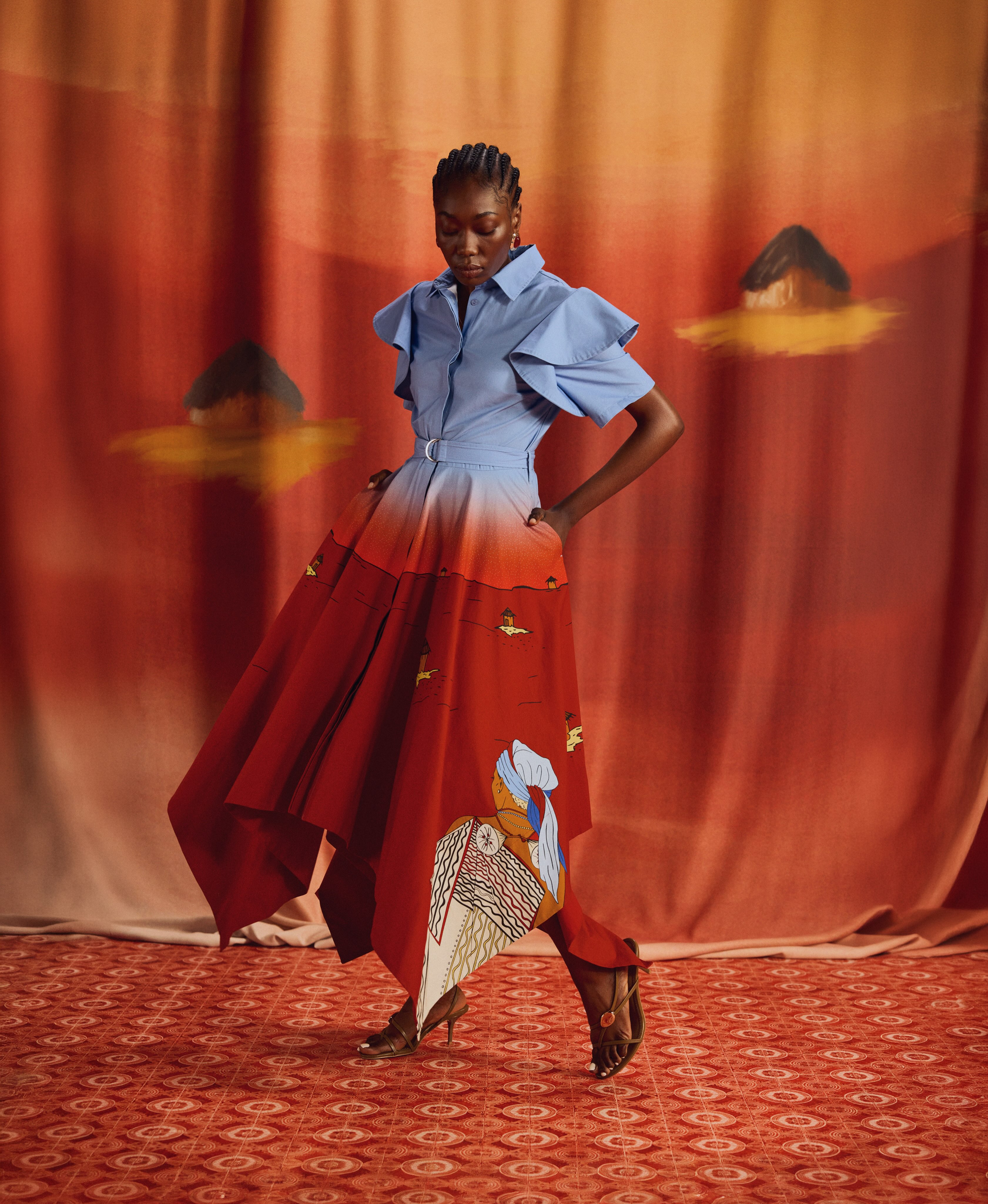
A white shirt, black tie and high-waisted trousers provide a recognisable starting point. In Sarah Mower’s Vogue review of Thebe Magugu’s Spring/Summer 2022 womenswear collection, however, the tie is exaggerated and looped over one shoulder. The ensemble draws on a photograph of the designer’s uncle as a young choir member. A familiar combination becomes connected to a particular person and family memory.
The example raises a more useful question than whether styling can make clothes attractive: which decisions produce the meaning of a look?
“Before asking whether a look is strong, ask where its strength comes from.” Omiren Styles Editorial Intelligence
The tie’s proportions concern the object itself. Its placement concerns how that object is worn. The photograph and its explanation give the ensemble another frame. These contributions overlap, but they are not identical.
Styling can shape an outfit’s meaning as decisively as garment design. Recognising that contribution should make criticism more precise about what each practice adds, not encourage it to describe every decision as the same kind of work. It’s easy to fall into this habit, because a finished image arrives all at once. Pulling it apart afterwards takes some patience.
This reading tries to supply that patience. We will take three examples from the published accounts, the tie, the short suit, and the headpiece, and ask what each garment, styling, and presentation seem to contribute. Where the sources cannot tell us, we will say so rather than guess.
A source-led reading of Thebe Magugu’s Genealogy collection examines how garment design, styling and presentation work together and why creative credits matter.
A Family Archive, Not a Generalised Heritage Story
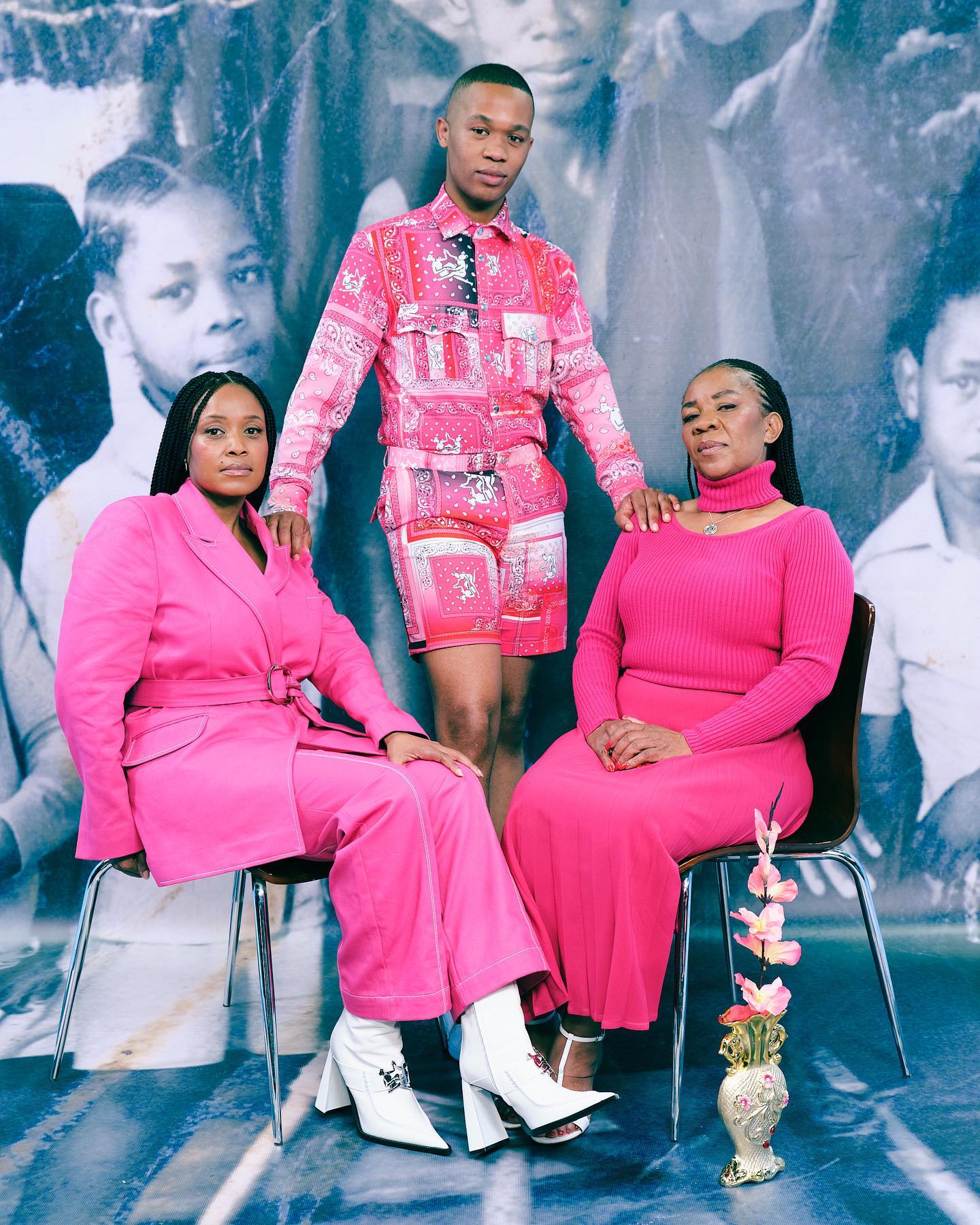
Magugu titled the collection Genealogy. The official account connects it to photographs and memories shared with his mother, Iris, and aunt, Esther. It cites references such as his grandmother’s pleated skirts and draped blouses, his mother’s pronounced sleeves and short skirts, and his aunt’s interest in a localised punk sensibility associated with Brenda Fassie. These are specific family references, presented through the designer’s account. They should not be expanded into claims about a uniform South African experience.
The presentation made those relationships part of the audience’s encounter with the clothes. Mower described an installation and film in which Magugu and his relatives discussed family photographs. In a subsequent ELLE interview, the designer explained the collection’s turn towards his own family.
For this reading, three distinctions matter. Garment design concerns the object: its shape, surface and construction. Styling concerns its relationship with other objects and the body. Presentation concerns the wider frame through which an audience encounters the result.
The family archive could inform all three. A photograph preserves not only what someone owned but also how they combined it, wore it and chose to be seen. That is why a family album is such a rich source for a designer: it records decisions about wearing, not just making.
The Tie: Where Proportion Meets Placement
The choir-inspired ensemble is useful because the published description identifies both an altered accessory and a particular arrangement. Mower’s account doesn’t simply name a shirt-and-trouser outfit; it draws attention to the exaggerated tie and its placement over the shoulder.
This interpretation is limited but meaningful: the outfit’s expression cannot be explained solely by listing its components. How the tie is worn contributes to the relationship between the clothes.
That does not establish who proposed the gesture. The official credits identify Thebe Magugu as creative director and Chloe Andrea Welgemoed as artist director and stylist. Those credits name contributions to the presentation; they do not assign responsibility for every decision in an individual look.
A responsible account can therefore recognise the styling without inventing a behind-the-scenes division of labour. It is tempting to fill the gap with a neat story about who did what, but a credit line is not a diary of the fitting room.
The Suit: Styling Can Reinforce Rather Than Transform
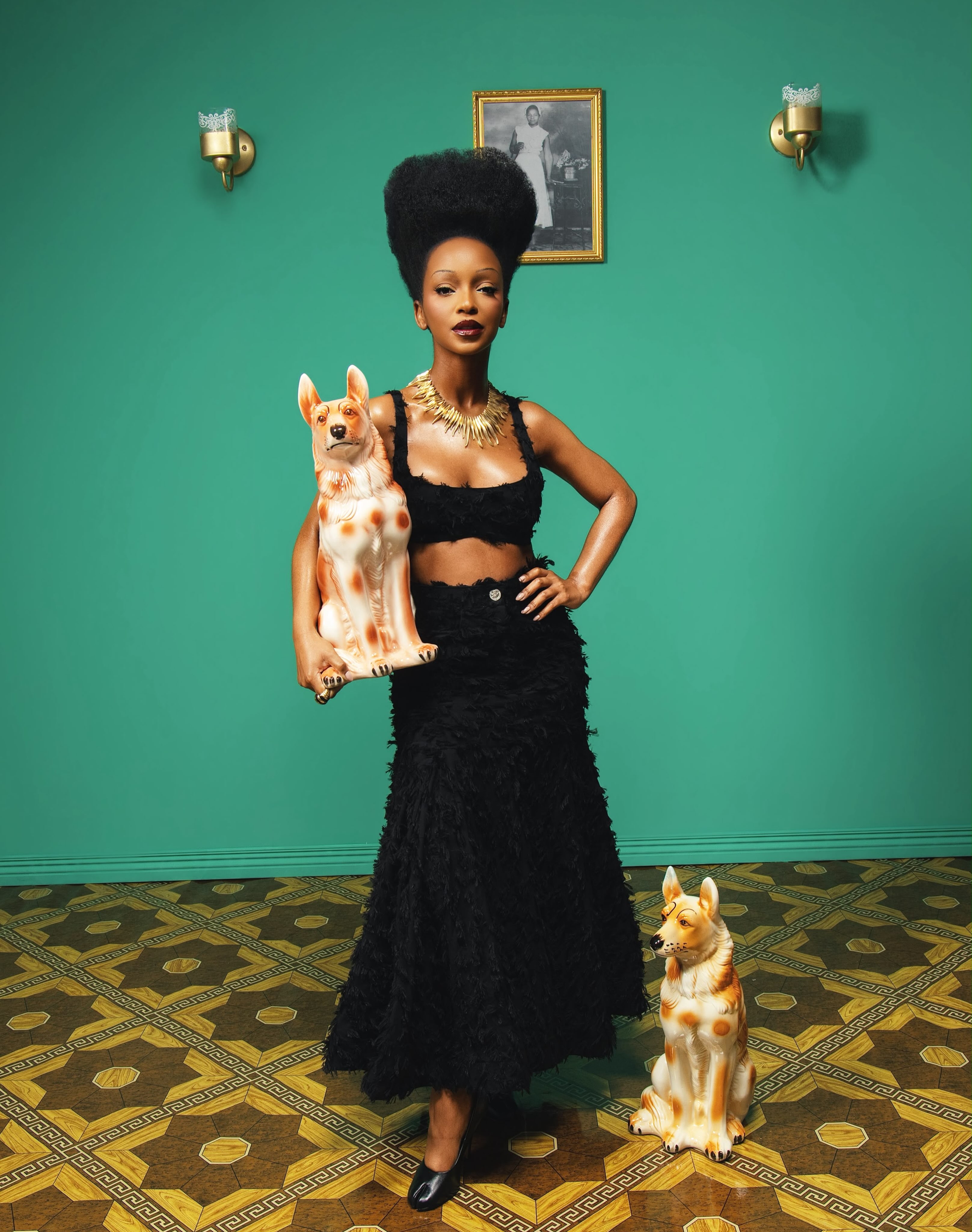
Mower also describes orange-and-white short suits worn with black knitted bralette sweaters, linking the tailoring to a minidress worn by Magugu’s aunt. This example introduces a different relationship between the family reference, the resulting garments and their combination
The translation into a shortsuit is already a garment-design decision. The knitted layer then contributes to how that design is presented. Neither contribution needs to cancel the other.
This is an important qualification to the idea that styling transforms clothes. Sometimes a garment carries the principal proposition, and the accompanying pieces clarify it. At other times, an unexpected combination changes the reading more substantially. The published description establishes the pairing, but not a definitive ranking of its contributions.
The useful critical question is therefore not whether the suit would “work” without its styling. That imagined alternative has not been demonstrated. It is what the documented combination adds to the design already present. Framed that way, the question stays tied to evidence we can actually point to.
The Headpiece: An Object and a Relationship
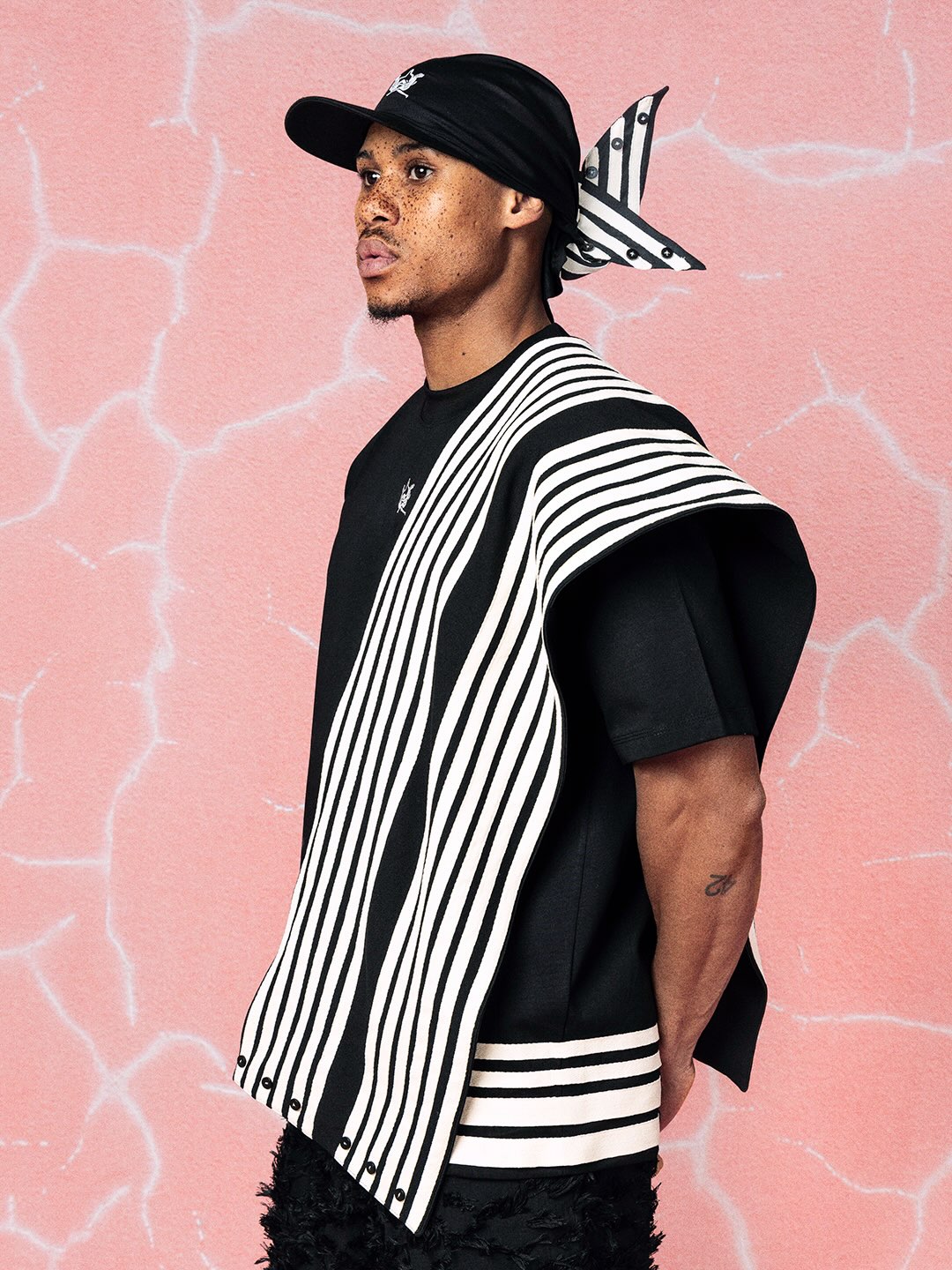
The collection’s headpieces complicate any simple separation between design and styling. According to the brand, they made exaggerated doeks from leftover cutting-room fabric in collaboration with Cape Town milliner Crystal Birch. The official statement connects them with milestone occasions, including weddings and wakes.
A headpiece is a designed object. Its scale, material and construction exist before it is placed within an outfit. Once worn, it also participates in styling: it changes the relationship between the head, shoulders and surrounding clothes.
Its cultural context is another distinct contribution. Describing it merely as a “heritage touch” would discard the specific account supplied by the collection and obscure the named collaboration. Equally, recognising that context does not establish how well each headpiece relates to each ensemble. Naming a collaborator is a small act with real weight, and it is one we return to in our guide to crediting makers on a heritage fashion product page.
The object, its use and its attribution all deserve attention. None should stand in for the others. A reader who remembers only that the doeks looked striking has missed most of what the collection says about them.
The Omiren Argument
Our argument is that fashion criticism should locate the source of an effect before assigning its value. A striking image may depend on an unusual garment, an unexpected combination, a meaningful reference or the interaction of all three. Calling the result “strong design” without explaining that interaction tells readers too little. In genealogy, the documented family references make those distinctions particularly useful.
That precision also matters for credit. The official record names creative direction, art direction and styling, and a millinery collaboration. Criticism should preserve those roles without pretending the credits reveal every conversation behind the finished presentation. Naming collaborators is necessary; assigning them unverified individual decisions is not.
Finally, context should deepen scrutiny rather than replace it. A family story can explain why a garment or combination exists, but emotional significance does not automatically establish visual success. For Omiren’s reading, the strongest question is how personal knowledge becomes a visible decision, and whether the available evidence lets us explain that decision clearly. The published accounts of genealogy provide several examples for that discussion while leaving a complete collection-wide judgement open.
What This Reading Establishes
Genealogy offers a way to discuss styling without treating it as either decoration added after design or an explanation for everything a look achieves.
The tie highlights proportion and placement. The shorts suit distinguishes garment development from combination. The headpiece demonstrates how an accessory can be a designed object, a styling element and a culturally situated collaboration at once. These interpretations are grounded in the collection’s published descriptions and official account, not in findings from an exhaustive visual assessment.
The resulting standard is straightforward: explain the relationship, preserve the credit and keep the conclusion within the evidence.
Also Read:
- Textile Provenance: How to Protect the Cloth Makers Behind the Fabric
- How to Verify a Fashion Brand’s Fabric Claims
- After Africa Fashion Week London 2026: What Converted Into Orders, Stockists, Press or Partnerships?
- What Happens After a Fashion Showcase? The Measures That Prove Market Access
FAQs
Which Thebe Magugu collection does this article examine?
It examines the genealogy of the Spring/Summer 2022 womenswear collection. This is distinct from Doublethink, Magugu’s menswear collection for the same season.
What inspired Genealogy?
According to the official collection statement, family photographs and memories informed the collection, including clothing associated with Magugu’s grandmother, mother, aunt and uncle. These are particular family references rather than a comprehensive account of South African dress.
Who received the styling credit?
The official collection page credits Chloe Andrea Welgemoed for art direction and styling, and Thebe Magugu as creative director. It also identifies Crystal Birch as the collaborator on the doeks. Those credits do not show who originated each outfit decision.
Does the article conclude that styling matters more than garment design?
No. It argues that the two contribute differently and can reinforce each other. The tie and shorts-suit descriptions offer examples for examining those relationships, but they do not justify ranking styling above garment design universally.